
Analysis
What Is Nipah Virus? Symptoms, Risks, and Transmission Explained as India Faces New Outbreak Alert

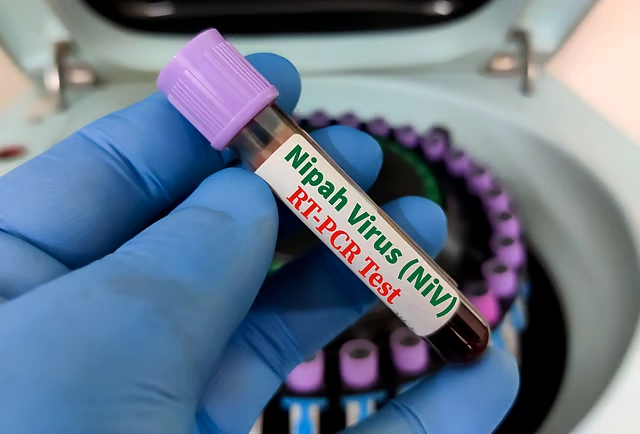
KOLKATA, West Bengal—In the intensive care unit of a Kolkata hospital, shielded behind layers of protective glass, a team of healthcare workers moves with a calibrated urgency. Their patient, a man in his forties, is battling an adversary they cannot see and for which they have no specific cure. He is one of at least five confirmed cases in a new Nipah virus outbreak in West Bengal, a stark reminder that the shadow of zoonotic pandemics is long, persistent, and profoundly personal. Among the cases are two frontline workers, a testament to the virus’s stealthy human-to-human transmission. Nearly 100 contacts now wait in monitored quarantine, their lives paused as public health officials race to contain a pathogen with a terrifying fatality rate of 40 to 75 percent.
This scene in India is not from a dystopian novel; it is the latest chapter in a two-decade struggle against a virus that emerges from forests, carried by fruit bats, to sporadically ignite human suffering. As of January 27, 2026, containment efforts are underway, but the alert status remains high. There is no Nipah virus vaccine, no licensed antiviral. Survival hinges on supportive care, epidemiological grit, and the hard-learned lessons from past outbreaks in Kerala and Bangladesh.
For a global audience weary of pandemic headlines, the name “Nipah” may elicit a flicker of recognition. But what is Nipah virus, and why does its appearance cause such profound concern among virologists and public health agencies worldwide? Beyond the immediate crisis in West Bengal, this outbreak illuminates the fragile interplay between a changing environment, animal reservoirs, and human health—a dynamic fueling the age of emerging infectious diseases.

Table of Contents
Understanding the Nipah Virus: A Zoonotic Origin Story
Nipah virus (NiV) is not a newcomer. It is a paramyxovirus, in the same family as measles and mumps, but with a deadlier disposition. It was first identified in 1999 during an outbreak among pig farmers in Sungai Nipah, Malaysia. The transmission chain was traced back to fruit bats of the Pteropus genus—the virus’s natural reservoir—who dropped partially eaten fruit into pig pens. The pigs became amplifying hosts, and from them, the virus jumped to humans.
The South Asian strain, however, revealed a more direct and dangerous pathway. In annual outbreaks in Bangladesh and parts of India, humans contract the virus primarily through consuming raw date palm sap contaminated by bat urine or saliva. From there, it gains the ability for efficient human-to-human transmission through close contact with respiratory droplets or bodily fluids, often in家庭or hospital settings. This capacity for person-to-person spread places it in a category of concern distinct from many other zoonoses.
“Nipah sits at a dangerous intersection,” explains a virologist with the World Health Organization’s (WHO) Emerging Diseases unit. “It has a high mutation rate, a high fatality rate, and proven ability to spread between people. While its outbreaks have so far been sporadic and localized, each event is an opportunity for the virus to better adapt to human hosts.” The WHO lists Nipah as a priority pathogen for research and development, alongside Ebola and SARS-CoV-2.
Key Symptoms and Progression: From Fever to Encephalitis
The symptoms of Nipah virus infection can be deceptively nonspecific at first, often leading to critical delays in diagnosis and isolation. The incubation period ranges from 4 to 14 days. The illness typically progresses in two phases:
- Initial Phase: Patients present with flu-like symptoms including:
- High fever
- Severe headache
- Muscle pain (myalgia)
- Vomiting and sore throat
- Neurological Phase: Within 24-48 hours, the infection can progress to acute encephalitis (brain inflammation). Signs of this dangerous progression include:
- Dizziness, drowsiness, and altered consciousness.
- Acute confusion or disorientation.
- Seizures.
- Atypical pneumonia and severe respiratory distress.
- In severe cases, coma within 48 hours.
According to the US Centers for Disease Control and Prevention (CDC), the case fatality rate is estimated at 40% to 75%, a staggering figure that varies by outbreak and local healthcare capacity. Survivors of severe encephalitis are often left with long-term neurological conditions, such as seizure disorders and personality changes.
Transmission Routes and Risk Factors
Understanding Nipah virus transmission is key to breaking its chain. The routes are specific but expose critical vulnerabilities in our food systems and healthcare protocols.
- Zoonotic (Animal-to-Human): The primary route. The consumption of raw date palm sap or fruit contaminated by infected bats is the major risk factor in Bangladesh and India. Direct contact with infected bats or their excrement is also a risk. Interestingly, while pigs were the intermediate host in Malaysia, they have not played a role in South Asian outbreaks.
- Human-to-Human: This is the driver of hospital-based and家庭clusters. The virus spreads through:
- Direct contact with respiratory droplets (coughing, sneezing) from an infected person.
- Contact with bodily fluids (saliva, urine, blood) of an infected person.
- Contact with contaminated surfaces in clinical or care settings.
This mode of transmission makes healthcare workers exceptionally vulnerable, as seen in the current West Bengal cases and the devastating 2018 Kerala outbreak, where a nurse lost her life after treating an index patient. The lack of early, specific symptoms means Nipah can enter a hospital disguised as a common fever.
The Current Outbreak in West Bengal: Containment Under Pressure
The Nipah virus India 2026 outbreak is centered in West Bengal, with confirmed cases receiving treatment in Kolkata-area hospitals. As reported by NDTV, state health authorities have confirmed at least five cases, including healthcare workers, with one patient in critical condition. The swift response includes:
- The quarantine and daily monitoring of nearly 100 high-risk contacts.
- Isolation wards established in designated hospitals.
- Enhanced surveillance in the affected districts.
- Public advisories against consuming raw date palm sap.
This outbreak echoes, but is geographically distinct from, the several deadly encounters Kerala has had with the virus, most notably in 2018 and 2023. Each outbreak tests India’s increasingly robust—yet uneven—infectious disease response infrastructure. The Indian Council of Medical Research (ICMR) and the National Institute of Virology (NIV) have deployed teams and are supporting rapid testing, which is crucial for containment.
Airports in the region, recalling measures from previous health crises, have reportedly instituted thermal screening for passengers from affected areas, a move aimed more at public reassurance than efficacy, given Nipah’s incubation period.
Why the Fatality Rate Is So High: A Perfect Storm of Factors
The alarming Nipah virus fatality rate is a product of biological, clinical, and systemic factors:
- Neurotropism: The virus has a strong affinity for neural tissue, leading to rapid and often irreversible brain inflammation.
- Lack of Specific Treatment: There is no vaccine for Nipah virus and no licensed antiviral therapy. Treatment is purely supportive: managing fever, ensuring hydration, treating seizures, and, in severe cases, mechanical ventilation. Monoclonal antibodies are under development and have been used compassionately in past outbreaks, but they are not widely available.
- Diagnostic Delays: Early symptoms mimic common illnesses. Without rapid, point-of-care diagnostics, critical isolation and care protocols are delayed, increasing the opportunity for spread and disease progression.
- Healthcare-Associated Transmission: Outbreaks can overwhelm infection prevention controls in hospitals, turning healthcare facilities into amplification points, which increases the overall case count and mortality.
Global Implications and Preparedness
While the current Nipah virus outbreak is a local crisis, its implications are global. In an interconnected world, no outbreak is truly isolated. The World Health Organization stresses that Nipah epidemics can cause severe disease and death in humans, posing a significant public health concern.
Furthermore, Nipah is a paradigm for a larger threat. Habitat loss and climate change are bringing wildlife and humans into more frequent contact. The Pteropus bat’s range is vast, spanning from the Gulf through the Indian subcontinent to Southeast Asia and Australia. Urbanization and agricultural expansion increase the odds of spillover events.
“The story of Nipah is the story of our time,” notes a global health security analyst in a piece for SCMP. “It’s a virus that exists in nature, held in check by ecological balance. When we disrupt that balance through deforestation, intensive farming, or climate stress, we roll the dice on spillover. West Bengal today could be somewhere else tomorrow.”
International preparedness is patchy. High-income countries have sophisticated biosecurity labs but may lack experience with the virus. Countries in the endemic region have hard-earned field experience but often lack resources. Bridging this gap through data sharing, capacity building, and joint research is essential.
Prevention and Future Outlook
Until a Nipah virus vaccine becomes a reality, prevention hinges on public awareness, robust surveillance, and classical public health measures:
- Community Education: In endemic areas, public campaigns must clearly communicate the dangers of consuming raw date palm sap and advise covering sap collection pots to prevent bat access.
- Enhanced Surveillance: Implementing a “One Health” approach that integrates human, animal, and environmental health monitoring to detect spillover events early.
- Hospital Readiness: Ensuring healthcare facilities in at-risk regions have protocols for rapid identification, isolation, and infection control, and that workers have adequate personal protective equipment (PPE).
- Accelerating Research: The pandemic has shown the world the value of platform technologies for vaccines. Several Nipah virus vaccine candidates are in various trial stages, supported by initiatives like the Coalition for Epidemic Preparedness Innovations (CEPI). Similarly, research into antiviral treatments like remdesivir and monoclonal antibodies must be prioritized.
The future outlook is one of cautious vigilance. Eradicating Nipah is impossible—its reservoir is wild, winged, and widespread. The goal is effective management: early detection, swift containment, and reducing the case fatality rate through better care and, eventually, medical countermeasures.
Conclusion: A Test of Vigilance and Cooperation
The patients in Kolkata’s isolation wards are more than statistics; they are a poignant call to action. The Nipah virus India outbreak in West Bengal is a flare in the night, illuminating the persistent vulnerabilities in our global health defenses. It reminds us that while COVID-19 may have redefined our scale of concern, it did not invent the underlying risks.
Nipah’s high fatality rate and capacity for human-to-human transmission demand respect, but not panic. The response in West Bengal demonstrates that with swift action, contact tracing, and community engagement, chains of transmission can be broken, even without a magic bullet cure.
Ultimately, the narrative of Nipah is not solely one of threat, but of trajectory. It shows where we have been—reactive, often scrambling. And it points to where we must go: toward a proactive, collaborative, and equitable system of pandemic preparedness. This means investing in research for neglected pathogens, strengthening health systems at the grassroots, and respecting the delicate ecological balances that, when disturbed, send silent passengers from the forest into our midst. The goal is not just to contain the outbreak of today, but to build a world resilient to the viruses of tomorrow.
Discover more from The Monitor
Subscribe to get the latest posts sent to your email.




October is Major League Baseball’s postseason month, with the League Championship Series leading toward the World Series. MLB’s official October 9 update listed league championship broadcasting arrangements and said its complete postseason schedule was subject to change. That is the appropriate basis for a service article, rather than relying on viral bracket graphics. Sources: MLB and NBA.
The important context competitors can overlook
The playoff path moves through the Wild Card Series, Division Series, League Championship Series and World Series. Series lengths differ, affecting travel planning, pitching strategies and when a potential deciding game may occur. Weather, broadcast adjustments and series ending early can all change the actual date of a matchup. A guide should therefore distinguish tentative “if necessary” games from guaranteed events. For primary-source checks and current reporting, see MLB and NFL. The key distinction is practical broadcast and bracket explainer with no fictitious results.
October baseball moves through elimination series toward the World Series. Games marked ‘if necessary’ depend on earlier series results. Research cutoff: October 12, 2026; confirm developing facts before publication.
A practical way to use this information
Use MLB’s live bracket and broadcast information for tonight’s specific matchup, while this article provides the enduring format explanation. If publishing a result, record the completed date and source. Viewers should check the network, streaming eligibility and local restrictions before paying. Avoid declaring future participants or game outcomes without an official final score.
What to verify before making a decision
The right next step is to identify the source, timestamp and applicable market or jurisdiction. Check whether a number is a historical observation, official announcement, target, forecast or scenario. If you intend to act financially, legally or commercially, use the relevant provider’s current terms and obtain professional advice where appropriate. The sources cited here establish context; they are not a substitute for live prices, individual eligibility checks or binding agreements.
Reader questions
Where is the authoritative 2026 playoff schedule? MLB publishes and updates it at MLB.com/postseason.
Why are some dates marked if necessary? Best-of-series matchups end once a team wins the required number of games.
How the MLB postseason bracket works
Major League Baseball’s postseason includes division winners and wild-card teams, followed by a sequence of elimination series that eventually determines each league champion and the World Series participants. The rounds use different series lengths; that affects pitching strategy, bullpen workload and how quickly a team can be eliminated. A single-game result in a best-of-series contest is important but not always decisive. Readers should consult MLB’s official postseason hub for the bracket rather than rely on an old graphic that may not reflect completed games.
Home-field advantage, seeding and tiebreaking rules add context to the matchup schedule. Those details can vary by competition edition, so the official rules should be checked instead of recycled from a prior year. When a postseason series has not yet finished, the next opponent remains conditional. An article should say “winner of Series A will face…” rather than assign a future opponent before the result exists.
Why starting pitching changes a short series
Starting pitchers often shape the first half of a game, but playoff success requires bullpen management, defense, baserunning and timely hitting. A team may start its most experienced pitcher in the first game and then adjust the rotation based on rest, health and earlier results. Managers must also decide when to use their strongest relief pitchers. Those choices can matter more in a short series than in a long regular season where roles and workloads can be smoothed across many games.
Baseball statistics need sample-size discipline. A hitter’s performance over ten postseason plate appearances tells less about underlying ability than a much longer period of play. Analysts can compare strikeout rates, on-base production and matchup tendencies while avoiding exaggerated claims drawn from one home run or one defensive error. Recent injuries and announced starting lineups can change the outlook quickly.
Broadcast rights and local time differences
A game carried by a U.S. broadcaster may require a different provider for an international audience. Some streaming services include blackout restrictions and authenticated subscriptions. Before directing readers to a platform, check the league’s official listing for the game, region and date. A schedule can shift because of series outcomes or weather; do not assume every potential Game 6 or Game 7 will occur. Conditional games should be clearly labeled so viewers do not subscribe or travel based on a nonexistent fixture.
Fans outside North America should verify dates carefully. A game beginning late at night in U.S. Eastern Time can appear on the following morning in Pakistan or elsewhere. A credible global article uses time-zone labeling and, where practical, provides local conversions while directing readers to official confirmations.
Planning a trip to a postseason game
Buy tickets through the team’s verified ticket office or a recognized authorized resale route. Read what happens to a ticket for an “if necessary” game that is never played. Lodging and transportation may be nonrefundable even when the ticket itself is refunded under a particular policy. Stadium entry rules, bag restrictions and transport can vary by venue. Travel budgets should include potential schedule shifts, especially when the identity of the next opponent is not yet known.
Reseller offers that look dramatically cheaper than the going rate can be fraudulent. Confirm seat location, transfer method and the platform’s buyer-protection terms. Never assume an image of a barcode sent by a stranger proves a usable ticket. The simplest defense is to purchase through verified channels and retain the order record.
A bracket-tracking method that stays accurate
For each series, maintain the teams, seeds, current games-won tally, next confirmed game time, probable or announced starters, broadcaster and a direct MLB link. Update each row only after official results. Distinguish “clinched” from “leads series.” If a matchup concludes earlier than its maximum length, remove unused dates or mark them canceled; otherwise a static editorial calendar can appear inaccurate within hours.
The purpose of a postseason guide is not to predict every winner. It is to make a fast-moving bracket understandable and give fans reliable answers on what happens next, where to watch and which details remain uncertain.
Baseball postseason questions answered
Does every potential game on a postseason schedule occur?
No. A best-of-seven series ends when one team reaches four wins. Games listed as “if necessary” do not take place if the series has already been decided. Ticket buyers and travelers should understand refund or cancellation policies associated with those conditional dates before arranging flights and hotels.
Why do playoff teams use pitchers differently?
A shorter series changes the cost of saving an elite relief pitcher or spacing starting assignments. Managers may make aggressive substitutions to protect a narrow lead, while maintaining enough arms for a possible next game. Such choices can look different from regular-season strategy, when teams plan around a longer schedule and broader workload management.
Can a postseason match move after its first announcement?
Yes. Broadcast planning, prior series results and circumstances such as weather can affect schedules. MLB’s official game page and league notices should be checked shortly before travel or viewing. An editorial table that fails to update conditional games can easily mislead readers as the bracket advances.
Discover more from The Monitor
Subscribe to get the latest posts sent to your email.

SpaceX CEO Elon Musk has escalated a public dispute over Starlink’s delayed commercial launch in India, sarcastically addressing Reliance Industries Chairman Mukesh Ambani as “Prime Minister Ambani” and questioning whether he holds outsized influence over the country’s telecom landscape. The remarks, posted on X in early October 2026, center on claims that entrenched interests—particularly around Reliance Jio—are slowing satellite broadband approvals to protect market dominance. Indian authorities have rejected the accusations as baseless, emphasizing a uniform regulatory process for all licensed satellite operators. Bloomberg
Musk’s Escalating Posts and Arguments for Starlink
Musk first accused unnamed “oligarchs” of blocking Starlink to maintain a “monopolistic chokehold on the Indian people,” describing the situation as “a crime against the people of India.” He followed by asking, “Is Ambani the real boss of India?” after noting that Starlink is licensed in over 165 countries and has spent five years complying with Indian requirements. In a subsequent post addressed as “Dear Prime Minister Ambani,” he offered a “humble apology” for not recognizing Ambani’s role and urged him to allow competition, arguing that satellite internet could connect underserved areas. Times of India
Musk highlighted potential benefits: improved access for children to education, opportunities for small businesses to reach global markets, and life-saving connectivity during natural disasters when terrestrial networks fail. He later pushed back against critics, stating that competition would benefit Indian consumers with more choices, that Ambani “is not going out of business,” and that Starlink would need affordable pricing to gain traction. Times of India
Government Position: No Monopoly, Uniform Rules for All Licensees
Union Communications Minister Jyotiraditya Scindia has directly addressed the claims, stating that “India does not allow a monopoly in any sector.” He confirmed that three companies hold Global Mobile Personal Communication by Satellite (GMPCS) licences: Starlink, Reliance’s Jio Satellite Communications, and Bharti-backed Eutelsat OneWeb. All three are at a similar regulatory stage and can begin commercial services only after each individually completes security clearances (assessed primarily by the Ministry of Home Affairs) and the government finalizes the revenue-based spectrum charging framework. CNBC TV18
The Department of Telecommunications has described suggestions of discriminatory treatment as “baseless and misconceived.” Security requirements include data localization, lawful interception capabilities, Indian gateways, and related technical demonstrations—conditions that apply equally across licensees. Spectrum assignment is set to be administrative rather than auction-based, with a usage charge of around 5% of adjusted gross revenue (lower for rural/remote areas) nearing finalization with the Telecom Regulatory Authority of India. Business Standard
Starlink’s Approval Timeline and Remaining Hurdles
Starlink received its GMPCS licence from the Department of Telecommunications in June 2025 and IN-SPACe authorization for its Gen-1 constellation in July 2025, following years of engagement that began with an application around November 2022. Provisional spectrum for testing has been available in some cases, but commercial operations require the outstanding security clearances and spectrum assignment. OneWeb and Jio Satellite secured earlier licences but face the same final milestones. Amazon’s Project Kuiper has also expressed interest and is under review. Business Standard
India’s Telecom Landscape and Connectivity Gaps
Reliance Jio remains India’s largest wireless operator, with roughly 500–530 million connections and about 39% market share as of mid-to-late 2026 data, closely trailed by Bharti Airtel at around 38%. Together the two private players dominate the market, with Vodafone Idea and BSNL holding smaller shares. Jio has driven significant growth in 5G adoption and fixed broadband. TelecomLead
Despite high overall coverage, a digital divide persists. TRAI and related data show India with over 1.09 billion internet subscriptions as of early 2026, but rural penetration stands at about 48 subscriptions per 100 people versus roughly 127 in urban areas. Large numbers of people live within mobile broadband footprints yet do not use the internet, with rural-urban gaps remaining notable. Satellite services are positioned by regulators as particularly suited for remote, border, hilly, and island areas that are harder to serve with terrestrial infrastructure. Government programs such as BharatNet continue expanding fiber and mobile coverage in villages. The Policy Edge
Broader Implications
The exchange underscores tensions between global satellite broadband ambitions and national regulatory, security, and competitive frameworks in one of the world’s largest telecom markets. Proponents of faster Starlink entry argue it could accelerate connectivity in hard-to-reach areas and introduce pricing and service competition. Authorities maintain that the process prioritizes security, data protection, and a level playing field among multiple licensed players rather than favoring any single incumbent. As of mid-October 2026, commercial satellite broadband services from any of the three licensees have not yet launched, pending the completion of remaining individual clearances and spectrum finalization.
Musk’s posts have drawn responses from opposition figures, including Rahul Gandhi, but the core dispute remains centered on the pace and nature of regulatory approvals for satellite internet in India. Further clarity is expected once security assessments conclude and the spectrum pricing regime is formally implemented.
Discover more from The Monitor
Subscribe to get the latest posts sent to your email.

“Min Ah” is one of the most searched names in Korean drama, and it points to more than one actress. The one driving the biggest buzz right now is Shin Min-a.
Key Takeaways
- Biggest news: Shin Min-a stars as Empress Navier in Disney+’s The Remarried Empress, which premieres November 4, 2026, per Soompi.
- Cast: Ju Ji-hoon plays Emperor Sovieshu, Lee Se-young plays Rashta, and Lee Jong-suk plays Prince Heinrey.
- Scale: the story is based on a web novel and webtoon that recorded about 2.97 billion cumulative global views as of July 2026, and it is Disney+’s first K-romance fantasy (SBS Star).
- Name confusion: other well-known “Min Ah” performers include Kang Min-ah and Minah (Bang Min-ah) of Girl’s Day. This article explains who is who.
| Name | Known for | Latest news |
|---|---|---|
| Shin Min-a | Leading roles in major dramas and films | The Remarried Empress (Nov 4, 2026) |
| Kang Min-ah | Actress represented by H&Entertainment | Drama Sympathetic Cells with Kim Myung-soo; premiere date announced June 2026 (MyDramaList) |
| Minah (Bang Min-ah) | Former Girl’s Day member turned actress | Born May 13, 1993; Girl’s Day debut in 2010 (Dramabeans) |
Shin Min-a’s Next Big Role: The Remarried Empress
Disney+ confirmed on August 26 that the series would premiere on November 4, releasing a teaser and character posters (Soompi). The story follows Navier, the “perfect empress” of the Eastern Empire, who is told by her husband that he wants a divorce after he falls for a runaway slave, Rashta. Instead of accepting defeat, Navier asks permission to remarry, choosing the prince of a rival kingdom.
Release plan
According to industry coverage, the ten-part series will debut with a four-episode drop and then release two episodes each Wednesday through a November 25 finale, and it streams on Hulu in the U.S. (Resonate). The same report says the first three episodes will screen at the Busan International Film Festival, which runs October 6–15.
Why it matters
This is the clearest sign of how K-drama has become a global asset. Platforms are paying for fantasy adaptations of internet-born stories with huge built-in audiences, and they are casting established leads to carry them.
Why Shin Min-a’s Popularity Travels
- Longevity. She has worked consistently in Korean drama since the early 2000s, and her credits on MyDramaList span more than two decades (MyDramaList).
- Genre range. From romantic comedy to Netflix thriller Karma and a 2026 film, The Eyes, in which she plays dual roles (MyDramaList).
- Global platforms. Disney+, Netflix, and Hulu give Korean series simultaneous worldwide releases.
The Other “Min Ah” Actresses
Kang Min-ah
A Seoul-born actress with credits since the 2010s. MyDramaList lists a 2026 drama, Sympathetic Cells, with Kim Myung-soo, whose premiere date was announced in June (MyDramaList).
Minah (Bang Min-ah)
She debuted with Girl’s Day in 2010, made her acting debut on the tvN variety program Roller Coaster, and later won a Best New Actress trophy at the 2013 Gwangju International Film Festival for the film Holly. She led the 2020 film Snowball, which earned a Screen International Rising Star Asia Award at the New York Asian Film Festival (Dramabeans).
How to Search the Right Person
Add the family name: “Shin Min-a,” “Kang Min-ah,” or “Bang Minah.” Spelling varies in English (Min-a, Mina, Min Ah), which is why results get mixed.
Frequently Asked Questions
Who is Min Ah in K-drama?
There are several, but the most prominent right now is Shin Min-a, starring in The Remarried Empress.
When does The Remarried Empress premiere?
November 4, 2026, on Disney+ (Soompi).
Who is in the cast?
Shin Min-a, Ju Ji-hoon, Lee Jong-suk, and Lee Se-young.
Is Min Ah the same as Minah from Girl’s Day?
No. Minah is Bang Min-ah, a different performer (Dramabeans).
How popular is the source story?
The webtoon had about 2.97 billion global views as of July 2026 (SBS Star).
Whichever Min Ah you were searching for, the pattern is the same: Korean drama talent now finds its audience everywhere at once.
Discover more from The Monitor
Subscribe to get the latest posts sent to your email.

MLB Playoffs 2026: Postseason Format, Broadcast Guide and How to Track the Bracket

Elon Musk Calls Mukesh Ambani the “Real Boss of India” Over Alleged Monopoly Concerns

Legal Pioneer and Defender of Justice: The Life, Works, and Legacy of Navi Pillay

Inside the Modern Republican Party Platform: Tax Policy, Immigration, and Governance

Anne Carson: Genius of Hybrid Forms and 2026 Nobel Laureate in Literature

Analyzing the Republican Voter Enthusiasm Gap: Turnout Metrics and Polling Data

The West Wing Legacy: Why the Political Drama Is More Relevant Than Ever

Remembering Kianna Underwood: The Nickelodeon Actress Behind “All That” and “Little Bill”

Min Ah: The Global Impact and Rising Popularity of the K-Drama Star

Pakistan Warns UN Security Council of AI Risks to Global Peace and Equality

Bloodhound Q50: Remembering the Tragic Loss of Chicago’s Rising Drill Star

Remembering Eliana Moreno: The Legacy of NBC LA’s “Eli in the Heli”

Horror Box Office Economics: ROI, Market Share and the 2026

iOS 27 Release Date & Siri AI: The Ultimate Tech News Guide for iPhone 18 Users
Min Ah: The Global Impact and Rising Popularity of the K-Drama Star

Fortress Diplomacy: How China’s Secretive Hongqi N701 Matches America’s Legendary “Beast”

Rep. Thomas Massie’s Impeachment Push Against Pete Hegseth, Explained
Remembering Kianna Underwood: The Nickelodeon Actress Behind “All That” and “Little Bill”
-

 Featured5 years ago
The Right-Wing Politics in United States & The Capitol Hill Mayhem
-

 News5 years ago
Prioritizing health & education most effective way to improve socio-economic status: President
-

 China5 years ago
Coronavirus Pandemic and Global Response
-

 Canada5 years ago
Socio-Economic Implications of Canadian Border Closure With U.S
-

 Democracy5 years ago
Missing You! SPSC
-

 Conflict5 years ago
Kashmir Lockdown, UNGA & Thereafter
-
Democracy5 years ago
President Dr Arif Alvi Confers Civil Awards on Independence Day
-

 Digital6 years ago
Pakistan Moves Closer to Train One Million Youth with Digital Skills