
Uncategorized
Kushner and Witkoff’s Secret Map for Europe

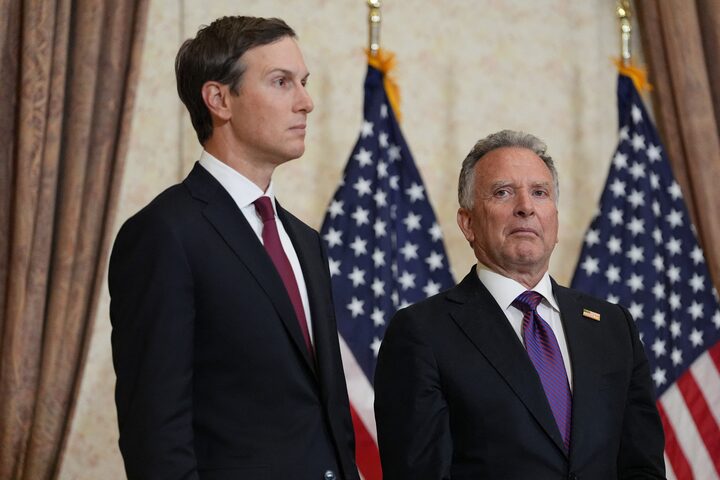
Pressure’s really building from all corners of the globe right now, and the whole Russia-Ukraine situation is shifting in some pretty major ways. Steve Witkoff and Jared Kushner—both working as Special Presidential Envoys for the U.S.—are heading over to Berlin to hash things out with officials from Europe and Ukraine in what’s shaping up to be really important talks.
The goal here is basically to work out solid security arrangements for after the war ends, plus put together an economic plan to rebuild things. When you step back and look at it, this summit is kind of the sweet spot where Washington’s juggling multiple diplomatic angles at once, and Europe’s really pushing to have a voice in how all this gets resolved.
Then there’s the whole Berlin-Beijing Axis thing happening alongside it. These talks in Berlin are set for November 19, but they’re not just random. Word from people in the administration is that this whole summit lines up pretty deliberately with Trump’s plans to meet with Putin and Xi Jinping in China at basically the same time. So it’s all connected—happening in parallel, feeding into each other.
+-------------------------------------------------------------------+
|                   COORDINATED DIPLOMATIC STRATEGY                 |
+---------------------------------+---------------------------------+
                                  |
         +------------------------+------------------------+
         v                                                 v
  [THE BERLIN SUMMIT]                               [THE CHINA SUMMIT]
  - Envoys Witkoff & Kushner                        - President Trump, Putin, & Xi
  - Ukraine, EU, & "E5" Nations                     - Trilateral geopolitical talks
  - Focus: Security & Recovery                      - Broader strategic alignment
While Washington’s heavyweights—including Secretary of State Marco Rubio, Treasury Secretary Scott Bessent, and White House Chief of Staff Stephen Miller—are briefing on the Asia itinerary, Kushner and Witkoff are tasked with locking down the European consensus.
Table of Contents
Core Objectives of the Berlin Meetings:
- The Three Pillars: Focus on solidifying post-war security commitments, a clear pathway to European integration, and a massive multi-billion-dollar economic reconstruction master plan.
- Direct Moscow-Europe Dialogue: Exploring communication channels that allow European capitals and the Kremlin to voice security concerns directly. Al Jazeera
- The “Coalition of the Willing”: Aligning key European stakeholders—specifically the E5 group (Germany, France, UK, Italy, and Poland)—to ensure unified leverage. Українська правда
The Three Pillars of Ukraine’s Post-War Future
Jared Kushner recently outlined the structural blueprint driving Washington’s current mediation push. Moving past mere ceasefire talks, the U.S. framework pivots heavily toward long-term stabilization:
- Ironclad Security Guarantees: Designed to prevent future escalations without fracturing existing regional alliances. Discussions in Berlin will test how far European partners are willing to go to enforce a demilitarized or protected buffer framework.
- Economic Rebirth: Harnessing international capital and reconstruction expertise to rebuild shattered infrastructure, utilities, and transport networks. Treasury involvement signals a focus on frozen asset utilization and sovereign financial structuring.
- Institutional Integration: Streamlining Ukraine’s trajectory toward European frameworks, balancing Kyiv’s sovereign aspirations with realistic transitional milestones.
Friction Points: Moscow’s Resistance and Europe’s Demands
Despite Washington’s optimistic framing, deep cracks remain in the multilateral architecture.
- The Representation Dispute: Kremlin aide Yuri Ushakov publicly noted that European representation in trilateral peace architecture has not been fully cleared or agreed upon with Moscow.
- The Ceasefire Pre-Condition: EU Foreign Policy Chief Kaja Kallas has maintained a hardline stance: European negotiators dealing with Russia must demand an immediate, verifiable ceasefire before entertaining any of the Kremlin’s pre-conditions or structural demands. Українська правда
- Balancing Sovereignty: As Kushner noted via social channels following talks with Kremlin advisor Yuri Ushakov, any enduring peace deal ultimately requires direct buy-in and sign-off from both Kyiv and Moscow.
What Comes Next?
The Berlin summit’s basically going to show us whether the Western allies can actually stick together while the White House is juggling talks with Beijing and Moscow at the same time. If Witkoff and Kushner can figure out how to square the circle between what Europe’s worried about security-wise and what the U.S. wants in terms of wrapping things up faster, then maybe—just maybe—we could see some real framework start coming together for ending Europe’s worst conflict since World War II.
Discover more from The Monitor
Subscribe to get the latest posts sent to your email.



As the world turns its attention to the year 2024, a global spectacle of democracy unfolds, spanning at least 64 countries and the European Union, collectively representing nearly half of the world’s population. This year promises to be a pivotal moment in shaping the future of nations, with a diverse range of elections from parliamentary to presidential, and even regional councils. Each election brings with it its own set of challenges, triumphs, and most importantly, the pursuit of a fair and free democratic process.
India: A Sea of Democracy
With a staggering population of 1.44 billion, India’s Lok Sabha elections expected in April-May will undoubtedly be a spectacle. However, the Freedom and Fairness Score of 0.53 raises questions about the transparency of the process, underscoring the need for vigilance in ensuring the integrity of one of the world’s largest democracies.

European Union: Unity in Diversity
The European Union, comprising 27 member states with a combined population of 448 million, is set for European Parliament elections from June 6-9. With an impressive average Freedom and Fairness Score of 0.91, the EU continues to demonstrate a commitment to democratic principles. Yet, the challenge lies in maintaining this unity amidst diverse political landscapes.
United States: A Pinnacle of Democracy
As the United States prepares for elections on November 5, encompassing the Presidency, Senate, and House of Representatives, the nation of 341 million people stands at the forefront of global democracy. With a Freedom and Fairness Score of 0.83, the U.S. sets a standard, though the shadows of recent political turbulence loom large.
Challenges in Asia: From Indonesia to North Korea
The Asian continent sees a multitude of elections, each with its unique characteristics. Indonesia, with a population of 279 million, faces elections on February 14, and a Freedom and Fairness Score of 0.68 suggests room for improvement. Meanwhile, North Korea’s election on April 10 raises eyebrows with a score of 0.14, showcasing the stark contrast in democratic practices within the region.
Middle East and Africa: Striving for Democracy Amidst Challenges
From Algeria to South Africa, the Middle East and Africa navigate a complex landscape of elections. Algeria, expecting presidential elections in December with a score of 0.29, highlights the struggle for transparent processes. On the other hand, South Africa, expected to vote between May and August, demonstrates a commendable score of 0.72, signalling a commitment to democratic values.
Europe: A Mosaic of Democracies
Europe, with its diverse cultures and histories, witnesses elections from Russia to Belgium. The United Kingdom, anticipating House of Commons elections by January 28, 2025, boasts an impressive Freedom and Fairness Score of 0.93. In contrast, Ukraine faces uncertainties with martial law potentially affecting its March 31 elections, exemplifying the fragility of democracies in the region.
Americas: From Mexico to Venezuela
In the Americas, Mexico’s June 2 elections for the Presidency, Senate, and Chamber of Deputies carry a Freedom and Fairness Score of 0.75, portraying a relatively stable democratic environment. However, Venezuela’s expected elections in December with a score of 0.11 underscore the challenges facing the nation, emphasizing the need for international scrutiny.
Conclusion: A Collective Call to Action
As we embark on this global democratic odyssey in 2024, it is crucial to recognize the significance of each election in shaping the course of nations. The data presented here serves not only as a snapshot of the current state of democracy but also as a call to action. It beckons us to scrutinize, support, and advocate for fair and transparent electoral processes across the globe, ensuring that the voice of the people resonates in every corner of the world. Ultimately, the success of these elections will determine the trajectory of nations and the collective destiny of our interconnected global community.
Discover more from The Monitor
Subscribe to get the latest posts sent to your email.


Bitcoin will shape the future of humanity in the wake of the 2008 financial crisis and the COVID-19 pandemic.
The 2008 financial meltdown, with subsequent bank bailouts and a cycle of austerity, led to the weakening of the public’s trust in governments and institutions. Bitcoin emerged as a response to this global crisis of legitimacy.
Now, more than a decade later, the economic damage created by the pandemic has triggered a further breakdown of the system. As the Federal Reserve’s infinite money printing creates high inflation, Bitcoin steadily increases its popularity as a safe haven.
At the same time, as the old economy is being destroyed, the leading global institutions have stepped forward to reboot the entire system. The key organization, the World Economic Forum (WEF), with the theme of “The Great Reset,” prepares for the rollout of the central bank digital currencies (CBDCs).
CBDC VERSUS BITCOIN
Agustin Carstens, head of the Bank for International Settlements, explains CBDCs as programmable money that gives issuers the power to control every transaction. Using these powers, issuers can restrict what ordinary people are allowed to spend money on.
Now, Bitcoin and CBDCs, two different types of digital currency with contrasting features, race toward a global adoption. The crux of this competition involves different visions of the world. The outcome of this race will determine the future of humanity.
SHIFT OF AUTHORITY
The crisis of legitimacy triggered by the financial panic of 2008 signaled the demise of the Western liberal democracy. This has begun to create a shift in the locus of authority in our society.
The idea of democracy that inspired the birth of the United States was based on a humanistic worldview. In the past, authority was placed in the gods, and the sacred text. People sought answers from the external. They turned to religion, the Bible and Popes for their decisions.
A move towards democracy brought a shift in values. It placed authority in human hands, putting emphasis on the individual. People who were seeking behavioral norms outside of themselves began to rely on their personal experience.
THREAT TO DEMOCRACY
Yuval Noah Harari, Israeli public intellectual and historian, talks about how, in this crisis of democracy, a threat to the humanistic worldview is now emerging from laboratories and research departments in places like Silicon Valley.
Harrai, who is a lead advisor to Klaus Schwab, head of the World Economic Forum (WEF), points out ways in which science is challenging the story of humanism.
He explains that scientists are saying there is no such thing as free will and that freedom is just another myth, an empty term that humans have invented. He defines feelings as biochemical processes of calculation and contends that there is no reason to consider them the highest authority in the world.
TECHNO-RELIGION
Harari, who has been praised by the likes of Mark Zuckerberg and Bill Gates, and celebrated by tech workers in Silicon Valley, explains how in this twilight of democracy, authority is now once again moving away from humans. This time, he states it is not some gods above the clouds that control human destiny, but algorithms, and data in the clouds of the Amazon and big tech giants.
He describes a new revolution happening around this shift of authority. It is led by a “techno-religion”, the ideology that technology provides salvation. He explains that this techno-religion is a data religion within which “data and information becomes a supreme source of authority and of meaning in the world.” It makes us believe that technology knows more about us than we do ourselves. It tells us, “Don’t listen to feeling or gut intuition. Just turn to data.”
Acting as a spokesperson for this new sect of techno religion, Harari predicts a coming of a future without humanity. He states that humans like you and I will disappear and that the earth will be dominated by very different kinds of beings or entities. Under the new authority of algorithms, Harari describes how human beings are viewed as no longer spiritual souls, but become “hackable animals.”
WARNING FOR HUMANITY
Some saw what was coming and warned about the potential machine takeover of the world and the elimination of human beings.
Julian Assange, WikiLeaks publisher and one of the notable Cypherpunks, was aware of this trend from early on. He called on those who are technologically capable to take up strong cryptography as a non-violent weapon to defend individual liberty.
Assange warned us: “The future of humanity is the struggle between humans that control machines and machines that control humans.”
As central planners try to deploy CBDCs to push their techno-religious movement, a breakthrough in computer science has brought us an alternative vision of the future of humanity.
VALUE OF INDIVIDUAL FREEDOM
Bitcoin, in its 14 years of existence, has provided a response to the crisis of Western liberal democracy, allowing us to truly embody humanistic values.
There was an inherent weakness in the system of representative democracy. The mysterious creator of Bitcoin, Satoshi Nakamoto recognized that this system was not adequate by itself to secure the value of freedom and the place of individuals as supreme authority in the system.
Those who gained control over the production of money have created an economic system that works to their advantage. Concentration of economic power in a few hands turned democracy into a system of control. With sophisticated methods of persuasion, through use of propaganda and PR under the guise of democracy, the population was subjected to manipulation of their feelings.
By challenging the monopoly of money, Bitcoin — cypherpunks’ holy grail — has enabled economic liberty. With the principle of “don’t trust, verify”, this technology places the source of legitimacy with individuals, for the first time in history.
Rather than residing in the clouds of tech giants, authority is now descending into the human heart.
REVIVAL OF HUMANISM

The birth of Bitcoin has helped creativity and freedom of expression to flourish, creating the resurgence of the arts. It now inspires a new renaissance of humanism.
Before the Renaissance, history was seen as being shaped by divine forces. With the advent of the Renaissance, beginning in the 14th century in Italy, this view shifted.
The Renaissance placed human beings at the center of life. A man was regarded as a partner in the creation of Gods, to actively engage in shaping the course of their own lives.
Just as the Renaissance placed emphasis on the individual, now, the Bitcoin Renaissance 2.0 creates sovereign individuals, enabling human beings to truly come alive.
A PATH OF SALVATION VIA PROOF-OF-WORK
People from all nations, with different backgrounds, started to align themselves with humanistic ideals that exist at the core of Bitcoin. Through meetups and conferences, they are now finding one another. They begin to speak the same language and share values.
Transcending their cultural differences, they have become Bitcoiners. They are bearers of humanity, beginning to claim the source of authority in human imagination.
This is now creating a humanistic movement, generating a force strong enough to counter the techno revolution.
Between Bitcoin and CBDCs, we are now presented with a choice.

Worshipers of machine intelligence offer a promise of salvation, through which we once again are made to rely on authority outside of us, this time, on external algorithms.
Bitcoin presents an alternative model of salvation via proof-of-work, where we no longer need to trust authorities outside of ourselves. Through each individual voluntarily participating in a network of consensus, each of us can engage in validating our own truth.
While a path of technological salvation moves a society toward the post-human era, Bitcoin, pro-human technology inspires each individual to create a new world of humanism.
EL SALVADOR (“THE SAVIOR”)
El Salvador, the country that first declared bitcoin legal tender, has become a center of this Renaissance 2.0. They are leading the way.
Using Bitcoin as a tool, the President Nayib Bukele began to stand up against the central banks and their financial imperialism.
As the leaders of G7 members are trying to launch centrally controlled digital slave coins, Bukele engages in efforts to increase Bitcoin adoption to open up a path of self-determination.
This is attracting creative minds and talents from all over the world.
Paolo Ardoino, CTO of Bitfinex, the world’s leading digital asset exchange is working to provide a platform for financial freedom. Along with his efforts to expand Bitcoin adoption, he aims to maximize decentralization by developing Keet. io, peer-to-peer Chat Apps that are built without any central server.

Can El Salvador, under Bukele’s leadership and his policy of economic liberty, engage people in proof-of-work — to organize a network toward the salvation of humanity?
Positive changes are already happening. Bitcoin Renaissance 2.0 inspires new ideas, bringing in investors and capital to help people build alternatives to big data and centralized cloud products, to enable freedom.
SECURING THE FUTURE OF HUMANITY
We human beings share our destiny. The life of all species is intertwined. Our choices and actions affect one another.
With the accelerated speed of technological advancement, as we are being quietly transported into a virtual reality, are we leaving behind our own body and our soul? Without human beings who can feel, what would happen to the earth, ecosphere, trees, rivers, and all of animals?
We Bitcoiners are custodians for this planet. By practicing self-custody and running full nodes which maintain the ecosystem, we preserve the autonomy of individuals. We can work toward securing the future of humanity.
A network of messiahs created through technologically-empowered men and women coming together starts to form a formidable defense against the transhumanism agendas.
Bitcoin presents a humanistic alternative to technological salvation.
Hyperbitconization has just begun. The dawn of new humanity is near. With hearts that beat every 10 minutes, we human beings can claim our freedom and responsibility to steward mother earth and all of her creation.
Via Bitcoin Magazine
Discover more from The Monitor
Subscribe to get the latest posts sent to your email.
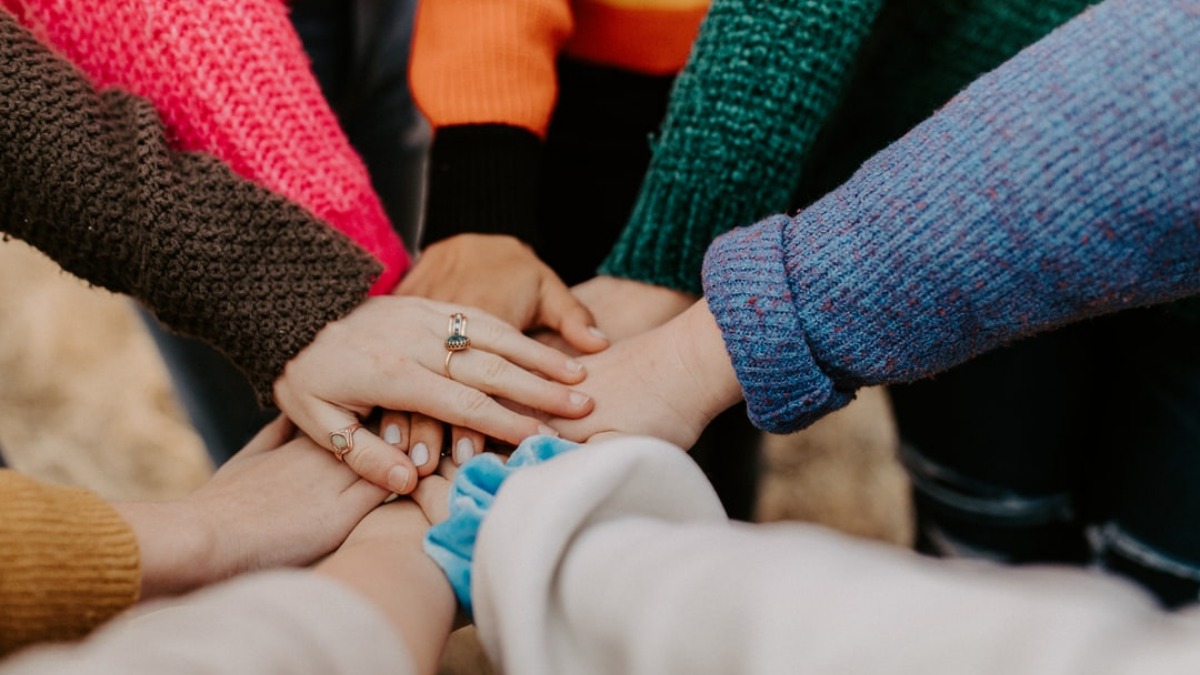
Every year, women and men around the world celebrate International Women’s Day (IWD) on March 8. The IWD has grown from a labour movement to an annual event recognised by the UN. The seeds for which were planted back in 1908, when 15,000 women marched through the streets of New York; demanding shorter working hours, higher wages and the right to vote. Clara Zetkin, an activist and advocate for women’s rights, suggested an exclusive international day designated solely for the empowerment of women. It was unanimously agreed upon at the International Conference of Working Women in Copenhagen in 1910 and first officially celebrated in 1911 in four countries. In 1975, the UN started celebrating the day internationally.

The IWD has become a day to celebrate the struggles and momentous achievements of women. On this day, we look back at how far women have come in society. The political roots of the day are still exemplified in strikes and protests to raise awareness about lasting inequality. The UN announced their theme for IWD 2022 as “Gender equality today for a sustainable tomorrow.” They will be hosting events, including an international virtual conference, to recognise how women worldwide are responding to climate change. According to the IWD’s website, this year’s selected hashtag is #BreakTheBias, which asks people to imagine “a world free of bias, stereotypes and discrimination.”
Aurat March has proven to be a phenomenal success; forcing societies to acknowledge the efforts of women.
The IWD is celebrated worldwide with festivals and protests. According to the World Economic Forum’s Global Gender Gap Report 2021, the time needed to close the global gender gap has increased from 99.5 years to 135.6 years. A 2021 study by UN Women based on 13 countries depicted that 45 per cent of women claimed that they or a woman they knew experienced some form of violence during the pandemic-with the most common forms of abuse being verbal and outright denial of basic resources.
Such statistics highlight the unfortunate realities of women worldwide. With an aim to bring about positive change, feminist groups around the world have organised demonstrations in the last few years; demanding equal working rights, abortion rights and an end to violence against women. Many campaign for their governments to revoke gender discriminative laws and push for new laws to protect women.
The first IWD march in Pakistan, known as the Aurat March, was organised by a small group of women in 2018 in Karachi who hoped to draw attention to the violence and inequality faced by women across the country. When women organised the first Aurat March, they did not expect a large turnout. However, women from all walks of life joined together to raise their voices for basic rights. Issues such as inheritance rights, rights to education, access to health services, domestic violence and equal wages were raised through speeches and placards.
Although many dismissed the massive turnout as a one-time fluke, women took it as a wake-up call. The event only increased in magnitude over the subsequent years. The march spread to a multitude of cities across Pakistan and even men began to participate in the event. Aurat March has proven to be a phenomenal success; forcing societies to acknowledge the efforts of women.
With continued support and the organisation of the annual Aurat Marches, Pakistani women hope to achieve similar milestones. Women who take part in the march display a great deal of symbolic power, but such outrage of demanding rights is limited to the more urban areas in Pakistan – Lahore, Islamabad and Karachi – even though around 63 per cent of Pakistani women live in rural areas.
While women worldwide and in Pakistan’s urban areas hope to close the wage gap and attain more positions of leadership, women from rural areas in Pakistan would like to be able to leave their homes without permission from male family members; most are currently financially and emotionally dependent on men.
Therefore, although the Aurat March provides an excellent opportunity for Pakistani women to raise their voices against the injustice they face, the march is restricted in its scope, as most of its participants are from urban towns and not subjected to the even greater barriers faced by rural women. The march seems to comprise only a small subset of Pakistan’s women: the urban and upper-middle classes. This year, protestors hope to see organisers make a greater effort to include various ethnicities, classes and sects of women in Pakistan.
Via DT
Discover more from The Monitor
Subscribe to get the latest posts sent to your email.

Kushner and Witkoff’s Secret Map for Europe

Inside Democrats’ Denver Victory Lap: Post-Midterm Euphoria Collides With a Brewing 2028 Divide

Nvidia Shockwave: Why Your 401(k) is More Exposed to the Chip Giant

DC Doctor Matt Wade Lambert Identified as Suspect in Logan Circle Gym Shooting

Congress can’t stop Trump’s wars. It can make them expensive.

The Millers and the New Washington Power Couple

The Municipal Left Turn: Can They Govern?

The First Muslim Senator and the Limits of America’s Midterm Revolt

Trump Announces U.S. Will Stop $4 Billion Annual Aid to Israel by End of 2026

What Is Trump Doing on Election Day 2026? Inside His White House Plans

Resilience Under Strain: The World’s Difficult 2026 Choices
Trump Announces U.S. Will Stop $4 Billion Annual Aid to Israel by End of 2026

Tesla, SpaceX and Starlink: The Real Business Story Behind Elon Musk’s October Buzz
The First Muslim Senator and the Limits of America’s Midterm Revolt
The Millers and the New Washington Power Couple
The Municipal Left Turn: Can They Govern?
Congress can’t stop Trump’s wars. It can make them expensive.
DC Doctor Matt Wade Lambert Identified as Suspect in Logan Circle Gym Shooting
-

 Featured6 years ago
The Right-Wing Politics in United States & The Capitol Hill Mayhem
-

 Conflict5 years ago
Kashmir Lockdown, UNGA & Thereafter
-

 News5 years ago
Prioritizing health & education most effective way to improve socio-economic status: President
-

 Democracy5 years ago
Missing You! SPSC
-

 China5 years ago
Coronavirus Pandemic and Global Response
-

 Digital6 years ago
Pakistan Moves Closer to Train One Million Youth with Digital Skills
-

 Canada5 years ago
Socio-Economic Implications of Canadian Border Closure With U.S
-
Democracy5 years ago
President Dr Arif Alvi Confers Civil Awards on Independence Day