
Elections
Inside Democrats’ Denver Victory Lap: Post-Midterm Euphoria Collides With a Brewing 2028 Divide

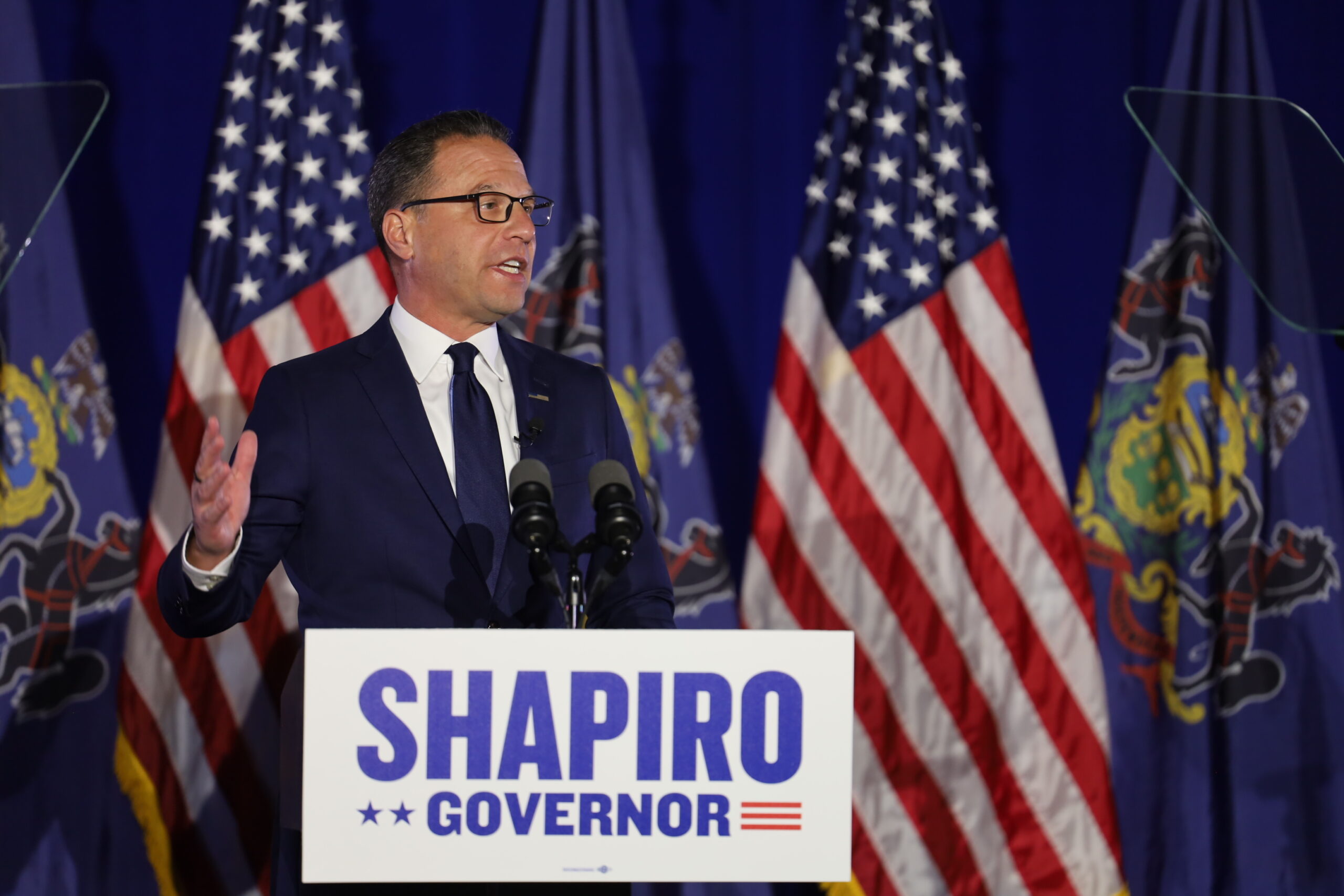
Fresh off a sweeping 2026 midterm victory that reclaimed both chambers of Congress and delivered stunning flips in deep-red states like Mississippi and South Carolina, roughly 3,500 Democrats converged on Denver’s Mission Ballroom this weekend for the “What’s Next” summit.
Hosted by the influential centrist group Majority Democrats, the gathering felt less like a policy conference and more like a rock concert. Free drinks flowed, political operatives sported custom bomber jackets embroidered with “Majority Democrats,” and headline speakers were immortalized on concert-style posters lining the walls.
“The vibes are excellent. The last high-water mark, we were all in our houses on Zooms. This is the first time there’s been an undeniable capacity to celebrate widespread wins in the last decade.”
— Rep. Sarah McBride (D-Del.), member of Majority Democrats
Yet beneath the Mile High euphoria, the weekend exposed an intensifying ideological and financial fault line—one over billionaire donors, press freedom, and populist policy that will define the 2028 Democratic presidential primary.
Table of Contents
Key Takeaways at a Glance
- Historic Midterm Momentum: Democrats celebrated winning back the House and Senate alongside unexpected breakthroughs in Mississippi and South Carolina, which centrists credited to a pragmatic, center-left playbook.
- 2028 Hopefuls Pitch Unity: Potential presidential contenders—including Pennsylvania Gov. Josh Shapiro, Michigan Sen. Elissa Slotkin, and New Jersey Sen. Andy Kim—used the stage to downplay party infighting.
- Stage Interruptions & Heckling: Young progressive protesters infiltrated the venue to heckle House Minority Leader Hakeem Jeffries (D-N.Y.), demanding Medicare for All and impeachment.
- The Billionaire & Press Clash: Progressive critics slammed the summit as an out-of-touch retreat funded by billionaires, while Majority Democrats clashed publicly with investigative outlet The Lever over press credentials.
“Missed the Plot”: 2028 Contenders Try to Bridge the Gap
For brief stretches inside the Mission Ballroom, the often-fractured Democratic Party projected rare cohesion. Several rising stars widely viewed as 2028 presidential contenders urged the party to move past ideological labels.
- Josh Shapiro (Pennsylvania Governor): Told the crowd onstage that ordinary Americans don’t give “a damn” about “where we fall on some imaginary political spectrum.”
- Elissa Slotkin (Michigan Senator): Quipped during her address that elected officials still fighting the old war of progressives versus moderates had simply “missed the plot.”
- Andy Kim (New Jersey Senator): Taking a more empathetic tone toward the party’s restless base while declining to rule out a 2028 bid, Kim acknowledged the protesters’ frustration directly: “I understand,” he said. “People are furious.”
Majority Democrats spokesperson Vidhya Jeyadev hailed the summit as “an overwhelming success,” noting that the 2026 cycle proved “there is no one way to be a Democrat” after the party won seats written off for a generation.
Protests, Billionaire Backers, and a Press Credential Showdown
Not everyone in the Democratic coalition was eager to join the celebration. To many on the party’s left flank, the optics of a lavish Denver retreat clashed directly with the anti-oligarchy message Democrats ran on during the midterms.
“I’m all for celebration, but perhaps a fancy retreat does not exactly meet the tenor of the moment.”
— Josh Orton, President of Demand Justice and 2020 Bernie Sanders campaign veteran
That tension erupted inside the hall when young demonstrators snuck into the event and interrupted House Minority Leader Hakeem Jeffries, shouting “You’re a fking traitor!” while demanding action on Medicare for All and presidential impeachment. Annoyed audience members shouted back, yelling “Shut up!” as security intervened.
The Two Visions Fighting for 2028
| Battleground Issue | Majority Democrats / Center-Left Wing | Progressive / Grassroots Wing |
| Core 2026 Lesson | Pragmatism and big-tent messaging can flip deep-red states like Mississippi and South Carolina. | Voters backed Democrats to fight corporate greed, billionaires, and the status quo—not to throw lavish retreats. |
| Campaign Finance | Leverages major donors and institutional backing to out-organize Republicans nationwide. | Demands an end to billionaire and super PAC influence inside Democratic organizations. |
| Policy & Oversight | Focuses on broad, kitchen-table appeal over “imaginary political spectrum” debates. | Pushes aggressively for Medicare for All, systemic reform, and immediate impeachment proceedings. |
| 2028 Messaging | Emphasizes unity, electability, and moving past intra-party factions. | Channels voter fury against both the GOP and what critics call an entrenched party establishment. |
Majority Democrats vs. The Lever: A Flashpoint Over Money in Politics
Another major controversy centered on who pays the bills. Majority Democrats—which bills itself as an alternative to both the “activist left” and a “gerontocratic establishment”—is largely bankrolled by a billionaire couple, making it a prime target for The Lever, the progressive investigative news outlet founded by David Sirota.
Ahead of and during the Denver gathering, Majority Democrats initially denied The Lever press passes and later blocked one of its reporters from interviewing an elected official.
Sirota blasted the moves as “Trump-like attempts at retribution.” Ironically, the public feud proved to be a financial boon for the watchdog site: according to Sirota, the clash triggered the single largest influx of new subscribers in The Lever’s history.
Frequently Asked Questions
What happened at the Democrats’ “What’s Next” conference in Denver?
Held at Denver’s Mission Ballroom in November 2026, the “What’s Next” summit brought together 3,500 Democrats to celebrate winning back Congress and flipping states like Mississippi and South Carolina. The event featured speeches from 2028 prospects like Josh Shapiro and Elissa Slotkin, alongside disruptions from progressive protesters and a dispute over billionaire campaign funding.
Why did protesters heckle Hakeem Jeffries in Denver?
Young progressive activists snuck into the Mission Ballroom and interrupted House Minority Leader Hakeem Jeffries to demand support for Medicare for All and impeachment, reflecting frustration among left-leaning voters with Democratic leadership.
Who funds Majority Democrats, and why did they clash with The Lever?
The majority of Democrats is largely funded by a billionaire couple. Progressive investigative outlet The Lever, founded by David Sirota, has scrutinized the group’s billionaire backing, leading to a dispute in Denver after Majority Democrats initially denied the outlet press credentials and blocked an interview.
Discover more from The Monitor
Subscribe to get the latest posts sent to your email.



President Donald Trump is scheduled to spend Election Day at the White House, holding private policy meetings, meeting the U.S. ambassador to Portugal and attending a 7 p.m. Eastern election-night viewing reception in the East Room. But what happens outside the White House may matter far more: voters are choosing whether Republicans keep control of Congress for the final two years of Trump’s term. TIME and the published White House daily guidance detail the itinerary.
An election-night reception is conventional presidential politics. What is unconventional is the scale of the uncertainty surrounding it. Republicans face an unfavourable national environment, several close Senate contests and heightened scrutiny of federal election-related litigation.
A Democratic House could subject Trump’s administration to aggressive investigations; a Democratic Senate would add a check on appointments. Neither result, however, would automatically remove him from office or strip him of presidential powers.
Trump’s Election Day Schedule: What Is Confirmed?
The published presidential schedule for Tuesday, November 3, 2026, lists the following events. All times are Eastern Standard Time (EST). All presidential events listed below are marked closed press; a scheduled event is not proof that it has already taken place.
| Time (EST) | Scheduled activity | Location |
|---|---|---|
| 8:00 a.m. | Executive time | White House |
| 11:00 a.m. | Policy meeting | White House |
| 12:30 p.m. | Policy meeting | White House |
| 1:30 p.m. | Meeting with the U.S. ambassador to Portugal | Oval Office |
| 2:30 p.m. | Policy meeting | Oval Office |
| 4:00 p.m. | Signing time | Oval Office |
| 7:00 p.m. | Election-night viewing reception | East Room, White House |
Source: Daily White House guidance reproduced by Mace News. CNN’s report independently describes the meetings and reception.
There is no campaign rally on the published Tuesday schedule. According to TIME, Trump and first lady Melania Trump voted early in West Palm Beach, Florida, so the president is not expected to cast a ballot in person on Election Day.
The White House has not made the reception a public event, and the published guidance does not establish whether Trump will deliver remarks or which guests will attend.
Why Trump’s Final Campaign Speech Was So Revealing
The president’s last major appearance before voting was not a conventional economic-policy closing argument.
On November 2, he spoke near the Lincoln Memorial Reflecting Pool in Washington, spending considerable time discussing renovations, construction details and proposed changes to the capital’s landscape.
Reuters reported that the speech lasted 54 minutes and that Trump had staged 28 rallies across 19 states since October 1.
He also criticised Democrats, touted his administration and appealed for Republican support. But his emphasis on the reflecting pool offered a striking contrast with the issue dominating voters’ minds: affordability.
The contrast is politically significant, though not a verdict on the election.
Presidential campaigns often seek to mobilise loyal supporters rather than persuade everyone. Trump’s supporters may view the project-focused speech as evidence of an administration getting visible things done.
Critics, and some Republican strategists cited by Reuters, see a missed opportunity to speak directly to higher household costs and concern about the Iran war.
Either reading is an interpretation; the votes will provide the harder test.
Trump himself acknowledged the historical difficulty of midterms for a sitting president. As TIME reported, he argued that Republicans had made a strong effort despite the tendency for presidents’ parties to lose ground.
The Numbers Behind Republican Anxiety
The most immediate problem for the White House is not whether Trump can fill a room on election night.
It is whether his political coalition turns out in enough places to defend thin congressional majorities.
A Reuters/Ipsos survey completed November 2 put Trump’s job approval at 32%.
Among registered voters, Democrats led Republicans 46% to 38% on the generic congressional ballot.
The poll also found that 78% regarded the cost of living as a very important or top voting concern.
These are national findings, not forecasts of any individual congressional district. District maps, candidate quality and turnout can produce different results.
Reuters’ election-day assessment describes Democrats as favored to capture the House while the Senate remains uncertain.
Historical precedent helps explain the anxiety: presidents’ parties have generally lost congressional seats in midterm elections.
But precedent is not destiny.
Redistricting, local contests and who actually votes can upset national expectations.
There is another revealing signal.
The Associated Press reported that more than 50 million Americans had already voted before Election Day.
High early participation demonstrates intensity, not by itself a winner: early-vote totals do not establish how all those ballots were cast or what Election Day turnout will look like.
The House and Senate Are Two Different Battles
Every one of the 435 House seats is up for election, while roughly one-third of Senate seats are contested in the regular cycle, as explained by USAGov.
The Republican majority began this Congress narrowly in the House, and the Senate balance entering the election is 53 Republicans to 47 Democrats and Democratic-aligned independents.
With the vice presidency providing a Republican tie-breaking vote, Democrats need a net gain of four Senate seats for a majority.
The House looks like the more accessible Democratic target.
The Senate requires a much more complicated chain of victories, including wins in states that have recently voted Republican at the presidential level.
AP’s election-day guide identifies North Carolina and Georgia as early indicators and contests in Michigan, Ohio, Iowa, Kansas, Texas and Alaska as consequential to the wider balance.
Instead of focusing only on the national popular-vote margin, watch suburban House districts, turnout in competitive Senate states and whether either party systematically outperforms expectations.
A narrow congressional majority can be powerful, but it is also fragile: individual absences, defections and vacancies complicate governing even for the winning party.
What Happens if Democrats Win the House—or Both Chambers?
The consequences depend on which chamber changes hands.
A midterm election is not a presidential election; Trump would remain president regardless of a Republican congressional defeat.
| Election outcome | Likely governing consequences |
|---|---|
| Republicans retain both chambers. | Easier path for administration legislation, oversight priorities and Senate confirmations, although small majorities can fracture |
| Democrats win the House; Republicans keep the Senate. | More investigations and committee subpoenas; harder negotiations on spending and legislation; Republicans retain Senate confirmation power |
| Democrats win both chambers. | Stronger legislative and investigative checks and a greater ability to block nominations and set congressional agendas, while Trump retains presidential veto and executive powers |
For a Democratic House, the practical priorities could include inquiries into federal contracting, immigration enforcement, spending decisions, administration officials and the conduct of federal agencies.
Reuters has specifically noted that administration construction projects could attract oversight.
But a House investigation is not evidence of wrongdoing, and committees would have to pursue facts, documents and testimony.
Could a Democratic House impeach Trump?
Constitutionally, yes, if it voted to approve articles of impeachment.
Removal would still require conviction by a two-thirds vote of senators present, an exceptionally high threshold.
The Congressional Research Service’s explanation makes the distinction between impeachment and removal clear.
A Republican defeat therefore would not terminate Trump’s presidency or automatically produce a constitutional crisis.
A divided government might also force compromises on budgets and spending.
It could just as easily produce legislative stalemate, especially where election promises collide with deficits, borrowing costs and the president’s veto.
Those outcomes depend on subsequent negotiations, not on election-night projections alone.
The Election-Integrity Dispute: Allegations, Court Orders and Actual Safeguards
One of the most sensitive questions is what Trump and his administration will say if Republicans lose narrowly.
Trump has questioned the validity of elections in the past, and TIME reported that he recently conditioned acceptance of the midterm results on their being honest elections.
That statement deserves scrutiny, but it is not proof that he will reject any particular outcome.
There are concrete legal disputes to examine rather than simply speculating about a confrontation.
On November 2, the U.S. Supreme Court rejected an emergency administration request to stop California from counting mail ballots from more than 20,000 registered voters whom federal officials alleged were likely noncitizens.
California disputed the reliability of the government’s list and warned that eligible citizens could be affected. Lower courts had also refused to halt the count.
Reuters’ account of the ruling details the competing claims and the courts’ decisions.
An allegation about eligibility is not a judicial finding that those voters are ineligible.
In Alaska, a federal judge dismissed a Justice Department lawsuit that sought to affect certification of a closely watched Senate contest amid a dispute involving two candidates with similar names.
The department said it would appeal.
Reuters’ Alaska report distinguishes the government’s legal argument from what the court actually decided.
The administration says it is acting to enforce federal election law and protect lawful voting.
Critics argue that federal pressure and poorly supported voter allegations could intimidate voters or undermine state-run election administration.
Reuters’ investigation of potential interference scenarios interviewed election officials and legal experts about risks ranging from pressure on local officials to disputes over ballots and certification.
Those are risks and scenarios, not claims that every feared action has happened.
The key tests are whether officials count lawful votes, follow court orders, preserve records and certify results according to law.
The Iran War and Cost of Living: The Issues Trump Cannot Avoid
The 2026 election is also a test of whether foreign-policy decisions have become household economic issues.
The U.S.-Israeli conflict with Iran has affected energy markets and increased pressure on American consumers.
Reuters’ November 2 reporting says energy costs had risen sharply and that the cost of living was voters’ top concern.
Oil markets remain sensitive to diplomacy and renewed fighting.
Reuters reported on November 2 that Brent crude settled around $104.77 a barrel after a sharp fall driven by hopes of renewed talks.
A one-day oil-price decline cannot erase months of uncertainty over supply routes, inflation and the Strait of Hormuz.
A Democratic-controlled Congress could hold hearings into the rationale, conduct and costs of military operations, debate funding and press the administration for a clearer diplomatic strategy.
But losing a midterm does not, by itself, legally deprive a president of commander-in-chief authority.
The constitutional division of war powers is complex: Congress controls declarations of war, military funding and legislation, while the president directs the armed forces within applicable law.
The Congressional Research Service overview of war powers explains that longstanding tension.
For U.S. allies, Gulf economies and energy-importing countries in Asia, the midterms therefore matter indirectly.
A weakened president may face more pressure to pursue a settlement, or may retain substantial freedom to act abroad despite domestic opposition.
Neither outcome should be presented as inevitable.
What Wall Street Is Watching Beyond the Election-Night Speeches
Investors are weighing more than the number of seats each party wins.
Congressional control can affect tax negotiations, federal spending, defence budgets, technology regulation, energy policy and the risk of fiscal standoffs.
Reuters’ market analysis reports that a Democratic victory could increase scrutiny of large technology companies and AI investments, whereas continued Republican control could preserve parts of the current deregulatory approach.
Divided government could also heighten the risk of budget battles.
These are policy possibilities, not reliable short-term stock-price predictions.
The larger lesson is that there is no single market verdict called a “Democratic win” or a “Republican win.”
Bond yields, oil prices, corporate earnings, geopolitical developments and Federal Reserve expectations can overwhelm the immediate reaction to election results.
Investors should distinguish temporary political headlines from actual changes in enacted policy.
What Time Will the 2026 Midterm Election Results Come In?
The president’s 7 p.m. EST reception overlaps with the early stages of vote counting.
According to TIME’s election-day account, the first polls close at 6 p.m. Eastern, with the final Alaska polling locations closing at approximately 1 a.m. Eastern on Wednesday, November 4.
Networks may project some races relatively quickly, but competitive contests can require additional counting and verification.
An election-night projection is not the same as an official certified result.
Close races can take longer, especially where absentee, provisional or late-arriving ballots must be evaluated under state law.
CBS News’ election-night guide explains how its results coverage works.
Counting legally cast ballots after Election Day is a normal part of administering elections, not evidence of fraud.
The two numbers to watch first are not Trump’s speech length or the size of the White House gathering.
They are the emerging House seat balance and the margins in the Senate battlegrounds.
A third signal will be how political leaders respond if the results are close.
Frequently Asked Questions
Where is Donald Trump on Election Day, November 3, 2026?
He is scheduled to remain at the White House in Washington, D.C., where his public guidance lists closed-press meetings and an evening viewing reception.
What time is Trump’s election-night event?
The published schedule sets the East Room viewing reception for 7 p.m. Eastern Standard Time on Tuesday, November 3. It is marked closed to the press.
Is Trump voting on Election Day?
No Election Day voting appearance is on his published schedule. TIME reports that Trump and Melania Trump already voted early in Florida.
Is Trump running in the 2026 midterm elections?
No. Trump’s name is not on the congressional ballot. Voters are choosing members of the House and Senate, as well as governors and other state and local officials in applicable jurisdictions.
The political impact on his administration, however, is substantial.
What happens to Trump if Republicans lose the House?
He remains president. A Democratic House would have greater power over oversight, investigations and legislation, but could not unilaterally remove him or direct the executive branch.
Can Trump cancel the midterms or simply reject the results?
The president does not possess a general unilateral power to cancel congressional elections or substitute his preferred outcome for state-administered votes.
Election procedures, litigation, canvassing and certification are governed by law and subject to judicial review.
Assertions of fraud need evidence; they do not become established facts merely because a politician makes them.
When will the winners be known?
Some races may be projected on Tuesday night; close House and Senate contests may take days.
Official certification follows the relevant state processes.
The Bigger Question Awaiting Trump
Trump’s election-night calendar is straightforward.
The political choice confronting Americans is not.
If Republicans retain Congress, the president will have a stronger platform for the remainder of his term, though narrow majorities will still test party unity.
If Democrats win the House, the White House will face a tougher oversight and legislative environment.
If they win both chambers, the conflict between executive ambition and congressional resistance will become more pronounced.
The immediate test is not whether Trump declares victory or disappointment from the East Room.
It is whether both parties, federal agencies, courts and state election officials respect the electorate’s legally determined verdict—and whether the administration adjusts its governing priorities to the result.
Election night will establish a political direction; it will not settle every race, every legal dispute or the future of Trump’s presidency.
Editorial note: This article reflects information available November 3, 2026, before election-night results. Scheduled events, election litigation and projections should be updated as developments occur.
Discover more from The Monitor
Subscribe to get the latest posts sent to your email.
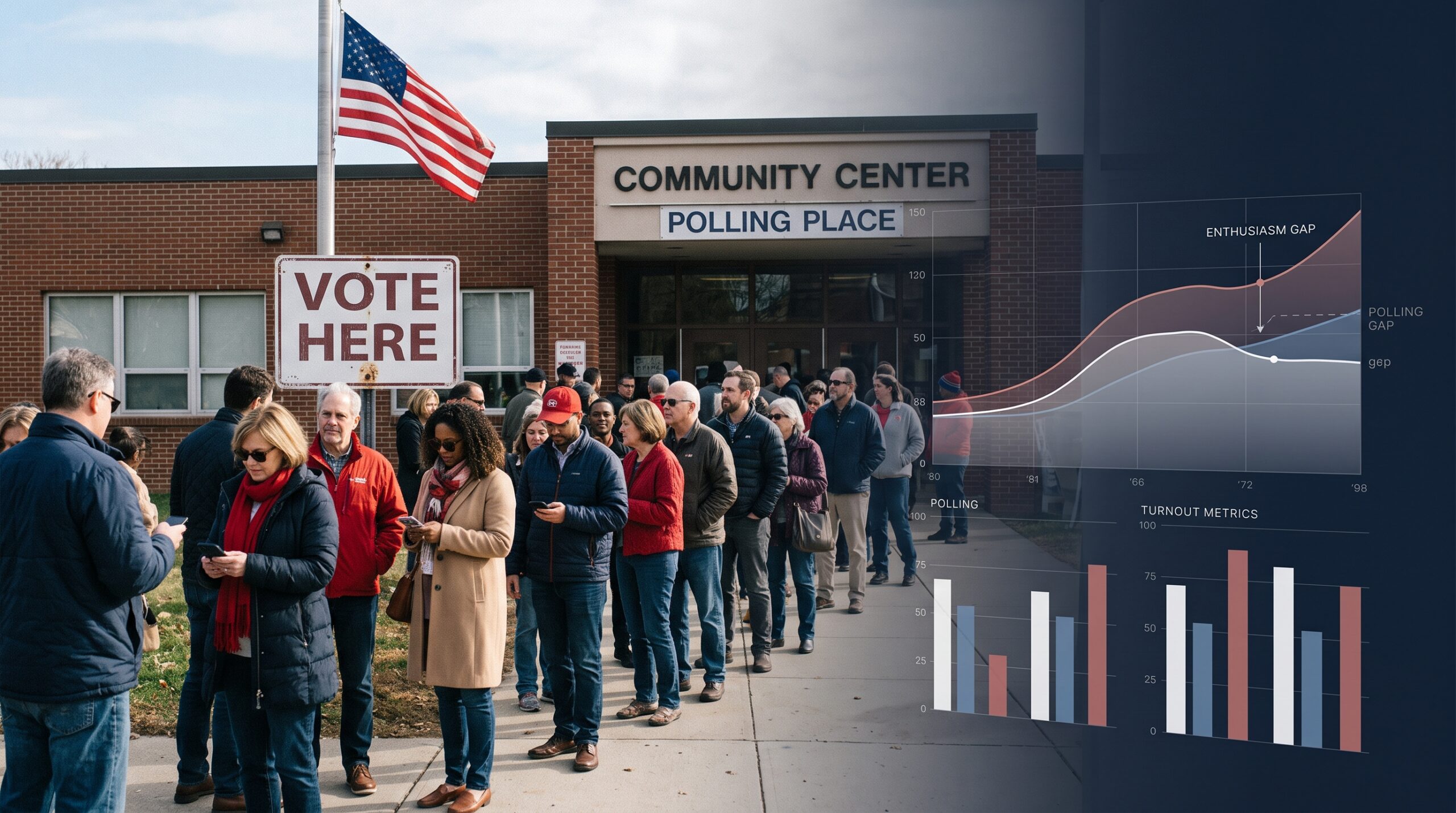
Polls and primary turnout show Republicans trailing on enthusiasm ahead of the 2026 midterms. Here’s what the data shows, where it’s weaker, and what could change.
Key Takeaways
- A Washington Post-Ipsos poll conducted July 8 to 13, 2026, found Democrats ahead 48% to 45% among registered voters, but ahead by about eight points among voters who say they are absolutely certain to vote.
- Democrats have outpaced Republicans in primary turnout. As of late June, about 12.6 million votes had been cast in Democratic House primaries, compared with 8.6 million in Republican primaries, according to a Washington Post analysis cited by commentators.
- Analysis of six states that held comparable primaries in 2022 and 2026 found the Republican-to-Democratic turnout ratio moved toward Democrats in every case.
- Special elections since 2025 have shown Democrats running ahead of their 2024 presidential margins, though special elections draw low turnout and are not reliable predictors.
- Enthusiasm is a leading indicator, not a result. Historically, the gap between stated enthusiasm and votes cast has been large, and the November outcome depends on who actually turns out.
Search Intent Summary
Readers searching this topic usually want to know whether Republicans are less motivated to vote in 2026, what the numbers show, and how much weight to give them. This article reviews the polling, primary turnout, and special election evidence, then sets out the strongest arguments on each side.
What “Enthusiasm” Measures
Political scientists use several overlapping measures. Pollsters ask respondents how enthusiastic they are about voting, how certain they are to vote, and whether they consider the upcoming election more important than past ones. Each measure captures something different, and results vary by question wording.
The key distinction is between opinion and turnout. Enthusiasm tells you how motivated a group feels. Turnout tells you how many people actually vote. Historically, the two do not always match, and the party with lower enthusiasm can still turn out strongly if its voters are organized and its contests are high-stakes.
What the Polls Show
The broadest signal comes from national surveys. In a February 2026 Washington Post-ABC News-Ipsos poll, 47% of registered voters planned to back Democrats and 45% Republicans. The gap was sharpest among younger voters. The poll found that 51% of 18-to-39-year-olds who voted for Donald Trump in 2024 said they were certain to vote, compared with 77% of Harris voters in the same age group.
By July, the Washington Post-Ipsos poll had narrowed the overall margin. Democrats led 48% to 45% among registered voters, down from a five-point edge in May. The enthusiasm gap, however, had widened. The same survey showed Democrats’ lead expanding to about eight points among those who said they were absolutely certain to vote.
Other measures point the same way. A Post-ABC poll found 73% of Democrats said the upcoming midterms were more important than past midterms, compared with 52% of Republicans. In the same survey, 72% of Republicans said they would definitely vote. A Marquette University Law School poll found 28% of Republicans and Republican-leaning independents described themselves as “very enthusiastic” about voting in the midterms.
These results should be read carefully. A generic-ballot lead of a few points is well within polling error, and the enthusiasm gap is a difference between two groups’ stated motivation, not a measured vote.
Primary Turnout: The Stronger Signal
Primary turnout is a more concrete measure than survey responses, because it counts actual ballots. Primary electorates are small and self-selected, so they are not a clean preview of a general election. Still, they show who is showing up when the stakes are visible.
Commentary citing a Washington Post analysis reported that by late June 2026, about 12.6 million ballots had been cast in Democratic House primaries, compared with 8.6 million in Republican primaries. Democrats set turnout records in several states, including Wisconsin, Michigan, Texas, and Georgia, according to the same analysis.
The statistician Charles Stewart III, of MIT’s Election Data and Science Lab, compared turnout in the six states that held statewide primaries in both 2022 and 2026: Arkansas, Illinois, Nebraska, North Carolina, Ohio, and Texas. In every one, the ratio of Republican to Democratic primary turnout moved toward Democrats. In his analysis, Democratic turnout rose while Republican turnout fell. Stewart also noted that primary turnout is not always predictive of general election outcomes, and that many factors influence it.
Those findings are not uniform. Closed primary systems, contested races, and candidate quality all shape turnout. A competitive Republican primary in one state can boost that party’s turnout even when enthusiasm elsewhere is weak.
Special Elections: A Pattern, With Caveats
Special elections have produced consistent Democratic overperformance. An analysis by The Down Ballot, reported in a column that cited it, examined 110 special elections since January 2025 and found Democrats running an average of 12.5 points ahead of their 2024 presidential margins. In 2025, Decision Desk HQ found an average overperformance of about 20 points in US House specials.
Special elections are a useful signal but a weak forecast. They draw low turnout, usually from the most motivated voters, and they are held under conditions that differ from a midterm. Analysts have noted that Democrats overperformed in special elections before the 2024 presidential race, then lost the national popular vote. Special elections can show shifts in motivation without predicting how a broader electorate will vote.
The Republican Case
Republicans and some analysts offer several counterarguments, and they deserve a fair hearing.
Enthusiasm is not the same as turnout. Republicans have historically turned out reliably in midterms when their voters were motivated by specific issues or candidates, and the party’s organizational infrastructure is strong.
Low-turnout special elections and primaries can exaggerate the energy of whichever side is more engaged in a given contest, and Democratic primary turnout partly reflects contested races that drew heavy spending.
Polls of enthusiasm can shift quickly. A few months before an election is a long time, and a single event, such as a major policy action or a change in the economic outlook, can reshape voter motivation.
The party also argues that its message on the economy and taxes resonates with voters who may not register strongly in polling. In the July Post-Ipsos poll, the top concern among voters was the economy, and some Republicans have argued their affordability messaging will close the gap as the election approaches.
The Democratic Case
Democrats point to the same data as evidence of an energized base. They argue that primary turnout records, special election swings, and the enthusiasm gap show a motivated electorate.
Democratic strategists also argue that the war with Iran, rising gasoline prices, and cost-of-living pressures have hurt the incumbent party. Pricing and economic concerns dominate voter priorities, according to the Post-Ipsos poll. The Post poll noted that more than 70% of Democrats regard voting as more important this year than before.
What to Watch Before November
Several indicators will show whether the gap is real or temporary.
Watch whether enthusiasm translates into actual turnout in the fall. Early voting and absentee data in competitive states will be more reliable than polls.
Watch the composition of turnout. A widening gap among younger voters, the group the February poll singled out, would matter more than overall numbers.
Watch Republican primary turnout in states that still have contests, and compare it with 2022 benchmarks.
Watch the economic and foreign policy environment. Gasoline prices, inflation, and the status of the Iran conflict all feed into voter priorities, as covered in our Iran policy analysis and the crude oil article.
Practical Takeaways
For readers following the midterms, the most useful habit is to weight actual turnout data above survey enthusiasm when assessing the outlook, and to treat both as indicators rather than predictions. Enthusiasm polls are a useful early signal, but they often change before voting.
For campaigns and analysts, the data points to the importance of turnout operations in the weeks before the election, regardless of which party’s enthusiasm numbers look stronger.
This article describes the evidence and the arguments on each side. It does not forecast the outcome of the midterms.
Future Outlook
The enthusiasm gap is a clear signal in the data so far, particularly in primaries and specials. Whether it turns into a general election advantage depends on turnout operations, on how the economy and foreign policy evolve, and on how many voters decide late. Those questions remain open.
Frequently Asked Questions
Are Republicans less enthusiastic about voting in 2026?
Several national polls show lower stated enthusiasm among Republicans than Democrats, including a Washington Post-Ipsos poll from July 2026 and a Marquette University Law School poll. Enthusiasm measures vary by question, so no single poll settles the question.
Does primary turnout predict the midterms?
Primary turnout is a useful signal but not a reliable forecast. It reflects who participates in primaries, which are smaller and more self-selected than general elections. Changes in turnout relative to earlier cycles can indicate shifts in motivation, but they do not determine outcomes.
Do special elections predict general election results?
Special elections show trends in voter motivation, but they draw low turnout and occur under different conditions than midterms. In 2024, Democrats overperformed in special elections before losing the national vote. Treat them as one input among many.
What is the enthusiasm gap?
The enthusiasm gap is the difference between parties in how motivated their supporters say they are to vote. Pollsters measure it by asking how enthusiastic or certain respondents are to vote. It is a measure of stated motivation, not a measure of votes.
Discover more from The Monitor
Subscribe to get the latest posts sent to your email.
The defining feature of the 2026 Senate cycle isn’t a single flippable seat — it’s how many states once considered structurally out of reach for Democrats have moved onto competitive target lists simultaneously. Nate Silver’s FLIPR model now shows Democrats polling ahead or within striking distance in Texas, North Carolina, Maine, Alaska, Iowa, and Ohio — a map that, six months earlier, would have been dismissed as aspirational rather than analytical.
The Core Dynamic: PVI Erosion in “Safe” Republican Territory
The Cook Partisan Voter Index (PVI) measures how a state or district leans relative to the national average, and it has historically been treated as a reliable ceiling on Democratic competitiveness in deep-red states. What’s shifted in 2026 is not the underlying PVI scores themselves — Texas remains a nominally red state, and Maine remains a state Trump has never carried — but the gap between a state’s structural partisan lean and its real-time polling, which has widened sharply against Republicans in a way PVI alone doesn’t capture.
Maine is the clearest illustration: it’s rated roughly D+7 on partisan lean, yet Sen. Susan Collins has won five consecutive terms there by cultivating a moderate, Trump-skeptical brand. Analysts now describe her erosion with independents — tied to her votes on Medicaid cuts and reconciliation packages — as the reason a state that “should” have been competitive for over a decade is only now genuinely rated a Toss-up.
Texas: The Marquee Case Study
The Talarico-Paxton matchup is the highest-profile test of whether Republican dominance in Texas is genuinely eroding or whether this is simply an unusually weak GOP nominee in an otherwise stable red state:
- Ken Paxton (R), the state attorney general, defeated incumbent Sen. John Cornyn in the Republican primary after securing Trump’s endorsement — but enters the general election carrying a well-documented history of legal controversies and a contentious, highly publicized divorce that both national and Texas-specific coverage flags as a real drag on his numbers.
- James Talarico (D), a state representative, has posted a consistent, modest polling lead and is rated by FLIPR with roughly a 60.7% win probability, and by Nate Silver’s initial model assessment at launch as high as 63%.
- The race is rated “Lean Democrat” by FLIPR — a rating with almost no modern precedent for a Texas federal race, given the state hasn’t elected a Democratic senator since 1988.
The Texas dynamic is instructive precisely because it may not generalize: Paxton’s specific vulnerabilities are candidate-level, not structural, meaning a stronger Republican nominee in a future cycle could plausibly restore the state’s traditional partisan lean even if Talarico wins in 2026.
In the 2026 midterms, Democrats are competitive in traditionally Republican Senate seats including Texas, Maine, North Carolina, Alaska, Iowa, and Ohio. Texas Democrat James Talarico leads Republican Ken Paxton in polling, while Maine’s Susan Collins faces her toughest re-election in three decades against Democrat Troy Jackson.
Maine: A Nominee Swap Adds Volatility
Maine’s race has been unusually chaotic even by midterm standards. Oyster farmer and military veteran Graham Platner won the Democratic primary over Gov. Janet Mills with progressive backing, but withdrew in July 2026 following sexual assault allegations and other controversies. Democrats replaced him with Troy Jackson, the former state Senate president, at a nominating convention on July 25 — leaving Democrats running a late-entry candidate against a five-term incumbent with 30 years of brand-building in the state.
Despite the disruption, Collins — the only Senate Republican representing a state Trump has never carried in three presidential runs — remains, per CNN’s Senate rankings, the single most vulnerable Republican incumbent in the chamber. Her position illustrates the core thesis of this cycle: candidate-level erosion (Collins’s declining favorability with both parties) is compounding with structural disadvantage (Maine’s D+7 lean) in a way that has finally overcome her historical resilience.
North Carolina: A More Conventional Battleground
North Carolina represents the more traditional version of a competitive Republican-held seat: former Gov. Roy Cooper (D), a proven statewide winner, faces former RNC Chairman Michael Whatley (R), the expected GOP nominee. Sabato’s Crystal Ball moved this race from “Leans Republican” to “Toss-up” alongside Maine — placing it in the same tier of competitiveness as Georgia and Michigan, two Democratic-held seats, illustrating how the overall map has shifted toward parity rather than a clean partisan split.
Suburban and Independent Voter Shifts
Across every competitive race — Texas, Maine, North Carolina, and the newer additions of Alaska, Iowa, and Ohio — the same demographic driver recurs in analyst commentary: independent and suburban voters moving away from Republican candidates, tied to dissatisfaction with reconciliation-package votes (particularly Medicaid provisions), economic anxiety over gas prices, and a broader erosion in Trump’s approval rating, which FLIPR’s inputs place at roughly 38% nationally with only 22% strong approval. This pattern — suburban erosion compounding with base-level fatigue — is structurally similar to the dynamic that drove Democratic gains in the 2018 midterms, though the current map extends into more traditionally rural, red-leaning states than 2018’s suburban-centric wave did.
Why This Matters Beyond November 2026
If Democrats do flip seats in states like Texas, Maine, or North Carolina, it would suggest a durable erosion in Republican strength beyond the specific unpopularity of individual 2026 candidates — with implications for the 2028 presidential map. If, conversely, Republicans hold these seats despite unfavorable national conditions, it would suggest FLIPR and similar models are overweighting national environment relative to the genuine structural advantages (partisan registration, rural turnout patterns, incumbency) that have insulated red states from Democratic gains in prior cycles.
Finally ,The 2026 Senate map has expanded well beyond the traditional handful of swing states, with Democrats competitive in Texas, Maine, North Carolina, Alaska, Iowa, and Ohio simultaneously. Texas (Talarico vs. Paxton) and Maine (Collins vs. Jackson) represent two distinct versions of the same underlying story — one driven primarily by candidate-level Republican vulnerability, the other by a decades-long erosion of a moderate incumbent’s independent support finally catching up with the state’s structural partisan lean.
Discover more from The Monitor
Subscribe to get the latest posts sent to your email.

Inside Democrats’ Denver Victory Lap: Post-Midterm Euphoria Collides With a Brewing 2028 Divide

Nvidia Shockwave: Why Your 401(k) is More Exposed to the Chip Giant

DC Doctor Matt Wade Lambert Identified as Suspect in Logan Circle Gym Shooting

Congress can’t stop Trump’s wars. It can make them expensive.

The Millers and the New Washington Power Couple

The Municipal Left Turn: Can They Govern?

The First Muslim Senator and the Limits of America’s Midterm Revolt

Trump Announces U.S. Will Stop $4 Billion Annual Aid to Israel by End of 2026

What Is Trump Doing on Election Day 2026? Inside His White House Plans
What Is Trump Doing on Election Day 2026? Inside His White House Plans

Resilience Under Strain: The World’s Difficult 2026 Choices
Trump Announces U.S. Will Stop $4 Billion Annual Aid to Israel by End of 2026

Tesla, SpaceX and Starlink: The Real Business Story Behind Elon Musk’s October Buzz
The First Muslim Senator and the Limits of America’s Midterm Revolt

Andy Harris in 2026: Freedom Caucus Influence, Spending and Congressional Power
The Millers and the New Washington Power Couple
The Municipal Left Turn: Can They Govern?
Congress can’t stop Trump’s wars. It can make them expensive.
-

 Featured6 years ago
The Right-Wing Politics in United States & The Capitol Hill Mayhem
-

 Conflict5 years ago
Kashmir Lockdown, UNGA & Thereafter
-

 News5 years ago
Prioritizing health & education most effective way to improve socio-economic status: President
-

 Democracy5 years ago
Missing You! SPSC
-

 China5 years ago
Coronavirus Pandemic and Global Response
-

 Digital6 years ago
Pakistan Moves Closer to Train One Million Youth with Digital Skills
-

 Canada5 years ago
Socio-Economic Implications of Canadian Border Closure With U.S
-
Democracy5 years ago
President Dr Arif Alvi Confers Civil Awards on Independence Day