
Elections
Bangladesh Election Results Live: BNP Surges Ahead in High-Stakes Race Against Jamaat Coalition Amid Historic Turnout

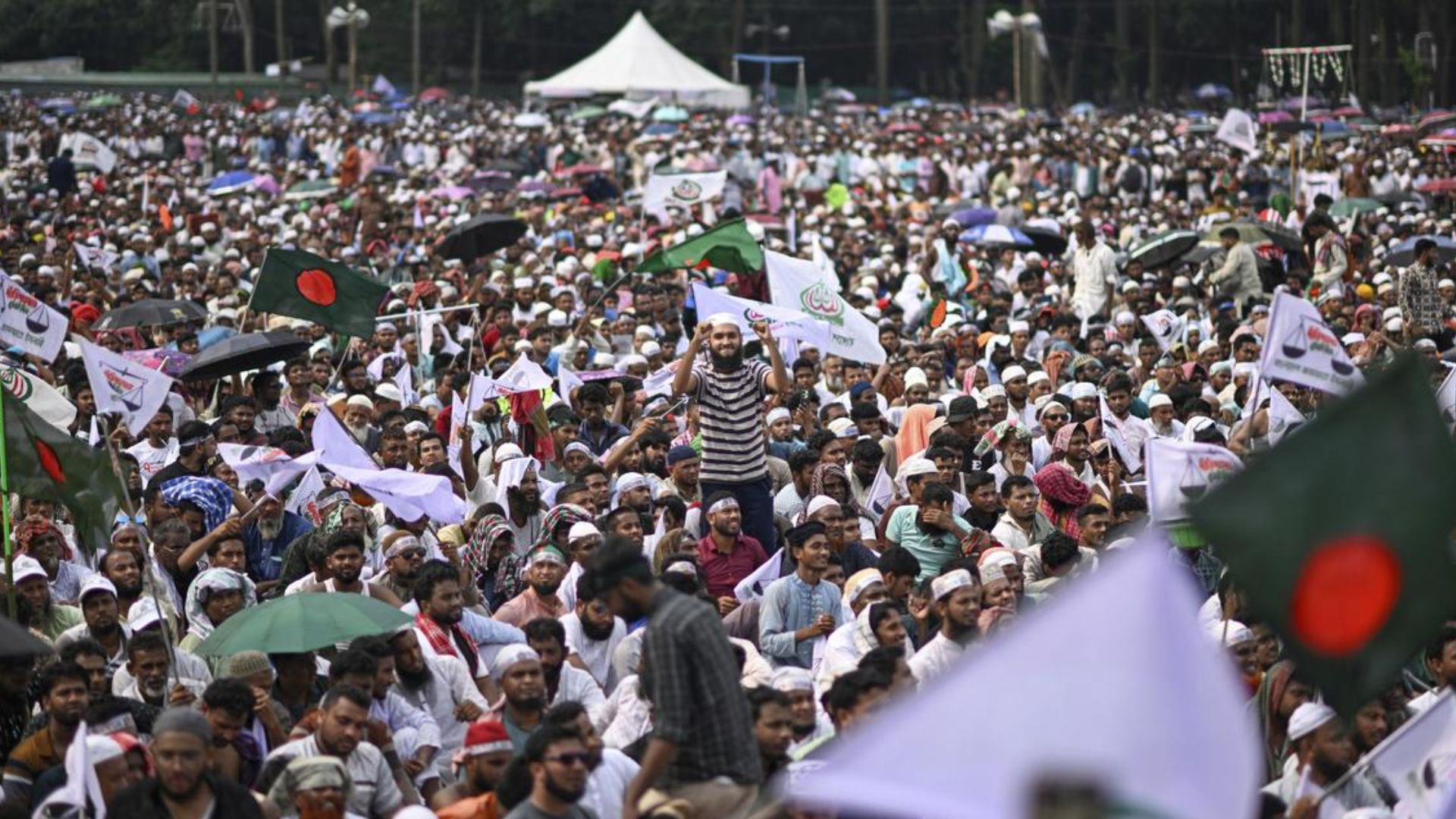
Dhaka — Vote counting is underway across Bangladesh following the close of polls at 4:30 PM Bangladesh Time on Thursday, with early trends showing the Bangladesh Nationalist Party (BNP) pulling ahead in what observers are calling the nation’s first genuinely competitive election in nearly two decades. The landmark vote, which drew approximately 48 percent of the country’s 127 million eligible voters, marks a dramatic turning point for South Asia’s eighth most populous nation, 18 months after a student-led uprising toppled longtime autocrat Sheikh Hasina.
As of late Thursday evening, initial counts indicate BNP leading in 24 constituencies and having secured at least five seats outright, while the 11-party coalition led by Jamaat-e-Islami shows strength in 12 seats with two victories confirmed, according to reports from multiple news outlets citing Election Commission sources. The BNP alliance holds a narrow but significant edge with a 48.1 percent vote share compared to Jamaat’s 45 percent, setting the stage for what could be Bangladesh’s most consequential government formation since independence.
Key Facts at a Glance:
- Voter Turnout: 47.91% (by 2 PM), approximately 61 million voters
- Eligible Voters: 127.7 million (including 15 million overseas workers via postal ballot)
- Constituencies: 299 (one postponed due to candidate death)
- Main Contenders: BNP (led by Tarique Rahman) vs. 11-party Jamaat coalition (led by Shafiqur Rahman)
- Early Trends: BNP leading in 24 seats (5 won), Jamaat coalition in 12 seats (2 won)
- Vote Share: BNP 48.1%, Jamaat coalition 45%
- Youth Voters: 56 million (44% of electorate) aged 18-37
- International Observers: ~500 from 45 countries, including EU and Commonwealth missions
- Concurrent Referendum: July National Charter (84-point constitutional reform package)
Table of Contents
A Nation Votes for Change
The atmosphere at polling stations across Bangladesh was notably festive, a stark contrast to the stage-managed elections that characterized Hasina’s 15-year authoritarian grip on power. First-time voters compared the experience to “Eid,” Bangladesh’s most celebrated holiday, while seasoned citizens spoke emotionally about exercising their democratic rights after years of disenfranchisement.
“I want this country to prosper,” Jainab Lutfun Naher, a voter from Dhaka’s upscale Gulshan area, told Al Jazeera after casting her ballot. “I want it to be democratic, where everyone has rights and freedom.”
The election represents more than a simple transfer of power. Alongside choosing 300 members of parliament across 299 constituencies—one seat was postponed following a candidate’s death—voters simultaneously participated in a constitutional referendum on the July National Charter, an ambitious 84-point reform package that proposes fundamental changes including prime ministerial term limits, a bicameral legislature, and enhanced judicial independence.
BNP’s Tarique Rahman Emerges as Frontrunner
Tarique Rahman, the 59-year-old chairman of the BNP and son of late Prime Minister Khaleda Zia, appears positioned to become Bangladesh’s next prime minister based on early vote counts. Rahman himself is leading comfortably in both constituencies he contested—receiving 60,215 votes in Dhaka-17 and 37,465 in Bogura-6 when last reports emerged.
The political scion, who returned from 17 years of exile in London last December, has campaigned on a platform of anti-corruption, economic revival, and restoring the rule of law. His manifesto includes providing financial assistance to poor families through a “Family Card” system, recruiting 100,000 healthcare workers predominantly from women, and implementing a decade-long cap on prime ministerial tenure—a direct response to Hasina’s extended autocracy.
“There is a clear and huge difference between BNP and the rival political party,” declared BNP Election Steering Committee spokesperson Mahdi Amin at a press briefing in Dhaka, describing the party’s victory as “inevitable.”
The BNP’s resurgence represents a dramatic reversal of fortune. In the 2018 election—widely condemned as neither free nor fair by international observers—the party was reduced to just seven seats as thousands of its leaders faced arrest. The 2024 election saw another BNP boycott amid what the party termed systematic repression.
Jamaat Coalition’s Surprising Strength
While trailing the BNP in overall numbers, the performance of the Jamaat-e-Islami-led coalition has exceeded many expectations, particularly given the Islamist party’s tumultuous recent history. Banned from electoral politics in 2015 under Hasina’s government and prohibited from the 2014, 2018, and 2024 elections, Jamaat has emerged as a formidable force under the leadership of 67-year-old Shafiqur Rahman.
The coalition’s strength lies partly in its partnership with the National Citizen Party (NCP), formed by student leaders who spearheaded the 2024 uprising that ousted Hasina. This alliance has proven particularly effective in attracting younger voters disillusioned with traditional political establishments.
“It is a turning point,” Shafiqur Rahman told reporters after casting his vote. “People demand change. They desire change. We also desire the change.”
Speaking at a later press briefing at Jamaat’s Moghbazar office, Rahman pledged to accept the election results unconditionally “regardless of others,” while cautioning against premature victory claims. The Jamaat leader noted that while initial trends showed his coalition leading in some areas, full clarity would not emerge until around 11 PM Thursday.
Jamaat’s campaign has emphasized justice, ending corruption, and presenting the party as a modernized political force despite its conservative Islamic ideology. Some political analysts suggest the party has benefited from former Awami League supporters who view it as a “lesser of two evils” compared to the BNP, which has taken a more punitive stance toward Hasina loyalists at the local level.
Youth Power Reshapes Bangladesh Politics
Perhaps the most significant factor in this election is the unprecedented role of young voters. Approximately 56 million voters—44 percent of the electorate—are between ages 18 and 37, with nearly five million casting ballots for the first time. This demographic bulge represents both a generational shift and a direct political legacy of the 2024 uprising, which saw hundreds of young protesters killed by security forces acting on Hasina’s orders.
The election has been described by observers as the world’s first “Gen Z-inspired” vote, reflecting how youth-led movements globally are translating street activism into electoral politics. The National Citizen Party embodies this transition most clearly, with leaders like Nahid Islam and Asif Mahmud—both prominent in the 2024 protests—now contesting parliamentary seats.
“I was registered to vote in the last two elections but couldn’t cast my ballot. This is my first time voting,” said Asif Mahmud after casting his vote in Dhaka. “For nearly 40 million young voters like me, this is a new experience.”
Economic anxieties drive much of this youth engagement. Bangladesh’s youth unemployment rate stood at 4.48 percent in 2024, with a staggering 87 percent of the unemployed being educated, including 21 percent with university degrees. A 2024 study found that 55 percent of Bangladeshi youth wished to emigrate due to lack of opportunities—a damning indictment of the previous government’s failure to translate economic growth into inclusive prosperity.
Economic Stakes and the Battle for Bangladesh’s Future
The incoming government inherits a deeply troubled economy in the world’s second-largest garment exporter. GDP growth slowed to 3.97 percent in the fiscal year ending June 2025, down from 4.22 percent the previous year—a far cry from the rapid expansion Bangladesh enjoyed through much of the 2010s.
Inflation has emerged as voters’ primary concern, reaching 8.58 percent in January 2026 with food prices rising even more sharply. More than two-thirds of respondents in pre-election surveys cited rising prices as a major worry, according to polling by the Communication Research Foundation and Bangladesh Elections and Public Opinion Studies.
“Economic pressure, including youth unemployment and stagnating growth, is fueling frustration among a new generation that demands real opportunity rather than symbolic change,” noted Nusrat Jahan, a political analyst at Dhaka University, speaking to Al Jazeera.
Both major alliances have made economic revival central to their platforms, though with differing approaches. The BNP emphasizes attracting foreign investment and revitalizing the crucial garments sector, which accounts for over 80 percent of Bangladesh’s export earnings. Jamaat’s coalition has focused on addressing inequality, inflation control, and what it terms “people-oriented” economic reforms.
Corruption consistently ranks as Bangladesh’s most pressing governance challenge. The nation placed 152nd out of 182 countries in Transparency International’s 2025 Corruption Perceptions Index, slipping from 151st the previous year. Both alliances have promised anti-corruption crackdowns, though skeptics note that such pledges have proven hollow in the past.
Geopolitical Implications: India, China, and Regional Realignment
The election outcome carries significant implications for South Asian geopolitics, particularly regarding Bangladesh’s relationship with neighboring India and increasingly assertive Chinese interests in the region.
Under Hasina, Bangladesh maintained close—critics said subservient—ties with New Delhi, granting India favorable trade terms, transit rights, and security cooperation while Beijing simultaneously increased its economic footprint through infrastructure investments. The incoming government will need to navigate these competing interests carefully.
A BNP-led administration could paradoxically move closer to India despite the party’s traditional nationalism, as Rahman has signaled interest in maintaining regional stability. However, a Jamaat-led coalition might seek to diversify Bangladesh’s international partnerships, potentially strengthening ties with Pakistan, Turkey, and other Muslim-majority nations—a shift that would concern Indian policymakers.
“The election result is expected to influence Bangladesh’s foreign relations significantly,” noted foreign policy analysts. Climate change adaptation, water-sharing agreements with India, and managing the Rohingya refugee crisis will test whichever government emerges from this vote.
The Hasina Legacy and Awami League’s Absence
The most notable aspect of this election is who’s not participating. The Awami League, which dominated Bangladeshi politics for 15 years and won four consecutive elections (three widely criticized as fraudulent), has been suspended from electoral activity following the interim government’s decision to ban the party under anti-terrorism legislation.
Former Prime Minister Hasina, 78, remains in exile in India following her dramatic August 2024 flight from Bangladesh as protesters stormed her official residence. In November 2025, the International Crimes Tribunal convicted her and former Home Minister Asaduzzaman Khan Kamal of war crimes and sentenced both to death in absentia for ordering the brutal crackdown that killed an estimated 1,400 protesters.
The election also proceeds without Khaleda Zia, Rahman’s mother and longtime BNP leader, who died on December 30, 2025, after prolonged illness. Her death marked the end of the “Two Begums” era that defined Bangladeshi politics for decades—the rivalry between Zia and Hasina that often descended into vindictive persecution and democratic backsliding.
Muhammad Yunus: The Reluctant Interim Leader
Overseeing this historic transition is Muhammad Yunus, the 85-year-old Nobel Peace Prize laureate who has led Bangladesh’s interim government since Hasina’s ouster. The microfinance pioneer, while promising to step down once the new government takes power, has championed the July National Charter as essential for preventing a return to autocratic rule.
“We have ended the nightmare and begun a new dream,” Yunus declared after casting his vote Thursday morning. He extended “heartfelt congratulations and gratitude to the entire nation” for the peaceful conduct of polling, describing it as “the beginning of an unprecedented journey toward a new Bangladesh.”
The referendum on Yunus’s reform charter runs parallel to the parliamentary election, with voters receiving pink ballots asking whether they approve the 84-point package. If the majority votes “yes,” the newly elected Parliament will function as a Constituent Assembly for its first 180 days to formalize the Charter into constitutional law.
International Observers and Electoral Integrity
The election proceeded under intense international scrutiny, with approximately 500 foreign observers monitoring the process. The European Union deployed its largest-ever election observation mission to Bangladesh, led by chief observer Ivars Ijabs, with 200 observers from all 27 EU member states plus Canada, Norway, and Switzerland.
The Commonwealth Observer Group, headed by former Ghanaian President Nana Akufo-Addo, also monitored the polls. Their preliminary assessments, due within 48 hours, will significantly influence international perceptions of the election’s legitimacy.
Chief Election Commissioner AMM Nasir Uddin hailed the vote as marking Bangladesh’s departure from the “arranged elections” of recent history. “Bangladesh has boarded the train of democracy,” Uddin declared, expressing confidence the nation would soon “reach its destination.”
However, the campaign period was not without violence. At least 16 political activists were killed since elections were announced in December, with five deaths occurring during the final campaign stretch. Police records show more than 600 people injured in political clashes, while crude bombs were detonated near seven polling centers in southwestern Gopalganj hours before voting began.
UN experts had warned of “growing intolerance, threats and attacks” and a “tsunami of disinformation” targeting young first-time voters particularly. Fact-checking organizations documented extensive use of deepfake videos, misleading captions, and fabricated statements—techniques attributed to foreign actors, Awami League supporters operating from exile, and “bot armies” working for various political parties.
What Comes Next: Counting Continues
Official results are expected to emerge gradually through Friday morning, with the Election Commission facing the complex task of tallying both white parliamentary ballots and pink referendum ballots across 42,766 polling stations nationwide. The process involves approximately 785,225 election officials conducting hand counts under the watch of party agents and observers.
For the first time in Bangladesh’s electoral history, postal voting allowed nearly 15 million overseas workers to participate—a recognition of the crucial role their remittances play in the national economy. This innovation, alongside technological enhancements and strengthened dispute-resolution mechanisms, makes the 2026 election “the most procedurally complex in the country’s history,” according to the International Foundation for Electoral Systems.
The atmosphere across Bangladesh Thursday evening was one of cautious optimism mixed with nervous anticipation. After years of authoritarian rule punctuated by fraudulent elections, citizens appeared both hopeful that democratic norms might be restored and anxious that the transition could still be derailed.
“During Hasina’s time, we couldn’t cast our votes,” said Shakil Ahmed, a driver in Dhaka. “It’s my right to vote. This time, I won’t miss it.”
Whether that vote translates into accountable governance, economic opportunity, and genuine democratic consolidation remains the question that will define Bangladesh’s next chapter. As vote counting continues into the night, a nation of 173 million waits to learn whether February 12, 2026, will indeed mark the birth of the “new Bangladesh” that so many have sacrificed to achieve.
This is a developing story. Results will be updated as official counts are released by the Bangladesh Election Commission.
Related Coverage:
- Al Jazeera: Bangladesh election results live updates
- BBC: Polls close in first election since Gen Z protests ousted Bangladesh leader
- Reuters: Bangladesh election – Early counts show close race
- The New York Times: Analysis of Bangladesh’s democratic transition
Discover more from The Monitor
Subscribe to get the latest posts sent to your email.



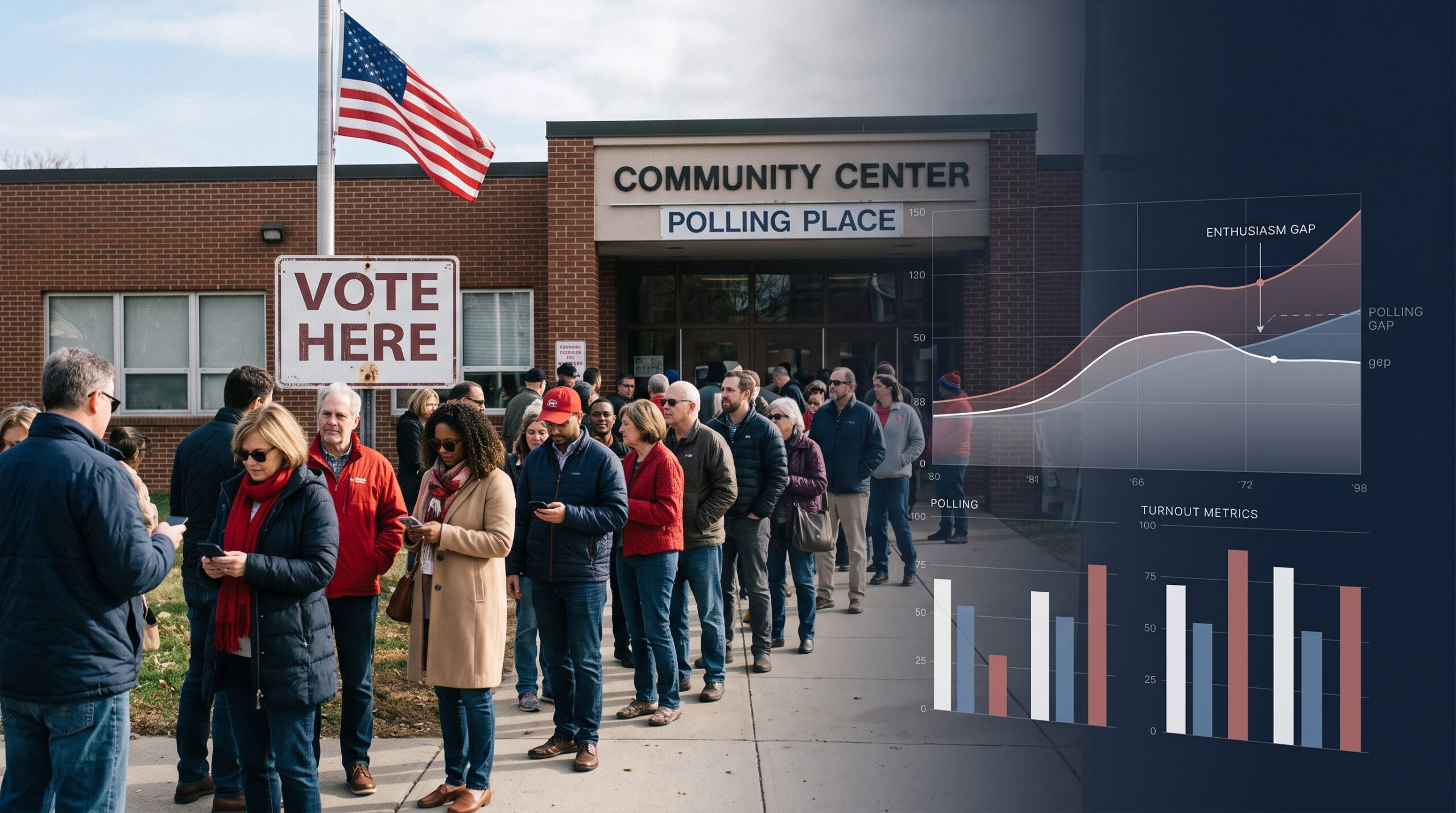
Polls and primary turnout show Republicans trailing on enthusiasm ahead of the 2026 midterms. Here’s what the data shows, where it’s weaker, and what could change.
Key Takeaways
- A Washington Post-Ipsos poll conducted July 8 to 13, 2026, found Democrats ahead 48% to 45% among registered voters, but ahead by about eight points among voters who say they are absolutely certain to vote.
- Democrats have outpaced Republicans in primary turnout. As of late June, about 12.6 million votes had been cast in Democratic House primaries, compared with 8.6 million in Republican primaries, according to a Washington Post analysis cited by commentators.
- Analysis of six states that held comparable primaries in 2022 and 2026 found the Republican-to-Democratic turnout ratio moved toward Democrats in every case.
- Special elections since 2025 have shown Democrats running ahead of their 2024 presidential margins, though special elections draw low turnout and are not reliable predictors.
- Enthusiasm is a leading indicator, not a result. Historically, the gap between stated enthusiasm and votes cast has been large, and the November outcome depends on who actually turns out.
Search Intent Summary
Readers searching this topic usually want to know whether Republicans are less motivated to vote in 2026, what the numbers show, and how much weight to give them. This article reviews the polling, primary turnout, and special election evidence, then sets out the strongest arguments on each side.
What “Enthusiasm” Measures
Political scientists use several overlapping measures. Pollsters ask respondents how enthusiastic they are about voting, how certain they are to vote, and whether they consider the upcoming election more important than past ones. Each measure captures something different, and results vary by question wording.
The key distinction is between opinion and turnout. Enthusiasm tells you how motivated a group feels. Turnout tells you how many people actually vote. Historically, the two do not always match, and the party with lower enthusiasm can still turn out strongly if its voters are organized and its contests are high-stakes.
What the Polls Show
The broadest signal comes from national surveys. In a February 2026 Washington Post-ABC News-Ipsos poll, 47% of registered voters planned to back Democrats and 45% Republicans. The gap was sharpest among younger voters. The poll found that 51% of 18-to-39-year-olds who voted for Donald Trump in 2024 said they were certain to vote, compared with 77% of Harris voters in the same age group.
By July, the Washington Post-Ipsos poll had narrowed the overall margin. Democrats led 48% to 45% among registered voters, down from a five-point edge in May. The enthusiasm gap, however, had widened. The same survey showed Democrats’ lead expanding to about eight points among those who said they were absolutely certain to vote.
Other measures point the same way. A Post-ABC poll found 73% of Democrats said the upcoming midterms were more important than past midterms, compared with 52% of Republicans. In the same survey, 72% of Republicans said they would definitely vote. A Marquette University Law School poll found 28% of Republicans and Republican-leaning independents described themselves as “very enthusiastic” about voting in the midterms.
These results should be read carefully. A generic-ballot lead of a few points is well within polling error, and the enthusiasm gap is a difference between two groups’ stated motivation, not a measured vote.
Primary Turnout: The Stronger Signal
Primary turnout is a more concrete measure than survey responses, because it counts actual ballots. Primary electorates are small and self-selected, so they are not a clean preview of a general election. Still, they show who is showing up when the stakes are visible.
Commentary citing a Washington Post analysis reported that by late June 2026, about 12.6 million ballots had been cast in Democratic House primaries, compared with 8.6 million in Republican primaries. Democrats set turnout records in several states, including Wisconsin, Michigan, Texas, and Georgia, according to the same analysis.
The statistician Charles Stewart III, of MIT’s Election Data and Science Lab, compared turnout in the six states that held statewide primaries in both 2022 and 2026: Arkansas, Illinois, Nebraska, North Carolina, Ohio, and Texas. In every one, the ratio of Republican to Democratic primary turnout moved toward Democrats. In his analysis, Democratic turnout rose while Republican turnout fell. Stewart also noted that primary turnout is not always predictive of general election outcomes, and that many factors influence it.
Those findings are not uniform. Closed primary systems, contested races, and candidate quality all shape turnout. A competitive Republican primary in one state can boost that party’s turnout even when enthusiasm elsewhere is weak.
Special Elections: A Pattern, With Caveats
Special elections have produced consistent Democratic overperformance. An analysis by The Down Ballot, reported in a column that cited it, examined 110 special elections since January 2025 and found Democrats running an average of 12.5 points ahead of their 2024 presidential margins. In 2025, Decision Desk HQ found an average overperformance of about 20 points in US House specials.
Special elections are a useful signal but a weak forecast. They draw low turnout, usually from the most motivated voters, and they are held under conditions that differ from a midterm. Analysts have noted that Democrats overperformed in special elections before the 2024 presidential race, then lost the national popular vote. Special elections can show shifts in motivation without predicting how a broader electorate will vote.
The Republican Case
Republicans and some analysts offer several counterarguments, and they deserve a fair hearing.
Enthusiasm is not the same as turnout. Republicans have historically turned out reliably in midterms when their voters were motivated by specific issues or candidates, and the party’s organizational infrastructure is strong.
Low-turnout special elections and primaries can exaggerate the energy of whichever side is more engaged in a given contest, and Democratic primary turnout partly reflects contested races that drew heavy spending.
Polls of enthusiasm can shift quickly. A few months before an election is a long time, and a single event, such as a major policy action or a change in the economic outlook, can reshape voter motivation.
The party also argues that its message on the economy and taxes resonates with voters who may not register strongly in polling. In the July Post-Ipsos poll, the top concern among voters was the economy, and some Republicans have argued their affordability messaging will close the gap as the election approaches.
The Democratic Case
Democrats point to the same data as evidence of an energized base. They argue that primary turnout records, special election swings, and the enthusiasm gap show a motivated electorate.
Democratic strategists also argue that the war with Iran, rising gasoline prices, and cost-of-living pressures have hurt the incumbent party. Pricing and economic concerns dominate voter priorities, according to the Post-Ipsos poll. The Post poll noted that more than 70% of Democrats regard voting as more important this year than before.
What to Watch Before November
Several indicators will show whether the gap is real or temporary.
Watch whether enthusiasm translates into actual turnout in the fall. Early voting and absentee data in competitive states will be more reliable than polls.
Watch the composition of turnout. A widening gap among younger voters, the group the February poll singled out, would matter more than overall numbers.
Watch Republican primary turnout in states that still have contests, and compare it with 2022 benchmarks.
Watch the economic and foreign policy environment. Gasoline prices, inflation, and the status of the Iran conflict all feed into voter priorities, as covered in our Iran policy analysis and the crude oil article.
Practical Takeaways
For readers following the midterms, the most useful habit is to weight actual turnout data above survey enthusiasm when assessing the outlook, and to treat both as indicators rather than predictions. Enthusiasm polls are a useful early signal, but they often change before voting.
For campaigns and analysts, the data points to the importance of turnout operations in the weeks before the election, regardless of which party’s enthusiasm numbers look stronger.
This article describes the evidence and the arguments on each side. It does not forecast the outcome of the midterms.
Future Outlook
The enthusiasm gap is a clear signal in the data so far, particularly in primaries and specials. Whether it turns into a general election advantage depends on turnout operations, on how the economy and foreign policy evolve, and on how many voters decide late. Those questions remain open.
Frequently Asked Questions
Are Republicans less enthusiastic about voting in 2026?
Several national polls show lower stated enthusiasm among Republicans than Democrats, including a Washington Post-Ipsos poll from July 2026 and a Marquette University Law School poll. Enthusiasm measures vary by question, so no single poll settles the question.
Does primary turnout predict the midterms?
Primary turnout is a useful signal but not a reliable forecast. It reflects who participates in primaries, which are smaller and more self-selected than general elections. Changes in turnout relative to earlier cycles can indicate shifts in motivation, but they do not determine outcomes.
Do special elections predict general election results?
Special elections show trends in voter motivation, but they draw low turnout and occur under different conditions than midterms. In 2024, Democrats overperformed in special elections before losing the national vote. Treat them as one input among many.
What is the enthusiasm gap?
The enthusiasm gap is the difference between parties in how motivated their supporters say they are to vote. Pollsters measure it by asking how enthusiastic or certain respondents are to vote. It is a measure of stated motivation, not a measure of votes.
Discover more from The Monitor
Subscribe to get the latest posts sent to your email.
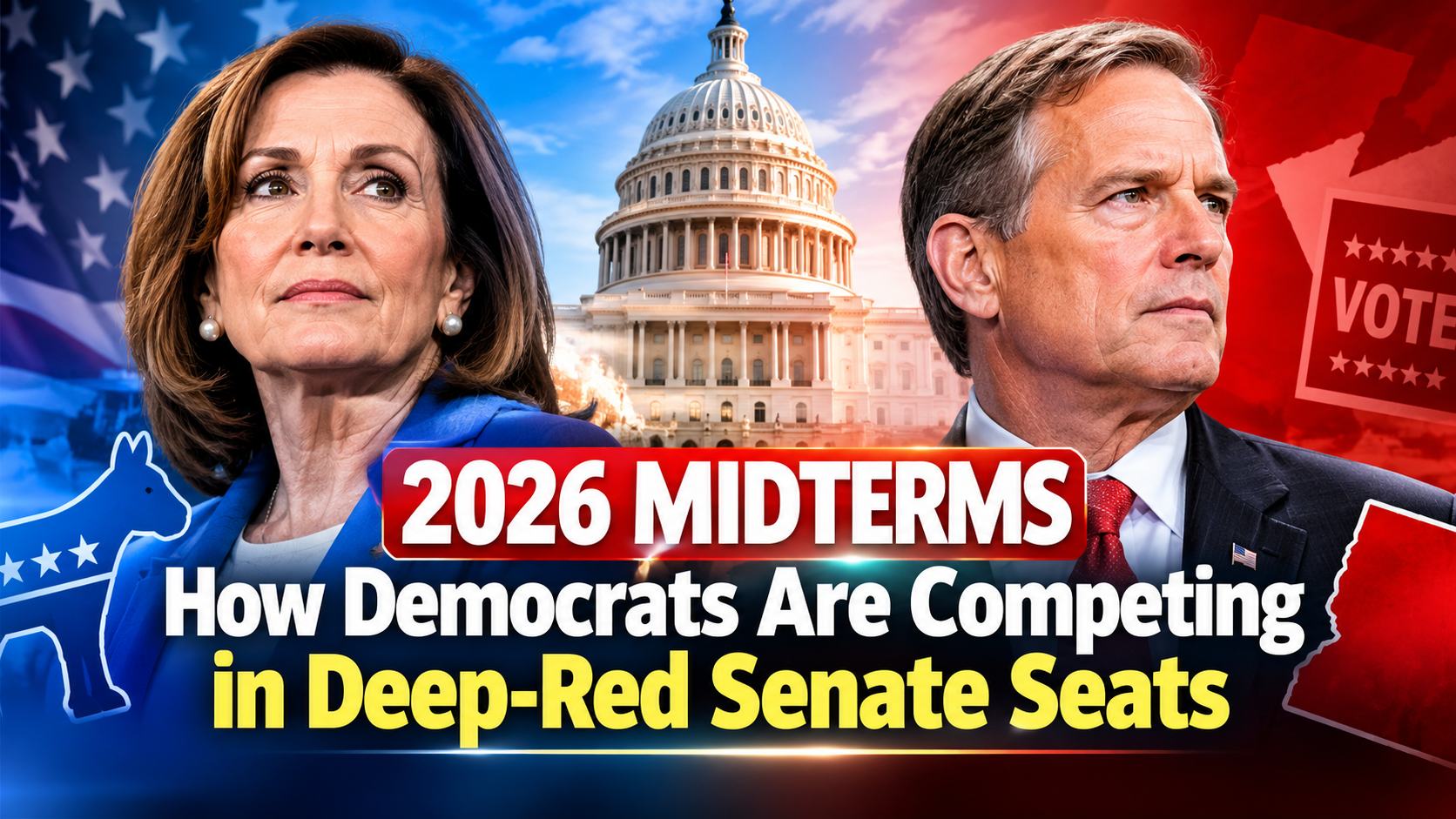
The defining feature of the 2026 Senate cycle isn’t a single flippable seat — it’s how many states once considered structurally out of reach for Democrats have moved onto competitive target lists simultaneously. Nate Silver’s FLIPR model now shows Democrats polling ahead or within striking distance in Texas, North Carolina, Maine, Alaska, Iowa, and Ohio — a map that, six months earlier, would have been dismissed as aspirational rather than analytical.
The Core Dynamic: PVI Erosion in “Safe” Republican Territory
The Cook Partisan Voter Index (PVI) measures how a state or district leans relative to the national average, and it has historically been treated as a reliable ceiling on Democratic competitiveness in deep-red states. What’s shifted in 2026 is not the underlying PVI scores themselves — Texas remains a nominally red state, and Maine remains a state Trump has never carried — but the gap between a state’s structural partisan lean and its real-time polling, which has widened sharply against Republicans in a way PVI alone doesn’t capture.
Maine is the clearest illustration: it’s rated roughly D+7 on partisan lean, yet Sen. Susan Collins has won five consecutive terms there by cultivating a moderate, Trump-skeptical brand. Analysts now describe her erosion with independents — tied to her votes on Medicaid cuts and reconciliation packages — as the reason a state that “should” have been competitive for over a decade is only now genuinely rated a Toss-up.
Texas: The Marquee Case Study
The Talarico-Paxton matchup is the highest-profile test of whether Republican dominance in Texas is genuinely eroding or whether this is simply an unusually weak GOP nominee in an otherwise stable red state:
- Ken Paxton (R), the state attorney general, defeated incumbent Sen. John Cornyn in the Republican primary after securing Trump’s endorsement — but enters the general election carrying a well-documented history of legal controversies and a contentious, highly publicized divorce that both national and Texas-specific coverage flags as a real drag on his numbers.
- James Talarico (D), a state representative, has posted a consistent, modest polling lead and is rated by FLIPR with roughly a 60.7% win probability, and by Nate Silver’s initial model assessment at launch as high as 63%.
- The race is rated “Lean Democrat” by FLIPR — a rating with almost no modern precedent for a Texas federal race, given the state hasn’t elected a Democratic senator since 1988.
The Texas dynamic is instructive precisely because it may not generalize: Paxton’s specific vulnerabilities are candidate-level, not structural, meaning a stronger Republican nominee in a future cycle could plausibly restore the state’s traditional partisan lean even if Talarico wins in 2026.
In the 2026 midterms, Democrats are competitive in traditionally Republican Senate seats including Texas, Maine, North Carolina, Alaska, Iowa, and Ohio. Texas Democrat James Talarico leads Republican Ken Paxton in polling, while Maine’s Susan Collins faces her toughest re-election in three decades against Democrat Troy Jackson.
Maine: A Nominee Swap Adds Volatility
Maine’s race has been unusually chaotic even by midterm standards. Oyster farmer and military veteran Graham Platner won the Democratic primary over Gov. Janet Mills with progressive backing, but withdrew in July 2026 following sexual assault allegations and other controversies. Democrats replaced him with Troy Jackson, the former state Senate president, at a nominating convention on July 25 — leaving Democrats running a late-entry candidate against a five-term incumbent with 30 years of brand-building in the state.
Despite the disruption, Collins — the only Senate Republican representing a state Trump has never carried in three presidential runs — remains, per CNN’s Senate rankings, the single most vulnerable Republican incumbent in the chamber. Her position illustrates the core thesis of this cycle: candidate-level erosion (Collins’s declining favorability with both parties) is compounding with structural disadvantage (Maine’s D+7 lean) in a way that has finally overcome her historical resilience.
North Carolina: A More Conventional Battleground
North Carolina represents the more traditional version of a competitive Republican-held seat: former Gov. Roy Cooper (D), a proven statewide winner, faces former RNC Chairman Michael Whatley (R), the expected GOP nominee. Sabato’s Crystal Ball moved this race from “Leans Republican” to “Toss-up” alongside Maine — placing it in the same tier of competitiveness as Georgia and Michigan, two Democratic-held seats, illustrating how the overall map has shifted toward parity rather than a clean partisan split.
Suburban and Independent Voter Shifts
Across every competitive race — Texas, Maine, North Carolina, and the newer additions of Alaska, Iowa, and Ohio — the same demographic driver recurs in analyst commentary: independent and suburban voters moving away from Republican candidates, tied to dissatisfaction with reconciliation-package votes (particularly Medicaid provisions), economic anxiety over gas prices, and a broader erosion in Trump’s approval rating, which FLIPR’s inputs place at roughly 38% nationally with only 22% strong approval. This pattern — suburban erosion compounding with base-level fatigue — is structurally similar to the dynamic that drove Democratic gains in the 2018 midterms, though the current map extends into more traditionally rural, red-leaning states than 2018’s suburban-centric wave did.
Why This Matters Beyond November 2026
If Democrats do flip seats in states like Texas, Maine, or North Carolina, it would suggest a durable erosion in Republican strength beyond the specific unpopularity of individual 2026 candidates — with implications for the 2028 presidential map. If, conversely, Republicans hold these seats despite unfavorable national conditions, it would suggest FLIPR and similar models are overweighting national environment relative to the genuine structural advantages (partisan registration, rural turnout patterns, incumbency) that have insulated red states from Democratic gains in prior cycles.
Finally ,The 2026 Senate map has expanded well beyond the traditional handful of swing states, with Democrats competitive in Texas, Maine, North Carolina, Alaska, Iowa, and Ohio simultaneously. Texas (Talarico vs. Paxton) and Maine (Collins vs. Jackson) represent two distinct versions of the same underlying story — one driven primarily by candidate-level Republican vulnerability, the other by a decades-long erosion of a moderate incumbent’s independent support finally catching up with the state’s structural partisan lean.
Discover more from The Monitor
Subscribe to get the latest posts sent to your email.
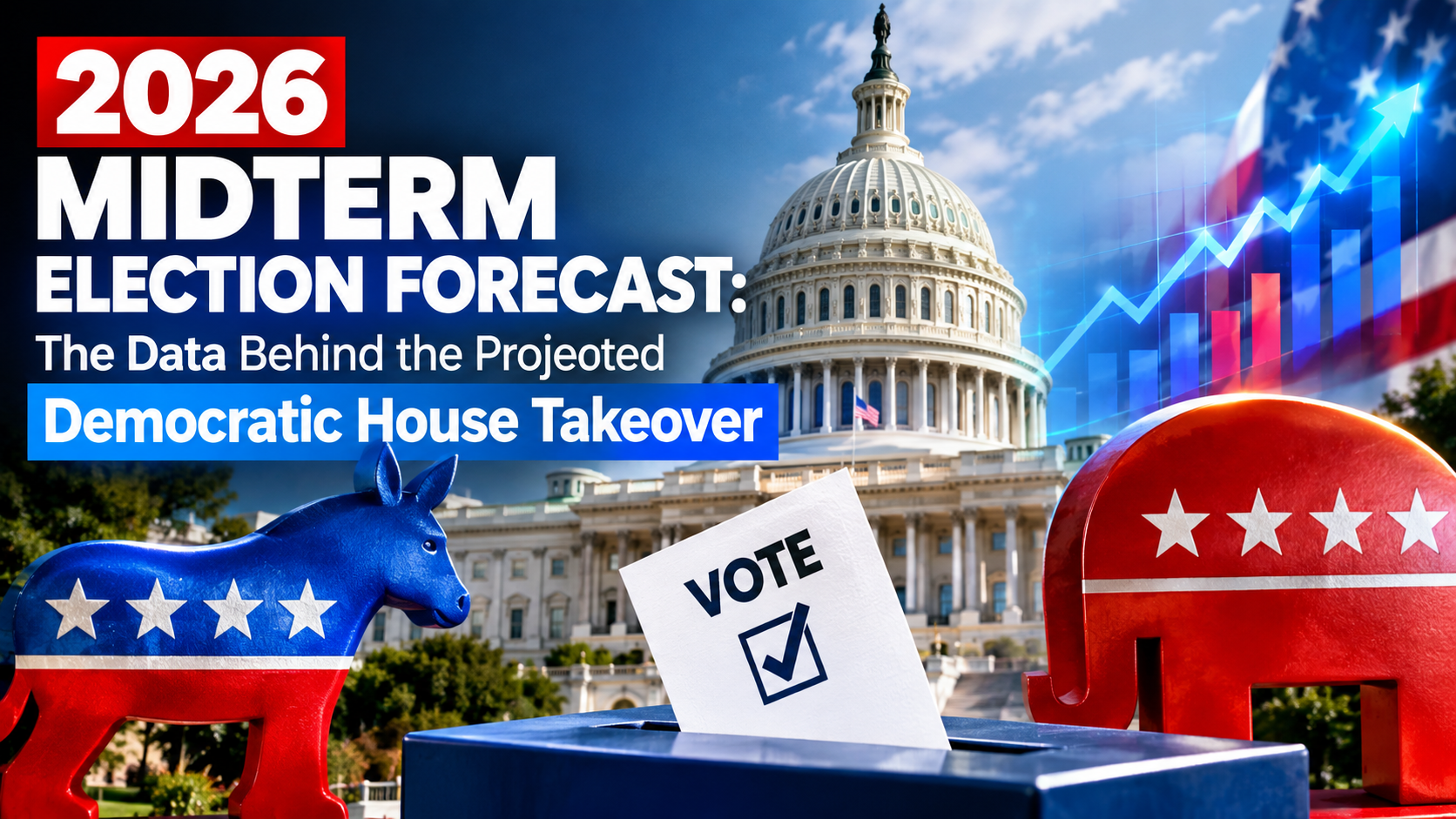
With the November 3, 2026 midterm elections roughly two months away, multiple independent forecasting models are converging on a similar conclusion: Democrats are currently favored to retake control of the U.S. House of Representatives, though the size of any majority — and control of the Senate — remains genuinely uncertain.
This piece breaks down what the leading models actually say, why historical patterns favor the out-of-power party in midterms, and which structural factors could still complicate a Democratic pickup.
The Current Numbers
Heading into the cycle, Republicans hold a narrow 218-seat majority, with Democrats at 212 seats and several vacancies. Because of that narrow margin, Democrats need to flip only a small net number of seats — commonly cited as roughly three to six, depending on how upcoming special elections in safely Democratic vacant seats resolve — to reclaim the majority.
Several independent models have published 2026 House projections:
- A Cornell University-based academic forecasting team, presenting at the American Political Science Association’s annual meeting, projects Democrats winning approximately 226 seats to Republicans’ 209, with simulations showing a plausible range as wide as 206 to 258 Democratic seats.
- A separate independent forecasting outlet (FiftyPlusOne) gives Democrats an 85% probability of winning the House majority, with a median projected outcome of 230 seats, and a national House popular-vote margin estimated at roughly +7 points for Democrats.
- Aggregator and prediction-market platforms tracking the race show a broadly consistent picture: Democrats favored, with meaningful — not negligible — uncertainty remaining.
Researchers behind the Cornell model were notably direct about what it would take for the forecast to be wrong: given the model’s historical accuracy, a Republican House majority holding would likely mean “either everything has gone their way or something unprecedented has happened.”
Why History Favors Democrats Structurally
Election forecasters lean heavily on one of the most consistent patterns in American politics: the president’s party almost always loses House seats in midterm elections.
- Looking back across 36 midterm elections since 1882, the White House party avoided losing a net of at least three seats in only four of them — 1934, 1962, 1998, and 2002 — each occurring under unusual circumstances (the Great Depression recovery, the Cuban Missile Crisis aftermath, post-9/11 unity, and the Clinton impeachment backlash, respectively).
- Democrats need a uniform national swing of roughly 1.1% from the 2024 House results to flip control — a relatively low bar by historical standards.
- Special elections held throughout 2025 provide an early, concrete signal: across roughly 31 state legislative and House special elections, Democratic candidates outperformed the 2024 presidential ticket’s vote share by an average of 15.4 points (median 13 points) — more than ten times the swing needed to flip the House.
The Redistricting Wildcard
No 2026 forecast is complete without accounting for the unusual mid-decade redistricting activity that has reshaped the House map since the 2024 election. Aggressive redistricting in several Republican-controlled states has given the GOP additional structural insulation heading into this cycle — a countervailing force against the historical midterm pattern and the favorable special-election trendline described above. This is the central tension every current model is trying to price in: strong Democratic generic political environment signals, against a map that has been deliberately reshaped to blunt exactly that kind of environment.
The GOP Counter-Strategy
Republican strategists are not treating the historical pattern as inevitable. Key elements of the party’s defensive posture include:
- Leaning on redistricting gains in states where new maps have already been implemented, effectively “banking” seats that would otherwise be more competitive under prior district lines.
- Fundraising and turnout operations targeted specifically at the small number of genuinely competitive districts where the national environment is expected to matter most.
- Nationalizing the midterm around specific policy contrasts rather than running on incumbency alone, given that broad “stay the course” messaging tends to perform poorly for an incumbent president’s party in a midterm.
What Swing Districts Are Actually Deciding This
Rather than the national popular vote, the real decision point sits in a relatively small number of competitive districts — often those that saw redistricting changes, those with retiring incumbents, or historically split-ticket suburban seats. Readers tracking this race closely should watch:
- Districts with open seats created by incumbent retirements, which historically see larger swings than seats with incumbents running for reelection.
- Suburban districts that have trended away from the GOP in recent cycles, where the current generic-ballot environment would need to hold through November to matter.
- Newly redrawn districts in states where redistricting fights are still working through courts — some maps used in 2026 could still face late legal challenges.
What Competitors Are Missing
Much of the horserace coverage of this cycle reports the topline “Democrats favored” number without explaining why two structurally different forces — a strongly Democratic-leaning political environment on one hand, and an aggressively re-drawn map on the other — are pulling against each other simultaneously. That tension, not the headline probability number, is the actual story of the 2026 House cycle, and it’s why even a “85% favored” forecast still carries real uncertainty worth taking seriously rather than treating as a foregone conclusion.
Key Dates to Watch
- Ongoing — ballot access deadlines and any late redistricting litigation in contested states
- September–October 2026 — final pre-election generic ballot and fundraising disclosures
- November 3, 2026 — Election Day
- Early November 2026 — initial results; close districts may take days to certify
Q: Are Democrats favored to win the House in the 2026 midterms?
As of early September 2026, multiple independent forecasting models favor Democrats to win a U.S. House majority. One academic model projects roughly 226 Democratic seats to 209 Republican seats; another independent forecaster puts Democrats’ probability of winning the House at 85%, with a median projection of 230 seats. Republicans currently hold an 218-seat majority, and Democrats need only a small net seat gain to flip control.
Discover more from The Monitor
Subscribe to get the latest posts sent to your email.

MLB Playoffs 2026: Postseason Format, Broadcast Guide and How to Track the Bracket

Elon Musk Calls Mukesh Ambani the “Real Boss of India” Over Alleged Monopoly Concerns

Legal Pioneer and Defender of Justice: The Life, Works, and Legacy of Navi Pillay

Inside the Modern Republican Party Platform: Tax Policy, Immigration, and Governance

Anne Carson: Genius of Hybrid Forms and 2026 Nobel Laureate in Literature

Analyzing the Republican Voter Enthusiasm Gap: Turnout Metrics and Polling Data

The West Wing Legacy: Why the Political Drama Is More Relevant Than Ever

Remembering Kianna Underwood: The Nickelodeon Actress Behind “All That” and “Little Bill”

Min Ah: The Global Impact and Rising Popularity of the K-Drama Star

Pakistan Warns UN Security Council of AI Risks to Global Peace and Equality

Bloodhound Q50: Remembering the Tragic Loss of Chicago’s Rising Drill Star

Remembering Eliana Moreno: The Legacy of NBC LA’s “Eli in the Heli”

Horror Box Office Economics: ROI, Market Share and the 2026

iOS 27 Release Date & Siri AI: The Ultimate Tech News Guide for iPhone 18 Users
Min Ah: The Global Impact and Rising Popularity of the K-Drama Star

Fortress Diplomacy: How China’s Secretive Hongqi N701 Matches America’s Legendary “Beast”

Rep. Thomas Massie’s Impeachment Push Against Pete Hegseth, Explained
Remembering Kianna Underwood: The Nickelodeon Actress Behind “All That” and “Little Bill”
-

 Featured5 years ago
The Right-Wing Politics in United States & The Capitol Hill Mayhem
-

 News5 years ago
Prioritizing health & education most effective way to improve socio-economic status: President
-

 China5 years ago
Coronavirus Pandemic and Global Response
-

 Canada5 years ago
Socio-Economic Implications of Canadian Border Closure With U.S
-

 Democracy5 years ago
Missing You! SPSC
-

 Conflict5 years ago
Kashmir Lockdown, UNGA & Thereafter
-
Democracy5 years ago
President Dr Arif Alvi Confers Civil Awards on Independence Day
-

 Digital6 years ago
Pakistan Moves Closer to Train One Million Youth with Digital Skills