
Opinion
The Texans Defense Just Put the AFC on Notice—With or Without Stroud

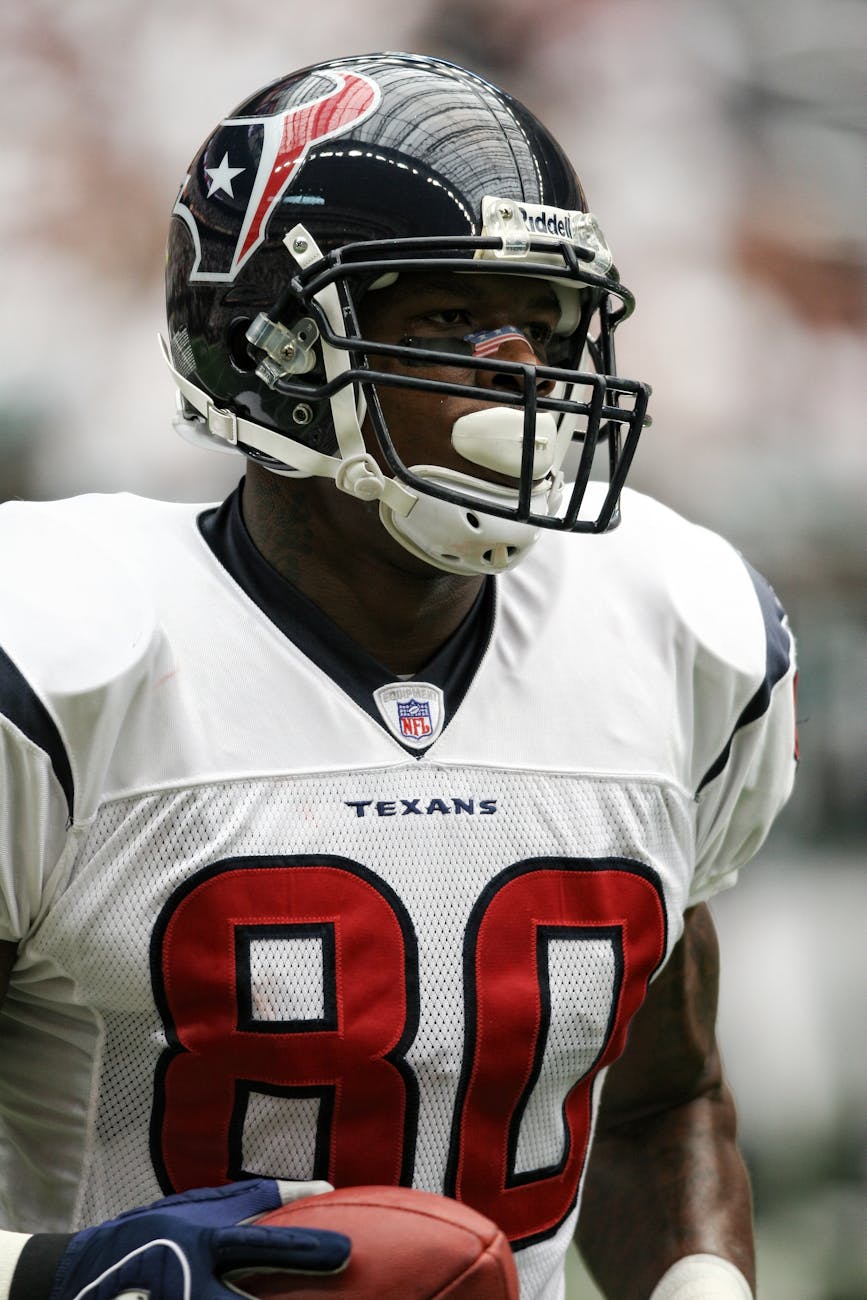
Josh Allen didn’t just lose a football game on Thursday night; he survived a mugging.
If you watched the Texans vs Bills highlights, you didn’t see a shootout. You saw a statement. You saw a Houston defensive front that smelled blood in the water and a secondary that refused to break. By the time the clock hit zero at NRG Stadium, with the scoreboard reading Texans 23, Bills 19, one thing became violently clear: The Houston Texans are no longer just “C.J. Stroud’s team.”
They are a defensive juggernaut capable of wrecking the AFC playoff picture, regardless of who is under center.
Table of Contents
The “Bullock Breakout” and the Pass Rush Party
Let’s start with the metric that matters most: 8 sacks.
That is not a typo. The Texans’ defensive front, led by the relentless Will Anderson Jr. (who tallied 2.5 sacks and seemingly lived in the Bills’ backfield), turned one of the league’s best quarterbacks into a frantic escape artist. Anderson has now recorded a sack in six straight games, tying a franchise record held by Mario Williams. He isn’t just rushing the passer; he is wrecking game plans.
But the true story of Thursday night was rookie safety Calen Bullock.
- 3 Total Turnovers Forced: Two interceptions and a forced fumble.
- The “Closer”: His interception with 24 seconds left didn’t just pad the stats; it iced the game.
In a league obsessed with offense, DeMeco Ryans has built a unit that wins ugly. When the Bills threatened late, it wasn’t the offense that responded—it was the defense forcing a 4th-and-27 disaster for Buffalo. This is the brand of football that travels well in January.
Davis Mills Did “Just Enough” (And That’s the Point)
Let’s address the elephant in the room: C.J. Stroud was out.
When your franchise quarterback is sidelined with a concussion, the playbook usually shrinks to the size of a napkin. Enter Davis Mills. The backup signal-caller didn’t light up the box score (153 yards, 2 TDs), but he did something far more important: he didn’t lose the game.
- Zero Turnovers: Mills protected the football.
- Red Zone Efficiency: Two first-half touchdown passes gave the defense a lead they could defend.
The “Mills Narrative” isn’t about him being a saviour. It’s about the Texans proving they have the infrastructure to survive adversity. Good teams panic when their star goes down. Great teams lean on their other units. Thursday night proved that Houston is becoming the latter.
The AFC South & Playoff Picture
So, where does this leave the Texans?
At 6-5, they are back above .500 and have firmly re-inserted themselves into the NFL playoff picture AFC. This wasn’t just a win; it was a tiebreaker goldmine against a fellow AFC contender.
With the Jaguars and Colts also fighting for the AFC South crown, this win stabilises the ship. If Stroud returns healthy for the stretch run—paired with this version of the defence—Houston is a dark horse to make a deep run. They just proved they can beat a 7-win Bills team without their best player. Imagine what they can do when he returns.
Frequently Asked Questions (FAQ)
When will C.J. Stroud return?
C.J. Stroud is currently in the NFL concussion protocol. While there is no official timeline, most players typically miss one week. If he clears protocol, he could return for the Week 13 matchup against the Jaguars.
Are the Texans playoff contenders?
Absolutely. At 6-5 with a tiebreaker win over Buffalo, the Texans are firmly in the Wild Card hunt and still competing for the AFC South title. Their defence (ranking top-5 in sacks) makes them a dangerous matchup for any team.
Who is Calen Bullock?
Calen Bullock is the Texans’ rookie safety out of USC. He was a third-round draft pick in 2024 and has quickly become a playmaker, recording multiple interceptions in his debut season, including the game-sealer against the Bills.
Discover more from The Monitor
Subscribe to get the latest posts sent to your email.




On October 9, 2026, the Norwegian Nobel Committee announced Navanethem “Navi” Pillay as the laureate of the 2026 Nobel Peace Prize. Recognized for her lifelong efforts to uphold international legal frameworks, advance human rights, and ensure accountability for war crimes and genocide, Pillay stands as one of the most transformative jurists of the modern era.
From her beginnings as a working-class defense attorney in apartheid-era South Africa to serving at the highest levels of global judicial institutions, Pillay’s career reflects a commitment to the rule of law as the foundation for global peace.
1. Early Life and Legal Education
Navanethem Pillay was born on September 23, 1941, in Durban, South Africa, into a working-class Tamil South African family. Growing up under the institutionalized racial segregation of apartheid, she experienced firsthand the systemic inequalities embedded in the legal and social systems of the time.
Supported by her community, Pillay attended the University of Natal, earning a Bachelor of Arts in 1963 and a Bachelor of Laws (LL.B.) in 1965. In 1967, she became the first woman of color to set up a private law practice in Natal Province. Faced with restrictions that prevented non-white lawyers from accessing judge’s chambers or using court libraries, she focused her early legal practice on defending anti-apartheid activists, political detainees, and trade unionists.
She later pursued advanced legal studies in the United States at Harvard Law School, completing a Master of Laws (LL.M.) in 1982 and a Doctor of Juridical Science (S.J.D.) in 1988. Her doctoral research focused on international human rights law and judicial independence.
2. Fighting Apartheid and Pioneering Institutional Reform
During the height of apartheid, Pillay represented political prisoners held on Robben Island, including members of the African National Congress (ANC) and the Black Consciousness Movement. Her defense strategies challenged state-sanctioned detention without trial, police brutality, and torture.
Key Contributions to Rights and Gender Equality
- Co-founder of Equality Now (1992): Pillay co-founded the international non-governmental organization Equality Now, which advocates for the civil, political, and economic rights of women worldwide.
- High Court Appointment (1995): Following South Africa’s transition to democracy under President Nelson Mandela, Pillay was appointed as the first Black woman judge on the South African High Court in 1995.
3. Key Global Appointments and Legal Achievements
| Institutional Role | Tenure | Primary Focus & Notable Achievements |
| Judge & President, International Criminal Tribunal for Rwanda (ICTR) | 1995–2003 | Presided over landmark cases establishing sexual violence as an act of genocide (Jean-Paul Akayesu case). |
| Judge, International Criminal Court (ICC) | 2003–2008 | Served in the Appeals Division during the foundational years of the court’s operations. |
| UN High Commissioner for Human Rights | 2008–2014 | Championed global campaigns on women’s rights, LGBT rights, combatting caste discrimination, and protecting journalists. |
| Chair, Independent UN Commission of Inquiry on the Occupied Palestinian Territory | 2021–Present | Mandated to investigate violations of international humanitarian and human rights law in the region. |
| Ad Hoc Judge, International Court of Justice (ICJ) | Present | Appointed in high-profile international litigation, including the Gambia v. Myanmar genocide proceedings. |
Landmark Precedents Set
- Defining Rape as Genocide: In the 1998 Jean-Paul Akayesu ruling at the ICTR, Pillay and her fellow judges issued a ruling establishing that systematic sexual violence and rape committed during conflict constitute acts of genocide under international law.
- Media Responsibility in Atrocities: In the 2003 ICTR Media Case, she presided over the trial that held media executives accountable for incitement to genocide, setting a key precedent for international criminal law regarding hate speech and mass communication.
4. The 2026 Nobel Peace Prize Recognition
The Norwegian Nobel Committee awarded the 2026 Nobel Peace Prize to Navi Pillay on October 9, 2026.
"The Norwegian Nobel Committee has decided to award the Nobel Peace Prize for 2026
to Navanethem 'Navi' Pillay for her efforts to promote peace and international law."
— Official Announcement, Norwegian Nobel Committee (October 2026)
The Committee highlighted her career-long defense of legal principles, human dignity, and international accountability during periods of geopolitical instability. With this award, Pillay became the fifth South African citizen—and the first Black South African woman—to receive the Nobel Peace Prize.
Official Sources & References
- The Nobel Prize Official Announcement — NobelPrize.org
- UN Human Rights Office (OHCHR) — Former High Commissioners Profile
- International Criminal Court (ICC) — Judicial Profiles
- International Criminal Tribunal for Rwanda (ICTR) Legacy Archives — UN International Residual Mechanism for Criminal Tribunals
- Navi Pillay Biography — Encyclopedia Britannica
- BBC News Coverage on the 2026 Nobel Peace Prize Announcement
Discover more from The Monitor
Subscribe to get the latest posts sent to your email.
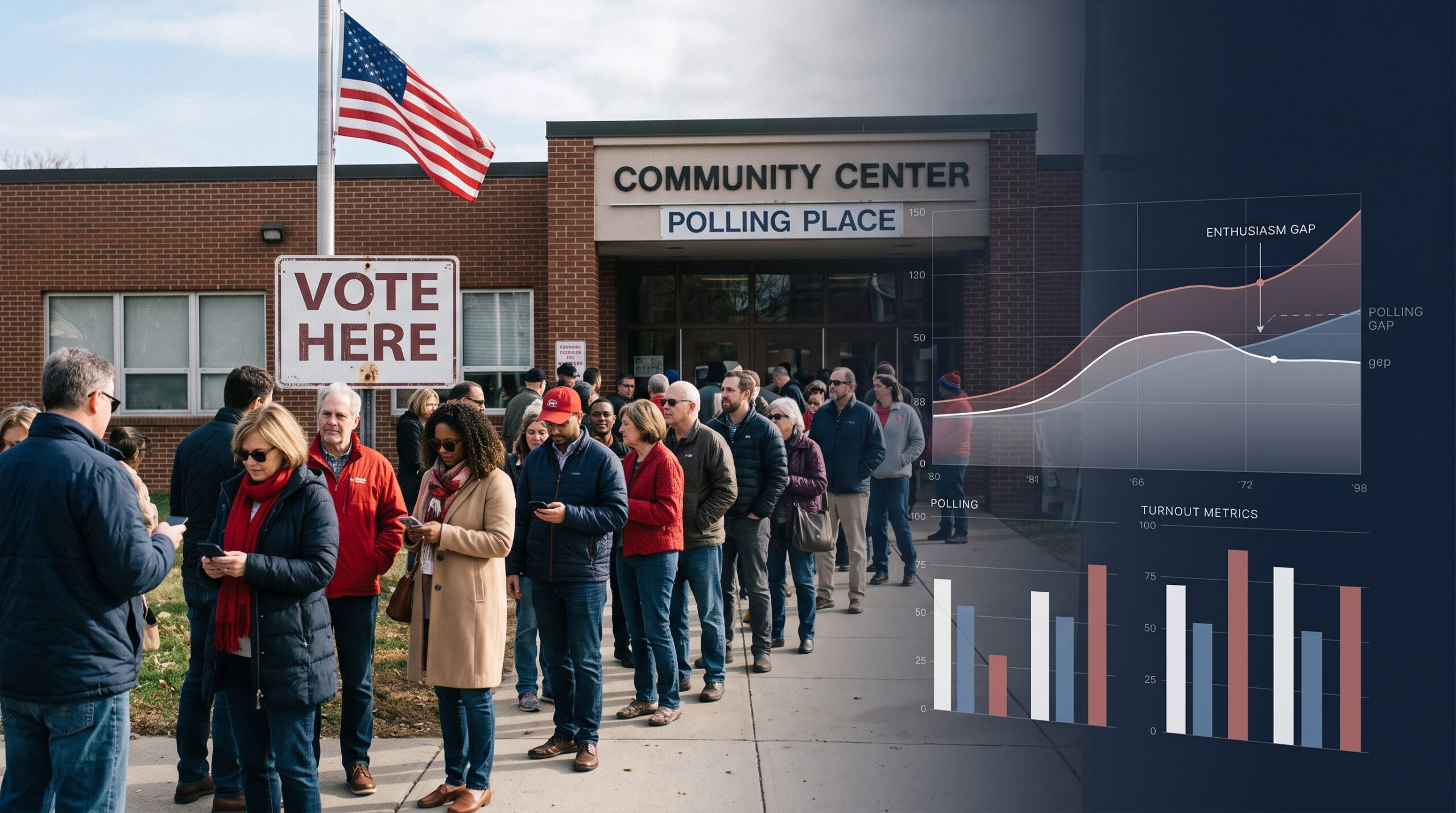
Polls and primary turnout show Republicans trailing on enthusiasm ahead of the 2026 midterms. Here’s what the data shows, where it’s weaker, and what could change.
Key Takeaways
- A Washington Post-Ipsos poll conducted July 8 to 13, 2026, found Democrats ahead 48% to 45% among registered voters, but ahead by about eight points among voters who say they are absolutely certain to vote.
- Democrats have outpaced Republicans in primary turnout. As of late June, about 12.6 million votes had been cast in Democratic House primaries, compared with 8.6 million in Republican primaries, according to a Washington Post analysis cited by commentators.
- Analysis of six states that held comparable primaries in 2022 and 2026 found the Republican-to-Democratic turnout ratio moved toward Democrats in every case.
- Special elections since 2025 have shown Democrats running ahead of their 2024 presidential margins, though special elections draw low turnout and are not reliable predictors.
- Enthusiasm is a leading indicator, not a result. Historically, the gap between stated enthusiasm and votes cast has been large, and the November outcome depends on who actually turns out.
Search Intent Summary
Readers searching this topic usually want to know whether Republicans are less motivated to vote in 2026, what the numbers show, and how much weight to give them. This article reviews the polling, primary turnout, and special election evidence, then sets out the strongest arguments on each side.
What “Enthusiasm” Measures
Political scientists use several overlapping measures. Pollsters ask respondents how enthusiastic they are about voting, how certain they are to vote, and whether they consider the upcoming election more important than past ones. Each measure captures something different, and results vary by question wording.
The key distinction is between opinion and turnout. Enthusiasm tells you how motivated a group feels. Turnout tells you how many people actually vote. Historically, the two do not always match, and the party with lower enthusiasm can still turn out strongly if its voters are organized and its contests are high-stakes.
What the Polls Show
The broadest signal comes from national surveys. In a February 2026 Washington Post-ABC News-Ipsos poll, 47% of registered voters planned to back Democrats and 45% Republicans. The gap was sharpest among younger voters. The poll found that 51% of 18-to-39-year-olds who voted for Donald Trump in 2024 said they were certain to vote, compared with 77% of Harris voters in the same age group.
By July, the Washington Post-Ipsos poll had narrowed the overall margin. Democrats led 48% to 45% among registered voters, down from a five-point edge in May. The enthusiasm gap, however, had widened. The same survey showed Democrats’ lead expanding to about eight points among those who said they were absolutely certain to vote.
Other measures point the same way. A Post-ABC poll found 73% of Democrats said the upcoming midterms were more important than past midterms, compared with 52% of Republicans. In the same survey, 72% of Republicans said they would definitely vote. A Marquette University Law School poll found 28% of Republicans and Republican-leaning independents described themselves as “very enthusiastic” about voting in the midterms.
These results should be read carefully. A generic-ballot lead of a few points is well within polling error, and the enthusiasm gap is a difference between two groups’ stated motivation, not a measured vote.
Primary Turnout: The Stronger Signal
Primary turnout is a more concrete measure than survey responses, because it counts actual ballots. Primary electorates are small and self-selected, so they are not a clean preview of a general election. Still, they show who is showing up when the stakes are visible.
Commentary citing a Washington Post analysis reported that by late June 2026, about 12.6 million ballots had been cast in Democratic House primaries, compared with 8.6 million in Republican primaries. Democrats set turnout records in several states, including Wisconsin, Michigan, Texas, and Georgia, according to the same analysis.
The statistician Charles Stewart III, of MIT’s Election Data and Science Lab, compared turnout in the six states that held statewide primaries in both 2022 and 2026: Arkansas, Illinois, Nebraska, North Carolina, Ohio, and Texas. In every one, the ratio of Republican to Democratic primary turnout moved toward Democrats. In his analysis, Democratic turnout rose while Republican turnout fell. Stewart also noted that primary turnout is not always predictive of general election outcomes, and that many factors influence it.
Those findings are not uniform. Closed primary systems, contested races, and candidate quality all shape turnout. A competitive Republican primary in one state can boost that party’s turnout even when enthusiasm elsewhere is weak.
Special Elections: A Pattern, With Caveats
Special elections have produced consistent Democratic overperformance. An analysis by The Down Ballot, reported in a column that cited it, examined 110 special elections since January 2025 and found Democrats running an average of 12.5 points ahead of their 2024 presidential margins. In 2025, Decision Desk HQ found an average overperformance of about 20 points in US House specials.
Special elections are a useful signal but a weak forecast. They draw low turnout, usually from the most motivated voters, and they are held under conditions that differ from a midterm. Analysts have noted that Democrats overperformed in special elections before the 2024 presidential race, then lost the national popular vote. Special elections can show shifts in motivation without predicting how a broader electorate will vote.
The Republican Case
Republicans and some analysts offer several counterarguments, and they deserve a fair hearing.
Enthusiasm is not the same as turnout. Republicans have historically turned out reliably in midterms when their voters were motivated by specific issues or candidates, and the party’s organizational infrastructure is strong.
Low-turnout special elections and primaries can exaggerate the energy of whichever side is more engaged in a given contest, and Democratic primary turnout partly reflects contested races that drew heavy spending.
Polls of enthusiasm can shift quickly. A few months before an election is a long time, and a single event, such as a major policy action or a change in the economic outlook, can reshape voter motivation.
The party also argues that its message on the economy and taxes resonates with voters who may not register strongly in polling. In the July Post-Ipsos poll, the top concern among voters was the economy, and some Republicans have argued their affordability messaging will close the gap as the election approaches.
The Democratic Case
Democrats point to the same data as evidence of an energized base. They argue that primary turnout records, special election swings, and the enthusiasm gap show a motivated electorate.
Democratic strategists also argue that the war with Iran, rising gasoline prices, and cost-of-living pressures have hurt the incumbent party. Pricing and economic concerns dominate voter priorities, according to the Post-Ipsos poll. The Post poll noted that more than 70% of Democrats regard voting as more important this year than before.
What to Watch Before November
Several indicators will show whether the gap is real or temporary.
Watch whether enthusiasm translates into actual turnout in the fall. Early voting and absentee data in competitive states will be more reliable than polls.
Watch the composition of turnout. A widening gap among younger voters, the group the February poll singled out, would matter more than overall numbers.
Watch Republican primary turnout in states that still have contests, and compare it with 2022 benchmarks.
Watch the economic and foreign policy environment. Gasoline prices, inflation, and the status of the Iran conflict all feed into voter priorities, as covered in our Iran policy analysis and the crude oil article.
Practical Takeaways
For readers following the midterms, the most useful habit is to weight actual turnout data above survey enthusiasm when assessing the outlook, and to treat both as indicators rather than predictions. Enthusiasm polls are a useful early signal, but they often change before voting.
For campaigns and analysts, the data points to the importance of turnout operations in the weeks before the election, regardless of which party’s enthusiasm numbers look stronger.
This article describes the evidence and the arguments on each side. It does not forecast the outcome of the midterms.
Future Outlook
The enthusiasm gap is a clear signal in the data so far, particularly in primaries and specials. Whether it turns into a general election advantage depends on turnout operations, on how the economy and foreign policy evolve, and on how many voters decide late. Those questions remain open.
Frequently Asked Questions
Are Republicans less enthusiastic about voting in 2026?
Several national polls show lower stated enthusiasm among Republicans than Democrats, including a Washington Post-Ipsos poll from July 2026 and a Marquette University Law School poll. Enthusiasm measures vary by question, so no single poll settles the question.
Does primary turnout predict the midterms?
Primary turnout is a useful signal but not a reliable forecast. It reflects who participates in primaries, which are smaller and more self-selected than general elections. Changes in turnout relative to earlier cycles can indicate shifts in motivation, but they do not determine outcomes.
Do special elections predict general election results?
Special elections show trends in voter motivation, but they draw low turnout and occur under different conditions than midterms. In 2024, Democrats overperformed in special elections before losing the national vote. Treat them as one input among many.
What is the enthusiasm gap?
The enthusiasm gap is the difference between parties in how motivated their supporters say they are to vote. Pollsters measure it by asking how enthusiastic or certain respondents are to vote. It is a measure of stated motivation, not a measure of votes.
Discover more from The Monitor
Subscribe to get the latest posts sent to your email.
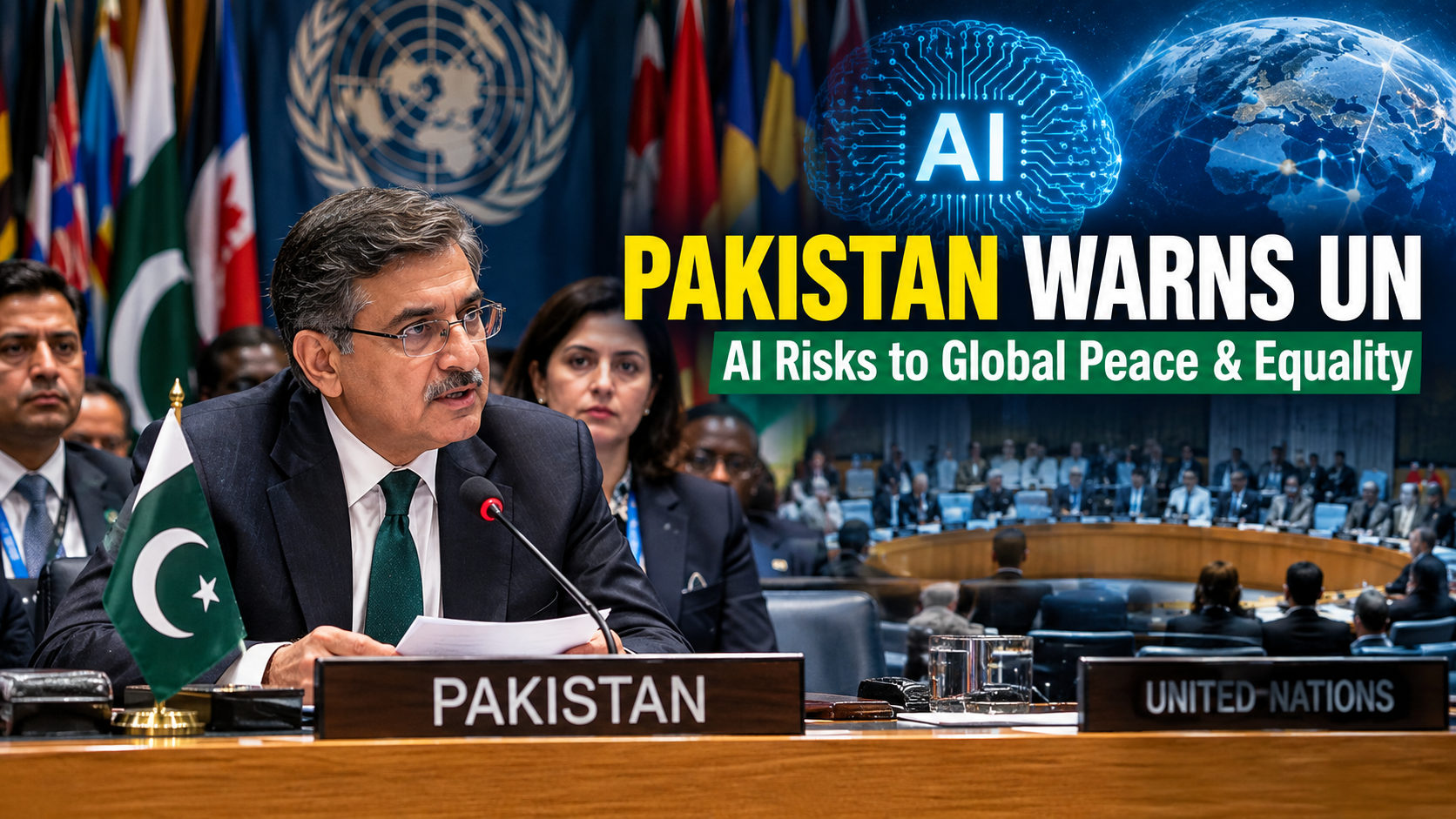
UNITED NATIONS — September 24, 2026: Pakistan has warned the United Nations Security Council that the rapid and insufficiently regulated development of artificial intelligence could deepen global inequality while creating new risks to international peace and security.
Speaking during a Security Council briefing on “Artificial Intelligence and International Security,” Pakistan’s Deputy Prime Minister and Foreign Minister Senator Mohammad Ishaq Dar called for stronger international safeguards, regulatory frameworks and governance mechanisms to address the risks associated with increasingly powerful AI systems.
Dar emphasized that the international community needs coordinated action to establish guardrails around artificial intelligence, particularly as AI technologies become increasingly relevant to military decision-making, information systems and national security.
Pakistan Calls for International Guardrails on Artificial Intelligence
Pakistan’s intervention comes as governments and international institutions increasingly debate how AI should be governed across borders.
Dar stressed the importance of restraint and confidence-building measures in the military domain, particularly because AI-assisted systems could compress decision-making timelines and increase the danger of miscalculation.
The concern is significant because artificial intelligence is no longer confined to civilian applications. AI is increasingly being examined in relation to cyber operations, intelligence analysis, autonomous systems, information warfare and other security-sensitive areas.
The United Nations has also warned that AI can create substantial risks when technological development moves faster than international governance.
The UN’s existing AI framework emphasizes responsible, accountable, transparent and human-centered development, while calling for effective human oversight of AI systems.
Why AI Is Becoming a Security Council Issue
The Security Council has previously considered artificial intelligence as a potential factor affecting international peace and security, but the technology has developed rapidly since those early discussions.
A recent analysis by the independent Security Council Report identified several security implications, including AI’s ability to facilitate malicious cyber activity, accelerate the creation and distribution of misinformation and disinformation, and influence military operations.
The organization also highlighted concerns surrounding increasingly autonomous weapons systems, shortened decision-making timelines and questions about human oversight and accountability.
These concerns help explain why AI has moved beyond being primarily a technology-policy issue and increasingly become a subject of international security diplomacy.
The challenge for governments is that AI can simultaneously create opportunities and risks.
AI could help countries identify emerging conflicts, improve humanitarian operations, monitor ceasefires and analyze large quantities of information. At the same time, poorly governed systems could amplify security threats or make already complex conflicts more difficult to manage.
Pakistan Highlights the Global Inequality Dimension
Pakistan’s message to the Security Council went beyond military applications.
Dar also emphasized the need for AI development to be representative, transparent and inclusive, reflecting concerns among developing countries that the benefits of advanced artificial intelligence could become concentrated among a relatively small group of technologically advanced states and companies.
That concern is already reflected in the United Nations’ Global Digital Compact.
The Compact calls for closing digital divides, expanding access to the benefits of the digital economy and strengthening international governance of artificial intelligence. It specifically calls for full and equal representation of countries, including developing nations, in international AI governance.
This makes AI access and governance part of a broader development question.
Countries with advanced computing infrastructure, large datasets, sophisticated research institutions and substantial private-sector investment are positioned differently from nations that remain dependent on imported technologies and have limited domestic AI capacity.
If that gap widens, AI could potentially reinforce existing economic and technological inequalities rather than reduce them.
UN Framework Already Calls for Inclusive AI Governance
The debate at the Security Council is taking place alongside a broader UN effort to develop international mechanisms for AI governance.
The Global Digital Compact, adopted as part of the Pact for the Future, established a framework for international cooperation on digital technologies and AI.
The United Nations has subsequently established an Independent International Scientific Panel on Artificial Intelligence and a Global Dialogue on AI Governance.
The first annual Global Dialogue took place in Geneva in July 2026, bringing together governments and other stakeholders to discuss international cooperation, AI opportunities and emerging risks.
The UN says the dialogue is intended to ensure that AI governance reflects the priorities of all nations rather than only those with the greatest technological capabilities.
For developing countries such as Pakistan, this process provides an avenue to raise questions about technological access, capacity-building, data governance and participation in international rule-making.
AI and Military Decision-Making Raise Particular Concerns
One of the most sensitive areas in the AI debate is military decision-making.
AI can process enormous volumes of information far faster than humans. That capability could potentially assist military planners and governments, but it also raises questions about what happens when decisions involving force are increasingly influenced by automated systems.
A shorter decision-making cycle can create pressure to respond before human officials have fully evaluated the available information.
That is why Pakistan’s emphasis on restraint and confidence-building is significant in the context of international security.
The broader UN position has also stressed the importance of retaining meaningful human control over decisions involving the use of force.
The central issue is not simply whether AI should be used in security applications, but how governments can establish accountability when AI-assisted systems contribute to consequential decisions.
Disinformation Adds Another Layer of Risk
AI-generated content presents another challenge for governments and international organizations.
Generative AI can make it easier to create convincing text, images, audio and video at scale. In a conflict environment, such capabilities could complicate efforts to distinguish authentic information from manipulated material.
The UN has identified misinformation and disinformation among the major concerns surrounding artificial intelligence, particularly where manipulated content can affect public trust, human rights or humanitarian operations.
For international institutions, the problem is therefore both technological and political: governments must develop mechanisms capable of addressing harmful AI-generated content without undermining legitimate expression or access to information.
Global AI Governance Is Becoming More Urgent
The current Security Council discussion reflects a larger international shift.
AI governance is no longer being discussed solely in terms of innovation, investment and economic competitiveness. Governments are increasingly considering questions involving national security, international stability, human rights, development and inequality.
The United States and China, for example, continue to compete technologically while also discussing mechanisms for AI safety and communication.
Meanwhile, the UN is developing a more inclusive multilateral framework intended to give countries a role in shaping international AI governance.
That creates an important distinction between AI development and AI governance.
The first concerns how quickly capabilities advance. The second concerns the rules, safeguards and institutions that determine how those capabilities are developed and deployed.
What Pakistan’s Position Means for Developing Countries
Pakistan’s intervention highlights an issue that is likely to remain central to future AI negotiations: who gets to shape the rules governing artificial intelligence?
Developing countries have an interest not only in managing AI-related risks but also in ensuring access to the technology’s potential benefits.
The UN’s Global Digital Compact recognizes the need for capacity-building, technology cooperation and support for developing countries to access, develop, use and govern AI systems.
That approach is particularly relevant as AI becomes increasingly connected to education, healthcare, agriculture, financial services, public administration and economic productivity.
Without adequate access to computing infrastructure, skills, data and investment, developing countries could find themselves primarily consuming technologies designed elsewhere.
Pakistan’s call for representative and inclusive AI governance therefore places technological development and international security within the same broader conversation.
The Challenge Ahead: Rules That Keep Pace With Technology
The Security Council’s latest discussion illustrates the central difficulty confronting policymakers.
Artificial intelligence is developing faster than many traditional regulatory processes can respond.
International rules must address security risks without unnecessarily blocking beneficial innovation. They must also account for differences between developed and developing countries while maintaining fundamental principles such as human rights, transparency and accountability.
The United Nations’ emerging governance architecture is an attempt to address that challenge through scientific assessment, international dialogue and greater participation by countries around the world.
Pakistan’s intervention adds another voice to that debate, particularly on the consequences of unequal access to AI capabilities and the risks associated with AI-assisted military decision-making.
Conclusion
Pakistan’s warning at the UN Security Council underscores the increasingly international character of the artificial intelligence debate.
The issue is no longer simply how quickly AI can advance. It is also about how the technology is governed, who participates in setting the rules, how military risks are controlled and whether the benefits of AI are distributed broadly enough to avoid deepening existing inequalities.
As AI becomes more deeply integrated into security, economies and public institutions, international cooperation will become an increasingly important part of managing both its opportunities and its risks.
For Pakistan and other developing countries, the emerging global AI governance system will be particularly important because the rules established today could influence access to technology, economic opportunities and participation in future international decision-making for years to come.
Discover more from The Monitor
Subscribe to get the latest posts sent to your email.

MLB Playoffs 2026: Postseason Format, Broadcast Guide and How to Track the Bracket

Elon Musk Calls Mukesh Ambani the “Real Boss of India” Over Alleged Monopoly Concerns

Legal Pioneer and Defender of Justice: The Life, Works, and Legacy of Navi Pillay

Inside the Modern Republican Party Platform: Tax Policy, Immigration, and Governance

Anne Carson: Genius of Hybrid Forms and 2026 Nobel Laureate in Literature

Analyzing the Republican Voter Enthusiasm Gap: Turnout Metrics and Polling Data

The West Wing Legacy: Why the Political Drama Is More Relevant Than Ever

Remembering Kianna Underwood: The Nickelodeon Actress Behind “All That” and “Little Bill”

Min Ah: The Global Impact and Rising Popularity of the K-Drama Star

Pakistan Warns UN Security Council of AI Risks to Global Peace and Equality

Bloodhound Q50: Remembering the Tragic Loss of Chicago’s Rising Drill Star

Remembering Eliana Moreno: The Legacy of NBC LA’s “Eli in the Heli”

Horror Box Office Economics: ROI, Market Share and the 2026

iOS 27 Release Date & Siri AI: The Ultimate Tech News Guide for iPhone 18 Users
Min Ah: The Global Impact and Rising Popularity of the K-Drama Star

Fortress Diplomacy: How China’s Secretive Hongqi N701 Matches America’s Legendary “Beast”

Rep. Thomas Massie’s Impeachment Push Against Pete Hegseth, Explained
Remembering Kianna Underwood: The Nickelodeon Actress Behind “All That” and “Little Bill”
-

 Featured5 years ago
The Right-Wing Politics in United States & The Capitol Hill Mayhem
-

 News5 years ago
Prioritizing health & education most effective way to improve socio-economic status: President
-

 China5 years ago
Coronavirus Pandemic and Global Response
-

 Canada5 years ago
Socio-Economic Implications of Canadian Border Closure With U.S
-

 Democracy5 years ago
Missing You! SPSC
-

 Conflict5 years ago
Kashmir Lockdown, UNGA & Thereafter
-
Democracy5 years ago
President Dr Arif Alvi Confers Civil Awards on Independence Day
-

 Digital6 years ago
Pakistan Moves Closer to Train One Million Youth with Digital Skills