
Analysis
The First Muslim Senator and the Limits of America’s Midterm Revolt

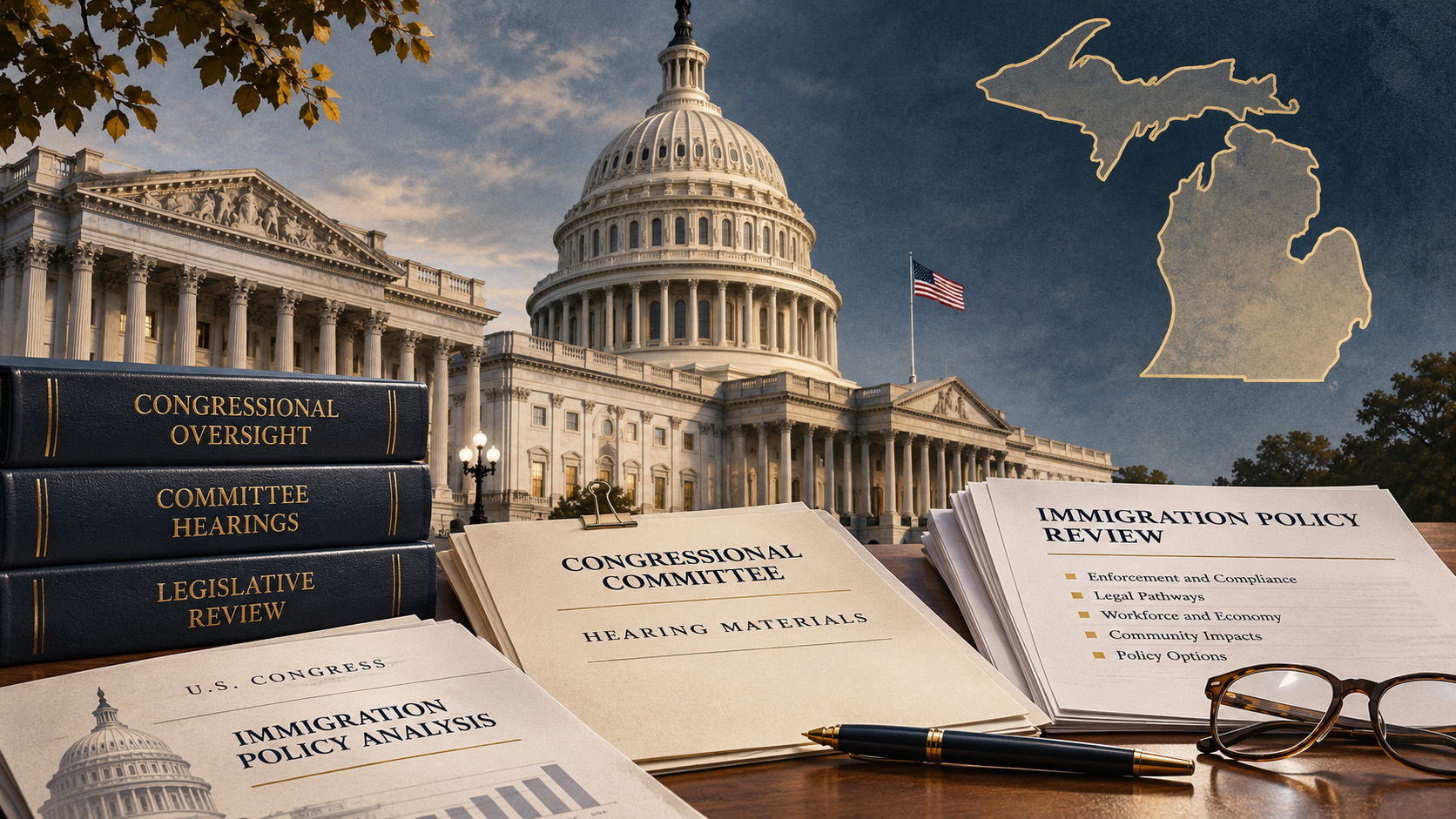
Can the new Congress challenge Trump’s immigration crackdown—or will election-night history meet the hard limits of presidential power?

On election night in Michigan, Abdul El-Sayed did more than hold a Senate seat for the Democrats. A 42-year-old physician and former public-health official, the American-born son of Egyptian immigrants became, according to media projections, the first Muslim ever elected to the United States Senate. The Republican he defeated, former congressman Mike Rogers, had questioned his political associations through allegations of extremist sympathies that El-Sayed denied and that Reuters reported were unsupported by evidence.
The result carried unmistakable symbolic weight. After months in which arguments about national identity and immigration enforcement filled American politics, a Muslim candidate won statewide office in a battleground that had twice supported Donald Trump for president. With about 97% of votes counted, El-Sayed led by seven percentage points, the Associated Press reported. Those are preliminary returns, not a certified final margin.
Yet the hardest question begins where the celebration ends. Can a senator-elect, even one whose victory expands the boundaries of political representation, alter the federal machinery that determines whether migrants are detained, deported, given a hearing—or returned to families? Or will the Democratic takeover of Congress produce televised confrontations while immigration agents continue to operate under presidential direction?
The midterms answered one question decisively: control of Congress can change. Whether the treatment of immigrants changes with it is a much more demanding test.
Table of Contents
A breakthrough—though not a wave of immigrant-born senators
The distinction matters from the outset. El-Sayed is not an immigrant; he was born in Michigan to Egyptian immigrant parents. His win is a milestone for Muslim representation and for the children of immigrants, not evidence that large numbers of foreign-born candidates captured Senate seats. Reuters’ account of the reaction in Egypt illuminates both the significance of his heritage and the awkwardness of treating an American election as a victory belonging to another nation.
El-Sayed’s biography resists a single-issue reading. He trained as a physician, led Detroit’s health department, lost a Democratic gubernatorial primary in 2018, and returned with a campaign centered on affordability, corporate influence and Medicare for All. His opposition to unconditional American military support for Israel drew intense scrutiny; his Republican opponent argued that his views were too radical. CBS News’ examination of the campaign and the Associated Press’ post-election interview show a candidate who won by emphasizing economic discontent while also confronting attacks on his religion.
A candidate’s identity does not establish his entire agenda. On immigration, however, El-Sayed has made specific commitments. In an October interview with Michigan Public, he supported border security but called for abolishing ICE and replacing its approach with an enforcement and administrative system closer to the former Immigration and Naturalization Service. He criticized operations involving masked officers and argued that Congress had relinquished too much of its constitutional authority. His position is more sweeping than a demand for better body cameras or disciplinary proceedings: it would require Congress to redesign a federal agency.
The wider Senate class reveals a different pattern: an enlargement of political backgrounds, not a homogeneous immigrant caucus.
| Senator-elect | State | Verified political significance | Connection to immigration debate |
|---|---|---|---|
| Abdul El-Sayed (D) | Michigan | First Muslim elected to the Senate; U.S.-born son of Egyptian immigrants | Has called for replacing ICE and reforming immigration law |
| Peggy Flanagan (D) | Minnesota | First Native American woman elected to the Senate; member of the White Earth Nation | Represents an Indigenous political milestone, not an immigrant background |
| Juliana Stratton (D) | Illinois | Becomes part of a historic expansion of Black women’s Senate representation | Campaigned on abolishing ICE; not presented as immigrant-born |
| James Talarico (D) | Texas | Former teacher and state lawmaker; defeated Ken Paxton | Victory included a shift among Hispanic voters; his identity should not be conflated with immigrant status |
| Adam Hamilton (D) | Kansas | Methodist pastor who defeated Republican Roger Marshall | Stressed affordability and cross-party cooperation, illustrating motives beyond immigration |
| Josh Turek (D) | Iowa | Former Paralympian and state legislator who flipped a Republican-held seat | Disability representation and economic campaigning, not an immigrant-origin claim |
These election calls are drawn from Minnesota Public Radio, Axios’ Illinois reporting, AP’s Texas account, Reuters on Kansas and AP on Iowa. These are projected results pending the normal certification process; comparable final vote margins were not available for every race at this research cutoff.
The House contributes another part of the story. Muslim candidates reported as winners include New Jersey’s Adam Hamawy and New York’s Darializa Avila Chevalier alongside returning members such as Ilhan Omar and Rashida Tlaib, according to Dawn’s November 5 overview. This is an expansion of Muslim congressional representation across chambers, not a list of new senators. Nor should Muslim identity be used as a synonym for immigration status.
What the voters rejected—and what they did not
Democrats seized control of both chambers, including unexpected Senate gains in Texas, Kansas, Iowa, South Carolina, Maine, North Carolina and Ohio. As of the morning after the election, Reuters reported at least 54 Senate seats for the Democratic side, including allies, with some races unresolved. The Washington Post’s Senate results coverage documents the breadth of the shift.
It would nevertheless be a mistake to describe this as a referendum exclusively on deportations or anti-Muslim politics. A final Reuters/Ipsos survey of 1,765 adults found that 48% of registered voters named living costs as their leading consideration, versus 26% who named democratic norms and 13% who named immigration. That was a pre-election poll, not an exit poll proving why particular people voted as they did.
The more revealing finding is that immigration enforcement generated discontent without becoming the only, or even the principal, electoral issue. AP’s national Voter Poll, covering more than 100,000 voters, found roughly six in ten Hispanic voters supporting Democratic House candidates, a significant change from the coalition that backed Trump in 2024. In Texas, about six in ten Hispanic Senate voters supported Talarico, against approximately three in ten for Paxton. These are survey estimates for specific electorates and contests, not a census of all Hispanic Americans.
Economic and political factors overlapped. The Washington Post’s analysis of its voter survey found that voters focused on immigration and crime still tended to prefer Republicans. A party can therefore lose an election without the country rejecting every element of its immigration platform. Discontent over the Iran war, gasoline prices, tariffs, health care and government accountability was also central to the result.
A further correction is essential: most immigrants cannot vote unless they have become U.S. citizens. Many Hispanic voters were born in the United States, while naturalized citizens come from every region of the world. A Congressional Research Service demographic briefing updated in September 2026 estimated 50.2 million foreign-born U.S. residents in 2024, including approximately 25.8 million naturalized citizens. Calling the midterms an “immigrant vote” without distinguishing citizenship, ancestry and ethnicity would obscure the very communities the description claims to represent.
The more defensible interpretation is that Americans assembled several forms of dissatisfaction into one electoral outcome. Identity mattered in Michigan. Enforcement tactics mattered in places touched by raids. Prices mattered almost everywhere. A national coalition won; its individual members did not necessarily vote for the same immigration reforms.
The enforcement record Congress inherits
The Trump administration’s argument is that vigorous enforcement protects public safety, restores the integrity of immigration law and deters unauthorized entry. Its supporters point to reduced unlawful border crossings and an expanded capacity to arrest and remove people subject to immigration proceedings. A pre-election AP examination of the crackdown reported both the border-security achievements claimed by the administration and the growing backlash against enforcement encounters inside American communities.
But border management and interior enforcement are distinct enterprises. The question is not simply whether a government may enforce immigration law—it may—but what procedures govern encounters, whether people can contest removal and what happens when officers make mistakes.
The restrictions extend beyond undocumented migrants. In January 2026, the administration expanded entry and visa restrictions affecting nationals of 39 countries and holders of Palestinian Authority travel documents, with category-specific exceptions. The State Department’s own guidance explains the restrictions as national-security screening. Many affected countries are Muslim-majority, but not all are; critics characterize the policy as discriminatory in design or effect. A serious legal assessment must identify the actual rule, its exceptions and the evidence for any allegation of religious discrimination rather than assume that nationality and religion are interchangeable.
Courts have not delivered a uniform verdict in immigration cases. In June, the Supreme Court rejected the administration’s broad effort to limit birthright citizenship under the Fourteenth Amendment, Reuters reported. Yet in September the same court permitted third-country deportations to resume while it considers the underlying litigation, according to Reuters. The administration argues that such transfers help remove people, including those with criminal convictions; challengers contend that migrants must be able to raise credible fears of persecution or torture before removal to an unfamiliar country. An interim court order allowing a practice to proceed is not a final determination that every application is lawful.
The consequences are immediate, not theoretical. On November 4, AP reported a federal judge’s temporary order restricting deportations of detained Afghans to Afghanistan or Pakistan after warnings about persecution risks. The case illustrates why due process has practical importance even when there is broad public support for border control: a removal decision may be irreversible long before the legal dispute is resolved.
Economic consequences also resist easy slogans. Pew Research Center estimates show that immigrants have become a substantial part of the U.S. workforce. Their participation varies across sectors and legal categories. Enforcement can reduce exploitation where unlawful employment is addressed, but indiscriminate disruptions may also impose costs on employers, workers and communities. Evaluating policy therefore requires both border and workplace data, not only arrest totals.
Three deaths, and a larger question about accountability
The killing of Lorenzo Salgado Araujo in Houston on July 7 exposes the risks of viewing every enforcement encounter solely through an immigration-status lens. The 52-year-old Mexican national was shot by an ICE officer during an attempted vehicle stop. DHS said he tried to ram an officer and that the shooting was in self-defense. His family disputed the official description. Crucially, DHS later acknowledged the officers had been seeking someone else and stopped Araujo because he resembled their target, according to AP reporting.
Agents involved were not wearing body cameras, Houston Public Media reported. Investigations were opened, and the family’s demand for an independent account remained separate from DHS’s assertion of justification. The medical examiner’s designation of a death as homicide, where applicable, is a classification of how a person died—not a criminal judgment that an officer committed murder.
Two killings in Minneapolis earlier in 2026 raised related but different questions. On January 7, ICE officer gunfire killed Renee Good, a U.S. citizen, during a vehicle encounter. Administration officials described the shooting as self-defense; AP’s examination documented video evidence, public disagreement and ongoing investigations. On January 24, federal Border Patrol agents killed Alex Pretti, also a U.S. citizen and an intensive-care nurse. The government’s initial account said he approached with a handgun; Reuters’ review of bystander video raised significant questions about the sequence of events. FactCheck.org’s analysis likewise identified claims unsupported or apparently contradicted by available footage, while warning that the investigation was incomplete.
Good and Pretti were not immigrants. Their deaths belong in this article because they arose from federal immigration operations and intensified debate about officer identification, use-of-force rules, incident reporting and independent review. Conflating their deaths with migrant fatalities would weaken the accuracy of that debate.
Deaths in detention constitute another category entirely. In June, a Reuters investigation found 50 deaths in immigration detention since January 2025 and estimated that the annualized death rate relative to the average detained population had more than doubled compared with its 2009–2024 benchmark. In September, Bloomberg Law reported 37 deaths in ICE detention during the fiscal year then ending. The figures refer to different time windows; they must not be added together.
The Department of Homeland Security has disputed claims of a rising death rate and says it maintains a high standard of medical care, as Reuters reported in June. Experts caution that illnesses, suicide, age and changing detainee populations complicate direct causal attribution. Yet complications are precisely why transparent mortality data, medical reviews and independent inspections matter. AP’s investigation into suicides in custody identified apparent shortcomings in mental-health screening and monitoring, while DHS defended its care standards.
Neither a tragic outcome nor a disputed video automatically establishes a criminal offence. Equally, invoking self-defense cannot substitute for an evidence-based investigation. The institutional question is whether investigators can obtain records, witness testimony and usable video without relying wholly on the agency whose personnel are under scrutiny.
The Senate can investigate; it cannot govern by investigation alone
The election substantially changes the machinery of oversight. Democratic chairpersons can schedule hearings, seek documents and, under committee procedures, pursue subpoenas. They can examine hiring and training standards, deaths in custody, the handling of medical emergencies, body-camera compliance, contracts with detention operators and the chain of command after fatal incidents. The Senate’s own description of investigative powers makes clear that inquiry is an established element of congressional responsibility, while its committee guidance distinguishes investigative, legislative and confirmation hearings.
Those powers are not personal prerogatives of a senator-elect. A single member can demand answers and organize public attention; enforceable congressional subpoenas ordinarily depend on authority delegated to a chamber or committee. The Justice Department’s published legal analysis makes that distinction explicit. Incoming members usually begin regular terms on January 3, 2027. They cannot simply command ICE officers in November.
The Senate can also refuse to confirm certain executive and judicial nominees, compel administration officials to defend their policies in public and consider statutory changes to detention conditions or the handling of administrative appeals. But replacing ICE, as El-Sayed advocates, would require legislation, institutional redesign, agreement over who conducts enforcement and sufficient votes. Oversight may expose violations; investigations do not themselves rewrite immigration law.
Control of both houses adds another lever: the power of the purse. There is an important catch. Congress already enacted substantial multiyear border and immigration-enforcement funding in 2026. A Congressional Research Service summary of FY2027 appropriations notes that ICE and Border Patrol continue to draw on resources from a reconciliation measure rather than relying entirely on annual appropriations. The Congressional Budget Office puts that 2026 reconciliation funding at $70 billion for those operations.
That financing limits any simple strategy of withholding next year’s regular ICE appropriation. Rescinding already enacted funds or changing the governing statutes generally requires another law, and therefore must confront the president’s signature or veto. Congress can still seek records, attach conditions to legislation that can pass, examine contracts, and make the political and administrative costs of opaque enforcement more visible.
Here the difference between protest and policy becomes evident. An investigation that identifies a broken procedure can produce a public record. A committee proposal can translate that record into a specific standard. A negotiated law can give that standard force. Each stage needs a different coalition and faces different resistance.
Trump’s veto is powerful, but it is not a universal shield
Trump has signaled that he intends to use the veto. He told CBS News in an election-day interview that it was his ultimate weapon against a Democratic Congress; after the results he publicly displayed a hat bearing the word “VETO,” as The Wall Street Journal reported.
Article I of the Constitution enables Congress to override a veto only with two-thirds of members voting in each chamber, provided a quorum is present. The Congressional Research Service’s January 2026 guide explains the mechanism. Democrats’ projected majorities are not by themselves veto-proof. Normal Senate rules, including the filibuster for most legislation, create further barriers well before a bill reaches the president’s desk.
But the veto is not authority to erase court rulings, cancel congressional investigations or prevent every request for documents. Nor does it let a president create funds that Congress has not lawfully provided. Executive discretion remains considerable, particularly over enforcement priorities and agency leadership, but it operates within statutory and constitutional limits. Court disputes may be prolonged; they are not resolved by a presidential slogan.
The next two years could therefore feature confrontation without automatic policy reversal. Hearings can focus attention on detention deaths and fatal force; judges can decide individual procedural claims; agencies can continue enforcing existing law; lawmakers can seek compromise on medical-care standards, reporting requirements and transparent identification. The administration’s security case deserves scrutiny against measurable outcomes, while critics’ allegations deserve testing against records rather than repetition as settled fact.
The three paths from 2027 to 2028
One path is sustained institutional conflict. Congressional committees summon DHS leaders, request operational files and dispute appropriations; the administration resists requests it considers intrusive or politically motivated. Such conflict could clarify facts, but prolonged litigation and legislative stalemate may limit immediate relief for affected families.
Another is selective negotiation. Legislators who disagree about deportation targets might nevertheless find common ground on body cameras, death reporting, credible-fear procedures, healthcare inspections or clear rules for encounters with the public. Even modest agreement would require the White House and both chambers to accept detailed, enforceable provisions. The electoral coalition itself gives no guarantee of that bargain.
A third is administrative continuity amid intensified scrutiny. Existing funding sustains operations, the president vetoes major restructuring and courts address discrete disputes as they arise. Under this path, a new Congress could alter public understanding and agency behavior without achieving the broader reforms some of its members seek.
These are institutional possibilities, not predictions. Their shape will depend on legislators’ priorities, committee assignments, executive responses, judicial decisions and public evidence yet to emerge. None should be assigned a numerical probability merely to make the analysis appear scientific.
A historic seat is not the same as a protected home
The symbolic meaning of El-Sayed’s election is substantial precisely because American citizenship, religious belonging and access to power have long been contested subjects. But symbolic representation and legal protection operate on different calendars. One changes with a ballot count; the other may depend on a detention decision made before dawn, a lawyer securing access to a client, or an officer recording a use of force.
The newly elected senators represent different constituencies and different political ideas. A Muslim senator may advocate ending ICE. A Native American senator may approach state power through the history of sovereignty and dispossession. A Black woman senator may draw on experience in law and government. A pastor from Kansas or a teacher from Texas may emphasize affordability, public accountability or negotiated enforcement. None should be presumed to speak for an entire community, and the people affected by immigration policy are neither uniformly Democratic nor uniformly opposed to deportation.
There is also a danger in imagining that the election has lifted all fears. The Washington Post reported that voting itself proceeded broadly smoothly, despite pre-election concern about federal interference. That civic success does not resolve the status of asylum seekers, undocumented workers, lawful residents confronting travel restrictions or families divided by detention.
America’s midterms produced a visible change in who holds congressional power. They did not transfer control of federal immigration agencies to the opposition party, invalidate existing statutes or repeal money already appropriated. They created oversight opportunities and raised the political cost of unchecked assertions, while leaving substantial executive discretion intact.
That is the central distinction between an electoral milestone and governing change. El-Sayed’s arrival will show that a Muslim American can win a statewide Senate contest despite attacks connected to his faith. What the next Congress does with subpoenas, nominations, appropriations and legislative negotiations will show whether a historic increase in representation produces more reliable rules for the millions of people who live under immigration law. The answer will not be found in a victory speech. It will be found in the public record of the next two years.
Discover more from The Monitor
Subscribe to get the latest posts sent to your email.



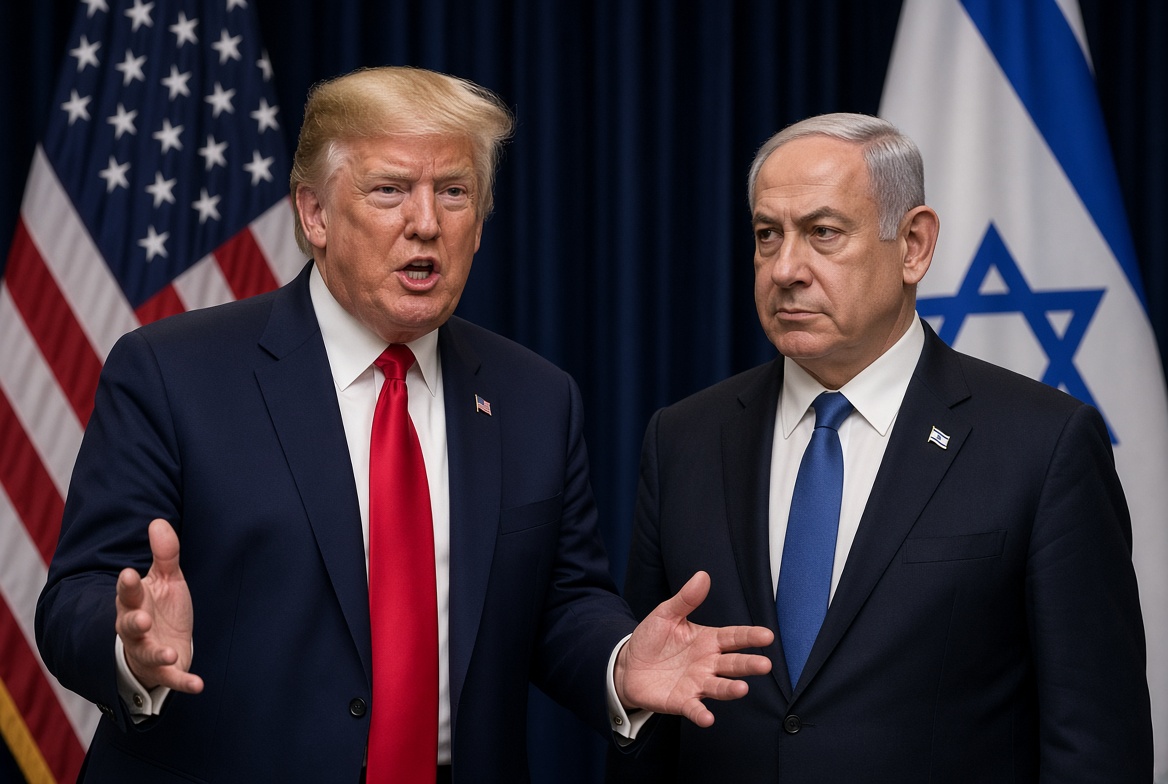
President Donald Trump said Tuesday that the United States will end its roughly $4 billion in annual funding to Israel by the close of this year under an agreement he reached months ago with Israeli Prime Minister Benjamin Netanyahu.
Speaking by phone on Fox News’ Fox & Friends as Americans voted in the midterm elections, Trump stated that the two leaders had decided to halt the payments because Israel “doesn’t need it” and to remove what he described as a damaging political talking point used by critics.
“Now, as far as paying Israel, Bibi Netanyahu and I have made a deal that we give Israel $4 billion a year, and we made a deal months ago that we’re stopping,” Trump said. “We’ve already agreed that by the end of this year we won’t be paying Israel. Now, we’ll help Israel if they need it.”
Trump added that Netanyahu had raised the idea himself, saying the Israeli leader told him it would be “appropriate” not to receive the aid given domestic political controversy in the United States. He specifically referenced criticism from Democratic Michigan Senate candidate Abdul El-Sayed and others on the left, calling continued payments “a bad talking point”.
The announcement immediately raised questions about implementation. The current U.S.-Israel Memorandum of Understanding, which provides about $3.8 billion annually in military assistance, does not expire until 2028. U.S. military aid to Israel is appropriated by Congress, and experts noted that abrupt termination of ongoing programs—particularly in missile defense and counter-drone systems—would face legal and logistical hurdles. Trump has not detailed the precise mechanism or timeline for ending the funding.
There was no immediate confirmation from Netanyahu’s office or Israel’s foreign ministry. Israeli defense and financial officials were reportedly caught off guard by the public statement. The U.S. State Department did not respond to requests for comment.
The move comes amid declining American public support for unconditional aid to Israel since the war in Gaza that began in 2023. A recent Quinnipiac University poll found that nearly half of U.S. voters overall, and two-thirds of Democrats, believe the United States is too supportive of Israel. Aid to Israel has also become a point of contention within the Republican Party, drawing criticism from some isolationist and “America First” voices.
Trump framed the decision as consistent with a strong alliance, emphasising that the U.S. would continue to support Israel “if they need it” and that Israel remains a key partner. He noted that Israel could still purchase American weapons.
Analysts described the timing—on Election Day—as potentially aimed at neutralising attacks from both progressive Democrats and some within the MAGA coalition. Former Republican Rep. Marjorie Taylor Greene wrote on X that the announcement was unlikely to change midterm results, while others questioned whether the pledge would hold after the election.
The development marks a significant rhetorical shift in a relationship that has included steady U.S. military financing for decades. Whether the stated cutoff materialises by the end of 2026, and in what form, remains unclear pending further details from the White House and any formal agreement with Israel.
References
Al Jazeera. (2026, November 3). Trump says US will stop giving Israel aid after year-end. https://www.aljazeera.com/news/2026/11/3/trump-announces-that-us-will-stop-paying-israel-after-year-end
Debusmann, B., Jr. (2026, November 3). Trump says US ‘won’t be paying Israel’ by end of year. BBC News. https://www.bbc.co.uk/news/articles/cmx2dlx86n9yo
Reuters. (2026, November 3). Trump says US will stop $4 billion in funding to Israel at end of 2026. https://www.reuters.com/world/middle-east/trump-says-us-will-stop-paying-israel-after-year-end-2026-11-03/
Times of Israel. (2026, November 3). Trump says US to end $4 billion in annual military aid to Israel by end of 2026. https://www.timesofisrael.com/trump-says-us-to-end-4-billion-in-annual-military-aid-to-israel-by-end-of-2026/
Discover more from The Monitor
Subscribe to get the latest posts sent to your email.

Three headlines about Elon Musk’s companies appeared to tell unrelated stories: a spectacular electric sports car, a possible corporate merger and growing dependence on satellite connectivity. Read together, they reveal a broader contest over capital, engineering and control of digital infrastructure.
The key is to separate announcements, proposals and operational results. A demonstrated vehicle capability is not a mass-production date. A corporate committee is not a completed merger. And satellite coverage is not the same as unrestricted service under every political or security condition.
Tesla Roadster: the spectacle and the schedule
Reuters reported in mid-October on a next-generation Tesla Roadster demonstration involving SpaceX-inspired thruster technology. The report also indicated that customer deliveries would not begin until 2028. The distinction between a prototype showcase and a product ready for buyers is the most important one for readers evaluating Tesla’s technology ambitions.
A dramatic unveiling can demonstrate engineering intent. What follows is less glamorous: homologation, manufacturing readiness, servicing plans, warranty commitments, cost control and repeatable performance in ordinary conditions. Prospective buyers should not treat estimated specifications or on-stage promises as final contract terms.
SpaceX–Tesla merger talks: possible is not agreed
Reuters reported on October 22 that a potential merger would require Musk’s approval, even as governance considerations complicated the discussion. Committees studying a deal have not, by themselves, established a price, transaction structure, regulatory clearance or shareholder outcome.
The strategic case is obvious to enthusiasts: electric vehicles, robotics, satellites, artificial intelligence and computing capacity might be marketed as a single integrated ecosystem. The drawbacks are equally serious. A conglomerate can obscure business-level performance, increase capital-allocation conflicts and make valuation harder. Directors and shareholders would need to scrutinise related-party interests and who benefits from any exchange ratio.
The less cinematic AI numbers
Reuters’ October earnings coverage described rapid revenue growth in SpaceX’s AI business alongside a sharp increase in capital spending. Investors should resist both extremes: dismissing all AI demand as hype or assuming revenue growth guarantees attractive free cash flow. Data-centre infrastructure needs chips, sites, power and expensive maintenance.
Fast revenue growth can coexist with high valuation risk. The test is whether new businesses eventually finance their own expansion while preserving adequate returns to capital providers.
Starlink’s national-security dilemma
Satellite networks promise resilience when terrestrial networks fail. They also create dependence on operators with technical control over service policies, access and availability. October reporting on Starlink and Ukraine highlighted how restrictions or changes in operational capability can acquire strategic significance. The Reuters account noted statements by Ukrainian officials about restored connectivity at high travel speeds; statements about the causes of earlier restrictions require careful attribution.
For governments and businesses, diversification may therefore matter almost as much as signal quality. Critical communications need backups, clear contracts and a plan for service interruption.
Five questions before believing the next Musk headline
| Claim | Verification test |
|---|---|
| A rocket or vehicle can perform a feat | Independent evidence of a completed demonstration |
| A car launches next year | Confirmed production, approvals and delivery schedule |
| Two companies are merging | Filed agreement, board and shareholder approvals |
| AI business is profitable | Cash flow, costs and credible segment disclosure |
| Satellite service is universally available | Licence, coverage, capacity and contractual terms |
Why the story matters outside the US
Pakistan and other emerging markets look to satellite broadband, low-cost electric technology and AI tools for development opportunities. They also face affordability, spectrum and regulatory questions. Importing a futuristic product is not a substitute for competition policy or infrastructure resilience.
Corporate governance will matter as much as engineering
A potential deal between companies closely associated with the same entrepreneur raises questions about valuation, conflicts and decision-making. Independent directors must consider whether each shareholder group receives fair treatment; enthusiasm for a shared brand is not a substitute for transaction terms. Investors should distinguish a serious formal proposal from a public comment about strategic possibilities.
There is also a different risk profile across the businesses involved. A vehicle manufacturer faces factory utilisation, safety recalls and consumer financing. A satellite operator depends on launch capabilities, spectrum arrangements, recurring subscriptions and government permissions. AI computing infrastructure adds yet another profile involving power costs, hardware replacement and contract concentration. Combining these enterprises does not make their underlying risks disappear.
For followers of the space programme, the next meaningful milestone is evidence of repeated operational success, not a promise that a future mission will use advanced recovery methods. For EV buyers, it is a firm delivery programme with defined specifications. For connectivity users, it is consistent service under known contractual conditions.
A restrained technology roundup can celebrate ambitious engineering while continuing to ask ordinary questions about reliability, costs and the institutions that oversee it.
Are Tesla and SpaceX already one company?
No. Reported discussions and committees do not establish a completed merger.
Does a Roadster prototype guarantee 2028 deliveries?
No. The announced timeline remains subject to production and regulatory realities.
Can Starlink replace every terrestrial telecom network?
No. It may be particularly valuable in hard-to-serve areas or emergencies, but capacity, cost and regulation still matter.
The overlooked theme: Musk’s ventures are increasingly connected by shared ambitions and capital demands. The more compelling editorial question is not what they can announce, but which promises can be delivered at scale and at a defensible cost.
Discover more from The Monitor
Subscribe to get the latest posts sent to your email.
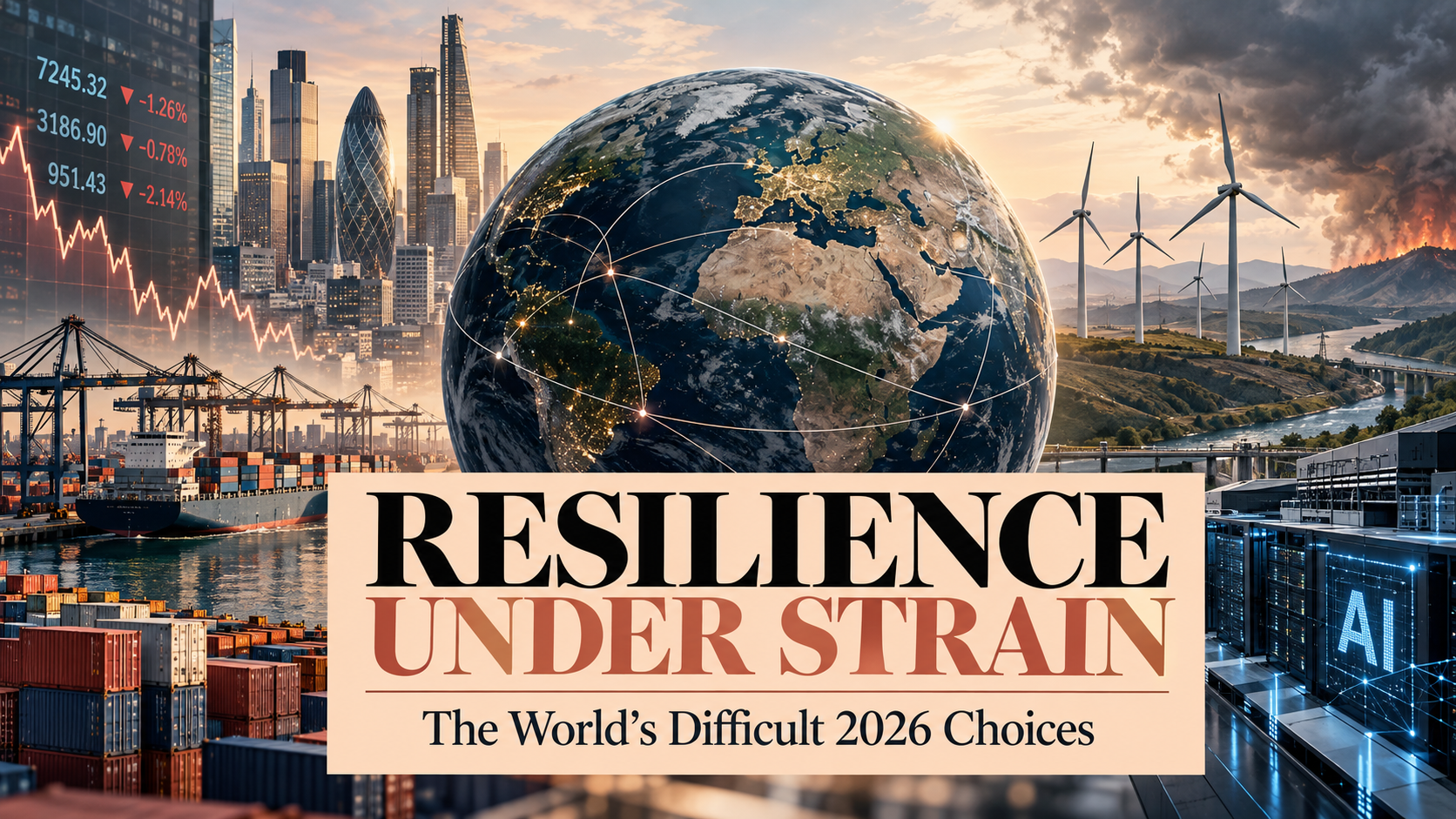
Global growth has proved harder to derail than many feared, but resilience is no longer evenly distributed. The IMF’s October 2026 World Economic Outlook projects 3.1% global real GDP growth this year and 3.4% in 2027. It also expects inflation to reach 4.7% in 2026 before easing to 4.1% next year. Those figures describe an expanding world economy, not a global recession. They also conceal a widening divide between technology-linked investment hubs and energy-importing developing countries.
The danger is not simply a weaker headline growth rate. It is that governments may respond to an uneven shock with blunt policy instruments: indiscriminate energy subsidies, abrupt fiscal austerity or interest-rate changes that neglect currency and inflation risks. The next phase of economic resilience will be determined by the quality of those choices.
Key takeaways
- Positive global growth masks divergent conditions across countries and industries.
- The AI investment cycle supports output but increases concentration and valuation risk.
- Energy prices transfer purchasing power from importers to producers and complicate monetary policy.
- High public debt makes apparently affordable short-term interventions expensive over time.
- For Pakistan and other import-dependent economies, targeted relief and durable export capacity are more valuable than headline stimulus.
The number that both reassures and misleads
The IMF’s 3.1% projection indicates that world output is still expanding in real terms. But an average cannot describe who bears the costs. A country hosting semiconductor investment may register a manufacturing upswing while an importing economy faces a higher fuel bill and constrained fiscal choices. Similarly, a profitable multinational can raise capital for data centres even when smaller firms struggle with borrowing costs.
The contrast also appears between different statistical frameworks. The UN Department of Economic and Social Affairs’ mid-2026 update forecast 2.5% global growth for 2026. That was a forecast published in May, using different assumptions and an earlier information set. It is not appropriate to present it as a contradiction that was settled by averaging the two figures. Readers should compare release dates, definitions and data cutoffs before drawing conclusions.
The October IMF forecast was prepared with statistical information available through October 1, according to the report. Even a recently published forecast cannot fully price in an unexpected military escalation or market shock afterward. Economic forecasts are conditional pictures of a changing landscape, not guarantees.
Three asymmetries shaping the world economy
Growth is concentrated in particular technologies
The WTO’s October trade update lifted its forecast of merchandise trade-volume growth to 3.9% for 2026, compared with 1.9% in March. Demand for AI-enabling goods helped offset disruptions in fuel and fertilizer trade. That is not a general statement that every exporter is thriving. It suggests that the composition of trade matters more than the direction of the global average.
The investment picture is similarly uneven. UNCTAD’s World Investment Report 2026 records a 6% rise in global foreign direct investment to $1.6 trillion in 2025, but says the recovery was concentrated. The 20 largest recipient economies attracted more than 80% of global inflows. A rebound in aggregate investment can coexist with a shortage of long-term capital where it is most needed.
Inflation hurts people and economies differently
Inflation is not one event experienced at the same intensity by everyone. A richer household may postpone a nonessential purchase; a lower-income household cannot postpone the need to eat or commute. An exporting fuel producer can benefit from a price spike while a developing economy paying for imported diesel loses foreign exchange and confronts an increase in domestic transport costs.
This distributional difference is precisely why the IMF’s 2026 World Economic Outlook places emphasis on temporary, targeted support during cost-of-living crises. The institution’s analysis finds that suppressing prices broadly can require several times the fiscal resources of targeted transfers. The political attraction of a universal subsidy is understandable; the budgetary opportunity cost can be punishing.
Financial resilience is not safety
The October Global Financial Stability Report warns about a possible correction in AI-related assets, rising sovereign yields and cyber incidents affecting financial infrastructure. Markets can remain calm for a long period while leverage, maturity mismatches or fiscal vulnerabilities accumulate underneath.
This distinction matters for sovereign borrowers. A government can refinance debt readily during a period of abundant risk appetite and then face sharply higher yields when investors reassess inflation or fiscal credibility. For an economy with substantial external obligations, volatility in international funding conditions can affect both public finances and private investment.
The economic transmission chain
| External shock | First transmission channel | Second-round consequence | Policy trade-off |
|---|---|---|---|
| Oil or diesel supply disruption | Import and freight costs rise | Inflation and weaker real incomes | Relief versus fiscal capacity |
| AI investment disappoints | Technology valuations weaken | Financing and equipment demand soften | Market support versus risk discipline |
| Sovereign yields rise | Debt refinancing costs increase | Less room for productive spending | Consolidation versus development |
| Tariff uncertainty rises | Supply chains and sourcing change | Investment delays and costlier inputs | Resilience versus efficiency |
| Tourism routes disrupted | Passenger flows and service earnings shift | Job and foreign-exchange losses | Security versus connectivity |
Original analytical framework; effects vary by country and timing.
A policymaker who sees only the first-round consequence may reach for the wrong remedy. A sudden oil price increase, for example, is not identical to excessive domestic demand. Higher interest rates can dampen inflation expectations and protect currency confidence, but they cannot create additional diesel. Conversely, a large untargeted subsidy may hide the visible rise in fuel prices while worsening public borrowing needs.
Why fiscal policy has become the decisive constraint
Governments entered this period with limited buffers. The IMF’s April 2026 Fiscal Monitor put global public debt at just under 94% of GDP in 2025 and projected it would reach 100% by 2029. An October IMF assessment of sovereign yields stressed that higher interest rates amplify fiscal pressure when debt is already elevated.
These are global debt measures, not a claim that every country shares the same balance-sheet risk. A reserve-currency government issuing long-term debt in its own money is in a different position from a frontier market with foreign-currency maturities. A sensible debt debate should therefore examine interest costs, maturity profiles, contingent liabilities and the credibility of future tax revenue—not debt-to-GDP in isolation.
A second question is the composition of fiscal adjustment. Cutting productive maintenance, basic education or disease prevention may improve a year’s reported deficit while damaging the economy’s long-run earning capacity. Credible consolidation should focus on inefficient spending and revenue leakage while preserving high-return public functions.
Asia and Pakistan: policy through the import bill
Energy-importing Asian economies face a dual challenge: fuel costs can rise as demand from major trading partners changes. Export manufacturing may benefit from stronger global goods trade, but the advantage is reduced when electricity and transport become more expensive. A successful strategy has to work on the export side and the import side together.
Pakistan illustrates the tension. An October 7 IMF statement estimated FY2025–26 real GDP growth at 3.6%, and reported gross reserves of around $21.5 billion at end-September. The Fund reached a staff-level agreement on program reviews, subject to Executive Board approval, not an unconditional disbursement. The statement also stressed energy-sector efficiency, taxation, reserves and targeted safety nets.
For Pakistan the policy logic is sequential. First, preserve macroeconomic credibility so price and exchange-rate signals remain useful. Second, protect vulnerable people with instruments designed around need rather than petrol consumption. Third, reduce energy-system losses and logistics frictions that prevent domestic producers from capitalizing on global trade opportunities. Fourth, raise skills and reliability in sectors capable of earning foreign exchange.
The same logic applies, with different institutional arrangements, to many countries across South Asia and Southeast Asia. A temporary commodity boom should not be mistaken for structural competitiveness; a temporary fuel shock should not become an excuse for permanent distortionary subsidies.
Four choices that cannot be postponed
Choose targeted protection over universal price freezes. Distributional relief should reach people most exposed to higher food, transport and electricity costs. That requires social registries, payment systems and transparent eligibility criteria. When assistance is untargeted, larger consumers often capture more of the financial benefit.
Choose investment quality over investment headlines. Data-centre announcements, industrial incentives and infrastructure projects are not equally valuable. Governments should ask how much domestic employment, export capacity, grid improvement and knowledge transfer each generates after subsidies and public guarantees are counted.
Choose diversified trade over tariff reflexes. Supply-chain resilience sometimes justifies redundant capacity, but permanent protection can also shelter unproductive firms. The relevant test is whether a measure lowers the expected total cost of disruption without becoming an open-ended subsidy to inefficiency.
Choose credible gradual reform over abrupt announcements. A clear medium-term fiscal and monetary path allows firms to plan capital expenditure, wages and hiring. Repeated reversals can raise the risk premium even when the immediate measure appears pro-business.
Risks, limitations and what would change the outlook
The outlook could improve if energy flows normalize, AI investment produces broad productivity gains and trade tensions ease. It could deteriorate if conflict escalates, financing costs rise or investors reassess the expected profitability of AI infrastructure. No single model can assign reliable probabilities to each geopolitical pathway. Differences between IMF and UN growth forecasts also caution against false precision.
The signals to follow are the composition of WTO trade growth; oil-product availability rather than only crude benchmarks; long-term sovereign yields; new FDI projects outside leading recipient countries; and whether real wages improve after inflation. Household welfare is the ultimate test of resilience, not the absence of recession headlines.
Frequently asked questions
Is the global economy in recession in 2026?
The IMF baseline still projects positive world output growth of 3.1% for 2026. Individual economies or sectors may nonetheless contract.
What does resilience under strain mean?
It means overall economic activity continues expanding, but the supporting conditions are increasingly unequal and vulnerable to financial, energy and geopolitical shocks.
Why can global trade grow faster than global GDP?
Trade volumes can be lifted by particular categories—such as AI-related equipment—even when domestic services and consumption in other economies are subdued.
Why are broad fuel subsidies risky?
They can be costly, may benefit larger consumers disproportionately and can reduce funds available for targeted social protection and infrastructure.
Does the IMF’s Pakistan staff-level agreement mean funds have already arrived?
No. Its October 7 announcement explicitly says implementation is conditional on Executive Board approval.
Which measure should households follow?
Real income—income adjusted for inflation—along with reliable employment, transport and food costs provides a more useful picture than global GDP alone.
Conclusion
Resilience is not the ability to ignore danger; it is the capacity to absorb shocks without sacrificing the foundations of future growth. In 2026 the world remains economically active, but benefits are concentrated and buffers are strained. Governments that preserve targeted social support, rebuild fiscal credibility and invest in productivity will emerge stronger than those that mistake a positive growth figure for proof of economic security.
Discover more from The Monitor
Subscribe to get the latest posts sent to your email.

The First Muslim Senator and the Limits of America’s Midterm Revolt

Trump Announces U.S. Will Stop $4 Billion Annual Aid to Israel by End of 2026

What Is Trump Doing on Election Day 2026? Inside His White House Plans

Tesla, SpaceX and Starlink: The Real Business Story Behind Elon Musk’s October Buzz

Resilience Under Strain: The World’s Difficult 2026 Choices

Andy Harris in 2026: Freedom Caucus Influence, Spending and Congressional Power

MLB Playoffs 2026: Postseason Format, Broadcast Guide and How to Track the Bracket

Elon Musk Calls Mukesh Ambani the “Real Boss of India” Over Alleged Monopoly Concerns

Legal Pioneer and Defender of Justice: The Life, Works, and Legacy of Navi Pillay

Inside the Modern Republican Party Platform: Tax Policy, Immigration, and Governance

Analyzing the Republican Voter Enthusiasm Gap: Turnout Metrics and Polling Data
What Is Trump Doing on Election Day 2026? Inside His White House Plans
Resilience Under Strain: The World’s Difficult 2026 Choices

Anne Carson: Genius of Hybrid Forms and 2026 Nobel Laureate in Literature
Elon Musk Calls Mukesh Ambani the “Real Boss of India” Over Alleged Monopoly Concerns
MLB Playoffs 2026: Postseason Format, Broadcast Guide and How to Track the Bracket
Andy Harris in 2026: Freedom Caucus Influence, Spending and Congressional Power
Trump Announces U.S. Will Stop $4 Billion Annual Aid to Israel by End of 2026
-

 Featured6 years ago
The Right-Wing Politics in United States & The Capitol Hill Mayhem
-

 Conflict5 years ago
Kashmir Lockdown, UNGA & Thereafter
-

 News5 years ago
Prioritizing health & education most effective way to improve socio-economic status: President
-

 Democracy5 years ago
Missing You! SPSC
-

 China5 years ago
Coronavirus Pandemic and Global Response
-

 Digital6 years ago
Pakistan Moves Closer to Train One Million Youth with Digital Skills
-

 Canada5 years ago
Socio-Economic Implications of Canadian Border Closure With U.S
-
Democracy5 years ago
President Dr Arif Alvi Confers Civil Awards on Independence Day