
Politics
The Repercussions of Growing Polarization in Pakistan

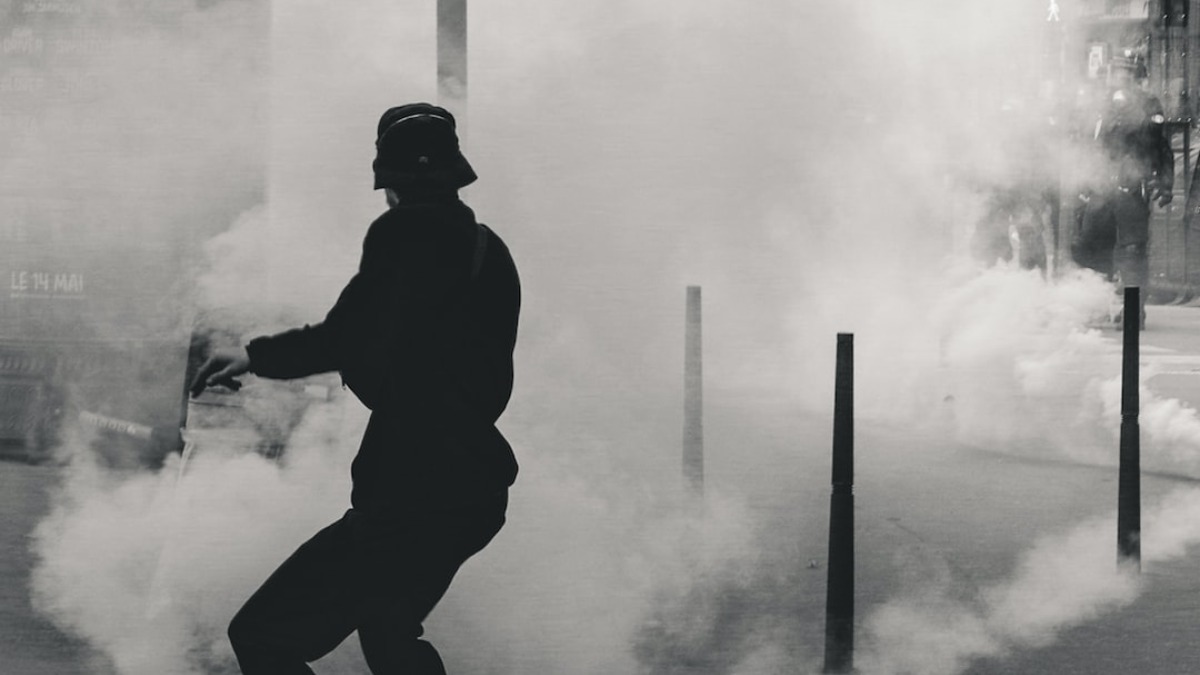
Table of Contents
Introduction
Pakistan is a country with a long history of political polarization. This polarization has been exacerbated in recent years by a number of factors, including the rise of social media, the decline of traditional media, and the increasing popularity of identity politics.
This polarization has had a number of negative repercussions for Pakistan, both domestically and internationally. These repercussions include:
- A decline in trust in government. As the political divide has widened, so too has the level of trust in government. This has made it more difficult for the government to govern effectively and has led to a decline in public services.
- Increased social unrest. The growing polarization has also led to increased social unrest. This has manifested itself in the form of protests, riots, and violence.
- A weakened economy. The polarization has also had a negative impact on the economy. This is because it has made it more difficult for businesses to operate and has discouraged investment.
- A damaged reputation abroad. The polarization has also damaged Pakistan’s reputation abroad. This has made it more difficult for Pakistan to attract foreign aid and investment.
The Causes of Polarization
There are a number of factors that have contributed to the growing polarization in Pakistan. These factors include:
- The rise of social media. Social media has made it easier for people to connect with others who share their political views. This has created echo chambers where people are only exposed to information that confirms their existing beliefs.
- The decline of traditional media. Traditional media, such as newspapers and television, have traditionally played an important role in bridging the political divide. However, the decline of these media outlets has left a void that has been filled by social media and other partisan outlets.
- The increasing popularity of identity politics. Identity politics has become increasingly popular in Pakistan in recent years. This has led to a situation where people are more likely to vote for a candidate based on their identity, rather than their policies.
The Repercussions of Polarization
The repercussions of polarization are far-reaching and have a negative impact on both the domestic and international spheres. Some of the most significant repercussions include:
- A decline in trust in government. As the political divide has widened, so too has the level of trust in government. This has made it more difficult for the government to govern effectively and has led to a decline in public services.
- Increased social unrest. The growing polarization has also led to increased social unrest. This has manifested itself in the form of protests, riots, and violence.
- A weakened economy. The polarization has also had a negative impact on the economy. This is because it has made it more difficult for businesses to operate and has discouraged investment.
- A damaged reputation abroad. The polarization has also damaged Pakistan’s reputation abroad. This has made it more difficult for Pakistan to attract foreign aid and investment.
Ways to Address Polarization
There are a number of ways to address polarization in Pakistan. Some of the most effective ways include:
- Promoting media literacy. Media literacy is the ability to critically evaluate the information that we consume. This is important because it can help us to identify and avoid biased or misleading information.
- Supporting independent media. Independent media can play an important role in bridging the political divide. This is because they are less likely to be biased and can provide a platform for different viewpoints.
- Encouraging dialogue and debate. Dialogue and debate are essential for a healthy democracy. These activities can help to break down the barriers between different groups and can promote understanding and tolerance.
Conclusion
The growing polarization in Pakistan is a serious problem that has a number of negative repercussions. However, there are a number of ways to address this problem. By promoting media literacy, supporting independent media, and encouraging dialogue and debate, we can help to create a more tolerant and inclusive society in Pakistan.
Discover more from The Monitor
Subscribe to get the latest posts sent to your email.



Analysis
How Liberal Democracy Can Survive an Age of Spiraling Crises: A Conversation With Daron Acemoglu
The 2024 Nobel laureate explains why democracy’s survival depends on working-class prosperity—and what happens when institutions fail to deliver
When only 28% of Americans express satisfaction with how their democracy functions—a historic low recorded in January 2024—the warning signals are impossible to ignore. This isn’t merely a statistical artifact of partisan frustration. It represents something more fundamental: a crisis of delivery, where democratic institutions have systematically failed to fulfill their core promises to ordinary citizens.
Daron Acemoglu, the MIT economist who received the 2024 Nobel Prize in Economic Sciences, argues that liberal democracy flourished when it pursued its core promises of shared prosperity, democratic governance at the local and national level, and the free pursuit of knowledge. But those promises now ring hollow for millions who have watched inequality skyrocket while their own economic prospects stagnate. The question facing advanced democracies isn’t whether they’re under threat—the data confirms they are—but whether they possess the institutional capacity to reform themselves before it’s too late.
Table of Contents
The Polycrisis: When Multiple Failures Converge
We live in what scholars call a “polycrisis”—a condition where multiple, overlapping emergencies compound one another in ways that transcend their individual impacts. The numbers tell a stark story: between 2016 and 2024, the number of people living with democratic rights fell from 3.9 billion to 2.3 billion. This isn’t gradual erosion; it’s a democratic recession affecting nearly 1.6 billion people in less than a decade.
The Varieties of Democracy (V-Dem) Institute documents this retreat with precision. As of 2024, 42 countries are experiencing ongoing episodes of autocratization, a process where elected leaders systematically dismantle the very institutions that brought them to power. What makes this wave particularly insidious is its legalistic veneer—authoritarianism advancing through the ballot box rather than military coups.
But the democratic crisis doesn’t exist in isolation. It intersects with economic turbulence that has reshaped the social contract across industrialized nations. Consider the wealth concentration dynamics: In the United States, households in the top 10% of the wealth distribution own more than half—specifically 52%—of all total household wealth, with this share reaching as high as 79%. Meanwhile, income inequality measured by the Gini coefficient varies dramatically across OECD countries, ranging from approximately 0.22 in the Slovak Republic to more than double that in Chile, Costa Rica, and the United States.
This economic bifurcation creates what Acemoglu calls the preconditions for democratic decay. When democracy stops delivering shared prosperity, citizens begin questioning whether democratic institutions serve their interests at all.
Acemoglu’s Diagnostic: The Narrow Corridor and Institutional Balance
To understand how democracies survive—or fail—Acemoglu and his longtime collaborator James Robinson developed what they term “the narrow corridor” theory. The concept, detailed in their 2019 book of the same name, rejects the notion that liberty emerges naturally from either strong states or weak ones. Instead, freedom arises from a delicate balance between state power and an empowered society, where institutions provide education, healthcare, infrastructure, and protection from violence while remaining constrained enough that they cannot become predatory.
This framework helps explain puzzling variations in democratic outcomes. Why did some countries successfully democratize while others with similar initial conditions descended into autocracy or chaos? The answer lies in institutional design and the continuous tension between state capacity and societal mobilization.
Acemoglu’s research with Robinson and others has found that democracy directly contributes to economic growth, though it takes time—countries that democratize generally grow faster and invest more in education and health. But this relationship isn’t automatic. It depends on whether democratic institutions remain genuinely inclusive or become captured by narrow elites.
The extractive-versus-inclusive framework provides the analytical foundation. Extractive institutions concentrate power and wealth in the hands of a small elite, extracting resources from the broader population. Inclusive institutions, by contrast, distribute political power widely and create incentives for education, innovation, and broad-based economic participation.
History offers abundant examples. For three decades following World War II, democracy delivered shared prosperity as real (inflation-adjusted) wages increased rapidly for all demographic groups and inequality declined, but this trend ended in the late 1970s and early 1980s. Since then, the compact has broken down. Wages for workers without college degrees have stagnated while inequality has exploded—creating precisely the conditions under which populist demagogues thrive.
Economic Foundations of Democratic Fragility
The connection between economic inequality and democratic backsliding isn’t merely correlational. It operates through specific mechanisms that Acemoglu has spent decades documenting.
Democracy is in crisis throughout the industrialized world because its performance has fallen short of what was promised, with far-right and extremist parties benefiting from the fact that center-left and center-right parties are associated with wage stagnation, rising inequality, and other unfavorable trends. This isn’t hyperbole—it’s observable reality across Europe and North America.
The wealth inequality data reveals the scale of the problem. Brazil, Russia, and South Africa top global rankings for wealth inequality, each posting Gini coefficients around the low 0.8s on a scale where 0 represents perfect equality and 1 represents maximum inequality. But even wealthy democracies show troubling patterns. Among OECD countries in 2021, the ratio of average income between the richest 10% and poorest 10% of the population was 8.4 to 1.
These disparities matter because they shape political behavior. More than 60% of respondents across surveyed countries declared that disparities in income and wealth were too high or far too high in their country. When large swaths of the population feel economically abandoned, they become receptive to politicians promising to overturn the existing system—democratic norms be damned.
Acemoglu’s recent work emphasizes how technological change amplifies these dynamics. Automation and artificial intelligence threaten to further concentrate wealth and eliminate middle-skill jobs, precisely the economic foundation that historically sustained democratic stability. Without deliberate policy interventions to ensure technology creates broadly shared prosperity rather than extracting value for a narrow class of owners and investors, the economic pressure on democracy will only intensify.
The Polarization Multiplier
Economic anxiety doesn’t operate in a vacuum—it interacts with political polarization to create a toxic feedback loop threatening democratic stability.
In spring 2024, only 22% of U.S. adults said they trust the federal government to do the right thing just about always or most of the time, up slightly from the previous year’s historic low of 16%. This institutional mistrust reflects and reinforces partisan divisions. The Centers for Disease Control, for instance, received a 78% favorable rating among Democrats but only 33% approval from Republicans in 2024—a 45-percentage point chasm reflecting not scientific evidence but tribal identity.
The share of Americans who consider themselves on the far left or far right of the political spectrum is particularly high in the United States, with 11% placing themselves on the far left and 19% on the far right. Compare this to Germany, where only 6% identify as far left and 7% as far right, and the distinctive character of American polarization becomes clear.
This affective polarization—the emotional hostility between political tribes—proves more destabilizing than mere policy disagreements. Research shows it enables voters to excuse antidemocratic behavior by their own side while viewing identical actions by opponents as existential threats. Three-quarters of Americans said in 2023 that the future of American democracy was at risk in the 2024 presidential election, with both sides viewing the other as the primary threat.
The international context provides little comfort. Since 2000, 45 countries have experienced significant decline in the free and fair nature of their elections, relating to the spread of misinformation, interference from foreign actors, and erosion of public trust. These trends aren’t unique to any single nation—they represent a global pattern threatening the third wave of democratization.
Institutional Resilience: Pathways Forward
Despite documenting democracy’s current travails, Acemoglu’s analysis isn’t fundamentally pessimistic. The narrow corridor framework suggests that democratic renewal remains possible—but only through specific institutional reforms and renewed social mobilization.
Democracy has long promised four things: shared prosperity, a voice for the citizenry, expertise-driven governance, and effective public services. Rebuilding these pillars requires concrete policy changes, not merely rhetorical commitments.
First, the economic compact must be restored. This means policies explicitly designed to ensure technology creates good jobs rather than merely automating existing ones. Acemoglu and co-author Simon Johnson argue in their recent work that AI deployment should be shaped by tax policy, regulation, and public investment to favor labor-augmenting rather than labor-replacing technologies.
Second, political institutions need structural reforms to rebuild representativeness. This includes addressing gerrymandering, campaign finance distortions, and the ways money translates directly into political power—all of which allow narrow interests to capture democratic processes.
Third, strengthening the civic infrastructure that enables ordinary citizens to organize, deliberate, and hold power accountable. Some countries like Austria, Chile, Nepal, and South Africa faced early warning signs of deterioration but demonstrated onset resilience to autocratization, providing examples of how mobilized societies can push back against democratic backsliding.
The comparative evidence suggests these interventions work. Countries that have successfully reversed democratic decline share common features: active civil society, reformed electoral systems, and economic policies that deliver tangible improvements in living standards for working families.
The Working-Class Imperative
Perhaps Acemoglu’s most urgent recent argument concerns democracy’s relationship with working-class voters—the constituencies that democratic institutions were originally designed to empower.
While Democrats have won recent elections with support from Silicon Valley, minorities, trade unions, and professionals in large cities, this coalition was never sustainable because the party became culturally disconnected from, and disdainful of, precisely the voters it needs to win. This diagnosis applies beyond American politics to center-left parties across the industrialized world.
The policy implications are clear: More good jobs—finding ways to create good jobs in communities and spreading prosperity that way—must become the organizing principle of democratic governance. This isn’t about nostalgia for manufacturing employment but about ensuring that economic growth translates into broadly shared gains rather than concentrated windfalls for asset owners.
Historical precedent supports this emphasis. The golden age of democratic stability in advanced economies—roughly 1945 to 1980—corresponded precisely to the period when working-class incomes grew fastest. Democracy thrived when it delivered economic security. It now struggles because that delivery system has broken down.
Technology, AI, and Democratic Futures
The technological landscape adds new complexity to democracy’s challenges. Artificial intelligence, in particular, presents both opportunities and acute risks for democratic governance.
On one hand, AI could enhance state capacity, improve public service delivery, and accelerate scientific progress in ways that benefit everyone. On the other, it threatens to concentrate economic power even further, eliminate millions of middle-skill jobs, enable unprecedented surveillance, and flood information ecosystems with AI-generated propaganda.
Acemoglu has testified before the U.S. Senate warning that AI deployment, if left to pure market forces, will likely accelerate inequality and undermine social cohesion. The technology itself is neutral, but its institutional context determines whether it strengthens or erodes democracy. Companies designing AI systems for automation rather than augmentation—replacing human judgment rather than enhancing it—make choices that ripple through the entire political economy.
The policy challenge involves steering technology toward inclusive outcomes without stifling innovation. This requires active industrial policy, thoughtful regulation, and potentially significant changes to how we tax capital versus labor. None of this is simple, but the alternative—allowing technological change to further hollow out the economic middle class—represents a clear pathway to democratic collapse.
Can Democracy Deliver Again?
The central question isn’t whether democracy faces a crisis—democracy is going through a very, very tough stretch, in part because it has not realized its promise for all people, particularly those at the lower end of the labor market. The question is whether democratic systems retain sufficient institutional capacity to reform themselves.
Acemoglu’s framework suggests cautious optimism grounded in historical realism. Democracies have weathered serious challenges before—the Great Depression, World War II, the civil rights struggles. Each time, reform came not from benevolent elites but from mobilized citizens demanding that institutions live up to their stated values.
The narrow corridor theory reminds us that democratic liberty has never been the default state. It emerges only from continuous struggle—the Red Queen effect, where state and society must keep running just to stay in place. Complacency leads to drift toward either despotism or anarchy.
Current global trends provide both warning and possibility. In Thailand, Zambia, and other nations, democracy eroded but people resisted growing authoritarianism, allowing these countries to partially or fully restore previous levels of liberal democracy. These reversals demonstrate that when democracy deteriorates, its fate isn’t sealed—institutions can be reclaimed through organized citizen action.
The Stakes: Liberty and Prosperity
The conversation with Acemoglu ultimately centers on what we risk losing. Democracy isn’t merely a set of procedures for selecting leaders—it’s the institutional foundation for both human liberty and shared prosperity.
It’s very difficult to maintain economic inclusion when ruled by the iron fist of an autocrat, Acemoglu notes. The extractive institutions that characterize autocracies systematically prevent the broad-based innovation, education, and entrepreneurship that drive sustained economic growth.
The stakes extend beyond economics to human dignity and freedom. Autocratic alternatives promise efficiency and decisive action, but they deliver neither. Instead, they concentrate power in ways that ultimately serve narrow interests while suppressing the very social dynamism that makes societies vibrant and productive.
For liberal democracy to survive this age of spiraling crises, it must rediscover its core promise: building inclusive institutions that genuinely serve the broad public rather than narrow elites. This requires confronting economic inequality, repairing social trust, reforming broken political systems, and ensuring that technological change serves human flourishing rather than extractive concentration.
The narrow corridor ahead is treacherous. But it remains navigable—if we choose to walk it with clear eyes and determined purpose.
About the Research
This analysis draws on Daron Acemoglu’s extensive body of work, including “Why Nations Fail” (2012) with James Robinson, “The Narrow Corridor” (2019), and his recent Project Syndicate commentaries on democratic crisis and working-class politics. Data sources include the Varieties of Democracy (V-Dem) Institute, OECD inequality statistics, Pew Research Center political surveys, and World Bank inequality metrics.
Discover more from The Monitor
Subscribe to get the latest posts sent to your email.
Analysis
The Jack Smith Report: What We Know About the Sealed Classified Documents Investigation—And Why It Matters
Behind closed doors in a secure congressional room this December, former Special Counsel Jack Smith delivered testimony that lasted over seven hours. The subject? One of the most consequential investigations into presidential conduct in American history—an inquiry into how hundreds of classified documents ended up at a Florida resort, and what happened when the government tried to get them back.
Yet the American public still hasn’t seen the full story. While Smith’s report on election interference was released in January 2025, Volume II—covering the classified records investigation—remains locked away, caught in a legal battle that reveals much about power, accountability, and the limits of transparency in American democracy.
Table of Contents
KEY TAKEAWAYS
- Jack Smith’s investigation uncovered over 300 documents with classified markings at Mar-a-Lago, including materials marked Top Secret
- Smith told Congress he had developed “proof beyond a reasonable doubt” that crimes were committed
- Volume II of Smith’s final report remains sealed by Judge Aileen Cannon, despite the dismissal of charges against Trump’s co-defendants
- The case represents the first federal indictment of a former U.S. president in American history
- Historical data shows classified document prosecutions typically require evidence of intent and obstruction—both factors present in this investigation
The Investigation That Never Reached Trial
The story begins not with an FBI search, but with missing boxes. In early 2022, the National Archives discovered that 15 boxes of presidential records had been improperly taken to Mar-a-Lago. What seemed like a straightforward retrieval effort evolved into something far more complex when archivists found classified materials mixed among the documents.
By August 2022, after months of negotiations and a grand jury subpoena, FBI agents executed a search warrant at the Florida estate. What they found shocked even seasoned investigators: more than 13,000 government documents, with over 300 bearing classification markings. Some documents were stored in a ballroom, others in a bathroom. Materials marked Top Secret—the government’s highest classification level—sat alongside magazine clippings and personal items.

Jack Smith’s team told lawmakers they had developed “proof beyond a reasonable doubt” that President Trump had criminally conspired and developed “powerful evidence” that he broke the law by hoarding classified documents and obstructing government efforts to recover them.
The numbers tell a stark story. Unlike previous classified document cases involving government officials, this investigation revealed systematic resistance to federal efforts at recovery. According to court documents, approximately 48,000 guests visited Mar-a-Lago between January 2021 and May 2022 while these materials were present, yet only 2,200 had their names checked and merely 2,900 passed through magnetometers.
How This Case Differs From Previous Classified Document Investigations
To understand the significance of Smith’s investigation, we need context. The federal government prosecutes classified document mishandling rarely—and only under specific conditions.
As the FBI has outlined, previous cases prosecuted involved some combination of four factors: clearly intentional and willful mishandling of classified information, vast quantities of materials exposed in a way that supports an inference of intentional misconduct, disloyalty to the United States, and efforts to obstruct the investigation.
The comparison many make—to Hillary Clinton’s email server investigation—reveals crucial distinctions. Clinton’s case involved 113 emails retrospectively determined to contain classified information, with only three bearing any classification markings, and those markings were ambiguous. Former FBI Director James Comey concluded there was no evidence Clinton intended to violate laws, and critically, no evidence of obstruction.
The Trump investigation presented a different picture entirely. Federal prosecutors documented what they characterized as deliberate efforts to retain materials after repeated requests for their return, misleading statements to attorneys tasked with compliance, and alleged instructions to move and conceal boxes of documents from federal investigators.
The Legal Framework: When Does Mishandling Become Criminal?
Understanding why Smith brought charges requires grasping the legal architecture governing classified information. The classification system, established through executive orders dating back to 1951, creates three levels of sensitivity: Confidential, Secret, and Top Secret. As of 2017, approximately 2.8 million individuals held clearances to access classified information at various levels—1.2 million with Top Secret access alone.
But classification alone doesn’t determine prosecution. The most serious charge in the Trump case came under the Espionage Act, which criminalizes mishandling information relating to national defense. Courts have consistently held that classified material constitutes strong evidence of national defense information, but the key elements prosecutors must prove are willfulness and intent.
This is where the obstruction allegations became central. Court filings detailed a recorded 2021 conversation where Trump allegedly acknowledged possessing a classified document about military plans that he could have declassified as president but didn’t. Prosecutors also pointed to evidence that when served with a subpoena, rather than complying, Trump allegedly suggested attorneys make false statements and directed an aide to conceal materials.
Six of the original 37 charges related specifically to obstruction—a stark contrast to every other recent high-profile classified documents case involving government officials, where cooperation rather than resistance characterized the response.
The Sealed Report: What We Know and What We Don’t
Jack Smith submitted his two-volume final report to Attorney General Merrick Garland in January 2025, just days before resigning his position. Volume I, covering election interference allegations, was released publicly despite fierce opposition from Trump’s legal team. It concluded that sufficient evidence existed to convict at trial, were it not for Trump’s return to the presidency.
Volume II remains hidden. Judge Aileen Cannon, who was appointed by Trump during his first term and previously dismissed the classified documents prosecution on constitutional grounds, has blocked its release since January 21, 2025. Her stated rationale: protecting the rights of Trump’s former co-defendants, Walt Nauta and Carlos De Oliveira, should their case be revived.
In December 2025, the Eleventh Circuit Court of Appeals gave Cannon 60 days to decide whether to lift her order blocking the report, with her decision deadline set to expire in February 2026.
But here’s where the situation becomes curious. The Department of Justice dropped all charges against Nauta and De Oliveira in February 2025—ten months before the latest court deadline. Legal experts and Democratic lawmakers have questioned what legitimate basis remains for withholding a report about a case that has been entirely dismissed.
Representative Jamie Raskin, the top Democrat on the House Judiciary Committee, captured the frustration: The Trump administration authorized Smith to testify about his investigation while refusing to release the written record that would explain it. The contradiction is difficult to reconcile with claims of unprecedented transparency.
The Constitutional Questions at the Heart of the Case
Judge Cannon’s July 2024 dismissal of the case raised fundamental questions about special counsel authority that reverberate beyond this single prosecution. She ruled that Jack Smith’s appointment violated both the Appointments Clause and Appropriations Clause of the Constitution—a conclusion that contradicted decades of precedent and every other judicial ruling on similar special counsel appointments.
Justice Clarence Thomas, in a solo concurrence in the immunity case, endorsed similar reasoning. No other Supreme Court justice joined his opinion, though this may have been procedural rather than substantive disagreement since the issue wasn’t properly raised in that case. Cannon cited Thomas’s concurrence three times in her decision.
The Department of Justice appealed Cannon’s dismissal, arguing that multiple statutes empower the Attorney General to appoint special counsels, and that such appointments have been validated repeatedly by courts over decades. The appeal became moot when Trump won the 2024 election and Justice Department policy precluded prosecuting a sitting president.
Yet the unresolved constitutional question lingers. If Cannon’s reasoning were to prevail, it would call into question not just this investigation but the entire special counsel framework that has existed since the post-Watergate reforms.
What Smith’s Congressional Testimony Revealed
When Smith appeared before the House Judiciary Committee in December 2025 for his closed-door deposition, he came prepared with strong words about the integrity of his work.
Smith stated: “I made my decisions in the investigation without regard to President Trump’s political association, activities, beliefs, or candidacy in the 2024 presidential election. We took actions based on what the facts and the law required.”
Democrats who attended the seven-hour session described Smith’s testimony as “devastating” to Trump’s claims of political persecution. Republicans maintained the investigation was weaponization of the justice system. Neither side offered specifics about what was discussed regarding the classified documents probe, given Cannon’s prohibition on discussing Volume II findings.
What we do know is that Smith defended controversial investigative tactics, including the acquisition of phone record metadata from nine congressional Republicans. He insisted these records were lawfully subpoenaed and relevant to completing a comprehensive investigation. The records showed only incoming and outgoing numbers and call durations—not content—but Republicans characterized even this as government overreach.
Smith also addressed the Republican criticism of internal FBI communications about the Mar-a-Lago search. Documents released by Senator Chuck Grassley showed that weeks before the search, an FBI agent wrote that the Washington field office did not believe probable cause existed. Yet agents who executed the search found boxes of classified and top-secret documents—precisely what the warrant predicted.
The special counsel’s position was straightforward: if presented with the same evidence again, knowing what he knows now, he would make the same prosecutorial decisions.
The Broader Implications for American Democracy
Step back from the legal technicalities and partisan warfare, and a larger picture emerges. This case tested fundamental principles about accountability, transparency, and the rule of law in ways that will influence American governance for decades.
Consider what we’re witnessing: a criminal investigation into a president’s handling of the nation’s most sensitive secrets, documented in a comprehensive report that may never see public light. Previous special counsel reports—from Kenneth Starr to Robert Mueller to Robert Hur—have all been released, setting expectations for transparency even in politically charged investigations.
The pattern has been consistent: special counsels complete their work, write detailed reports explaining their findings and decisions, and those reports become part of the public record. This transparency serves multiple functions. It allows the American people to understand what their government learned. It provides accountability for prosecutors’ decisions. It creates historical documentation for future generations to understand pivotal moments in American democracy.
With Volume II sealed indefinitely, we lose all of these benefits. The investigation becomes a black box—we know charges were brought, then dismissed, but the full evidentiary record and prosecutorial reasoning remain classified by judicial order, not by the executive branch’s classification system.
What History Tells Us About Classified Document Prosecutions
Looking at comparable cases provides useful context. Over the past 75 years, the federal government has prosecuted classified information mishandling cases with notable selectivity. The pattern reveals prosecutorial discretion focused on the most egregious violations.
David Petraeus, the former CIA director, pleaded guilty in 2015 to mishandling classified materials after sharing black notebooks containing classified information with his biographer. He initially lied to investigators about it. The case resulted in a plea deal with probation and a fine—no prison time.
Sandy Berger, President Clinton’s national security advisor, pleaded guilty in 2005 to removing and destroying classified documents from the National Archives. He also initially lied about it. He received probation, community service, and a fine.
Reality Winner, an NSA contractor, received a 63-month prison sentence in 2018 for leaking a single classified document to a news outlet—the longest sentence ever imposed for unauthorized release of classified information to the media.
The pattern across these cases: intent matters, obstruction matters, and the volume and sensitivity of materials matter. Cases involving cooperation and prompt correction typically result in administrative penalties or light criminal sanctions. Cases involving obstruction, false statements, or national security damage result in serious consequences.
Jack Smith’s investigation alleged both willful retention and systematic obstruction across hundreds of highly classified documents. By the historical standard of how such cases are prosecuted, bringing criminal charges aligned with precedent.
The Political Dimension: Weaponization or Accountability?
Perhaps no aspect of this case has been more contentious than the question of motivation. Trump and his allies have consistently characterized Smith’s investigation as political persecution—the “weaponization” of the Justice Department against a political opponent.
Smith’s defenders point to his career-long reputation as an apolitical prosecutor, his work prosecuting corruption by both Democrats and Republicans, and the extensive evidence documented in court filings. They note that the investigation began under Trump’s own appointed FBI director and that the Mar-a-Lago search came only after months of negotiation and a subpoena that allegedly went unfulfilled.
The timing raises questions on both sides. Smith was appointed in November 2022—days after Trump announced his 2024 presidential campaign. Critics see this as politically motivated. Defenders counter that the appointment came after evidence of potential criminal conduct had already emerged, and that special counsel regulations specifically exist to insulate politically sensitive investigations from direct political control.
What’s undeniable is that American voters rendered their own verdict. Trump won the 2024 presidential election despite facing multiple criminal indictments. Whether this represents vindication of his innocence claims or simply political polarization overriding concern about legal jeopardy depends entirely on one’s political perspective.
The Transparency Paradox
We’re left with a paradox that speaks to larger tensions in American democracy. The Trump administration has proclaimed itself the most transparent in American history. Trump himself has repeatedly demanded full transparency regarding investigations into his political opponents—calling for release of documents, testimony, and evidence.
Yet Volume II of the Jack Smith report remains sealed, despite:
- The dismissal of all criminal charges
- The conclusion of both co-defendants’ cases
- The resignation of the special counsel
- The end of any active prosecution
- The completion of the investigation
Transparency advocacy groups including the Knight First Amendment Institute and American Oversight have pursued legal action to compel release. Their argument is straightforward: with no ongoing prosecution to protect and no defendants’ rights at stake, no legitimate basis exists for continued secrecy about one of the most significant investigations in American history.
Scott Wilkens of the Knight Institute stated: “This is an extraordinarily significant report about one of the most important criminal investigations in American history. There is no legitimate reason for the report’s continued suppression.”
The counterargument from Trump’s legal team and Judge Cannon focuses on procedural and jurisdictional questions rather than engaging the merits of transparency. They argue the special counsel’s appointment was unconstitutional, making any report invalid. They express concern about leaks that could prejudice some theoretical future prosecution.
But these arguments become weaker with each passing month. At what point does the public’s right to know what its government learned outweigh speculative concerns about procedural irregularities and hypothetical future proceedings?
Where Do We Go From Here?
As of late December 2025, several scenarios remain possible:
Scenario 1: Cannon Maintains the Seal
The judge could decide that her January 2025 order should remain in effect indefinitely, keeping Volume II classified unless overturned by an appeals court. This would require the transparency groups to appeal to the Eleventh Circuit, potentially extending the fight for months or years.
Scenario 2: Limited Congressional Access
Cannon could allow the Justice Department to provide a redacted version to the four congressional leaders of the House and Senate Judiciary Committees, as originally proposed. This would give some transparency without full public release—though the risk of leaks would remain.
Scenario 3: Full Public Release
The judge could lift her order entirely, allowing the Justice Department to publish Volume II as it did with Volume I. This seems least likely given Cannon’s consistent rulings favoring Trump’s positions throughout the case.
Scenario 4: Appellate Intervention
The Eleventh Circuit could lose patience with the delay and directly order release, potentially reassigning the case to another judge. This would be unusual but not unprecedented given the court’s previous rebuke of Cannon during the special master controversy.
Each scenario carries implications that extend well beyond this single case. The resolution will help define how much transparency Americans can expect when their government investigates powerful officials, what protections exist for politically sensitive prosecutions, and whether judicial appointments create conflicts of interest that compromise the appearance of impartial justice.
The Larger Questions
Strip away the partisan noise and legal technicalities, and we’re left with fundamental questions about how democracies hold their most powerful figures accountable:
Can a president be prosecuted for conduct occurring during and after their presidency? The Supreme Court’s immunity decision suggests official acts receive presumptive immunity, but questions remain about what constitutes an official act. Is retaining classified documents after leaving office an official or personal act?
What role should the judiciary play when a judge presiding over a case has been appointed by the defendant? Judge Cannon’s appointment by Trump doesn’t automatically create a conflict of interest, but her rulings have consistently favored his positions in ways that appellate courts have found legally questionable.
How do we balance transparency with the rights of defendants? Even in cases involving powerful political figures, criminal defendants deserve protections. But when those cases are dismissed and no prosecution remains active, does the calculus change?
What happens when different branches of government give competing signals about transparency? Congress demands the report. The judiciary blocks it. The executive branch falls somewhere in between, bound by court orders but facing pressure from lawmakers. Who decides?
These aren’t abstract philosophical questions. They’re practical challenges that will recur as American politics grows more polarized and as more officials face potential criminal liability for their conduct.
Conclusion: The Investigation That Defined an Era
Jack Smith’s classified documents investigation will be studied by historians, legal scholars, and political scientists for generations. It represents the first federal indictment of a former president. It tested the limits of executive power and special counsel authority. It raised profound questions about how democracies investigate their leaders while respecting due process and the separation of powers.
But perhaps most significantly, it demonstrated how political polarization can transform legal accountability into partisan warfare. Half the country sees rigorous enforcement of laws governing classified information. The other half sees politically motivated persecution. These competing narratives exist not in different countries but in the same democracy, consuming the same information yet reaching opposite conclusions.
The sealed Volume II report symbolizes this deeper division. One side demands transparency and accountability. The other demands protection from what they view as illegitimate prosecution. Judge Cannon’s courtroom has become the venue where these competing visions of American democracy collide.
We may not see that report for years—if ever. But its absence speaks as loudly as its eventual release might. In a democracy that prides itself on transparency and the rule of law, the inability to share findings from one of the most consequential investigations in American history represents either prudent judicial restraint or dangerous democratic backsliding.
Which interpretation prevails will depend on factors beyond Jack Smith’s investigation itself—on whether Americans can find common ground about basic questions of accountability, whether judicial processes can maintain legitimacy amid deep political divisions, and whether transparency norms can survive when they conflict with partisan interests.
The Jack Smith report exists. Somewhere in Justice Department files sits a detailed account of what happened with those classified documents, why prosecutors believed crimes occurred, and what evidence they amassed. That American citizens may never read it—despite the dismissal of all charges, the conclusion of all proceedings, and the completion of the investigation—tells us something important about the state of American democracy in 2025.
What it tells us, exactly, depends on where you stand.
About This Investigation
This analysis draws on court documents, congressional testimony, and reporting from multiple news organizations. The sealed nature of Volume II means significant aspects of the investigation remain unknown to the public. All factual claims are sourced from publicly available information or direct testimony from parties involved.
Discover more from The Monitor
Subscribe to get the latest posts sent to your email.
Analysis
Henry Cuellar Indicted, Then Pardoned by Trump: What It Means for Political Finance and Accountability
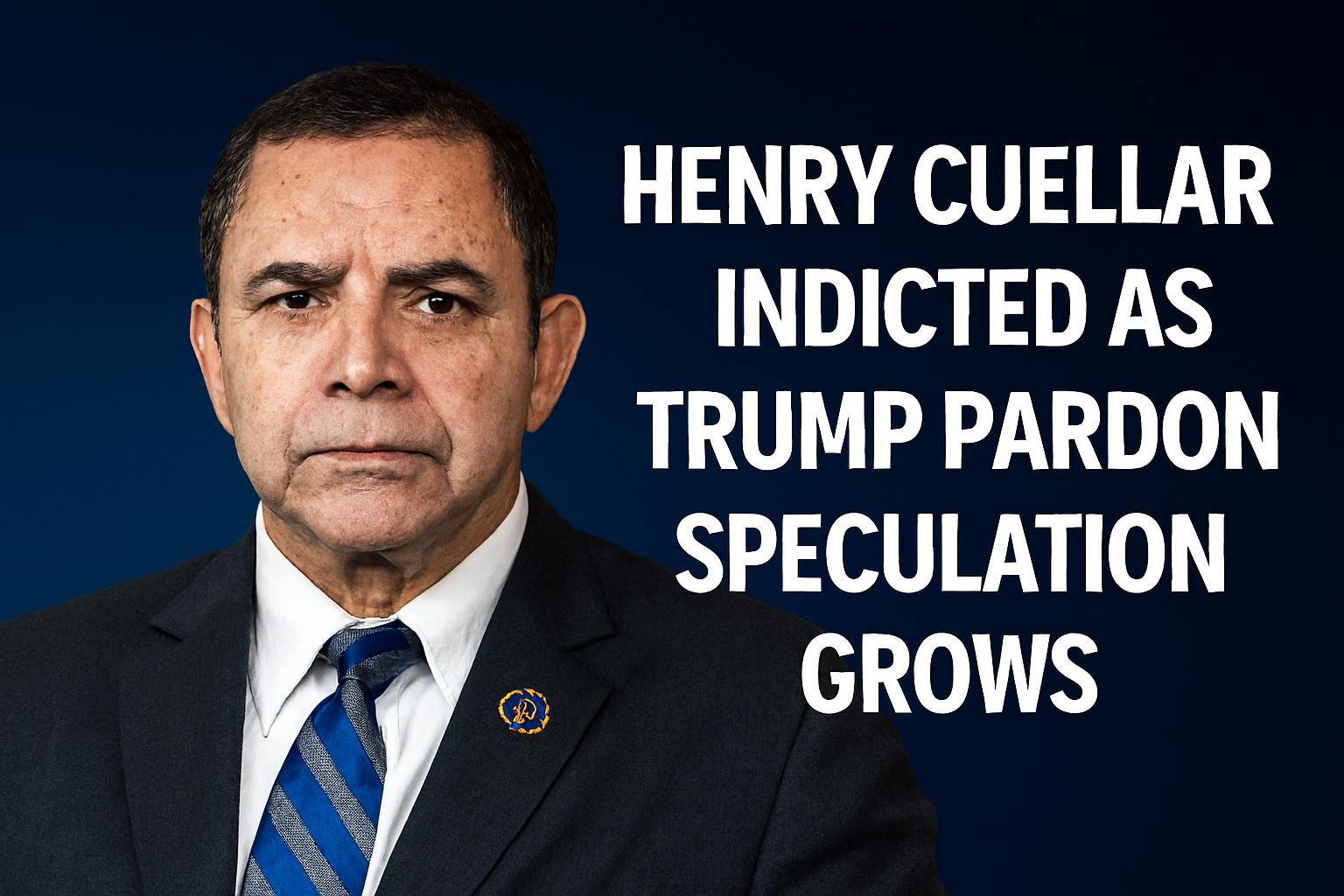
Table of Contents
Introduction
In a stunning twist, Henry Cuellar, the long-serving Democratic Congressman from Texas, was indicted on federal bribery and money laundering charges—only to be pardoned by President Donald Trump days later. The case, which involved alleged payments from foreign entities totaling nearly $600,000, has ignited fierce debate over political accountability, campaign finance ethics, and the evolving role of presidential pardons in partisan warfare.
Cuellar Indicted: The Charges Explained
- Cuellar Henry, along with his wife Imelda, was charged with accepting bribes from overseas sources in exchange for political influence.
- The indictment included money laundering, wire fraud, and obstruction of justice, according to federal prosecutors.
- The charges stemmed from a multi-year investigation into foreign lobbying and campaign finance irregularities.
Trump Pardon: A Political Power Play
- On December 3, 2025, Trump announced a full and unconditional pardon for Henry Cuellar and his wife, via Truth Social.
- Trump claimed the indictment was politically motivated, calling it a “weaponization of the Justice Department” under Joe Biden.
- The move sparked immediate backlash from ethics watchdogs and legal scholars, who questioned the precedent of pardoning a member of the opposing party.
Cuellar Pardon: Strategic or Symbolic?
- The Cuellar pardon may serve dual purposes:
- Symbolic outreach to Hispanic voters and moderate Democrats.
- Strategic distraction from ongoing investigations into Trump’s own allies.
- Cuellar thanked Trump publicly, saying, “Your leadership and willingness to look at the facts means everything to my family.”
Financial Fallout and Market Implications
- The case has rattled investor confidence in politically exposed sectors, especially those tied to foreign lobbying and defense contracts.
- Campaign finance reform stocks and compliance firms saw a brief uptick following the indictment.
- Traders are now watching for ripple effects in government contracting ETFs and political risk indexes.
Conclusion
The Henry Cuellar indictment and Trump pardon underscore the blurred lines between justice, politics, and finance. As campaign finance scrutiny intensifies and presidential pardon powers remain unchecked, investors and voters alike must navigate a landscape where influence and immunity often intersect.
Discover more from The Monitor
Subscribe to get the latest posts sent to your email.

Millions of Burmese Struggle to Find Safety in Thailand

What Is the No Kings Protest? Inside Minnesota’s Historic 2026 Flagship Rally Against Authoritarianism

OPINION | Global South Peace Efforts: How the World’s New Mediators Are Reshaping Diplomacy in 2026

Singapore’s Bold Bid to Become Asia-Pacific’s Gold-Trading Powerhouse: Why the City-State Is Racing to Capture Bullion Liquidity and Central-Bank Vaults

The Private Firms Powering China’s Military AI Push

Trump Extends Iran Talks Deadline amid Sell-Off on Wall Street

Indonesia’s Danantara Shifts to Investment Phase, Targets 7% Returns — Sovereign Wealth Fund Enters Deployment Era Under Prabowo’s Ambitious Vision

AI is dressing up greed as progress on creative rights

Iran’s Tenacious Regime and the Future of the Gulf
Singapore’s Bold Bid to Become Asia-Pacific’s Gold-Trading Powerhouse: Why the City-State Is Racing to Capture Bullion Liquidity and Central-Bank Vaults
OPINION | Global South Peace Efforts: How the World’s New Mediators Are Reshaping Diplomacy in 2026

Qatar warns Middle East war will force Gulf to stop energy exports within days

Four Killed in Beirut Hotel Strike, Israel Says It Targeted Iranian Commanders

The Hormuz Crisis: How US-Iran War Is Reshaping Gulf Geopolitics and Global Energy Security
Iran’s Tenacious Regime and the Future of the Gulf
Indonesia’s Danantara Shifts to Investment Phase, Targets 7% Returns — Sovereign Wealth Fund Enters Deployment Era Under Prabowo’s Ambitious Vision

Brent Crosses $100 as Indian Tanker Path Corrected Near Strait of Hormuz

The 400 Million Barrel Question: Can the IEA’s Historic Reserve Release Save the Global Economy from Iran’s Energy War?
-

 Featured5 years ago
The Right-Wing Politics in United States & The Capitol Hill Mayhem
-

 News4 years ago
Prioritizing health & education most effective way to improve socio-economic status: President
-

 China5 years ago
Coronavirus Pandemic and Global Response
-

 Canada5 years ago
Socio-Economic Implications of Canadian Border Closure With U.S
-

 Democracy5 years ago
Missing You! SPSC
-

 Conflict5 years ago
Kashmir Lockdown, UNGA & Thereafter
-
Democracy5 years ago
President Dr Arif Alvi Confers Civil Awards on Independence Day
-

 Digital5 years ago
Pakistan Moves Closer to Train One Million Youth with Digital Skills