
Analysis
From Trump Tariffs to Bitcoin’s Crash: 10 Global Events That Made Headlines in 2025

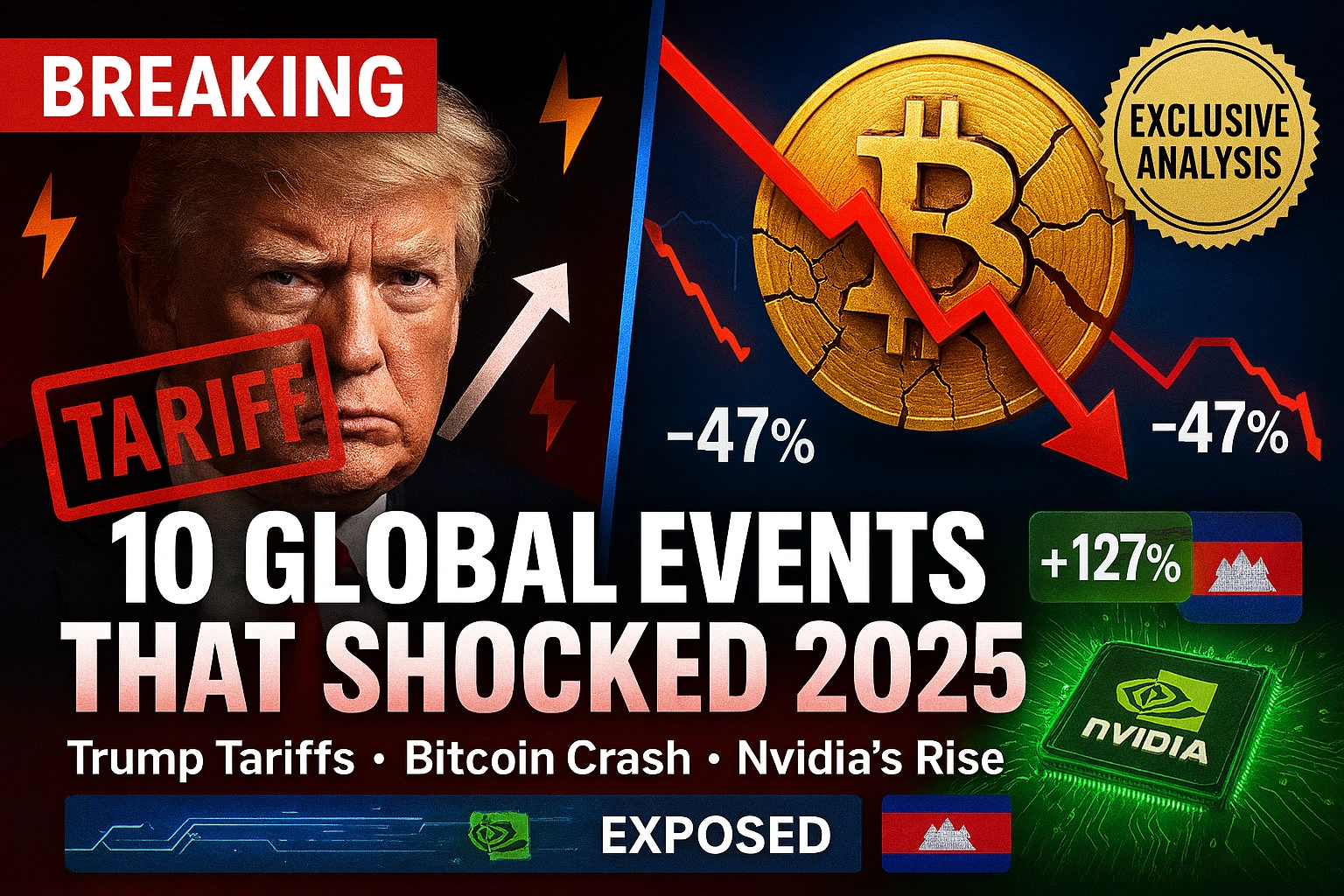
A year of unprecedented volatility: How trade wars, crypto crashes, and AI mania reshaped the global economy
When historians look back on 2025, they’ll remember it as the year economic certainty died. From the trading floors of Wall Street to the scam compounds of Cambodia, from Bitcoin’s spectacular implosion to Nvidia’s trillion-dollar ascent, the global business landscape experienced seismic shifts that left even veteran analysts scrambling for explanations.
This wasn’t just another year of market fluctuations and quarterly earnings reports. This was twelve months of whiplash-inducing policy reversals, technological disruptions that threatened entire industries, and geopolitical maneuvering that redrew the map of global commerce. As Federal Reserve Chair Jerome Powell navigated perhaps the most divisive period in the central bank’s modern history, and as artificial intelligence continued its relentless march toward either revolution or bubble, one truth became undeniable: the rules of the game have fundamentally changed.
Table of Contents
1. The Great Tariff Experiment: Trump’s $250 Billion Gambit
January-December 2025 | The biggest tax increase in 32 years
President Donald Trump’s return to office unleashed what economists are calling the most aggressive trade policy shift since the Smoot-Hawley Tariff Act of 1930. By April 2025, the average US tariff rate had skyrocketed from a modest 2.5% to an eye-watering 27%—the highest level in over a century. Though negotiations brought it down to 16.8% by November, the damage to global supply chains had already been inflicted.
The numbers tell a stunning story: US tariff revenue exceeded $30 billion per month, compared to under $10 billion per month in 2024. By year’s end, these policies had raised $250 billion in tariff revenue for the US government.
But who really pays? Despite Trump’s repeated claims that foreign countries bear the cost, studies show that tariffs have increased expenses and reduced earnings for companies and have increased costs for households. Goldman Sachs analysis reveals the tariff incidence is paid 40% by US consumers, 40% by US businesses, and 20% by foreign exporters.
The Tax Foundation delivered a sobering assessment: The Trump tariffs amount to an average tax increase per US household of $1,100 in 2025 and $1,400 in 2026, making them the largest US tax increase as a percent of GDP since 1993.
The ripple effects extended far beyond American shores. Brazilian coffee exports to the United States more than halved in the August-November period after facing 50% tariffs. Canada retaliated with its own 25% surtax on $30 billion worth of US goods. Jobs growth slowed significantly, and the promised surge in manufacturing employment never materialized.
Perhaps most controversially, the administration announced a $12 billion bailout fund for farmers devastated by retaliatory tariffs—money that ironically came from the very tariff revenues that necessitated the bailout in the first place.
Strategic Implications: The tariff regime represents a fundamental rejection of four decades of globalization. Supply chains painstakingly built since the 1980s are being dismantled, with companies facing impossible choices between absorbing costs, passing them to consumers, or relocating production. The long-term impact on American competitiveness remains hotly debated, but one thing is certain: we’re witnessing the birth of a new economic nationalism that will define trade policy for years to come.
2. Bitcoin’s $1 Trillion Wipeout: When Crypto Winter Returned
October-November 2025 | Digital gold becomes digital fool’s gold
Bitcoin fell dramatically from its record high of $126,000 in early October to dip below $81,000, a gut-wrenching 36% plunge that wiped out approximately $1 trillion from the global cryptocurrency market. The crash wasn’t just a typical crypto correction—it represented a fundamental crisis of confidence in digital assets.
The catalyst came on October 10, when a Trump trade war announcement triggered a flash crash that wiped out $19 billion worth of crypto in a single day. What made this downturn particularly brutal was the presence of institutional money. Unlike previous crypto crashes driven primarily by retail speculation, this collapse involved major financial institutions with billions at stake.
The flash crash forced many investors to sell their holdings to meet margin calls, creating a snowball effect as automated liquidations cascaded through highly leveraged positions. By mid-November, market sentiment plummeted to “extreme fear” with the Fear & Greed Index dropping to 10, levels not seen since the depths of previous crypto winters.
Deutsche Bank analysts noted a critical difference: “Unlike prior crashes, driven primarily by retail speculation, this year’s downturn has occurred amid substantial institutional participation, policy developments, and global macro trends”.
The Federal Reserve’s hawkish stance on interest rates provided no relief. Fading hopes of a December rate cut from the Federal Reserve, with odds falling to near 50%, further pressured speculative assets like cryptocurrencies.
Market Psychology: What’s perhaps most fascinating is the disconnect between Bitcoin’s year-to-date performance (down just 6%) and investor psychology. The crash exposed how fragile market confidence had become, with many new institutional investors who entered through spot Bitcoin ETFs experiencing their first true crypto bear market. The question now: Is this correction a buying opportunity or the beginning of a longer winter?
3. Nvidia’s Trillion-Dollar Odyssey: The AI Chip Giant’s Rocky Road to $5 Trillion
January-October 2025 | From near-death experience to unprecedented heights
The year began catastrophically for Nvidia. In late January, Chinese AI startup DeepSeek released its R-1 model, claiming it was trained using less advanced processors than expected. The market’s reaction was swift and brutal: Nvidia saw the largest one-day loss in market capitalization for a US company in history at $600 billion.
Yet by July, Nvidia became the first company to see its market capitalization pass the $4 trillion mark. The recovery wasn’t just impressive—it was historic. Nvidia became the world’s most valuable company, surpassing Microsoft and Apple, after its market capitalization exceeded $3.3 trillion in June 2024.
The company’s resilience stemmed from a fundamental truth the market eventually recognized: training AI models and running them are different operations. Running models with more powerful chips improves overall performance—a reality that kept demand for Nvidia’s advanced GPUs surging despite DeepSeek’s claims.
By October, Nvidia became the first company to reach a market capitalization of $5 trillion. The company’s dominance is staggering: As of January 2025, Nvidia’s market cap was worth more than double of the combined value of AMD, ARM, Broadcom, and Intel.
The numbers behind the valuation tell the story: Nvidia’s revenue soared to $187.1 billion in 2025. In November, Morgan Stanley reported that “the entire 2025 production” of all of Nvidia’s Blackwell chips was “already sold out”.
CEO Jensen Huang became something of a rock star in tech circles, with reporters and onlookers swarming a South Korean fried chicken restaurant to catch a glimpse of him dining with Samsung and Hyundai executives.
The China Factor: Navigating US-China relations proved critical to Nvidia’s success. Despite Trump administration export restrictions, the company successfully made the case that selling technologies to China benefited America’s competitive position. The delicate diplomatic dance paid off, with Nvidia ordering 300,000 H20 AI chips from TSMC in July due to strong demand from Chinese tech firms like Tencent and Alibaba.
4. Cambodia’s $19 Billion Shadow Economy: Modern Slavery at Industrial Scale
June-October 2025 | When cybercrime meets human trafficking
In June, Amnesty International lifted the curtain on one of 2025’s most disturbing business stories: a sprawling network of scam compounds across Cambodia generating between $12.5 and $19 billion annually, equivalent to more than half of Cambodia’s gross domestic product.
At least 53 scamming compounds were identified where human rights abuses including slavery, human trafficking, child labor, deprivation of liberty and torture have taken place or continue to occur. The scale is staggering: between 100,000 and 150,000 people are exploited in scam compounds in Cambodia, making this one of the largest human trafficking operations in modern history.
The business model was brutally simple yet sophisticated. Victims were lured by deceptive job advertisements posted on social media sites such as Facebook and Instagram, then trafficked to Cambodia where they were held in prison-like compounds and forced to conduct online scams targeting victims worldwide. These operations included fake romances, fraudulent investment opportunities, and “pig-butchering” scams.
Lisa, 18 and looking for work during a school break, represented thousands of victims. “The recruiters said I would work in administration, they sent pictures of a hotel with a swimming pool, the salary was high,” she recalled. Instead, she spent 11 months held at gunpoint, forced to defraud strangers online.
The criminal enterprise reached its zenith with Prince Group, a multinational conglomerate. In October, US authorities revealed that Chen Zhi, the baby-faced 37-year-old chairman, allegedly ran one of the largest transnational criminal organizations in Asia. The empire was fueled by forced labor and cryptocurrency scams earning Chen and his associates $30 million every day at its peak.
US prosecutors seized $15 billion in cryptocurrency from Chen following a years-long investigation. The money had funded Picasso artwork, private jets, London properties, and bribes to public officials.
Government Complicity: What made the situation particularly egregious was official complicity, including at senior levels, which inhibited effective law enforcement action against trafficking crimes. The Cambodian government has never arrested or prosecuted a suspected scam compound operator or owner despite the prevalence of trafficking in scam operations.
The US State Department’s response was unequivocal: Cambodia was designated a Tier 3 state sponsor of human trafficking for the fourth consecutive year.
5. The AI Infrastructure Arms Race: When Big Tech Bet the Company
Throughout 2025 | $300 billion in capex and counting
If there’s one story that defined corporate strategy in 2025, it’s the mind-boggling amounts of money tech giants poured into AI infrastructure. Microsoft, Amazon, Meta, and Google collectively transformed from asset-light software companies into massive infrastructure players, fundamentally altering their risk profiles and business models.
Microsoft disclosed that it had spent almost $35 billion on AI infrastructure in the three months leading up to the end of September. Amazon’s projected capex hit $100 billion. Meta’s capex guidance stood near $70 billion, or roughly 40-45% of its 2024 revenue.
OpenAI committed to investing $300 billion in computing power with Oracle over the next five years, averaging $60 billion per year. This despite the company losing billions annually and expecting revenues of just $13 billion in 2025.
The circular nature of these investments raised eyebrows. OpenAI is taking a 10% stake in AMD, while Nvidia is investing $100 billion in OpenAI; OpenAI counts Microsoft as a major shareholder, but Microsoft is also a major customer of CoreWeave, which is another company in which Nvidia holds a significant equity stake.
Reports estimate that AI-related capital expenditures surpassed the US consumer as the primary driver of economic growth in the first half of 2025, accounting for 1.1% of GDP growth. JP Morgan’s Michael Cembalest notes that “AI-related stocks have accounted for 75% of S&P 500 returns, 80% of earnings growth and 90% of capital spending growth since ChatGPT launched in November 2022”.
The Bubble Question: Wall Street luminaries increasingly drew comparisons to previous infrastructure bubbles. Ray Dalio said the current levels of investment in AI are “very similar” to the dot-com bubble. Jamie Dimon, head of JP Morgan, acknowledged “AI is real” but warned that some invested money would be wasted, with a higher chance of a meaningful stock drop than the market was reflecting.
Yale’s analysis painted a stark picture: Should the bold promises of AI fall short, the dependence among these major AI players could trigger a devastating chain reaction similar to the 2008 Great Financial Crisis.
6. The Microsoft-OpenAI Uncoupling: When $14 Billion Wasn’t Enough
September 2025 | Redefining the future of AI partnerships
After nearly six years of what many called the most successful partnership in AI history, Microsoft and OpenAI fundamentally restructured their relationship. The September announcement represented more than a business deal—it was a referendum on how AI’s future would be controlled.
OpenAI would be allowed to restructure itself as a for-profit company, opening the way for $22.5 billion from SoftBank. OpenAI could make infrastructure deals with other companies without granting Microsoft right of first refusal and could develop AI-based consumer hardware independently.
In return, Microsoft gets 27% ownership of the for-profit OpenAI business, estimated to be worth about $135 billion—a solid return on its nearly $14 billion investment.
The restructuring came amid intense regulatory pressure. The FTC said Microsoft’s deal with OpenAI raised concerns that the tech giant could extend its dominance in cloud computing into the nascent AI market. The agency worried these partnerships could lead to full acquisitions in the future.
Behind the scenes, tensions had reached a breaking point. OpenAI executives reportedly discussed filing an antitrust complaint with US regulators, which insiders called a “nuclear option,” accusing Microsoft of wielding monopolistic control.
The UK’s Competition and Markets Authority had opened an investigation in December 2023 to determine whether the partnership effectively functioned as a merger. Though they eventually closed the inquiry, the scrutiny had achieved its goal: forcing a restructuring that gave OpenAI more independence.
The Bigger Picture: This “uncoupling” represented the first major domino in a landscape where regulators now view multi-year, multi-billion-dollar exclusive licensing deals as undisclosed mergers in all but name. The days of exclusive, “all-in” partnerships between Big Tech and AI startups appear to be over.
7. Federal Reserve’s Tightrope Walk: Divided Decision-Making in Polarized Times
September-December 2025 | Three cuts, countless controversies
The Federal Reserve faced perhaps its most challenging year since the stagflation era of the 1970s, caught between stubborn inflation above 2.8% and a weakening labor market. After holding rates steady for most of 2025 to assess Trump’s tariff impacts, the Fed cut rates three times in the final months—but each decision exposed deepening divisions within the central bank.
The December meeting was particularly contentious. The Federal Open Market Committee lowered its key rate by a quarter percentage point to 3.5%-3.75%, but the move featured “no” votes from three members—the first time this had happened since September 2019.
The divisions weren’t just philosophical. Two regional Fed bank presidents dissented saying they wanted to hold rates steady, while Fed Governor Stephen Miran voted for a supersized, half-point cut—the first time in six years that an interest rate vote was so divided.
The closely watched “dot plot” indicated just one cut in 2026 and another in 2027, with seven officials indicating they want no cuts next year.
The Fed’s challenge was compounded by unprecedented circumstances. The six-week government shutdown meant furloughed federal workers were unable to measure inflation and unemployment in October, with November readings delayed. Policymakers were essentially flying blind, relying on stale September data.
Adding to the complexity was Trump’s relentless pressure on the Fed to cut rates more aggressively. In September, Trump installed Stephen Miran, a White House economic adviser, to fill a short-term vacancy on the Fed board. Since then, Miran voted consistently for larger rate cuts than his Fed colleagues.
The president’s attacks on Fed Chair Jerome Powell raised fears about central bank independence. Trump went so far as to fire Fed Governor Lisa Cook over alleged mortgage fraud—a case still being litigated and heading to the Supreme Court in early 2026.
Forward Looking: As Powell’s term winds down in 2026, the central bank faces an uncertain future. The next Fed chair will inherit a deeply divided committee, persistent inflation, and a labor market whose true health remains obscured by limited data. Whether they can forge the consensus that Powell barely managed remains one of 2026’s biggest questions.
8. The Great Stock Market Paradox: Record Highs Amid Bubble Warnings
Throughout 2025 | When everyone sees the bubble but no one wants to leave the party
In late 2025, 30% of the US S&P 500 and 20% of the MSCI World index was solely held up by the five largest companies—the greatest concentration in half a century, with share valuations reportedly the most stretched since the dot-com bubble.
Yet Wall Street strategists couldn’t help themselves. For the first time in nearly two decades, not a single one of the 21 prognosticators surveyed by Bloomberg News predicted a market decline for 2026, with the average forecast implying a 9% gain.
The contradiction was stark: everyone acknowledged we were in a bubble, but no one agreed on what would pop it or when. In July, a widely cited MIT study claimed that 95% of organizations that invested in generative AI were getting “zero return.” Tech stocks briefly plunged.
Then in August, OpenAI CEO Sam Altman asked the question everyone was thinking: “Are we in a phase where investors as a whole are overexcited about AI?” The next day’s stock market dip was attributed to the sentiment he shared.
The warnings multiplied. The Bank of England cautioned about growing risks of a global market correction due to possible overvaluation of leading AI firms. The IMF’s Kristalina Georgieva drew comparisons to the dot-com bubble of 2001, highlighting that a market correction could stunt global growth and weaken developing country economies.
Morgan Stanley estimated that debt used to fund data centers could exceed $1 trillion by 2028. The burden of servicing this debt while hoping AI revenues eventually materialize created what one analyst called “the mother of all carry trades.”
The Concentration Risk: What made this situation unprecedented was the sheer dominance of a handful of companies. Over 2025, AI-related enterprises accounted for roughly 80% of gains in the American stock market. If these few giants stumbled, the entire market would follow.
Yet the party continued. Despite the October flash crash that briefly sent the S&P 500 down nearly 20%, stocks staged one of the swiftest comebacks since the 1950s. As one strategist put it: “We’ve never seen a more anticipated bubble in history. Everyone knows it’s there, they just can’t agree on when it ends.”
9. The Acqui-Hire Crackdown: When Hiring Talent Became a Merger
May-September 2025 | Regulators close the loophole
Silicon Valley thought it had found the perfect workaround for antitrust scrutiny: instead of acquiring companies outright, tech giants would simply hire their key talent and license their intellectual property. The strategy worked beautifully—until regulators decided it didn’t.
In early May, OpenAI agreed to acquire AI coding startup Windsurf for approximately $3 billion but was unable to execute the acquisition due to conflicts with Microsoft. The day after OpenAI’s exclusivity period ended, Google promptly hired Windsurf’s CEO and key R&D staff and licensed certain Windsurf technologies for roughly $2.4 billion.
This structure—hiring core talent combined with nonexclusive IP licensing while stopping short of acquiring corporate control—became known as the “acqui-hire.” It allowed companies to neutralize competitors without triggering Hart-Scott-Rodino filing requirements.
Reports indicate antitrust agencies opened inquiries into Microsoft/Inflection and Google/Character.AI. Former DOJ antitrust head Jonathan Kanter argued that acquihires, though structurally distinct from traditional mergers, can nonetheless neutralize competition by absorbing key talent.
The DOJ’s ongoing inquiry into Nvidia’s $20 billion deal with inference-startup Groq in December highlighted the risks of using licensing as a proxy for acquisition, with Nvidia facing the prospect of “behavioral remedies” preventing it from prioritizing investment partners for latest chips.
The Trump administration’s December Executive Order 14365 signaled federal support for preempting state AI regulations, potentially creating new pathways for tech consolidation—but also new scrutiny.
Implications: The crackdown on acqui-hires represents a fundamental shift in how regulators view talent as an asset. If the DOJ succeeds in establishing that “talent is an asset” requiring merger review, it could effectively end the acqui-hire as a viable strategy. For AI startups, this means fewer exit options and potentially less funding as strategic buyers pull back.
10. The Return of Economic Nationalism: Sovereignty Over Efficiency
Throughout 2025 | When supply chain security trumped cost optimization
Beyond any single event, 2025 marked a philosophical shift in how nations view economic policy. For four decades, globalization’s promise was simple: efficiency through specialization and comparative advantage. By year’s end, that orthodoxy lay in ruins.
The trend manifested across multiple fronts. Trump’s tariffs were just the most visible symptom. The CHIPS Act continued pumping billions into domestic semiconductor manufacturing. The EU’s Digital Markets Act flexed its muscles against American tech giants. China accelerated its “dual circulation” strategy, prioritizing domestic consumption and self-reliance.
The regulatory shift fit into a broader global trend of “digital sovereignty,” with nations increasingly asserting control over AI development, data storage, and tech infrastructure within their borders.
The costs were staggering but apparently acceptable. Companies were willing to pay 20-30% more for “friend-shored” supply chains. Consumers absorbed higher prices on everything from coffee to electronics. Efficiency wasn’t the goal anymore—resilience was.
The semiconductor industry epitomized this transformation. Once concentrated in Taiwan and South Korea for maximum efficiency, production was now being deliberately fragmented across North America, Europe, and friendly Asian nations. The economic logic was questionable, but the geopolitical logic was ironclad: no nation wanted to be held hostage by supply chain chokepoints ever again.
Long-term Ramifications: We’re witnessing a rare historical moment: the unwinding of a multi-decade global economic architecture in real-time. The just-in-time supply chains that defined late 20th-century capitalism are being replaced by just-in-case redundancy. Free trade agreements are being superseded by strategic partnerships. The invisible hand of the market is being stayed by the very visible fist of the state.
Whether this represents wisdom or folly, efficiency or waste, won’t be clear for years. But one thing is certain: the global economy of 2035 will look fundamentally different than that of 2015—and 2025 was the year the transformation became irreversible.
The Invisible Threads: How These Events Connect
At first glance, these ten events might seem disconnected—a grab bag of crises, triumphs, and policy disasters. But look closer and the invisible threads binding them together become clear.
Start with the AI infrastructure boom. Those hundreds of billions in data center investments created insatiable demand for Nvidia’s chips, driving its trillion-dollar valuation. But that same AI boom attracted regulatory scrutiny, forcing the Microsoft-OpenAI restructuring and crackdowns on acqui-hires. The circular investments and mounting debt levels spooked investors, contributing to both the crypto crash and broader concerns about an AI bubble.
Meanwhile, Trump’s tariffs disrupted global supply chains, accelerating the shift toward economic nationalism and making Nvidia’s navigation of US-China trade relations critical to its success. The tariffs also complicated the Fed’s job, forcing officials to choose between fighting inflation and supporting employment—a choice made harder by a government shutdown that eliminated reliable economic data.
The crypto crash wasn’t just about leverage and flash crashes. It reflected a broader flight from risk assets as the Fed signaled fewer rate cuts and Trump’s trade war created macro uncertainty. Bitcoin’s 36% plunge happened in the same weeks that AI stocks wobbled on bubble concerns, revealing how interconnected these supposedly separate asset classes had become.
Even Cambodia’s scam compounds connect to this larger narrative. The infrastructure enabling these operations—the casinos, the cryptocurrencies, the encrypted communications—emerged from the same technological revolution that produced AI and blockchain. The fact that such operations could generate revenues exceeding half of Cambodia’s GDP without meaningful intervention reflects the regulatory vacuum that also allowed AI companies to rack up trillion-dollar valuations on unproven business models.
Three meta-forces tie everything together:
First, the concentration of power. Whether it’s five tech giants dominating market indices, a handful of AI companies controlling the future of computing, or regulatory agencies struggling to oversee increasingly complex ecosystems, power has never been more concentrated. This concentration creates systemic risk: when Nvidia’s market cap swings by $600 billion in a day, or when cryptocurrency flash crashes can wipe out $19 billion instantly, the interconnected nature of modern markets means contagion spreads at the speed of light.
Second, the triumph of narrative over fundamentals. OpenAI losing billions while being valued at $135 billion. AI companies spending more on infrastructure than their revenues justify. Bitcoin gyrating based on Fed meeting vibes rather than any change in its fundamental utility. Trump claiming tariffs will make America wealthy again despite economic analysis suggesting otherwise. We’re living in an era where belief matters more than balance sheets—at least until it doesn’t.
Third, the erosion of consensus. The Fed has never been more divided. Wall Street strategists all predict gains while warning of bubbles. Tech leaders debate whether we’re in an AI boom or bust. Policymakers can’t agree whether globalization needs reform or demolition. This lack of consensus isn’t just philosophical—it has real economic consequences when central bankers can’t agree on rate policy or when companies can’t predict regulatory approaches.
What This Means for 2026: Three Contrarian Predictions
Prediction 1: The AI Bubble Doesn’t Pop—It Transforms
Conventional wisdom suggests the AI bubble will burst dramatically, wiping out trillions in market value. But bubbles rarely pop cleanly. More likely, we’ll see a slow deflation as reality catches up to hype. Some AI companies will deliver on their promises, justifying valuations. Others won’t. The key is differentiation: investors will finally distinguish between AI infrastructure providers making real money (Nvidia, cloud platforms) and AI application companies burning cash on hope.
Expect a bifurcated market where “AI winners” pull away from “AI pretenders.” The total market cap of AI-related companies may not crash—it will just redistribute from losers to winners. Think less 2000 dot-com implosion, more 2002-2003 reshuffling.
Prediction 2: Trump’s Tariff Regime Becomes Permanent (and Both Parties Embrace It)
Here’s the uncomfortable truth Democrats won’t admit: Trump’s tariffs aren’t going away, even if a Democrat wins in 2028. The political consensus around free trade is dead. Both parties now believe in industrial policy, strategic competition with China, and protecting American workers. The debate isn’t whether to maintain tariffs—it’s how high to set them.
What changes is the implementation. Instead of chaotic announcements and constant reversals, we’ll see a more systematic approach. Tariffs will be targeted at strategic industries (semiconductors, batteries, critical minerals) rather than blanket levies. The revenue won’t replace income taxes, but it will fund domestic manufacturing incentives. Call it “trade realism” or “progressive protectionism”—either way, it’s here to stay.
Prediction 3: The Real Regulatory Crackdown Targets Data, Not Mergers
While everyone obsesses over antitrust cases and merger reviews, the real regulatory earthquake will come in data governance. As AI systems require ever-more training data, questions about who owns that data, how it can be used, and what consent means will explode.
Expect 2026 to bring the first major lawsuits over AI training data rights, potentially establishing that using copyrighted content to train models requires licensing. This won’t kill AI development—it will just make it more expensive and shift power from model developers to content owners. The New York Times’ lawsuit against OpenAI is the opening salvo in what will become a decade-long battle over digital property rights.
Strategic Framework: Navigating the New Normal
For business leaders trying to make sense of this volatility, here’s a practical framework:
1. Build Optionality, Not Certainty
Stop making five-year strategic plans. The world changes too fast. Instead, develop multiple scenarios and maintain flexibility to pivot between them. This means keeping cash reserves higher than historical norms, avoiding over-leveraging, and investing in capabilities that work across multiple futures.
2. Geographic Diversification Is Dead—Strategic Diversification Isn’t
Don’t just spread operations across countries; spread them across trading blocs. Have presence in multiple regulatory environments (US, EU, China, India). This isn’t about tax optimization anymore—it’s about regime risk mitigation.
3. The Premium on Talent Has Never Been Higher
In an era where acqui-hires face regulatory scrutiny and AI can automate routine tasks, the gap between exceptional and mediocre talent is widening exponentially. The companies that win the 2020s will be those that attract and retain the top 1% of performers in their fields. Pay whatever it takes.
4. Sustainability Meets Resilience
The new competitive advantage isn’t the cheapest supply chain or the greenest supply chain—it’s the most resilient one that happens to be relatively sustainable. Customers and regulators both demand proof you won’t collapse when the next crisis hits.
5. Embrace Regulatory Reality
Stop fighting regulation—shape it instead. The companies that thrive will be those that proactively work with regulators to establish frameworks that protect consumers while enabling innovation. The antagonistic approach of the 2010s is dead; collaborative compliance is the future.
A Final Word: Embrace the Uncertainty
The most dangerous assumption business leaders can make is that 2026 will be calmer than 2025. It won’t be. The forces reshaping our economic landscape—technological disruption, geopolitical competition, regulatory evolution, and demographic shifts—are accelerating, not abating.
But here’s the paradox: in an environment this volatile, the winners won’t be those who predict the future most accurately. They’ll be those who adapt to it most quickly. The companies that thrived in 2025 weren’t necessarily those with the best strategic plans from 2024—they were those that pivoted fastest when reality diverged from expectations.
Nvidia clawed back from a $600 billion loss by doubling down on its core value proposition: delivering the world’s most powerful chips for AI workloads. Microsoft restructured its OpenAI relationship to ensure resilience and optionality in a rapidly shifting innovation landscape. And countless smaller firms survived—not because they had perfect foresight, but because they had the courage to experiment, the humility to course-correct, and the discipline to keep moving forward.
The lesson is clear: uncertainty is not a threat to be feared, but a constant to be mastered. Leaders who embrace volatility as the new normal—who build organizations that are agile, resilient, and relentlessly focused on fundamentals—will not just endure the turbulence of 2026. They will harness it.
Discover more from The Monitor
Subscribe to get the latest posts sent to your email.




October is Major League Baseball’s postseason month, with the League Championship Series leading toward the World Series. MLB’s official October 9 update listed league championship broadcasting arrangements and said its complete postseason schedule was subject to change. That is the appropriate basis for a service article, rather than relying on viral bracket graphics. Sources: MLB and NBA.
The important context competitors can overlook
The playoff path moves through the Wild Card Series, Division Series, League Championship Series and World Series. Series lengths differ, affecting travel planning, pitching strategies and when a potential deciding game may occur. Weather, broadcast adjustments and series ending early can all change the actual date of a matchup. A guide should therefore distinguish tentative “if necessary” games from guaranteed events. For primary-source checks and current reporting, see MLB and NFL. The key distinction is practical broadcast and bracket explainer with no fictitious results.
October baseball moves through elimination series toward the World Series. Games marked ‘if necessary’ depend on earlier series results. Research cutoff: October 12, 2026; confirm developing facts before publication.
A practical way to use this information
Use MLB’s live bracket and broadcast information for tonight’s specific matchup, while this article provides the enduring format explanation. If publishing a result, record the completed date and source. Viewers should check the network, streaming eligibility and local restrictions before paying. Avoid declaring future participants or game outcomes without an official final score.
What to verify before making a decision
The right next step is to identify the source, timestamp and applicable market or jurisdiction. Check whether a number is a historical observation, official announcement, target, forecast or scenario. If you intend to act financially, legally or commercially, use the relevant provider’s current terms and obtain professional advice where appropriate. The sources cited here establish context; they are not a substitute for live prices, individual eligibility checks or binding agreements.
Reader questions
Where is the authoritative 2026 playoff schedule? MLB publishes and updates it at MLB.com/postseason.
Why are some dates marked if necessary? Best-of-series matchups end once a team wins the required number of games.
How the MLB postseason bracket works
Major League Baseball’s postseason includes division winners and wild-card teams, followed by a sequence of elimination series that eventually determines each league champion and the World Series participants. The rounds use different series lengths; that affects pitching strategy, bullpen workload and how quickly a team can be eliminated. A single-game result in a best-of-series contest is important but not always decisive. Readers should consult MLB’s official postseason hub for the bracket rather than rely on an old graphic that may not reflect completed games.
Home-field advantage, seeding and tiebreaking rules add context to the matchup schedule. Those details can vary by competition edition, so the official rules should be checked instead of recycled from a prior year. When a postseason series has not yet finished, the next opponent remains conditional. An article should say “winner of Series A will face…” rather than assign a future opponent before the result exists.
Why starting pitching changes a short series
Starting pitchers often shape the first half of a game, but playoff success requires bullpen management, defense, baserunning and timely hitting. A team may start its most experienced pitcher in the first game and then adjust the rotation based on rest, health and earlier results. Managers must also decide when to use their strongest relief pitchers. Those choices can matter more in a short series than in a long regular season where roles and workloads can be smoothed across many games.
Baseball statistics need sample-size discipline. A hitter’s performance over ten postseason plate appearances tells less about underlying ability than a much longer period of play. Analysts can compare strikeout rates, on-base production and matchup tendencies while avoiding exaggerated claims drawn from one home run or one defensive error. Recent injuries and announced starting lineups can change the outlook quickly.
Broadcast rights and local time differences
A game carried by a U.S. broadcaster may require a different provider for an international audience. Some streaming services include blackout restrictions and authenticated subscriptions. Before directing readers to a platform, check the league’s official listing for the game, region and date. A schedule can shift because of series outcomes or weather; do not assume every potential Game 6 or Game 7 will occur. Conditional games should be clearly labeled so viewers do not subscribe or travel based on a nonexistent fixture.
Fans outside North America should verify dates carefully. A game beginning late at night in U.S. Eastern Time can appear on the following morning in Pakistan or elsewhere. A credible global article uses time-zone labeling and, where practical, provides local conversions while directing readers to official confirmations.
Planning a trip to a postseason game
Buy tickets through the team’s verified ticket office or a recognized authorized resale route. Read what happens to a ticket for an “if necessary” game that is never played. Lodging and transportation may be nonrefundable even when the ticket itself is refunded under a particular policy. Stadium entry rules, bag restrictions and transport can vary by venue. Travel budgets should include potential schedule shifts, especially when the identity of the next opponent is not yet known.
Reseller offers that look dramatically cheaper than the going rate can be fraudulent. Confirm seat location, transfer method and the platform’s buyer-protection terms. Never assume an image of a barcode sent by a stranger proves a usable ticket. The simplest defense is to purchase through verified channels and retain the order record.
A bracket-tracking method that stays accurate
For each series, maintain the teams, seeds, current games-won tally, next confirmed game time, probable or announced starters, broadcaster and a direct MLB link. Update each row only after official results. Distinguish “clinched” from “leads series.” If a matchup concludes earlier than its maximum length, remove unused dates or mark them canceled; otherwise a static editorial calendar can appear inaccurate within hours.
The purpose of a postseason guide is not to predict every winner. It is to make a fast-moving bracket understandable and give fans reliable answers on what happens next, where to watch and which details remain uncertain.
Baseball postseason questions answered
Does every potential game on a postseason schedule occur?
No. A best-of-seven series ends when one team reaches four wins. Games listed as “if necessary” do not take place if the series has already been decided. Ticket buyers and travelers should understand refund or cancellation policies associated with those conditional dates before arranging flights and hotels.
Why do playoff teams use pitchers differently?
A shorter series changes the cost of saving an elite relief pitcher or spacing starting assignments. Managers may make aggressive substitutions to protect a narrow lead, while maintaining enough arms for a possible next game. Such choices can look different from regular-season strategy, when teams plan around a longer schedule and broader workload management.
Can a postseason match move after its first announcement?
Yes. Broadcast planning, prior series results and circumstances such as weather can affect schedules. MLB’s official game page and league notices should be checked shortly before travel or viewing. An editorial table that fails to update conditional games can easily mislead readers as the bracket advances.
Discover more from The Monitor
Subscribe to get the latest posts sent to your email.
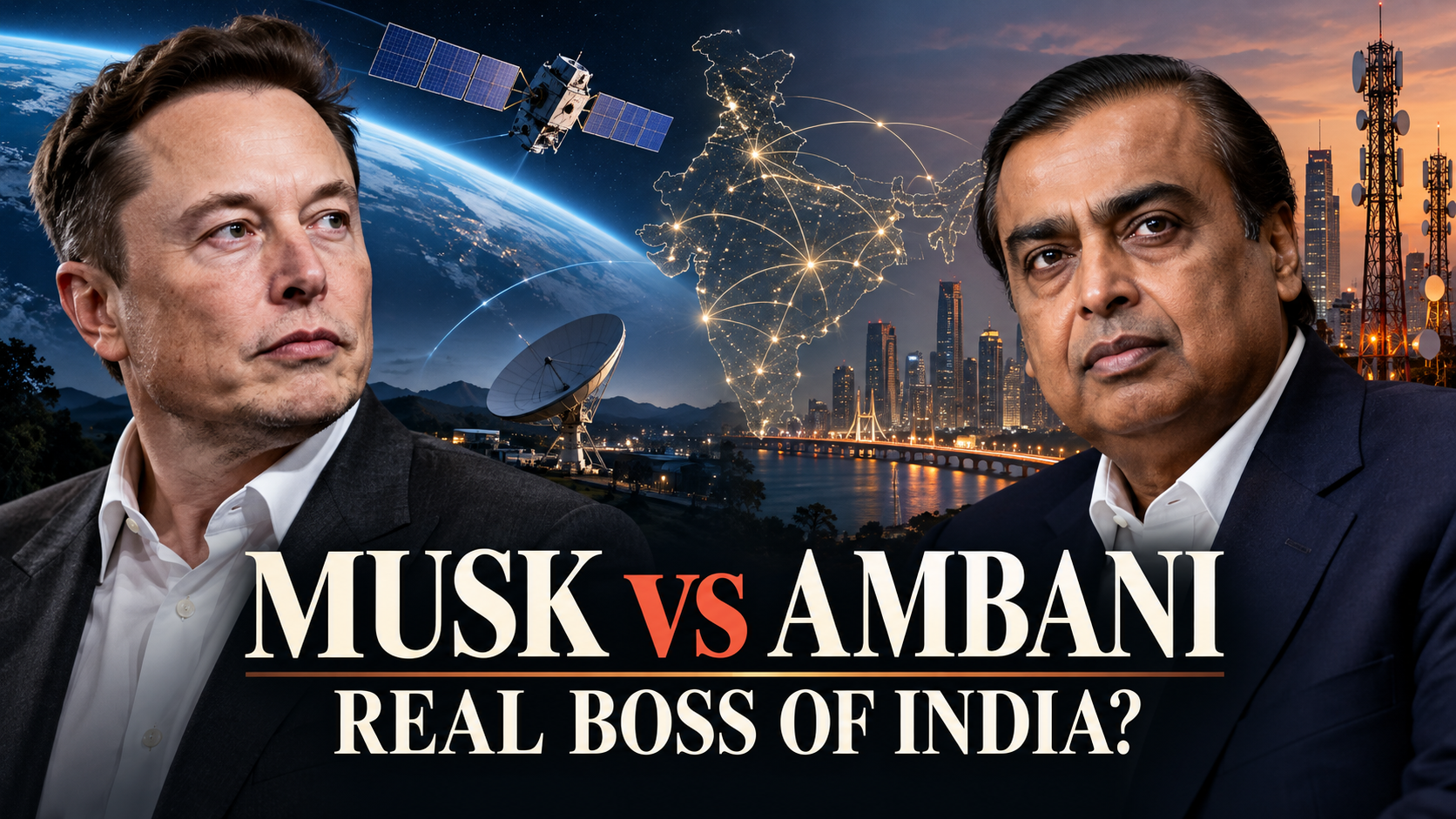
SpaceX CEO Elon Musk has escalated a public dispute over Starlink’s delayed commercial launch in India, sarcastically addressing Reliance Industries Chairman Mukesh Ambani as “Prime Minister Ambani” and questioning whether he holds outsized influence over the country’s telecom landscape. The remarks, posted on X in early October 2026, center on claims that entrenched interests—particularly around Reliance Jio—are slowing satellite broadband approvals to protect market dominance. Indian authorities have rejected the accusations as baseless, emphasizing a uniform regulatory process for all licensed satellite operators. Bloomberg
Musk’s Escalating Posts and Arguments for Starlink
Musk first accused unnamed “oligarchs” of blocking Starlink to maintain a “monopolistic chokehold on the Indian people,” describing the situation as “a crime against the people of India.” He followed by asking, “Is Ambani the real boss of India?” after noting that Starlink is licensed in over 165 countries and has spent five years complying with Indian requirements. In a subsequent post addressed as “Dear Prime Minister Ambani,” he offered a “humble apology” for not recognizing Ambani’s role and urged him to allow competition, arguing that satellite internet could connect underserved areas. Times of India
Musk highlighted potential benefits: improved access for children to education, opportunities for small businesses to reach global markets, and life-saving connectivity during natural disasters when terrestrial networks fail. He later pushed back against critics, stating that competition would benefit Indian consumers with more choices, that Ambani “is not going out of business,” and that Starlink would need affordable pricing to gain traction. Times of India
Government Position: No Monopoly, Uniform Rules for All Licensees
Union Communications Minister Jyotiraditya Scindia has directly addressed the claims, stating that “India does not allow a monopoly in any sector.” He confirmed that three companies hold Global Mobile Personal Communication by Satellite (GMPCS) licences: Starlink, Reliance’s Jio Satellite Communications, and Bharti-backed Eutelsat OneWeb. All three are at a similar regulatory stage and can begin commercial services only after each individually completes security clearances (assessed primarily by the Ministry of Home Affairs) and the government finalizes the revenue-based spectrum charging framework. CNBC TV18
The Department of Telecommunications has described suggestions of discriminatory treatment as “baseless and misconceived.” Security requirements include data localization, lawful interception capabilities, Indian gateways, and related technical demonstrations—conditions that apply equally across licensees. Spectrum assignment is set to be administrative rather than auction-based, with a usage charge of around 5% of adjusted gross revenue (lower for rural/remote areas) nearing finalization with the Telecom Regulatory Authority of India. Business Standard
Starlink’s Approval Timeline and Remaining Hurdles
Starlink received its GMPCS licence from the Department of Telecommunications in June 2025 and IN-SPACe authorization for its Gen-1 constellation in July 2025, following years of engagement that began with an application around November 2022. Provisional spectrum for testing has been available in some cases, but commercial operations require the outstanding security clearances and spectrum assignment. OneWeb and Jio Satellite secured earlier licences but face the same final milestones. Amazon’s Project Kuiper has also expressed interest and is under review. Business Standard
India’s Telecom Landscape and Connectivity Gaps
Reliance Jio remains India’s largest wireless operator, with roughly 500–530 million connections and about 39% market share as of mid-to-late 2026 data, closely trailed by Bharti Airtel at around 38%. Together the two private players dominate the market, with Vodafone Idea and BSNL holding smaller shares. Jio has driven significant growth in 5G adoption and fixed broadband. TelecomLead
Despite high overall coverage, a digital divide persists. TRAI and related data show India with over 1.09 billion internet subscriptions as of early 2026, but rural penetration stands at about 48 subscriptions per 100 people versus roughly 127 in urban areas. Large numbers of people live within mobile broadband footprints yet do not use the internet, with rural-urban gaps remaining notable. Satellite services are positioned by regulators as particularly suited for remote, border, hilly, and island areas that are harder to serve with terrestrial infrastructure. Government programs such as BharatNet continue expanding fiber and mobile coverage in villages. The Policy Edge
Broader Implications
The exchange underscores tensions between global satellite broadband ambitions and national regulatory, security, and competitive frameworks in one of the world’s largest telecom markets. Proponents of faster Starlink entry argue it could accelerate connectivity in hard-to-reach areas and introduce pricing and service competition. Authorities maintain that the process prioritizes security, data protection, and a level playing field among multiple licensed players rather than favoring any single incumbent. As of mid-October 2026, commercial satellite broadband services from any of the three licensees have not yet launched, pending the completion of remaining individual clearances and spectrum finalization.
Musk’s posts have drawn responses from opposition figures, including Rahul Gandhi, but the core dispute remains centered on the pace and nature of regulatory approvals for satellite internet in India. Further clarity is expected once security assessments conclude and the spectrum pricing regime is formally implemented.
Discover more from The Monitor
Subscribe to get the latest posts sent to your email.

“Min Ah” is one of the most searched names in Korean drama, and it points to more than one actress. The one driving the biggest buzz right now is Shin Min-a.
Key Takeaways
- Biggest news: Shin Min-a stars as Empress Navier in Disney+’s The Remarried Empress, which premieres November 4, 2026, per Soompi.
- Cast: Ju Ji-hoon plays Emperor Sovieshu, Lee Se-young plays Rashta, and Lee Jong-suk plays Prince Heinrey.
- Scale: the story is based on a web novel and webtoon that recorded about 2.97 billion cumulative global views as of July 2026, and it is Disney+’s first K-romance fantasy (SBS Star).
- Name confusion: other well-known “Min Ah” performers include Kang Min-ah and Minah (Bang Min-ah) of Girl’s Day. This article explains who is who.
| Name | Known for | Latest news |
|---|---|---|
| Shin Min-a | Leading roles in major dramas and films | The Remarried Empress (Nov 4, 2026) |
| Kang Min-ah | Actress represented by H&Entertainment | Drama Sympathetic Cells with Kim Myung-soo; premiere date announced June 2026 (MyDramaList) |
| Minah (Bang Min-ah) | Former Girl’s Day member turned actress | Born May 13, 1993; Girl’s Day debut in 2010 (Dramabeans) |
Shin Min-a’s Next Big Role: The Remarried Empress
Disney+ confirmed on August 26 that the series would premiere on November 4, releasing a teaser and character posters (Soompi). The story follows Navier, the “perfect empress” of the Eastern Empire, who is told by her husband that he wants a divorce after he falls for a runaway slave, Rashta. Instead of accepting defeat, Navier asks permission to remarry, choosing the prince of a rival kingdom.
Release plan
According to industry coverage, the ten-part series will debut with a four-episode drop and then release two episodes each Wednesday through a November 25 finale, and it streams on Hulu in the U.S. (Resonate). The same report says the first three episodes will screen at the Busan International Film Festival, which runs October 6–15.
Why it matters
This is the clearest sign of how K-drama has become a global asset. Platforms are paying for fantasy adaptations of internet-born stories with huge built-in audiences, and they are casting established leads to carry them.
Why Shin Min-a’s Popularity Travels
- Longevity. She has worked consistently in Korean drama since the early 2000s, and her credits on MyDramaList span more than two decades (MyDramaList).
- Genre range. From romantic comedy to Netflix thriller Karma and a 2026 film, The Eyes, in which she plays dual roles (MyDramaList).
- Global platforms. Disney+, Netflix, and Hulu give Korean series simultaneous worldwide releases.
The Other “Min Ah” Actresses
Kang Min-ah
A Seoul-born actress with credits since the 2010s. MyDramaList lists a 2026 drama, Sympathetic Cells, with Kim Myung-soo, whose premiere date was announced in June (MyDramaList).
Minah (Bang Min-ah)
She debuted with Girl’s Day in 2010, made her acting debut on the tvN variety program Roller Coaster, and later won a Best New Actress trophy at the 2013 Gwangju International Film Festival for the film Holly. She led the 2020 film Snowball, which earned a Screen International Rising Star Asia Award at the New York Asian Film Festival (Dramabeans).
How to Search the Right Person
Add the family name: “Shin Min-a,” “Kang Min-ah,” or “Bang Minah.” Spelling varies in English (Min-a, Mina, Min Ah), which is why results get mixed.
Frequently Asked Questions
Who is Min Ah in K-drama?
There are several, but the most prominent right now is Shin Min-a, starring in The Remarried Empress.
When does The Remarried Empress premiere?
November 4, 2026, on Disney+ (Soompi).
Who is in the cast?
Shin Min-a, Ju Ji-hoon, Lee Jong-suk, and Lee Se-young.
Is Min Ah the same as Minah from Girl’s Day?
No. Minah is Bang Min-ah, a different performer (Dramabeans).
How popular is the source story?
The webtoon had about 2.97 billion global views as of July 2026 (SBS Star).
Whichever Min Ah you were searching for, the pattern is the same: Korean drama talent now finds its audience everywhere at once.
Discover more from The Monitor
Subscribe to get the latest posts sent to your email.

MLB Playoffs 2026: Postseason Format, Broadcast Guide and How to Track the Bracket

Elon Musk Calls Mukesh Ambani the “Real Boss of India” Over Alleged Monopoly Concerns

Legal Pioneer and Defender of Justice: The Life, Works, and Legacy of Navi Pillay

Inside the Modern Republican Party Platform: Tax Policy, Immigration, and Governance

Anne Carson: Genius of Hybrid Forms and 2026 Nobel Laureate in Literature

Analyzing the Republican Voter Enthusiasm Gap: Turnout Metrics and Polling Data

The West Wing Legacy: Why the Political Drama Is More Relevant Than Ever

Remembering Kianna Underwood: The Nickelodeon Actress Behind “All That” and “Little Bill”

Min Ah: The Global Impact and Rising Popularity of the K-Drama Star

Pakistan Warns UN Security Council of AI Risks to Global Peace and Equality

Bloodhound Q50: Remembering the Tragic Loss of Chicago’s Rising Drill Star

Remembering Eliana Moreno: The Legacy of NBC LA’s “Eli in the Heli”

Horror Box Office Economics: ROI, Market Share and the 2026

iOS 27 Release Date & Siri AI: The Ultimate Tech News Guide for iPhone 18 Users
Min Ah: The Global Impact and Rising Popularity of the K-Drama Star

Fortress Diplomacy: How China’s Secretive Hongqi N701 Matches America’s Legendary “Beast”

Rep. Thomas Massie’s Impeachment Push Against Pete Hegseth, Explained
Remembering Kianna Underwood: The Nickelodeon Actress Behind “All That” and “Little Bill”
-

 Featured5 years ago
The Right-Wing Politics in United States & The Capitol Hill Mayhem
-

 News5 years ago
Prioritizing health & education most effective way to improve socio-economic status: President
-

 China5 years ago
Coronavirus Pandemic and Global Response
-

 Canada5 years ago
Socio-Economic Implications of Canadian Border Closure With U.S
-

 Democracy5 years ago
Missing You! SPSC
-

 Conflict5 years ago
Kashmir Lockdown, UNGA & Thereafter
-
Democracy5 years ago
President Dr Arif Alvi Confers Civil Awards on Independence Day
-

 Digital6 years ago
Pakistan Moves Closer to Train One Million Youth with Digital Skills