
Analysis
How Liberal Democracy Can Survive an Age of Spiraling Crises: A Conversation With Daron Acemoglu


The 2024 Nobel laureate explains why democracy’s survival depends on working-class prosperity—and what happens when institutions fail to deliver
When only 28% of Americans express satisfaction with how their democracy functions—a historic low recorded in January 2024—the warning signals are impossible to ignore. This isn’t merely a statistical artifact of partisan frustration. It represents something more fundamental: a crisis of delivery, where democratic institutions have systematically failed to fulfill their core promises to ordinary citizens.
Daron Acemoglu, the MIT economist who received the 2024 Nobel Prize in Economic Sciences, argues that liberal democracy flourished when it pursued its core promises of shared prosperity, democratic governance at the local and national level, and the free pursuit of knowledge. But those promises now ring hollow for millions who have watched inequality skyrocket while their own economic prospects stagnate. The question facing advanced democracies isn’t whether they’re under threat—the data confirms they are—but whether they possess the institutional capacity to reform themselves before it’s too late.
Table of Contents
The Polycrisis: When Multiple Failures Converge
We live in what scholars call a “polycrisis”—a condition where multiple, overlapping emergencies compound one another in ways that transcend their individual impacts. The numbers tell a stark story: between 2016 and 2024, the number of people living with democratic rights fell from 3.9 billion to 2.3 billion. This isn’t gradual erosion; it’s a democratic recession affecting nearly 1.6 billion people in less than a decade.
The Varieties of Democracy (V-Dem) Institute documents this retreat with precision. As of 2024, 42 countries are experiencing ongoing episodes of autocratization, a process where elected leaders systematically dismantle the very institutions that brought them to power. What makes this wave particularly insidious is its legalistic veneer—authoritarianism advancing through the ballot box rather than military coups.
But the democratic crisis doesn’t exist in isolation. It intersects with economic turbulence that has reshaped the social contract across industrialized nations. Consider the wealth concentration dynamics: In the United States, households in the top 10% of the wealth distribution own more than half—specifically 52%—of all total household wealth, with this share reaching as high as 79%. Meanwhile, income inequality measured by the Gini coefficient varies dramatically across OECD countries, ranging from approximately 0.22 in the Slovak Republic to more than double that in Chile, Costa Rica, and the United States.
This economic bifurcation creates what Acemoglu calls the preconditions for democratic decay. When democracy stops delivering shared prosperity, citizens begin questioning whether democratic institutions serve their interests at all.
Acemoglu’s Diagnostic: The Narrow Corridor and Institutional Balance
To understand how democracies survive—or fail—Acemoglu and his longtime collaborator James Robinson developed what they term “the narrow corridor” theory. The concept, detailed in their 2019 book of the same name, rejects the notion that liberty emerges naturally from either strong states or weak ones. Instead, freedom arises from a delicate balance between state power and an empowered society, where institutions provide education, healthcare, infrastructure, and protection from violence while remaining constrained enough that they cannot become predatory.
This framework helps explain puzzling variations in democratic outcomes. Why did some countries successfully democratize while others with similar initial conditions descended into autocracy or chaos? The answer lies in institutional design and the continuous tension between state capacity and societal mobilization.
Acemoglu’s research with Robinson and others has found that democracy directly contributes to economic growth, though it takes time—countries that democratize generally grow faster and invest more in education and health. But this relationship isn’t automatic. It depends on whether democratic institutions remain genuinely inclusive or become captured by narrow elites.
The extractive-versus-inclusive framework provides the analytical foundation. Extractive institutions concentrate power and wealth in the hands of a small elite, extracting resources from the broader population. Inclusive institutions, by contrast, distribute political power widely and create incentives for education, innovation, and broad-based economic participation.
History offers abundant examples. For three decades following World War II, democracy delivered shared prosperity as real (inflation-adjusted) wages increased rapidly for all demographic groups and inequality declined, but this trend ended in the late 1970s and early 1980s. Since then, the compact has broken down. Wages for workers without college degrees have stagnated while inequality has exploded—creating precisely the conditions under which populist demagogues thrive.
Economic Foundations of Democratic Fragility
The connection between economic inequality and democratic backsliding isn’t merely correlational. It operates through specific mechanisms that Acemoglu has spent decades documenting.
Democracy is in crisis throughout the industrialized world because its performance has fallen short of what was promised, with far-right and extremist parties benefiting from the fact that center-left and center-right parties are associated with wage stagnation, rising inequality, and other unfavorable trends. This isn’t hyperbole—it’s observable reality across Europe and North America.
The wealth inequality data reveals the scale of the problem. Brazil, Russia, and South Africa top global rankings for wealth inequality, each posting Gini coefficients around the low 0.8s on a scale where 0 represents perfect equality and 1 represents maximum inequality. But even wealthy democracies show troubling patterns. Among OECD countries in 2021, the ratio of average income between the richest 10% and poorest 10% of the population was 8.4 to 1.
These disparities matter because they shape political behavior. More than 60% of respondents across surveyed countries declared that disparities in income and wealth were too high or far too high in their country. When large swaths of the population feel economically abandoned, they become receptive to politicians promising to overturn the existing system—democratic norms be damned.
Acemoglu’s recent work emphasizes how technological change amplifies these dynamics. Automation and artificial intelligence threaten to further concentrate wealth and eliminate middle-skill jobs, precisely the economic foundation that historically sustained democratic stability. Without deliberate policy interventions to ensure technology creates broadly shared prosperity rather than extracting value for a narrow class of owners and investors, the economic pressure on democracy will only intensify.
The Polarization Multiplier
Economic anxiety doesn’t operate in a vacuum—it interacts with political polarization to create a toxic feedback loop threatening democratic stability.
In spring 2024, only 22% of U.S. adults said they trust the federal government to do the right thing just about always or most of the time, up slightly from the previous year’s historic low of 16%. This institutional mistrust reflects and reinforces partisan divisions. The Centers for Disease Control, for instance, received a 78% favorable rating among Democrats but only 33% approval from Republicans in 2024—a 45-percentage point chasm reflecting not scientific evidence but tribal identity.
The share of Americans who consider themselves on the far left or far right of the political spectrum is particularly high in the United States, with 11% placing themselves on the far left and 19% on the far right. Compare this to Germany, where only 6% identify as far left and 7% as far right, and the distinctive character of American polarization becomes clear.
This affective polarization—the emotional hostility between political tribes—proves more destabilizing than mere policy disagreements. Research shows it enables voters to excuse antidemocratic behavior by their own side while viewing identical actions by opponents as existential threats. Three-quarters of Americans said in 2023 that the future of American democracy was at risk in the 2024 presidential election, with both sides viewing the other as the primary threat.
The international context provides little comfort. Since 2000, 45 countries have experienced significant decline in the free and fair nature of their elections, relating to the spread of misinformation, interference from foreign actors, and erosion of public trust. These trends aren’t unique to any single nation—they represent a global pattern threatening the third wave of democratization.
Institutional Resilience: Pathways Forward
Despite documenting democracy’s current travails, Acemoglu’s analysis isn’t fundamentally pessimistic. The narrow corridor framework suggests that democratic renewal remains possible—but only through specific institutional reforms and renewed social mobilization.
Democracy has long promised four things: shared prosperity, a voice for the citizenry, expertise-driven governance, and effective public services. Rebuilding these pillars requires concrete policy changes, not merely rhetorical commitments.
First, the economic compact must be restored. This means policies explicitly designed to ensure technology creates good jobs rather than merely automating existing ones. Acemoglu and co-author Simon Johnson argue in their recent work that AI deployment should be shaped by tax policy, regulation, and public investment to favor labor-augmenting rather than labor-replacing technologies.
Second, political institutions need structural reforms to rebuild representativeness. This includes addressing gerrymandering, campaign finance distortions, and the ways money translates directly into political power—all of which allow narrow interests to capture democratic processes.
Third, strengthening the civic infrastructure that enables ordinary citizens to organize, deliberate, and hold power accountable. Some countries like Austria, Chile, Nepal, and South Africa faced early warning signs of deterioration but demonstrated onset resilience to autocratization, providing examples of how mobilized societies can push back against democratic backsliding.
The comparative evidence suggests these interventions work. Countries that have successfully reversed democratic decline share common features: active civil society, reformed electoral systems, and economic policies that deliver tangible improvements in living standards for working families.
The Working-Class Imperative
Perhaps Acemoglu’s most urgent recent argument concerns democracy’s relationship with working-class voters—the constituencies that democratic institutions were originally designed to empower.
While Democrats have won recent elections with support from Silicon Valley, minorities, trade unions, and professionals in large cities, this coalition was never sustainable because the party became culturally disconnected from, and disdainful of, precisely the voters it needs to win. This diagnosis applies beyond American politics to center-left parties across the industrialized world.
The policy implications are clear: More good jobs—finding ways to create good jobs in communities and spreading prosperity that way—must become the organizing principle of democratic governance. This isn’t about nostalgia for manufacturing employment but about ensuring that economic growth translates into broadly shared gains rather than concentrated windfalls for asset owners.
Historical precedent supports this emphasis. The golden age of democratic stability in advanced economies—roughly 1945 to 1980—corresponded precisely to the period when working-class incomes grew fastest. Democracy thrived when it delivered economic security. It now struggles because that delivery system has broken down.
Technology, AI, and Democratic Futures
The technological landscape adds new complexity to democracy’s challenges. Artificial intelligence, in particular, presents both opportunities and acute risks for democratic governance.
On one hand, AI could enhance state capacity, improve public service delivery, and accelerate scientific progress in ways that benefit everyone. On the other, it threatens to concentrate economic power even further, eliminate millions of middle-skill jobs, enable unprecedented surveillance, and flood information ecosystems with AI-generated propaganda.
Acemoglu has testified before the U.S. Senate warning that AI deployment, if left to pure market forces, will likely accelerate inequality and undermine social cohesion. The technology itself is neutral, but its institutional context determines whether it strengthens or erodes democracy. Companies designing AI systems for automation rather than augmentation—replacing human judgment rather than enhancing it—make choices that ripple through the entire political economy.
The policy challenge involves steering technology toward inclusive outcomes without stifling innovation. This requires active industrial policy, thoughtful regulation, and potentially significant changes to how we tax capital versus labor. None of this is simple, but the alternative—allowing technological change to further hollow out the economic middle class—represents a clear pathway to democratic collapse.
Can Democracy Deliver Again?
The central question isn’t whether democracy faces a crisis—democracy is going through a very, very tough stretch, in part because it has not realized its promise for all people, particularly those at the lower end of the labor market. The question is whether democratic systems retain sufficient institutional capacity to reform themselves.
Acemoglu’s framework suggests cautious optimism grounded in historical realism. Democracies have weathered serious challenges before—the Great Depression, World War II, the civil rights struggles. Each time, reform came not from benevolent elites but from mobilized citizens demanding that institutions live up to their stated values.
The narrow corridor theory reminds us that democratic liberty has never been the default state. It emerges only from continuous struggle—the Red Queen effect, where state and society must keep running just to stay in place. Complacency leads to drift toward either despotism or anarchy.
Current global trends provide both warning and possibility. In Thailand, Zambia, and other nations, democracy eroded but people resisted growing authoritarianism, allowing these countries to partially or fully restore previous levels of liberal democracy. These reversals demonstrate that when democracy deteriorates, its fate isn’t sealed—institutions can be reclaimed through organized citizen action.
The Stakes: Liberty and Prosperity
The conversation with Acemoglu ultimately centers on what we risk losing. Democracy isn’t merely a set of procedures for selecting leaders—it’s the institutional foundation for both human liberty and shared prosperity.
It’s very difficult to maintain economic inclusion when ruled by the iron fist of an autocrat, Acemoglu notes. The extractive institutions that characterize autocracies systematically prevent the broad-based innovation, education, and entrepreneurship that drive sustained economic growth.
The stakes extend beyond economics to human dignity and freedom. Autocratic alternatives promise efficiency and decisive action, but they deliver neither. Instead, they concentrate power in ways that ultimately serve narrow interests while suppressing the very social dynamism that makes societies vibrant and productive.
For liberal democracy to survive this age of spiraling crises, it must rediscover its core promise: building inclusive institutions that genuinely serve the broad public rather than narrow elites. This requires confronting economic inequality, repairing social trust, reforming broken political systems, and ensuring that technological change serves human flourishing rather than extractive concentration.
The narrow corridor ahead is treacherous. But it remains navigable—if we choose to walk it with clear eyes and determined purpose.
About the Research
This analysis draws on Daron Acemoglu’s extensive body of work, including “Why Nations Fail” (2012) with James Robinson, “The Narrow Corridor” (2019), and his recent Project Syndicate commentaries on democratic crisis and working-class politics. Data sources include the Varieties of Democracy (V-Dem) Institute, OECD inequality statistics, Pew Research Center political surveys, and World Bank inequality metrics.
Discover more from The Monitor
Subscribe to get the latest posts sent to your email.



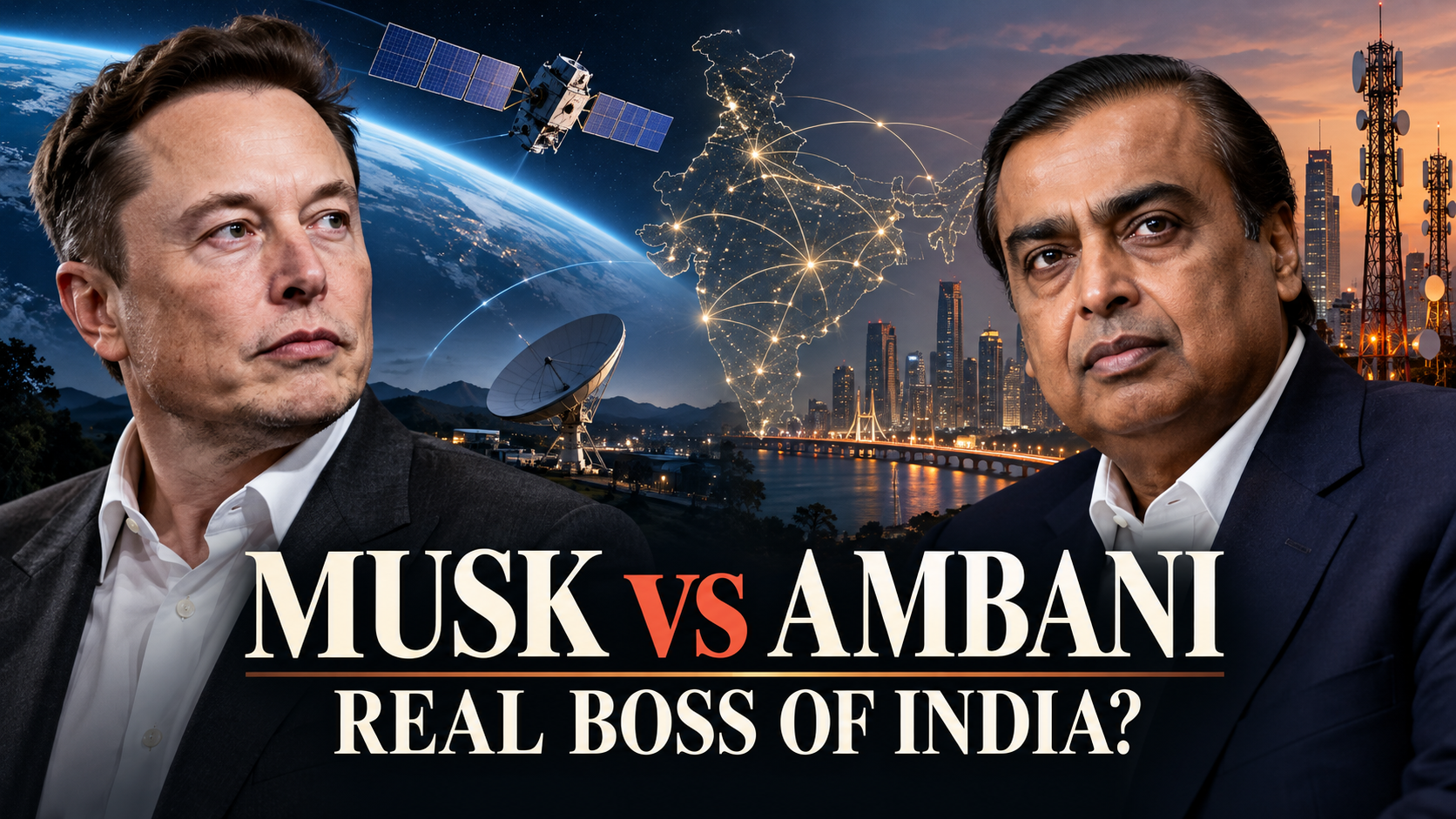
SpaceX CEO Elon Musk has escalated a public dispute over Starlink’s delayed commercial launch in India, sarcastically addressing Reliance Industries Chairman Mukesh Ambani as “Prime Minister Ambani” and questioning whether he holds outsized influence over the country’s telecom landscape. The remarks, posted on X in early October 2026, center on claims that entrenched interests—particularly around Reliance Jio—are slowing satellite broadband approvals to protect market dominance. Indian authorities have rejected the accusations as baseless, emphasizing a uniform regulatory process for all licensed satellite operators. Bloomberg
Musk’s Escalating Posts and Arguments for Starlink
Musk first accused unnamed “oligarchs” of blocking Starlink to maintain a “monopolistic chokehold on the Indian people,” describing the situation as “a crime against the people of India.” He followed by asking, “Is Ambani the real boss of India?” after noting that Starlink is licensed in over 165 countries and has spent five years complying with Indian requirements. In a subsequent post addressed as “Dear Prime Minister Ambani,” he offered a “humble apology” for not recognizing Ambani’s role and urged him to allow competition, arguing that satellite internet could connect underserved areas. Times of India
Musk highlighted potential benefits: improved access for children to education, opportunities for small businesses to reach global markets, and life-saving connectivity during natural disasters when terrestrial networks fail. He later pushed back against critics, stating that competition would benefit Indian consumers with more choices, that Ambani “is not going out of business,” and that Starlink would need affordable pricing to gain traction. Times of India
Government Position: No Monopoly, Uniform Rules for All Licensees
Union Communications Minister Jyotiraditya Scindia has directly addressed the claims, stating that “India does not allow a monopoly in any sector.” He confirmed that three companies hold Global Mobile Personal Communication by Satellite (GMPCS) licences: Starlink, Reliance’s Jio Satellite Communications, and Bharti-backed Eutelsat OneWeb. All three are at a similar regulatory stage and can begin commercial services only after each individually completes security clearances (assessed primarily by the Ministry of Home Affairs) and the government finalizes the revenue-based spectrum charging framework. CNBC TV18
The Department of Telecommunications has described suggestions of discriminatory treatment as “baseless and misconceived.” Security requirements include data localization, lawful interception capabilities, Indian gateways, and related technical demonstrations—conditions that apply equally across licensees. Spectrum assignment is set to be administrative rather than auction-based, with a usage charge of around 5% of adjusted gross revenue (lower for rural/remote areas) nearing finalization with the Telecom Regulatory Authority of India. Business Standard
Starlink’s Approval Timeline and Remaining Hurdles
Starlink received its GMPCS licence from the Department of Telecommunications in June 2025 and IN-SPACe authorization for its Gen-1 constellation in July 2025, following years of engagement that began with an application around November 2022. Provisional spectrum for testing has been available in some cases, but commercial operations require the outstanding security clearances and spectrum assignment. OneWeb and Jio Satellite secured earlier licences but face the same final milestones. Amazon’s Project Kuiper has also expressed interest and is under review. Business Standard
India’s Telecom Landscape and Connectivity Gaps
Reliance Jio remains India’s largest wireless operator, with roughly 500–530 million connections and about 39% market share as of mid-to-late 2026 data, closely trailed by Bharti Airtel at around 38%. Together the two private players dominate the market, with Vodafone Idea and BSNL holding smaller shares. Jio has driven significant growth in 5G adoption and fixed broadband. TelecomLead
Despite high overall coverage, a digital divide persists. TRAI and related data show India with over 1.09 billion internet subscriptions as of early 2026, but rural penetration stands at about 48 subscriptions per 100 people versus roughly 127 in urban areas. Large numbers of people live within mobile broadband footprints yet do not use the internet, with rural-urban gaps remaining notable. Satellite services are positioned by regulators as particularly suited for remote, border, hilly, and island areas that are harder to serve with terrestrial infrastructure. Government programs such as BharatNet continue expanding fiber and mobile coverage in villages. The Policy Edge
Broader Implications
The exchange underscores tensions between global satellite broadband ambitions and national regulatory, security, and competitive frameworks in one of the world’s largest telecom markets. Proponents of faster Starlink entry argue it could accelerate connectivity in hard-to-reach areas and introduce pricing and service competition. Authorities maintain that the process prioritizes security, data protection, and a level playing field among multiple licensed players rather than favoring any single incumbent. As of mid-October 2026, commercial satellite broadband services from any of the three licensees have not yet launched, pending the completion of remaining individual clearances and spectrum finalization.
Musk’s posts have drawn responses from opposition figures, including Rahul Gandhi, but the core dispute remains centered on the pace and nature of regulatory approvals for satellite internet in India. Further clarity is expected once security assessments conclude and the spectrum pricing regime is formally implemented.
Discover more from The Monitor
Subscribe to get the latest posts sent to your email.

“Min Ah” is one of the most searched names in Korean drama, and it points to more than one actress. The one driving the biggest buzz right now is Shin Min-a.
Key Takeaways
- Biggest news: Shin Min-a stars as Empress Navier in Disney+’s The Remarried Empress, which premieres November 4, 2026, per Soompi.
- Cast: Ju Ji-hoon plays Emperor Sovieshu, Lee Se-young plays Rashta, and Lee Jong-suk plays Prince Heinrey.
- Scale: the story is based on a web novel and webtoon that recorded about 2.97 billion cumulative global views as of July 2026, and it is Disney+’s first K-romance fantasy (SBS Star).
- Name confusion: other well-known “Min Ah” performers include Kang Min-ah and Minah (Bang Min-ah) of Girl’s Day. This article explains who is who.
| Name | Known for | Latest news |
|---|---|---|
| Shin Min-a | Leading roles in major dramas and films | The Remarried Empress (Nov 4, 2026) |
| Kang Min-ah | Actress represented by H&Entertainment | Drama Sympathetic Cells with Kim Myung-soo; premiere date announced June 2026 (MyDramaList) |
| Minah (Bang Min-ah) | Former Girl’s Day member turned actress | Born May 13, 1993; Girl’s Day debut in 2010 (Dramabeans) |
Shin Min-a’s Next Big Role: The Remarried Empress
Disney+ confirmed on August 26 that the series would premiere on November 4, releasing a teaser and character posters (Soompi). The story follows Navier, the “perfect empress” of the Eastern Empire, who is told by her husband that he wants a divorce after he falls for a runaway slave, Rashta. Instead of accepting defeat, Navier asks permission to remarry, choosing the prince of a rival kingdom.
Release plan
According to industry coverage, the ten-part series will debut with a four-episode drop and then release two episodes each Wednesday through a November 25 finale, and it streams on Hulu in the U.S. (Resonate). The same report says the first three episodes will screen at the Busan International Film Festival, which runs October 6–15.
Why it matters
This is the clearest sign of how K-drama has become a global asset. Platforms are paying for fantasy adaptations of internet-born stories with huge built-in audiences, and they are casting established leads to carry them.
Why Shin Min-a’s Popularity Travels
- Longevity. She has worked consistently in Korean drama since the early 2000s, and her credits on MyDramaList span more than two decades (MyDramaList).
- Genre range. From romantic comedy to Netflix thriller Karma and a 2026 film, The Eyes, in which she plays dual roles (MyDramaList).
- Global platforms. Disney+, Netflix, and Hulu give Korean series simultaneous worldwide releases.
The Other “Min Ah” Actresses
Kang Min-ah
A Seoul-born actress with credits since the 2010s. MyDramaList lists a 2026 drama, Sympathetic Cells, with Kim Myung-soo, whose premiere date was announced in June (MyDramaList).
Minah (Bang Min-ah)
She debuted with Girl’s Day in 2010, made her acting debut on the tvN variety program Roller Coaster, and later won a Best New Actress trophy at the 2013 Gwangju International Film Festival for the film Holly. She led the 2020 film Snowball, which earned a Screen International Rising Star Asia Award at the New York Asian Film Festival (Dramabeans).
How to Search the Right Person
Add the family name: “Shin Min-a,” “Kang Min-ah,” or “Bang Minah.” Spelling varies in English (Min-a, Mina, Min Ah), which is why results get mixed.
Frequently Asked Questions
Who is Min Ah in K-drama?
There are several, but the most prominent right now is Shin Min-a, starring in The Remarried Empress.
When does The Remarried Empress premiere?
November 4, 2026, on Disney+ (Soompi).
Who is in the cast?
Shin Min-a, Ju Ji-hoon, Lee Jong-suk, and Lee Se-young.
Is Min Ah the same as Minah from Girl’s Day?
No. Minah is Bang Min-ah, a different performer (Dramabeans).
How popular is the source story?
The webtoon had about 2.97 billion global views as of July 2026 (SBS Star).
Whichever Min Ah you were searching for, the pattern is the same: Korean drama talent now finds its audience everywhere at once.
Discover more from The Monitor
Subscribe to get the latest posts sent to your email.
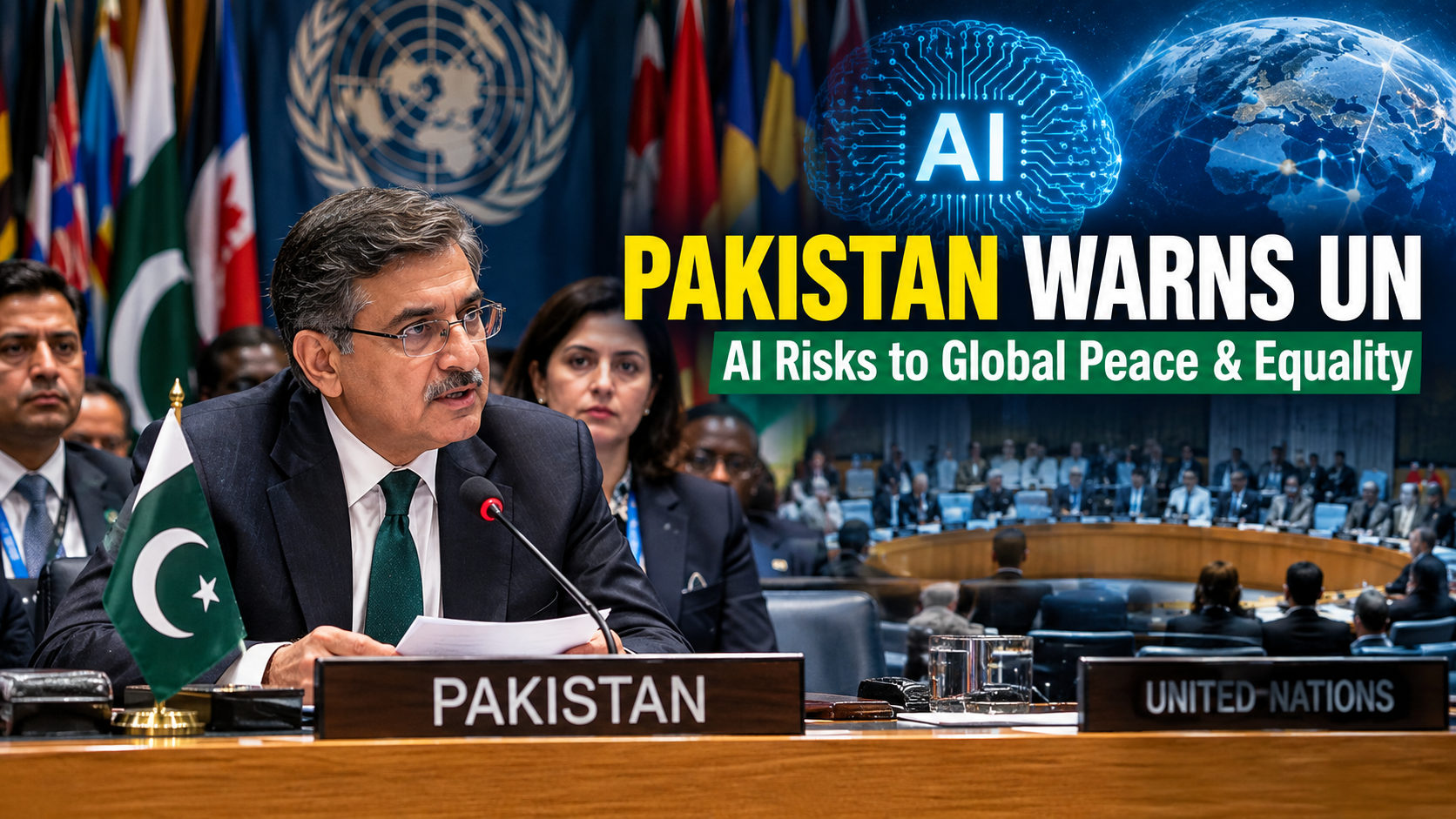
UNITED NATIONS — September 24, 2026: Pakistan has warned the United Nations Security Council that the rapid and insufficiently regulated development of artificial intelligence could deepen global inequality while creating new risks to international peace and security.
Speaking during a Security Council briefing on “Artificial Intelligence and International Security,” Pakistan’s Deputy Prime Minister and Foreign Minister Senator Mohammad Ishaq Dar called for stronger international safeguards, regulatory frameworks and governance mechanisms to address the risks associated with increasingly powerful AI systems.
Dar emphasized that the international community needs coordinated action to establish guardrails around artificial intelligence, particularly as AI technologies become increasingly relevant to military decision-making, information systems and national security.
Pakistan Calls for International Guardrails on Artificial Intelligence
Pakistan’s intervention comes as governments and international institutions increasingly debate how AI should be governed across borders.
Dar stressed the importance of restraint and confidence-building measures in the military domain, particularly because AI-assisted systems could compress decision-making timelines and increase the danger of miscalculation.
The concern is significant because artificial intelligence is no longer confined to civilian applications. AI is increasingly being examined in relation to cyber operations, intelligence analysis, autonomous systems, information warfare and other security-sensitive areas.
The United Nations has also warned that AI can create substantial risks when technological development moves faster than international governance.
The UN’s existing AI framework emphasizes responsible, accountable, transparent and human-centered development, while calling for effective human oversight of AI systems.
Why AI Is Becoming a Security Council Issue
The Security Council has previously considered artificial intelligence as a potential factor affecting international peace and security, but the technology has developed rapidly since those early discussions.
A recent analysis by the independent Security Council Report identified several security implications, including AI’s ability to facilitate malicious cyber activity, accelerate the creation and distribution of misinformation and disinformation, and influence military operations.
The organization also highlighted concerns surrounding increasingly autonomous weapons systems, shortened decision-making timelines and questions about human oversight and accountability.
These concerns help explain why AI has moved beyond being primarily a technology-policy issue and increasingly become a subject of international security diplomacy.
The challenge for governments is that AI can simultaneously create opportunities and risks.
AI could help countries identify emerging conflicts, improve humanitarian operations, monitor ceasefires and analyze large quantities of information. At the same time, poorly governed systems could amplify security threats or make already complex conflicts more difficult to manage.
Pakistan Highlights the Global Inequality Dimension
Pakistan’s message to the Security Council went beyond military applications.
Dar also emphasized the need for AI development to be representative, transparent and inclusive, reflecting concerns among developing countries that the benefits of advanced artificial intelligence could become concentrated among a relatively small group of technologically advanced states and companies.
That concern is already reflected in the United Nations’ Global Digital Compact.
The Compact calls for closing digital divides, expanding access to the benefits of the digital economy and strengthening international governance of artificial intelligence. It specifically calls for full and equal representation of countries, including developing nations, in international AI governance.
This makes AI access and governance part of a broader development question.
Countries with advanced computing infrastructure, large datasets, sophisticated research institutions and substantial private-sector investment are positioned differently from nations that remain dependent on imported technologies and have limited domestic AI capacity.
If that gap widens, AI could potentially reinforce existing economic and technological inequalities rather than reduce them.
UN Framework Already Calls for Inclusive AI Governance
The debate at the Security Council is taking place alongside a broader UN effort to develop international mechanisms for AI governance.
The Global Digital Compact, adopted as part of the Pact for the Future, established a framework for international cooperation on digital technologies and AI.
The United Nations has subsequently established an Independent International Scientific Panel on Artificial Intelligence and a Global Dialogue on AI Governance.
The first annual Global Dialogue took place in Geneva in July 2026, bringing together governments and other stakeholders to discuss international cooperation, AI opportunities and emerging risks.
The UN says the dialogue is intended to ensure that AI governance reflects the priorities of all nations rather than only those with the greatest technological capabilities.
For developing countries such as Pakistan, this process provides an avenue to raise questions about technological access, capacity-building, data governance and participation in international rule-making.
AI and Military Decision-Making Raise Particular Concerns
One of the most sensitive areas in the AI debate is military decision-making.
AI can process enormous volumes of information far faster than humans. That capability could potentially assist military planners and governments, but it also raises questions about what happens when decisions involving force are increasingly influenced by automated systems.
A shorter decision-making cycle can create pressure to respond before human officials have fully evaluated the available information.
That is why Pakistan’s emphasis on restraint and confidence-building is significant in the context of international security.
The broader UN position has also stressed the importance of retaining meaningful human control over decisions involving the use of force.
The central issue is not simply whether AI should be used in security applications, but how governments can establish accountability when AI-assisted systems contribute to consequential decisions.
Disinformation Adds Another Layer of Risk
AI-generated content presents another challenge for governments and international organizations.
Generative AI can make it easier to create convincing text, images, audio and video at scale. In a conflict environment, such capabilities could complicate efforts to distinguish authentic information from manipulated material.
The UN has identified misinformation and disinformation among the major concerns surrounding artificial intelligence, particularly where manipulated content can affect public trust, human rights or humanitarian operations.
For international institutions, the problem is therefore both technological and political: governments must develop mechanisms capable of addressing harmful AI-generated content without undermining legitimate expression or access to information.
Global AI Governance Is Becoming More Urgent
The current Security Council discussion reflects a larger international shift.
AI governance is no longer being discussed solely in terms of innovation, investment and economic competitiveness. Governments are increasingly considering questions involving national security, international stability, human rights, development and inequality.
The United States and China, for example, continue to compete technologically while also discussing mechanisms for AI safety and communication.
Meanwhile, the UN is developing a more inclusive multilateral framework intended to give countries a role in shaping international AI governance.
That creates an important distinction between AI development and AI governance.
The first concerns how quickly capabilities advance. The second concerns the rules, safeguards and institutions that determine how those capabilities are developed and deployed.
What Pakistan’s Position Means for Developing Countries
Pakistan’s intervention highlights an issue that is likely to remain central to future AI negotiations: who gets to shape the rules governing artificial intelligence?
Developing countries have an interest not only in managing AI-related risks but also in ensuring access to the technology’s potential benefits.
The UN’s Global Digital Compact recognizes the need for capacity-building, technology cooperation and support for developing countries to access, develop, use and govern AI systems.
That approach is particularly relevant as AI becomes increasingly connected to education, healthcare, agriculture, financial services, public administration and economic productivity.
Without adequate access to computing infrastructure, skills, data and investment, developing countries could find themselves primarily consuming technologies designed elsewhere.
Pakistan’s call for representative and inclusive AI governance therefore places technological development and international security within the same broader conversation.
The Challenge Ahead: Rules That Keep Pace With Technology
The Security Council’s latest discussion illustrates the central difficulty confronting policymakers.
Artificial intelligence is developing faster than many traditional regulatory processes can respond.
International rules must address security risks without unnecessarily blocking beneficial innovation. They must also account for differences between developed and developing countries while maintaining fundamental principles such as human rights, transparency and accountability.
The United Nations’ emerging governance architecture is an attempt to address that challenge through scientific assessment, international dialogue and greater participation by countries around the world.
Pakistan’s intervention adds another voice to that debate, particularly on the consequences of unequal access to AI capabilities and the risks associated with AI-assisted military decision-making.
Conclusion
Pakistan’s warning at the UN Security Council underscores the increasingly international character of the artificial intelligence debate.
The issue is no longer simply how quickly AI can advance. It is also about how the technology is governed, who participates in setting the rules, how military risks are controlled and whether the benefits of AI are distributed broadly enough to avoid deepening existing inequalities.
As AI becomes more deeply integrated into security, economies and public institutions, international cooperation will become an increasingly important part of managing both its opportunities and its risks.
For Pakistan and other developing countries, the emerging global AI governance system will be particularly important because the rules established today could influence access to technology, economic opportunities and participation in future international decision-making for years to come.
Discover more from The Monitor
Subscribe to get the latest posts sent to your email.

Elon Musk Calls Mukesh Ambani the “Real Boss of India” Over Alleged Monopoly Concerns

Legal Pioneer and Defender of Justice: The Life, Works, and Legacy of Navi Pillay

Inside the Modern Republican Party Platform: Tax Policy, Immigration, and Governance

Anne Carson: Genius of Hybrid Forms and 2026 Nobel Laureate in Literature

Analyzing the Republican Voter Enthusiasm Gap: Turnout Metrics and Polling Data

The West Wing Legacy: Why the Political Drama Is More Relevant Than Ever

Remembering Kianna Underwood: The Nickelodeon Actress Behind “All That” and “Little Bill”

Min Ah: The Global Impact and Rising Popularity of the K-Drama Star

Pakistan Warns UN Security Council of AI Risks to Global Peace and Equality

Best iPhone 18 Pro Max Cases: Premium Protection for Apple’s 2026 Flagship
Pakistan Warns UN Security Council of AI Risks to Global Peace and Equality

Bloodhound Q50: Remembering the Tragic Loss of Chicago’s Rising Drill Star

Remembering Eliana Moreno: The Legacy of NBC LA’s “Eli in the Heli”

Horror Box Office Economics: ROI, Market Share and the 2026

iOS 27 Release Date & Siri AI: The Ultimate Tech News Guide for iPhone 18 Users

Club América’s Financial Playbook: The Economics and Valuation of Latin American Football
Min Ah: The Global Impact and Rising Popularity of the K-Drama Star

Fortress Diplomacy: How China’s Secretive Hongqi N701 Matches America’s Legendary “Beast”
-

 Featured5 years ago
The Right-Wing Politics in United States & The Capitol Hill Mayhem
-

 News5 years ago
Prioritizing health & education most effective way to improve socio-economic status: President
-

 China5 years ago
Coronavirus Pandemic and Global Response
-

 Canada5 years ago
Socio-Economic Implications of Canadian Border Closure With U.S
-

 Democracy5 years ago
Missing You! SPSC
-

 Conflict5 years ago
Kashmir Lockdown, UNGA & Thereafter
-
Democracy5 years ago
President Dr Arif Alvi Confers Civil Awards on Independence Day
-

 Digital6 years ago
Pakistan Moves Closer to Train One Million Youth with Digital Skills