
Human Rights
Commemorating Human Rights Day: False consolation for Kashmiris


Today, on December 10, 2023, the 75th anniversary of the Universal Declaration of Human Rights is being celebrated. December 10 commemorates the day in 1948 when the General Assembly of the United Nations adopted the Universal Declaration of Human Rights. Mr Antonio Guterres, the United Nations Secretary-General said, “Human rights are the foundation for human dignity, and the cornerstone of peaceful, inclusive, fair, equal and prosperous societies…They are a unifying force and a rallying cry. They reflect the most fundamental thing we share – our common humanity.”
Dr. Volker Türk, the UN High Commissioner for Human Rights said, “On this Human Rights Day, we reaffirm the universality and indivisibility of all rights, as we stand up for human rights for all.” He added, “Human rights is a force to reckon with, not because it serves the interests of the powerful, but because it has captured the imagination of the powerless…And so I will endeavour to promote advances in all human rights, without distinction, in every region, and across all UN activities.”
Besides, the Universal Declaration of Human Rights, the world body has adopted the ‘Geneva Convention’ its ‘Additional Protocols’, (1949) and International Criminal Court (ICC) (1998) for a single purpose: to defend protect, and safeguard the human rights of all. The basic human rights provisions of the Geneva Conventions including the ones protected under Common Article 3 of the conventions are non-derogable in the sense that they must be respected even in times of international and non-international conflicts, international disturbances, and foreign occupations.
The preamble of the ICC states that ICC is “mindful that during this century millions of children, women, and men have been victims of unimaginable atrocities that deeply shock the conscience of humanity” and “recognizing that such crimes threaten the peace, security and well-being of the world.”
Tragically, civilized nations have fallen from their lofty calling: namely, human rights for all mankind. There is a sad commentary on the state of human rights all over the globe. It is the job of all human rights defenders to jump-start that moral evolution.
George Bernard Shaw, world renowned political philosopher was prophetic when he said in 1940’s “Only on paper has humanity yet achieved glory, beauty, truth, knowledge, virtue, and abiding love.”
The presence of the ‘Universal Declaration of Human Rights’ ICC and other human rights instruments offers no consolation for the people of Kashmir because its framers have not lived up to its spirit, at least applying it selectively to suit the objectives of certain powers.
The people of Kashmir are perplexed as to how to interpret such joi de vivre. Over seventy-five years have elapsed since the adoption of this Declaration, but the people of Kashmir have not seen an iota of change in the human rights situation in Kashmir. For worse may be but never for the better. The latest phenomenon of settler colonial project has brought Kashmir to the brink of genocide, as articulated by Dr. Gregory Stanton, Chairman, of Genocide Watch before the United States Congress on January 12, 2022. Such international treaties are meaningless for the people of Kashmir, or Palestine or for any other people who do not see their application, or even a negative mention to those who ride roughshod over them with total impunity while enjoying the good graces of some of the members of the world community to aspire to a high moral station above others.
According to the definition of ICC, tens of thousands of Indian soldiers and scores of India officials are guilty of crimes against humanity in Kashmir. The crimes committed by 900,000 Indian military and paramilitary forces in Kashmir are a daily feature of Kashmiri life. According to Arundhati Roy, India’s legendary novelist, the 900,000 Indian soldiers have made Kashmir the largest militarized zone in the world. Indian army has organized and employed violence against civilians to create deep fear among the general population to advance the political and religious agenda of a Hindutva ideology. Does anyone seriously believe that Under ICC Statue, a single Indian soldier or an official would ever be prosecuted before the ICC? Of course NOT. India has sneered at international law for decades and the international community has just yawned.
Too often, the international community closes its eyes to the brutal reality of Kashmir because of India’s hegemony in South Asia and its potentially attractive consumer market. As a consequence, the moral suasion that could jolt India into recognizing its international law obligation to accede to self‑determination in Kashmir is blunted.
The world body and saner elements in American policy agencies should take a leaf out of the warning of Arundhati Roy, “Kashmir is the real theatre of unspeakable violence and moral corrosion that can spin us into violence and nuclear war at any moment. To prevent that from happening, the conflict in Kashmir has to be addressed and resolved.” Huff Post, Mar 1, 2019
We call upon the United Nations to use its influence in putting an end of human rights violations especially when the 75th anniversary of the Universal Declaration of Human Rights is being celebrated with great pomp. The UN needs to do more than celebrate anniversaries if it is concerned about ensuring peace, stability and security in South Asia.
Dr. Fai is Secretary General, World Kashmir Awareness Forum. He can be reached at: gnfai2003@yahoo.com www.kashmirawareness.org
Discover more from The Monitor
Subscribe to get the latest posts sent to your email.



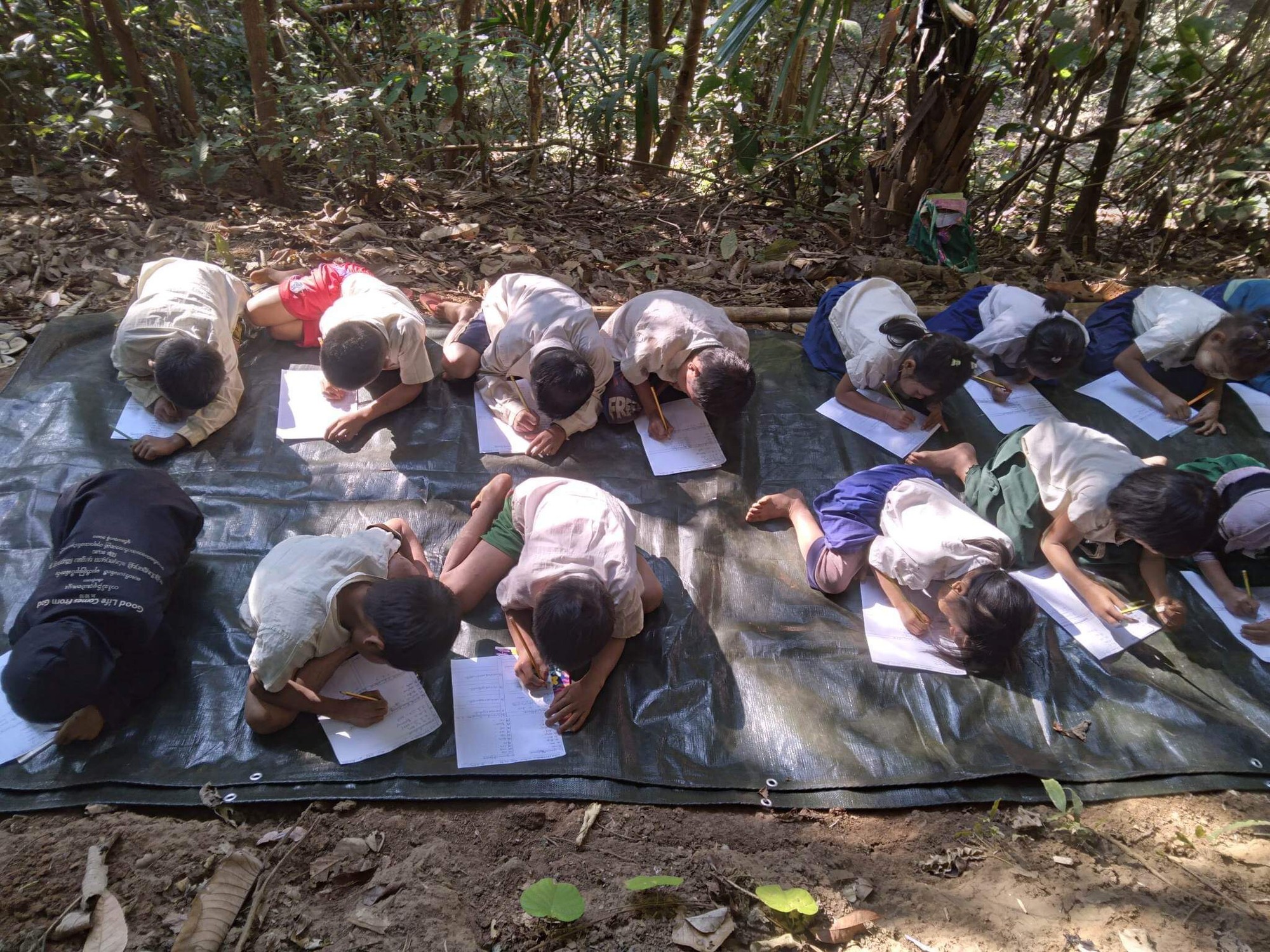
Over 4 million Myanmar refugees in Thailand face police extortion, aid cuts, and legal limbo in 2026. A landmark work permit policy offers hope — but millions of undocumented Burmese migrants remain dangerously exposed. A premium investigation.
Table of Contents
The Street Becomes a Trap
Every morning, Naw Paw — a 34-year-old Karen woman who fled the Irrawaddy Delta shortly after Myanmar’s military coup in February 2021 — maps her walk to the garment workshop in Mae Sot with a single overriding thought: which roads have police checkpoints today. She knows most of the officers by the shifts they work. She knows which ones accept 200 baht, which ones demand 500. She has paid bribes she cannot afford more times than she can count.
“I never feel safe,” she told a rights researcher earlier this year. “Even when nothing is happening, I am afraid. I am always afraid.”
Naw Paw is one of an estimated 4 million Myanmar nationals now living in Thailand — the largest single-nationality migrant population in any Southeast Asian country. She is also among the roughly 1.7 million of them who are undocumented, meaning she exists in a legal void: unable to regularize her status, barred from formal work, excluded from the Thai government’s own refugee protection mechanisms, and left almost entirely vulnerable to the whims of local police. In border towns like Mae Sot, the informal extortion of undocumented Myanmar nationals has become so normalized that locals use a darkly revealing phrase to describe them: walking ATMs.
Four years after the generals in Naypyidaw seized power and set their country ablaze, the humanitarian fallout has reached a scale that Thailand — and the international community — can no longer manage by looking away.
Four Million People, and Counting
The numbers alone are staggering. The International Organization for Migration (IOM) estimates that more than 4 million Myanmar nationals currently reside in Thailand. Of those, nearly half — approximately 1.7 million — are undocumented, according to the Human Rights Watch July 2025 report, which documents their daily exposure to harassment, arrest, and forced deportation.
A further 90,000 mostly Karen and Karenni refugees live in nine government-administered camps strung along the Thai-Myanmar border — settlements that have existed since the 1980s and whose residents, in some cases, have now spent their entire lives inside the wire. The UNHCR registers more than 80,000 of these camp residents, along with roughly 5,000 urban asylum-seekers from more than 40 countries.
The scale of this population represents, in microcosm, everything that has gone wrong in Myanmar since February 2021: a military junta that has carried out crimes against humanity, a collapsing economy, fractured healthcare and education systems, and a countryside scorched by conflict. People are not crossing the Moei River into Thailand because they want to; they are crossing because staying has become unbearable.
What awaits them on the other side, however, is a protection system riddled with gaps — and, for far too many, a second layer of suffering.
“Walking ATMs”: The Extortion Economy
Thailand is not a signatory to the 1951 Refugee Convention. It has no domestic refugee law applicable to all nationalities. Its 2023 National Screening Mechanism — hailed by Bangkok as a reform — was designed with an exemption so large it swallows the mechanism whole: it explicitly excludes migrant workers from Myanmar, Cambodia, and Laos. Since the overwhelming majority of Myanmar nationals enter Thailand through migrant worker channels, they fall entirely outside the system’s protection.
The result is a population kept in permanent legal precarity — and Thai police have learned to profit from it.
HRW’s 48-page report, based on in-person interviews with 30 Myanmar nationals in Thailand in February 2025, documents a pattern of police stops, interrogations, and demands for bribes carried out with the implicit threat of arrest and detention. The phrase “walking ATMs” — used by residents of Mae Sot — captures not just the individual transactions but the systemic architecture: vulnerability is the product, and those who hold legal power over undocumented migrants are its sellers.
Many Myanmar nationals rely on brokers to navigate the “pink card” system — officially the Non-Thai Identification Card — which facilitates legal residence and employment. But the brokers charge exorbitant fees, the cards are often linked to fictitious employers, and a regularization window opened by the Thai Cabinet in September 2024 (extended in February 2025) has left most applicants in a renewal limbo that offers documentation but not genuine security.
“After fleeing conflict, persecution, and deprivation, Myanmar nationals need protection in Thailand,” said Nadia Hardman, refugee and migrant rights researcher at Human Rights Watch. “Instead, Thailand denies them secure legal status, and its authorities use that vulnerability to exploit and extort them.”
Urban undocumented Burmese migrants self-restrict their movement so severely that many avoid seeking medical care for serious conditions, pulling their children out of school at the first sign of increased police activity. The fear of deportation — back to a country under military rule, back to forced conscription, back to airstrikes and burning villages — operates as a form of continuous psychological violence.
The Camps: Aid Collapse and a Generation in Limbo
If conditions for undocumented Myanmar migrants outside the camps are defined by fear and exploitation, conditions inside the nine border camps have been defined, since 2025, by hunger.
The Trump administration’s dismantling of USAID in early 2025 triggered a cascade of funding failures that landed hardest on the most isolated. The Border Consortium (TBC), which had provided food assistance to camp residents for decades, terminated standard food aid for over 80 percent of families on July 31, 2025, after US funding was cut. Primary healthcare services from the International Rescue Committee followed. As HRW reported in August 2025, the monthly food allowance for adults had already been cut to just 77 baht — roughly US$2.30 — before the complete termination of food aid.
“In the past, we had enough rations,” one 34-year-old camp resident told HRW. “But the funding’s been cut bit by bit. The cash decreased and prices went up. I get 77 baht a month, but you can’t buy anything with that.”
Between 2022 and 2024, chronic malnutrition among children under five in the camps had already increased for the first time in at least a decade. The aid collapse accelerated what was already a slow-moving emergency.
For the youngest residents — who make up nearly 30 percent of the camp population — the education system has been crumbling in parallel. In January 2026, Save the Children warned that access to education in the border camps had reached “breaking point,” with student numbers rising 33 percent — from roughly 18,000 in 2020 to 24,000 in 2025 — even as funding collapsed. Classrooms of up to 60 students share frayed textbooks. Teachers face legal constraints that prevent them from holding Thai teaching licenses. Many learning centres operate on rented land, with no security of tenure.
The human cost is concentrated in a generation that has known nothing but the camps. One 25-year-old named Jornay, born in Mae La and interviewed by Save the Children, put it with quiet devastation: “I was educated in the camps, but our education was not recognized, so after we graduate, we don’t have jobs.”
Mae La, the oldest and largest of the nine camps — a dense settlement of wooden houses on the hills near Mae Sot, carved through with narrow muddy roads — has residents who have been there since the 1980s. Hope of resettlement abroad, always fragile, largely evaporated after the Trump administration halted a new resettlement program in early 2025, forcing two dozen refugees back to Umpiem Mai camp when their flight was cancelled in February.
“Having the card means we can’t go anywhere, we can’t apply for jobs, we can’t study,” a teacher who had spent 17 years in the camps told HRW. “We have no future, no opportunities. Our lives are in limbo.”
A Landmark Step — and Its Limits
In this landscape of compounding crises, August 26, 2025 marked a genuine departure. Thailand’s Cabinet approved a landmark policy allowing Myanmar refugees living in the nine border camps to work legally outside for the first time in decades. It is a significant concession — driven, in part, by economic necessity.
The timing was not coincidental. An escalating border dispute with Cambodia in 2025 prompted the return of over 780,000 Cambodian migrant workers to their home country. Since Cambodians had represented approximately 12 percent of the Thai workforce, entire industries — agriculture, manufacturing, construction, food processing — found themselves facing acute labor shortages. With an aging Thai population and a structural deficit of low-wage workers, the refugee camps along the Myanmar border began to look less like a humanitarian problem and more like an untapped labor reservoir.
As HRW noted, the new permits will be available to approximately 80,000 camp refugees registered with the Thai government, of whom an estimated 42,000 are of working age. Refugees must apply for permission to leave the camps and for work permits valid up to one year, tied to employer sponsorship. It is a pilot program — cautious, conditional, and heavily mediated by bureaucratic process.
“As young people, we want to make a living, we want to use our knowledge and skills,” one refugee told HRW. “If there’s any chance for us to leave the camp to work, to get a job and provide for our families, I would take it.”
UNHCR welcomed the Cabinet resolution as a meaningful step toward refugee self-reliance. For rights advocates, the challenge now is ensuring the application process remains free, transparent, and insulated from the broker networks and extortion dynamics that plague the broader migrant worker system. Every previous Thai regularization scheme has created new opportunities for intermediaries to extract fees from desperate people.
But even if the permit scheme functions flawlessly, its scope exposes the deeper problem: it covers roughly 80,000 people. The other 3.9-plus million Myanmar nationals in Thailand — the vast majority, living in urban areas, border towns, and informal settlements — remain entirely outside it.
The Urban Millions: Left Exposed
For undocumented Myanmar nationals in Bangkok, Chiang Mai, Samut Sakhon, and cities across Thailand, the August 2025 Cabinet resolution changed very little. They remain in legal limbo: too numerous to ignore, too undocumented to protect, and too economically essential to deport en masse — yet subjected to systematic harassment that extracts money while reinforcing their powerlessness.
Thailand’s structural reliance on Myanmar labor creates an inherent contradiction at the heart of its policy: the government needs these workers, but it has built no legitimate pathway for most of them to exist legally. The broker economy — which charges Myanmar nationals thousands of baht for pink cards linked to employers who may not exist — fills the gap, funneling money upward while leaving workers more exposed than before.
Human rights organizations, including UNHCR, have called for a temporary protection regime for all Myanmar nationals in Thailand — a status that would halt deportations, allow movement, and extend basic legal protections without requiring Thailand to adopt full refugee status determination procedures. Bangkok has not moved in that direction.
There is also a more sinister dimension: credible reports of junta informants operating within Myanmar migrant communities in Thailand, monitoring diaspora political organizing and reporting back to Naypyidaw. For those who fled specifically because of their political activity or ethnic identity, even the relative safety of Bangkok can feel provisional.
What Thailand Must Do — And Why It Should
The economic case for extending legal protection to Myanmar nationals in Thailand is not merely humane — it is hard-headed. Thailand faces a demographic crunch. Its workforce is aging rapidly. Industries that drive export revenue — including agriculture, seafood processing, and construction — are structurally dependent on low-wage migrant labor. A rights-respecting integration framework would not just alleviate suffering; it would stabilize a labor supply that the Thai economy cannot function without.
Rights groups and the UN have converged on a set of concrete demands:
- Introduce a temporary protection regime for all Myanmar nationals, halting deportations and extending legal status regardless of how people entered Thailand
- Expand the work permit program beyond camp residents to undocumented Myanmar nationals in urban areas
- Ratify the 1951 Refugee Convention, or at minimum adopt domestic legislation creating genuine asylum procedures applicable to all nationalities
- End police extortion through accountability mechanisms, independent monitoring, and criminal consequences for officers who exploit migrants
- Restore humanitarian funding for border camp services — food, healthcare, and education — through diversified donor commitments that reduce dependence on any single government
- Integrate camp schools into the Thai national education system so that children’s qualifications are recognized and pathways to the workforce open
The ASEAN dimension matters here too. Thailand is not alone in hosting Myanmar refugees — Malaysia, Indonesia, and India all carry portions of the load, and all face similar tensions between economic pragmatism and rights commitments. A regional framework for temporary protection, brokered through ASEAN mechanisms, would distribute pressure more equitably and reduce the incentive for any single host country to maintain exploitative conditions as a deterrent.
The international community, meanwhile, must recognize that the aid funding collapse of 2025 did not just harm individual refugees — it destabilized one of Southeast Asia’s most fragile border regions, creating conditions for trafficking, organized crime, and further political radicalization. Penny-pinching on humanitarian budgets in periods of great-power political realignment costs far more in the long run than the contributions foregone.
Conclusion: The Arithmetic of Exposure
The arithmetic of this crisis is brutal in its clarity. Thailand hosts more than 4 million people from Myanmar. Ninety thousand live in official camps that have just — tentatively, conditionally — been given the right to work. The other 3.9 million live in a system that is designed neither to protect them nor to acknowledge their presence with any dignity.
For Naw Paw, planning her route to work in Mae Sot around police checkpoints, the August 2025 Cabinet resolution is abstract comfort. She is not in a camp. She is not registered. She does not have a pink card linked to a real employer. She has what millions of Burmese refugees in Thailand have: a daily calculation of risks, a practiced ability to disappear, and the knowledge that if something goes wrong, the system will not save her.
Four years on from the coup, Thailand stands at a choice. It can continue managing Myanmar’s displaced millions through a combination of selective legalization, systematic exploitation, and willful blindness. Or it can build something that actually works — for refugees, for Thai industry, and for the region’s long-term stability. The landmark August 2025 work permit policy is a proof of concept. The question is whether Bangkok has the political will to scale it.
The answer matters to millions of people who are still running out of road.
Frequently Asked Questions (FAQ)
Q: How many Myanmar refugees are currently in Thailand as of 2026? According to IOM estimates, more than 4 million Myanmar nationals currently live in Thailand. Of these, approximately 90,000 reside in nine official border camps, while the vast majority — including an estimated 1.7 million who are undocumented — live and work across Thailand in legal limbo.
Q: Are Myanmar refugees in Thailand allowed to work legally? As of August 2025, Thailand’s Cabinet approved work permits for approximately 80,000 registered camp refugees — the first such authorization in decades. However, the estimated 3.9 million Myanmar nationals living outside official camps, including nearly 1.7 million undocumented individuals, remain excluded from legal employment pathways and are vulnerable to exploitation.
Q: Why are undocumented Myanmar migrants in Thailand called “walking ATMs”? The phrase, used by residents of Mae Sot on the Thai-Myanmar border, refers to the practice of Thai police extorting money from undocumented Myanmar nationals — stopping, interrogating, and demanding bribes under the threat of arrest and deportation. Human Rights Watch documented this systemic extortion pattern in its July 2025 report, “I’ll Never Feel Secure.”
Q: What has the US aid funding cut meant for Myanmar refugee camps in Thailand? The Trump administration’s dismantling of foreign assistance in 2025 led directly to the termination of standard food aid for over 80 percent of camp families by July 31, 2025, as well as the collapse of primary healthcare services. Monthly food allowances had already been slashed to approximately US$2.30 per adult before full termination. Save the Children separately reported in January 2026 that education in the camps had reached “breaking point” due to underfunding amid rising student numbers.
Sources
- Human Rights Watch — “I’ll Never Feel Secure”: Undocumented and Exploited Myanmar Nationals in Thailand (July 2025): https://www.hrw.org/report/2025/07/14/ill-never-feel-secure/undocumented-and-exploited-myanmar-nationals-in-thailand
- Human Rights Watch — Thailand Allows Myanmar Refugees in Camps to Work Legally (August 2025): https://www.hrw.org/news/2025/08/27/thailand-allows-myanmar-refugees-in-camps-to-work-legally
- Human Rights Watch — Thailand: Aid Cuts Put Myanmar Refugees at Grave Risk (August 2025): https://www.hrw.org/news/2025/08/11/thailand-aid-cuts-put-myanmar-refugees-at-grave-risk
- Save the Children — Education in Refugee Camps on Thailand-Myanmar Border Reaches ‘Breaking Point’ (January 2026): https://www.savethechildren.net/news/education-refugee-camps-thailand-myanmar-border-reaches-breaking-point-report
- UNHCR — Thailand Country Page: https://www.unhcr.org/us/where-we-work/countries/thailand
- Center for Global Development — A Breakthrough for Refugees’ Work Rights in Thailand and Malaysia?: https://www.cgdev.org/blog/breakthrough-refugees-work-rights-thailand-and-malaysia
- Reuters — Leaving Border Camps for Orchards: Myanmar Refugees Join Thai Workforce (November 2025): https://www.reuters.com/world/asia-pacific/leaving-border-camps-orchards-myanmar-refugees-join-thai-workforce-2025-11-19/
- The Guardian — Thailand to Let Myanmar Refugees Work Amid Aid Cuts and Labour Shortages (October 2025): https://www.theguardian.com/global-development/2025/oct/22/thailand-to-let-myanmar-refugees-work-aid-cuts-labour-shortages
Discover more from The Monitor
Subscribe to get the latest posts sent to your email.

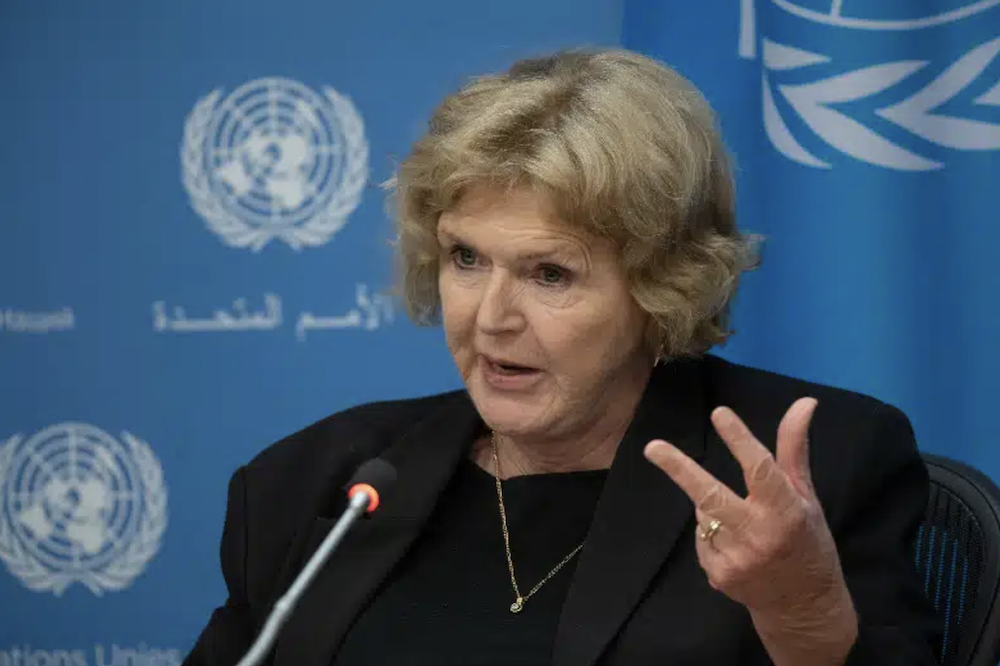
This written communication draws the attention of the United Nations and its human rights mechanisms to persistent and grave violations in Jammu and Kashmir, which cumulatively raise serious concerns under international human rights law and international criminal law, including the threshold of crimes against humanity.
For decades, the civilian population of Jammu and Kashmir has lived under one of the world’s most militarized environments. Since August 2019 in particular, restrictions on civil liberties have intensified, marked by arbitrary arrests, prolonged detentions without trial, torture and ill-treatment, extrajudicial killings, enforced disappearances, and collective punishment under the guise of national security.
On 24 November 2025, ten UN Special Rapporteurs issued a joint statement condemning “reports of arbitrary arrests and detentions, suspicious deaths in custody, torture and other ill-treatment, lynchings, and discriminatory treatment of Kashmiri and Muslim communities.”
These concerns echo findings previously documented by Michelle Bachelet,the United Nations High Commissioner for Human Rights (OHCHR) in its 2019 report, which warned of an entrenched culture of impunity and lack of accountability for serious violations.
Independent experts on mass atrocities have sounded early warnings. Gregory Stanton, Founder of Genocide Watch, has stated that Kashmir exhibits multiple risk factors associated with genocide, including extreme militarization, denial of identity, suppression of dissent, and systemic impunity.
Freedom of expression and access to information have been severely curtailed. The Committee to Protect Journalists has repeatedly warned that journalism in Kashmir has been effectively criminalized, leaving the population voiceless.
Award-winning journalists and scholars—such as Masarat Zahra and Dr. Nitasha Kaul (British Academic) —have faced harassment, travel bans, and reprisals, including the denial of entry to India, amounting to transnational repression.
The recent attachment of properties belonging to members of the Kashmiri diaspora who advocate a peaceful resolution of the Kashmir dispute is deeply alarming. These measures appear aimed at intimidating and silencing dissenting voices and preventing the international community from understanding the reality on the ground.
Equally disturbing is the forthcoming trial of Mohammad Yasin Malik before the Supreme Court of India, where the government is seeking the death penalty, a move that has sent shockwaves across Kashmir and among human rights advocates worldwide. The recent convictions of Asiya Andrabi, Nahida Nasreen and Fahmeeda Sofi serve no legitimate purpose other than to suppress political expression and peaceful advocacy.
The continued incarceration of Shabir Ahmed Shah and Masarat Alam, without credible justification, further underscores a pattern of repression aimed at dismantling legitimate political leadership in Kashmir. The prolonged confinement of Khurram Parvez, an internationally known human rights advocate violates all norms of international standards.
These actions collectively reflect a troubling pattern of repression and raise serious concerns under international human rights law. Urgent intervention by the United Nations is essential to protect fundamental freedoms, uphold the rule of law, and prevent further deterioration of the human rights situation in Jammu and Kashmir.
My concerns are consistent with observations made by other United Nations independent experts, international NGO’s, scholars and academics.
Mary Lawlor, UN Special Rapporteur on Human Rights Defenders said on the targeting of Kashmiri civil society: “The continued use of counter-terrorism legislation to silence human rights defenders in Jammu and Kashmir is deeply alarming. Peaceful human rights work must never be criminalized under the guise of national security.”
Dr. Fernand de Varennes, UN Special Rapporteur on Minority Issues (2020): “Restrictions imposed in Jammu and Kashmir appear to be inconsistent with international human rights norms, particularly those protecting minorities.”
International Commission of Jurists (ICJ): “The prolonged denial of civil liberties in Jammu and Kashmir raises serious concerns under international law, including the prohibition of collective punishment and arbitrary detention.”
Amnesty International: “India’s claims of ‘normalcy’ in Kashmir are contradicted by widespread repression, including arbitrary detentions, communication blackouts, and collective punishment of civilians.”
Human Rights Watch: “Impunity for security forces remains the norm, fostering further abuses and denying justice to victims.”
Timely and principled intervention by the United Nations is essential to restore confidence in the rule of law, protect fundamental freedoms, and bring a measure of sanity and accountability to the situation in Jammu and Kashmir.
This submission urges the United Nations to:
- Initiate independent international investigations into alleged crimes against humanity in Jammu and Kashmir.
- Press for the repeal or reform of laws enabling arbitrary detention and collective punishment.
- Persuade India to release Mohammad Yasin Malik, Shabbir Ahmed Shah, Masar Aalam, Asiya Andrabi, Nahida Nasreen, Fahmeeda Soofi, Khurram Parvez and others immediately.
- Ensure access to UN Special Procedures, international observers, and independent media.
- Call for accountability and remedies for victims, consistent with international law.
Silence and inaction risk normalizing repression. The situation in Jammu and Kashmir demands sustained international scrutiny and principled engagement.
Discover more from The Monitor
Subscribe to get the latest posts sent to your email.
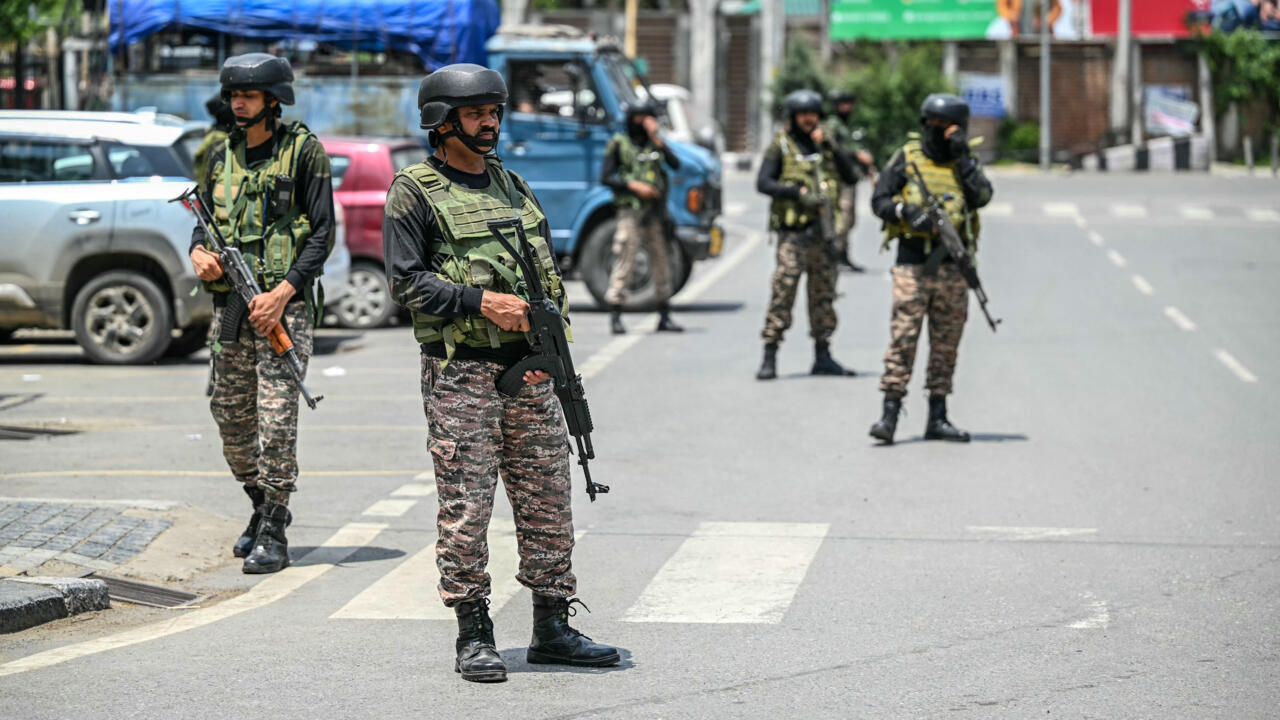
The recent conviction of three prominent Kashmiri women leaders—Asiya Andrabi, Fahmeeda Sofi, and Nahida Nasreen—by a National Investigation Agency (NIA) court in Delhi underscores a disturbing trend in India’s governance of Jammu and Kashmir: the systematic criminalization of peaceful political dissent under the guise of counterterrorism.
The three women were convicted under the Unlawful Activities (Prevention) Act (UAPA), a law widely criticized by international human rights experts for its vague definitions, prolonged pre-trial detention, and use as a tool to silence critics. Asiya Andrabi, Fahmeeda Sofi, and Nahida Nasreen are associated with Dukhtaran-e-Millat, a constituent of the All Parties Hurriyat Conference (APHC)—a coalition that has long advocated a peaceful, negotiated resolution of the Kashmir dispute in accordance with United Nations resolutions.
This case is not an anomaly. It reflects a broader pattern in which India’s counterterrorism laws are deployed not to address genuine security threats, but to suppress political expression and civic activism in Kashmir.
International concern over India’s counterterrorism framework is well documented. On May 6, 2020, nine United Nations Special Rapporteurs, together with the Chair of the UN Working Group on Arbitrary Detention, formally warned India that amendments to the UAPA were incompatible with its obligations under international human rights law. They expressed particular alarm over provisions allowing individuals to be designated as “terrorists” without due process, noting that such powers were being exercised in a context of discrimination against religious minorities, human rights defenders, and political dissidents.
Leading human rights organizations have echoed these warnings. Aakar Patel, former Chair of Amnesty International India, observed that authorities were using “bogus foreign-funding and terrorism charges” to intimidate and silence critics, in violation of international financial and legal standards. Human Rights Watch, in multiple reports including one issued in November 2023, has urged India to stop abusing counterterrorism regulations that have created what its Asia leadership describes as a “dangerous arsenal” against civil society.
The allegations against Asiya Andrabi, Fahmeeda Sofi, and Nahida Nasreen center largely on their use of social media and public messaging that, according to prosecutors, threatened India’s sovereignty and territorial integrity. Yet a closer look reveals that their advocacy focused on demanding the implementation of United Nations Security Council resolutions on Kashmir—resolutions that explicitly recognize Kashmir as a disputed territory and call for the people of the region to determine their political future.
These resolutions were not imposed on India from the outside. They were adopted with India’s participation and, in several instances, with language proposed by Indian representatives themselves. Peacefully invoking international law and UN-mandated processes cannot credibly be equated with terrorism.
Equally troubling is the judicial reasoning employed in the case. The special NIA court relied on domestic legal provisions to claim that the women’s statements were prejudicial to national integration. This ignores a fundamental legal reality: under international law and binding UN Security Council resolutions, Jammu and Kashmir remains a disputed territory, not an internationally recognized part of any UN member state. Advocacy for self-determination in such a context does not constitute secession; it reflects a right recognized under international law.
The judgment also raises serious constitutional concerns. By criminalizing peaceful political expression, it conflicts with basic protections enshrined in India’s own Constitution, including guarantees of liberty, due process, and freedom of expression. When counterterrorism laws are used to punish speech rather than violence, the rule of law itself is placed at risk.///
Among the charges cited is an allegation that Asiya Andrabi hoisted the Pakistani flag and sang Pakistan’s national anthem in Kashmir in 2015. Even if true, the selective criminalization of symbolic expression exposes a glaring double standard. Kashmiri civilians have frequently been compelled under military supervision to display Indian national symbols on official occasions. Symbolic acts cannot be criminalized selectively, particularly in a region governed by extraordinary military measures.
The conviction of these three women must also be viewed alongside the continued detention of other prominent Kashmiri leaders, including Mohammad Yasin Malik, Shabir Ahmed Shah, Masarat Aalam, and Khurram Parvez, many of whom have been imprisoned for years without fair trial under the same legal framework.
India rightly seeks recognition as a democratic state committed to the rule of law. That claim is undermined when counterterrorism legislation is used to silence peaceful political voices, especially those of women, in a disputed territory. Restoring credibility requires more than rhetoric; it requires adherence to constitutional guarantees and international legal obligations.
The international community—particularly UN Special Rapporteurs and democratic partners of India—must press for the immediate and unconditional release of all Kashmiri political prisoners, including Asiya Andrabi, Fahmeeda Sofi, and Nahida Nasreen, held for peaceful expression. Justice in Kashmir cannot be achieved through repression. Only respect for law, dialogue, and the freely expressed will of the people can offer a path toward lasting peace.
Discover more from The Monitor
Subscribe to get the latest posts sent to your email.

Millions of Burmese Struggle to Find Safety in Thailand

What Is the No Kings Protest? Inside Minnesota’s Historic 2026 Flagship Rally Against Authoritarianism

OPINION | Global South Peace Efforts: How the World’s New Mediators Are Reshaping Diplomacy in 2026

Singapore’s Bold Bid to Become Asia-Pacific’s Gold-Trading Powerhouse: Why the City-State Is Racing to Capture Bullion Liquidity and Central-Bank Vaults

The Private Firms Powering China’s Military AI Push

Trump Extends Iran Talks Deadline amid Sell-Off on Wall Street

Indonesia’s Danantara Shifts to Investment Phase, Targets 7% Returns — Sovereign Wealth Fund Enters Deployment Era Under Prabowo’s Ambitious Vision

AI is dressing up greed as progress on creative rights

Iran’s Tenacious Regime and the Future of the Gulf
Singapore’s Bold Bid to Become Asia-Pacific’s Gold-Trading Powerhouse: Why the City-State Is Racing to Capture Bullion Liquidity and Central-Bank Vaults
OPINION | Global South Peace Efforts: How the World’s New Mediators Are Reshaping Diplomacy in 2026

Qatar warns Middle East war will force Gulf to stop energy exports within days

Four Killed in Beirut Hotel Strike, Israel Says It Targeted Iranian Commanders

The Hormuz Crisis: How US-Iran War Is Reshaping Gulf Geopolitics and Global Energy Security
Iran’s Tenacious Regime and the Future of the Gulf
Indonesia’s Danantara Shifts to Investment Phase, Targets 7% Returns — Sovereign Wealth Fund Enters Deployment Era Under Prabowo’s Ambitious Vision

Brent Crosses $100 as Indian Tanker Path Corrected Near Strait of Hormuz

The 400 Million Barrel Question: Can the IEA’s Historic Reserve Release Save the Global Economy from Iran’s Energy War?
-

 Featured5 years ago
The Right-Wing Politics in United States & The Capitol Hill Mayhem
-

 News4 years ago
Prioritizing health & education most effective way to improve socio-economic status: President
-

 China5 years ago
Coronavirus Pandemic and Global Response
-

 Canada5 years ago
Socio-Economic Implications of Canadian Border Closure With U.S
-

 Democracy5 years ago
Missing You! SPSC
-

 Conflict5 years ago
Kashmir Lockdown, UNGA & Thereafter
-
Democracy5 years ago
President Dr Arif Alvi Confers Civil Awards on Independence Day
-

 Digital5 years ago
Pakistan Moves Closer to Train One Million Youth with Digital Skills