
Analysis
Texas Redistricting and the Supreme Court: Why This Fight Matters in 2025

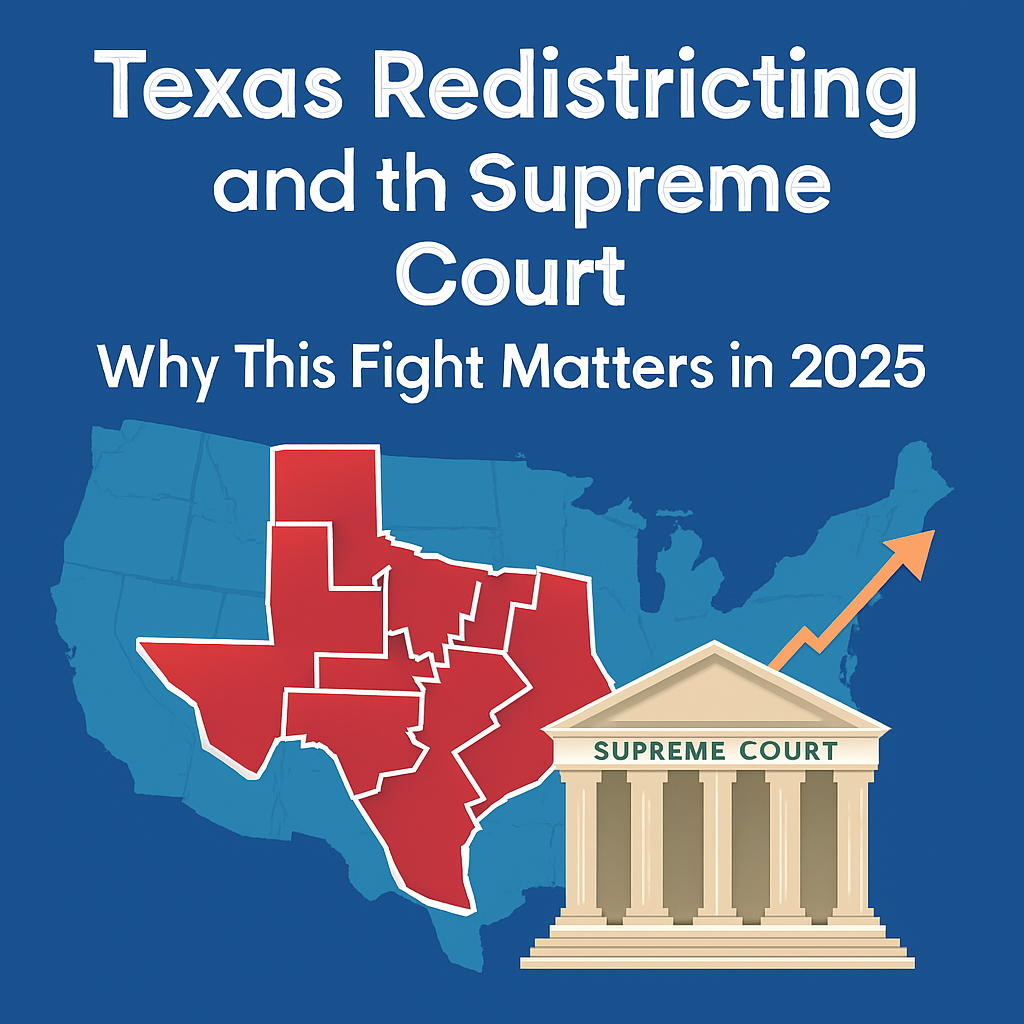
Table of Contents
Introduction
The Supreme Court’s December 2025 decision to allow Texas to use its newly redrawn congressional maps for the 2026 elections has reignited one of America’s oldest battles: who gets to draw the lines of democracy. The ruling, split along ideological lines, hands Republicans a significant advantage and raises urgent questions about representation, fairness, and the future of voting rights.
For readers of DailyTheMonitor.com, this isn’t just a story about Texas—it’s a window into how power is shaped, contested, and preserved across the United States.
The Supreme Court’s Ruling
- SCOTUS Decision: The Court sided with Texas GOP leaders, overturning a lower court’s block on the maps.
- Impact: Analysts project Republicans could gain five additional House seats under the new districts.
- Controversy: Critics argue the maps dilute minority voting power, while supporters claim they reflect “legislative good faith.”
This decision underscores the Supreme Court’s central role in shaping electoral landscapes—one that increasingly tilts toward partisan advantage.
Texas Congressional Maps: Winners and Losers
| District | Party Shift | Key Change |
|---|---|---|
| TX-30 | Democrat → Toss-up | Rep. Jasmine Crockett’s district redrawn to weaken urban base |
| TX-15 | Democrat → GOP | Latino-majority district split |
| TX-23 | GOP → Safer GOP | Consolidated rural areas |
| TX-37 & TX-38 | New Districts | Added post-2020 census, both leaning Republican |
The Texas congressional districts map now favors GOP control in 30 of 38 seats, cementing Republican dominance in a state already trending red.
Why It Matters Nationally
- SCOTUS & GOP Strategy: The ruling reflects a broader Republican push to secure long-term control through redistricting.
- Supreme Court Texas Redistricting: Sets precedent for other states facing similar challenges.
- Supreme New York: New York’s own redistricting battles show this is not just a Texas issue—it’s a national one.
The fight over maps is ultimately a fight over power. Who gets represented, whose voices are amplified, and whose are silenced.
Opinion: Democracy by Design
Redistricting is often treated as a technical exercise, but it is fundamentally political. The Supreme Court’s decision to greenlight Texas’s maps is less about cartography and more about control.
When SCOTUS defers to partisan legislatures, it risks eroding public trust in democracy itself. Voters are left wondering: are elections truly competitive, or are they engineered outcomes?
This is not just a Texas story—it’s America’s story. And it’s one that demands vigilance, transparency, and civic engagement.
FAQs
Q: What is the Supreme Court’s role in redistricting? A: It reviews whether maps violate constitutional protections, especially around race and equal representation.
Q: How does Texas’s map affect national politics? A: By securing GOP dominance in a key state, it reshapes the balance of power in Congress.
Q: Is this ruling final? A: No. The maps are approved for 2026, but ongoing legal challenges could resurface before 2030.
Conclusion
The Supreme Court’s ruling on Texas redistricting is more than a local dispute—it’s a national flashpoint. For voters, activists, and policymakers, the message is clear: democracy is being redrawn, one district at a time.
DailyTheMonitor.com readers should see this as a call to action: stay informed, scrutinize the maps, and demand accountability from those who draw the lines of power.
Discover more from The Monitor
Subscribe to get the latest posts sent to your email.



Analysis
Indonesia’s Danantara Shifts to Investment Phase, Targets 7% Returns — Sovereign Wealth Fund Enters Deployment Era Under Prabowo’s Ambitious Vision
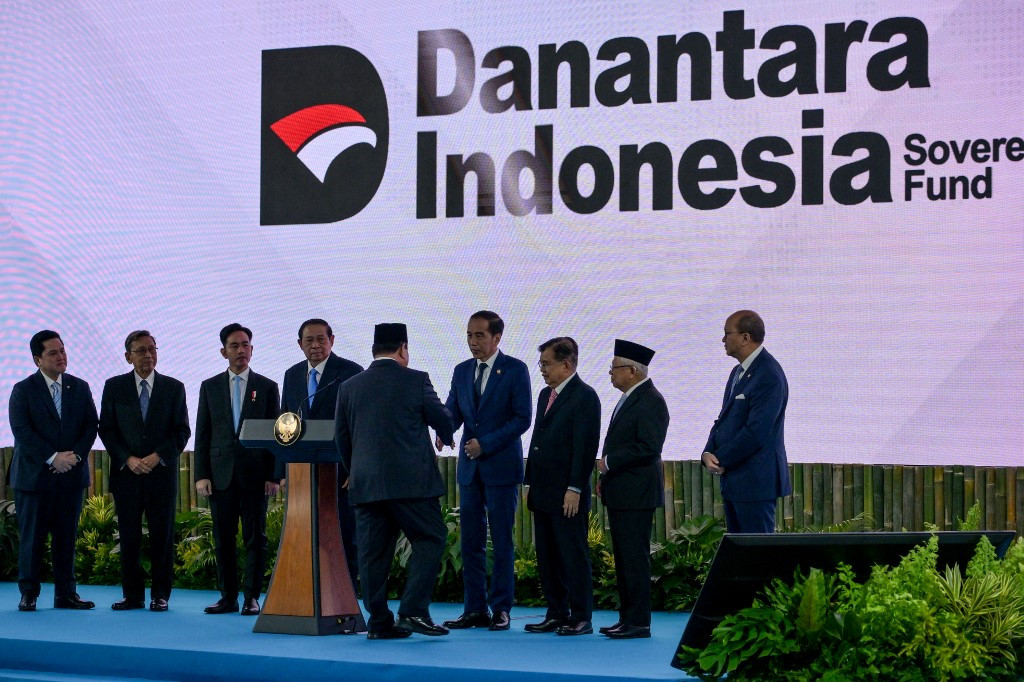
The morning light over Jakarta’s financial district has a way of making ambition look achievable. In the gleaming corridors of the Danantara Indonesia headquarters — a building that barely existed eighteen months ago — a quiet but consequential shift is underway. The sovereign wealth fund that President Prabowo Subianto unveiled with enormous fanfare in February 2025 has spent its inaugural year doing something unglamorous but essential: building the institutional scaffolding that separates a serious fund from a political showpiece. Now, as Indonesia’s Danantara sovereign wealth fund enters its investment phase in 2026, the real examination begins.
At the World Economic Forum in Davos in January, Chief Investment Officer Pandu Patria Sjahrir declared that Danantara’s target for investment fund placements in 2026 is set at $14 billion — nearly double the $8 billion allocated across all of 2025. Kompas The capital acceleration is not simply a number; it is a declaration of intent. The governance year is over. The deployment year has arrived.
Table of Contents
Year One: The Governance Foundation Nobody Talks About
Before you can deploy capital at scale, you need systems that can be trusted with it. That is the unglamorous lesson Danantara absorbed in 2025. Chief executive Rosan Roeslani acknowledged that a primary achievement of the first year was breaking down the siloed operations that had long plagued Indonesia’s state-owned enterprises, promoting greater transparency and internal value creation. Jakarta Globe
BCA Chief Economist David Sumual confirmed the picture candidly: Danantara’s main focus in 2025 was internal consolidation — restructuring efforts, organizational improvements, and recruitment of human resources — with no major projects having fully materialized by year’s end despite SOE dividends being reallocated to the fund. Indonesia Business Post
That candour from a senior domestic economist is actually a constructive signal. Unlike the opaque early years of Abu Dhabi’s IPIC or the dangerously undisclosed operations of Malaysia’s 1MDB before its collapse, Danantara’s leaders are at least publicly acknowledging the gap between aspiration and execution. The first year served as a necessary stress-test of internal architecture. The critical question, now that the architecture is nominally in place, is whether the deployment year delivers the returns its political patron is demanding.
The 7% Return Mandate: Prabowo’s Public Challenge
Few sovereign wealth fund leaders have their performance targets set quite so publicly — or quite so politically — as Pandu Sjahrir now does. President Prabowo Subianto has publicly set a target of 7% return on assets for the fund, a mandate that Sjahrir acknowledged directly, saying Danantara would gladly accept the challenge as it “searches for projects that can give higher returns with the same impact while improving standards.” Jakarta Globe
The 7% ROA hurdle deserves context. Indonesia’s current state-owned enterprise portfolio has historically generated returns on assets hovering near 1.88% — a figure that reflects decades of sub-optimal capital allocation, political interference in pricing decisions, and chronic underinvestment in productivity. Reaching 7% is not an incremental improvement. It represents nearly a fourfold leap in capital efficiency across a portfolio of more than 1,000 SOEs.
To understand whether the target is reachable, consider how the world’s benchmark sovereign funds perform. Singapore’s Temasek Holdings has delivered annualised total shareholder return of approximately 7% in Singapore dollar terms over its 50-year history — but this was achieved with an entirely different governance architecture, strict commercial independence from government policy directives, and a portfolio heavily weighted toward liquid, globally diversified assets. GIC, Singapore’s other sovereign vehicle, targets real returns above 4% over 20-year rolling periods while managing over $770 billion. Abu Dhabi’s Mubadala, a closer model given its hybrid development-investment mandate, has generated returns in the 8–12% range in its best years, but only after a decade of portfolio maturation and institutional discipline-building.
What Danantara needs — quickly — is a portfolio mix that can bridge the gap between its politically derived SOE inheritance and the commercially rational returns its mandate demands.
Shifting to Deployment: Bonds, Equities, and the Capital Market Play
In a presentation at the Indonesia Stock Exchange, Pandu Sjahrir confirmed that Danantara would begin investing SOE dividend capital in both bonds and equities through the capital market starting in 2026, with the explicit additional goal of deepening Indonesia’s relatively shallow domestic capital markets. Kompas
This two-pronged strategy is tactically sound. Fixed-income instruments — particularly Indonesian government bonds (SBN) and SOE-issued corporate bonds — offer predictable yields in the 6–7% range at current rupiah interest rate levels, immediately competitive with the ROA target. The equities component introduces both upside potential and volatility, but also provides the market liquidity and price-discovery function that Indonesia’s IDX has lacked for years.
Economic observer Yanuar Rizky assessed that Danantara’s entry as a major institutional investor could have a positive stabilising effect on Indonesia’s capital markets, provided the fund maintains a clear distinction between commercial portfolio investment and politically motivated market support operations. Kompas That caveat is pointed. If Danantara begins purchasing equities to prop up falling SOE stock prices rather than to generate returns, it will quickly become both a market distortion mechanism and a fiscal liability.
Danantara is also considering taking a shareholder position in the Indonesia Stock Exchange itself through its demutualization process — a move that would simultaneously give the fund a structural role in market governance while diversifying its asset base into financial infrastructure. Kompas
The $14 Billion Deployment Pipeline: Sectors and Scale
The capital earmarked for 2026 will flow primarily from SOE dividends and will target sectors including renewable energy, energy transition, digital infrastructure, healthcare, and food security. Danantara is also evaluating opportunities beyond Indonesia’s borders — specifically in China, India, Japan, South Korea, and Europe — though domestic allocation remains the dominant priority. Asia Asset Management
Six major projects were scheduled for groundbreaking in February 2026 alone, including an aluminum smelter and smelter-grade alumina facility in Mempawah, West Kalimantan; a bioavtur production facility at the Cilacap Refinery in Central Java; a bioethanol plant in Banyuwangi, East Java; and salt factories in Gresik and Sampang designed to supply Indonesia’s chlor-alkali industrial base. Kompas Together, these projects form the visible edge of what Danantara describes as a $7 billion downstream industrialization push — Indonesia’s long-deferred attempt to stop exporting raw nickel, bauxite, and palm oil and start exporting processed value.
The downstream story matters enormously for return-on-assets arithmetic. A nickel laterite operation generates modest margins; a battery cathode facility or EV component manufacturer attached to that same ore base can generate returns in the 12–18% range at commercial scale. That is the logic threading through Danantara’s investment thesis — and it is the same logic that has made Indonesia’s nickel-to-battery downstream push a subject of intense interest among Japanese, South Korean, and European manufacturers watching their supply chains with growing anxiety.
CEO Rosan Roeslani has emphasized that 2026’s strategy is built on risk-managed deployment and long-horizon value creation, with investment screens tightened to ensure capital flows only to projects with clear commercial merit and measurable economic impact. GovMedia
Danantara vs. The World’s Great Sovereign Funds: A Benchmark Comparison
| Fund | AUM (approx.) | 10-Year Return | Independence Model | Primary Focus |
|---|---|---|---|---|
| Norway GPFG | $1.7 trillion | ~8.5% p.a. | Statutory independence | Global equities/bonds |
| Temasek (Singapore) | ~$300 billion | ~7% TSR | Operational independence | Asia equities |
| GIC (Singapore) | ~$770 billion | 4%+ real | Full professional management | Global diversified |
| Mubadala (Abu Dhabi) | ~$300 billion | 8–12% (peak) | Semi-commercial | Strategic/development |
| Khazanah (Malaysia) | ~$35 billion | Mixed | Political proximity | Domestic SOEs |
| Danantara (Indonesia) | ~$900 billion AUM | Target: 7% ROA | Political appointment-led | SOEs + strategic projects |
The table tells a revealing story. Danantara is already one of the largest sovereign vehicles on earth by nominal AUM — but AUM and investable capital are very different things when the underlying portfolio consists largely of SOE assets that are neither liquid nor independently valued. Norway’s Government Pension Fund Global can credibly report 8.5% annualised returns because its portfolio is marked to liquid global market prices daily. Danantara’s SOE assets are carried at book values that may significantly diverge from what arms-length buyers would actually pay.
This is not a fatal flaw — it is a governance design choice with profound implications for how the 7% target gets measured. If Danantara measures ROA against re-valued, market-based asset prices, the benchmark is genuinely demanding. If it measures against legacy book values, the headline number may look better while concealing underlying performance deterioration.
The Broader Economic Stakes: Indonesia’s Path Past the Middle-Income Trap
Danantara does not exist in isolation. It is the financial architecture beneath President Prabowo’s “Golden Indonesia 2045” vision — the aspiration to reach developed-nation status within a generation. The fund was explicitly designed to help accelerate the president’s target of 8% annual GDP growth by his term’s end in 2029, consolidating and streamlining SOE operations to unlock productivity gains that fragmented management had suppressed for decades. Fortune
Indonesia’s GDP per capita, currently around $5,000, needs to triple to reach developed-world thresholds. That requires sustained, compounding productivity improvements across agriculture, manufacturing, energy, and services simultaneously. Danantara — if it functions as designed — could accelerate this by directing capital toward infrastructure gaps, energy transition assets, and downstream industries that private markets have been too cautious or too short-sighted to finance at the required scale.
Prabowo’s pitch to American business leaders in Washington in February 2026 was explicit: all state-owned assets have been consolidated under Danantara to accelerate investment, and the fund will serve as a primary engine of Indonesia’s economic transformation. Jakarta Globe The geopolitical subtext was equally clear — Indonesia is positioning itself as a destination for capital diversifying away from Chinese concentration and seeking access to Southeast Asia’s 280 million-strong consumer middle class.
Pandu Sjahrir, speaking at the South China Morning Post’s China Conference: Southeast Asia 2026 in Jakarta in February, framed the geopolitical dimension directly: “In the new geopolitical world, every country and every leader uses sovereign wealth funds as a geopolitical tool,” while insisting that Danantara must operate for profit rather than politics. South China Morning Post The tension between those two imperatives — geopolitical instrument and commercially disciplined investor — defines Danantara’s central challenge, and is one that even mature funds like Mubadala have never fully resolved.
Risks, Scrutiny, and the 1MDB Shadow
No serious analysis of Danantara can avoid the governance concerns that have trailed the fund from its inception. Following Danantara’s inauguration, the Jakarta Composite Index fell 7.1%, driven by continuous foreign capital outflows of approximately $622.7 million — a market verdict on investor discomfort with the fund’s legal structure and oversight architecture. East Asia Forum
The concerns are structural, not merely perceptual. Indonesia’s national audit bodies — the Financial Audit Board (BPK), the Agency for Financial and Development Supervision (BPKP), and the Corruption Eradication Commission (KPK) — have limited ability to monitor Danantara’s managed assets. Audits can only be conducted upon request from the House of Representatives, creating an oversight model that is reactive rather than systematic. Wikipedia
Critics have pointed out that Danantara’s senior leadership emerged from political negotiation as much as merit selection — CEO Rosan Roeslani served as Prabowo’s campaign chief, while Pandu Sjahrir served as the campaign’s deputy treasurer. East Asia Forum These connections do not automatically disqualify either man — Temasek’s own senior officials maintain government proximity — but they demand an unusually clear demonstration of commercial independence before institutional investors will commit capital with confidence.
Economists have also flagged crowding-out risks: as Danantara absorbs SOE dividends and raises capital through bond instruments, private sector investment appetite may be compressed, particularly if Patriot Bond subscriptions divert capital that listed companies would otherwise have deployed for their own growth. Indonesia Business Post
The Patriot Bond programme itself has attracted commentary that is difficult to ignore. Financial analysts widely viewed the initiative — which raised over Rp50 trillion from Indonesia’s business elite — as carrying the implicit return of political goodwill rather than purely financial reward, describing it as a “loyalty test” for the nation’s conglomerates. Wikipedia These are not conditions under which a world-class sovereign fund typically operates.
Investor Outlook: What Global Capital Should Watch
For international investors, Danantara’s deployment year presents a calibrated opportunity set rather than a binary bet. The fund’s entry into Indonesia’s bond and equity markets will provide liquidity and potentially improve price discovery on SOE-linked assets that have historically been thinly traded. Indonesia’s sovereign bond yields — currently in the 6.8–7.2% range for 10-year instruments — already offer competitive real returns given the country’s current inflation trajectory, and Danantara’s institutional demand will provide additional market support.
The downstream projects represent a longer-dated opportunity. Investors with three-to-five-year horizons who gain exposure to Indonesia’s nickel-to-battery value chain — whether through listed SOEs, joint venture structures, or Danantara-linked project bonds — are positioning for a structural shift in global clean-energy supply chains. The risk is not the economics of the projects themselves; it is the execution timeline and the political discipline to resist using Danantara as a budget-substitute during fiscal pressures.
Danantara’s 2026 Corporate Work Plan, presented to the House of Representatives, emphasised that every investment must be “bankable and truly value-accretive” — a standard borrowed from the private equity lexicon that, if genuinely applied, would represent a meaningful departure from the historically political character of Indonesian SOE capital allocation. Danantara Indonesia
Whether that departure is real or rhetorical will become clear within the next eighteen months. The projects are breaking ground. The bonds are being issued. The capital is beginning to flow. And in a country of 280 million people sitting atop some of the world’s most valuable commodity and consumer market assets, the upside — if governance holds — is not 7%. It is considerably higher.
Prabowo’s fund has set the floor. The ceiling is a function of institutional integrity.
Conclusion: The Deployment Era Begins — And the Scrutiny Deepens
Indonesia’s Danantara sovereign wealth fund enters 2026 at an inflection point that will define its legacy for a generation. The governance infrastructure is nominally in place. The capital pipeline — $14 billion targeted for deployment this year — is the largest in the fund’s short history. The 7% return-on-assets mandate, set publicly by the president himself, is ambitious relative to current SOE performance baselines but achievable if capital is deployed into commercial-grade projects with rigorous discipline.
The fund’s peer group — Temasek, GIC, Mubadala, Norway’s GPFG — took years, sometimes decades, to earn the institutional credibility that translates into sustained performance. Danantara does not have that luxury of time. Indonesia’s growth aspirations are set on a compressed timeline, and the political expectations attached to this fund are enormous.
What sophisticated investors should watch: the actual returns posted in Danantara’s first audited annual report; the independence and credibility of whichever oversight mechanism emerges; the performance of the six downstream projects currently breaking ground; and whether the fund’s capital market activities in bonds and equities reflect commercial logic or political stabilization.
The fund carrying the weight of Indonesia’s Golden 2045 vision is now, at last, actively deploying. The test of whether Danantara becomes Southeast Asia’s defining sovereign fund — or its most cautionary tale — begins today.
Discover more from The Monitor
Subscribe to get the latest posts sent to your email.

There are two narratives battling for the soul of the creative economy. In one, Silicon Valley venture capitalists cast themselves as the heirs of Prometheus, bringing the fire of generative AI to a backward creative class clinging to outmoded business models. In the other, artists and authors watch their life’s work being fed into a digital maw to produce competition that is “priced at the marginal cost of zero,” as the US Copyright Office recently put it .
For years, the tech lobby has successfully peddled the first narrative, framing copyright law as a dusty relic of the Gutenberg era that must be swept aside so progress can march on. But March 2026 has provided a reality check. Last week, the UK government—facing a blistering campaign from the creative industries and a damning report from the House of Lords—was forced to delay its plans for AI copyright reform, kicking a decision into 2027 . Simultaneously, in a Munich courtroom, the music rights society GEMA began its pivotal case against the AI music generator Suno, while awaiting a ruling on its related victory against OpenAI from last November .
These are not signs of a legal system that is broken or unfit for purpose. They are signs of a legal system that is working—and that the tech industry would prefer to dismantle. The core thesis emerging from the courts, parliaments, and collecting societies of the Western world is this: AI is dressing up greed as progress on creative rights. The problem is not that the law is unfit for the 21st century but that it is being flouted.
Table of Contents
The Myth of the Legal Vacuum
Listen closely to the AI developers, and you will hear a consistent refrain: we are innovating in a vacuum; the rules are unclear; we need a modernized framework. This is the lobbying equivalent of a land grab. The House of Lords Communications and Digital Committee, in its scorching report published March 6, saw right through it. They noted that the tech sector’s demand for a broad commercial text and data mining (TDM) exception is not a plea for clarity, but an attempt to “lower… litigation risk by weakening the current level of copyright protection” .
Let us be precise about what existing law actually says. Under UK law, and across most of Europe, copyright is engaged whenever the whole or a substantial part of a protected work is copied—including storing it in digital form. As the Lords report firmly states, “the large-scale making and processing of digital copies of protected works for model training may therefore be characterised as reproduction” . The US Copyright Office, in its pre-publication report from May 2025, similarly affirmed that downloading and processing copyrighted works for training constitutes prima facie infringement, subject only to defenses like fair use .
The industry knows this. They know that hoovering up 100 million images, as Midjourney’s founder casually admitted to doing, requires a defense, not a permission slip . They know that ingesting the “Pirate Library Mirror” and “Library Genesis”—shadowy online repositories of pirated books—to train models like Anthropic’s Claude is not an act of academic research, but of industrial-scale copying . This is not innovation operating in a grey area. This is innovation operating in the dead of night.
What the Courts Are Actually Saying
While Westminster dithers, the judiciary is moving. And contrary to the narrative that judges are helpless in the face of technology, they are proving perfectly capable of applying centuries of copyright principle to silicon.
The most significant ruling of the past year came out of the Munich Regional Court last November. In a case brought by GEMA against OpenAI, the court held that AI training constitutes “reproduction” under German law. Crucially, the court found that even the fixation of copyrighted works into a model’s numerical “probability values” qualifies as reproduction if the work can later be perceived. And because ChatGPT was found to “memorize” and reproduce complete training data (song lyrics), it fell outside the EU’s TDM exceptions . OpenAI is appealing, but the legal logic is sound: a copy is a copy, whether stored on a hard drive or distilled into a matrix of weights.
This is not an isolated European quirk. Across the Atlantic, the $1.5 billion settlement by Anthropic to resolve authors’ claims was a tacit admission of liability . While a US district judge in the Bartz case made a nuanced distinction—ruling that training itself could be fair use but that maintaining a permanent library of pirated books was not—the sheer scale of the payout reveals the underlying risk .
The legal scholar Jane Ginsburg once noted that “the right to read is the right to write.” The AI industry has inverted this: they claim the right to copy is the right to compute. But the Munich ruling reminds us that copying for computational purposes is still copying. The notion that ingesting a novel to “learn” style is the same as a human reading it was rightly dismissed by the US Copyright Office, which noted that a student reading a book cannot subsequently distribute millions of perfect paraphrases of it in seconds .
The “Pirate and Delete” Defense
If the legal landscape is clarifying, why the urgency to legislate? Because the industry’s preferred solution is not compliance, but amnesty. The UK government’s now-delayed proposal was for an “opt-out” system—shifting the burden onto creators to police the entire internet and tell AI companies not to steal from them. As the musician and former Labour minister Margaret Hodge reportedly told Parliament, this is like putting a sign on your front door asking burglars not to enter.
The technical term for this strategy is “asymmetric warfare.” AI companies argue they cannot possibly license every work because there are billions of them. But this is an argument of convenience. The EU’s AI Act, which came into force this year, mandates transparency. Its template for training data summaries, published in final form in late 2025, requires providers to list the top data sources and domains used . If they can summarize it for regulators, they can pay for it.
Furthermore, a disturbing legal strategy is emerging from the U.S. cases. As legal analysts at Arnall Golden Gregory noted after the Bartz case, the ruling creates a perverse incentive: if training is fair use but permanent storage is not, the optimal strategy for a company is to “pirate and delete” . Download the stolen library, train the model as fast as possible, delete the evidence, and claim protection under the “transformative” use doctrine. This is not a solution; it is a recipe for laundering copyright infringement on a global scale.
The New Robber Barons
We have been here before. In 18th-century Scotland, booksellers in London held a monopoly on “valuable” literature. Scottish “pirates” like Alexander Donaldson reproduced and sold cheaper editions, arguing that knowledge should be free and that the London booksellers were holding back the enlightenment. The resulting battle—Donaldson v. Beckett—helped forge modern copyright law, establishing that the right is limited and ultimately yields to the public domain. But crucially, the Scottish “pirates” did not pretend the books were not written by someone. They simply exploited a territorial loophole. They were businessmen, not revolutionaries.
Today’s AI companies are the heirs of Donaldson, but with a crucial difference: they have no intention of letting the copyright term expire. They want the raw material of human culture delivered to them, on tap, forever. They want the value without the cost, the reward without the risk.
When Disney and NBCUniversal sue Midjourney, calling it a “bottomless pit of plagiarism,” they are not merely defending Mickey Mouse . They are defending a principle that every studio, every musician, and every journalist relies upon: that you cannot take someone’s labor without consent or compensation. When Paul McCartney releases a “silent album” to protest proposed UK laws, he is making the same point: that the output of a lifetime of creative work is being scraped to build machines that will ultimately silence him .
The Only Way Forward
There is a path forward, but it does not run through weakening the law. It runs through enforcing it.
First, reject the “opt-out” framework. The House of Lords is right: the government should rule out any reform that removes the incentive to license. The default must be opt-in.
Second, mandate transparency. The EU has shown the way. The UK’s Data (Use and Access) Act provides a vehicle for this. We need to know what data was used, where it came from, and how it was processed. The Midjourney admission that it scraped 100 million images without any tracking of provenance should be illegal, not a badge of honor .
Third, let the courts work. The Munich ruling on OpenAI lyrics and the pending GEMA v. Suno decision will provide clarity . So will the New York Times case against OpenAI and the Scarlett Johansson voice cloning suit. These are not roadblocks to innovation; they are the guardrails of a functioning market.
The AI industry likes to quote the maxim that “information wants to be free.” But as Stewart Brand, who coined the phrase, also said, “information also wants to be expensive.” The tension between those two truths is what markets resolve. The attempt to collapse that tension by fiat—by declaring that all information is free for the taking by a handful of monopolists—is not progress. It is a heist dressed up as philosophy.
The law is fit for the 21st century. The question is whether we have the courage to use it.
Discover more from The Monitor
Subscribe to get the latest posts sent to your email.
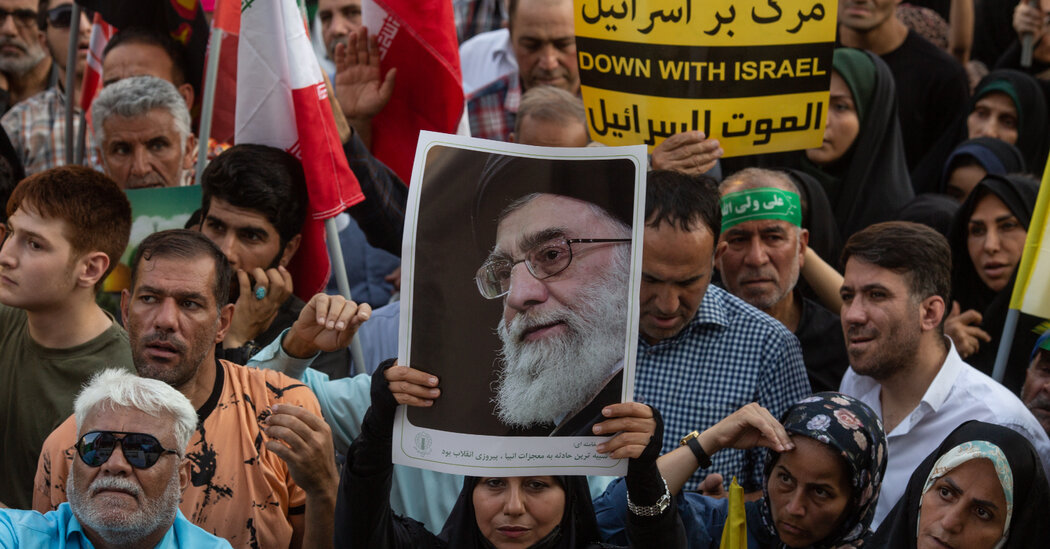
Iran’s tenacious regime and the future of the Gulf hangs in the balance as Mojtaba Khamenei vows Hormuz closure, oil tops $100, and Gulf states face an impossible choice.
When the first B-2 bombers arced over the Persian Gulf in the predawn hours of February 28, 2026, the assumption in Washington and Jerusalem was brutally simple: decapitate the regime, and the Islamic Republic would shudder into transition. Thirteen days later, that assumption lies in ruins — and the question that now preoccupies chancelleries from Riyadh to Brussels, from Doha to Tokyo, is the same one that has humbled strategists for four decades. Iran’s tenacious regime and the future of the Gulf have once again become the defining geopolitical problem of our era, more urgent and more dangerous than at any moment since Ayatollah Ruhollah Khomeini seized power in 1979.
On February 28, 2026, Israel and the United States launched surprise airstrikes on multiple sites and cities across Iran, killing Supreme Leader Ali Khamenei and numerous other Iranian officials, triggering a war. Wikipedia What followed was not the popular uprising that Benjamin Netanyahu and Donald Trump had publicly forecast. It was a ferocious, structured retaliation that struck civilian airports in Dubai, sent plumes of black smoke rising over Doha’s industrial district, hit the US Navy’s Fifth Fleet headquarters in Bahrain’s Manama, and forced Kuwait, Qatar, the UAE and Bahrain to temporarily close their airspace. Al Jazeera The Strait of Hormuz — the 21-mile chokepoint through which roughly a fifth of the world’s daily oil consumption flows — effectively ground to a halt, with tanker traffic dropping first by approximately 70 percent before collapsing to near zero, leaving over 150 ships anchored outside the strait. Wikipedia
Oil prices surged past $100 per barrel CNBC and briefly touched $120, their highest level since the COVID-19 pandemic. And on March 9, in a move that extinguished any lingering hope of rapid regime collapse, Iran’s Assembly of Experts elected Mojtaba Khamenei, the 56-year-old son of the slain supreme leader, as the Islamic Republic’s third supreme leader since its founding in 1979. NPR Then, on March 12, in his first public statement since succeeding his father, Mojtaba Khamenei defied President Trump’s warnings and vowed to keep the Strait of Hormuz closed, calling its blockade a lever of pressure that “must continue to be used.” Time
The regime did not fall. It metastasised.
Table of Contents
A Revolution Built to Survive Its Founder
To understand why Iran’s resilience confounds outsiders so consistently, one must begin not with missiles but with institutional architecture. The Islamic Republic was designed — with unusual intentionality — as a system that could outlast any individual, including the supreme leader himself.
Over the course of nearly 37 years in power, Khamenei cemented the unique dominance of his office, thwarted every effort to make meaningful changes to Iran’s approach to the world, and empowered and expanded its influence across the region. Brookings Yet the very networks he cultivated — the Islamic Revolutionary Guard Corps, the bonyads (religious foundations controlling an estimated third of the Iranian economy), the clerical establishment embedded in the judiciary, education and media — were never merely instruments of Khamenei personally. They were the regime itself, a deep state so thoroughly interwoven with the fabric of Iranian governance that decapitating its leadership was always unlikely to precipitate institutional collapse.
Just as the shah’s departure failed to usher in the aspirations of the millions who rallied in the streets during the 1979 revolution, it remains highly uncertain that the U.S.-Israeli operation will successfully produce a real transition to a different kind of governance. Brookings The analogy is instructive: in both 1979 and 2026, the removal of a supreme authority generated not a power vacuum but a succession contest the regime’s hardliners were structurally positioned to win.
The Battlefield as of March 13, 2026
Operation Epic Fury, as Washington has named its campaign, has now entered its thirteenth day with no discernible exit strategy articulated by either the United States or Israel. By March 5, Iran had fired over 500 ballistic and naval missiles and almost 2,000 drones since February 28 — roughly 40 percent aimed at Israel and 60 percent toward US targets across the region. Wikipedia
The rate of ballistic missile launches declined in the opening days of the war, with analysts pointing to depletion of Iranian missile and launcher stores as well as a deliberate strategy of rationing for a longer war. Wikipedia This is a critical distinction. Iran is not firing recklessly. It is managing escalation with strategic patience — an insight that should discomfort those who framed this operation as a short, decisive strike.
The internal dynamics within Tehran also reveal a regime in tension but not in freefall. Iranian President Masoud Pezeshkian apologized to neighboring Gulf states for the strikes and ordered the armed forces to stop, but the Revolutionary Guards continued with the attacks — exposing a leadership rift within the Iranian government. Wikipedia That the IRGC could visibly defy a presidential order and face no immediate sanction is not a sign of chaos. It is a sign of where real authority resides.
On March 10, US military intelligence sources reported that Iran had begun planting naval mines in the Strait of Hormuz. Trump demanded their immediate removal, and the US military said it destroyed 16 Iranian minelayers. Wikipedia The mining of the strait represents a qualitative escalation: it transforms a temporary traffic disruption into a structural threat to global energy security that cannot be resolved by a single air campaign.
Why Iran’s Regime Remains Tenacious: The IRGC, Succession, and Popular Legitimacy
The IRGC as the Regime’s Immune System
No analysis of Iran’s resilience is complete without accounting for the Islamic Revolutionary Guard Corps, an entity that functions simultaneously as a military force, an intelligence apparatus, a vast commercial empire, and the ideological vanguard of the revolution. The IRGC boasts expansive intelligence capabilities, business networks, and nearly 200,000 personnel. CNBC It has its own navy, air force, missile command, and — critically — its own succession logic that runs parallel to the formal constitutional process.
When Ali Khamenei was killed, Iran International stated that IRGC commanders tried to appoint a new supreme leader quickly, bypassing the formal electoral process, and then pressured Assembly of Experts members to vote for Mojtaba Khamenei with “repeated contacts and psychological and political pressure.” Wikipedia The IRGC did not panic. It organised. Within 72 hours of the supreme leader’s assassination, the institution responsible for Iran’s military posture was already managing the succession — a demonstration of institutional continuity that no airstrike can replicate.
The Mojtaba Question: Continuity in Harder Packaging
Mojtaba Khamenei is more connected to the Islamic Republic’s political and security establishments than his father was. He joined the IRGC in the late 1980s, serving in the final years of the Iran-Iraq war — a period that shaped his ties to Iran’s security elite. CNBC He was identified by US diplomatic cables published by WikiLeaks as his father’s “principal gatekeeper” and “the power behind the robes.” He has been linked to the brutal crackdown on the 2009 Green Movement. He is not a reformer who entered the supreme leadership reluctantly. He is a hardliner who spent decades preparing for exactly this moment.
Iran’s election of Mojtaba Khamenei signaled to the world that Tehran would not back down in the war raging across the Middle East Bloomberg — a message received with alarm in every Gulf capital and with market efficiency by crude oil traders. Trump called the appointment “unacceptable.” Former Israeli Ambassador Michael Herzog told CNBC: “The Iranians are showing defiance by choosing the son of Khamenei.” CNBC
That defiance is not irrational. Iran’s tenacious regime has long understood that capitulation is extinction. For the IRGC, for the senior clergy, for the bonyad networks whose wealth depends on the continuation of the current order, accepting regime change is not a policy option. It is existential surrender.
The Legitimacy Paradox: Celebration and Resistance Coexist
As Khamenei’s death was confirmed, many Iranian civilians went out to celebrate in the streets. Elsewhere in Iran, thousands gathered in mourning, and pro-Iranian protests occurred in multiple countries. Wikipedia This is not contradiction — it is the lived complexity of a society where the regime commands neither universal love nor universal loathing. The protests in January 2026 were the largest since the revolution, and the regime killed thousands to suppress them. Yet an institutional structure capable of killing thousands to suppress dissent is, by definition, still a functioning institutional structure.
Airstrikes have powerfully degraded Iran’s military capabilities and decapitated key political and military leadership. Still, the deeply embedded networks and institutions that have underpinned the Islamic Republic for nearly half a century ensure that, at least in the near term, the vestiges of the power structure will persist. Brookings The Islamic Republic was never a dictatorship of one man’s personality. It was — and remains — a system.
The Gulf in the Crossfire: A Security Architecture in Crisis
The Nightmare Scenario Arrives
For years, Gulf analysts spoke of a nightmare scenario in abstract terms: Iranian missiles raining down on civilian infrastructure, energy facilities ablaze, the Strait of Hormuz sealed, and Western military bases serving simultaneously as deterrent shields and target-generating liabilities. On March 1, 2026, the nightmare became a live news broadcast.
In the early days of the war, Iran fired more than twice as many ballistic missiles and approximately 20 times more drones at Gulf states than at Israel. Three people were killed and 78 injured in the UAE alone; Saudi Arabia’s largest refinery was set ablaze; major airports were targeted; and Qatar’s Ras Laffan, a pillar of global LNG supply, was struck. Al Jazeera
The “real nightmare scenario” — as one analyst framed it — is strikes on power grids, water desalination plants and energy infrastructure. “Without air conditioning and water desalination, the scorching hot and bone-dry Gulf countries are essentially uninhabitable,” the analysis noted. “Without energy infrastructure, they’re unprofitable.” Al Jazeera
Saudi Arabia: Opportunity and Exposure
Saudi Arabia’s position is the most paradoxical in the Gulf. Riyadh arguably stands to benefit most from a weakened Iran. Saudi Arabia has long sought to become the dominant power in the Middle East, and Iran has consistently posed the greatest threat to that goal. Iran may have calculated that Saudi Arabia was the most likely of the Gulf countries to respond militarily, and so refrained from major attacks against Riyadh until it decided to escalate against the Gulf on March 2. Atlantic Council
That calculation proved costly for Tehran. The Saudi Foreign Ministry issued a statement of categorical condemnation, calling Iranian attacks “reprehensible” and asserting that they came “despite statements from the Kingdom confirming it would not allow its airspace and territory to be used to target Iran.” Al Jazeera Riyadh’s Shaybah oilfield — one of the world’s largest — was targeted by drones, four of which were intercepted. The Ras Tanura refinery sustained damage visible in satellite imagery. The 2019 Abqaiq strikes, which briefly cut Saudi output by half, now look like a rehearsal.
The UAE: Most Targeted, Most Exposed
The United Arab Emirates bore the brunt of Iran’s Gulf offensive — a targeting logic that remains partially opaque but likely reflects the UAE’s role as both a major US military host (Al Dhafra Air Base) and the regional financial hub that Tehran has long accused of enabling sanctions-busting for the West. The overwhelming Iranian assault on the UAE is one of the most noteworthy elements of the initial Iranian response. Atlantic Council Abu Dhabi and Dubai — cities whose entire economic model rests on perceptions of absolute safety — absorbed strikes that set fire to buildings on Palm Jumeirah, damaged infrastructure near the port of Jebel Ali, and forced schools and universities to switch to remote learning.
The damage to the UAE’s brand of invulnerability is harder to price than the physical destruction.
Qatar: A Trust Destroyed
Qatar’s case is perhaps the most tragic in diplomatic terms. Doha had maintained more open channels to Tehran than any other Gulf state, hosting Hamas negotiations, shuttling between Iranian and Western interlocutors, and repeatedly assuring Tehran that its territory — including the largest US military base in the Middle East, Al Udeid — would not be used offensively against Iran. Qatar issued what officials described as the strongest condemnation in the country’s history, calling the strikes “reckless and irresponsible.” Al Jazeera Qatar’s Prime Minister Sheikh Mohammed bin Abdulrahman described the attacks as “a big sense of betrayal” Al Jazeera — language of surprising emotional intensity from one of the Gulf’s most diplomatically reserved leaders.
On March 6, Qatar’s energy minister Saad al-Kaabi warned that if the war continues, other Gulf energy producers may be forced to halt exports and declare force majeure — an announcement he said “will bring down economies of the world.” Wikipedia Qatar had already stopped gas production on March 2 and declared force majeure on gas contracts on March 4. Given that Qatar supplies roughly 16 percent of the world’s LNG, this is not hyperbole. It is arithmetic.
Bahrain and Kuwait: Sovereign Exposure Without Strategic Depth
Bahrain hosts the US Navy’s Fifth Fleet — an arrangement that has historically been framed as deterrence. On February 28, Iranian missiles targeted that headquarters directly. Bahrain’s state-owned energy company Bapco declared force majeure after Iranian strikes targeted its energy installations. Al Jazeera A country of 1.5 million people, sitting 20 kilometres from the Saudi coast, hosting a superpower’s naval command — and receiving no protection it did not provide for itself. The strategic fiction of Gulf states as protected clients rather than exposed frontline states has been definitively shattered.
Kuwait’s position is equally acute. The United States embassy in Kuwait was hit by an Iranian missile strike, prompting Secretary of State Rubio to close the embassy until further notice. Wikipedia A Kuwaiti F/A-18 shot down three American F-15Es in a friendly fire incident on March 2 — a single, accidental image that captures the chaotic geometry of this conflict with cruel precision.
Oman: The Last Bridge
Alone among GCC states, Oman has not been targeted. An Al Jazeera correspondent in Doha noted that Oman was the only GCC member not struck in the initial Iranian salvos. Al Jazeera This is almost certainly deliberate. Muscat has functioned for decades as the Gulf’s backchannel to Tehran — it hosted the secret negotiations that produced the 2015 JCPOA framework. Preserving Oman as an interlocutor is one of the few signals from Tehran that a diplomatic off-ramp, however distant, has not been entirely foreclosed.
Three Scenarios for 2026–2030: Iran’s Regime, the Gulf, and Global Energy
Scenario One: Prolonged Attrition — “The Frozen Conflict”
The most probable near-term trajectory: neither side achieves its stated objectives. The United States degrades Iran’s military infrastructure without dislodging the IRGC’s command structure or manufacturing a popular uprising. Mojtaba Khamenei consolidates power under wartime emergency conditions, using the conflict as pretext to eliminate moderate voices and cement IRGC supremacy. The Strait of Hormuz reopens partially under international pressure and IEA reserve releases, but remains subject to episodic harassment — mining, drone strikes on tankers, navigation warnings — for months.
The Gulf states face a prolonged security burden they cannot sustain indefinitely. Saudi Arabia and the UAE accelerate their pipeline bypass infrastructure — the Petroline to Yanbu and the Habshan-Fujairah pipeline — but the capacity deficit of approximately 12 million barrels per day cannot be overcome by existing alternative routes, and the Red Sea alternative remains vulnerable to Houthi attacks. Wikipedia Oil stabilises between $90 and $110, injecting sustained inflationary pressure into every import-dependent economy from Karachi to Cape Town. Gulf sovereign wealth funds, flush with windfall revenues, simultaneously fund reconstruction at home while accelerating diversification away from energy dependency — compressing a decade of Vision 2030 ambitions into four years of crisis-driven urgency.
Policy implication: Washington must negotiate a durable Hormuz security framework with Gulf partners and international naval guarantors, including France and India, before any ceasefire — or find itself drawn back within 18 months.
Scenario Two: Accelerated Collapse — “The Velvet Implosion”
A less probable but non-trivial scenario: internal pressure within Iran reaches a tipping point. The January 2026 massacre of protesters, the humiliation of the IRGC’s defensive failures (hundreds of drones and missiles intercepted, nuclear sites destroyed), hyperinflation accelerated by the wartime dollar shortage engineered by Treasury Secretary Scott Bessent, and the symbolic delegitimisation of a hereditary succession (which opposition leader Maryam Rajavi has called “clerical rule turned into hereditary monarchy”) combine to fracture the regime’s internal coalition.
In this scenario, factional conflict within the IRGC — between those who believe the war can be managed and those who see it as existential — produces a leadership crisis that Mojtaba Khamenei, new to office and lacking his father’s 37-year institutional authority, cannot contain. A negotiated transition involving Western interlocutors and internal reformers emerges, facilitated through Oman and possibly Beijing.
Policy implication: Western powers should maintain robust non-military channels and immediately signal their willingness to engage any successor government that renounces nuclear weapons development — without preconditions of regime type that only entrench IRGC hardliners.
Scenario Three: Regional Escalation — “The Gulf War of Choice”
The most dangerous scenario: Iran successfully pressures Gulf states to expel US military bases, either through sustained missile campaigns that make the political cost of hosting American forces untenable, or through a credible threat to permanently mine the Hormuz approaches unless GCC governments force Washington’s hand. Saudi Arabia and the UAE, facing an impossible choice between their security treaty with the United States and the continued habitability of their territories, begin quiet negotiations with Tehran.
Qatar’s energy minister’s warning that 33 percent of global oil flows through the Strait of Hormuz captures the systemic stakes. Al Jazeera If Iran succeeds in making Gulf governments choose between Washington and Tehran, the post-1991 American security architecture in the Gulf — built on the premise that bases are assets, not liabilities — collapses entirely. China, which has invested heavily in Iranian infrastructure under the 2021 25-year cooperation agreement and has voiced steadfast support for Tehran’s sovereignty throughout the crisis, would be the principal beneficiary of any reduction in the American military footprint.
Policy implication: The United States must offer Gulf states a genuine restructuring of the security relationship — not merely renewed defence pledges, but a fundamental rethinking of base posture, burden-sharing arrangements, and the political compact that makes hosting American forces a net benefit rather than a net liability.
Conclusion: What the Tenacious Regime Demands of Policymakers
The lesson of thirteen days of warfare in the Persian Gulf is not that military power is useless — Operation Epic Fury has demonstrably degraded Iran’s nuclear programme, killed its most senior leadership, and imposed severe military costs. The lesson is rather that military power alone cannot resolve the structural conditions that produce regimes like Iran’s Islamic Republic: a revolutionary ideology institutionalised across four decades of state-building, a security apparatus that is simultaneously the regime’s protector and its largest economic stakeholder, and a geopolitical position — astride the world’s most critical energy chokepoint — that gives Tehran leverage no airstrike can permanently neutralise.
For Gulf states, the immediate priority is simultaneously defensive and diplomatic: rebuild air defence architectures that do not depend on American umbrella coverage alone, diversify energy export routes that can operate independently of the Strait, and — critically — preserve the diplomatic channels to Tehran that only Oman and, to some extent, Qatar still maintain. Iran’s attacks on the Gulf constitute a profound moral and legal failure that risks poisoning relations for generations. Al Jazeera But the Gulf states’ own long-term interests demand that they not allow that poisoning to foreclose the eventual return to managed coexistence that their geographic proximity to Iran makes unavoidable.
For Western policymakers, the hardest reckoning is this: wars rarely go according to plan, and in launching a war of choice with Iran, the United States and Israel have unleashed a confrontation that is unlikely to succeed and certain to produce unintended effects they will be unable to manage or contain. Brookings Iran’s tenacious regime did not survive 47 years of sanctions, isolation, internal revolt, and now decapitation by accident. It survived because it was designed to survive, because its institutions have roots that run deeper than any individual leader, and because the Persian Gulf’s geography gives it a form of deterrence that no amount of bombing can eliminate.
The question for 2026 and beyond is not whether the Islamic Republic will persist in some form — it will. The question is what form it will take, whether a Mojtaba-IRGC condominium moves Iran toward greater nuclear ambition or strategic exhaustion, and whether the Gulf states that stand in the crossfire between American power and Iranian defiance will emerge from this crisis with their sovereignty intact, their economies diversified, and their diplomatic relationships durable enough for the decades ahead.
History suggests that the regimes most transformed by external military pressure are those transformed from within — and that the conditions for internal transformation in Iran, including economic desperation, demographic youth pressure, and the delegitimising spectacle of a dynastic succession, are more advanced today than at any point since 1979.
The Islamic Republic is wounded. It is not defeated. And the gulf — in every sense of that word — between those two conditions is where the most consequential geopolitics of our time will be decided.
Discover more from The Monitor
Subscribe to get the latest posts sent to your email.

Indonesia’s Danantara Shifts to Investment Phase, Targets 7% Returns — Sovereign Wealth Fund Enters Deployment Era Under Prabowo’s Ambitious Vision

AI is dressing up greed as progress on creative rights

Iran’s Tenacious Regime and the Future of the Gulf

Brent Crosses $100 as Indian Tanker Path Corrected Near Strait of Hormuz

Iran Vows to Keep Strait of Hormuz Closed: Mojtaba Khamenei’s First Statement Signals Escalation as Oil Surges Past $100

Pakistan’s 5G Era Begins: Pilot Projects Launch Next Week After Record $510 Million Spectrum Auction

The 400 Million Barrel Question: Can the IEA’s Historic Reserve Release Save the Global Economy from Iran’s Energy War?

Four Killed in Beirut Hotel Strike, Israel Says It Targeted Iranian Commanders

The Mirage of a New Middle East: War With Iran Won’t Reshape the Region the Way America Wants

Pakistan vs New Zealand T20 World Cup 2026 Super 8 Opener Abandoned: Rain Washes Out Colombo Clash, Both Teams Share One Point

Qatar warns Middle East war will force Gulf to stop energy exports within days

The Hormuz Crisis: How US-Iran War Is Reshaping Gulf Geopolitics and Global Energy Security
Four Killed in Beirut Hotel Strike, Israel Says It Targeted Iranian Commanders
Iran’s Tenacious Regime and the Future of the Gulf
Brent Crosses $100 as Indian Tanker Path Corrected Near Strait of Hormuz
Iran Vows to Keep Strait of Hormuz Closed: Mojtaba Khamenei’s First Statement Signals Escalation as Oil Surges Past $100
The 400 Million Barrel Question: Can the IEA’s Historic Reserve Release Save the Global Economy from Iran’s Energy War?
Indonesia’s Danantara Shifts to Investment Phase, Targets 7% Returns — Sovereign Wealth Fund Enters Deployment Era Under Prabowo’s Ambitious Vision
-

 Featured5 years ago
The Right-Wing Politics in United States & The Capitol Hill Mayhem
-

 News4 years ago
Prioritizing health & education most effective way to improve socio-economic status: President
-

 China5 years ago
Coronavirus Pandemic and Global Response
-

 Canada5 years ago
Socio-Economic Implications of Canadian Border Closure With U.S
-

 Democracy5 years ago
Missing You! SPSC
-

 Conflict5 years ago
Kashmir Lockdown, UNGA & Thereafter
-
Democracy5 years ago
President Dr Arif Alvi Confers Civil Awards on Independence Day
-

 Digital5 years ago
Pakistan Moves Closer to Train One Million Youth with Digital Skills