
Analysis
Trump’s Board of Peace: Can Blair, Rubio, and Kushner Rebuild Gaza?

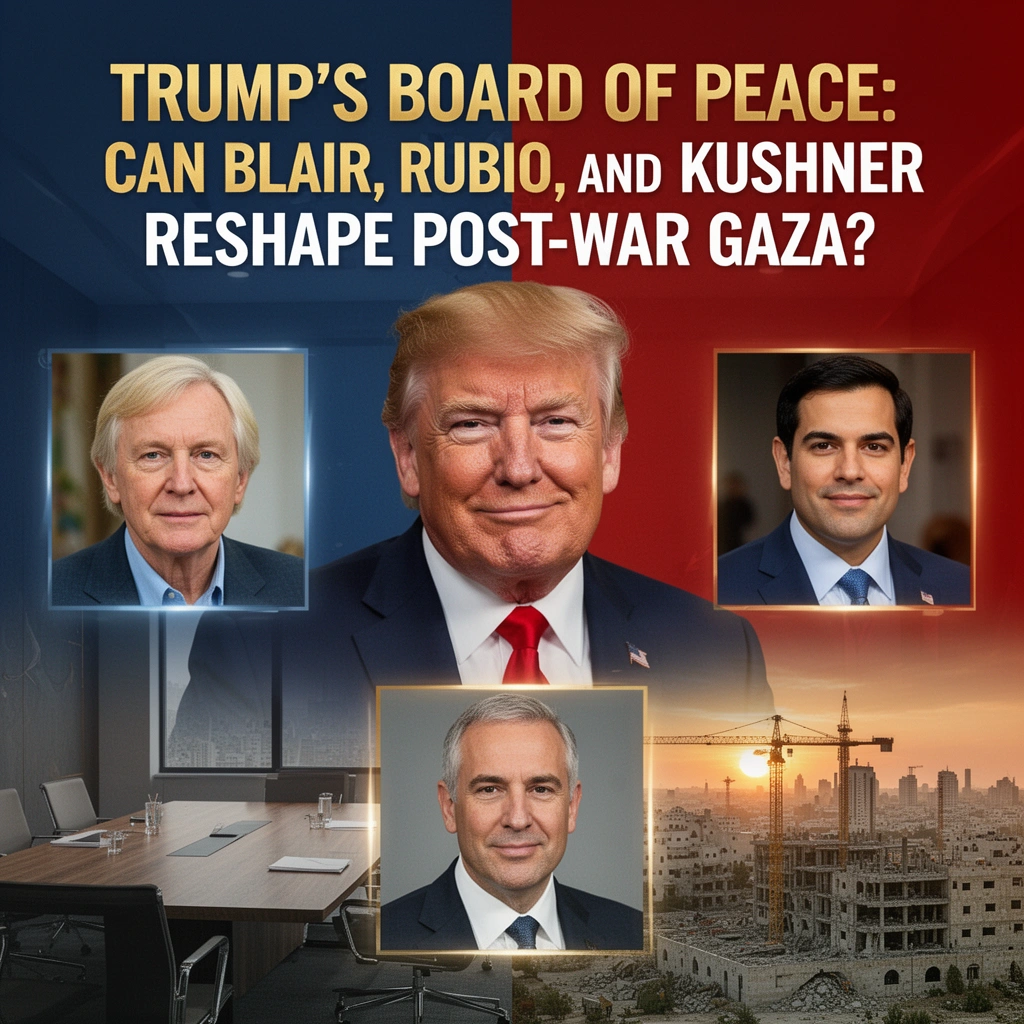
Trump’s Gaza Board of Peace unites Marco Rubio, Tony Blair, and Jared Kushner to oversee reconstruction. Can this ambitious initiative succeed where decades of diplomacy failed?
The announcement arrived with characteristic Trumpian grandeur: a “Board of Peace” for Gaza, chaired by the President himself, tasked with nothing less than transforming the devastated territory from a conflict zone into what administration officials describe as “the Singapore of the Mediterranean.” Unveiled as part of a comprehensive 20-point plan following the fragile ceasefire between Israel and Hamas, the initiative brings together an unlikely consortium of American political heavyweights, diplomatic veterans, and Middle East dealmakers. Yet beneath the bold rhetoric lies a complex web of challenges that have confounded international efforts for generations.
The Trump Gaza Board of Peace represents the most ambitious American intervention in Palestinian governance since the Oslo Accords. With US Secretary of State Marco Rubio, former British Prime Minister Sir Tony Blair, Middle East envoy Steve Witkoff, and presidential son-in-law Jared Kushner as founding members, the board embodies both continuity with Trump’s first-term Middle East approach and a striking departure from conventional post-conflict reconstruction models. The question facing analysts, regional stakeholders, and skeptical observers is whether this configuration of personalities and policies can succeed where multilateral institutions, Arab mediators, and previous American administrations have stumbled.
Table of Contents
The Board’s Composition and Mandate: Power, Influence, and Controversy
The architecture of Trump’s Gaza reconstruction plan reveals much about the administration’s theory of change. Unlike the broad multilateral frameworks that characterized post-conflict interventions in Bosnia, Kosovo, or Iraq, this board concentrates decision-making authority in a tight circle of individuals with direct access to presidential power and substantial experience in Middle East negotiations—though not always with outcomes that inspire universal confidence.
President Trump’s decision to personally chair the board signals the priority his administration places on the Gaza initiative. According to a White House statement, the president will convene quarterly meetings to assess progress on demilitarization, infrastructure development, and governance transitions. This hands-on approach contrasts sharply with the arms-length involvement typical of previous administrations, which often delegated Middle East peacemaking to special envoys operating with varying degrees of presidential backing.
The Board of Peace Gaza members bring distinct portfolios:
- Marco Rubio, serving his first weeks as Secretary of State, arrives with a hawkish record on Iran and unwavering support for Israeli security concerns. His appointment to the board ensures State Department resources flow toward the reconstruction effort while maintaining what one senior official described as “ironclad” security guarantees for Israel throughout the process.
- Sir Tony Blair returns to Palestinian affairs nearly two decades after his tenure as Middle East Quartet envoy (2007-2015), a role that produced modest economic gains but failed to advance political reconciliation. His inclusion brings institutional knowledge of Palestinian governance structures and existing relationships with regional leaders, though critics have questioned whether his close ties to Israeli security establishment limit his credibility among Palestinians.
- Steve Witkoff, a real estate developer and Trump’s newly appointed Middle East envoy, played a crucial role in brokering the initial ceasefire. His business background aligns with the administration’s emphasis on economic transformation, though he lacks the diplomatic experience of traditional envoys. As reported by The New York Times, Witkoff’s negotiating success with Qatar and Egypt has earned him Trump’s confidence for the implementation phase.
- Jared Kushner completes the quartet, bringing his experience architecting the Abraham Accords and the now-shelved “Peace to Prosperity” economic plan for Palestinians. His return to Gaza-related policymaking has generated the most controversy, particularly given his past comments about Gaza’s “very valuable” waterfront property and his investment firm’s focus on Middle Eastern real estate opportunities.
The mandate entrusted to this board extends far beyond traditional post-conflict reconstruction. Drawing from the broader Trump 20-point Gaza peace plan, the board’s responsibilities encompass:
- Overseeing Gaza’s complete demilitarization and weapons destruction
- Establishing temporary administrative structures during a transition period
- Coordinating international reconstruction funding estimated at $50-100 billion
- Facilitating the release of remaining hostages and prisoners
- Creating conditions for eventual Palestinian self-governance
- Preventing Hamas or affiliated organizations from regaining power
- Integrating Gaza economically with neighboring countries
- Developing infrastructure including ports, airports, and industrial zones
This sweeping agenda essentially positions the board as Gaza’s de facto governing authority during what officials characterize as a “transition period” of indeterminate length—a model that bears troubling resemblance to previous occupations and mandates that generated long-term resentment rather than sustainable peace.

Historical Echoes: Blair, Kushner, and the Ghosts of Plans Past
Understanding the Trump Gaza Board of Peace requires examining the historical trajectories of its key figures, whose previous Middle East interventions offer both instructive lessons and cautionary tales.
Tony Blair’s Gaza role represents a second act in Palestinian affairs that few anticipated. As Quartet envoy from 2007 to 2015, Blair focused primarily on Palestinian economic development and institution-building, deliberately sidestepping the thorniest political questions about borders, settlements, and statehood. His tenure coincided with marginal improvements in West Bank economic indicators but no breakthrough on core political grievances. Critics, particularly within Palestinian civil society, viewed his approach as privileging stability and economic management over justice and self-determination—a criticism that will likely resurface as he guides Gaza’s reconstruction.
Yet Blair brings valuable insights from his decades navigating Israeli-Palestinian dynamics. His Institute for Global Change has maintained projects in Palestinian territories, providing continuity of relationships and technical expertise. More significantly, his experience managing the delicate balance between donor expectations, Israeli security demands, and Palestinian aspirations offers practical knowledge that purely political or military figures lack.
Jared Kushner’s involvement presents a more complicated legacy. The Abraham Accords—normalizing relations between Israel and several Arab states—represented a genuine diplomatic achievement, demonstrating that Arab-Israeli relations could evolve independently of Palestinian-Israeli peace. However, the accords also revealed the limitations of what critics termed “peace for peace” diplomacy: economic incentives and geopolitical alignment without addressing fundamental Palestinian grievances.
Kushner’s “Peace to Prosperity” plan, unveiled in 2019, proposed $50 billion in investment for Palestinian territories but deferred political questions indefinitely and was rejected by Palestinian leadership as economic bribery. As noted by BBC analysis, his current role raises questions about whether the Board of Peace represents a revival of that approach or a genuine evolution incorporating Palestinian political aspirations.
The presence of potential conflicts of interest cannot be ignored. Kushner’s investment firm, Affinity Partners, has raised billions from Gulf sovereign wealth funds and has expressed interest in Middle Eastern development projects. While administration officials insist appropriate ethics walls exist, the optics of a presidential family member shaping policy in a region where his firm invests creates persistent credibility challenges.
Marco Rubio’s appointment as the diplomatic heavyweight balances these concerns with conventional foreign policy credentials. His record suggests he will prioritize Israeli security requirements and maintain pressure on Iran, potentially limiting the board’s flexibility in engaging with regional actors like Qatar or Turkey who maintain relationships with Hamas political leadership.
The 20-Point Framework: Ambition Meets Reality
The Gaza reconstruction plan Trump unveiled extends well beyond the board itself, encompassing what administration officials describe as a comprehensive 20-point roadmap to lasting peace. While the complete details remain partially classified, reporting from Reuters and other outlets has illuminated key components:
Security and Demilitarization:
- Complete dismantling of Hamas military infrastructure
- Destruction or removal of all weapons, including tunnel networks
- International monitoring force during transition (composition unspecified)
- Israeli security control over Gaza’s borders and airspace during initial phase
- Gradual transfer to Palestinian security forces trained by US and Arab partners
Governance Transition:
- Temporary international administration led by the Board of Peace
- Exclusion of Hamas and affiliated groups from governance roles
- Eventual establishment of Palestinian Authority control or alternative governance structure
- Requirement for any governing entity to renounce violence and recognize Israel
- Timeline for transition extending 5-10 years based on security benchmarks
Economic Reconstruction:
- International donor conference targeting $50-100 billion in commitments
- Construction of Gaza seaport and airport under international management
- Industrial zones linking Gaza to Egyptian and Israeli economies
- Housing reconstruction prioritizing displaced populations
- Private sector investment facilitated through World Bank mechanisms
Humanitarian and Social:
- Immediate infrastructure repair: water, electricity, sanitation
- Healthcare system rebuilding with international hospital partnerships
- Educational curriculum reform and school reconstruction
- Return of displaced persons to rebuilt communities
- Compensation fund for victims on all sides
The plan’s most striking feature is its explicit rejection of immediate Palestinian statehood, instead proposing what officials term “earned sovereignty”—a gradual transition contingent on security cooperation, economic development, and political reforms. This approach mirrors aspects of the 2003 “Road Map” that collapsed amid violence and mutual recriminations.
What distinguishes this iteration is the direct American administrative role. Previous frameworks relied on Palestinian Authority capability or international organizations; the Trump plan envisions American officials—through the Board of Peace—making fundamental decisions about Gaza’s future during an extended transition. This colonial-administration echo troubles many observers who question whether externally imposed governance can generate legitimate, sustainable political institutions.
Economic Reconstruction: Opportunities, Obstacles, and Uncomfortable Questions
The economic dimension of the Board of Peace Gaza members’ mission represents both the plan’s greatest potential and its most significant vulnerabilities. Gaza’s reconstruction needs are staggering: the conflict destroyed an estimated 60-70% of residential structures, virtually all industrial capacity, and critical infrastructure including water treatment plants, power generation facilities, and telecommunications networks.
Initial cost estimates range from $50 billion to $100 billion over a decade—figures that dwarf the resources allocated to previous Palestinian development initiatives. Administration officials point to the Abraham Accords as evidence that Gulf states possess both the capital and willingness to invest in regional stabilization. The United Arab Emirates and Saudi Arabia have reportedly indicated preliminary interest in Gaza reconstruction projects, particularly if Palestinian governance meets specified security standards.
The proposed economic model draws heavily from Singapore and Dubai development strategies: create a business-friendly environment, leverage geographic position, attract international investment, and prioritize infrastructure enabling trade and services sectors. Gaza’s Mediterranean coastline, officials argue, offers natural advantages that decades of conflict have prevented from realization.
Yet this vision confronts formidable obstacles. First, the political economy of dependence: if Gaza’s economy develops through international largesse while lacking political self-determination, does this create sustainable prosperity or simply a well-funded dependency? The West Bank experience suggests that economic growth without political horizons generates frustration rather than stability.
Second, the investor credibility gap: private capital requires predictable governance, rule of law, and security—precisely the conditions that Gaza’s history makes uncertain. Without sovereign control over borders, currency, or trade policy, Gaza’s economic appeal to serious international investors remains questionable regardless of infrastructure improvements.
Third, regional integration challenges: linking Gaza economically to Egypt and Israel sounds straightforward but requires unprecedented cooperation. Egypt has historically limited Gaza border crossings due to security concerns about Sinai instability; Israel maintains comprehensive control over Palestinian trade for security reasons. Convincing both neighbors to open their economies to Gaza demands political commitments that transcend economic logic.
Fourth, the corruption and governance question: international development agencies have long struggled with ensuring reconstruction funds reach intended beneficiaries rather than disappearing into patronage networks or conflict economies. The Palestinian Authority’s well-documented governance challenges offer little reassurance, while excluding all existing Palestinian political structures risks creating parallel systems with murky accountability.
The World Bank and International Monetary Fund have begun preliminary assessments, but their participation depends on governance frameworks that respect international development standards—standards that an American-led temporary administration may or may not satisfy.
Perhaps most uncomfortable is the question Bloomberg and Financial Times analysts have raised: does reconstruction on this scale, led by figures with real estate backgrounds, represent humanitarian nation-building or an unprecedented development opportunity for politically connected investors? The administration insists robust ethics protocols will govern all economic initiatives, but skepticism persists.
Palestinian Voices: Agency, Skepticism, and Alternative Visions
Conspicuously absent from the Board of Peace’s founding membership is Palestinian representation—an omission that Palestinian civil society organizations, political factions, and diaspora communities have condemned as fundamental delegitimization of Palestinian agency.
The Palestinian Authority, weakened by years of declining legitimacy and internal dysfunction, issued carefully worded statements neither endorsing nor rejecting the plan, instead emphasizing that any lasting solution must address Palestinian political rights, not merely economic development. President Mahmoud Abbas, now in the nineteenth year of a four-year term, faces the unenviable position of appearing to accept externally imposed governance while his own relevance continues eroding.
Hamas, despite its military defeat and exclusion from any governance role in the proposed framework, retains significant grassroots support among Gaza’s population—support rooted partly in resistance credentials and partly in social service provision during years of blockade. The organization’s political leadership, operating from Qatar and Turkey, has rejected the Trump plan as “surrender” and vowed continued resistance, albeit without specifying what form that resistance might take given its depleted military capability.
More significant may be the voices of ordinary Gazans, whose perspectives rarely penetrate international policy discussions. Polling conducted before the ceasefire suggested deep ambivalence: overwhelming desire for the conflict to end and for reconstruction to begin, but equally strong insistence on Palestinian self-determination and skepticism toward any framework that perpetuates external control.
Youth activists and civil society leaders—representing Gaza’s predominantly young population—articulate a vision transcending both Hamas’s militant resistance and the Palestinian Authority’s sclerotic governance: democratic accountability, economic opportunity, freedom of movement, and dignity. Whether the Board of Peace framework can accommodate these aspirations while satisfying Israeli security requirements and American political constraints remains profoundly uncertain.
The risk of what academics term “peace without Palestinians” looms large. If reconstruction proceeds through externally imposed structures that deliver economic improvements but deny political agency, the result may resemble other failed state-building exercises: surface stability masking unresolved grievances that eventually erupt in renewed violence.
Israeli Calculations: Security, Strategy, and Settlements
Israel’s position on the Trump Gaza Board of Peace reflects its fundamental strategic objective: ensuring Gaza never again serves as a platform for attacks on Israeli territory. Prime Minister Netanyahu’s government has cautiously endorsed the framework while maintaining significant reservations about timelines, international involvement, and eventual Palestinian governance.
Israeli security officials emphasize that demilitarization must be comprehensive and verifiable—not merely collecting visible weapons but destroying the industrial capacity to manufacture rockets, dismantling tunnel networks, and preventing weapons smuggling. The presence of Marco Rubio, known for his pro-Israel positions, provides reassurance that American oversight will prioritize Israeli security concerns.
Yet Israeli domestic politics complicates straightforward endorsement. Netanyahu’s coalition includes far-right parties advocating for Israeli civilian settlement in Gaza—a position the Trump administration has not endorsed but also has not categorically ruled out. The ambiguity creates uncertainty about whether the reconstruction plan represents a pathway to eventual Palestinian governance or a prelude to Israeli territorial expansion.
Israeli economic interests also factor significantly. Reconstruction on the scale envisioned will require materials, technology, and expertise that Israeli companies possess. The prospect of billions in reconstruction contracts flowing to Israeli firms provides economic incentive for cooperation, even as security hawks warn against creating conditions that could enable future threats.
The Gaza-Israel border communities, devastated by the October 7 attack and subsequent war, voice perhaps the most complex perspectives. Survivors and families of victims demand absolute security guarantees before accepting any reconstruction that might enable future attacks, yet also recognize that sustainable peace requires addressing Palestinian grievances rather than perpetual military occupation.
Regional Dynamics: Arab States, Iran, and the Broader Middle East
The success or failure of the Trump 20-point Gaza peace plan depends substantially on regional actors whose interests only partially align with American objectives.
Gulf States: Saudi Arabia and the United Arab Emirates represent potential financial powerhouses for reconstruction. Both have indicated willingness to invest in Palestinian development as part of broader normalization with Israel—the unfulfilled promise of the Abraham Accords. However, both also face domestic and regional pressures to condition support on meaningful Palestinian political progress, not merely economic projects.
Crown Prince Mohammed bin Salman of Saudi Arabia has reportedly told American officials that Saudi financing requires “a credible pathway to Palestinian statehood,” a formulation the Trump administration has acknowledged without endorsing. This tension between economic reconstruction and political resolution may ultimately determine whether Gulf capital flows or remains withheld.
Egypt: Cairo’s role proves critical given its shared border with Gaza and its historical mediating function in Palestinian-Israeli conflicts. President el-Sisi’s government supports Gaza reconstruction in principle but fears that collapse of governance could generate refugee flows or security spillover into Sinai. Egypt has proposed assuming temporary administrative responsibility for Gaza—a suggestion the Trump administration has not embraced, preferring American-led oversight.
Qatar and Turkey: Both maintain relationships with Hamas political leadership and significant influence over Palestinian political dynamics. Their exclusion from the Board of Peace risks marginalizing the very actors who might facilitate Hamas’s political transformation or incorporation into post-war governance. Yet their inclusion would likely trigger Israeli opposition and domestic American political backlash.
Iran: Tehran views Gaza reconstruction through the lens of regional competition with Israel and the United States. While the conflict depleted Hamas military capability—reducing Iranian investment—Iran retains interest in preventing Palestinian political capitulation. Iranian support for alternative resistance groups or spoiler tactics could undermine reconstruction efforts, particularly if Iran perceives the plan as consolidating American-Israeli dominance.
The broader regional context includes ongoing normalization between Israel and Arab states, competition for influence between Sunni Arab powers and Iran, and evolving American military presence. The Board of Peace operates within this complex ecosystem, requiring careful navigation of contradictory interests and deep-seated animosities.
International Law, Human Rights, and Accountability Questions
Legal scholars and human rights organizations have raised significant questions about the Board of Peace framework’s compliance with international humanitarian law and human rights standards.
Under the Geneva Conventions, an occupying power bears specific responsibilities for civilian welfare in occupied territories. Israel’s legal status in Gaza has been contested since its 2005 withdrawal, but international consensus holds that Israeli control over Gaza’s borders, airspace, and territorial waters constitutes a form of occupation. The introduction of an American-led temporary administration complicates this already murky legal landscape.
Questions include: Under what legal authority does an American-chaired board govern Gaza? Do Gazans have recourse or representation in decisions affecting their lives? How do international humanitarian law protections apply during this transition? Can externally imposed governance coexist with Palestinian self-determination rights recognized by international law?
Accountability for war crimes and potential crimes against humanity committed during the conflict adds another dimension. The International Criminal Court has opened investigations into conduct by both Hamas and Israeli forces. Whether reconstruction proceeds independently of accountability mechanisms or conditions assistance on cooperation with justice processes remains unresolved—and deeply contentious.
Human rights organizations have emphasized that reconstruction must include:
- Truth and reconciliation processes acknowledging suffering on all sides
- Compensation for civilian casualties and displacement
- Guarantees against forced displacement or demographic engineering
- Protection of fundamental freedoms including speech, assembly, and movement
- Independent monitoring of governance during transition
The extent to which the Board of Peace incorporates these principles will significantly impact international legitimacy and Palestinian acceptance.
The Path Forward: Scenarios, Challenges, and Contingencies
Projecting the Board of Peace’s trajectory requires considering multiple scenarios, each with distinct probabilities and implications.
Optimistic Scenario: International donors provide substantial funding; demilitarization proceeds smoothly; moderate Palestinian leadership emerges willing to work within the framework; Arab states actively support reconstruction; security incidents remain minimal; economic growth generates popular support; gradual transition to Palestinian self-governance occurs over 7-10 years, culminating in a stable, demilitarized Palestinian entity with economic ties to neighbors.
Probability: Low (15-20%). This scenario requires nearly everything going right simultaneously—a historical rarity in Palestinian-Israeli affairs.
Muddling Through Scenario: Partial international funding materializes; demilitarization faces resistance and incomplete implementation; temporary administration struggles with governance challenges; economic reconstruction advances unevenly with some successful projects; security incidents occur periodically but don’t trigger renewed war; transition stalls in prolonged limbo without clear endpoint.
Probability: Moderate (40-50%). This scenario reflects typical post-conflict reconstruction challenges: good intentions, partial implementation, and unsatisfying but manageable outcomes.
Failure Scenario: International funding falls short; demilitarization incomplete as weapons caches remain hidden; governance vacuum enables renewed militancy; economic projects fail to launch due to security concerns; Palestinian opposition hardens into resistance; renewed violence erupts; board dissolves with recriminations about whose fault the failure represents.
Probability: Moderate-high (30-40%). Palestinian-Israeli history suggests that structural obstacles—mutual distrust, competing narratives, external spoilers—often overwhelm even well-designed initiatives.
Critical variables determining outcomes include:
Hamas’s trajectory: Does the organization’s military defeat translate into political transformation, or does it reconstitute underground while boycotting reconstruction? Can pragmatic Hamas factions be separated from rejectionists?
Israeli political stability: Will Netanyahu’s coalition maintain unity around the framework, or will internal contradictions—between security hawks wanting permanent control and economic liberals wanting normalized relations—cause the Israeli position to fracture?
American staying power: Will the Trump administration maintain engagement through the difficult middle years when progress stalls and problems multiply, or will domestic political pressures lead to premature withdrawal?
Palestinian political renewal: Can new leadership emerge with legitimacy among Gazans and credibility with international partners, or will the governance vacuum persist?
Regional economic commitment: Will Gulf states invest billions in uncertain conditions, or will they wait for security guarantees that may never materialize?
Conclusion: Legacy in the Balance
The Trump Gaza Board of Peace represents an audacious gamble: that concentrated decision-making authority, substantial financial resources, and suspension of political resolution can generate security and prosperity where decades of negotiations failed. It embodies characteristically Trumpian confidence in deal-making over diplomacy, in economic leverage over political compromise, and in disrupting established frameworks rather than working within them.
History offers cautionary perspective. Post-conflict reconstruction littered with initiatives that began with grand ambitions but foundered on incompatible visions, insufficient resources, or implacable opposition. The Oslo Accords, the Road Map, the Arab Peace Initiative, countless donor conferences—all produced moments of hope that eventually dissipated amid violence and recrimination.
Yet history also demonstrates that seemingly intractable conflicts sometimes yield to unexpected approaches. Northern Ireland, South Africa, Colombia—all eventually found pathways from violence to uneasy peace through combinations of military stalemate, diplomatic creativity, and exhausted populations willing to try alternatives.
Gaza in January 2026 represents such a moment: a population devastated by war, militant organizations militarily defeated, international attention focused, and resources potentially available. The Board of Peace framework provides a mechanism—however imperfect—for channeling this moment toward reconstruction rather than renewed conflict.
Success requires threading an impossibly narrow needle: demilitarizing thoroughly enough to assure Israeli security while preserving Palestinian dignity; providing external governance without perpetuating colonialism; delivering economic development that creates opportunities rather than dependency; and ultimately enabling Palestinian self-determination that doesn’t threaten neighbors.
The board’s composition—combining political heavyweights, diplomatic experience, regional knowledge, and direct presidential access—provides capacity, but capacity alone proves insufficient without wisdom, flexibility, and luck. Tony Blair’s institutional knowledge must be balanced with Palestinian agency; Marco Rubio’s security focus must accommodate legitimate grievances; Jared Kushner’s economic vision must respect political reality; Steve Witkoff’s deal-making must navigate cultural complexity.
Whether this particular constellation of personalities and policies can achieve what decades of others could not remains an open question—one whose answer will unfold over years, not weeks. The immediate ceasefire offers breathing room; the reconstruction plan provides a framework; but the essential ingredients of lasting peace—mutual recognition, compromise, and trust—remain as elusive as ever.
For the 2.3 million Palestinians in Gaza, the stakes could not be higher: the choice between rebuilding lives in security and dignity, or enduring another cycle of deprivation and violence. For Israelis, the question is whether security can be achieved through comprehensive solutions rather than periodic military operations. For the broader Middle East, Gaza has become a test of whether the region’s conflicts can be resolved or merely managed.
The Trump Gaza Board of Peace is the latest attempt to answer these questions. Its legacy will be determined not by the boldness of its vision but by the wisdom of its implementation, the resilience of its supporters, and ultimately, whether it serves the interests of the peoples whose futures it presumes to shape.
Discover more from The Monitor
Subscribe to get the latest posts sent to your email.



Global growth has proved harder to derail than many feared, but resilience is no longer evenly distributed. The IMF’s October 2026 World Economic Outlook projects 3.1% global real GDP growth this year and 3.4% in 2027. It also expects inflation to reach 4.7% in 2026 before easing to 4.1% next year. Those figures describe an expanding world economy, not a global recession. They also conceal a widening divide between technology-linked investment hubs and energy-importing developing countries.
The danger is not simply a weaker headline growth rate. It is that governments may respond to an uneven shock with blunt policy instruments: indiscriminate energy subsidies, abrupt fiscal austerity or interest-rate changes that neglect currency and inflation risks. The next phase of economic resilience will be determined by the quality of those choices.
Key takeaways
- Positive global growth masks divergent conditions across countries and industries.
- The AI investment cycle supports output but increases concentration and valuation risk.
- Energy prices transfer purchasing power from importers to producers and complicate monetary policy.
- High public debt makes apparently affordable short-term interventions expensive over time.
- For Pakistan and other import-dependent economies, targeted relief and durable export capacity are more valuable than headline stimulus.
The number that both reassures and misleads
The IMF’s 3.1% projection indicates that world output is still expanding in real terms. But an average cannot describe who bears the costs. A country hosting semiconductor investment may register a manufacturing upswing while an importing economy faces a higher fuel bill and constrained fiscal choices. Similarly, a profitable multinational can raise capital for data centres even when smaller firms struggle with borrowing costs.
The contrast also appears between different statistical frameworks. The UN Department of Economic and Social Affairs’ mid-2026 update forecast 2.5% global growth for 2026. That was a forecast published in May, using different assumptions and an earlier information set. It is not appropriate to present it as a contradiction that was settled by averaging the two figures. Readers should compare release dates, definitions and data cutoffs before drawing conclusions.
The October IMF forecast was prepared with statistical information available through October 1, according to the report. Even a recently published forecast cannot fully price in an unexpected military escalation or market shock afterward. Economic forecasts are conditional pictures of a changing landscape, not guarantees.
Three asymmetries shaping the world economy
Growth is concentrated in particular technologies
The WTO’s October trade update lifted its forecast of merchandise trade-volume growth to 3.9% for 2026, compared with 1.9% in March. Demand for AI-enabling goods helped offset disruptions in fuel and fertilizer trade. That is not a general statement that every exporter is thriving. It suggests that the composition of trade matters more than the direction of the global average.
The investment picture is similarly uneven. UNCTAD’s World Investment Report 2026 records a 6% rise in global foreign direct investment to $1.6 trillion in 2025, but says the recovery was concentrated. The 20 largest recipient economies attracted more than 80% of global inflows. A rebound in aggregate investment can coexist with a shortage of long-term capital where it is most needed.
Inflation hurts people and economies differently
Inflation is not one event experienced at the same intensity by everyone. A richer household may postpone a nonessential purchase; a lower-income household cannot postpone the need to eat or commute. An exporting fuel producer can benefit from a price spike while a developing economy paying for imported diesel loses foreign exchange and confronts an increase in domestic transport costs.
This distributional difference is precisely why the IMF’s 2026 World Economic Outlook places emphasis on temporary, targeted support during cost-of-living crises. The institution’s analysis finds that suppressing prices broadly can require several times the fiscal resources of targeted transfers. The political attraction of a universal subsidy is understandable; the budgetary opportunity cost can be punishing.
Financial resilience is not safety
The October Global Financial Stability Report warns about a possible correction in AI-related assets, rising sovereign yields and cyber incidents affecting financial infrastructure. Markets can remain calm for a long period while leverage, maturity mismatches or fiscal vulnerabilities accumulate underneath.
This distinction matters for sovereign borrowers. A government can refinance debt readily during a period of abundant risk appetite and then face sharply higher yields when investors reassess inflation or fiscal credibility. For an economy with substantial external obligations, volatility in international funding conditions can affect both public finances and private investment.
The economic transmission chain
| External shock | First transmission channel | Second-round consequence | Policy trade-off |
|---|---|---|---|
| Oil or diesel supply disruption | Import and freight costs rise | Inflation and weaker real incomes | Relief versus fiscal capacity |
| AI investment disappoints | Technology valuations weaken | Financing and equipment demand soften | Market support versus risk discipline |
| Sovereign yields rise | Debt refinancing costs increase | Less room for productive spending | Consolidation versus development |
| Tariff uncertainty rises | Supply chains and sourcing change | Investment delays and costlier inputs | Resilience versus efficiency |
| Tourism routes disrupted | Passenger flows and service earnings shift | Job and foreign-exchange losses | Security versus connectivity |
Original analytical framework; effects vary by country and timing.
A policymaker who sees only the first-round consequence may reach for the wrong remedy. A sudden oil price increase, for example, is not identical to excessive domestic demand. Higher interest rates can dampen inflation expectations and protect currency confidence, but they cannot create additional diesel. Conversely, a large untargeted subsidy may hide the visible rise in fuel prices while worsening public borrowing needs.
Why fiscal policy has become the decisive constraint
Governments entered this period with limited buffers. The IMF’s April 2026 Fiscal Monitor put global public debt at just under 94% of GDP in 2025 and projected it would reach 100% by 2029. An October IMF assessment of sovereign yields stressed that higher interest rates amplify fiscal pressure when debt is already elevated.
These are global debt measures, not a claim that every country shares the same balance-sheet risk. A reserve-currency government issuing long-term debt in its own money is in a different position from a frontier market with foreign-currency maturities. A sensible debt debate should therefore examine interest costs, maturity profiles, contingent liabilities and the credibility of future tax revenue—not debt-to-GDP in isolation.
A second question is the composition of fiscal adjustment. Cutting productive maintenance, basic education or disease prevention may improve a year’s reported deficit while damaging the economy’s long-run earning capacity. Credible consolidation should focus on inefficient spending and revenue leakage while preserving high-return public functions.
Asia and Pakistan: policy through the import bill
Energy-importing Asian economies face a dual challenge: fuel costs can rise as demand from major trading partners changes. Export manufacturing may benefit from stronger global goods trade, but the advantage is reduced when electricity and transport become more expensive. A successful strategy has to work on the export side and the import side together.
Pakistan illustrates the tension. An October 7 IMF statement estimated FY2025–26 real GDP growth at 3.6%, and reported gross reserves of around $21.5 billion at end-September. The Fund reached a staff-level agreement on program reviews, subject to Executive Board approval, not an unconditional disbursement. The statement also stressed energy-sector efficiency, taxation, reserves and targeted safety nets.
For Pakistan the policy logic is sequential. First, preserve macroeconomic credibility so price and exchange-rate signals remain useful. Second, protect vulnerable people with instruments designed around need rather than petrol consumption. Third, reduce energy-system losses and logistics frictions that prevent domestic producers from capitalizing on global trade opportunities. Fourth, raise skills and reliability in sectors capable of earning foreign exchange.
The same logic applies, with different institutional arrangements, to many countries across South Asia and Southeast Asia. A temporary commodity boom should not be mistaken for structural competitiveness; a temporary fuel shock should not become an excuse for permanent distortionary subsidies.
Four choices that cannot be postponed
Choose targeted protection over universal price freezes. Distributional relief should reach people most exposed to higher food, transport and electricity costs. That requires social registries, payment systems and transparent eligibility criteria. When assistance is untargeted, larger consumers often capture more of the financial benefit.
Choose investment quality over investment headlines. Data-centre announcements, industrial incentives and infrastructure projects are not equally valuable. Governments should ask how much domestic employment, export capacity, grid improvement and knowledge transfer each generates after subsidies and public guarantees are counted.
Choose diversified trade over tariff reflexes. Supply-chain resilience sometimes justifies redundant capacity, but permanent protection can also shelter unproductive firms. The relevant test is whether a measure lowers the expected total cost of disruption without becoming an open-ended subsidy to inefficiency.
Choose credible gradual reform over abrupt announcements. A clear medium-term fiscal and monetary path allows firms to plan capital expenditure, wages and hiring. Repeated reversals can raise the risk premium even when the immediate measure appears pro-business.
Risks, limitations and what would change the outlook
The outlook could improve if energy flows normalize, AI investment produces broad productivity gains and trade tensions ease. It could deteriorate if conflict escalates, financing costs rise or investors reassess the expected profitability of AI infrastructure. No single model can assign reliable probabilities to each geopolitical pathway. Differences between IMF and UN growth forecasts also caution against false precision.
The signals to follow are the composition of WTO trade growth; oil-product availability rather than only crude benchmarks; long-term sovereign yields; new FDI projects outside leading recipient countries; and whether real wages improve after inflation. Household welfare is the ultimate test of resilience, not the absence of recession headlines.
Frequently asked questions
Is the global economy in recession in 2026?
The IMF baseline still projects positive world output growth of 3.1% for 2026. Individual economies or sectors may nonetheless contract.
What does resilience under strain mean?
It means overall economic activity continues expanding, but the supporting conditions are increasingly unequal and vulnerable to financial, energy and geopolitical shocks.
Why can global trade grow faster than global GDP?
Trade volumes can be lifted by particular categories—such as AI-related equipment—even when domestic services and consumption in other economies are subdued.
Why are broad fuel subsidies risky?
They can be costly, may benefit larger consumers disproportionately and can reduce funds available for targeted social protection and infrastructure.
Does the IMF’s Pakistan staff-level agreement mean funds have already arrived?
No. Its October 7 announcement explicitly says implementation is conditional on Executive Board approval.
Which measure should households follow?
Real income—income adjusted for inflation—along with reliable employment, transport and food costs provides a more useful picture than global GDP alone.
Conclusion
Resilience is not the ability to ignore danger; it is the capacity to absorb shocks without sacrificing the foundations of future growth. In 2026 the world remains economically active, but benefits are concentrated and buffers are strained. Governments that preserve targeted social support, rebuild fiscal credibility and invest in productivity will emerge stronger than those that mistake a positive growth figure for proof of economic security.
Discover more from The Monitor
Subscribe to get the latest posts sent to your email.

October is Major League Baseball’s postseason month, with the League Championship Series leading toward the World Series. MLB’s official October 9 update listed league championship broadcasting arrangements and said its complete postseason schedule was subject to change. That is the appropriate basis for a service article, rather than relying on viral bracket graphics. Sources: MLB and NBA.
The important context competitors can overlook
The playoff path moves through the Wild Card Series, Division Series, League Championship Series and World Series. Series lengths differ, affecting travel planning, pitching strategies and when a potential deciding game may occur. Weather, broadcast adjustments and series ending early can all change the actual date of a matchup. A guide should therefore distinguish tentative “if necessary” games from guaranteed events. For primary-source checks and current reporting, see MLB and NFL. The key distinction is practical broadcast and bracket explainer with no fictitious results.
October baseball moves through elimination series toward the World Series. Games marked ‘if necessary’ depend on earlier series results. Research cutoff: October 12, 2026; confirm developing facts before publication.
A practical way to use this information
Use MLB’s live bracket and broadcast information for tonight’s specific matchup, while this article provides the enduring format explanation. If publishing a result, record the completed date and source. Viewers should check the network, streaming eligibility and local restrictions before paying. Avoid declaring future participants or game outcomes without an official final score.
What to verify before making a decision
The right next step is to identify the source, timestamp and applicable market or jurisdiction. Check whether a number is a historical observation, official announcement, target, forecast or scenario. If you intend to act financially, legally or commercially, use the relevant provider’s current terms and obtain professional advice where appropriate. The sources cited here establish context; they are not a substitute for live prices, individual eligibility checks or binding agreements.
Reader questions
Where is the authoritative 2026 playoff schedule? MLB publishes and updates it at MLB.com/postseason.
Why are some dates marked if necessary? Best-of-series matchups end once a team wins the required number of games.
How the MLB postseason bracket works
Major League Baseball’s postseason includes division winners and wild-card teams, followed by a sequence of elimination series that eventually determines each league champion and the World Series participants. The rounds use different series lengths; that affects pitching strategy, bullpen workload and how quickly a team can be eliminated. A single-game result in a best-of-series contest is important but not always decisive. Readers should consult MLB’s official postseason hub for the bracket rather than rely on an old graphic that may not reflect completed games.
Home-field advantage, seeding and tiebreaking rules add context to the matchup schedule. Those details can vary by competition edition, so the official rules should be checked instead of recycled from a prior year. When a postseason series has not yet finished, the next opponent remains conditional. An article should say “winner of Series A will face…” rather than assign a future opponent before the result exists.
Why starting pitching changes a short series
Starting pitchers often shape the first half of a game, but playoff success requires bullpen management, defense, baserunning and timely hitting. A team may start its most experienced pitcher in the first game and then adjust the rotation based on rest, health and earlier results. Managers must also decide when to use their strongest relief pitchers. Those choices can matter more in a short series than in a long regular season where roles and workloads can be smoothed across many games.
Baseball statistics need sample-size discipline. A hitter’s performance over ten postseason plate appearances tells less about underlying ability than a much longer period of play. Analysts can compare strikeout rates, on-base production and matchup tendencies while avoiding exaggerated claims drawn from one home run or one defensive error. Recent injuries and announced starting lineups can change the outlook quickly.
Broadcast rights and local time differences
A game carried by a U.S. broadcaster may require a different provider for an international audience. Some streaming services include blackout restrictions and authenticated subscriptions. Before directing readers to a platform, check the league’s official listing for the game, region and date. A schedule can shift because of series outcomes or weather; do not assume every potential Game 6 or Game 7 will occur. Conditional games should be clearly labeled so viewers do not subscribe or travel based on a nonexistent fixture.
Fans outside North America should verify dates carefully. A game beginning late at night in U.S. Eastern Time can appear on the following morning in Pakistan or elsewhere. A credible global article uses time-zone labeling and, where practical, provides local conversions while directing readers to official confirmations.
Planning a trip to a postseason game
Buy tickets through the team’s verified ticket office or a recognized authorized resale route. Read what happens to a ticket for an “if necessary” game that is never played. Lodging and transportation may be nonrefundable even when the ticket itself is refunded under a particular policy. Stadium entry rules, bag restrictions and transport can vary by venue. Travel budgets should include potential schedule shifts, especially when the identity of the next opponent is not yet known.
Reseller offers that look dramatically cheaper than the going rate can be fraudulent. Confirm seat location, transfer method and the platform’s buyer-protection terms. Never assume an image of a barcode sent by a stranger proves a usable ticket. The simplest defense is to purchase through verified channels and retain the order record.
A bracket-tracking method that stays accurate
For each series, maintain the teams, seeds, current games-won tally, next confirmed game time, probable or announced starters, broadcaster and a direct MLB link. Update each row only after official results. Distinguish “clinched” from “leads series.” If a matchup concludes earlier than its maximum length, remove unused dates or mark them canceled; otherwise a static editorial calendar can appear inaccurate within hours.
The purpose of a postseason guide is not to predict every winner. It is to make a fast-moving bracket understandable and give fans reliable answers on what happens next, where to watch and which details remain uncertain.
Baseball postseason questions answered
Does every potential game on a postseason schedule occur?
No. A best-of-seven series ends when one team reaches four wins. Games listed as “if necessary” do not take place if the series has already been decided. Ticket buyers and travelers should understand refund or cancellation policies associated with those conditional dates before arranging flights and hotels.
Why do playoff teams use pitchers differently?
A shorter series changes the cost of saving an elite relief pitcher or spacing starting assignments. Managers may make aggressive substitutions to protect a narrow lead, while maintaining enough arms for a possible next game. Such choices can look different from regular-season strategy, when teams plan around a longer schedule and broader workload management.
Can a postseason match move after its first announcement?
Yes. Broadcast planning, prior series results and circumstances such as weather can affect schedules. MLB’s official game page and league notices should be checked shortly before travel or viewing. An editorial table that fails to update conditional games can easily mislead readers as the bracket advances.
Discover more from The Monitor
Subscribe to get the latest posts sent to your email.
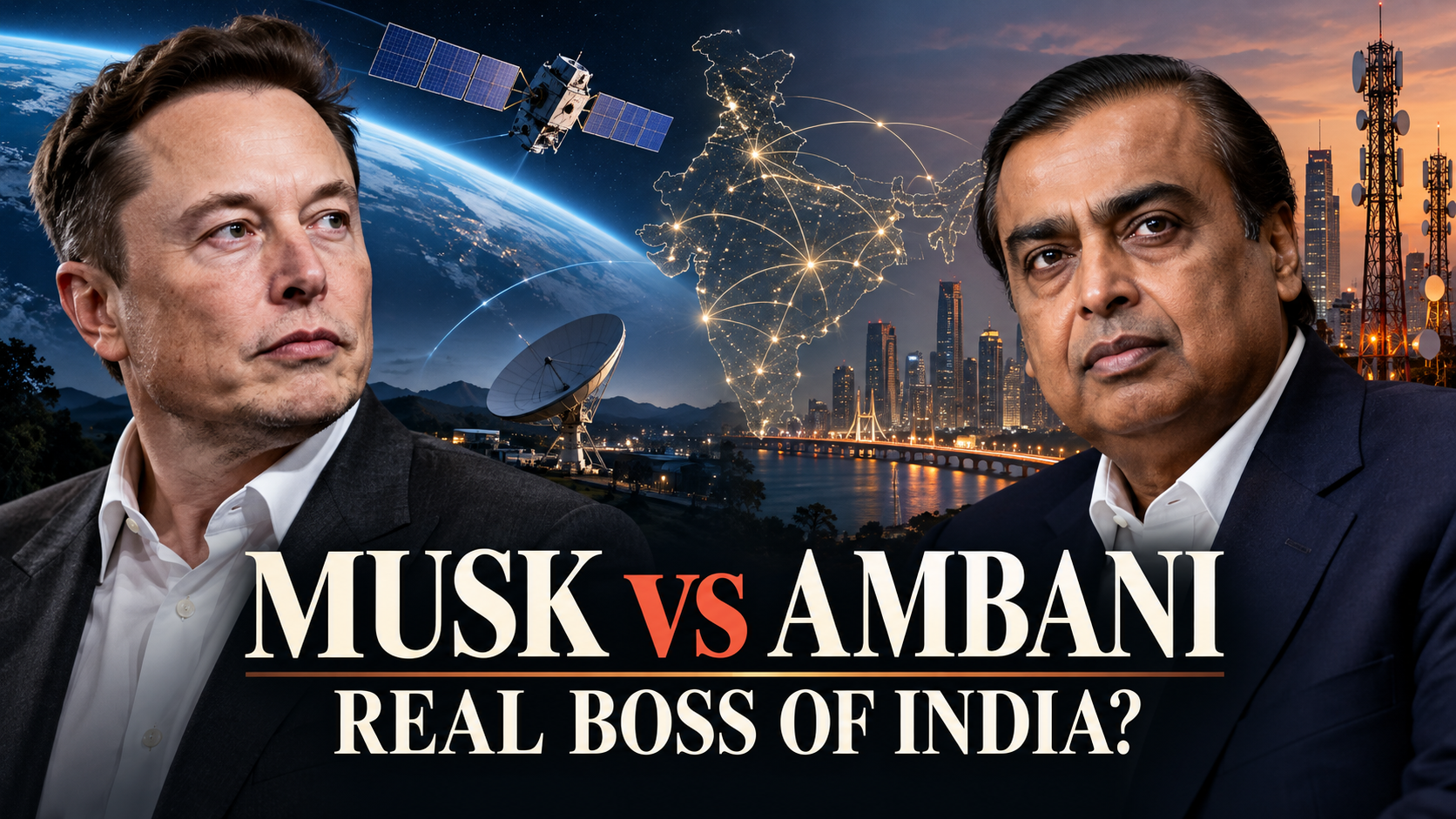
SpaceX CEO Elon Musk has escalated a public dispute over Starlink’s delayed commercial launch in India, sarcastically addressing Reliance Industries Chairman Mukesh Ambani as “Prime Minister Ambani” and questioning whether he holds outsized influence over the country’s telecom landscape. The remarks, posted on X in early October 2026, center on claims that entrenched interests—particularly around Reliance Jio—are slowing satellite broadband approvals to protect market dominance. Indian authorities have rejected the accusations as baseless, emphasizing a uniform regulatory process for all licensed satellite operators. Bloomberg
Musk’s Escalating Posts and Arguments for Starlink
Musk first accused unnamed “oligarchs” of blocking Starlink to maintain a “monopolistic chokehold on the Indian people,” describing the situation as “a crime against the people of India.” He followed by asking, “Is Ambani the real boss of India?” after noting that Starlink is licensed in over 165 countries and has spent five years complying with Indian requirements. In a subsequent post addressed as “Dear Prime Minister Ambani,” he offered a “humble apology” for not recognizing Ambani’s role and urged him to allow competition, arguing that satellite internet could connect underserved areas. Times of India
Musk highlighted potential benefits: improved access for children to education, opportunities for small businesses to reach global markets, and life-saving connectivity during natural disasters when terrestrial networks fail. He later pushed back against critics, stating that competition would benefit Indian consumers with more choices, that Ambani “is not going out of business,” and that Starlink would need affordable pricing to gain traction. Times of India
Government Position: No Monopoly, Uniform Rules for All Licensees
Union Communications Minister Jyotiraditya Scindia has directly addressed the claims, stating that “India does not allow a monopoly in any sector.” He confirmed that three companies hold Global Mobile Personal Communication by Satellite (GMPCS) licences: Starlink, Reliance’s Jio Satellite Communications, and Bharti-backed Eutelsat OneWeb. All three are at a similar regulatory stage and can begin commercial services only after each individually completes security clearances (assessed primarily by the Ministry of Home Affairs) and the government finalizes the revenue-based spectrum charging framework. CNBC TV18
The Department of Telecommunications has described suggestions of discriminatory treatment as “baseless and misconceived.” Security requirements include data localization, lawful interception capabilities, Indian gateways, and related technical demonstrations—conditions that apply equally across licensees. Spectrum assignment is set to be administrative rather than auction-based, with a usage charge of around 5% of adjusted gross revenue (lower for rural/remote areas) nearing finalization with the Telecom Regulatory Authority of India. Business Standard
Starlink’s Approval Timeline and Remaining Hurdles
Starlink received its GMPCS licence from the Department of Telecommunications in June 2025 and IN-SPACe authorization for its Gen-1 constellation in July 2025, following years of engagement that began with an application around November 2022. Provisional spectrum for testing has been available in some cases, but commercial operations require the outstanding security clearances and spectrum assignment. OneWeb and Jio Satellite secured earlier licences but face the same final milestones. Amazon’s Project Kuiper has also expressed interest and is under review. Business Standard
India’s Telecom Landscape and Connectivity Gaps
Reliance Jio remains India’s largest wireless operator, with roughly 500–530 million connections and about 39% market share as of mid-to-late 2026 data, closely trailed by Bharti Airtel at around 38%. Together the two private players dominate the market, with Vodafone Idea and BSNL holding smaller shares. Jio has driven significant growth in 5G adoption and fixed broadband. TelecomLead
Despite high overall coverage, a digital divide persists. TRAI and related data show India with over 1.09 billion internet subscriptions as of early 2026, but rural penetration stands at about 48 subscriptions per 100 people versus roughly 127 in urban areas. Large numbers of people live within mobile broadband footprints yet do not use the internet, with rural-urban gaps remaining notable. Satellite services are positioned by regulators as particularly suited for remote, border, hilly, and island areas that are harder to serve with terrestrial infrastructure. Government programs such as BharatNet continue expanding fiber and mobile coverage in villages. The Policy Edge
Broader Implications
The exchange underscores tensions between global satellite broadband ambitions and national regulatory, security, and competitive frameworks in one of the world’s largest telecom markets. Proponents of faster Starlink entry argue it could accelerate connectivity in hard-to-reach areas and introduce pricing and service competition. Authorities maintain that the process prioritizes security, data protection, and a level playing field among multiple licensed players rather than favoring any single incumbent. As of mid-October 2026, commercial satellite broadband services from any of the three licensees have not yet launched, pending the completion of remaining individual clearances and spectrum finalization.
Musk’s posts have drawn responses from opposition figures, including Rahul Gandhi, but the core dispute remains centered on the pace and nature of regulatory approvals for satellite internet in India. Further clarity is expected once security assessments conclude and the spectrum pricing regime is formally implemented.
Discover more from The Monitor
Subscribe to get the latest posts sent to your email.

Resilience Under Strain: The World’s Difficult 2026 Choices

Andy Harris in 2026: Freedom Caucus Influence, Spending and Congressional Power

MLB Playoffs 2026: Postseason Format, Broadcast Guide and How to Track the Bracket

Elon Musk Calls Mukesh Ambani the “Real Boss of India” Over Alleged Monopoly Concerns

Legal Pioneer and Defender of Justice: The Life, Works, and Legacy of Navi Pillay

Inside the Modern Republican Party Platform: Tax Policy, Immigration, and Governance

Anne Carson: Genius of Hybrid Forms and 2026 Nobel Laureate in Literature

Analyzing the Republican Voter Enthusiasm Gap: Turnout Metrics and Polling Data

The West Wing Legacy: Why the Political Drama Is More Relevant Than Ever

Min Ah: The Global Impact and Rising Popularity of the K-Drama Star
Inside the Modern Republican Party Platform: Tax Policy, Immigration, and Governance
Analyzing the Republican Voter Enthusiasm Gap: Turnout Metrics and Polling Data
Anne Carson: Genius of Hybrid Forms and 2026 Nobel Laureate in Literature

Remembering Kianna Underwood: The Nickelodeon Actress Behind “All That” and “Little Bill”
Elon Musk Calls Mukesh Ambani the “Real Boss of India” Over Alleged Monopoly Concerns
The West Wing Legacy: Why the Political Drama Is More Relevant Than Ever
Andy Harris in 2026: Freedom Caucus Influence, Spending and Congressional Power
MLB Playoffs 2026: Postseason Format, Broadcast Guide and How to Track the Bracket
-

 Featured6 years ago
The Right-Wing Politics in United States & The Capitol Hill Mayhem
-

 News5 years ago
Prioritizing health & education most effective way to improve socio-economic status: President
-

 China5 years ago
Coronavirus Pandemic and Global Response
-

 Democracy5 years ago
Missing You! SPSC
-

 Conflict5 years ago
Kashmir Lockdown, UNGA & Thereafter
-

 Canada5 years ago
Socio-Economic Implications of Canadian Border Closure With U.S
-
Democracy5 years ago
President Dr Arif Alvi Confers Civil Awards on Independence Day
-

 Digital6 years ago
Pakistan Moves Closer to Train One Million Youth with Digital Skills