
Analysis
2025: The Year That Reshaped Our World

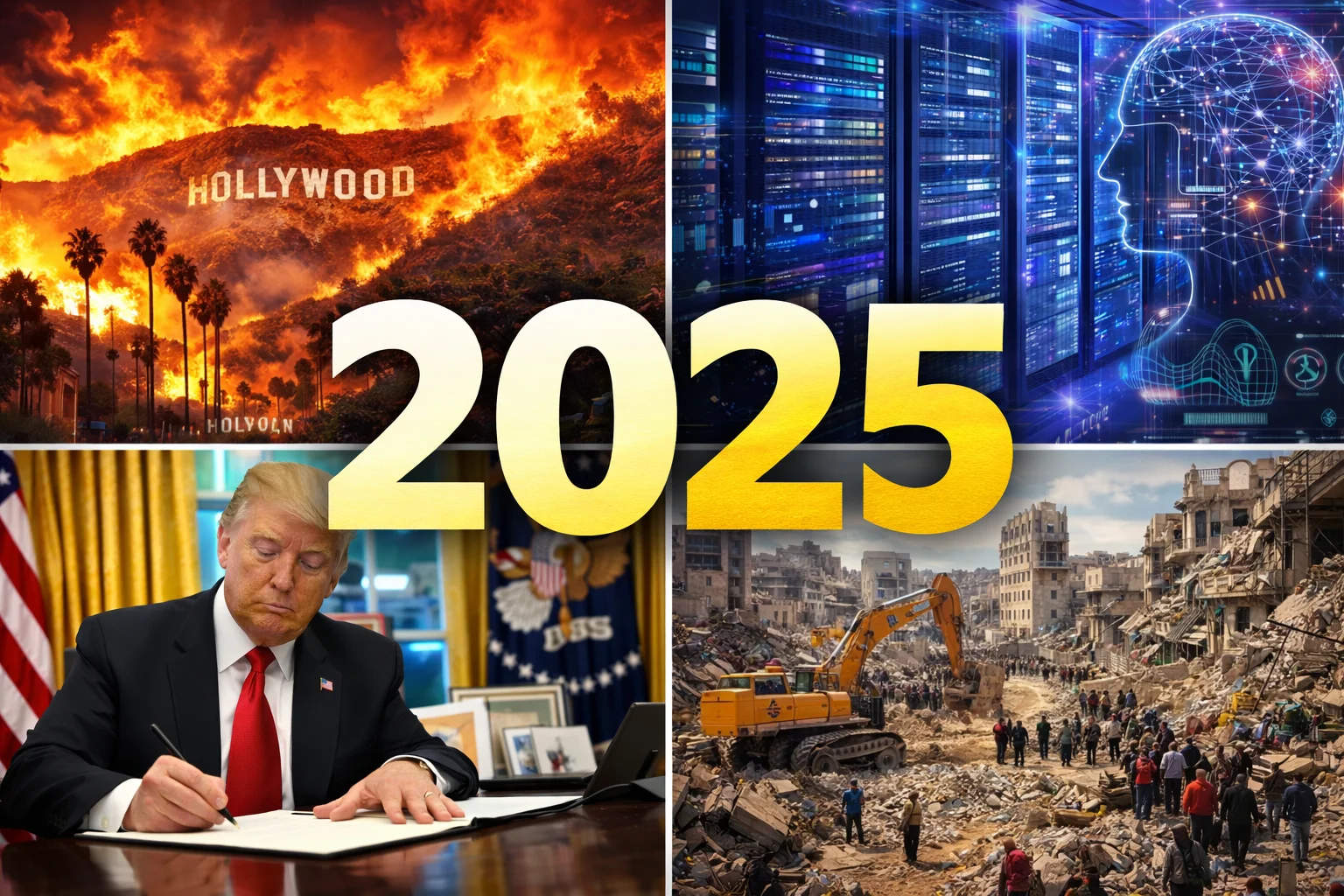
Table of Contents
A Political Analyst’s Reflection on Twelve Months That Redefined Power, Progress, and Planetary Limits
When historians thumb through the annals of the early 21st century, 2025 will stand out—not for a single cataclysmic event, but for the way disparate forces converged to accelerate transformations already underway. It was the year artificial intelligence moved from boardroom buzzword to economic driver, when climate records tumbled with disturbing regularity, and when geopolitical fault lines cracked open in ways that will shape international relations for decades.
I’ve covered politics and global affairs for two decades, but few years have felt as consequent as this one. From my perch watching these events unfold, 2025 revealed something fundamental: the post-Cold War order isn’t gradually evolving—it’s being actively dismantled and rebuilt, often simultaneously, by forces ranging from Silicon Valley boardrooms to Kathmandu’s streets.
The AI Gold Rush: When Technology Became Infrastructure
If 2023 introduced the world to generative AI’s possibilities, 2025 was the year it became undeniable infrastructure. The numbers tell a staggering story: global AI spending reached approximately $1.5 trillion this year, according to Gartner projections, while private investment in AI companies surged to $202.3 billion—a 75% increase from 2024.
The United States dominated this landscape with almost imperial confidence. U.S. private AI investment hit $109.1 billion in 2024 data, nearly twelve times China’s $9.3 billion. The San Francisco Bay Area alone captured $122 billion in AI funding this year—more than three-quarters of U.S. investment. When President Trump announced the $500 billion “Stargate” project with OpenAI, SoftBank, and Oracle, it wasn’t just industrial policy; it was a declaration that whoever controls AI’s commanding heights will shape the global economy.
But this gold rush came with costs that extend beyond quarterly earnings. Business usage of AI jumped from 55% of organizations in 2023 to 78% in 2024, and that acceleration continued through 2025. Yet as JP Morgan economists noted, AI-related capital expenditures contributed 1.1% to GDP growth in the first half of 2025—actually outpacing consumer spending as an engine of expansion.
The human toll proved harder to quantify. Companies increasingly cited AI adoption when announcing mass layoffs. The technology stands accused of fueling misinformation campaigns, faces mushrooming copyright lawsuits, and has sparked fears of a speculative bubble reminiscent of the 1990s dot-com crash. China’s DeepSeek R1 demonstrated that the computing gap between Beijing and Silicon Valley is narrowing faster than many anticipated, adding geopolitical urgency to what was already an economic arms race.
By year’s end, 88% of organizations reported regular AI use—but most had yet to embed these tools deeply enough to realize material benefits. The promise of transformation remains largely that: a promise, expensive and unproven at scale.
Trump’s Return: Disruption as Governing Philosophy
Donald Trump’s return to the White House on January 20 marked more than a political restoration. At 78, he became the oldest person to win the presidency and only the second to serve non-consecutive terms. But age and precedent mattered less than the velocity of change he unleashed.
Within hours of taking office, Trump signed executive orders withdrawing from the World Health Organization and the Paris Climate Agreement, initiated what he termed “mass deportations” of undocumented immigrants, and set in motion the dismantling of diversity and inclusion programs across the federal government. The National Guard deployed to Democratic-voting cities. Media outlets faced presidential intimidation. The administrative state found itself under systematic assault.
Yet Trump’s most consequential policy lever proved to be the one Alexander Hamilton championed in the Federalist Papers: tariffs. What began as campaign rhetoric evolved into the most aggressive trade policy since the Great Depression. The administration imposed a minimum 10% tariff on all trading partners, with China facing rates reaching 60%, and specific sectors like steel, aluminum, semiconductors, and pharmaceuticals hit with targeted increases.
The economic impact unfolded like a slow-motion collision. The Tax Foundation calculated that Trump’s imposed tariffs would raise $2.1 trillion over a decade while reducing GDP by 0.5%—and that’s before accounting for foreign retaliation. Penn Wharton’s Budget Model projected even grimmer consequences: an 8% GDP reduction and 7% wage decline, costing a middle-income household approximately $58,000 over their lifetime.
Real-world effects arrived swiftly. The U.S. economy actually contracted at an annual rate of 0.6% in early 2025 as businesses braced for the tariff onslaught. Brazilian coffee exports to the United States fell by 32.2% after facing 50% tariffs. Switzerland’s economy shrank in the third quarter at the fastest rate since the pandemic. By November, only 36% of Americans approved of Trump’s economic stewardship—his worst mark in six years of polling.
The tariffs raised $30 billion monthly by August, but revenue projections kept declining as economists factored in reduced trade volumes, foreign retaliation, and slower economic growth. What Trump positioned as economic nationalism increasingly resembled fiscal folly: the largest tax increase as a percentage of GDP since 1993, implemented to fund tax cuts that benefited primarily the wealthy while raising consumer prices for everyone else.
Climate’s Unrelenting March
While politicians debated policy, the planet delivered its verdict. Data from multiple scientific agencies confirmed 2025 as either the second or third warmest year on record, with global average temperatures running 1.42°C above pre-industrial levels through August. More ominously, the three-year average for 2023-2025 exceeded 1.5°C for the first time—the threshold scientists had long warned against breaching.
The past eleven years, from 2015 to 2025, now constitute the eleven warmest in the 176-year observational record. Arctic sea ice extent after winter freeze reached the lowest level ever recorded. Ocean heat content hit new records. And approximately 7% of Earth’s surface experienced record warming in just the first six months of the year.
These weren’t abstract statistics. The Los Angeles wildfires that erupted January 7 burned for a month, destroying more than 16,000 structures and killing 30 people. With costs estimated between $76 billion and $131 billion, it became one of the costliest disasters in U.S. history. Typhoon Kalmaegi killed more than 200 people across the Philippines, Vietnam, and Thailand in November. Catastrophic flooding in Southeast Asia claimed over 1,700 lives when tropical cyclones struck in late November, demonstrating how climate change intensifies the water cycle—for every degree Celsius of warming, air holds 7% more moisture.
The World Meteorological Organization projected that without dramatic emission reductions, multi-decadal global temperatures will at least temporarily exceed 1.5°C within the next decade. UN Environment Programme modeling found the world now heading toward 1.8°C warming before potentially falling back below 1.5°C before century’s end—but only if nations implement aggressive mitigation policies they’ve mostly failed to enact.
“Each year above 1.5 degrees will hammer economies, deepen inequalities and inflict irreversible damage,” WMO Secretary-General Celeste Saulo warned. Yet greenhouse gas concentrations continued rising throughout 2025, and the gap between climate commitments and climate action grew wider, not narrower.
Gaza: A Fragile Peace After Years of Devastation
Few conflicts commanded global attention like the Gaza war, which entered its third year before President Trump brokered a ceasefire that went into effect October 10. The numbers behind the agreement were staggering and tragic: the war had killed at least 67,869 Palestinians according to Gaza’s Health Ministry, following the Hamas-led attack on October 7, 2023, that killed 1,144 Israelis.
Trump’s 20-point peace plan, announced September 29, required Hamas to release all living hostages and hand over deceased hostages’ remains within 72 hours of Israeli forces withdrawing to designated “yellow lines” within Gaza. Israel agreed to release 2,000 Palestinian prisoners, including 250 serving life sentences. On October 13, all 20 remaining living Israeli hostages walked free.
But if the ceasefire formally ended the war, it did little to resolve the underlying conflicts. According to Gaza’s Government Media Office, Israel violated the ceasefire at least 875 times between October 10 and December 22—through shootings, raids, bombings, and property demolitions. Since the ceasefire began, Israeli attacks killed at least 406 Palestinians and injured 1,118 more.
The deadliest incident occurred October 29, when Israel killed 104 people, including 46 children, after accusing Hamas of ceasefire violations. Trump defended the strikes from Air Force One, saying Israel “should hit back” and warning that Hamas would be “terminated” if they didn’t “behave.”
The peace plan’s subsequent phases remain mired in fundamental disagreements. Israel refuses to allow a Palestinian state. Hamas refuses to disarm. The UN Security Council approved a U.S. resolution on November 17 establishing an International Stabilization Force for Gaza and calling for the Palestinian Authority to assume governance by 2027, but implementation faces massive obstacles. The World Bank estimates Gaza reconstruction will cost more than $70 billion—and no one has explained where that funding will come from.
The Gen Z Uprising: Youth Demand Their Voice
September 8 marked the beginning of the most dramatic Gen Z protest of 2025: thousands of students in Nepal took to the streets to oppose the government’s sweeping social media ban. The uprising created vivid images—protesters hanging a Jolly Roger flag from the manga One Piece on gates as the Singha Durbar government complex burned behind them. By the time the demonstrations subsided, at least 22 people were dead, hundreds were injured, and Prime Minister K.P. Sharma Oli had resigned.
Nepal’s revolt formed part of a broader pattern. From Morocco to Indonesia, young people under 30 led mass movements against poor living standards, social media censorship, and elite corruption. Australia implemented a social media ban for those under 16 on December 10, applying to YouTube, Facebook, Instagram, X, and TikTok. India’s government grappled with youth protests over economic opportunities. In Morocco, the government promised social reforms but then prosecuted more than 2,000 demonstrators.
These movements enjoyed mixed success, but they revealed something significant: a generation that came of age during global financial crisis, pandemic lockdowns, and climate anxiety refuses to accept the world older generations are handing them. They’re digitally native, globally connected, and increasingly willing to risk state violence to demand change.
Ukraine: The War That Wouldn’t End
The war in Ukraine ground through its fourth year with punishing arithmetic. Russia lost roughly 1,000 soldiers daily, according to estimates, yet increased its control of Ukrainian territory by less than 1% throughout 2025. Those meager gains came at costs that strain comprehension—both in lives and treasure.
Russia intensified its missile and drone campaigns, repeatedly striking Ukrainian cities and causing heavy civilian casualties. In March, Russian forces reclaimed Kursk province, which Ukraine had seized in a surprise invasion the previous August. Ukraine stunned observers in June with Operation Spiderweb—a covert drone strike deep into Russia that hit five air bases. Yet the attack failed to change the war’s basic dynamics.
President Trump’s approach oscillated between engagement and confrontation. In February, he berated President Zelensky in the Oval Office, accusing him of risking World War III. An August summit with Putin in Alaska ended early, with Washington accusing Moscow of not being serious about peace. Trump later imposed his first major sanctions package on Russia. By November, international negotiations based on a draft U.S. plan commenced, though Kyiv and European allies initially considered the proposal largely favorable to Moscow.
Experts continue debating how long both sides can sustain the conflict, but most agree Ukraine’s position looks increasingly precarious. The EU approved a €90 billion loan for Ukraine over two years, structured so Kyiv only repays once Russia pays reparations—a condition that acknowledges peace remains distant and uncertain.
The Bondi Beach Massacre: Terror Returns to Australia
December 14 brought Australia’s deadliest terrorist incident in history when a father and son opened fire on a Hanukkah celebration at Sydney’s Bondi Beach, killing 15 people and injuring more than 40. Police fatally shot one gunman; both were said to be motivated by Islamic State ideology.
The attack shook a nation that had implemented some of the world’s strictest gun laws following the 1996 Port Arthur massacre. It raised uncomfortable questions about radicalization, security screening, and whether bureaucratic delays in gun licensing contributed to the tragedy. An Australian state leader later revealed the main suspect faced lengthy delays in obtaining a gun license due to administrative backlogs, not suspicion.
The massacre also highlighted the persistent threat of ISIS-inspired violence even as the Islamic State’s territorial caliphate had collapsed years earlier. The ideology proved more durable than the territory, capable of inspiring attacks from New Orleans (where a man inspired by ISIS drove into crowds on New Year’s Day, killing multiple people) to Sydney’s beaches.
The First American Pope and the Church’s New Direction
On May 8, the College of Cardinals elected Cardinal Robert Prevost as Pope Leo XIV, making him the first American pontiff in Catholic Church history. The Chicago-born clergyman, who spent nearly 20 years as a missionary in Peru and obtained citizenship there, took the papal name Leo XIV at age 69.
Pope Leo XIV inherited a church grappling with declining attendance in the Global North, clergy abuse scandals, and questions about its relevance to younger generations. His predecessor, Pope Francis, had died April 21 at age 88 after hospitalization for respiratory issues. Francis had been canonized for his focus on the poor, migrants, and the environment—causes Leo XIV signaled he would continue.
Yet the new pope also offered reassurances to conservative circles by ruling out, at least in the short term, the ordination of women as deacons and recognition of same-sex marriage. This balancing act—progressive on economic justice and climate, traditional on doctrine and gender roles—will define his papacy and likely determine whether the Church can retain influence as secularization accelerates across developed nations.
Carlo Acutis, who died at age 15 from leukemia, was canonized on September 7, becoming widely venerated as “the first millennial saint” and “the patron saint of the Internet” for his interest in using digital communication to teach others. His canonization reflected the Church’s attempt to remain relevant in an increasingly digital age.
Democracy Under Strain: Elections and Erosions
The year delivered a mixed verdict on democratic governance. In New York City, Zohran Mamdani, a self-described democratic socialist, won the mayoral race on November 4, defeating better-known candidates with promises to make the city more affordable. India won its first Women’s Cricket World Cup on November 2, a cultural milestone in a nation where women’s sports traditionally received little support or recognition.
But democratic backsliding accelerated elsewhere. Charlie Kirk, the conservative activist and Trump ally who founded Turning Point USA, was assassinated on September 10 while speaking at Utah Valley University. His killing sent shockwaves through American political movements on both left and right, raising fears of escalating political violence.
Elections across Europe and Asia revealed voters’ discontent with incumbent governments yet offered few clear alternatives. Czech elections on October 3-4 saw former Prime Minister Andrej Babiš win a plurality but fail to reach a majority. Bulgaria’s government resigned in December following major protests, extending a political crisis that began in 2021. Chile elected José Antonio Kast as president, marking a rightward shift in a nation that had recently elected progressive leaders.
The pattern suggested voters everywhere wanted change but disagreed fundamentally about what kind. Populism continued gaining ground, traditional parties fragmented, and the center struggled to hold.
Notable Passages and Cultural Moments
Not everything in 2025 spoke to crisis. Rebecca Yarros published Onyx Storm, the third installment in her Empyrean “romantasy” series on January 21, breaking sales records with more than 2.7 million copies sold in its first week—the fastest-selling adult fiction title in 20 years. The cultural hunger for escapist fantasy suggested audiences wanted relief from a relentlessly difficult present.
Inter Miami CF, led by Lionel Messi, won its first Major League Soccer Cup on December 6, marking a triumph for both the legendary player and American soccer’s growing ambitions. The fictional K-pop group from the Netflix series K-Pop Demon Hunters saw their song “Golden” hit No. 1 on the Billboard Hot 100, becoming the first K-pop girl group, real or fictional, to reach the top slot. The movie became Netflix’s most-watched film of all time.
On October 19, thieves dressed as workers used a furniture ladder to break into Paris’s Louvre Museum, fleeing on scooters with Crown Jewels valued at €88 million (though they dropped a diamond-encrusted crown during their escape). Three suspects were charged and jailed, but the stolen treasures remained missing—a crime that sparked worldwide headlines and debates about security at the world’s most-visited museum.
And on December 16, the world celebrated the 250th anniversary of Jane Austen’s birth, a reminder that some cultural touchstones endure regardless of technological disruption or geopolitical turbulence.
What 2025 Revealed About Our Trajectory
Standing at year’s end, several patterns emerge from the chaos. First, the American-led international order that structured global affairs since 1945 is dissolving faster than any replacement is being built. Trump’s tariffs, his simultaneous courtship and confrontation with traditional allies, and his transactional approach to alliances all signal that the rules-based system is giving way to something more Hobbesian—though what precisely remains unclear.
Second, climate change has moved from future threat to present reality in ways that penetrate public consciousness even as political action remains inadequate. When Los Angeles burns and Southeast Asian floods kill thousands, the connection between fossil fuel emissions and human suffering becomes harder to dismiss as alarmist speculation.
Third, artificial intelligence is reshaping economic structures at a pace that makes measured policy responses nearly impossible. By the time regulators understand last year’s technology, next year’s innovation has already been deployed. The $1.5 trillion in AI spending this year will seem quaint when we look back from 2030.
Fourth, young people globally are losing patience with systems that offer them diminishing opportunities while demanding their compliance. From Kathmandu to New York, Gen Z is increasingly willing to take risks their parents avoided. Whether this energy produces meaningful reform or violent backlash will shape the decade ahead.
Fifth, the search for peace in long-running conflicts—Ukraine, Gaza, Yemen—keeps producing agreements that paper over rather than resolve fundamental disagreements. Ceasefires hold, barely, while the underlying causes of war remain unaddressed. This is not stability; it’s a fragile pause before the next round.
Looking Forward: 2026 and Beyond
As we enter 2026, several questions demand answers. Can AI deliver on its enormous promises without triggering economic dislocation or enabling authoritarian control? Will democracies find ways to address voter anger, or will that anger keep empowering demagogues who offer simple answers to complex problems? Can the international community mobilize the resources needed to prevent climate change from triggering mass displacement and resource wars?
And perhaps most fundamentally: Is the post-1945 liberal international order worth saving, or should we accept that we’re entering a multipolar world where might increasingly makes right?
The optimist in me notes that humanity has navigated periods of comparable disruption before. The pessimist observes that such transitions typically involved considerable suffering before new equilibria emerged.
What’s undeniable is that 2025 represented not an aberration but an acceleration. The forces reshaping our world—technological, environmental, political, demographic—aren’t slowing down. If anything, they’re compounding, creating feedback loops that make prediction increasingly hazardous.
Those of us who chronicle these changes bear a responsibility to document not just events but patterns, not just what happened but what it might mean. And what 2025 meant, I believe, is this: the old world is dying, the new world struggles to be born, and in this interregnum, many monsters appear.
Whether 2026 brings us closer to resolution or deeper into crisis, one lesson from 2025 endures: change is the only constant, and our capacity to shape that change depends on our willingness to see clearly, think honestly, and act courageously in the face of enormous complexity.
The year ahead will test whether we’re equal to that challenge.
Discover more from The Monitor
Subscribe to get the latest posts sent to your email.




October is Major League Baseball’s postseason month, with the League Championship Series leading toward the World Series. MLB’s official October 9 update listed league championship broadcasting arrangements and said its complete postseason schedule was subject to change. That is the appropriate basis for a service article, rather than relying on viral bracket graphics. Sources: MLB and NBA.
The important context competitors can overlook
The playoff path moves through the Wild Card Series, Division Series, League Championship Series and World Series. Series lengths differ, affecting travel planning, pitching strategies and when a potential deciding game may occur. Weather, broadcast adjustments and series ending early can all change the actual date of a matchup. A guide should therefore distinguish tentative “if necessary” games from guaranteed events. For primary-source checks and current reporting, see MLB and NFL. The key distinction is practical broadcast and bracket explainer with no fictitious results.
October baseball moves through elimination series toward the World Series. Games marked ‘if necessary’ depend on earlier series results. Research cutoff: October 12, 2026; confirm developing facts before publication.
A practical way to use this information
Use MLB’s live bracket and broadcast information for tonight’s specific matchup, while this article provides the enduring format explanation. If publishing a result, record the completed date and source. Viewers should check the network, streaming eligibility and local restrictions before paying. Avoid declaring future participants or game outcomes without an official final score.
What to verify before making a decision
The right next step is to identify the source, timestamp and applicable market or jurisdiction. Check whether a number is a historical observation, official announcement, target, forecast or scenario. If you intend to act financially, legally or commercially, use the relevant provider’s current terms and obtain professional advice where appropriate. The sources cited here establish context; they are not a substitute for live prices, individual eligibility checks or binding agreements.
Reader questions
Where is the authoritative 2026 playoff schedule? MLB publishes and updates it at MLB.com/postseason.
Why are some dates marked if necessary? Best-of-series matchups end once a team wins the required number of games.
How the MLB postseason bracket works
Major League Baseball’s postseason includes division winners and wild-card teams, followed by a sequence of elimination series that eventually determines each league champion and the World Series participants. The rounds use different series lengths; that affects pitching strategy, bullpen workload and how quickly a team can be eliminated. A single-game result in a best-of-series contest is important but not always decisive. Readers should consult MLB’s official postseason hub for the bracket rather than rely on an old graphic that may not reflect completed games.
Home-field advantage, seeding and tiebreaking rules add context to the matchup schedule. Those details can vary by competition edition, so the official rules should be checked instead of recycled from a prior year. When a postseason series has not yet finished, the next opponent remains conditional. An article should say “winner of Series A will face…” rather than assign a future opponent before the result exists.
Why starting pitching changes a short series
Starting pitchers often shape the first half of a game, but playoff success requires bullpen management, defense, baserunning and timely hitting. A team may start its most experienced pitcher in the first game and then adjust the rotation based on rest, health and earlier results. Managers must also decide when to use their strongest relief pitchers. Those choices can matter more in a short series than in a long regular season where roles and workloads can be smoothed across many games.
Baseball statistics need sample-size discipline. A hitter’s performance over ten postseason plate appearances tells less about underlying ability than a much longer period of play. Analysts can compare strikeout rates, on-base production and matchup tendencies while avoiding exaggerated claims drawn from one home run or one defensive error. Recent injuries and announced starting lineups can change the outlook quickly.
Broadcast rights and local time differences
A game carried by a U.S. broadcaster may require a different provider for an international audience. Some streaming services include blackout restrictions and authenticated subscriptions. Before directing readers to a platform, check the league’s official listing for the game, region and date. A schedule can shift because of series outcomes or weather; do not assume every potential Game 6 or Game 7 will occur. Conditional games should be clearly labeled so viewers do not subscribe or travel based on a nonexistent fixture.
Fans outside North America should verify dates carefully. A game beginning late at night in U.S. Eastern Time can appear on the following morning in Pakistan or elsewhere. A credible global article uses time-zone labeling and, where practical, provides local conversions while directing readers to official confirmations.
Planning a trip to a postseason game
Buy tickets through the team’s verified ticket office or a recognized authorized resale route. Read what happens to a ticket for an “if necessary” game that is never played. Lodging and transportation may be nonrefundable even when the ticket itself is refunded under a particular policy. Stadium entry rules, bag restrictions and transport can vary by venue. Travel budgets should include potential schedule shifts, especially when the identity of the next opponent is not yet known.
Reseller offers that look dramatically cheaper than the going rate can be fraudulent. Confirm seat location, transfer method and the platform’s buyer-protection terms. Never assume an image of a barcode sent by a stranger proves a usable ticket. The simplest defense is to purchase through verified channels and retain the order record.
A bracket-tracking method that stays accurate
For each series, maintain the teams, seeds, current games-won tally, next confirmed game time, probable or announced starters, broadcaster and a direct MLB link. Update each row only after official results. Distinguish “clinched” from “leads series.” If a matchup concludes earlier than its maximum length, remove unused dates or mark them canceled; otherwise a static editorial calendar can appear inaccurate within hours.
The purpose of a postseason guide is not to predict every winner. It is to make a fast-moving bracket understandable and give fans reliable answers on what happens next, where to watch and which details remain uncertain.
Baseball postseason questions answered
Does every potential game on a postseason schedule occur?
No. A best-of-seven series ends when one team reaches four wins. Games listed as “if necessary” do not take place if the series has already been decided. Ticket buyers and travelers should understand refund or cancellation policies associated with those conditional dates before arranging flights and hotels.
Why do playoff teams use pitchers differently?
A shorter series changes the cost of saving an elite relief pitcher or spacing starting assignments. Managers may make aggressive substitutions to protect a narrow lead, while maintaining enough arms for a possible next game. Such choices can look different from regular-season strategy, when teams plan around a longer schedule and broader workload management.
Can a postseason match move after its first announcement?
Yes. Broadcast planning, prior series results and circumstances such as weather can affect schedules. MLB’s official game page and league notices should be checked shortly before travel or viewing. An editorial table that fails to update conditional games can easily mislead readers as the bracket advances.
Discover more from The Monitor
Subscribe to get the latest posts sent to your email.
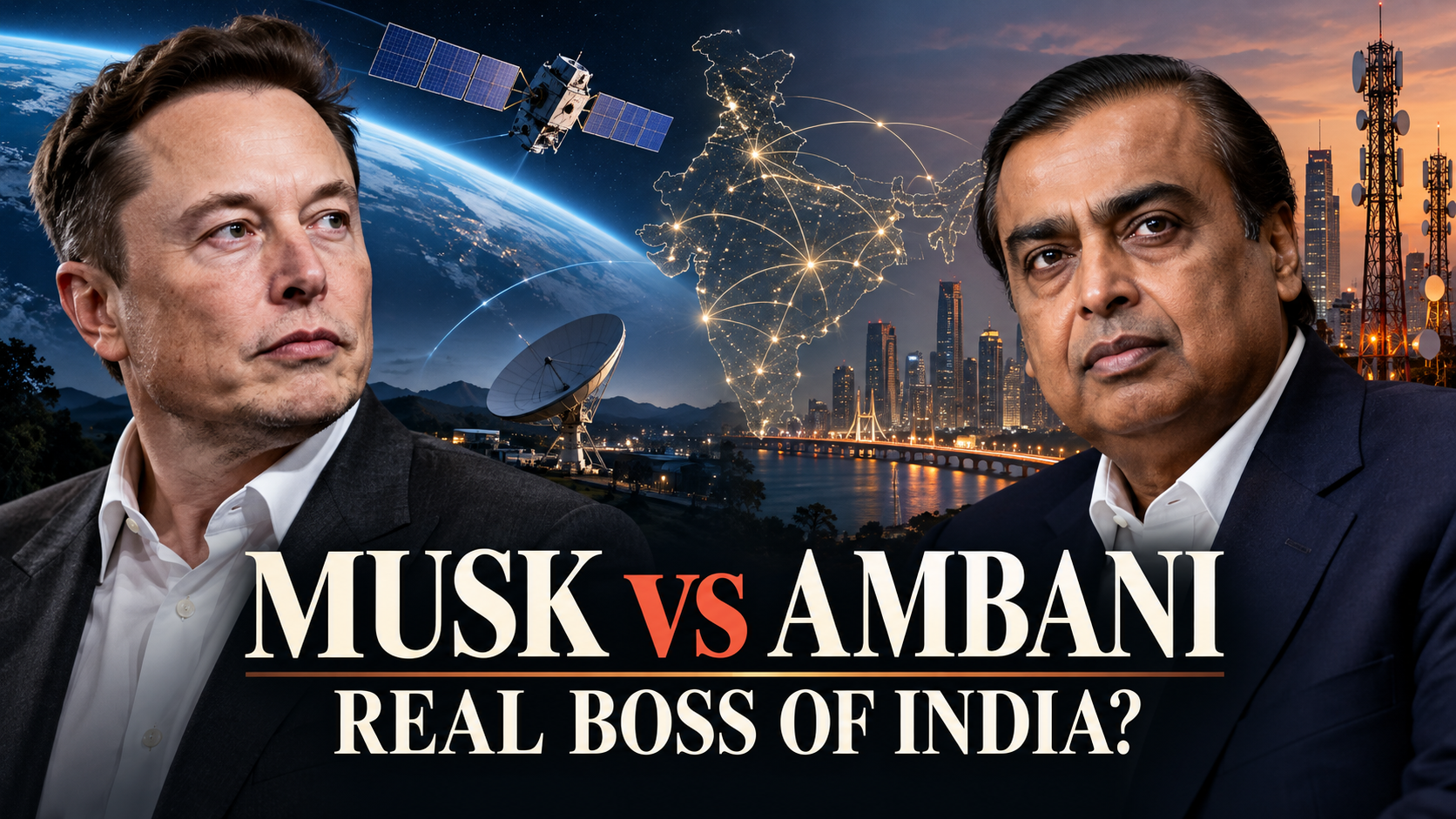
SpaceX CEO Elon Musk has escalated a public dispute over Starlink’s delayed commercial launch in India, sarcastically addressing Reliance Industries Chairman Mukesh Ambani as “Prime Minister Ambani” and questioning whether he holds outsized influence over the country’s telecom landscape. The remarks, posted on X in early October 2026, center on claims that entrenched interests—particularly around Reliance Jio—are slowing satellite broadband approvals to protect market dominance. Indian authorities have rejected the accusations as baseless, emphasizing a uniform regulatory process for all licensed satellite operators. Bloomberg
Musk’s Escalating Posts and Arguments for Starlink
Musk first accused unnamed “oligarchs” of blocking Starlink to maintain a “monopolistic chokehold on the Indian people,” describing the situation as “a crime against the people of India.” He followed by asking, “Is Ambani the real boss of India?” after noting that Starlink is licensed in over 165 countries and has spent five years complying with Indian requirements. In a subsequent post addressed as “Dear Prime Minister Ambani,” he offered a “humble apology” for not recognizing Ambani’s role and urged him to allow competition, arguing that satellite internet could connect underserved areas. Times of India
Musk highlighted potential benefits: improved access for children to education, opportunities for small businesses to reach global markets, and life-saving connectivity during natural disasters when terrestrial networks fail. He later pushed back against critics, stating that competition would benefit Indian consumers with more choices, that Ambani “is not going out of business,” and that Starlink would need affordable pricing to gain traction. Times of India
Government Position: No Monopoly, Uniform Rules for All Licensees
Union Communications Minister Jyotiraditya Scindia has directly addressed the claims, stating that “India does not allow a monopoly in any sector.” He confirmed that three companies hold Global Mobile Personal Communication by Satellite (GMPCS) licences: Starlink, Reliance’s Jio Satellite Communications, and Bharti-backed Eutelsat OneWeb. All three are at a similar regulatory stage and can begin commercial services only after each individually completes security clearances (assessed primarily by the Ministry of Home Affairs) and the government finalizes the revenue-based spectrum charging framework. CNBC TV18
The Department of Telecommunications has described suggestions of discriminatory treatment as “baseless and misconceived.” Security requirements include data localization, lawful interception capabilities, Indian gateways, and related technical demonstrations—conditions that apply equally across licensees. Spectrum assignment is set to be administrative rather than auction-based, with a usage charge of around 5% of adjusted gross revenue (lower for rural/remote areas) nearing finalization with the Telecom Regulatory Authority of India. Business Standard
Starlink’s Approval Timeline and Remaining Hurdles
Starlink received its GMPCS licence from the Department of Telecommunications in June 2025 and IN-SPACe authorization for its Gen-1 constellation in July 2025, following years of engagement that began with an application around November 2022. Provisional spectrum for testing has been available in some cases, but commercial operations require the outstanding security clearances and spectrum assignment. OneWeb and Jio Satellite secured earlier licences but face the same final milestones. Amazon’s Project Kuiper has also expressed interest and is under review. Business Standard
India’s Telecom Landscape and Connectivity Gaps
Reliance Jio remains India’s largest wireless operator, with roughly 500–530 million connections and about 39% market share as of mid-to-late 2026 data, closely trailed by Bharti Airtel at around 38%. Together the two private players dominate the market, with Vodafone Idea and BSNL holding smaller shares. Jio has driven significant growth in 5G adoption and fixed broadband. TelecomLead
Despite high overall coverage, a digital divide persists. TRAI and related data show India with over 1.09 billion internet subscriptions as of early 2026, but rural penetration stands at about 48 subscriptions per 100 people versus roughly 127 in urban areas. Large numbers of people live within mobile broadband footprints yet do not use the internet, with rural-urban gaps remaining notable. Satellite services are positioned by regulators as particularly suited for remote, border, hilly, and island areas that are harder to serve with terrestrial infrastructure. Government programs such as BharatNet continue expanding fiber and mobile coverage in villages. The Policy Edge
Broader Implications
The exchange underscores tensions between global satellite broadband ambitions and national regulatory, security, and competitive frameworks in one of the world’s largest telecom markets. Proponents of faster Starlink entry argue it could accelerate connectivity in hard-to-reach areas and introduce pricing and service competition. Authorities maintain that the process prioritizes security, data protection, and a level playing field among multiple licensed players rather than favoring any single incumbent. As of mid-October 2026, commercial satellite broadband services from any of the three licensees have not yet launched, pending the completion of remaining individual clearances and spectrum finalization.
Musk’s posts have drawn responses from opposition figures, including Rahul Gandhi, but the core dispute remains centered on the pace and nature of regulatory approvals for satellite internet in India. Further clarity is expected once security assessments conclude and the spectrum pricing regime is formally implemented.
Discover more from The Monitor
Subscribe to get the latest posts sent to your email.

“Min Ah” is one of the most searched names in Korean drama, and it points to more than one actress. The one driving the biggest buzz right now is Shin Min-a.
Key Takeaways
- Biggest news: Shin Min-a stars as Empress Navier in Disney+’s The Remarried Empress, which premieres November 4, 2026, per Soompi.
- Cast: Ju Ji-hoon plays Emperor Sovieshu, Lee Se-young plays Rashta, and Lee Jong-suk plays Prince Heinrey.
- Scale: the story is based on a web novel and webtoon that recorded about 2.97 billion cumulative global views as of July 2026, and it is Disney+’s first K-romance fantasy (SBS Star).
- Name confusion: other well-known “Min Ah” performers include Kang Min-ah and Minah (Bang Min-ah) of Girl’s Day. This article explains who is who.
| Name | Known for | Latest news |
|---|---|---|
| Shin Min-a | Leading roles in major dramas and films | The Remarried Empress (Nov 4, 2026) |
| Kang Min-ah | Actress represented by H&Entertainment | Drama Sympathetic Cells with Kim Myung-soo; premiere date announced June 2026 (MyDramaList) |
| Minah (Bang Min-ah) | Former Girl’s Day member turned actress | Born May 13, 1993; Girl’s Day debut in 2010 (Dramabeans) |
Shin Min-a’s Next Big Role: The Remarried Empress
Disney+ confirmed on August 26 that the series would premiere on November 4, releasing a teaser and character posters (Soompi). The story follows Navier, the “perfect empress” of the Eastern Empire, who is told by her husband that he wants a divorce after he falls for a runaway slave, Rashta. Instead of accepting defeat, Navier asks permission to remarry, choosing the prince of a rival kingdom.
Release plan
According to industry coverage, the ten-part series will debut with a four-episode drop and then release two episodes each Wednesday through a November 25 finale, and it streams on Hulu in the U.S. (Resonate). The same report says the first three episodes will screen at the Busan International Film Festival, which runs October 6–15.
Why it matters
This is the clearest sign of how K-drama has become a global asset. Platforms are paying for fantasy adaptations of internet-born stories with huge built-in audiences, and they are casting established leads to carry them.
Why Shin Min-a’s Popularity Travels
- Longevity. She has worked consistently in Korean drama since the early 2000s, and her credits on MyDramaList span more than two decades (MyDramaList).
- Genre range. From romantic comedy to Netflix thriller Karma and a 2026 film, The Eyes, in which she plays dual roles (MyDramaList).
- Global platforms. Disney+, Netflix, and Hulu give Korean series simultaneous worldwide releases.
The Other “Min Ah” Actresses
Kang Min-ah
A Seoul-born actress with credits since the 2010s. MyDramaList lists a 2026 drama, Sympathetic Cells, with Kim Myung-soo, whose premiere date was announced in June (MyDramaList).
Minah (Bang Min-ah)
She debuted with Girl’s Day in 2010, made her acting debut on the tvN variety program Roller Coaster, and later won a Best New Actress trophy at the 2013 Gwangju International Film Festival for the film Holly. She led the 2020 film Snowball, which earned a Screen International Rising Star Asia Award at the New York Asian Film Festival (Dramabeans).
How to Search the Right Person
Add the family name: “Shin Min-a,” “Kang Min-ah,” or “Bang Minah.” Spelling varies in English (Min-a, Mina, Min Ah), which is why results get mixed.
Frequently Asked Questions
Who is Min Ah in K-drama?
There are several, but the most prominent right now is Shin Min-a, starring in The Remarried Empress.
When does The Remarried Empress premiere?
November 4, 2026, on Disney+ (Soompi).
Who is in the cast?
Shin Min-a, Ju Ji-hoon, Lee Jong-suk, and Lee Se-young.
Is Min Ah the same as Minah from Girl’s Day?
No. Minah is Bang Min-ah, a different performer (Dramabeans).
How popular is the source story?
The webtoon had about 2.97 billion global views as of July 2026 (SBS Star).
Whichever Min Ah you were searching for, the pattern is the same: Korean drama talent now finds its audience everywhere at once.
Discover more from The Monitor
Subscribe to get the latest posts sent to your email.

MLB Playoffs 2026: Postseason Format, Broadcast Guide and How to Track the Bracket

Elon Musk Calls Mukesh Ambani the “Real Boss of India” Over Alleged Monopoly Concerns

Legal Pioneer and Defender of Justice: The Life, Works, and Legacy of Navi Pillay

Inside the Modern Republican Party Platform: Tax Policy, Immigration, and Governance

Anne Carson: Genius of Hybrid Forms and 2026 Nobel Laureate in Literature

Analyzing the Republican Voter Enthusiasm Gap: Turnout Metrics and Polling Data

The West Wing Legacy: Why the Political Drama Is More Relevant Than Ever

Remembering Kianna Underwood: The Nickelodeon Actress Behind “All That” and “Little Bill”

Min Ah: The Global Impact and Rising Popularity of the K-Drama Star

Pakistan Warns UN Security Council of AI Risks to Global Peace and Equality

Bloodhound Q50: Remembering the Tragic Loss of Chicago’s Rising Drill Star

Remembering Eliana Moreno: The Legacy of NBC LA’s “Eli in the Heli”

Horror Box Office Economics: ROI, Market Share and the 2026

iOS 27 Release Date & Siri AI: The Ultimate Tech News Guide for iPhone 18 Users
Min Ah: The Global Impact and Rising Popularity of the K-Drama Star

Fortress Diplomacy: How China’s Secretive Hongqi N701 Matches America’s Legendary “Beast”

Rep. Thomas Massie’s Impeachment Push Against Pete Hegseth, Explained
Remembering Kianna Underwood: The Nickelodeon Actress Behind “All That” and “Little Bill”
-

 Featured5 years ago
The Right-Wing Politics in United States & The Capitol Hill Mayhem
-

 News5 years ago
Prioritizing health & education most effective way to improve socio-economic status: President
-

 China5 years ago
Coronavirus Pandemic and Global Response
-

 Canada5 years ago
Socio-Economic Implications of Canadian Border Closure With U.S
-

 Democracy5 years ago
Missing You! SPSC
-

 Conflict5 years ago
Kashmir Lockdown, UNGA & Thereafter
-
Democracy5 years ago
President Dr Arif Alvi Confers Civil Awards on Independence Day
-

 Digital6 years ago
Pakistan Moves Closer to Train One Million Youth with Digital Skills