
Academic Coordinator



Analysis
Asia Pacific Emerges as Global Travel Growth Engine — China Outbound to Surpass 225 Million Trips
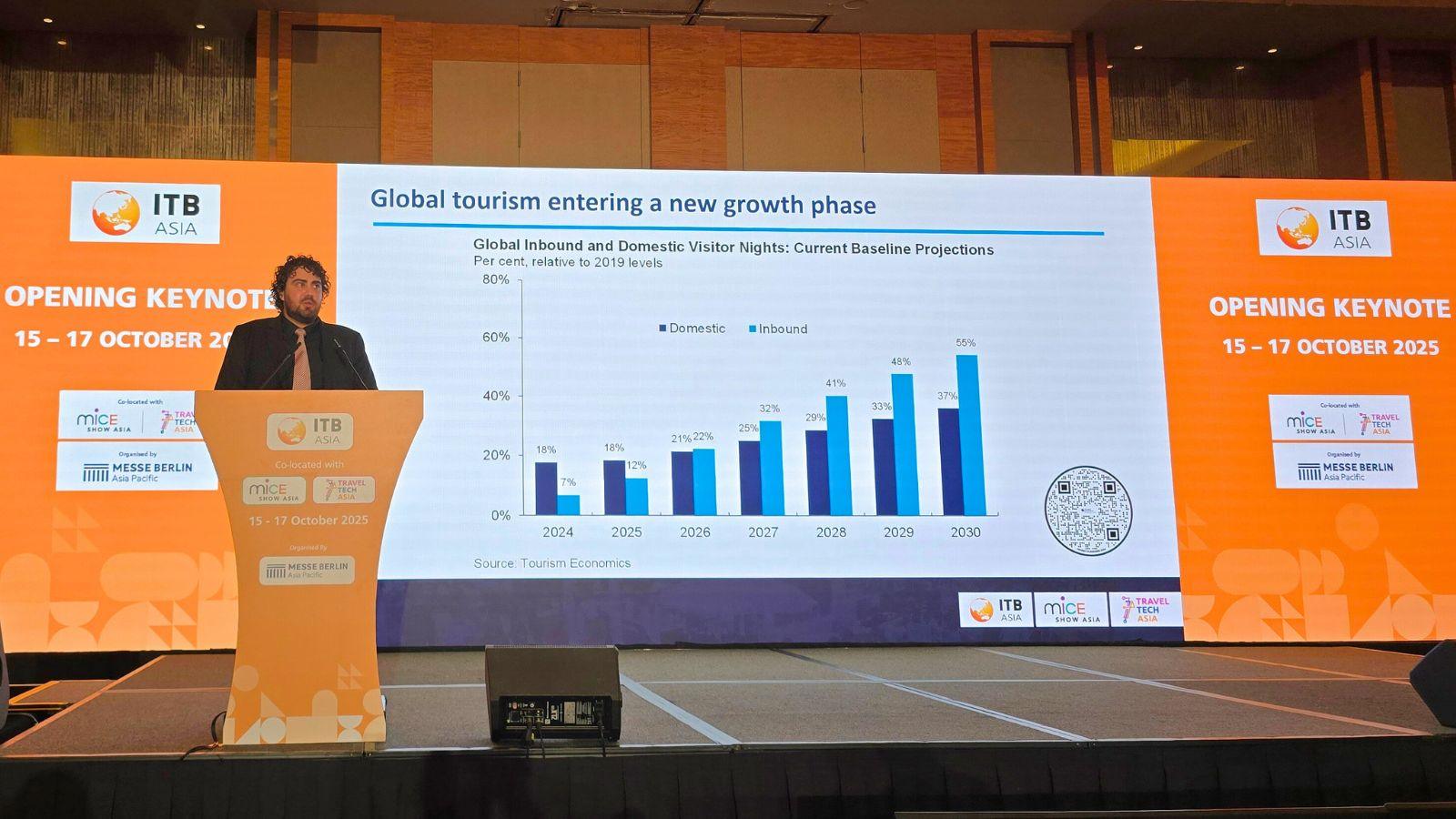
Asia Pacific travellers have a 50% higher intention to increase travel spending than those in Europe and the US, cementing the region’s position as the world’s growth engine for travel. According to one study, 88% of global travellers plan to increase or maintain their travel budgets in 2026.
China’s outbound market is the powerhouse. China’s outbound travel in 2026 is projected to exceed 225 million trips, surpassing pre-pandemic levels and marking a transition from recovery to a structurally different phase of growth. Chinese travellers report the highest expected mean spend at **$7,748 per international leisure trip**, followed by Australian travellers at $7,124 and Indian travellers at $5,154. International visitor spending in China rose by 10.5% to $135 billion, exceeding pre-pandemic levels and outperforming the global average growth of 3.2%.
The World Travel and Tourism Council expects China’s travel and tourism sector to grow 7% annually over the next decade, contributing $3.8 trillion to GDP by 2035. China is on track to surpass the US as the world’s leading travel and tourism economy.
Corporate travel is also booming. Business travel expenditure across Asia Pacific is forecast to reach $70.09 billion in 2026, marking a year-on-year increase of 10.9%. The region is expected to contribute more than 40% of total global outbound business travel spending, underlining APAC’s central role in international commerce and aviation growth. China alone is projected to account for $40.8 billion of this spending — 58% of the regional total.
What’s driving this surge? Expanding visa-free access, a stronger yuan, and pent-up demand from Chinese consumers eager to explore the world. MMGY’s survey of 4,000 travellers shows that Chinese and Indian travellers are planning 3.2-3.5 trips annually versus 1.9-2.3 for Australia, Japan, and South Korea. The destinations winning Chinese travellers are those offering premium experiences, seamless digital payments, culturally resonant offerings, and visa facilitation.
The spending differential is significant. Chinese travellers not only travel more frequently but spend substantially more per trip than travellers from other major Asia Pacific markets. This makes them the most coveted segment for destinations worldwide, driving intense competition among tourism boards to attract and retain Chinese visitors through targeted marketing, direct flights, and culturally tailored experiences.
Discover more from The Monitor
Subscribe to get the latest posts sent to your email.

The dominant narrative around artificial intelligence investment has always centred on equity valuations — Nvidia’s market capitalisation, hyperscaler earnings multiples, the concentration of the S&P 500 in a handful of AI-exposed names. That narrative is now incomplete. The more consequential shift underway in 2026 is happening in credit markets, and regulators are starting to say so explicitly.
Table of Contents
An Unprecedented Pace of Capital Deployment
The Bank of England’s July 2026 Financial Stability Report puts it plainly: the pace of AI-related investment is unprecedented historically, with AI companies increasingly turning to the financial system — and specifically to debt financing — to fund infrastructure buildouts. This marks a meaningful departure from the equity-heavy funding model that characterised the first wave of the AI boom, when cash-rich technology giants largely self-funded expansion from balance-sheet reserves.
Why Debt, and Why Now
The shift toward debt financing reflects simple scale economics: data-center construction costs have grown large enough that even the best-capitalised technology companies are choosing to preserve equity and cash flexibility by tapping bond and private credit markets instead. This dynamic accelerated sharply through the first half of 2026, coinciding with the same window in which China’s export data showed chips, computer parts and power equipment accounting for roughly half of the country’s export growth — evidence that the AI infrastructure buildout is now a genuinely global capital-expenditure cycle, not a US-only phenomenon.
The Leverage Concentration Problem
The Bank’s Financial Policy Committee has flagged a specific structural fragility: equity gains in AI-related names have been driven in significant part by a narrow, concentrated set of companies, with a substantial increase in the use of leverage tied to these positions. That combination — narrow concentration plus rising leverage — is precisely the mechanism that has historically turned isolated valuation corrections into broader, self-reinforcing liquidity events.
Separately, the Bank’s broader assessment of credit markets warns that vulnerabilities in risky asset valuations, sovereign debt markets and risky credit segments — including private credit specifically — remain, with some having become more pronounced since its previous report, as globally higher interest rates and energy-driven cost increases add pressure on corporate borrowers across the board, AI-related or otherwise.
The Sovereign Debt Connection
Perhaps the most significant — and least discussed — finding from the Bank’s analysis concerns how an AI-related equity correction could interact with sovereign bond markets. In its modelled scenario, debt-to-GDP ratios rise following a hypothetical AI valuation correction, but the Bank notes that both the US Treasury market and UK gilt market continued to function well under the scenario tested — with an explicit warning that had those markets come under pressure instead, the consequences could have been considerably more severe.
That finding sits uncomfortably alongside the Federal Reserve’s own hawkish pivot under Chair Kevin Warsh, detailed elsewhere in this series. A Fed moving toward rate hikes rather than cuts directly raises the cost of the debt financing now underpinning much of the AI infrastructure buildout — a tightening that could pressure highly leveraged data-center financing structures at precisely the moment the sector’s borrowing needs are accelerating.
What Regulators Are Doing About It
Rather than attempting to directly restrain AI-related credit growth — not typically a central bank mandate — the Bank of England is focused on strengthening the plumbing that would need to absorb a shock if one occurs. It points specifically to reforms already announced for money market funds across the UK and Europe, alongside exploratory changes to bolster resilience in the gilt repo market, as the primary tools available to prevent an AI-financing-driven credit event from cascading into broader market dysfunction.
The Investor Takeaway
For fixed-income investors and credit allocators, the practical shift is this: AI exposure can no longer be assessed purely through equity valuation multiples. The debt structures financing data-center buildouts — their leverage ratios, their sensitivity to a hawkish Fed, and their concentration among a narrow set of borrowers — now represent a distinct and growing risk factor in global credit markets, one that central banks on both sides of the Atlantic are actively modelling, even as they stop short of calling it a bubble outright.
Featured Snippet
Is AI infrastructure being funded by debt or equity in 2026? AI companies are increasingly relying on debt financing rather than equity to fund data-center buildouts, a shift the Bank of England describes as historically unprecedented in pace, raising new financial stability questions around leverage concentration and credit market resilience.
Discover more from The Monitor
Subscribe to get the latest posts sent to your email.
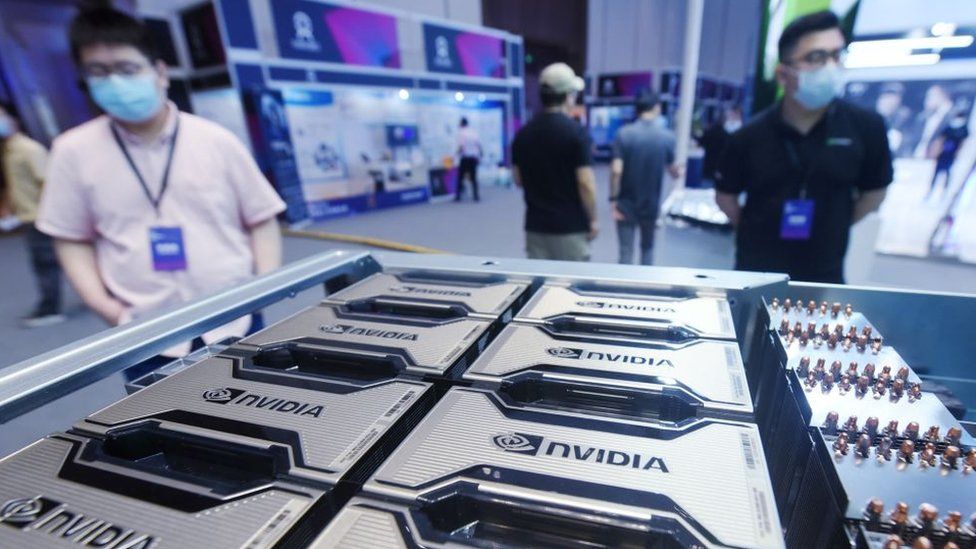
New guidance from the US Department of Commerce issued in late May 2026 has tightened licensing requirements for Nvidia’s most advanced processors, including its Blackwell series, closing a loophole that let Chinese firms acquire restricted chips through overseas subsidiaries — and putting Singapore and Malaysia squarely in Washington’s crosshairs as the two Southeast Asian hubs most exposed to diversion risk (NaturalNews).
Table of Contents
A Trillion-Dollar Market, and a Widening Grey Zone
Under the current three-tier US export framework, Singapore and Malaysia sit in “Tier 2” alongside roughly 120 other countries, including India and the UAE, meaning firms there must obtain individual licences or validated end-user authorisation before accessing the most advanced AI chips (Asia Times). That has not stopped both markets from becoming critical waypoints in the global AI supply chain: Singapore alone accounted for roughly one-fifth of Nvidia’s $215.9 billion in revenue for the fiscal year ended January 2026, making it the company’s second-largest market after the United States.
The scale of the enforcement challenge became public in May 2026, when the US Department of Justice charged three individuals connected to a technology supplier in a scheme involving roughly $2.5 billion worth of Nvidia-powered servers, allegedly routed to Chinese brokers using dummy replicas to defeat physical audits (Model Diplomat). That case echoes an August 2025 indictment involving chip shipments transiting through Malaysia and Singapore en route to Hong Kong, underscoring how the region has become a persistent pressure point for US export enforcement.
Malaysia Moves First, Thailand Lags Behind
Regional responses have diverged sharply based on exposure and regulatory capacity. Malaysia acted earliest, introducing a mandatory Strategic Trade Permit in July 2025 covering the export, transshipment and transit of high-performance US-origin AI chips — a move widely read as Kuala Lumpur choosing to tighten oversight rather than risk its reputation as what one Eco-Business analysis calls a “weak link” in the compliance chain (Eco-Business).
Thailand has proven more exposed. In May 2026, US authorities publicly flagged a Bangkok-based firm tied to the country’s national AI initiative for allegedly helping divert billions of dollars’ worth of Nvidia-powered servers to Chinese companies including Alibaba — a case that illustrates how national AI ambitions and export-control compliance can pull governments in opposing directions.
Beijing’s Answer: Building Around the Restrictions
China’s response to tightening controls has increasingly been to accelerate domestic substitution rather than simply seek workarounds. Nvidia CEO Jensen Huang told CNBC in May that he had effectively “conceded” the Chinese data-centre market to Huawei, with the company now assuming zero data-centre chip revenue from China going forward — a remarkable admission given that the Chinese market generated an estimated $12–15 billion in H20 chip sales as recently as 2024 (Model Diplomat).
China’s own supercomputing ambitions received a symbolic boost in June 2026 when the domestically built LineShine supercomputer, developed at Shenzhen’s National Supercomputing Center, reclaimed the top spot on the global TOP500 ranking, surpassing the US-built El Capitan system. Analysts tracking China’s fifteenth five-year plan note that Beijing has explicitly directed its AI sector to develop “extraordinary measures” to defeat export controls, with domestic players Huawei, Cambricon and SMIC forecast to reach at least 50% market share within China by the end of 2026.
Why Southeast Asia Cannot Simply Pick a Side
Chatham House’s assessment of the broader export-control strategy is unusually blunt: rapid global demand growth for AI compute makes enforcement extraordinarily difficult, and countries like Malaysia and Singapore have become de facto grey markets whether or not their governments intend that outcome (Chatham House). The US Chip Security Act, working its way through Congress, aims to close some of these gaps by requiring companies to verify that chips remain in authorised locations — but even proponents acknowledge that legislation alone cannot fully police a supply chain running through dozens of jurisdictions with varying regulatory capacity.
For Singapore and Malaysia, the dilemma is structural rather than merely diplomatic: both governments actively court data-centre investment from American and Chinese firms alike, because both flows generate genuine economic value, jobs and technology transfer. Neither wants to be forced into an exclusive alignment with Washington or Beijing on chip policy, yet the political and legal risk of appearing to enable diversion is rising sharply with each new DOJ indictment. The likeliest trajectory for the rest of 2026 is not a clean resolution but an intensifying game of regulatory whack-a-mole, with Southeast Asian governments tightening rules just fast enough to avoid becoming Washington’s next enforcement headline, without fully closing the door on Chinese capital.
Discover more from The Monitor
Subscribe to get the latest posts sent to your email.

Asia Pacific Emerges as Global Travel Growth Engine — China Outbound to Surpass 225 Million Trips

The AI Debt Bubble: How Data Centers Are Reshaping Credit Markets

AI Chip War 2026: How Singapore & Malaysia Got Caught Between US and China

Indonesian Rupiah 2026: Why Bank Indonesia Can’t Stop the Currency’s Slide

Fed Rate Hike 2026: Kevin Warsh’s Hawkish Pivot Explained | Impact on Mortgages & Markets

The New Disorder at Sea: How the Iran War Exposed the Limits of American Maritime Power

The G7’s Fragile Consensus: Why Europe Is Right to Fear Trump’s Return to Ukraine Negotiations

Cyprus Tourism Revenue Plunges 33.8% in March as Israeli Arrivals Dry Up

Student Loan Defaults Surge Again as Pandemic-Era Protections Fade Into Memory
AI Chip War 2026: How Singapore & Malaysia Got Caught Between US and China
The AI Debt Bubble: How Data Centers Are Reshaping Credit Markets
Indonesian Rupiah 2026: Why Bank Indonesia Can’t Stop the Currency’s Slide
Asia Pacific Emerges as Global Travel Growth Engine — China Outbound to Surpass 225 Million Trips
-

 Featured5 years ago
The Right-Wing Politics in United States & The Capitol Hill Mayhem
-

 News4 years ago
Prioritizing health & education most effective way to improve socio-economic status: President
-

 China5 years ago
Coronavirus Pandemic and Global Response
-

 Canada5 years ago
Socio-Economic Implications of Canadian Border Closure With U.S
-

 Democracy5 years ago
Missing You! SPSC
-

 Conflict5 years ago
Kashmir Lockdown, UNGA & Thereafter
-
Democracy5 years ago
President Dr Arif Alvi Confers Civil Awards on Independence Day
-

 Digital5 years ago
Pakistan Moves Closer to Train One Million Youth with Digital Skills