
Analysis
The $8 Billion Reckoning: Purdue Pharma’s Collapse Won’t Heal America’s Opioid Wound

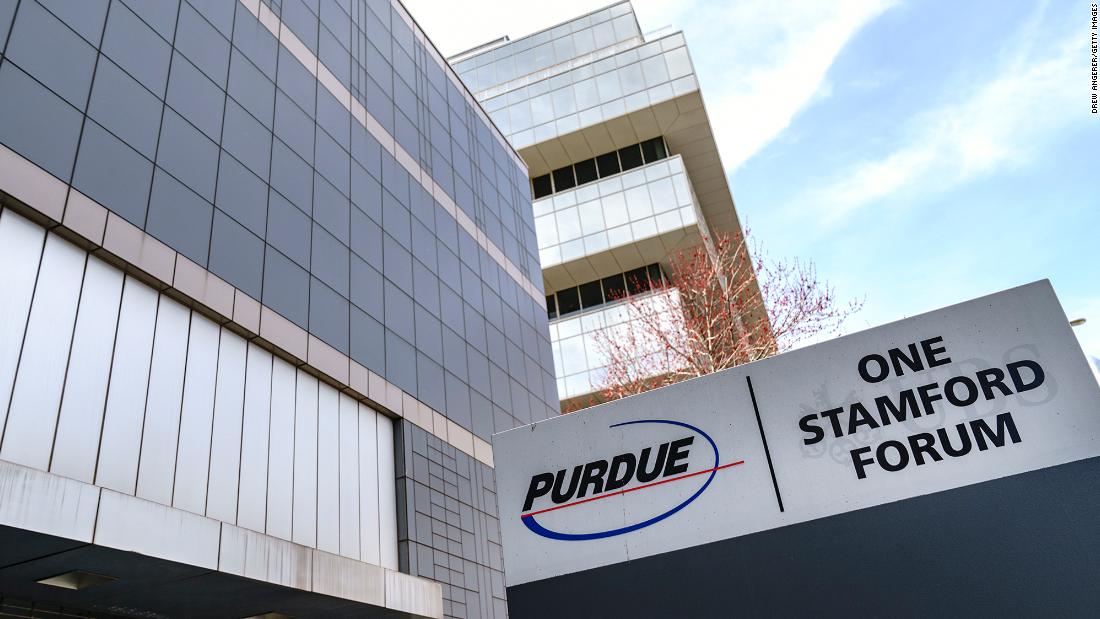
Table of Contents
A Company Dies. A Crisis Lives On.
On April 29, 2026, a federal judge in Newark, New Jersey, formally sentenced OxyContin maker Purdue Pharma — sealing the fate of a corporation whose pursuit of profit ignited the worst drug epidemic in American history. The guilty plea and civil settlement with the U.S. federal government totaled $8.3 billion in forfeitures, fines, and penalties. Within days, Purdue Pharma will cease to exist, reborn as Knoa Pharma — a state-supervised public benefit company tasked with producing opioid addiction treatments and overdose-reversal medicines.
It is a story of institutional collapse dressed up as justice. And it deserves scrutiny far beyond the headline figure.
The settlement ends a legal saga that stretched across three presidential administrations, survived a landmark Supreme Court ruling, and consumed well over $1 billion in legal and professional fees before a single victim received a dollar. Whether it constitutes genuine accountability — or a carefully managed retreat by one of America’s wealthiest families — is a question that will echo through legislatures, courtrooms, and grieving households for years to come.
What the Numbers Actually Mean
The $8.3 billion figure is arresting. But context is everything.
The Sackler family, who owned Purdue for decades, extracted an estimated $10.7 billion from the company between 2008 and 2018 — even as lawsuits mounted and regulators grew suspicious. Under the final settlement terms, the family will contribute up to $7 billion over 15 years, paid in installments as they liquidate other assets. When U.S. District Judge Madeline Cox Arleo asked why the Sacklers couldn’t pay now, she was told they needed time to sell businesses. Her reply was pointed: “They’d rather pay it from future money than pay it now.”
Meanwhile, the U.S. Department of Justice, which had originally levied $5.5 billion in criminal fines and penalties, agreed to collect just $225 million in cash — the rest contingent on Purdue directing its remaining assets to creditor settlements. Only the company was charged criminally. No individual Sackler family member faces prosecution.
For the 140,000 individuals who filed claims against Purdue — people who lost children, siblings, and spouses to OxyContin addiction — the math is even grimmer. The individual victim compensation fund sits at approximately $865 million, a fraction of the total. Families of those who fatally overdosed can now expect payouts of as little as $8,000 — down from the $48,000 initially promised in earlier settlement plans. And due to tightened eligibility requirements, many victims who cannot produce decades-old prescription records may receive nothing at all.
The total lawsuits against Purdue, had they gone to trial, were estimated to represent over $40 trillion in damages. The settlement, by any actuarial measure, is a steep discount on catastrophe.
The Opioid Crisis in Numbers: What Was Lost
To understand what justice would truly require, one must first understand the scale of what Purdue helped engineer.
According to the CDC, from 1999 to 2023, approximately 806,000 Americans died from opioid overdoses. In 2023 alone, roughly 80,000 people died from opioid-related causes — nearly 10 times the 1999 figure. KFF data shows that while 2024 brought encouraging news — opioid deaths fell sharply to approximately 54,045, a 32% decline — those numbers remain above pre-pandemic levels. New provisional CDC data projects approximately 70,231 drug overdose deaths for the 12 months ending November 2025, a further 15.9% decline, suggesting the epidemic’s trajectory is finally bending downward.
But the underlying infrastructure of suffering remains intact. An estimated 54.2 million Americans aged 12 or older needed substance use disorder treatment in 2023. Only 12.8 million received it — fewer than one in four. The treatment gap is not a statistical abstraction. It is a lived reality for millions of families in rural Appalachia, suburban Ohio, the South Bronx, and Native American reservations where the opioid death rate has always run highest.
Purdue did not create this crisis alone. But it industrialized it. The company — by its own admission in its guilty plea — paid kickbacks to doctors through speaker programs to prescribe OxyContin, and paid an electronic medical records company to mine patient data to encourage further opioid prescriptions. It told the DEA it had an effective diversion prevention program. It did not. This was not negligence. It was strategy.
A Legal Precedent in Two Acts
The Purdue Pharma case will be studied in law schools for decades, not merely for its scale, but for the constitutional fault lines it exposed.
The company’s original 2022 bankruptcy plan — which would have granted the Sackler family broad legal immunity from future opioid lawsuits in exchange for $6 billion — was struck down by the U.S. Supreme Court in June 2024. In a 5-4 decision authored by Justice Neil Gorsuch, the Court held that bankruptcy courts lack the authority to discharge claims against non-bankrupt third parties without the consent of affected claimants. It was a landmark ruling — a rebuke of what critics called a billionaire-engineered escape hatch.
The decision forced all parties back to the negotiating table. The result was a revised $7.4 billion plan approved by a federal bankruptcy judge in November 2025, which in turn cleared the final procedural hurdle with Tuesday’s criminal sentencing.
Crucially, the Sackler family still retains liability shields under the revised plan — but only for those claimants who agree to accept settlement payments. Those who reject the settlement may pursue litigation, though the practical path to recovery for individual victims remains narrow.
The comparison to the 1998 Tobacco Master Settlement Agreement — which extracted $246 billion from cigarette manufacturers over 25 years — is instructive. That settlement, too, was criticized for shielding executives from criminal prosecution while allowing companies to continue operating in modified form. The tobacco industry absorbed the financial hit, rebranded, and pivoted to new markets. The question now is whether America’s pharmaceutical industry has learned anything from either precedent.
Early signals are not encouraging. McKinsey & Company, which consulted for Purdue and helped design its aggressive OxyContin sales strategy, settled its own opioid-related litigation for approximately $600 million — with no admission of wrongdoing. Johnson & Johnson settled for $5 billion. Major distributors McKesson, Cardinal Health, and AmerisourceBergen collectively paid $21 billion. CVS and Walgreens together contributed $10 billion.
The cumulative sum of opioid-related settlements now exceeds $50 billion across all defendants — a figure that represents, in cold economic terms, the price tag America has put on an epidemic that killed nearly a million of its citizens.
The Sackler Question: When Is Accountability Real?
The moral and political weight of this settlement rests on one unresolved question: Should the Sackler family have faced criminal prosecution?
Family members received approximately $10.7 billion from Purdue between 2008 and 2018, during the very years the company was being sued across the country for its role in the opioid crisis. Reports from the New York Attorney General’s office documented wire transfers totaling at least $1 billion moved to personal overseas accounts as litigation mounted.
No Sackler family member was criminally charged.
Under the settlement terms, the family agreed to allow their names to be removed from museums and cultural institutions they had supported — the Metropolitan Museum of Art, the Tate Modern, the Louvre, and others have already complied. It is a reputational consequence, not a legal one.
Judge Arleo, who clearly felt constrained by the terms of the negotiated plea deal she was bound to accept, voiced her frustration from the bench. She warned that corporate wrongdoers should not receive the message that they can “pay fines as the cost of doing business.” But without prosecutorial action against individuals, that is precisely the message the settlement sends.
This dynamic — corporate culpability without personal consequence — is a structural feature of American corporate law, not a bug. It is also one of the most pressing reform targets in both Democratic and Republican policy circles, albeit for different reasons.
The Global Lens: How the World Watches America’s Corporate Accountability
To international policymakers and economists, the Purdue settlement is both a milestone and a cautionary tale.
In Europe, pharmaceutical liability frameworks differ substantially. The EU’s product liability directive holds manufacturers accountable for defective products without requiring proof of negligence — a standard that would have potentially enabled far swifter action against OxyContin’s known risks. In the UK, where prescription opioid addiction has risen in parallel with the American epidemic, parliamentary inquiries have explicitly cited the Purdue case as a warning about the dangers of aggressive pharmaceutical marketing combined with inadequate regulatory oversight.
Canada’s own opioid reckoning is ongoing. In March 2025, a Canadian court approved what has been described as the largest pharmaceutical settlement in Canadian history — a sweeping resolution of tobacco-related litigation spanning 28 years — signaling that common law jurisdictions are increasingly willing to hold corporate actors accountable for long-latency public health harms.
The Financial Times and The Economist have both noted that the U.S. opioid settlements, despite their size, have done little to change the fundamental incentive structures that enabled the crisis. Pharmaceutical companies remain among the most profitable businesses in the world. Marketing budgets dwarf research budgets in many divisions. And the revolving door between regulators and industry remains well-oiled.
From a Foreign Affairs perspective, the opioid crisis also represents a geopolitical vulnerability. The epidemic’s third wave — driven by synthetic fentanyl manufactured largely with Chinese precursor chemicals and trafficked through Mexican cartels — exposed how domestic public health failures intersect with international supply chain politics. The Purdue settlement does nothing to address that dimension. It is, at its core, a reckoning with the past, not a shield against the future.
What Happens to the Money — And Does It Matter?
Purdue’s assets will be channeled through a settlement trust to three broad categories: payments to individual victims, reimbursements to state and local governments, and funding for addiction treatment and prevention programs.
The largest beneficiaries will be state and local governments, which bore the direct fiscal costs of the opioid crisis — emergency services, incarceration, child welfare, Medicaid, and lost tax revenue. Washington State alone is set to receive over $1.3 billion across multiple opioid settlements, with the Purdue portion contingent on county and city participation.
Whether these funds translate into lasting public health infrastructure depends entirely on political will at the state level. In Ohio and West Virginia — two states synonymous with the epidemic’s devastation — settlement funds have begun flowing to medication-assisted treatment programs, naloxone distribution, and recovery housing. Early data suggests these investments are contributing to the declining death rates seen in 2024 and 2025.
But ProPublica’s reporting on the claims process reveals a darker side: many of the most severely harmed individuals are being systematically excluded. Ellen Isaacs, a Michigan mother whose son Ryan died of an overdose at 33 after being prescribed OxyContin for a high school sports injury, told investigators she cannot locate 23-year-old prescription records required to qualify for compensation. Her son is not an outlier. He is the rule.
The settlement’s insistence on documented proof — in a case where Purdue itself sold painkillers for decades and records are routinely destroyed after a few years — is perhaps its most revealing feature. It optimizes for legal closure over moral reckoning.
What Comes Next: Regulation, Reform, and the Unfinished Business of Accountability
Purdue Pharma’s dissolution and its rebirth as Knoa Pharma — a public benefit company producing addiction treatments — is genuinely novel. The idea that a company built on causing addiction should now profit from treating it strikes many victims as grotesque. But it also reflects a pragmatic judgment: the expertise, manufacturing capacity, and infrastructure built up over decades should serve the public, not be liquidated.
Millions of internal Purdue documents will be made public as part of the settlement — a transparency measure with potentially far-reaching implications for understanding how the opioid crisis was engineered at the boardroom level. Researchers, journalists, and policymakers will mine that archive for years.
The regulatory lessons are clearer than the corporate accountability ones. The FDA’s approval of OxyContin in 1996 — with labeling that understated its addiction risk — represented a systemic failure that the agency has acknowledged but not fully remedied. The Washington Post and New York Times have documented extensively how the FDA’s relationship with pharmaceutical industry funding creates structural conflicts of interest that persist today.
Judge Arleo herself acknowledged as much: “The government failed at several opportunities to stop Purdue from deceiving doctors and patients about the addictiveness of OxyContin.”
That failure of regulatory capture — not just corporate malfeasance — is the deeper lesson of the opioid crisis. And it is one that the settlement, for all its size, cannot address.
A Final Reckoning
$8.3 billion is a number large enough to require scientific notation in most contexts. In the context of the opioid crisis — which has killed more than 800,000 Americans, hollowed out communities across two generations, and cost the U.S. economy an estimated $1.5 trillion in lost productivity, healthcare, and criminal justice expenditures — it is a rounding error.
That is not an argument against the settlement. It is an argument for honesty about what settlements can and cannot do. They can compensate. They cannot restore. They can punish corporations. They cannot prosecute billionaires who have already transferred their wealth offshore. They can fund treatment programs. They cannot return a child to a mother who has been waiting since 2014 for justice that now looks like $8,000, if it comes at all.
The opioid crisis is not over. Fentanyl has mutated the epidemic into a form that no pharmaceutical settlement can touch. The treatment gap remains vast. Federal budget cuts threaten the programs that have, slowly and painfully, begun to bend the curve of death downward.
Purdue Pharma is gone. The crisis it helped create is not.
What America owes its opioid victims is not closure. It is honesty: about the limits of legal settlements, about the structural failures that allowed this to happen, and about the sustained investment — in treatment, in prevention, in regulatory reform — that genuine accountability would require.
Justice, in this case, was not served. It was settled.
Discover more from The Monitor
Subscribe to get the latest posts sent to your email.




October is Major League Baseball’s postseason month, with the League Championship Series leading toward the World Series. MLB’s official October 9 update listed league championship broadcasting arrangements and said its complete postseason schedule was subject to change. That is the appropriate basis for a service article, rather than relying on viral bracket graphics. Sources: MLB and NBA.
The important context competitors can overlook
The playoff path moves through the Wild Card Series, Division Series, League Championship Series and World Series. Series lengths differ, affecting travel planning, pitching strategies and when a potential deciding game may occur. Weather, broadcast adjustments and series ending early can all change the actual date of a matchup. A guide should therefore distinguish tentative “if necessary” games from guaranteed events. For primary-source checks and current reporting, see MLB and NFL. The key distinction is practical broadcast and bracket explainer with no fictitious results.
October baseball moves through elimination series toward the World Series. Games marked ‘if necessary’ depend on earlier series results. Research cutoff: October 12, 2026; confirm developing facts before publication.
A practical way to use this information
Use MLB’s live bracket and broadcast information for tonight’s specific matchup, while this article provides the enduring format explanation. If publishing a result, record the completed date and source. Viewers should check the network, streaming eligibility and local restrictions before paying. Avoid declaring future participants or game outcomes without an official final score.
What to verify before making a decision
The right next step is to identify the source, timestamp and applicable market or jurisdiction. Check whether a number is a historical observation, official announcement, target, forecast or scenario. If you intend to act financially, legally or commercially, use the relevant provider’s current terms and obtain professional advice where appropriate. The sources cited here establish context; they are not a substitute for live prices, individual eligibility checks or binding agreements.
Reader questions
Where is the authoritative 2026 playoff schedule? MLB publishes and updates it at MLB.com/postseason.
Why are some dates marked if necessary? Best-of-series matchups end once a team wins the required number of games.
How the MLB postseason bracket works
Major League Baseball’s postseason includes division winners and wild-card teams, followed by a sequence of elimination series that eventually determines each league champion and the World Series participants. The rounds use different series lengths; that affects pitching strategy, bullpen workload and how quickly a team can be eliminated. A single-game result in a best-of-series contest is important but not always decisive. Readers should consult MLB’s official postseason hub for the bracket rather than rely on an old graphic that may not reflect completed games.
Home-field advantage, seeding and tiebreaking rules add context to the matchup schedule. Those details can vary by competition edition, so the official rules should be checked instead of recycled from a prior year. When a postseason series has not yet finished, the next opponent remains conditional. An article should say “winner of Series A will face…” rather than assign a future opponent before the result exists.
Why starting pitching changes a short series
Starting pitchers often shape the first half of a game, but playoff success requires bullpen management, defense, baserunning and timely hitting. A team may start its most experienced pitcher in the first game and then adjust the rotation based on rest, health and earlier results. Managers must also decide when to use their strongest relief pitchers. Those choices can matter more in a short series than in a long regular season where roles and workloads can be smoothed across many games.
Baseball statistics need sample-size discipline. A hitter’s performance over ten postseason plate appearances tells less about underlying ability than a much longer period of play. Analysts can compare strikeout rates, on-base production and matchup tendencies while avoiding exaggerated claims drawn from one home run or one defensive error. Recent injuries and announced starting lineups can change the outlook quickly.
Broadcast rights and local time differences
A game carried by a U.S. broadcaster may require a different provider for an international audience. Some streaming services include blackout restrictions and authenticated subscriptions. Before directing readers to a platform, check the league’s official listing for the game, region and date. A schedule can shift because of series outcomes or weather; do not assume every potential Game 6 or Game 7 will occur. Conditional games should be clearly labeled so viewers do not subscribe or travel based on a nonexistent fixture.
Fans outside North America should verify dates carefully. A game beginning late at night in U.S. Eastern Time can appear on the following morning in Pakistan or elsewhere. A credible global article uses time-zone labeling and, where practical, provides local conversions while directing readers to official confirmations.
Planning a trip to a postseason game
Buy tickets through the team’s verified ticket office or a recognized authorized resale route. Read what happens to a ticket for an “if necessary” game that is never played. Lodging and transportation may be nonrefundable even when the ticket itself is refunded under a particular policy. Stadium entry rules, bag restrictions and transport can vary by venue. Travel budgets should include potential schedule shifts, especially when the identity of the next opponent is not yet known.
Reseller offers that look dramatically cheaper than the going rate can be fraudulent. Confirm seat location, transfer method and the platform’s buyer-protection terms. Never assume an image of a barcode sent by a stranger proves a usable ticket. The simplest defense is to purchase through verified channels and retain the order record.
A bracket-tracking method that stays accurate
For each series, maintain the teams, seeds, current games-won tally, next confirmed game time, probable or announced starters, broadcaster and a direct MLB link. Update each row only after official results. Distinguish “clinched” from “leads series.” If a matchup concludes earlier than its maximum length, remove unused dates or mark them canceled; otherwise a static editorial calendar can appear inaccurate within hours.
The purpose of a postseason guide is not to predict every winner. It is to make a fast-moving bracket understandable and give fans reliable answers on what happens next, where to watch and which details remain uncertain.
Baseball postseason questions answered
Does every potential game on a postseason schedule occur?
No. A best-of-seven series ends when one team reaches four wins. Games listed as “if necessary” do not take place if the series has already been decided. Ticket buyers and travelers should understand refund or cancellation policies associated with those conditional dates before arranging flights and hotels.
Why do playoff teams use pitchers differently?
A shorter series changes the cost of saving an elite relief pitcher or spacing starting assignments. Managers may make aggressive substitutions to protect a narrow lead, while maintaining enough arms for a possible next game. Such choices can look different from regular-season strategy, when teams plan around a longer schedule and broader workload management.
Can a postseason match move after its first announcement?
Yes. Broadcast planning, prior series results and circumstances such as weather can affect schedules. MLB’s official game page and league notices should be checked shortly before travel or viewing. An editorial table that fails to update conditional games can easily mislead readers as the bracket advances.
Discover more from The Monitor
Subscribe to get the latest posts sent to your email.
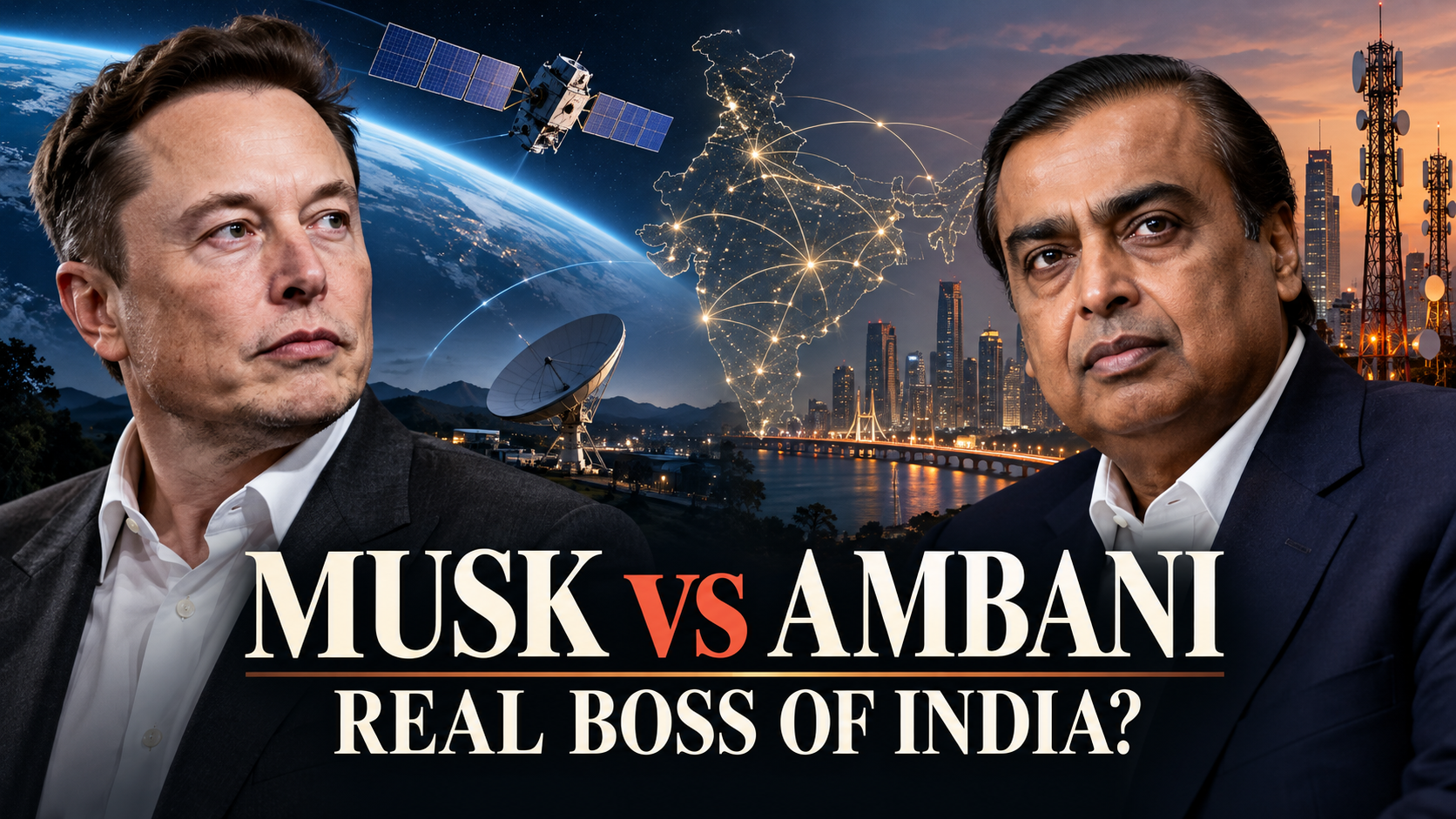
SpaceX CEO Elon Musk has escalated a public dispute over Starlink’s delayed commercial launch in India, sarcastically addressing Reliance Industries Chairman Mukesh Ambani as “Prime Minister Ambani” and questioning whether he holds outsized influence over the country’s telecom landscape. The remarks, posted on X in early October 2026, center on claims that entrenched interests—particularly around Reliance Jio—are slowing satellite broadband approvals to protect market dominance. Indian authorities have rejected the accusations as baseless, emphasizing a uniform regulatory process for all licensed satellite operators. Bloomberg
Musk’s Escalating Posts and Arguments for Starlink
Musk first accused unnamed “oligarchs” of blocking Starlink to maintain a “monopolistic chokehold on the Indian people,” describing the situation as “a crime against the people of India.” He followed by asking, “Is Ambani the real boss of India?” after noting that Starlink is licensed in over 165 countries and has spent five years complying with Indian requirements. In a subsequent post addressed as “Dear Prime Minister Ambani,” he offered a “humble apology” for not recognizing Ambani’s role and urged him to allow competition, arguing that satellite internet could connect underserved areas. Times of India
Musk highlighted potential benefits: improved access for children to education, opportunities for small businesses to reach global markets, and life-saving connectivity during natural disasters when terrestrial networks fail. He later pushed back against critics, stating that competition would benefit Indian consumers with more choices, that Ambani “is not going out of business,” and that Starlink would need affordable pricing to gain traction. Times of India
Government Position: No Monopoly, Uniform Rules for All Licensees
Union Communications Minister Jyotiraditya Scindia has directly addressed the claims, stating that “India does not allow a monopoly in any sector.” He confirmed that three companies hold Global Mobile Personal Communication by Satellite (GMPCS) licences: Starlink, Reliance’s Jio Satellite Communications, and Bharti-backed Eutelsat OneWeb. All three are at a similar regulatory stage and can begin commercial services only after each individually completes security clearances (assessed primarily by the Ministry of Home Affairs) and the government finalizes the revenue-based spectrum charging framework. CNBC TV18
The Department of Telecommunications has described suggestions of discriminatory treatment as “baseless and misconceived.” Security requirements include data localization, lawful interception capabilities, Indian gateways, and related technical demonstrations—conditions that apply equally across licensees. Spectrum assignment is set to be administrative rather than auction-based, with a usage charge of around 5% of adjusted gross revenue (lower for rural/remote areas) nearing finalization with the Telecom Regulatory Authority of India. Business Standard
Starlink’s Approval Timeline and Remaining Hurdles
Starlink received its GMPCS licence from the Department of Telecommunications in June 2025 and IN-SPACe authorization for its Gen-1 constellation in July 2025, following years of engagement that began with an application around November 2022. Provisional spectrum for testing has been available in some cases, but commercial operations require the outstanding security clearances and spectrum assignment. OneWeb and Jio Satellite secured earlier licences but face the same final milestones. Amazon’s Project Kuiper has also expressed interest and is under review. Business Standard
India’s Telecom Landscape and Connectivity Gaps
Reliance Jio remains India’s largest wireless operator, with roughly 500–530 million connections and about 39% market share as of mid-to-late 2026 data, closely trailed by Bharti Airtel at around 38%. Together the two private players dominate the market, with Vodafone Idea and BSNL holding smaller shares. Jio has driven significant growth in 5G adoption and fixed broadband. TelecomLead
Despite high overall coverage, a digital divide persists. TRAI and related data show India with over 1.09 billion internet subscriptions as of early 2026, but rural penetration stands at about 48 subscriptions per 100 people versus roughly 127 in urban areas. Large numbers of people live within mobile broadband footprints yet do not use the internet, with rural-urban gaps remaining notable. Satellite services are positioned by regulators as particularly suited for remote, border, hilly, and island areas that are harder to serve with terrestrial infrastructure. Government programs such as BharatNet continue expanding fiber and mobile coverage in villages. The Policy Edge
Broader Implications
The exchange underscores tensions between global satellite broadband ambitions and national regulatory, security, and competitive frameworks in one of the world’s largest telecom markets. Proponents of faster Starlink entry argue it could accelerate connectivity in hard-to-reach areas and introduce pricing and service competition. Authorities maintain that the process prioritizes security, data protection, and a level playing field among multiple licensed players rather than favoring any single incumbent. As of mid-October 2026, commercial satellite broadband services from any of the three licensees have not yet launched, pending the completion of remaining individual clearances and spectrum finalization.
Musk’s posts have drawn responses from opposition figures, including Rahul Gandhi, but the core dispute remains centered on the pace and nature of regulatory approvals for satellite internet in India. Further clarity is expected once security assessments conclude and the spectrum pricing regime is formally implemented.
Discover more from The Monitor
Subscribe to get the latest posts sent to your email.

“Min Ah” is one of the most searched names in Korean drama, and it points to more than one actress. The one driving the biggest buzz right now is Shin Min-a.
Key Takeaways
- Biggest news: Shin Min-a stars as Empress Navier in Disney+’s The Remarried Empress, which premieres November 4, 2026, per Soompi.
- Cast: Ju Ji-hoon plays Emperor Sovieshu, Lee Se-young plays Rashta, and Lee Jong-suk plays Prince Heinrey.
- Scale: the story is based on a web novel and webtoon that recorded about 2.97 billion cumulative global views as of July 2026, and it is Disney+’s first K-romance fantasy (SBS Star).
- Name confusion: other well-known “Min Ah” performers include Kang Min-ah and Minah (Bang Min-ah) of Girl’s Day. This article explains who is who.
| Name | Known for | Latest news |
|---|---|---|
| Shin Min-a | Leading roles in major dramas and films | The Remarried Empress (Nov 4, 2026) |
| Kang Min-ah | Actress represented by H&Entertainment | Drama Sympathetic Cells with Kim Myung-soo; premiere date announced June 2026 (MyDramaList) |
| Minah (Bang Min-ah) | Former Girl’s Day member turned actress | Born May 13, 1993; Girl’s Day debut in 2010 (Dramabeans) |
Shin Min-a’s Next Big Role: The Remarried Empress
Disney+ confirmed on August 26 that the series would premiere on November 4, releasing a teaser and character posters (Soompi). The story follows Navier, the “perfect empress” of the Eastern Empire, who is told by her husband that he wants a divorce after he falls for a runaway slave, Rashta. Instead of accepting defeat, Navier asks permission to remarry, choosing the prince of a rival kingdom.
Release plan
According to industry coverage, the ten-part series will debut with a four-episode drop and then release two episodes each Wednesday through a November 25 finale, and it streams on Hulu in the U.S. (Resonate). The same report says the first three episodes will screen at the Busan International Film Festival, which runs October 6–15.
Why it matters
This is the clearest sign of how K-drama has become a global asset. Platforms are paying for fantasy adaptations of internet-born stories with huge built-in audiences, and they are casting established leads to carry them.
Why Shin Min-a’s Popularity Travels
- Longevity. She has worked consistently in Korean drama since the early 2000s, and her credits on MyDramaList span more than two decades (MyDramaList).
- Genre range. From romantic comedy to Netflix thriller Karma and a 2026 film, The Eyes, in which she plays dual roles (MyDramaList).
- Global platforms. Disney+, Netflix, and Hulu give Korean series simultaneous worldwide releases.
The Other “Min Ah” Actresses
Kang Min-ah
A Seoul-born actress with credits since the 2010s. MyDramaList lists a 2026 drama, Sympathetic Cells, with Kim Myung-soo, whose premiere date was announced in June (MyDramaList).
Minah (Bang Min-ah)
She debuted with Girl’s Day in 2010, made her acting debut on the tvN variety program Roller Coaster, and later won a Best New Actress trophy at the 2013 Gwangju International Film Festival for the film Holly. She led the 2020 film Snowball, which earned a Screen International Rising Star Asia Award at the New York Asian Film Festival (Dramabeans).
How to Search the Right Person
Add the family name: “Shin Min-a,” “Kang Min-ah,” or “Bang Minah.” Spelling varies in English (Min-a, Mina, Min Ah), which is why results get mixed.
Frequently Asked Questions
Who is Min Ah in K-drama?
There are several, but the most prominent right now is Shin Min-a, starring in The Remarried Empress.
When does The Remarried Empress premiere?
November 4, 2026, on Disney+ (Soompi).
Who is in the cast?
Shin Min-a, Ju Ji-hoon, Lee Jong-suk, and Lee Se-young.
Is Min Ah the same as Minah from Girl’s Day?
No. Minah is Bang Min-ah, a different performer (Dramabeans).
How popular is the source story?
The webtoon had about 2.97 billion global views as of July 2026 (SBS Star).
Whichever Min Ah you were searching for, the pattern is the same: Korean drama talent now finds its audience everywhere at once.
Discover more from The Monitor
Subscribe to get the latest posts sent to your email.

MLB Playoffs 2026: Postseason Format, Broadcast Guide and How to Track the Bracket

Elon Musk Calls Mukesh Ambani the “Real Boss of India” Over Alleged Monopoly Concerns

Legal Pioneer and Defender of Justice: The Life, Works, and Legacy of Navi Pillay

Inside the Modern Republican Party Platform: Tax Policy, Immigration, and Governance

Anne Carson: Genius of Hybrid Forms and 2026 Nobel Laureate in Literature

Analyzing the Republican Voter Enthusiasm Gap: Turnout Metrics and Polling Data

The West Wing Legacy: Why the Political Drama Is More Relevant Than Ever

Remembering Kianna Underwood: The Nickelodeon Actress Behind “All That” and “Little Bill”

Min Ah: The Global Impact and Rising Popularity of the K-Drama Star

Pakistan Warns UN Security Council of AI Risks to Global Peace and Equality

Bloodhound Q50: Remembering the Tragic Loss of Chicago’s Rising Drill Star

Remembering Eliana Moreno: The Legacy of NBC LA’s “Eli in the Heli”

Horror Box Office Economics: ROI, Market Share and the 2026

iOS 27 Release Date & Siri AI: The Ultimate Tech News Guide for iPhone 18 Users
Min Ah: The Global Impact and Rising Popularity of the K-Drama Star

Fortress Diplomacy: How China’s Secretive Hongqi N701 Matches America’s Legendary “Beast”

Rep. Thomas Massie’s Impeachment Push Against Pete Hegseth, Explained
Remembering Kianna Underwood: The Nickelodeon Actress Behind “All That” and “Little Bill”
-

 Featured5 years ago
The Right-Wing Politics in United States & The Capitol Hill Mayhem
-

 News5 years ago
Prioritizing health & education most effective way to improve socio-economic status: President
-

 China5 years ago
Coronavirus Pandemic and Global Response
-

 Canada5 years ago
Socio-Economic Implications of Canadian Border Closure With U.S
-

 Democracy5 years ago
Missing You! SPSC
-

 Conflict5 years ago
Kashmir Lockdown, UNGA & Thereafter
-
Democracy5 years ago
President Dr Arif Alvi Confers Civil Awards on Independence Day
-

 Digital6 years ago
Pakistan Moves Closer to Train One Million Youth with Digital Skills