
News
Lessons for the World from Tiny Hungary

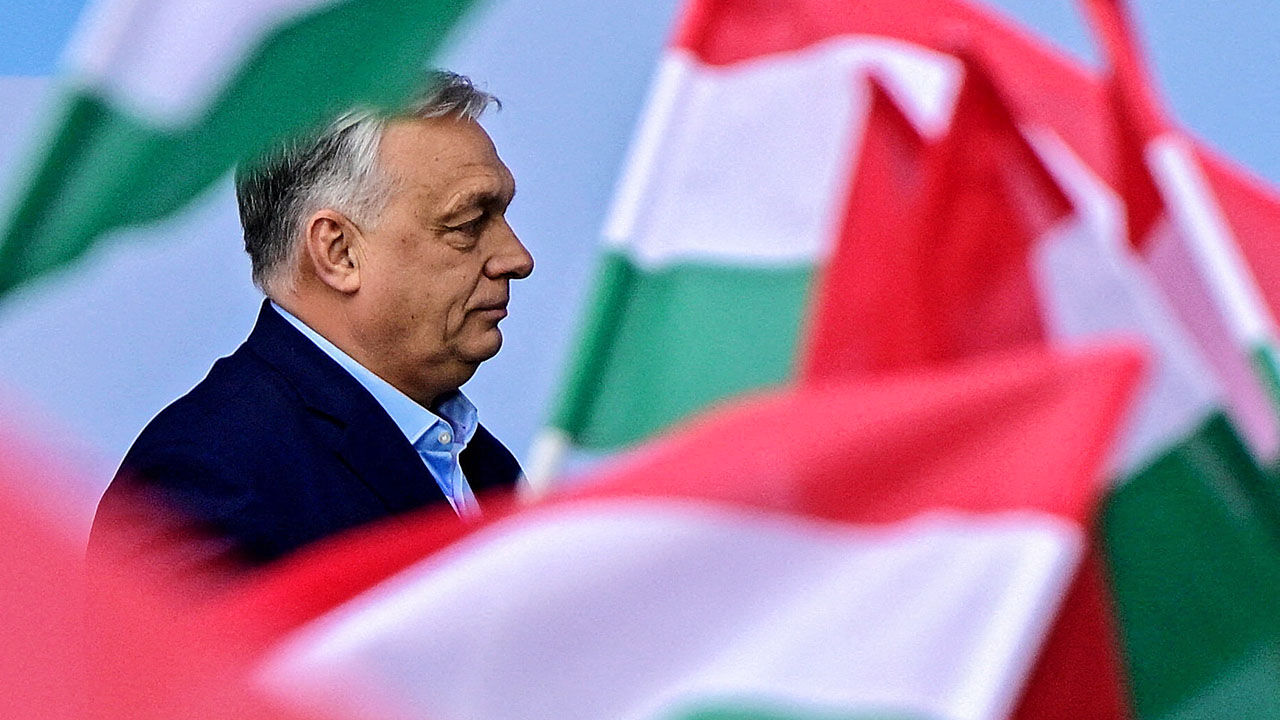
How Viktor Orbán’s Illiberal Democracy Template Became the Global Playbook for Dismantling Freedom—And Why April 12 Could Change Everything
One week from now, roughly 8 million eligible voters in a Central European country barely larger, in population, than the greater New York metropolitan area will cast ballots that reverberate far beyond the Danube. Hungary goes to the polls on April 12 in what independent pollsters are calling the most consequential European election of 2026. The opposition Tisza party, led by the telegenic former government insider Péter Magyar, has surged to a 19-to-23-point lead over Prime Minister Viktor Orbán’s ruling Fidesz among decided voters—56% to 37%, according to the 21 Research Centre’s latest survey, with Bloomberg reporting that the Hungarian forint jumped against the euro on the news. Donald Trump has already endorsed Orbán. So, reportedly, has the Kremlin. The man whom MAGA celebrates as a hero of Christian civilization may be about to lose a free election.
That matters. Not primarily to Hungarians—though of course it matters most to them. It matters to anyone who cares about the health of democracy in an age when authoritarianism is no longer the blunt instrument of generals in mirrored sunglasses but the sleek, legally dressed project of elected leaders with supermajorities and friendly courts.
Hungary has fewer people than Belgium. Its population has fallen from 10 million in 2009 to fewer than 9.6 million today, a demographic collapse driven by emigration—largely young Hungarians fleeing a system rigged against them—and a fertility rate of just 1.31, one of the lowest in Central Europe despite billions spent on family subsidies. Its economy, which entered technical recession twice in 2023–2024, contributes roughly 1% of the European Union’s total GDP. By any conventional measure of geopolitical weight, Hungary is a footnote.
And yet. Orbán’s Hungary is one of the most studied, most cited, most imitated political experiments of the 21st century. Not because Hungarians invented the Rubik’s Cube (they did) or the ballpoint pen (they did that too), but because an unscrupulous one, Viktor Orbán, has spent sixteen years demonstrating something that many political scientists once considered impossible: that a determined leader, working entirely within the formal architecture of democracy, can hollow it out until only the shell remains. He called the result an “illiberal democracy.” History may call it something less polite. Either way, the world has been watching—and in many places, taking notes.
Table of Contents
How You Dismantle a Democracy Without Technically Destroying It
Orbán’s method is not, and has never been, the method of a coup. He did not send tanks into parliament. He sent lawyers.
When Fidesz swept to a supermajority in 2010, winning over two-thirds of parliamentary seats on just 53% of the popular vote—a harbinger of the electoral system manipulations to come—Orbán used that majority with breathtaking speed. Within months, his allies were parachuted into 6-to-12-year terms on the Constitutional Court, the National Media Authority, the Competition Authority, the State Audit Office, and the Public Prosecutor’s Office. These were not corrupt appointments in the crude sense of brown envelopes and handshakes. They were legal. They were confirmed by the parliament Fidesz controlled. And they ensured, with surgical precision, that no institution capable of checking government power would ever again have the independence to do so.
Then came the media. Orbán understood, perhaps better than any European leader of his generation, that reality is constructed by the outlets that describe it. State-owned broadcasters were brought to heel through loyal editorial appointments. Pro-government businessmen acquired most private outlets, which in 2018 were merged overnight into a single media conglomerate—the Central European Press and Media Foundation, or KESMA—comprising over 450 outlets. The government classified the transaction as being of “national strategic importance,” exempting it from competition review. Independent media did not disappear entirely, but it was starved of advertising—state-linked companies provided 70–80% of pro-government outlets’ advertising revenue, while critical voices found their commercial oxygen cut off.
The electoral system itself was redesigned. Orbán’s government redrew constituency boundaries, reduced the size of parliament, abolished runoff votes, and extended voting rights to ethnic Hungarian diaspora communities abroad—who vote overwhelmingly for Fidesz via postal ballot. The resulting system allowed Fidesz to win supermajorities in 2014, 2018, and 2022 despite never approaching two-thirds of the popular vote. Scholars commonly describe the result as “competitive authoritarianism”: elections still happen, opposition parties still exist, and yet the playing field has been tilted so systematically that genuine competition becomes structurally improbable.
Finally, there is the money. A 2026 Cato Institute analysis concludes that Transparency International and Civitas Institute assess corruption in Hungary not as a malfunction of state power but as “a central characteristic of the operation of the state.” Hungary’s score on the Corruption Perceptions Index fell from 55 in 2012 to 40 in 2025, making it the most corrupt country in the European Union—roughly tied with Cuba and China. Billions of euros in EU development funds were redirected through public procurement to a small circle of politically connected oligarchs, creating a loyal business class that in turn funded loyal media, which funded loyal politics, which protected the business class. A self-reinforcing machine. A state that functions, in the words of one political analyst, less like a government than like a vertically integrated protection racket.
The Economic Bill Comes Due
For years, Orbán managed to sustain a political equilibrium by papering over the contradictions: nationalism for the soul, EU subsidies for the wallet. That equation has been breaking down. Hungary’s economy stagnated through much of 2024 and 2025, entering technical recession twice. GDP per capita in purchasing power terms stood at just 77% of the EU average in 2024—with only Slovakia, Latvia, Greece, and Bulgaria faring worse. The country had the lowest individual consumption per capita in the entire EU.
More damaging still: €7.5 billion in EU cohesion funds and a further €10.4 billion under the EU Recovery and Resilience Facility remain frozen over rule-of-law concerns. In February 2025, the European Commission deducted €325 million in fines directly from Hungary’s EU allocations over asylum policy violations. The OECD projects GDP growth of just 0.3% for Hungary in 2025. Hungarian inflation ran at 17.1% in 2023—the highest in the EU. Three major rating agencies assigned Hungary a negative outlook in December 2025.
This is the real story that Péter Magyar is telling Hungarians. “You have made Hungary the poorest, most corrupt nation in the European Union,” he told crowds at rallies that drew tens of thousands across a country where opposition politicians once barely dared venture into rural strongholds. Magyar—43, articulate, and credentialed by having actually worked inside the system he now attacks—is not a leftist insurgent. He is a centre-right politician who has promised to curb corruption, unlock frozen EU funds, and firmly anchor Hungary in the EU and NATO. His appeal is less ideological than moral. He is running, essentially, against decay.
Five Lessons for the World from Tiny Hungary
What makes Hungary so instructive—and so alarming—is not just what happened there but how transferable the playbook is. Here are the essential lessons.
Lesson One: Democratic institutions are infrastructure, not decoration. Democracies survive not because citizens are virtuous but because institutions constrain power even when citizens aren’t paying attention. Orbán understood this with clarity his opponents did not match. By systematically appointing loyalists to every regulatory and judicial body within the first two years of a supermajority, he ensured that the checks on executive power became extensions of executive power. The Constitutional Court that should have stopped him became the court that blessed him. The lesson is simple and terrifying: institutions are only as strong as the political will to defend them in the moment—and moments pass quickly.
Lesson Two: The “zombie democracy” is the hardest to fight. A classical autocracy is easy to name and easier to oppose. Orbán’s genius—if one can call it that—was to never formally cancel democracy, only to defang it. Elections continue to occur. Opposition parties contest them. International observers note irregularities and then go home. This zombie form—democracy that breathes but does not function—is profoundly harder to resist because it gives incumbents a veneer of legitimacy. Dissidents can be dismissed as sore losers. Foreign critics can be accused of interference. The system sustains itself precisely because it resembles the thing it has replaced.
Lesson Three: Corruption is not a side effect—it is the point. Orbán’s crony capitalism is not incidental to his political project; it is the political project. By concentrating economic power in the hands of a loyal oligarchy, he created a financial constituency with an existential stake in his continued rule. Those businesses fund his media. Those oligarchs lose everything if he loses. This dynamic—state capture as a loyalty mechanism—is now visible in varying degrees from Warsaw to Ankara, from Bratislava to Washington, where the blurring of state resources and personal political interest has become a defining feature of the populist right. Hungary is the proof of concept.
Lesson Four: Cultural fear is the accelerant. Orbán has always understood that economic grievances alone are insufficient. You need an enemy. In Hungary, successive enemies have included George Soros, Brussels bureaucrats, Muslim migrants, LGBTQ+ communities, and—more recently—Ukraine. The culture war is not decorative; it is structural. It creates an out-group that rallies an in-group, and it reframes every political contest as a civilizational battle in which normal democratic norms—fair courts, free press, minority rights—become tools of the enemy. A 2025 constitutional amendment declared that all Hungarians are either male or female, stripped dual nationals of citizenship if declared “threats to the state,” and enshrined the right to use cash—each provision a piece of culture-war legislation dressed as constitutional principle.
Lesson Five: The export model is real and active. Hungary is a template, not an accident. The MAGA movement has been openly fascinated with the Orbán model, and Orbán has been a keynote speaker at CPAC conferences in the United States. He organized European variants of the event in Budapest in 2022, 2023, and 2024. Marine Le Pen in France, Geert Wilders in the Netherlands, and the AfD in Germany all draw inspiration—tactically and rhetorically—from what Orbán demonstrated was possible. Trump’s personal endorsement of Orbán ahead of the April 12 vote is not merely a diplomatic courtesy; it is a statement of ideological solidarity. This is a network, not a coincidence.
What Happens After April 12?
Polls can be wrong. Electoral systems can be cruel. By-election results in rural Hungary—where Fidesz has won eight consecutive contests since Tisza emerged in 2024—remind us that polling leads do not automatically translate into parliamentary seats in a majoritarian system engineered to produce the opposite outcome. The aggregated PolitPro poll trend puts Tisza at 48.7% versus Fidesz at 40.8%, with projections suggesting 102 Tisza seats versus 86 for Fidesz in a 199-seat parliament. That would be a historic shift—but it would be a thin majority, and thin majorities in a system built for supermajorities face structural headwinds from day one.
If Magyar wins, the challenges begin immediately. The judiciary is stacked. The media ecosystem is hostile. The oligarchic networks are entrenched. Reversing sixteen years of institutional capture is not the work of a first hundred days—it is the work of a generation, and it requires the EU to provide not just financial incentives but sustained political support for democratic reform in ways Brussels has been reluctant to offer with sufficient conviction.
If Orbán wins, by whatever margin and through whatever combination of turnout suppression, diaspora votes, and gerrymandered constituencies, the consequences stretch well beyond Budapest. A re-empowered Orbán would continue to block EU aid to Ukraine, as he has done repeatedly since Russia’s full-scale invasion. He would continue to serve as the EU’s internal veto player, the man who can paralyze European foreign policy with a single abstention. He would be emboldened to accelerate the institutional consolidation that has already driven the Central European University out of Budapest, required NGOs to register as foreign agents, and enabled the government to strip dual nationals of citizenship for political disloyalty. And he would take a phone call from Mar-a-Lago that would be heard around the world as a victory message for illiberal democracy.
Small Country, World-Sized Stakes
There is a bitter irony at the heart of this moment. The country that produced the Rubik’s Cube—the puzzle that looks solvable until you realize every move changes something you weren’t watching—has itself become a puzzle for democrats everywhere. How do you protect open societies from leaders who use open societies’ own rules against them? How do you maintain institutional norms when one side has decided norms are a weakness to exploit? How do you beat a rigged game from inside it?
Péter Magyar may be about to provide one answer: you organize, you mobilize, you refuse to cede the countryside, and you make the cost of stagnation impossible to ignore. Mass demonstrations involving tens of thousands of participants on both sides shaped the Hungarian campaign, especially around Independence Day on March 15. Voter turnout is projected to be at record levels. The Medián polling institute has suggested the 23-point lead among decided voters could be sufficient to deliver a two-thirds parliamentary supermajority for Tisza—the same instrument Orbán used to dismantle democracy, potentially repurposed to repair it.
That is not guaranteed. It may not even be likely, given the structural disadvantages the opposition faces. But the fact that it is possible—that an opposition party built from scratch in 2024 by a former insider who decided he could no longer be silent has managed to put the most successful authoritarian-democrat of his generation genuinely on the defensive—is itself a lesson.
Democracy is not self-healing, but it is not incurable, either. The antibodies exist. What tiny Hungary is showing the world, one week before it votes, is that the Orbán template has a vulnerability its author may not have fully anticipated: ordinary people, fed up with corruption and stagnation, are still capable of voting against it. The question is whether, in Hungary and everywhere else this model has traveled, they are given a fair chance to do so.
Watch the Danube on April 12. The currents there may tell us something about the tides everywhere else.
Discover more from The Monitor
Subscribe to get the latest posts sent to your email.



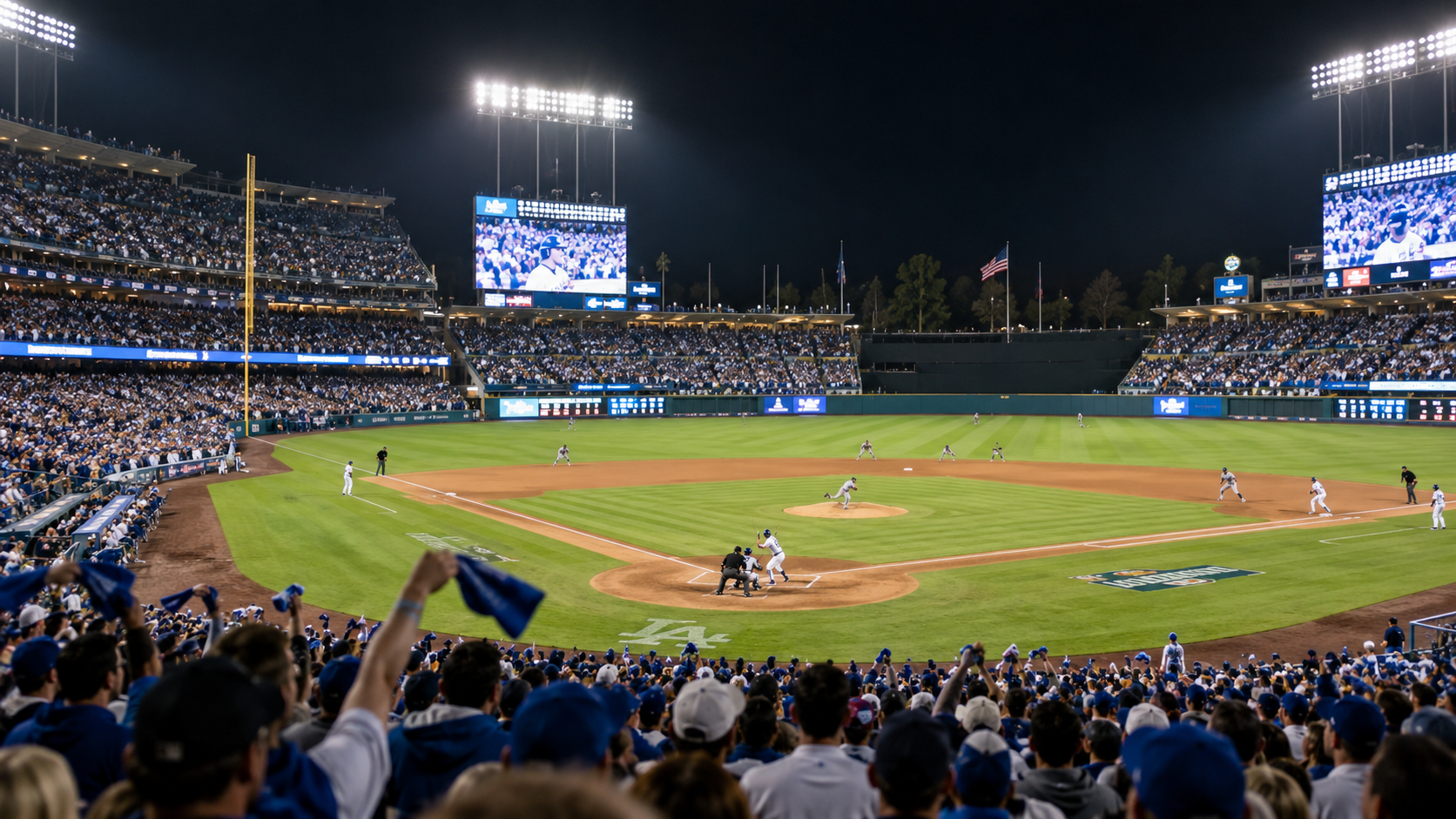
October is Major League Baseball’s postseason month, with the League Championship Series leading toward the World Series. MLB’s official October 9 update listed league championship broadcasting arrangements and said its complete postseason schedule was subject to change. That is the appropriate basis for a service article, rather than relying on viral bracket graphics. Sources: MLB and NBA.
The important context competitors can overlook
The playoff path moves through the Wild Card Series, Division Series, League Championship Series and World Series. Series lengths differ, affecting travel planning, pitching strategies and when a potential deciding game may occur. Weather, broadcast adjustments and series ending early can all change the actual date of a matchup. A guide should therefore distinguish tentative “if necessary” games from guaranteed events. For primary-source checks and current reporting, see MLB and NFL. The key distinction is practical broadcast and bracket explainer with no fictitious results.
October baseball moves through elimination series toward the World Series. Games marked ‘if necessary’ depend on earlier series results. Research cutoff: October 12, 2026; confirm developing facts before publication.
A practical way to use this information
Use MLB’s live bracket and broadcast information for tonight’s specific matchup, while this article provides the enduring format explanation. If publishing a result, record the completed date and source. Viewers should check the network, streaming eligibility and local restrictions before paying. Avoid declaring future participants or game outcomes without an official final score.
What to verify before making a decision
The right next step is to identify the source, timestamp and applicable market or jurisdiction. Check whether a number is a historical observation, official announcement, target, forecast or scenario. If you intend to act financially, legally or commercially, use the relevant provider’s current terms and obtain professional advice where appropriate. The sources cited here establish context; they are not a substitute for live prices, individual eligibility checks or binding agreements.
Reader questions
Where is the authoritative 2026 playoff schedule? MLB publishes and updates it at MLB.com/postseason.
Why are some dates marked if necessary? Best-of-series matchups end once a team wins the required number of games.
How the MLB postseason bracket works
Major League Baseball’s postseason includes division winners and wild-card teams, followed by a sequence of elimination series that eventually determines each league champion and the World Series participants. The rounds use different series lengths; that affects pitching strategy, bullpen workload and how quickly a team can be eliminated. A single-game result in a best-of-series contest is important but not always decisive. Readers should consult MLB’s official postseason hub for the bracket rather than rely on an old graphic that may not reflect completed games.
Home-field advantage, seeding and tiebreaking rules add context to the matchup schedule. Those details can vary by competition edition, so the official rules should be checked instead of recycled from a prior year. When a postseason series has not yet finished, the next opponent remains conditional. An article should say “winner of Series A will face…” rather than assign a future opponent before the result exists.
Why starting pitching changes a short series
Starting pitchers often shape the first half of a game, but playoff success requires bullpen management, defense, baserunning and timely hitting. A team may start its most experienced pitcher in the first game and then adjust the rotation based on rest, health and earlier results. Managers must also decide when to use their strongest relief pitchers. Those choices can matter more in a short series than in a long regular season where roles and workloads can be smoothed across many games.
Baseball statistics need sample-size discipline. A hitter’s performance over ten postseason plate appearances tells less about underlying ability than a much longer period of play. Analysts can compare strikeout rates, on-base production and matchup tendencies while avoiding exaggerated claims drawn from one home run or one defensive error. Recent injuries and announced starting lineups can change the outlook quickly.
Broadcast rights and local time differences
A game carried by a U.S. broadcaster may require a different provider for an international audience. Some streaming services include blackout restrictions and authenticated subscriptions. Before directing readers to a platform, check the league’s official listing for the game, region and date. A schedule can shift because of series outcomes or weather; do not assume every potential Game 6 or Game 7 will occur. Conditional games should be clearly labeled so viewers do not subscribe or travel based on a nonexistent fixture.
Fans outside North America should verify dates carefully. A game beginning late at night in U.S. Eastern Time can appear on the following morning in Pakistan or elsewhere. A credible global article uses time-zone labeling and, where practical, provides local conversions while directing readers to official confirmations.
Planning a trip to a postseason game
Buy tickets through the team’s verified ticket office or a recognized authorized resale route. Read what happens to a ticket for an “if necessary” game that is never played. Lodging and transportation may be nonrefundable even when the ticket itself is refunded under a particular policy. Stadium entry rules, bag restrictions and transport can vary by venue. Travel budgets should include potential schedule shifts, especially when the identity of the next opponent is not yet known.
Reseller offers that look dramatically cheaper than the going rate can be fraudulent. Confirm seat location, transfer method and the platform’s buyer-protection terms. Never assume an image of a barcode sent by a stranger proves a usable ticket. The simplest defense is to purchase through verified channels and retain the order record.
A bracket-tracking method that stays accurate
For each series, maintain the teams, seeds, current games-won tally, next confirmed game time, probable or announced starters, broadcaster and a direct MLB link. Update each row only after official results. Distinguish “clinched” from “leads series.” If a matchup concludes earlier than its maximum length, remove unused dates or mark them canceled; otherwise a static editorial calendar can appear inaccurate within hours.
The purpose of a postseason guide is not to predict every winner. It is to make a fast-moving bracket understandable and give fans reliable answers on what happens next, where to watch and which details remain uncertain.
Baseball postseason questions answered
Does every potential game on a postseason schedule occur?
No. A best-of-seven series ends when one team reaches four wins. Games listed as “if necessary” do not take place if the series has already been decided. Ticket buyers and travelers should understand refund or cancellation policies associated with those conditional dates before arranging flights and hotels.
Why do playoff teams use pitchers differently?
A shorter series changes the cost of saving an elite relief pitcher or spacing starting assignments. Managers may make aggressive substitutions to protect a narrow lead, while maintaining enough arms for a possible next game. Such choices can look different from regular-season strategy, when teams plan around a longer schedule and broader workload management.
Can a postseason match move after its first announcement?
Yes. Broadcast planning, prior series results and circumstances such as weather can affect schedules. MLB’s official game page and league notices should be checked shortly before travel or viewing. An editorial table that fails to update conditional games can easily mislead readers as the bracket advances.
Discover more from The Monitor
Subscribe to get the latest posts sent to your email.

On October 9, 2026, the Norwegian Nobel Committee announced Navanethem “Navi” Pillay as the laureate of the 2026 Nobel Peace Prize. Recognized for her lifelong efforts to uphold international legal frameworks, advance human rights, and ensure accountability for war crimes and genocide, Pillay stands as one of the most transformative jurists of the modern era.
From her beginnings as a working-class defense attorney in apartheid-era South Africa to serving at the highest levels of global judicial institutions, Pillay’s career reflects a commitment to the rule of law as the foundation for global peace.
1. Early Life and Legal Education
Navanethem Pillay was born on September 23, 1941, in Durban, South Africa, into a working-class Tamil South African family. Growing up under the institutionalized racial segregation of apartheid, she experienced firsthand the systemic inequalities embedded in the legal and social systems of the time.
Supported by her community, Pillay attended the University of Natal, earning a Bachelor of Arts in 1963 and a Bachelor of Laws (LL.B.) in 1965. In 1967, she became the first woman of color to set up a private law practice in Natal Province. Faced with restrictions that prevented non-white lawyers from accessing judge’s chambers or using court libraries, she focused her early legal practice on defending anti-apartheid activists, political detainees, and trade unionists.
She later pursued advanced legal studies in the United States at Harvard Law School, completing a Master of Laws (LL.M.) in 1982 and a Doctor of Juridical Science (S.J.D.) in 1988. Her doctoral research focused on international human rights law and judicial independence.
2. Fighting Apartheid and Pioneering Institutional Reform
During the height of apartheid, Pillay represented political prisoners held on Robben Island, including members of the African National Congress (ANC) and the Black Consciousness Movement. Her defense strategies challenged state-sanctioned detention without trial, police brutality, and torture.
Key Contributions to Rights and Gender Equality
- Co-founder of Equality Now (1992): Pillay co-founded the international non-governmental organization Equality Now, which advocates for the civil, political, and economic rights of women worldwide.
- High Court Appointment (1995): Following South Africa’s transition to democracy under President Nelson Mandela, Pillay was appointed as the first Black woman judge on the South African High Court in 1995.
3. Key Global Appointments and Legal Achievements
| Institutional Role | Tenure | Primary Focus & Notable Achievements |
| Judge & President, International Criminal Tribunal for Rwanda (ICTR) | 1995–2003 | Presided over landmark cases establishing sexual violence as an act of genocide (Jean-Paul Akayesu case). |
| Judge, International Criminal Court (ICC) | 2003–2008 | Served in the Appeals Division during the foundational years of the court’s operations. |
| UN High Commissioner for Human Rights | 2008–2014 | Championed global campaigns on women’s rights, LGBT rights, combatting caste discrimination, and protecting journalists. |
| Chair, Independent UN Commission of Inquiry on the Occupied Palestinian Territory | 2021–Present | Mandated to investigate violations of international humanitarian and human rights law in the region. |
| Ad Hoc Judge, International Court of Justice (ICJ) | Present | Appointed in high-profile international litigation, including the Gambia v. Myanmar genocide proceedings. |
Landmark Precedents Set
- Defining Rape as Genocide: In the 1998 Jean-Paul Akayesu ruling at the ICTR, Pillay and her fellow judges issued a ruling establishing that systematic sexual violence and rape committed during conflict constitute acts of genocide under international law.
- Media Responsibility in Atrocities: In the 2003 ICTR Media Case, she presided over the trial that held media executives accountable for incitement to genocide, setting a key precedent for international criminal law regarding hate speech and mass communication.
4. The 2026 Nobel Peace Prize Recognition
The Norwegian Nobel Committee awarded the 2026 Nobel Peace Prize to Navi Pillay on October 9, 2026.
"The Norwegian Nobel Committee has decided to award the Nobel Peace Prize for 2026
to Navanethem 'Navi' Pillay for her efforts to promote peace and international law."
— Official Announcement, Norwegian Nobel Committee (October 2026)
The Committee highlighted her career-long defense of legal principles, human dignity, and international accountability during periods of geopolitical instability. With this award, Pillay became the fifth South African citizen—and the first Black South African woman—to receive the Nobel Peace Prize.
Official Sources & References
- The Nobel Prize Official Announcement — NobelPrize.org
- UN Human Rights Office (OHCHR) — Former High Commissioners Profile
- International Criminal Court (ICC) — Judicial Profiles
- International Criminal Tribunal for Rwanda (ICTR) Legacy Archives — UN International Residual Mechanism for Criminal Tribunals
- Navi Pillay Biography — Encyclopedia Britannica
- BBC News Coverage on the 2026 Nobel Peace Prize Announcement
Discover more from The Monitor
Subscribe to get the latest posts sent to your email.

Anne Carson, the Canadian classicist, poet, essayist, and translator, was awarded the 2026 Nobel Prize in Literature by the Swedish Academy “for her bold and inventive oeuvre that, in playful dialogue with the classical tradition, has created new forms for contemporary literature”. Known for collapsing the borders between poetry, criticism, verse novel, and translation, Carson has spent over four decades fundamentally altering how antiquity speaks to modern consciousness.
Biography & Formative Years
Born on June 21, 1950, in Toronto, Ontario, Anne Carson grew up moving between small Canadian towns where her father worked as a bank manager. Her entrance into classical studies was spontaneously sparked during high school in Hamilton, Ontario, when she discovered a copy of Sappho’s poems in a local bookstore and persuaded her Latin teacher to tutor her in Ancient Greek during lunch breaks.
Carson attended the University of Toronto, earning her B.A. in 1974, M.A. in 1975, and Ph.D. in Classics in 1981. Her doctoral dissertation on the concept of desire in ancient Greek poetry formed the foundation for her landmark first book, Eros the Bittersweet (1986).
Across her academic career, Carson has held distinguished teaching and faculty positions at prominent universities:
- McGill University
- University of Michigan
- Princeton University
- New York University (NYU)
- University of California, Berkeley
Despite her stature, Carson maintains a notoriously private persona, rarely granting media interviews and identifying primarily as a “classicist who writes.”
Key Literary Works & Formal Innovations
Carson’s writing operates at the intersection of classical erudition, postmodern experimentation, and emotional immediacy.
| Work | Year | Genre / Structure | Significance & Key Themes |
| Eros the Bittersweet | 1986 | Critical Essay / Philosophy | Re-examines ancient Greek love poetry (glykypikron) to explore how desire functions through distance and triangular lack. |
| Autobiography of Red | 1998 | Novel in Verse | Based on surviving fragments of Stesichorus’ Geryoneis, reimagining the red winged monster Geryon as a modern queer photographer. |
| Men in the Off Hours | 2000 | Hybrid Poetry Collection | Interweaves figures like Thucydides, Virginia Woolf, and Tolstoy with reflections on time and grief. |
| The Beauty of the Husband | 2001 | Verse Essay (29 Tangoes) | Subtitled “A Fictional Essay in 29 Tangoes,” dissecting marital collapse through Keatsian aesthetics. |
| If Not, Winter: Fragments of Sappho | 2002 | Translation / Apparatus | Landmark translation that uses brackets and blank spaces to preserve the physical fragility of Sappho’s papyri. |
| Nox | 2010 | Artist’s Book / Elegy | An accordion-folding book in a box combining family photos, collages, and word-by-word translations of Catullus 101 after her brother’s death. |
| Antigonick | 2012 | Illustrated Drama | A handwritten, visually striking translation and adaptation of Sophocles’ Antigone. |
| Red Doc> | 2013 | Verse Narrative | The sequel to Autobiography of Red, revisiting Geryon (“G”) and Herakles (“Sad”) in middle age. |
| Wrong Norma | 2024 | Hybrid Prose Poems | A collection of unlinked prose pieces ranging from Joseph Conrad and snow to her father’s memory. |
Major Achievements & Honours
Anne Carson’s four-decade career is marked by prestigious international accolades spanning poetry, translation, and classical studies.
2026 Nobel Prize in Literature
On October 8, 2026, the Swedish Academy awarded Carson the Nobel Prize in Literature, highlighting her decades of boundary-pushing poetry and translation. She joins Alice Munro as one of the few Canadian writers to receive literature’s highest global honor.
Key Awards and Distinctions
- Nobel Prize in Literature (2026)
- Honorary President of the Classical Association (2023–2024)
- Royal Society of Literature International Writer (2022)
- Princess of Asturias Award for Literature (2020)
- Governor General’s Literary Award (2020)
- Griffin Poetry Prize (2001, 2014)
- PEN Award for Poetry in Translation (2010)
- Member of the Order of Canada (2005)
- T. S. Eliot Prize (2001) – First female recipient in the award’s history.
- MacArthur Fellowship (“Genius Grant”) (2000)
- Guggenheim Fellowship (1998)
Legacy and Impact on Contemporary Letters
Carson has reshaped how modern literature engages with antiquity. Rather than treating ancient Greek myths as static artifacts, she treats them as living instruments capable of diagnosing contemporary grief, queer desire, and structural alienation. Her radical refusal to adhere to traditional genre boundaries has influenced generations of writers, poets, and translators to treat literary form as a dynamic, flexible space.
Sources & Citations
- NobelPrize.org – Nobel Prize in Literature 2026 Official Announcement
- Encyclopædia Britannica – Anne Carson Biography & Works
- The Guardian – Anne Carson Wins Nobel Prize in Literature 2026
- Poetry Foundation – Anne Carson Profile & Bibliography
- Wikipedia – Anne Carson Biography and Works
Discover more from The Monitor
Subscribe to get the latest posts sent to your email.

MLB Playoffs 2026: Postseason Format, Broadcast Guide and How to Track the Bracket

Elon Musk Calls Mukesh Ambani the “Real Boss of India” Over Alleged Monopoly Concerns

Legal Pioneer and Defender of Justice: The Life, Works, and Legacy of Navi Pillay

Inside the Modern Republican Party Platform: Tax Policy, Immigration, and Governance

Anne Carson: Genius of Hybrid Forms and 2026 Nobel Laureate in Literature

Analyzing the Republican Voter Enthusiasm Gap: Turnout Metrics and Polling Data

The West Wing Legacy: Why the Political Drama Is More Relevant Than Ever

Remembering Kianna Underwood: The Nickelodeon Actress Behind “All That” and “Little Bill”

Min Ah: The Global Impact and Rising Popularity of the K-Drama Star

Pakistan Warns UN Security Council of AI Risks to Global Peace and Equality

Bloodhound Q50: Remembering the Tragic Loss of Chicago’s Rising Drill Star

Remembering Eliana Moreno: The Legacy of NBC LA’s “Eli in the Heli”

Horror Box Office Economics: ROI, Market Share and the 2026

iOS 27 Release Date & Siri AI: The Ultimate Tech News Guide for iPhone 18 Users
Min Ah: The Global Impact and Rising Popularity of the K-Drama Star

Fortress Diplomacy: How China’s Secretive Hongqi N701 Matches America’s Legendary “Beast”

Rep. Thomas Massie’s Impeachment Push Against Pete Hegseth, Explained
Remembering Kianna Underwood: The Nickelodeon Actress Behind “All That” and “Little Bill”
-

 Featured5 years ago
The Right-Wing Politics in United States & The Capitol Hill Mayhem
-

 News5 years ago
Prioritizing health & education most effective way to improve socio-economic status: President
-

 China5 years ago
Coronavirus Pandemic and Global Response
-

 Canada5 years ago
Socio-Economic Implications of Canadian Border Closure With U.S
-

 Democracy5 years ago
Missing You! SPSC
-

 Conflict5 years ago
Kashmir Lockdown, UNGA & Thereafter
-
Democracy5 years ago
President Dr Arif Alvi Confers Civil Awards on Independence Day
-

 Digital6 years ago
Pakistan Moves Closer to Train One Million Youth with Digital Skills