
Analysis
Pakistan’s Education Conundrum: Challenges and Strategic Solutions for Reform

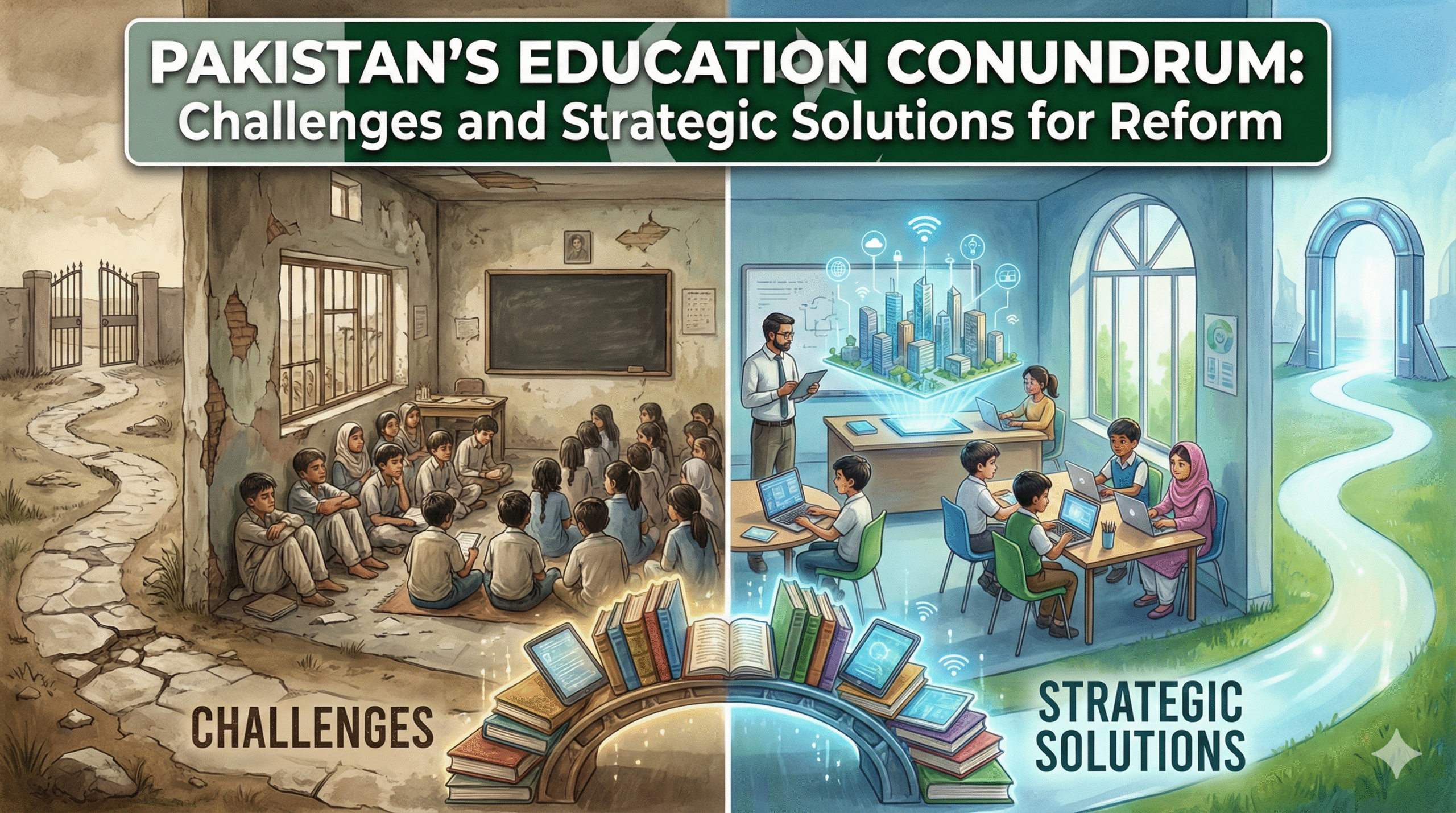
Pakistan’s education system faces serious challenges that stop many children from getting the learning they need. Millions of young students, especially those aged 5 to 16, remain out of school. This crisis is not just about numbers but the deep-rooted issues like low public spending, outdated policies, and poor quality in teaching that affect the country’s future.
Understanding what causes these problems and how they affect society is key to finding real solutions. This article explores why Pakistan’s education system is struggling and what steps might help fix it.
These challenges create a cycle where poverty and illiteracy keep reinforcing each other. Despite some efforts, the system struggles to offer the skills and knowledge students need to succeed in today’s world.
” The core problem is that Pakistan’s education system is trapped between a lack of funding, ineffective management, and growing inequality that limits access for many children.“
Table of Contents
Key Takeaways
- Many children in Pakistan cannot access basic education due to financial and social barriers.
- The education system suffers from poor quality and weak management.
- Effective reforms require better funding, improved policies, and focus on equal access.
Current State of Education in Pakistan
Pakistan faces several major challenges in education, including limited access to schools, poor quality of learning institutions, insufficient teacher training, and a wide gap between urban and rural education. These issues greatly affect enrollment, learning outcomes, and future opportunities for millions of children.
Access to Schools
Access to education in Pakistan remains a major barrier. Over 25 million children are out of school, with the highest numbers in rural and remote areas. Many regions lack enough schools, especially for girls. Social and economic factors also prevent attendance. Families often prioritize work over education due to poverty.
Limited public funding restricts new school construction. Transportation and unsafe routes to schools keep children, particularly girls, away. While urban areas tend to have better infrastructure, rural regions face severe school shortages. This results in over 36% of children nationwide not attending school.
Quality of Educational Institutions
The quality of education across Pakistan’s schools varies widely and often remains poor. Many schools suffer from outdated textbooks, weak curricula, and lack of basic facilities. Proper learning environments are rare, with overcrowded classrooms and insufficient learning materials common.
Government schools generally provide lower-quality education compared to private institutions, although private schools often charge fees that many families cannot afford. Low learning outcomes persist. Students frequently leave school without mastering essential skills like reading and math.
Teacher Training and Capacity
Teacher quality in Pakistan is a critical issue. Most teachers receive limited training, which affects their ability to engage students or deliver effective lessons. Many are not updated on modern teaching methods, reducing classroom effectiveness.
Low salaries demotivate teachers and contribute to absenteeism. In rural areas, finding qualified teachers is even harder. Many educators lack confidence in handling diverse student needs or managing classrooms. Training programs exist but are inconsistent and underfunded, leading to gaps in teacher performance.
Urban-Rural Disparities
Education access and quality vary sharply between urban and rural areas. Cities benefit from better infrastructure, more schools, and higher teacher availability. Private schooling options are more common, offering better resources and learning environments.
Rural communities face severe disadvantages. Schools are scarce, poorly maintained, and lack trained teachers. Cultural norms may discourage girls’ education. These disparities reinforce cycles of poverty and limit social mobility in rural populations.
| Aspect | Urban Areas | Rural Areas |
|---|---|---|
| School Availability | Generally adequate | Very limited |
| Teacher Quality | Higher training levels | Often underqualified |
| Infrastructure | Better facilities and resources | Poor or missing basic facilities |
| Female Enrollment | Higher compared to rural | Much lower, with cultural barriers |
Historical Context and Policy Evolution
Pakistan’s education system has deep roots in its colonial past, influencing how schools and curricula developed after independence. Over time, the government introduced various reforms aimed at addressing challenges like low literacy and uneven quality. However, the success of these reforms depended heavily on how policies were implemented across regions.
Legacy of Colonial Education Frameworks
Pakistan inherited an education system designed primarily to serve colonial interests rather than national development. The British focused on creating a small educated elite to work in administration. This left a fragmented structure, with limited access for the majority of the population. The curriculum emphasized rote learning and ignored local languages and cultures.
After 1947, the country struggled to reshape this inherited system. Many schools remained urban and elite-focused, while rural areas lacked facilities. The colonial legacy also left a strong divide between English-medium and vernacular schools. This historical setup created long-term challenges in expanding quality education to all segments of society.
Major Education Reforms
Since independence, Pakistan has launched several major reforms to improve education access, quality, and relevance. Key policies included the 1972 National Education Policy, which aimed to standardize curricula and expand primary education. The 1992 policy introduced a shift toward decentralization and greater involvement of provincial governments.
Reforms also focused on religious education integration, skill-based learning, and literacy enhancement programs. Despite these efforts, inconsistent funding and political changes often disrupted progress. Policies oscillated between centralized control and decentralized initiatives, creating confusion among administrators and schools.
| Year | Key Reform | Focus |
|---|---|---|
| 1972 | National Education Policy | Curriculum standardization |
| 1992 | Decentralization reform | Provincial control & autonomy |
| 2009 | Literacy & skill programs | Improving youth literacy rates |
Government Policy Implementation
The effectiveness of education policies in Pakistan has been limited by poor implementation. Challenges include insufficient funding, lack of trained teachers, and weak monitoring systems. Many policies remain on paper without clear follow-up or resources to back them up.
Regional disparities also affect implementation. Provinces with less infrastructure struggle to apply national policies effectively. Political instability and frequent changes in education leadership further disrupt continuity. Additionally, bureaucratic delays and corruption have slowed the development of schools and teaching quality.
Efforts to involve local communities and private sectors have grown but are uneven. Successful policy implementation requires consistent support, accountability, and adapting strategies to local needs.
Socioeconomic Barriers to Learning
Access to education in Pakistan is deeply affected by economic conditions, social customs, and geography. These factors create obstacles that keep many children from fully benefiting from schooling. Poverty limits resources, cultural gender roles affect who attends school, and where a child lives influences education quality.
Poverty and Affordability
Many families in Pakistan live below the poverty line, which makes it hard to afford school expenses like uniforms, books, and transportation. Even when tuition is free, indirect costs can be too high for poor households.
Children from low-income families often must work to support their families. This reduces their time and energy for learning. Schools in poorer areas also lack basic facilities and trained teachers.
Because of these issues, dropout rates are high among children from poor families, especially after primary school. Poverty also affects nutrition and health, which impacts concentration and attendance in school.
Gender Inequality
In many parts of Pakistan, girls face more barriers to education than boys. Cultural norms often prioritize boys’ schooling and encourage girls to stay at home or marry early.
Safety concerns, lack of female teachers, and distant schools discourage families from sending girls to school. This limits girls’ access to education beyond the elementary level in some regions.
Girls who do attend school often study in overcrowded or poorly resourced environments. Gender bias in textbooks and teaching methods can also affect how girls learn and perform.
Regional Disparities
Education quality and access vary widely between urban and rural areas. Cities generally have better schools, more teachers, and stronger infrastructure.
Rural areas often suffer from fewer schools, poorly trained teachers, and lack of basic facilities like clean water and electricity. Many schools in these areas are difficult to reach, especially for girls.
Regions affected by conflict or poverty have even lower enrollment rates. These geographic differences create unequal opportunities for children based solely on where they live.
| Factor | Urban Areas | Rural Areas |
|---|---|---|
| School Quantity | Many schools | Few schools |
| Teaching Quality | Generally better-trained | Often untrained or absent |
| Facilities | Adequate facilities | Poor or missing facilities |
| Safety | Relatively safer | Concerns over travel safety |
Curriculum and Language Challenges
Pakistan’s education faces major hurdles with language choice, curriculum design, and textbook quality. These factors affect how well students learn and how the system adapts to diverse needs across the country.
Medium of Instruction Dilemma
The main languages used in schools are Urdu and English, while over 70 regional languages are spoken nationwide. This creates a gap for many children who speak local languages at home. When taught in Urdu or English, these students often struggle to understand and keep up.
The lack of early education in native languages limits student engagement and learning outcomes. Schools rarely switch to regional languages or use bilingual teaching methods. Resistance from teachers, limited resources, and policy gaps make introducing local languages difficult.
Without proper support, many learners face disadvantages that widen educational inequality. Bridging this language gap is key to improving access and success rates in schools.
Curriculum Relevance
Much of Pakistan’s curriculum is outdated and does not reflect local culture or current global knowledge. Subjects often focus on rote memorization rather than critical thinking or practical skills.
The Single National Curriculum aims to standardize content but faces uneven implementation, with rural areas lacking enough materials and trained teachers. Political influences sometimes shape curricula that prioritize ideology over quality education.
There is a growing call for curricula that relate better to students’ lives and future job markets. This requires frequent updates and inclusion of diverse regional perspectives.
Textbook Quality
Textbooks in Pakistan vary widely in quality and relevance. Many contain errors, outdated information, and politically biased content. Poor production standards reduce durability and usability.
Access to quality books is uneven, especially in remote or underfunded schools. Some areas rely on secondhand or unofficial materials. Teachers report lacking adequate, clear resources to deliver lessons effectively.
Efforts to improve textbook content and distribution need to focus on accurate information, cultural inclusion, and alignment with modern teaching methods. Enhancing textbook quality can significantly impact student learning outcomes.
Public vs Private Sector Education
Pakistan’s education system is divided mainly into public and private sectors. Public schools are run by the government and aim to provide free or low-cost education. Private schools charge tuition and often have better facilities and resources but are less affordable for many families.
Key Differences:
| Aspect | Public Schools | Private Schools |
|---|---|---|
| Cost | Low or free | Expensive, varies widely |
| Quality | Varies, often limited | Generally better, but inconsistent |
| Teacher Training | Often lacks investment | More focus on faculty development |
| Accessibility | More accessible to low-income families | Mostly for middle and upper income groups |
Private schools in Pakistan often outperform public schools in student results. This is partly due to better resources, smaller class sizes, and more qualified teachers. However, quality control in private education is inconsistent because of weak regulation.
Public schools face challenges like underfunding and overcrowding. Many lack basic infrastructure and qualified teachers. This contributes to a significant gap in educational outcomes between the two sectors.
Both sectors play important roles. Public schools serve the majority of children, while private schools cater to those who can afford them. There is growing support for public-private partnerships to improve quality and access in public education. Community involvement and government support are seen as crucial steps to bridge this divide.
Impact of Technology and Innovation
Technology is changing how education works in Pakistan, but the effects are uneven. Some students gain greatly from new learning tools, while others still lack access to basic digital resources. Innovations like AI and mobile learning hold promise but face obstacles tied to infrastructure and policy.
Digital Divide
The digital divide in Pakistan shows a clear gap between urban and rural areas. Many rural regions lack reliable internet and electricity, making it hard for students to benefit from online learning or digital tools. Urban schools tend to have better access to computers and mobile devices, giving their students an advantage.
This gap also affects gender equity. Girls in remote areas often face more barriers to technology access, which limits their education opportunities. Poor infrastructure and high costs intensify these challenges.
Efforts to close this divide include government and NGO projects aimed at expanding internet access and providing affordable devices. Still, significant work remains to ensure equal digital learning chances nationwide.
E-Learning Initiatives
Pakistan has introduced several e-learning programs to support education through technology. Projects like DigiSkills offer free online courses that teach digital and technical skills to young people, preparing them for jobs.
The Learning Passport, backed by UNICEF, targets marginalized children, providing digital education resources that reach beyond traditional schools. This helps children, especially girls, overcome logistical and social barriers.
These initiatives use mobile-friendly platforms and multimedia to engage students. However, challenges such as teacher training, content relevance, and internet reliability need ongoing attention to maximize impact.
Pathways Forward and Proposed Solutions
Addressing Pakistan’s education challenges requires targeted steps in policy, community support, and future planning. Solutions must improve access, teacher quality, infrastructure, and technology while involving local stakeholders. Each approach plays a key role in building a more effective system.
Policy Recommendations
Effective policies need clear focus on funding, training, and curriculum updates. Increasing budget allocation to education is essential to fix poor infrastructure and provide learning materials. Teacher training programs must prioritize skills for active, project-based learning rather than rote methods.
Curriculum reforms should align with modern needs, including digital literacy and critical thinking. Policies should promote gender equality and accessibility to ensure no group is left behind.
Regular monitoring and evaluation can track progress and reveal gaps. Using data to guide decisions helps avoid repeating past mistakes and allocates resources efficiently.
Community Involvement
Local communities play a crucial role in supporting schools and boosting enrollment. Community engagement can improve accountability and encourage parental involvement, which affects student attendance and success.
School management committees should include parents and local leaders. Their participation helps adapt education to community needs and values.
Awareness campaigns can promote the importance of education, especially for girls, to overcome cultural barriers.
Partnering with non-profits and private sectors can bring extra resources and innovation. Community-backed initiatives tend to be more sustainable and responsive.
Future Outlook
Technology and research-driven policies will shape Pakistan’s education future. Integrating digital tools can expand access to remote areas and support personalized learning.
Investing in education research provides evidence-based approaches to reform. This data-backed method helps create resilient systems able to adjust to challenges like natural disasters or economic shifts.
The growing young population demands faster, scalable solutions. Emphasizing skills for the job market will link education more directly to economic growth.
Sustained political will is critical. Without ongoing commitment, progress will remain slow, and disparities will persist.
Discover more from The Monitor
Subscribe to get the latest posts sent to your email.




“Min Ah” is one of the most searched names in Korean drama, and it points to more than one actress. The one driving the biggest buzz right now is Shin Min-a.
Key Takeaways
- Biggest news: Shin Min-a stars as Empress Navier in Disney+’s The Remarried Empress, which premieres November 4, 2026, per Soompi.
- Cast: Ju Ji-hoon plays Emperor Sovieshu, Lee Se-young plays Rashta, and Lee Jong-suk plays Prince Heinrey.
- Scale: the story is based on a web novel and webtoon that recorded about 2.97 billion cumulative global views as of July 2026, and it is Disney+’s first K-romance fantasy (SBS Star).
- Name confusion: other well-known “Min Ah” performers include Kang Min-ah and Minah (Bang Min-ah) of Girl’s Day. This article explains who is who.
| Name | Known for | Latest news |
|---|---|---|
| Shin Min-a | Leading roles in major dramas and films | The Remarried Empress (Nov 4, 2026) |
| Kang Min-ah | Actress represented by H&Entertainment | Drama Sympathetic Cells with Kim Myung-soo; premiere date announced June 2026 (MyDramaList) |
| Minah (Bang Min-ah) | Former Girl’s Day member turned actress | Born May 13, 1993; Girl’s Day debut in 2010 (Dramabeans) |
Shin Min-a’s Next Big Role: The Remarried Empress
Disney+ confirmed on August 26 that the series would premiere on November 4, releasing a teaser and character posters (Soompi). The story follows Navier, the “perfect empress” of the Eastern Empire, who is told by her husband that he wants a divorce after he falls for a runaway slave, Rashta. Instead of accepting defeat, Navier asks permission to remarry, choosing the prince of a rival kingdom.
Release plan
According to industry coverage, the ten-part series will debut with a four-episode drop and then release two episodes each Wednesday through a November 25 finale, and it streams on Hulu in the U.S. (Resonate). The same report says the first three episodes will screen at the Busan International Film Festival, which runs October 6–15.
Why it matters
This is the clearest sign of how K-drama has become a global asset. Platforms are paying for fantasy adaptations of internet-born stories with huge built-in audiences, and they are casting established leads to carry them.
Why Shin Min-a’s Popularity Travels
- Longevity. She has worked consistently in Korean drama since the early 2000s, and her credits on MyDramaList span more than two decades (MyDramaList).
- Genre range. From romantic comedy to Netflix thriller Karma and a 2026 film, The Eyes, in which she plays dual roles (MyDramaList).
- Global platforms. Disney+, Netflix, and Hulu give Korean series simultaneous worldwide releases.
The Other “Min Ah” Actresses
Kang Min-ah
A Seoul-born actress with credits since the 2010s. MyDramaList lists a 2026 drama, Sympathetic Cells, with Kim Myung-soo, whose premiere date was announced in June (MyDramaList).
Minah (Bang Min-ah)
She debuted with Girl’s Day in 2010, made her acting debut on the tvN variety program Roller Coaster, and later won a Best New Actress trophy at the 2013 Gwangju International Film Festival for the film Holly. She led the 2020 film Snowball, which earned a Screen International Rising Star Asia Award at the New York Asian Film Festival (Dramabeans).
How to Search the Right Person
Add the family name: “Shin Min-a,” “Kang Min-ah,” or “Bang Minah.” Spelling varies in English (Min-a, Mina, Min Ah), which is why results get mixed.
Frequently Asked Questions
Who is Min Ah in K-drama?
There are several, but the most prominent right now is Shin Min-a, starring in The Remarried Empress.
When does The Remarried Empress premiere?
November 4, 2026, on Disney+ (Soompi).
Who is in the cast?
Shin Min-a, Ju Ji-hoon, Lee Jong-suk, and Lee Se-young.
Is Min Ah the same as Minah from Girl’s Day?
No. Minah is Bang Min-ah, a different performer (Dramabeans).
How popular is the source story?
The webtoon had about 2.97 billion global views as of July 2026 (SBS Star).
Whichever Min Ah you were searching for, the pattern is the same: Korean drama talent now finds its audience everywhere at once.
Discover more from The Monitor
Subscribe to get the latest posts sent to your email.
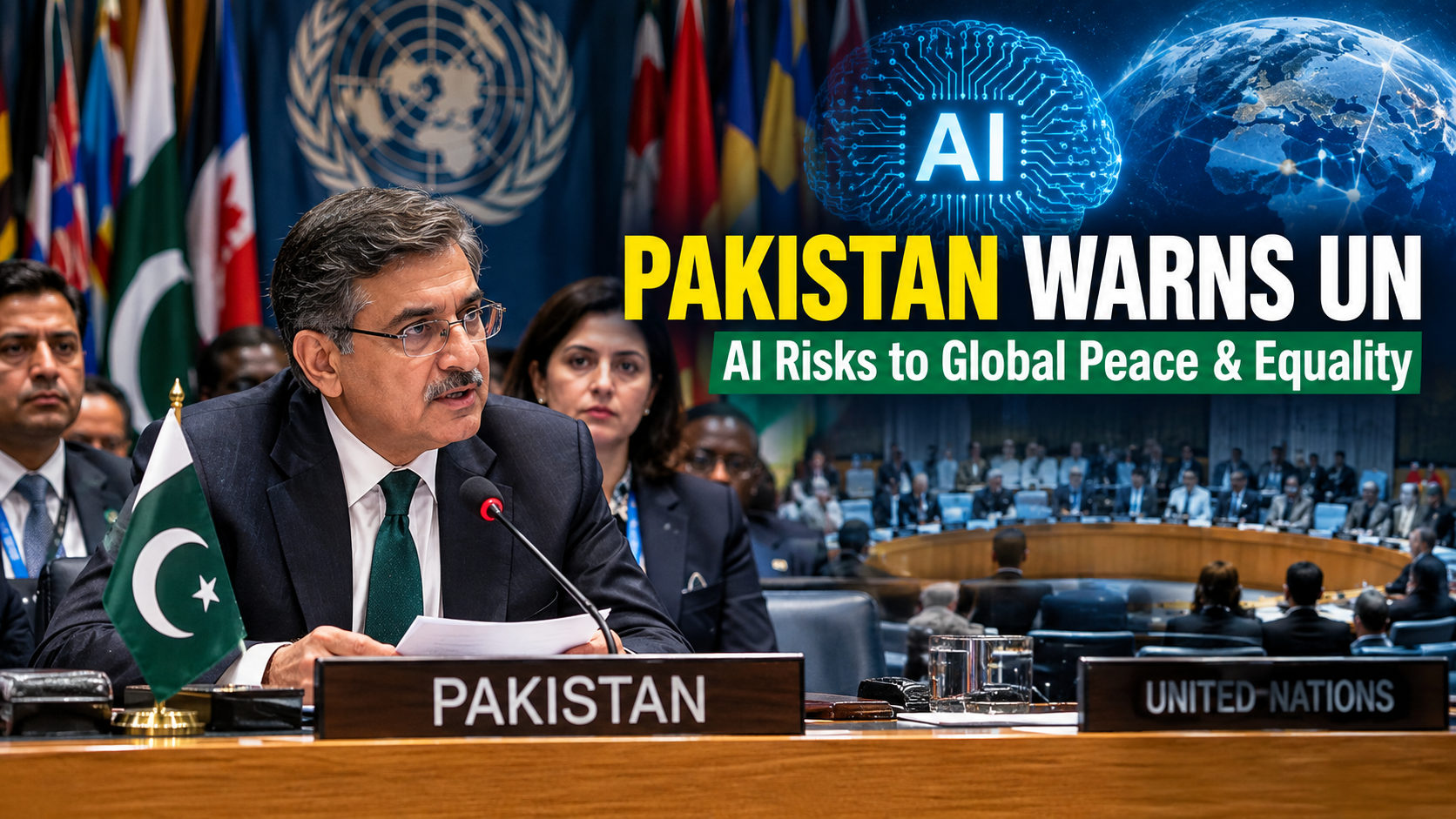
UNITED NATIONS — September 24, 2026: Pakistan has warned the United Nations Security Council that the rapid and insufficiently regulated development of artificial intelligence could deepen global inequality while creating new risks to international peace and security.
Speaking during a Security Council briefing on “Artificial Intelligence and International Security,” Pakistan’s Deputy Prime Minister and Foreign Minister Senator Mohammad Ishaq Dar called for stronger international safeguards, regulatory frameworks and governance mechanisms to address the risks associated with increasingly powerful AI systems.
Dar emphasized that the international community needs coordinated action to establish guardrails around artificial intelligence, particularly as AI technologies become increasingly relevant to military decision-making, information systems and national security.
Pakistan Calls for International Guardrails on Artificial Intelligence
Pakistan’s intervention comes as governments and international institutions increasingly debate how AI should be governed across borders.
Dar stressed the importance of restraint and confidence-building measures in the military domain, particularly because AI-assisted systems could compress decision-making timelines and increase the danger of miscalculation.
The concern is significant because artificial intelligence is no longer confined to civilian applications. AI is increasingly being examined in relation to cyber operations, intelligence analysis, autonomous systems, information warfare and other security-sensitive areas.
The United Nations has also warned that AI can create substantial risks when technological development moves faster than international governance.
The UN’s existing AI framework emphasizes responsible, accountable, transparent and human-centered development, while calling for effective human oversight of AI systems.
Why AI Is Becoming a Security Council Issue
The Security Council has previously considered artificial intelligence as a potential factor affecting international peace and security, but the technology has developed rapidly since those early discussions.
A recent analysis by the independent Security Council Report identified several security implications, including AI’s ability to facilitate malicious cyber activity, accelerate the creation and distribution of misinformation and disinformation, and influence military operations.
The organization also highlighted concerns surrounding increasingly autonomous weapons systems, shortened decision-making timelines and questions about human oversight and accountability.
These concerns help explain why AI has moved beyond being primarily a technology-policy issue and increasingly become a subject of international security diplomacy.
The challenge for governments is that AI can simultaneously create opportunities and risks.
AI could help countries identify emerging conflicts, improve humanitarian operations, monitor ceasefires and analyze large quantities of information. At the same time, poorly governed systems could amplify security threats or make already complex conflicts more difficult to manage.
Pakistan Highlights the Global Inequality Dimension
Pakistan’s message to the Security Council went beyond military applications.
Dar also emphasized the need for AI development to be representative, transparent and inclusive, reflecting concerns among developing countries that the benefits of advanced artificial intelligence could become concentrated among a relatively small group of technologically advanced states and companies.
That concern is already reflected in the United Nations’ Global Digital Compact.
The Compact calls for closing digital divides, expanding access to the benefits of the digital economy and strengthening international governance of artificial intelligence. It specifically calls for full and equal representation of countries, including developing nations, in international AI governance.
This makes AI access and governance part of a broader development question.
Countries with advanced computing infrastructure, large datasets, sophisticated research institutions and substantial private-sector investment are positioned differently from nations that remain dependent on imported technologies and have limited domestic AI capacity.
If that gap widens, AI could potentially reinforce existing economic and technological inequalities rather than reduce them.
UN Framework Already Calls for Inclusive AI Governance
The debate at the Security Council is taking place alongside a broader UN effort to develop international mechanisms for AI governance.
The Global Digital Compact, adopted as part of the Pact for the Future, established a framework for international cooperation on digital technologies and AI.
The United Nations has subsequently established an Independent International Scientific Panel on Artificial Intelligence and a Global Dialogue on AI Governance.
The first annual Global Dialogue took place in Geneva in July 2026, bringing together governments and other stakeholders to discuss international cooperation, AI opportunities and emerging risks.
The UN says the dialogue is intended to ensure that AI governance reflects the priorities of all nations rather than only those with the greatest technological capabilities.
For developing countries such as Pakistan, this process provides an avenue to raise questions about technological access, capacity-building, data governance and participation in international rule-making.
AI and Military Decision-Making Raise Particular Concerns
One of the most sensitive areas in the AI debate is military decision-making.
AI can process enormous volumes of information far faster than humans. That capability could potentially assist military planners and governments, but it also raises questions about what happens when decisions involving force are increasingly influenced by automated systems.
A shorter decision-making cycle can create pressure to respond before human officials have fully evaluated the available information.
That is why Pakistan’s emphasis on restraint and confidence-building is significant in the context of international security.
The broader UN position has also stressed the importance of retaining meaningful human control over decisions involving the use of force.
The central issue is not simply whether AI should be used in security applications, but how governments can establish accountability when AI-assisted systems contribute to consequential decisions.
Disinformation Adds Another Layer of Risk
AI-generated content presents another challenge for governments and international organizations.
Generative AI can make it easier to create convincing text, images, audio and video at scale. In a conflict environment, such capabilities could complicate efforts to distinguish authentic information from manipulated material.
The UN has identified misinformation and disinformation among the major concerns surrounding artificial intelligence, particularly where manipulated content can affect public trust, human rights or humanitarian operations.
For international institutions, the problem is therefore both technological and political: governments must develop mechanisms capable of addressing harmful AI-generated content without undermining legitimate expression or access to information.
Global AI Governance Is Becoming More Urgent
The current Security Council discussion reflects a larger international shift.
AI governance is no longer being discussed solely in terms of innovation, investment and economic competitiveness. Governments are increasingly considering questions involving national security, international stability, human rights, development and inequality.
The United States and China, for example, continue to compete technologically while also discussing mechanisms for AI safety and communication.
Meanwhile, the UN is developing a more inclusive multilateral framework intended to give countries a role in shaping international AI governance.
That creates an important distinction between AI development and AI governance.
The first concerns how quickly capabilities advance. The second concerns the rules, safeguards and institutions that determine how those capabilities are developed and deployed.
What Pakistan’s Position Means for Developing Countries
Pakistan’s intervention highlights an issue that is likely to remain central to future AI negotiations: who gets to shape the rules governing artificial intelligence?
Developing countries have an interest not only in managing AI-related risks but also in ensuring access to the technology’s potential benefits.
The UN’s Global Digital Compact recognizes the need for capacity-building, technology cooperation and support for developing countries to access, develop, use and govern AI systems.
That approach is particularly relevant as AI becomes increasingly connected to education, healthcare, agriculture, financial services, public administration and economic productivity.
Without adequate access to computing infrastructure, skills, data and investment, developing countries could find themselves primarily consuming technologies designed elsewhere.
Pakistan’s call for representative and inclusive AI governance therefore places technological development and international security within the same broader conversation.
The Challenge Ahead: Rules That Keep Pace With Technology
The Security Council’s latest discussion illustrates the central difficulty confronting policymakers.
Artificial intelligence is developing faster than many traditional regulatory processes can respond.
International rules must address security risks without unnecessarily blocking beneficial innovation. They must also account for differences between developed and developing countries while maintaining fundamental principles such as human rights, transparency and accountability.
The United Nations’ emerging governance architecture is an attempt to address that challenge through scientific assessment, international dialogue and greater participation by countries around the world.
Pakistan’s intervention adds another voice to that debate, particularly on the consequences of unequal access to AI capabilities and the risks associated with AI-assisted military decision-making.
Conclusion
Pakistan’s warning at the UN Security Council underscores the increasingly international character of the artificial intelligence debate.
The issue is no longer simply how quickly AI can advance. It is also about how the technology is governed, who participates in setting the rules, how military risks are controlled and whether the benefits of AI are distributed broadly enough to avoid deepening existing inequalities.
As AI becomes more deeply integrated into security, economies and public institutions, international cooperation will become an increasingly important part of managing both its opportunities and its risks.
For Pakistan and other developing countries, the emerging global AI governance system will be particularly important because the rules established today could influence access to technology, economic opportunities and participation in future international decision-making for years to come.
Discover more from The Monitor
Subscribe to get the latest posts sent to your email.

Most celebrity business ventures are licensing deals wearing a founder’s costume. The name goes on the label, the cheque clears, and an operating company nobody has heard of does the actual work.
Jennifer Garner’s is not that. On 6 February 2026, she rang the opening bell at the New York Stock Exchange as Once Upon A Farm went public at $18 per share with a valuation of $724 million.
The company she co-founded is now a listed public entity with audited financials, a board seat in her name, and a stock price that has since gone down. That last detail is the most interesting part of the story.
Key Takeaways
- The IPO: Once Upon A Farm listed on the NYSE as OFRM, raising $197.9 million at the midpoint of its marketed range.
- The pop: shares closed day one up about 17%, then traded at $25.10 by 9 February — nearly 40% above the listing price.
- The reality check: the stock was down about 15% for the year by August 2026.
- The business is real: $225 million in annual revenue for the year ending September 2025, up more than 40%.
- Her role is contractual and disclosed: board director, co-founder and spokesperson, with compensation set out in the S-1.
What Once Upon A Farm Actually Is
The company sells organic, cold-pressed refrigerated food for children — pouches, smoothies, applesauce and oat bars — through grocery retail and direct-to-consumer channels.
It was founded by serial entrepreneurs Cassandra Curtis and Ari Raz, with Garner and CEO John Foraker joining as co-founders two years later. Foraker’s background matters to the credibility of the operation: he ran Annie’s Homegrown for more than a decade and served as a president at General Mills.
Note: founding-date reporting varies between 2011 and 2015 depending on the source. Verify before publication.
The Financial Trajectory
| Metric | Figure |
|---|---|
| Annual revenue (yr ending Sept 2025) | $225 million |
| Year-on-year growth | Over 40% |
| CAGR since 2018 | More than 60% |
| IPO valuation | $724 million |
| Capital raised | $197.9 million |
| Shares sold by company | ~7.6 million |
| Shares sold by existing holders | ~3.4 million |
| Lead bookrunners | Goldman Sachs, JPMorgan Chase |
A compound annual growth rate above 60% sustained over seven years is not a celebrity endorsement outcome. It is a consumer packaged goods outcome — and CPG is one of the hardest categories in which to build distribution from scratch.
What Her Actual Job Is
This is where the Once Upon A Farm story diverges most sharply from the celebrity-brand template, because the terms are public.
The S-1 discloses that Garner serves on the public company’s board of directors and continues as co-founder and spokesperson — “Farmer Jen” — a role for which she was paid $1 million in the prior year, with $2 million to $3 million in expected annual compensation through 2028, separate from stock options and an IPO-linked bonus.
She also worked the roadshow directly. Garner described the investor meetings to Forbes as rooms full of existing customers, noting that families already trusted the product.
That is a meaningful distinction for anyone assessing celebrity-backed companies. There is a difference between a founder who licenses a likeness and a founder who sits on the board, pitches institutional investors and has compensation disclosed in a registration statement.
The Mission Structure
Once Upon A Farm is a public benefit corporation — the “PBC” in its legal name — which means its charter permits management to weigh mission alongside shareholder returns.
Garner has framed the IPO itself as a mission decision. Selling to a major food conglomerate would have cost the existing team control of the business; a listing preserved it while raising capital.
The concrete expression of that mission is WIC certification. Getting products approved so low-income families can purchase them through the federal nutrition programme has been a stated priority, and the brand now holds that distinction in more than 20 states. Garner has called it the company’s north star.
It connects to a longer track record — she had been a trustee for Save the Children for several years before joining the company in 2017.
The Risks the Prospectus Discloses
A public listing forces disclosure that private celebrity ventures never face. Three risks stand out.
Tariff and sourcing exposure. The prospectus highlighted risks related to tariffs and trade barriers, particularly against Mexico and South America, from where the company sources a significant portion of its fruit and vegetable ingredients.
Key-person concentration. A brand built substantially on one founder’s public identity carries a risk no diversified CPG company does.
Acquisition framing. Ahead of the listing, Hedgeye analyst Bennett Cheer characterised the company as an acquisition “play” — a view that treats the IPO as a staging post toward a strategic sale rather than a destination.
The Post-IPO Slide, and What It Tells You
The stock’s path is the honest part of this story. Priced at $18, up 17% on day one, close to $25 within a week, then down roughly 15% for the year by August.
Garner’s stated response has been to ignore the daily price and focus on execution — her position being that the stock follows the mission rather than the reverse.
Whether or not one finds that convincing as investor communication, the underlying pattern is common and worth understanding. Consumer IPOs frequently pop on scarcity — the listing was described as a rare food offering that excited investors — and then reprice once the float settles and quarterly results replace the narrative.
For investors, the lesson generalises. A founder’s celebrity generates demand at listing. It does not generate gross margin.
The Broader Commercial Portfolio
Beyond Once Upon A Farm, Garner’s commercial activity follows a consistent pattern: long-term brand relationships rather than one-off endorsements.
She has been the recurring face of Capital One’s advertising campaigns, continuing through 2026. She brokered Once Upon A Farm’s first sports sponsorship in 2024 — a multi-year deal making it Angel City FC’s exclusive children’s snack partner.
She was named to the Forbes 50 Over 50 class of 2026 at age 54, alongside continued acting work.
What This Means for the Global Market in 2027
Coverage of celebrity businesses stops at the launch. Here is what actually determines outcomes.
Public listing is the real test of a celebrity brand. Private valuations are negotiated; public ones are voted on daily. Expect more celebrity-founded consumer companies to attempt listings after this precedent — and expect most to trade below their debut.
Governance disclosure becomes the differentiator. Once Upon A Farm published its founder compensation structure. Investors evaluating the next celebrity IPO should ask for the same and treat its absence as a signal.
Tariff exposure is the underpriced risk in food CPG. Companies sourcing produce from Mexico and South America face input volatility that margin models built in a stable trade environment do not capture.
The PBC structure will be tested. A public benefit corporation’s mission commitments have not yet been stress-tested against a sustained share price decline. Once Upon A Farm may become the case study.
Acquisition remains the likely endgame. If the Hedgeye thesis holds, a strategic buyer eventually acquires the brand. The question for shareholders is whether that happens above or below the $18 listing price.
Frequently Asked Questions
What company did Jennifer Garner found?
Garner is a co-founder and chief brand officer of Once Upon A Farm, an organic children’s food company. She joined in September 2017 alongside CEO John Foraker; the business was originally founded by Cassandra Curtis and Ari Raz.
When did Once Upon A Farm go public?
The company listed on the New York Stock Exchange under the ticker OFRM on 6 February 2026, pricing at $18 per share for a valuation of $724 million and raising $197.9 million.
How much revenue does Once Upon A Farm generate?
The company reported $225 million in annual revenue for the year ending September 2025, representing growth of more than 40% year-on-year and a compound annual growth rate above 60% since 2018.
Is Jennifer Garner paid by Once Upon A Farm?
Yes, and the terms are disclosed. She was paid $1 million in the year before the IPO, with $2 million to $3 million in expected annual compensation through 2028, separate from stock options and an IPO-linked bonus.
Discover more from The Monitor
Subscribe to get the latest posts sent to your email.

The West Wing Legacy: Why the Political Drama Is More Relevant Than Ever

Remembering Kianna Underwood: The Nickelodeon Actress Behind “All That” and “Little Bill”

Min Ah: The Global Impact and Rising Popularity of the K-Drama Star

Pakistan Warns UN Security Council of AI Risks to Global Peace and Equality

Fortress Diplomacy: How China’s Secretive Hongqi N701 Matches America’s Legendary “Beast”

Jennifer Garner’s Latest Projects: Business Ventures Beyond Hollywood

Horror Box Office Economics: ROI, Market Share and the 2026

Inside Pete Hegseth’s Pentagon Speech Requirements: Structural Reforms and Defense Strategy

Remembering Eliana Moreno: The Legacy of NBC LA’s “Eli in the Heli”

Best iPhone 18 Pro Max Cases: Premium Protection for Apple’s 2026 Flagship
Pakistan Warns UN Security Council of AI Risks to Global Peace and Equality

Bloodhound Q50: Remembering the Tragic Loss of Chicago’s Rising Drill Star

2026 Midterms: How Democrats Are Competing in Deep-Red Senate Seats
Remembering Eliana Moreno: The Legacy of NBC LA’s “Eli in the Heli”
Horror Box Office Economics: ROI, Market Share and the 2026

iOS 27 Release Date & Siri AI: The Ultimate Tech News Guide for iPhone 18 Users

North American Tariff Standoff 2026: Supply Chain Guide

Club América’s Financial Playbook: The Economics and Valuation of Latin American Football
-

 Featured5 years ago
The Right-Wing Politics in United States & The Capitol Hill Mayhem
-

 News5 years ago
Prioritizing health & education most effective way to improve socio-economic status: President
-

 China5 years ago
Coronavirus Pandemic and Global Response
-

 Canada5 years ago
Socio-Economic Implications of Canadian Border Closure With U.S
-

 Democracy5 years ago
Missing You! SPSC
-

 Conflict5 years ago
Kashmir Lockdown, UNGA & Thereafter
-
Democracy5 years ago
President Dr Arif Alvi Confers Civil Awards on Independence Day
-

 Digital6 years ago
Pakistan Moves Closer to Train One Million Youth with Digital Skills