
Opinion
The Hormuz Crisis: How US-Iran War Is Reshaping Gulf Geopolitics and Global Energy Security

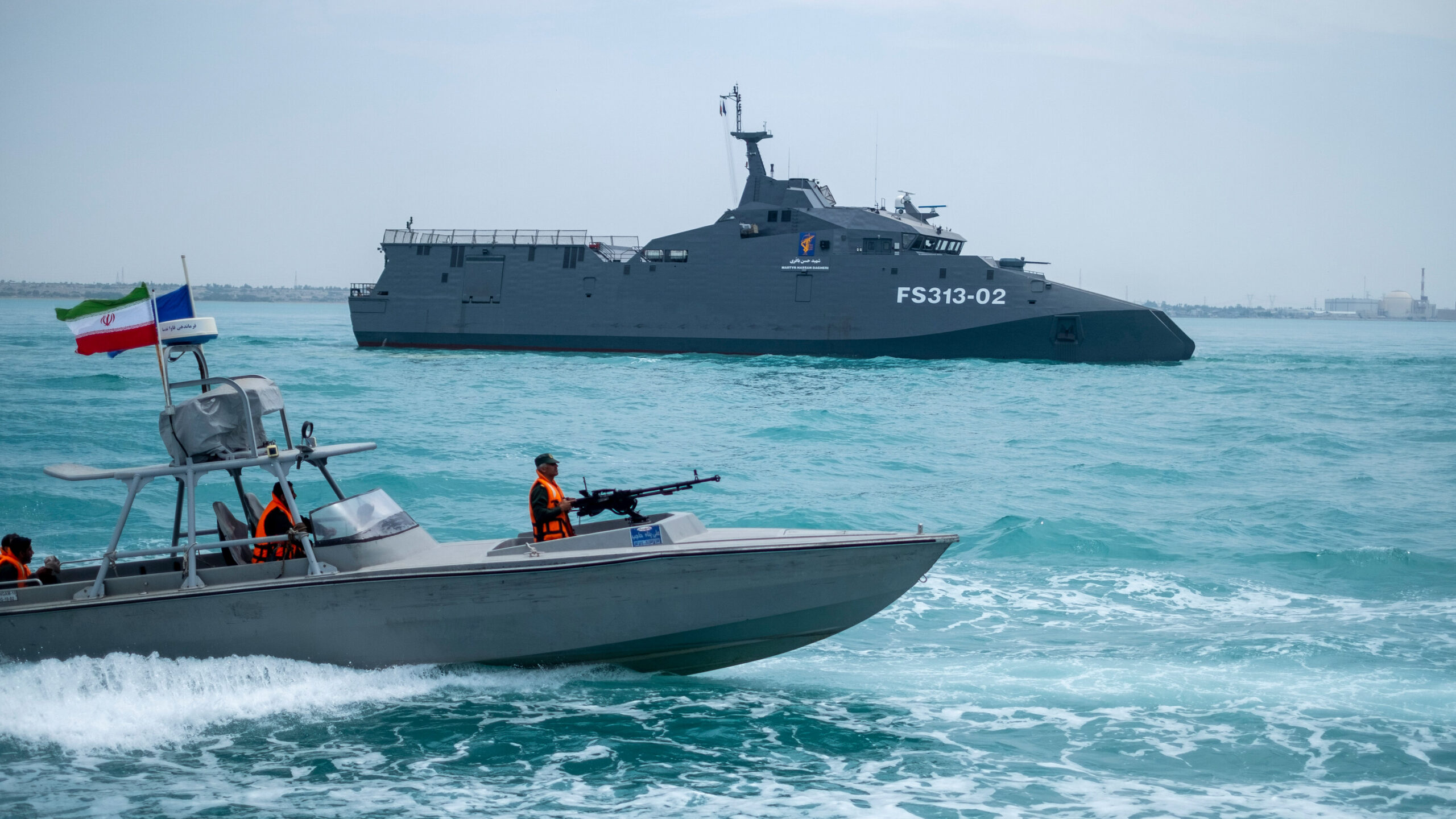
Table of Contents
Key Takeaways
- Strait of Hormuz is effectively closed to commercial shipping after insurance markets withdrew coverage, threatening 20% of global oil supply and 19% of LNG exports
- Gulf monarchies face an existential dilemma: maintaining US security partnerships while protecting economic interests tied to Asian markets
- Oil prices have surged 26% since February 28, with Brent crude trading at $91/barrel—every $10 increase costs global economy $1 trillion annually
- UAE’s air defense systems have achieved 94% interception rates, but cost-exchange ratios favor Iran ($10K drones vs. $3M interceptors)
- Asian importers (China, India, Japan, South Korea) face the greatest supply risk, importing 12.5 million barrels daily through the Strait
The Anchor Chain
Captain Rashid Al-Mansouri stared at the radar screen in the bridge of the Maran Andromeda, a 330-meter supertanker carrying two million barrels of crude bound for Shanghai. Forty-seven kilometers off the coast of Fujairah, the vessel had been stationary for six days. The Strait of Hormuz—normally a 21-mile-wide highway through which one-fifth of humanity’s oil passes—had become a de facto no-go zone.
“Insurance voided,” the message from London had read. “War risk exclusion invoked. Proceed at owner’s peril.”
Al-Mansouri was not alone. By the second week of March 2025, more than 150 tankers sat anchored in Gulf waters, their hulls dark against the turquoise sea, their cargo—collectively worth billions—trapped by a conflict that had escalated with shocking speed. The US-Iran war, which began with precision strikes on February 28, had transformed within days from a limited military operation into a regional crisis with profound implications for the Gulf monarchies whose prosperity depends on the very waters now deemed too dangerous to traverse.
The question facing Riyadh, Abu Dhabi, Doha, and their neighbors was excruciating: How do you maintain an alliance with Washington while protecting the economic lifeline that flows through the world’s most volatile chokepoint?
From Proxy War to Direct Confrontation
Understanding the US-Iran Conflict’s Regional Escalation
The path to direct war was paved by years of failed diplomacy. The collapse of the 2015 nuclear agreement, the Trump administration’s 2018 withdrawal, and the Biden administration’s inability to resurrect a diplomatic framework left both sides in a state of managed hostility—until February 28, 2025, when the Trump administration launched a series of precision strikes targeting Iranian nuclear facilities and military command centers.
The initial American operation was designed to be limited. According to analysis from the Council on Foreign Relations, the strikes targeted facilities at Fordow, Natanz, and Isfahan, alongside command nodes of the Islamic Revolutionary Guard Corps (IRGC). The objective, stated US officials, was to degrade Iran’s nuclear capabilities and deter further aggression in the region.
Iran’s response was both predictable and unprecedented in scale. Within 48 hours, ballistic missiles and drones were striking targets across the Gulf—not just American military installations, but the civilian infrastructure of Washington’s Arab partners. The International Institute for Strategic Studies documented strikes against oil facilities in Saudi Arabia, commercial shipping in UAE waters, and military bases in Qatar and Kuwait.
“What we’re witnessing is the transformation of a shadow war into open conflict,” notes Suzanne Maloney, director of the Foreign Policy program at the Brookings Institution. “For decades, Iran operated through proxies—Hezbollah, the Houthis, militias in Iraq. Now the Iranian state is striking directly, and that changes every calculation for Gulf leaders.”
The nuclear dimension adds a particular urgency. According to the Institute for Science and International Security, Iran’s breakout time—the period required to produce sufficient fissile material for a nuclear weapon—had shrunk to mere weeks by early 2025. The US strikes were explicitly framed as preventing Iran from crossing that threshold. But the operation also eliminated whatever diplomatic constraints remained, unleashing Iran’s full conventional arsenal against regional targets.
Historical parallels are instructive. During the 1980s Tanker War, Iran and Iraq attacked commercial shipping in the Gulf, resulting in 546 civilian seamen killed and hundreds of vessels damaged. The US responded with Operation Earnest Will, reflagging Kuwaiti tankers and escorting them through the Strait. But 2025 presents a fundamentally different challenge: Iran’s missile capabilities have advanced dramatically, and the economic integration of the Gulf states—with their tourism hubs, financial centers, and global business models—creates vulnerabilities that did not exist four decades ago.
Gulf Monarchies Face an Existential Dilemma
Saudi Arabia: Vision 2030 Meets Geopolitical Reality
No country embodies the tension between ambition and vulnerability more acutely than Saudi Arabia. Crown Prince Mohammed bin Salman’s Vision 2030 represents the most ambitious economic transformation program in the kingdom’s history—diversifying away from oil dependence toward tourism, technology, and finance. The plan depends on stability, foreign investment, and global confidence.
The US-Iran war threatens all three.
Saudi oil infrastructure remains vulnerable despite significant investments in defense. The 2019 attack on Abqaiq—allegedly launched by Iranian-backed Houthis—temporarily halved the kingdom’s production and exposed the limits of its air defense network. Today, with Iran striking directly, the threat is orders of magnitude greater.
“Saudi Arabia finds itself in a nearly impossible position,” writes Karen Young at the Washington Institute for Near East Policy. “The kingdom depends on US security guarantees, but those guarantees now come with the cost of being drawn into a conflict that threatens its economic future. The question in Riyadh is whether the US is a reliable partner or a liability.”
The kingdom’s spare oil capacity—approximately 3.5 million barrels per day—represents a critical buffer for global markets. But that capacity is only valuable if it can reach market. With the Strait of Hormuz effectively closed, Saudi Arabia’s ability to influence oil prices through production adjustments is severely constrained. The Financial Times reported that Saudi officials have privately expressed frustration with Washington’s failure to consult before the February strikes, viewing the operation as a unilateral American decision that imposed costs on Gulf partners without their consent.
UAE: Dubai’s Business Model Under Siege
If Saudi Arabia represents the challenge of protecting oil infrastructure, the United Arab Emirates illustrates the vulnerability of a diversified economy built on global connectivity. Dubai’s transformation into a tourism, finance, and logistics hub depends on its reputation as a safe, stable destination for international business.
That reputation is now in jeopardy.
On March 7, 2025, Iranian missiles struck Dubai’s Jebel Ali port—one of the world’s largest container facilities—and targeted Dubai International Airport, the world’s busiest for international passenger traffic. The UAE’s sophisticated air defense network, which includes THAAD and Patriot batteries acquired from the US, intercepted the majority of incoming threats. According to Reuters, the UAE achieved a 94% interception rate for drones and 92% for ballistic missiles—an impressive technical achievement that nonetheless reveals the scale of the threat.
But interception is not neutralization. The cost-exchange ratio heavily favors Iran. While a Shahed drone costs approximately $10,000-20,000 to produce, the interceptor missiles required to destroy it—PAC-3 MSEs—cost $3-4 million each. As S&P Global Commodity Insights noted, the UAE and Saudi Arabia “can’t sustain such a cost-exchange ratio for long.”
The economic impact extends beyond defense expenditures. Emirates Airlines, Dubai’s flagship carrier, has suspended flights to multiple destinations and faces a collapse in forward bookings. The tourism sector, which contributes 11% of Dubai’s GDP, is experiencing cancellations at levels not seen since the COVID-19 pandemic. Real estate markets—already under pressure from global interest rate increases—face a new wave of uncertainty as expatriates reconsider their presence in the region.
“Dubai’s value proposition is built on being a safe harbor in a turbulent region,” observes a senior executive at a major international bank with operations in the emirate, speaking on condition of anonymity. “If that safety perception is shattered, the entire business model is at risk. You can’t be a global financial center when missiles are landing at your airport.”
Qatar: LNG Dominance Challenged
Qatar occupies a unique position in this crisis. As the world’s third-largest LNG exporter, the emirate supplies approximately 20% of global LNG—much of it to Asian markets through the Strait of Hormuz. Unlike oil, which can be diverted through alternative routes (albeit at higher cost), Qatar’s LNG exports have no practical alternative to Hormuz transit.
The stakes could not be higher. Qatar’s liquefaction capacity—77 million tonnes per annum—represents decades of investment and underpins the emirate’s sovereign wealth and global influence. A sustained closure of Hormuz would not merely inconvenience Qatar; it would threaten the fundamental basis of its economy.
Yet Qatar also hosts the largest American military installation in the Middle East. Al-Udeid Air Base, located southwest of Doha, serves as the forward headquarters for US Central Command and hosts over 10,000 American service members. This presence offers protection—it also makes Qatar a target.
The emirate’s traditional role as a regional mediator has been severely constrained. Qatar’s foreign minister had engaged in back-channel discussions with Iranian officials in the months preceding the conflict, attempting to de-escalate tensions. Those channels are now largely severed, and Qatar’s ability to influence events has diminished.
“Qatar is caught between its security partnership with the US and its economic dependence on LNG exports that must pass through Iranian-contested waters,” notes Trita Parsi of the Quincy Institute for Responsible Statecraft. “There’s no good option here—only degrees of damage limitation.”
Kuwait, Bahrain, and Oman: Varying Exposures
The smaller Gulf states face their own distinct challenges. Kuwait, with significant oil production and proximity to the Iraqi border, worries about spillover from Iranian-backed militias. Bahrain, home to the US Fifth Fleet headquarters, is a symbolic target for Iranian propaganda even if its physical vulnerability is limited. Oman, traditionally the region’s mediator, has seen its diplomatic channels strained by the intensity of the conflict.
Oman’s position is particularly poignant. The sultanate has historically maintained cordial relations with Iran, facilitated secret US-Iran negotiations, and positioned itself as a neutral party in regional disputes. But neutrality becomes untenable when missiles are flying. Oman has quietly increased its security cooperation with the US and UAE while attempting to preserve its diplomatic channels to Tehran—a balancing act that grows more precarious by the day.
Economic Shockwaves: From Oil Markets to Aviation Hubs
Oil Price Volatility and the $90 Threshold
The economic implications of the US-Iran war extend far beyond the Gulf itself. Global oil markets have experienced their most significant disruption since the 2003 Iraq invasion, with prices surging 26% from pre-conflict levels.
Brent crude, the international benchmark, crossed $90 per barrel in early March and has remained volatile, trading between $85-91 depending on headlines from the region. Every $10 increase in oil prices costs the global economy approximately $1 trillion annually, according to Goldman Sachs Research. For oil-importing nations, the impact is immediate and painful: higher fuel costs, increased inflation, reduced consumer spending, and potential recessionary pressures.
The International Energy Agency warned that prolonged disruption could push prices above $100 per barrel, a level that would significantly impact global growth. The agency noted that while strategic petroleum reserves could provide short-term relief, sustained outages would overwhelm buffer stocks.
US consumers are already feeling the effects. Gasoline prices have risen to $3.20 per gallon nationally, with higher prices in coastal states dependent on imported crude. The political implications for the Trump administration are significant: rising fuel costs historically correlate with reduced presidential approval ratings and electoral vulnerability.
The Insurance Market Freeze
Perhaps the most underreported aspect of this crisis is the mechanism by which the Strait of Hormuz has been effectively closed. It is not Iranian naval blockade or American military interdiction, but the withdrawal of commercial insurance coverage that has halted maritime traffic.
War risk insurance, which covers vessels against military action, has seen premiums surge to 1% of vessel value per voyage—up from approximately 0.1% before the conflict. For a supertanker worth $100 million, a single transit now requires $1 million in additional insurance. More critically, many underwriters have simply withdrawn from the market entirely, refusing to cover any vessels entering the Gulf.
The result is a de facto closure that affects not just oil but all maritime commerce. Container ships, bulk carriers, and LNG vessels have all been impacted. The Wilson Center noted that this “insurance-driven closure” may be more durable than military blockades, as it reflects private sector risk assessment rather than government policy that could be reversed through diplomacy.
“The insurance market is sending a clear signal,” says a London-based maritime underwriter who requested anonymity. “The risk of transiting Hormuz is currently unquantifiable. Until there’s clarity on the military situation, most underwriters will remain on the sidelines.”
Aviation and Logistics Disruption
The impact extends to aviation. Dubai International Airport, which handled 87 million passengers in 2024, has seen flight cancellations and rerouting as airlines avoid Iranian airspace. Emirates, Etihad, and Qatar Airways—all major global carriers—have suspended routes and face significant revenue losses.
The logistics sector is similarly affected. Jebel Ali, the region’s largest container port, has experienced a 40% decline in throughput as shipping lines divert vessels to alternative routes. The cost of shipping from Asia to Europe has increased 35% as vessels are forced to circumnavigate the Arabian Peninsula rather than transship through Dubai.
For businesses operating in the Gulf, the disruption is immediate and costly. Supply chains are being reconfigured, inventories are being built up, and contingency plans are being activated. The question is no longer whether to prepare for disruption, but how long the disruption will last.
Gulf Defense Cooperation Tested by Iranian Missile Barrage
Integrated Air and Missile Defense Performance
The military dimension of this crisis has tested the Gulf states’ defense capabilities in ways that exercises and simulations never could. The integrated air and missile defense architecture developed over two decades of cooperation with the US has performed well—but not perfectly.
The UAE’s achievement of 94% interception rates for drones and 92% for ballistic missiles represents a technical success. Saudi Arabia’s performance has been similar, though less publicly documented. The Patriot, THAAD, and Aegis systems deployed across the region have demonstrated their effectiveness against the threats they were designed to counter.
But the cost-exchange problem is acute. Iran’s drone and missile arsenal, while less sophisticated than American systems, is vastly cheaper to produce and deploy. The Shahed-136 drones used in attacks cost an estimated $10,000-20,000 each. The PAC-3 MSE interceptors used to destroy them cost $3-4 million apiece. Even with high interception rates, the economic calculus favors Iran.
“The Gulf states are winning the tactical battle but losing the strategic war of attrition,” argues a defense analyst at the RAND Corporation. “Iran can sustain this level of attack indefinitely at current costs. The UAE and Saudi Arabia cannot sustain this level of defense expenditure indefinitely. Something has to give.”
Munition Supply Sustainability
Compounding the cost problem is the question of supply. American munition production capacity, while substantial, is not infinite. The US has supplied significant quantities of interceptors to Gulf partners, but there are limits to how quickly production can be ramped up. Lead times for PAC-3 missiles are currently 18-24 months, meaning that interceptors used today cannot be quickly replaced.
The Institute for the Study of War noted in a recent assessment that “Gulf states’ air defense inventories are being depleted at rates that raise questions about sustainability beyond a 90-day conflict.” If the war continues at current intensity, the region may face a critical shortage of interceptors by mid-2025.
GCC Unity vs. National Interests
The crisis has also exposed tensions within the Gulf Cooperation Council. While the UAE and Saudi Arabia have borne the brunt of Iranian attacks, other members—notably Qatar and Oman—have pursued more nuanced positions, attempting to preserve diplomatic channels and avoid direct confrontation.
This divergence reflects differing threat assessments and economic interests. For Qatar, with its US base and LNG exports, overt antagonism toward Iran carries significant risks. For Oman, neutrality has been a core principle of foreign policy for decades. But the pressure to align with Saudi and Emirati positions is growing, and the long-term cohesion of the GCC is being tested.
The US security guarantee, long the foundation of Gulf stability, is also being questioned. The Trump administration’s decision to launch strikes without extensive consultation with regional partners has reinforced concerns about American reliability. Gulf officials, speaking privately to the Financial Times, expressed frustration that Washington acted unilaterally, imposing costs on regional partners without their consent.
“The fundamental question is whether the US is committed to Gulf security or merely pursuing its own interests,” notes Bilal Saab of the Washington Institute. “The answer to that question will shape Gulf foreign policy for a generation.”
Beyond the Gulf: Global Energy Security at Risk
Asian Importers’ Vulnerability
While the Gulf states face the most immediate threats, the global implications of this crisis extend far beyond the region. Asian economies, which import the vast majority of Gulf oil and gas, are particularly vulnerable.
China, the world’s largest oil importer, receives approximately 4.5 million barrels per day through the Strait of Hormuz—roughly 45% of its total imports. A sustained closure would force Beijing to draw down strategic reserves and seek alternative suppliers, primarily Russia and West Africa. The economic impact would be significant: a $10 increase in oil prices costs China an estimated $50 billion annually.
India, the third-largest importer, receives 2.8 million barrels daily through Hormuz. The Indian government has already activated contingency plans, including strategic reserve releases and diplomatic outreach to alternative suppliers. But India’s refining capacity, much of which is configured for Middle Eastern crude, cannot easily switch to other sources.
Japan and South Korea, both highly dependent on imported energy, face similar challenges. Japan’s strategic petroleum reserves, while substantial, would last only 90 days in a total cutoff scenario. South Korea’s energy-intensive manufacturing sector—semiconductors, automobiles, petrochemicals—would face immediate cost pressures.
The Atlantic Council noted that “the concentration of Asian industrial capacity in countries dependent on Hormuz transit creates systemic risk for the global economy. A sustained closure would not merely raise oil prices; it would disrupt global supply chains and potentially trigger recession.”
European Gas Market Spillover
Europe, while less directly dependent on Gulf oil, is not immune to the crisis’s effects. LNG markets are globally integrated, and any disruption to Qatari exports would tighten supply and raise prices worldwide.
European LNG import capacity has expanded significantly since the 2022 Ukraine crisis, but the region remains price-sensitive. A sustained outage of Qatari supply could push European gas prices back to 2022 levels—€100+ per MWh—with devastating implications for industrial competitiveness and household energy bills.
The crisis has also complicated European efforts to reduce dependence on Russian gas. With Qatari supply uncertain, some European utilities have increased purchases of Russian LNG, undermining sanctions and creating political controversy.
Russia’s Opportunistic Positioning
Russia has been the primary beneficiary of the crisis. As a major oil and gas exporter with no dependence on Hormuz transit, Moscow has gained leverage in global energy markets and increased revenues from higher prices.
Russian crude, which traded at a discount before the conflict, now commands premium prices as buyers seek alternatives to Gulf supply. Moscow has also positioned itself as a diplomatic mediator, offering to facilitate negotiations between Washington and Tehran—a role that enhances its international standing despite its ongoing aggression in Ukraine.
“Russia is playing a double game,” observes Angela Stent of the Brookings Institution. “It benefits economically from higher oil prices and diplomatically from the US being tied down in the Middle East. Putin couldn’t have scripted this better.”
What Happens Next? Three Scenarios for Gulf Stability
Scenario One: Rapid De-escalation (30% Probability)
In this scenario, back-channel negotiations—facilitated by Oman, Qatar, or European intermediaries—produce a ceasefire agreement within weeks. Iran agrees to halt missile attacks on Gulf targets in exchange for US commitments to limit future strikes. The Strait of Hormuz reopens to commercial shipping as insurance markets restore coverage.
This outcome depends on several factors: Iranian willingness to negotiate from a position of relative strength, American recognition that limited objectives have been achieved, and Gulf states’ ability to facilitate dialogue without appearing to undermine their US partnerships.
If this scenario materializes, oil prices would likely retreat to $75-80 per barrel, and Gulf economies would experience a rapid recovery. The long-term damage would be limited, though trust in American reliability would remain diminished.
Scenario Two: Protracted Conflict (50% Probability)
This scenario—considered most likely by analysts—involves sustained low-intensity warfare without resolution. Iran continues periodic missile and drone attacks on Gulf targets. The US maintains pressure through airstrikes and sanctions. The Strait of Hormuz remains effectively closed to commercial shipping, with only military vessels and sanctioned Iranian tankers transiting.
In this environment, Gulf states would face prolonged economic pressure. Tourism and business travel would remain depressed. Oil revenues would be constrained by limited export capacity. Defense expenditures would consume an increasing share of government budgets.
The key variable is duration. A three-month conflict would be damaging but manageable. A year-long conflict would force fundamental economic adjustments, potentially accelerating diversification efforts but also creating social and political pressures.
Scenario Three: Regional Escalation (20% Probability)
In the most dangerous scenario, the conflict expands beyond its current parameters. Iranian attacks cause significant casualties in Gulf states, triggering direct military involvement by Saudi or Emirati forces. Israeli strikes on Iranian nuclear facilities add another dimension. The conflict becomes a regional war with multiple state actors.
This scenario would have catastrophic economic implications. Oil prices could spike above $150 per barrel, triggering global recession. Gulf economies would face existential threats, with potential for capital flight, expatriate exodus, and political instability.
The probability of this scenario depends on Iranian escalation decisions, American willingness to expand operations, and Gulf leaders’ tolerance for continued attacks on their territory. Current trends suggest that all parties have incentives to avoid this outcome—but accidents, miscalculations, and domestic political pressures could push events in dangerous directions.
The Gulf’s Uncertain Future
The US-Iran war has exposed a fundamental tension in the Gulf states’ strategic position. For decades, they have pursued a dual objective: maintaining security partnerships with Washington while building economic relationships with Asia. The assumption was that these objectives were compatible—that American security guarantees would enable Gulf prosperity regardless of regional tensions.
That assumption is now being tested. The February 28 strikes, launched without extensive regional consultation, demonstrated that Washington pursues its own interests—preventing Iranian nuclearization, responding to attacks on American forces—regardless of the costs imposed on partners. The Iranian response, targeting Gulf civilian infrastructure, showed that proximity to the US carries immediate risks.
For Gulf leaders, the path forward is unclear. Diversifying security partnerships—expanding ties with China, Russia, or European powers—offers theoretical benefits but no immediate alternatives to American military capabilities. Accelerating economic diversification reduces oil dependence but cannot eliminate it within relevant timeframes. Building domestic defense industries addresses sustainability concerns but requires decades of investment.
What is clear is that the pre-February status quo cannot be restored. The Gulf states must navigate a new reality in which American security guarantees are less reliable, Iranian threats are more direct, and their own economic models are more vulnerable than previously acknowledged.
The tankers anchored off Fujairah are a symbol of this new reality. Their cargo—millions of barrels of crude that cannot reach market—represents not just an economic loss but a strategic vulnerability that Gulf leaders can no longer ignore. The Strait of Hormuz, once a source of geopolitical leverage, has become a chokepoint that threatens to strangle the very prosperity it once enabled.
As Captain Al-Mansouri watches the sun set over the anchored fleet, he knows that his fate—and the fate of millions in the Gulf—depends on decisions made in Washington and Tehran over which he has no control. It is a humbling realization, and one that Gulf leaders share. For all their wealth, ambition, and modernization, they remain vulnerable to the geopolitical currents that swirl around them—currents that have now become a storm.
Discover more from The Monitor
Subscribe to get the latest posts sent to your email.



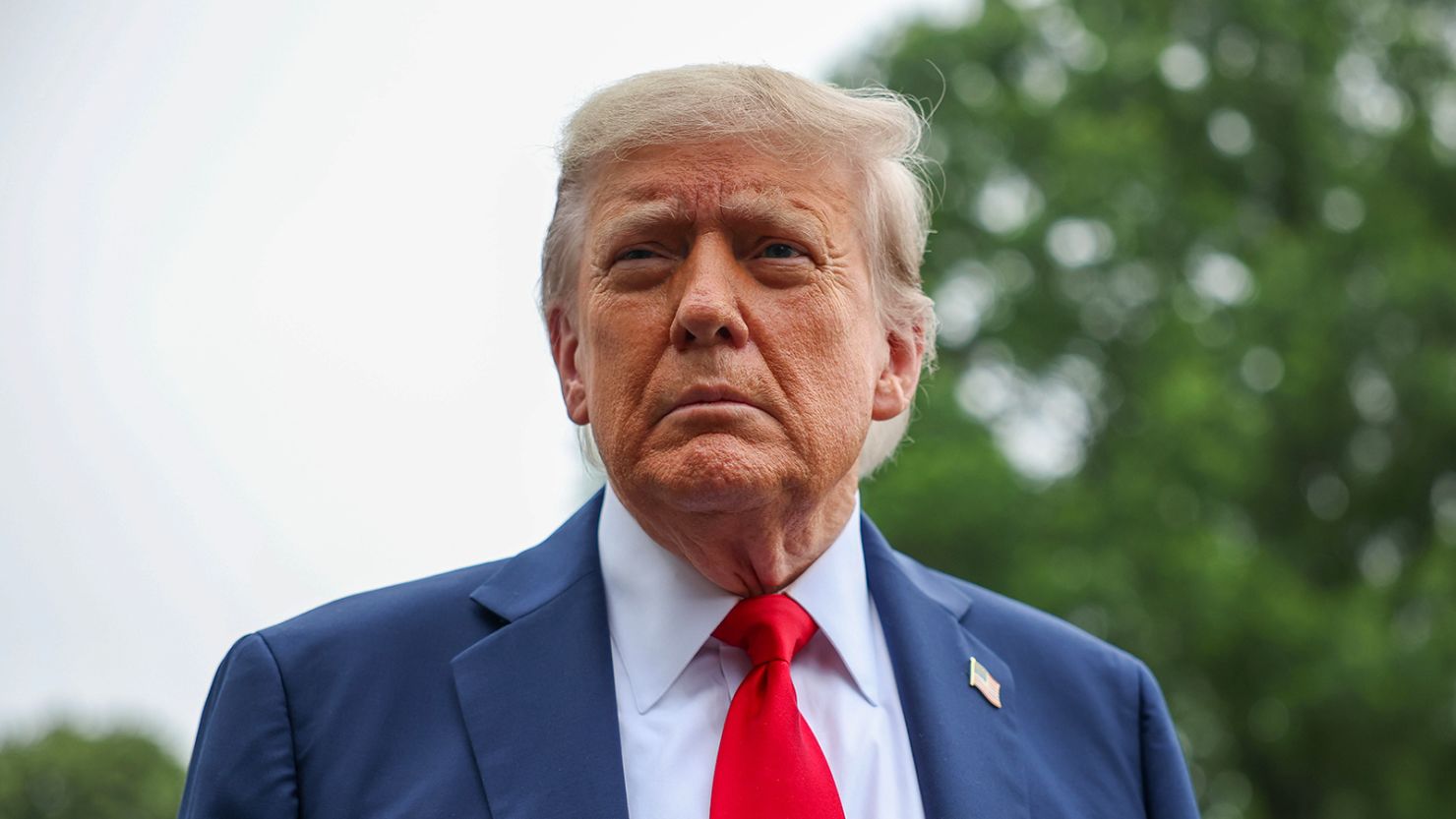
President Trump extended the Iran strike deadline to April 6 after Wall Street suffered its worst day since the conflict began. S&P 500 dropped 1.7%, Nasdaq entered correction, and 10-year Treasury yields spiked to 4.41% on fresh inflation fears. Full market analysis inside.
It was, by any measure, a signal moment—not in the Persian Gulf, where Iranian patrol boats continue to shadow tankers through the world’s most consequential maritime choke point, but on the floor of the New York Stock Exchange, where traders watched their screens with the kind of grim resignation usually reserved for hurricane landfalls.
At 4:00 p.m. Eastern time on Thursday, the numbers were final. The S&P 500 had fallen 1.7 percent, its worst single-day decline since January. The Nasdaq Composite had plunged 2.4 percent, pushing it more than 10 percent below its record high—a correction, in the clinical language of Wall Street, but in human terms something closer to a collective gut punch. The Dow Jones Industrial Average shed 469 points (Reuters).
Then, eleven minutes after the closing bell, President Donald Trump posted on Truth Social: Iran had asked for more time, and he was giving it. Ten more days. The new deadline for a deal to reopen the Strait of Hormuz—or face the destruction of Iran’s energy infrastructure—is now April 6 at 8:00 p.m. Eastern (Bloomberg).
“As per Iranian Government request,” Trump wrote, “please let this statement serve to represent that I am pausing the period of Energy Plant destruction by 10 Days” (Truth Social via Reuters). Talks, he insisted, were “going very well.”
The market, it seems, is not so sure.
What unfolded on Thursday was not merely a routine sell-off in response to geopolitical noise. It was something more revealing: a moment when investors, who had spent weeks parsing contradictory signals from Washington and Tehran, collectively concluded that the cost of uncertainty had become too high to carry. The extension that Trump framed as progress read to many on Wall Street as what it actually was—a punt, born of market panic, dressed up as diplomatic leverage.
Table of Contents
Why Wall Street Crashed: Inflation Fears Meet Iran Deadline Extension
To understand the carnage, one must go back to Saturday, when Trump first gave Iran 48 hours to reopen the Strait of Hormuz. The threat was existential for global energy markets: roughly 20 percent of the world’s oil passes through that narrow waterway, and Iran had effectively closed it since the U.S.-Israel bombing campaign began on February 28 (The Wall Street Journal).
By Monday, the president had already blinked once, extending the deadline to March 27 after Asian markets showed signs of distress. By Thursday, with U.S. stocks in freefall and the 10-year Treasury yield spiking to 4.41 percent—up eight basis points in a single session—he blinked again (Financial Times).
The numbers from Thursday’s session tell a story of broad-based capitulation. The Nasdaq’s 2.4 percent drop pushed it into correction territory, with technology giants taking the heaviest hits: Meta Platforms fell 7 percent, Nvidia slid 4 percent, and Alphabet dropped 3.4 percent (CNBC). The selling was indiscriminate, spanning sectors and market caps, a sign that the concern was systemic rather than sector-specific.
What spooked investors most was not the fighting itself—though that certainly didn’t help—but the collision of geopolitical escalation with stubborn inflation dynamics. Brent crude settled at $108.01 a barrel on Thursday, a 5.7 percent jump that brought its gain since the war began to nearly 50 percent (Bloomberg). West Texas Intermediate climbed 4.6 percent to $94.48.
For a market already skittish about the Federal Reserve’s next move, those oil prices are radioactive. The OECD warned Thursday that the Middle East crisis would push U.S. inflation to 4.2 percent this year, the highest among G7 nations (Reuters). That prospect effectively extinguishes any remaining hope for interest rate cuts in 2026—and raises the uncomfortable possibility that the Fed may have to resume hiking.
Treasury Yields Spike as Oil Volatility Returns
The bond market delivered its own verdict on Thursday, and it was brutal. The two-year Treasury yield, which is exquisitely sensitive to Fed policy expectations, jumped 10 basis points to 3.99 percent (Bloomberg). The 10-year yield touched 4.43 percent intraday before settling at 4.41 percent—a level not seen since the early weeks of the conflict.
What makes this yield spike particularly unsettling is what it signals about market psychology. Typically, geopolitical crises drive investors into the safety of U.S. government debt, pushing yields down. The fact that yields are rising instead suggests that inflation fears are overwhelming the traditional flight-to-quality impulse. Investors are not betting on Fed rescue; they are betting on Fed restraint, perhaps indefinitely.
“The market isn’t being erratic,” Steven Grey, chief investment officer at Grey Value Management, told the Financial Times. “This is what an efficient market looks like in the face of radical uncertainty” (Financial Times).
The radical uncertainty Grey refers to is not merely about whether the U.S. and Iran will reach a deal by April 6. It is about whether any deal is even possible, given the maximalist positions both sides have staked out.
Geopolitical Chess: What Trump’s 10-Day Pause Really Means for the Strait of Hormuz
For all the White House’s insistence that negotiations are proceeding smoothly, the reality on the ground is considerably messier. Iran’s Foreign Minister Abbas Araqchi made clear Wednesday that Tehran does not consider the message-swapping conducted through Pakistani intermediaries to constitute negotiation.
“Messages being conveyed through our friendly countries and us responding by stating our positions or issuing the necessary warnings is not called negotiation or dialogue,” Araqchi said (Reuters). “At present, our policy is to continue resistance and defend the country, and we have no intention of negotiating.”
The U.S. proposal delivered through Pakistan reportedly runs to 15 points and includes demands that Iran dismantle its nuclear program, curb its missile capabilities, and effectively cede control of the Strait of Hormuz (The Wall Street Journal). Iran’s counterproposal, according to regional sources, includes formal control of the strait, reparations from the U.S. and Israel, and guarantees against future military action (Al Jazeera).
These are not the positions of two sides approaching compromise. They are the positions of two sides preparing for a longer conflict, with diplomats working the back channels largely to manage escalation rather than to end it.
That assessment is reinforced by the military posture of the United States. Even as Trump extends diplomatic deadlines, the Pentagon is moving more troops into the region. Some 5,000 Marines are already being repositioned, and now an additional 1,000 soldiers from the 82nd Airborne Division are preparing to deploy, with reports suggesting the total could reach 10,000 (Associated Press).
The message to Tehran is contradictory: we want to talk, but we are also preparing to seize Kharg Island, Iran’s primary oil export terminal. Whether that contradiction reflects strategic coherence or improvisation is a question that markets are increasingly answering in the negative.
The “Toll Booth” and the Global Economy
Iran’s strategy in the strait has become clearer over the past week. Tehran is not merely blocking oil shipments; it is attempting to establish what one analyst described as a “toll booth” for tankers passing through Hormuz (Foreign Policy). Iranian patrol boats are stopping vessels, demanding fees, and allowing some to pass while detaining others.
Trump noted Thursday that Iran had allowed 10 Pakistan-flagged tankers through the strait, presenting this as evidence of progress (Reuters). But the selective passage is itself a form of control—a demonstration that Iran, not the United States, decides which ships move and which do not.
The economic impact of this arrangement is already visible. Global shipping insurance rates have spiked. Tanker operators are demanding premiums that reflect not just the risk of attack but the risk of arbitrary detention. And while Treasury Secretary Scott Bessent announced a U.S. insurance program to encourage shipping through the strait, it remains unclear whether private operators will accept coverage from a government that cannot guarantee safe passage (Bloomberg).
For the global economy, the stakes are enormous. Before the war, approximately 20 million barrels of oil passed through Hormuz daily—roughly 20 percent of world consumption. That flow has been reduced to a trickle, and the impact is being felt at gasoline pumps from Mumbai to Milan (International Energy Agency). In the United States, the national average price of gas is up more than a dollar from a month ago (AAA).
Economist’s View: Long-Term Market Risks Beyond April 6
For investors trying to position themselves for the weeks ahead, the key variable is not whether Trump extends the deadline again on April 6—though that remains a distinct possibility—but whether the underlying structural risks of the conflict are being priced correctly.
On that front, the market may still be underestimating the danger.
“Any sustainable market recovery will require meaningful progress toward a peace agreement and a reopening of the Strait of Hormuz,” Adam Turnquist at LPL Financial told Bloomberg (Bloomberg). That is the baseline condition. Without it, oil prices remain elevated, inflation expectations stay anchored higher, and the Fed remains locked in a hawkish stance.
Yet the conditions for a genuine peace agreement appear distant. Iran has hardened its position since the war began, demanding guarantees it would never have asked for before February 28. The United States, for its part, has committed to a posture of maximum pressure that leaves little room for the kind of face-saving compromises that typically end conflicts.
There is also the matter of trust—or the complete absence of it. The U.S. and Israel launched their initial strikes on February 28 in the middle of what were described as productive talks (The New York Times). Iran’s negotiators, to put it mildly, remember this.
“The current situation looks very similar, with markets positioning for a potential weekend escalation,” Kyle Rodda at Capital.com wrote in a note this week (Capital.com). That is the new normal: investors bracing for military action every Friday, only to recalibrate on Sunday night based on what actually happened.
Conclusion: A Market That Knows the Difference Between Postponement and Resolution
There is an old maxim on Wall Street that markets can climb walls of worry but cannot abide uncertainty. What the past week has demonstrated is that the Trump administration’s approach to the Iran crisis has created a wall of uncertainty so high and so opaque that even the most risk-tolerant investors are pulling back.
The 10-day extension to April 6 buys time, but it does not buy resolution. It allows the White House to avoid a market crisis in the immediate term while leaving every underlying problem—the closure of the strait, the inflationary pressure from high oil prices, the absence of a diplomatic framework—completely unresolved.
For the elite investors and policymakers who read this publication, the takeaway is not complicated. The Trump administration has shown that it will blink when markets demand it. That is a useful signal about the boundaries of policy, but it is not a solution. Until the Strait of Hormuz is genuinely reopened—not selectively, not conditionally, but fully—the risks to global markets remain asymmetrically tilted to the downside.
April 6 will come quickly. Whether it brings a breakthrough or merely another extension is anyone’s guess. But one thing is clear: the market is no longer waiting to find out. It is already pricing in the worst, and hoping, against evidence, to be proven wrong.
Discover more from The Monitor
Subscribe to get the latest posts sent to your email.
Analysis
Indonesia’s Danantara Shifts to Investment Phase, Targets 7% Returns — Sovereign Wealth Fund Enters Deployment Era Under Prabowo’s Ambitious Vision
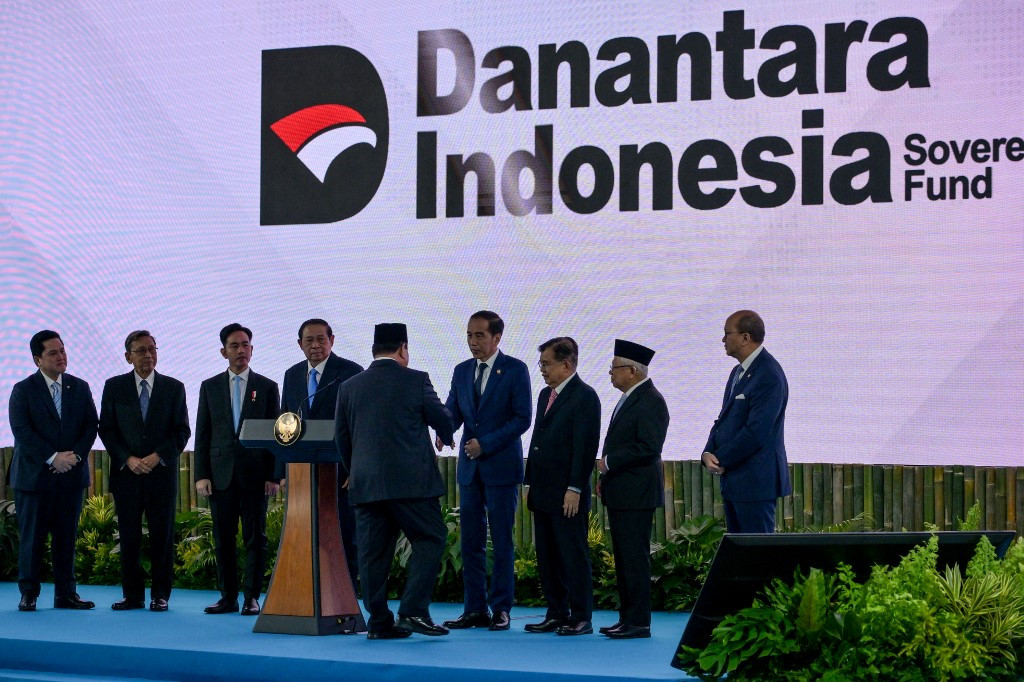
The morning light over Jakarta’s financial district has a way of making ambition look achievable. In the gleaming corridors of the Danantara Indonesia headquarters — a building that barely existed eighteen months ago — a quiet but consequential shift is underway. The sovereign wealth fund that President Prabowo Subianto unveiled with enormous fanfare in February 2025 has spent its inaugural year doing something unglamorous but essential: building the institutional scaffolding that separates a serious fund from a political showpiece. Now, as Indonesia’s Danantara sovereign wealth fund enters its investment phase in 2026, the real examination begins.
At the World Economic Forum in Davos in January, Chief Investment Officer Pandu Patria Sjahrir declared that Danantara’s target for investment fund placements in 2026 is set at $14 billion — nearly double the $8 billion allocated across all of 2025. Kompas The capital acceleration is not simply a number; it is a declaration of intent. The governance year is over. The deployment year has arrived.
Table of Contents
Year One: The Governance Foundation Nobody Talks About
Before you can deploy capital at scale, you need systems that can be trusted with it. That is the unglamorous lesson Danantara absorbed in 2025. Chief executive Rosan Roeslani acknowledged that a primary achievement of the first year was breaking down the siloed operations that had long plagued Indonesia’s state-owned enterprises, promoting greater transparency and internal value creation. Jakarta Globe
BCA Chief Economist David Sumual confirmed the picture candidly: Danantara’s main focus in 2025 was internal consolidation — restructuring efforts, organizational improvements, and recruitment of human resources — with no major projects having fully materialized by year’s end despite SOE dividends being reallocated to the fund. Indonesia Business Post
That candour from a senior domestic economist is actually a constructive signal. Unlike the opaque early years of Abu Dhabi’s IPIC or the dangerously undisclosed operations of Malaysia’s 1MDB before its collapse, Danantara’s leaders are at least publicly acknowledging the gap between aspiration and execution. The first year served as a necessary stress-test of internal architecture. The critical question, now that the architecture is nominally in place, is whether the deployment year delivers the returns its political patron is demanding.
The 7% Return Mandate: Prabowo’s Public Challenge
Few sovereign wealth fund leaders have their performance targets set quite so publicly — or quite so politically — as Pandu Sjahrir now does. President Prabowo Subianto has publicly set a target of 7% return on assets for the fund, a mandate that Sjahrir acknowledged directly, saying Danantara would gladly accept the challenge as it “searches for projects that can give higher returns with the same impact while improving standards.” Jakarta Globe
The 7% ROA hurdle deserves context. Indonesia’s current state-owned enterprise portfolio has historically generated returns on assets hovering near 1.88% — a figure that reflects decades of sub-optimal capital allocation, political interference in pricing decisions, and chronic underinvestment in productivity. Reaching 7% is not an incremental improvement. It represents nearly a fourfold leap in capital efficiency across a portfolio of more than 1,000 SOEs.
To understand whether the target is reachable, consider how the world’s benchmark sovereign funds perform. Singapore’s Temasek Holdings has delivered annualised total shareholder return of approximately 7% in Singapore dollar terms over its 50-year history — but this was achieved with an entirely different governance architecture, strict commercial independence from government policy directives, and a portfolio heavily weighted toward liquid, globally diversified assets. GIC, Singapore’s other sovereign vehicle, targets real returns above 4% over 20-year rolling periods while managing over $770 billion. Abu Dhabi’s Mubadala, a closer model given its hybrid development-investment mandate, has generated returns in the 8–12% range in its best years, but only after a decade of portfolio maturation and institutional discipline-building.
What Danantara needs — quickly — is a portfolio mix that can bridge the gap between its politically derived SOE inheritance and the commercially rational returns its mandate demands.
Shifting to Deployment: Bonds, Equities, and the Capital Market Play
In a presentation at the Indonesia Stock Exchange, Pandu Sjahrir confirmed that Danantara would begin investing SOE dividend capital in both bonds and equities through the capital market starting in 2026, with the explicit additional goal of deepening Indonesia’s relatively shallow domestic capital markets. Kompas
This two-pronged strategy is tactically sound. Fixed-income instruments — particularly Indonesian government bonds (SBN) and SOE-issued corporate bonds — offer predictable yields in the 6–7% range at current rupiah interest rate levels, immediately competitive with the ROA target. The equities component introduces both upside potential and volatility, but also provides the market liquidity and price-discovery function that Indonesia’s IDX has lacked for years.
Economic observer Yanuar Rizky assessed that Danantara’s entry as a major institutional investor could have a positive stabilising effect on Indonesia’s capital markets, provided the fund maintains a clear distinction between commercial portfolio investment and politically motivated market support operations. Kompas That caveat is pointed. If Danantara begins purchasing equities to prop up falling SOE stock prices rather than to generate returns, it will quickly become both a market distortion mechanism and a fiscal liability.
Danantara is also considering taking a shareholder position in the Indonesia Stock Exchange itself through its demutualization process — a move that would simultaneously give the fund a structural role in market governance while diversifying its asset base into financial infrastructure. Kompas
The $14 Billion Deployment Pipeline: Sectors and Scale
The capital earmarked for 2026 will flow primarily from SOE dividends and will target sectors including renewable energy, energy transition, digital infrastructure, healthcare, and food security. Danantara is also evaluating opportunities beyond Indonesia’s borders — specifically in China, India, Japan, South Korea, and Europe — though domestic allocation remains the dominant priority. Asia Asset Management
Six major projects were scheduled for groundbreaking in February 2026 alone, including an aluminum smelter and smelter-grade alumina facility in Mempawah, West Kalimantan; a bioavtur production facility at the Cilacap Refinery in Central Java; a bioethanol plant in Banyuwangi, East Java; and salt factories in Gresik and Sampang designed to supply Indonesia’s chlor-alkali industrial base. Kompas Together, these projects form the visible edge of what Danantara describes as a $7 billion downstream industrialization push — Indonesia’s long-deferred attempt to stop exporting raw nickel, bauxite, and palm oil and start exporting processed value.
The downstream story matters enormously for return-on-assets arithmetic. A nickel laterite operation generates modest margins; a battery cathode facility or EV component manufacturer attached to that same ore base can generate returns in the 12–18% range at commercial scale. That is the logic threading through Danantara’s investment thesis — and it is the same logic that has made Indonesia’s nickel-to-battery downstream push a subject of intense interest among Japanese, South Korean, and European manufacturers watching their supply chains with growing anxiety.
CEO Rosan Roeslani has emphasized that 2026’s strategy is built on risk-managed deployment and long-horizon value creation, with investment screens tightened to ensure capital flows only to projects with clear commercial merit and measurable economic impact. GovMedia
Danantara vs. The World’s Great Sovereign Funds: A Benchmark Comparison
| Fund | AUM (approx.) | 10-Year Return | Independence Model | Primary Focus |
|---|---|---|---|---|
| Norway GPFG | $1.7 trillion | ~8.5% p.a. | Statutory independence | Global equities/bonds |
| Temasek (Singapore) | ~$300 billion | ~7% TSR | Operational independence | Asia equities |
| GIC (Singapore) | ~$770 billion | 4%+ real | Full professional management | Global diversified |
| Mubadala (Abu Dhabi) | ~$300 billion | 8–12% (peak) | Semi-commercial | Strategic/development |
| Khazanah (Malaysia) | ~$35 billion | Mixed | Political proximity | Domestic SOEs |
| Danantara (Indonesia) | ~$900 billion AUM | Target: 7% ROA | Political appointment-led | SOEs + strategic projects |
The table tells a revealing story. Danantara is already one of the largest sovereign vehicles on earth by nominal AUM — but AUM and investable capital are very different things when the underlying portfolio consists largely of SOE assets that are neither liquid nor independently valued. Norway’s Government Pension Fund Global can credibly report 8.5% annualised returns because its portfolio is marked to liquid global market prices daily. Danantara’s SOE assets are carried at book values that may significantly diverge from what arms-length buyers would actually pay.
This is not a fatal flaw — it is a governance design choice with profound implications for how the 7% target gets measured. If Danantara measures ROA against re-valued, market-based asset prices, the benchmark is genuinely demanding. If it measures against legacy book values, the headline number may look better while concealing underlying performance deterioration.
The Broader Economic Stakes: Indonesia’s Path Past the Middle-Income Trap
Danantara does not exist in isolation. It is the financial architecture beneath President Prabowo’s “Golden Indonesia 2045” vision — the aspiration to reach developed-nation status within a generation. The fund was explicitly designed to help accelerate the president’s target of 8% annual GDP growth by his term’s end in 2029, consolidating and streamlining SOE operations to unlock productivity gains that fragmented management had suppressed for decades. Fortune
Indonesia’s GDP per capita, currently around $5,000, needs to triple to reach developed-world thresholds. That requires sustained, compounding productivity improvements across agriculture, manufacturing, energy, and services simultaneously. Danantara — if it functions as designed — could accelerate this by directing capital toward infrastructure gaps, energy transition assets, and downstream industries that private markets have been too cautious or too short-sighted to finance at the required scale.
Prabowo’s pitch to American business leaders in Washington in February 2026 was explicit: all state-owned assets have been consolidated under Danantara to accelerate investment, and the fund will serve as a primary engine of Indonesia’s economic transformation. Jakarta Globe The geopolitical subtext was equally clear — Indonesia is positioning itself as a destination for capital diversifying away from Chinese concentration and seeking access to Southeast Asia’s 280 million-strong consumer middle class.
Pandu Sjahrir, speaking at the South China Morning Post’s China Conference: Southeast Asia 2026 in Jakarta in February, framed the geopolitical dimension directly: “In the new geopolitical world, every country and every leader uses sovereign wealth funds as a geopolitical tool,” while insisting that Danantara must operate for profit rather than politics. South China Morning Post The tension between those two imperatives — geopolitical instrument and commercially disciplined investor — defines Danantara’s central challenge, and is one that even mature funds like Mubadala have never fully resolved.
Risks, Scrutiny, and the 1MDB Shadow
No serious analysis of Danantara can avoid the governance concerns that have trailed the fund from its inception. Following Danantara’s inauguration, the Jakarta Composite Index fell 7.1%, driven by continuous foreign capital outflows of approximately $622.7 million — a market verdict on investor discomfort with the fund’s legal structure and oversight architecture. East Asia Forum
The concerns are structural, not merely perceptual. Indonesia’s national audit bodies — the Financial Audit Board (BPK), the Agency for Financial and Development Supervision (BPKP), and the Corruption Eradication Commission (KPK) — have limited ability to monitor Danantara’s managed assets. Audits can only be conducted upon request from the House of Representatives, creating an oversight model that is reactive rather than systematic. Wikipedia
Critics have pointed out that Danantara’s senior leadership emerged from political negotiation as much as merit selection — CEO Rosan Roeslani served as Prabowo’s campaign chief, while Pandu Sjahrir served as the campaign’s deputy treasurer. East Asia Forum These connections do not automatically disqualify either man — Temasek’s own senior officials maintain government proximity — but they demand an unusually clear demonstration of commercial independence before institutional investors will commit capital with confidence.
Economists have also flagged crowding-out risks: as Danantara absorbs SOE dividends and raises capital through bond instruments, private sector investment appetite may be compressed, particularly if Patriot Bond subscriptions divert capital that listed companies would otherwise have deployed for their own growth. Indonesia Business Post
The Patriot Bond programme itself has attracted commentary that is difficult to ignore. Financial analysts widely viewed the initiative — which raised over Rp50 trillion from Indonesia’s business elite — as carrying the implicit return of political goodwill rather than purely financial reward, describing it as a “loyalty test” for the nation’s conglomerates. Wikipedia These are not conditions under which a world-class sovereign fund typically operates.
Investor Outlook: What Global Capital Should Watch
For international investors, Danantara’s deployment year presents a calibrated opportunity set rather than a binary bet. The fund’s entry into Indonesia’s bond and equity markets will provide liquidity and potentially improve price discovery on SOE-linked assets that have historically been thinly traded. Indonesia’s sovereign bond yields — currently in the 6.8–7.2% range for 10-year instruments — already offer competitive real returns given the country’s current inflation trajectory, and Danantara’s institutional demand will provide additional market support.
The downstream projects represent a longer-dated opportunity. Investors with three-to-five-year horizons who gain exposure to Indonesia’s nickel-to-battery value chain — whether through listed SOEs, joint venture structures, or Danantara-linked project bonds — are positioning for a structural shift in global clean-energy supply chains. The risk is not the economics of the projects themselves; it is the execution timeline and the political discipline to resist using Danantara as a budget-substitute during fiscal pressures.
Danantara’s 2026 Corporate Work Plan, presented to the House of Representatives, emphasised that every investment must be “bankable and truly value-accretive” — a standard borrowed from the private equity lexicon that, if genuinely applied, would represent a meaningful departure from the historically political character of Indonesian SOE capital allocation. Danantara Indonesia
Whether that departure is real or rhetorical will become clear within the next eighteen months. The projects are breaking ground. The bonds are being issued. The capital is beginning to flow. And in a country of 280 million people sitting atop some of the world’s most valuable commodity and consumer market assets, the upside — if governance holds — is not 7%. It is considerably higher.
Prabowo’s fund has set the floor. The ceiling is a function of institutional integrity.
Conclusion: The Deployment Era Begins — And the Scrutiny Deepens
Indonesia’s Danantara sovereign wealth fund enters 2026 at an inflection point that will define its legacy for a generation. The governance infrastructure is nominally in place. The capital pipeline — $14 billion targeted for deployment this year — is the largest in the fund’s short history. The 7% return-on-assets mandate, set publicly by the president himself, is ambitious relative to current SOE performance baselines but achievable if capital is deployed into commercial-grade projects with rigorous discipline.
The fund’s peer group — Temasek, GIC, Mubadala, Norway’s GPFG — took years, sometimes decades, to earn the institutional credibility that translates into sustained performance. Danantara does not have that luxury of time. Indonesia’s growth aspirations are set on a compressed timeline, and the political expectations attached to this fund are enormous.
What sophisticated investors should watch: the actual returns posted in Danantara’s first audited annual report; the independence and credibility of whichever oversight mechanism emerges; the performance of the six downstream projects currently breaking ground; and whether the fund’s capital market activities in bonds and equities reflect commercial logic or political stabilization.
The fund carrying the weight of Indonesia’s Golden 2045 vision is now, at last, actively deploying. The test of whether Danantara becomes Southeast Asia’s defining sovereign fund — or its most cautionary tale — begins today.
Discover more from The Monitor
Subscribe to get the latest posts sent to your email.

There are two narratives battling for the soul of the creative economy. In one, Silicon Valley venture capitalists cast themselves as the heirs of Prometheus, bringing the fire of generative AI to a backward creative class clinging to outmoded business models. In the other, artists and authors watch their life’s work being fed into a digital maw to produce competition that is “priced at the marginal cost of zero,” as the US Copyright Office recently put it .
For years, the tech lobby has successfully peddled the first narrative, framing copyright law as a dusty relic of the Gutenberg era that must be swept aside so progress can march on. But March 2026 has provided a reality check. Last week, the UK government—facing a blistering campaign from the creative industries and a damning report from the House of Lords—was forced to delay its plans for AI copyright reform, kicking a decision into 2027 . Simultaneously, in a Munich courtroom, the music rights society GEMA began its pivotal case against the AI music generator Suno, while awaiting a ruling on its related victory against OpenAI from last November .
These are not signs of a legal system that is broken or unfit for purpose. They are signs of a legal system that is working—and that the tech industry would prefer to dismantle. The core thesis emerging from the courts, parliaments, and collecting societies of the Western world is this: AI is dressing up greed as progress on creative rights. The problem is not that the law is unfit for the 21st century but that it is being flouted.
Table of Contents
The Myth of the Legal Vacuum
Listen closely to the AI developers, and you will hear a consistent refrain: we are innovating in a vacuum; the rules are unclear; we need a modernized framework. This is the lobbying equivalent of a land grab. The House of Lords Communications and Digital Committee, in its scorching report published March 6, saw right through it. They noted that the tech sector’s demand for a broad commercial text and data mining (TDM) exception is not a plea for clarity, but an attempt to “lower… litigation risk by weakening the current level of copyright protection” .
Let us be precise about what existing law actually says. Under UK law, and across most of Europe, copyright is engaged whenever the whole or a substantial part of a protected work is copied—including storing it in digital form. As the Lords report firmly states, “the large-scale making and processing of digital copies of protected works for model training may therefore be characterised as reproduction” . The US Copyright Office, in its pre-publication report from May 2025, similarly affirmed that downloading and processing copyrighted works for training constitutes prima facie infringement, subject only to defenses like fair use .
The industry knows this. They know that hoovering up 100 million images, as Midjourney’s founder casually admitted to doing, requires a defense, not a permission slip . They know that ingesting the “Pirate Library Mirror” and “Library Genesis”—shadowy online repositories of pirated books—to train models like Anthropic’s Claude is not an act of academic research, but of industrial-scale copying . This is not innovation operating in a grey area. This is innovation operating in the dead of night.
What the Courts Are Actually Saying
While Westminster dithers, the judiciary is moving. And contrary to the narrative that judges are helpless in the face of technology, they are proving perfectly capable of applying centuries of copyright principle to silicon.
The most significant ruling of the past year came out of the Munich Regional Court last November. In a case brought by GEMA against OpenAI, the court held that AI training constitutes “reproduction” under German law. Crucially, the court found that even the fixation of copyrighted works into a model’s numerical “probability values” qualifies as reproduction if the work can later be perceived. And because ChatGPT was found to “memorize” and reproduce complete training data (song lyrics), it fell outside the EU’s TDM exceptions . OpenAI is appealing, but the legal logic is sound: a copy is a copy, whether stored on a hard drive or distilled into a matrix of weights.
This is not an isolated European quirk. Across the Atlantic, the $1.5 billion settlement by Anthropic to resolve authors’ claims was a tacit admission of liability . While a US district judge in the Bartz case made a nuanced distinction—ruling that training itself could be fair use but that maintaining a permanent library of pirated books was not—the sheer scale of the payout reveals the underlying risk .
The legal scholar Jane Ginsburg once noted that “the right to read is the right to write.” The AI industry has inverted this: they claim the right to copy is the right to compute. But the Munich ruling reminds us that copying for computational purposes is still copying. The notion that ingesting a novel to “learn” style is the same as a human reading it was rightly dismissed by the US Copyright Office, which noted that a student reading a book cannot subsequently distribute millions of perfect paraphrases of it in seconds .
The “Pirate and Delete” Defense
If the legal landscape is clarifying, why the urgency to legislate? Because the industry’s preferred solution is not compliance, but amnesty. The UK government’s now-delayed proposal was for an “opt-out” system—shifting the burden onto creators to police the entire internet and tell AI companies not to steal from them. As the musician and former Labour minister Margaret Hodge reportedly told Parliament, this is like putting a sign on your front door asking burglars not to enter.
The technical term for this strategy is “asymmetric warfare.” AI companies argue they cannot possibly license every work because there are billions of them. But this is an argument of convenience. The EU’s AI Act, which came into force this year, mandates transparency. Its template for training data summaries, published in final form in late 2025, requires providers to list the top data sources and domains used . If they can summarize it for regulators, they can pay for it.
Furthermore, a disturbing legal strategy is emerging from the U.S. cases. As legal analysts at Arnall Golden Gregory noted after the Bartz case, the ruling creates a perverse incentive: if training is fair use but permanent storage is not, the optimal strategy for a company is to “pirate and delete” . Download the stolen library, train the model as fast as possible, delete the evidence, and claim protection under the “transformative” use doctrine. This is not a solution; it is a recipe for laundering copyright infringement on a global scale.
The New Robber Barons
We have been here before. In 18th-century Scotland, booksellers in London held a monopoly on “valuable” literature. Scottish “pirates” like Alexander Donaldson reproduced and sold cheaper editions, arguing that knowledge should be free and that the London booksellers were holding back the enlightenment. The resulting battle—Donaldson v. Beckett—helped forge modern copyright law, establishing that the right is limited and ultimately yields to the public domain. But crucially, the Scottish “pirates” did not pretend the books were not written by someone. They simply exploited a territorial loophole. They were businessmen, not revolutionaries.
Today’s AI companies are the heirs of Donaldson, but with a crucial difference: they have no intention of letting the copyright term expire. They want the raw material of human culture delivered to them, on tap, forever. They want the value without the cost, the reward without the risk.
When Disney and NBCUniversal sue Midjourney, calling it a “bottomless pit of plagiarism,” they are not merely defending Mickey Mouse . They are defending a principle that every studio, every musician, and every journalist relies upon: that you cannot take someone’s labor without consent or compensation. When Paul McCartney releases a “silent album” to protest proposed UK laws, he is making the same point: that the output of a lifetime of creative work is being scraped to build machines that will ultimately silence him .
The Only Way Forward
There is a path forward, but it does not run through weakening the law. It runs through enforcing it.
First, reject the “opt-out” framework. The House of Lords is right: the government should rule out any reform that removes the incentive to license. The default must be opt-in.
Second, mandate transparency. The EU has shown the way. The UK’s Data (Use and Access) Act provides a vehicle for this. We need to know what data was used, where it came from, and how it was processed. The Midjourney admission that it scraped 100 million images without any tracking of provenance should be illegal, not a badge of honor .
Third, let the courts work. The Munich ruling on OpenAI lyrics and the pending GEMA v. Suno decision will provide clarity . So will the New York Times case against OpenAI and the Scarlett Johansson voice cloning suit. These are not roadblocks to innovation; they are the guardrails of a functioning market.
The AI industry likes to quote the maxim that “information wants to be free.” But as Stewart Brand, who coined the phrase, also said, “information also wants to be expensive.” The tension between those two truths is what markets resolve. The attempt to collapse that tension by fiat—by declaring that all information is free for the taking by a handful of monopolists—is not progress. It is a heist dressed up as philosophy.
The law is fit for the 21st century. The question is whether we have the courage to use it.
Discover more from The Monitor
Subscribe to get the latest posts sent to your email.

The Private Firms Powering China’s Military AI Push

Trump Extends Iran Talks Deadline amid Sell-Off on Wall Street

Indonesia’s Danantara Shifts to Investment Phase, Targets 7% Returns — Sovereign Wealth Fund Enters Deployment Era Under Prabowo’s Ambitious Vision

AI is dressing up greed as progress on creative rights

Iran’s Tenacious Regime and the Future of the Gulf

Brent Crosses $100 as Indian Tanker Path Corrected Near Strait of Hormuz

Iran Vows to Keep Strait of Hormuz Closed: Mojtaba Khamenei’s First Statement Signals Escalation as Oil Surges Past $100

Pakistan’s 5G Era Begins: Pilot Projects Launch Next Week After Record $510 Million Spectrum Auction

The 400 Million Barrel Question: Can the IEA’s Historic Reserve Release Save the Global Economy from Iran’s Energy War?

Qatar warns Middle East war will force Gulf to stop energy exports within days

Four Killed in Beirut Hotel Strike, Israel Says It Targeted Iranian Commanders

The Hormuz Crisis: How US-Iran War Is Reshaping Gulf Geopolitics and Global Energy Security
Iran’s Tenacious Regime and the Future of the Gulf
Indonesia’s Danantara Shifts to Investment Phase, Targets 7% Returns — Sovereign Wealth Fund Enters Deployment Era Under Prabowo’s Ambitious Vision
Iran Vows to Keep Strait of Hormuz Closed: Mojtaba Khamenei’s First Statement Signals Escalation as Oil Surges Past $100
Brent Crosses $100 as Indian Tanker Path Corrected Near Strait of Hormuz
The 400 Million Barrel Question: Can the IEA’s Historic Reserve Release Save the Global Economy from Iran’s Energy War?
AI is dressing up greed as progress on creative rights
-

 Featured5 years ago
The Right-Wing Politics in United States & The Capitol Hill Mayhem
-

 News4 years ago
Prioritizing health & education most effective way to improve socio-economic status: President
-

 China5 years ago
Coronavirus Pandemic and Global Response
-

 Canada5 years ago
Socio-Economic Implications of Canadian Border Closure With U.S
-

 Democracy5 years ago
Missing You! SPSC
-

 Conflict5 years ago
Kashmir Lockdown, UNGA & Thereafter
-
Democracy5 years ago
President Dr Arif Alvi Confers Civil Awards on Independence Day
-

 Digital5 years ago
Pakistan Moves Closer to Train One Million Youth with Digital Skills