
AI
The Private Firms Powering China’s Military AI Push

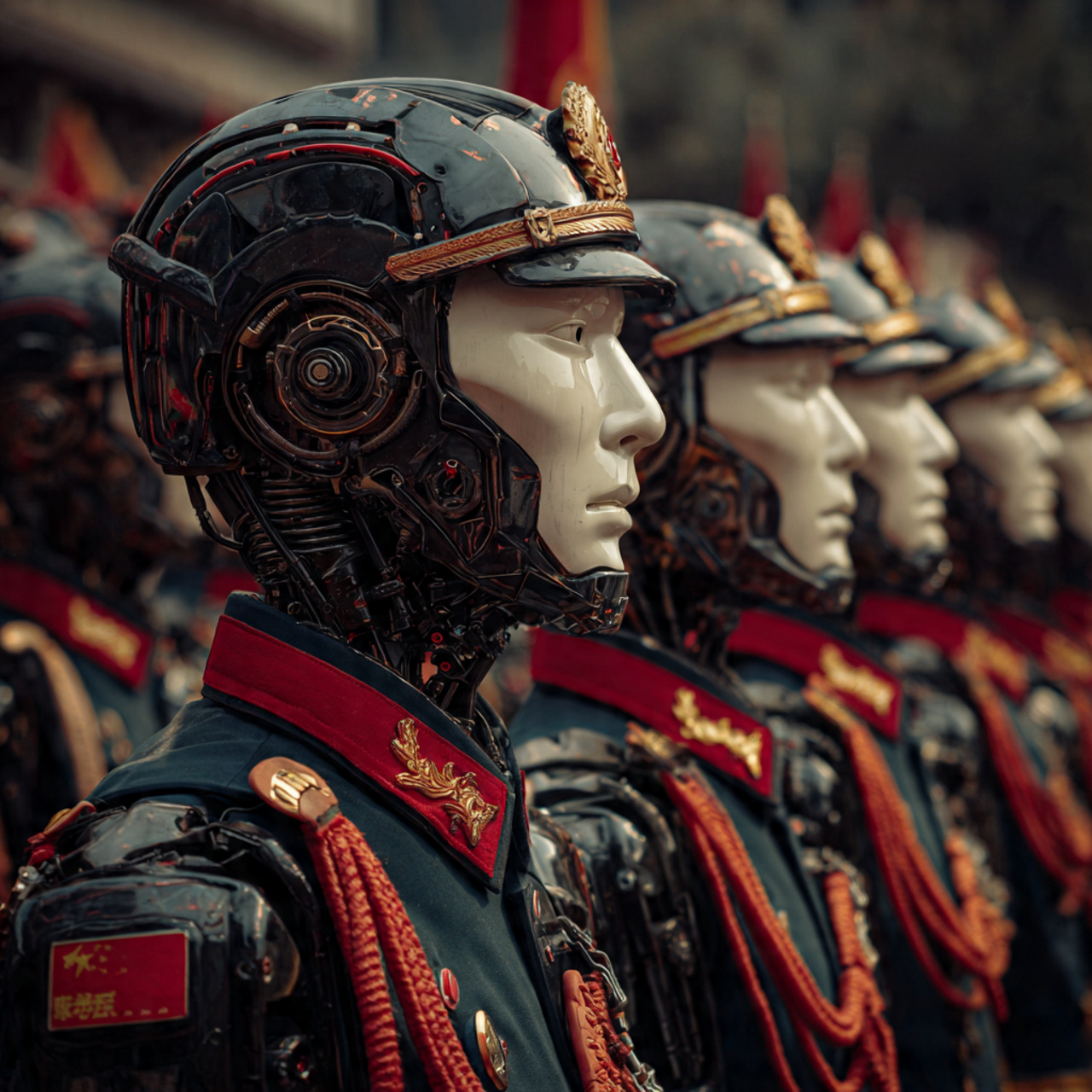
China’s private firms are winning its military AI bids — and Washington doesn’t seem to grasp the implications.
In February 2026, a routine penalty notice appeared on the People’s Liberation Army’s procurement platform. It named Shanxi 100 Trust Information Technology — a 266-person IT company based in Taiyuan, in China’s coal-scarred heartland — and barred it from all military procurement across every service branch for one year. The infraction was bid fraud: the firm had submitted falsified materials to win a contract. In the labyrinthine world of PLA procurement, such violations are not uncommon.
What was uncommon was the company itself.
As a Jamestown Foundation analysis identified, 100 Trust is the sole wholly privately-owned firm operating inside China’s xinchuang (信创) domestic IT innovation framework — a program originally designed to replace foreign technology in sensitive government systems. Despite its modest headcount, the firm holds classified-project clearance and had won some of the PLA’s largest contracts to integrate DeepSeek, China’s breakout open-weight AI model, into military command systems. Its products had reportedly been demonstrated to Xi Jinping himself. And yet, when the opportunity arose to inflate its credentials, someone at 100 Trust apparently couldn’t resist.
The penalty notice tells us almost everything we need to know about China’s military AI push in 2026 — both its ambition and its contradictions. It tells us that China private firms are winning military AI bids once reserved for state giants. It tells us that the structural conditions of Beijing’s civil-military fusion policy have made this outcome not accidental but inevitable. And it tells us that Washington, still operating on a mental model of “China Inc.” — a monolithic, state-directed industrial juggernaut — is watching the wrong companies.
Table of Contents
The Data Is Unambiguous: Private Is the New Defense
The anecdote of Shanxi 100 Trust is not an outlier. It is the leading edge of a statistical pattern that, once you see it, is impossible to unsee.
In a landmark September 2025 study, Georgetown University’s Center for Security and Emerging Technology (CSET) analyzed 2,857 AI-related defense contract award notices published by the PLA between January 2023 and December 2024. The finding that should have set off alarms in every national security directorate from Langley to the Pentagon: of the 338 entities that won AI-related PLA contracts, close to three-quarters were nontraditional vendors (NTVs) — firms with no self-reported state ownership ties. These NTVs collectively won 764 contracts, more than any other category. Two-thirds of them were founded after 2010.
These are not shadowy front companies. They are nimble, technically sophisticated private firms that market themselves explicitly on dual-use capability — civilian agility deployed for military ends. They are the companies winning PLA AI procurement private sector contracts that, by any conventional Washington risk framework, should not exist.
The legacy state-owned defense champions — China Electronics Technology Group (CETC), China Aerospace Science and Technology Corporation (CASC), NORINCO — still lead in sheer contract volume among top-tier entities. But the growth is concentrated in the private sector. The civil-military fusion AI China strategy that Xi Jinping has championed for over a decade is, in the AI domain at least, delivering something its architects may not have fully anticipated: a market in which lean private operators consistently outrun the bureaucratic lumbering of the state-owned defense-industrial complex.
The DeepSeek Accelerant
No single development has turbocharged China’s military AI push more dramatically than DeepSeek’s January 2025 release of its R1 reasoning model as an open-weight system — meaning any entity, including the PLA and its contractor ecosystem, could download, modify, and deploy it without restriction.
The Jamestown Foundation, tracking hundreds of DeepSeek-specific PLA procurement tenders, found the same structural pattern: private companies, not SOEs, won a majority of contracts to build DeepSeek-integrated tools for the PLA. The Jamestown analysts note that this likely reflects private firms’ superior capacity to respond to rapidly shifting market dynamics — a competitive edge that bureaucratic SOEs, with their elongated procurement relationships and political dependencies, simply cannot match.
The capabilities being built are not incremental. Researchers at Xi’an Technological University demonstrated a DeepSeek-powered assessment system that processed 10,000 battlefield scenarios in 48 seconds — a task they estimated would require human military planners approximately 48 hours. The PLA’s Central Theatre Command (responsible for defending Beijing) has used DeepSeek in military hospital settings and personnel management. The Nanjing National Defense Mobilization Office has issued guidance documents on deploying it for emergency evacuation planning. State media outlet Guangming Daily has described DeepSeek as “playing an increasingly crucial role in the military intelligentization process.”
The most revealing data point: Norinco, China’s enormous state-owned weapons manufacturer, unveiled the P60 autonomous combat-support vehicle in February 2026 — explicitly powered by DeepSeek. But the integration contracts enabling such deployments across the PLA’s command architecture are being won by private firms powering China military AI systems from Taiyuan to Hefei, not by Norinco’s in-house engineers.
iFlytek Digital and the Art of Corporate Camouflage
One company illuminates the structural logic with particular clarity: iFlytek Digital, the top-awarded nontraditional vendor in CSET’s dataset, which won 20 contracts in 2023 and 2024 alone, including one for the development of AI-enabled decision support systems and translation software for the PLA. As CSET’s full report documents, iFlytek Digital has close ties to its parent company iFlytek — a speech recognition and natural language processing champion that helped build China’s mass automated voice surveillance infrastructure and played a documented role in the CCP’s surveillance programs in Xinjiang and Tibet. iFlytek was placed on the U.S. government’s Entity List in 2019.
But iFlytek Digital — which became formally independent of its parent in 2021, though its ultimate beneficial owners remained iFlytek executives — operates in a regulatory gray zone that the Entity List framework was never designed to address. This is not an accident. It is a deliberate structural feature: by creating arms-length subsidiaries, spinning off divisions, or establishing new entities that technically lack “state-reported ownership ties,” Chinese tech companies can maintain operational separation from sanctioned entities while preserving functional alignment with them.
For Washington, this matters enormously. The U.S. government’s primary tools — the Commerce Department’s Entity List, the Pentagon’s 1260H “Chinese military company” designations, and the Treasury’s investment restrictions — are built around the premise of identifying specific legal entities. When the PLA’s most consequential AI suppliers are structurally designed to be nontraditional, non-state-affiliated, and technically new, the entity-based framework becomes a sieve. You can list the parent; the subsidiary wins the contract.
The Top Private Winners: A Structural Snapshot
Based on CSET, Jamestown Foundation, and open-source procurement data, the following entities represent the emerging private tier of China’s military AI supplier ecosystem:
- Shanxi 100 Trust Information Technology — xinchuang framework, DeepSeek integration contracts, classified-project clearance; 266 employees.
- iFlytek Digital — NLP, translation, AI decision support; 20 PLA contracts in two years; arms-length separation from sanctioned iFlytek parent.
- PIESAT — Satellite and geospatial analytics; delivering combat simulation platforms and automatic target recognition for the PLA; subsidiaries in Australia, Denmark, Singapore, Malaysia.
- Sichuan Tengden — Drone manufacturer; produced autonomous systems deployed by the PLA on missions near Japan and Taiwan.
- DeepSeek (Hangzhou High-Flyer AI) — Open-weight model appearing in 150+ PLA procurement records; U.S. lawmakers have requested its Pentagon designation as a Chinese military company.
What unites this cohort is not state ownership but structural alignment: dependence on state-controlled compute infrastructure, technical agility that SOEs lack, and an incentive architecture that rewards civil-military dual-use positioning.
The Export Control Paradox
Here is the geopolitical irony that Washington has not fully digested: U.S. export controls on advanced semiconductors — Nvidia A100s, H100s, and their successors — were designed to impede China’s military AI development. In the narrow technical sense, they impose real friction. But in the strategic sense, they have produced a second-order effect that cuts against their intended purpose.
By restricting access to Western computing hardware, the Biden and Trump administrations have deepened Chinese private firms’ dependence on state-controlled domestic alternatives — primarily Huawei’s Ascend AI chips and Kunpeng processors. The firms now winning PLA AI contracts are marketing themselves explicitly on Huawei Ascend stacks, partly because of U.S. export controls. Restrictions that force private firms to rely on state-favored compute simultaneously deepen those firms’ incentive to demonstrate loyalty through military work. The export control paradox: the policy meant to widen the capability gap may be accelerating the fusion between private innovation and PLA procurement.
A separate paradox is operational: DeepSeek’s R1 is open-weight. The Export Administration Regulations have no jurisdiction over Chinese-origin technology being used by Chinese military entities. As one former national security official noted in open-source analysis, “you can’t export-control a model that’s already been released.” The horse left the barn in January 2025.
Meanwhile, the February 2026 CSET report on China’s Military AI Wish List — drawing on over 9,000 unclassified PLA RFPs from 2023 and 2024 — documents that the PLA is pursuing AI-enabled capabilities across all domains simultaneously: decision support systems, autonomous drone swarms, deepfake generation for cognitive warfare, seaborne vessel tracking, cyberattack detection, and AI-enabled encryption stress-testing. The breadth alone should recalibrate any analyst who still views China’s military AI push as aspirational rather than operational.
Why Private Firms Are Outcompeting SOEs
Two structural conditions explain why Chinese private tech military contracts are growing at the expense of SOE incumbents — and why this trend will deepen.
First: speed. PLA AI procurement notices in the DeepSeek era feature compressed tender timelines, frequently under six months from solicitation to award. State-owned defense giants, with their multi-layered bureaucratic approval chains and established procurement relationships, are architecturally incapable of this tempo. A 266-person firm from Taiyuan, by contrast, can pivot its entire technical stack in weeks. The CSET data confirms that the majority of NTVs were founded relatively recently; they were built for agile deployment cycles, not Cold War-era production runs.
Second: the PLA’s own institutional crisis. Xi Jinping’s sweeping anti-corruption purge of the PLA Rocket Force leadership in 2023, and its subsequent extension into the Equipment Development Department and broader defense industrial apparatus, has hollowed out precisely the procurement networks on which SOE defense contractors depended. As Foreign Affairs documented in its March 2026 analysis, the PLA is “rapidly prototyping and experimenting” rather than engaging in traditional long-cycle procurement. In an environment where established bureaucratic relationships carry less weight than deployment speed and technical competence, private firms hold a structural advantage they did not engineer and may not fully appreciate.
The result, paradoxically, is that Xi’s anti-corruption campaign — designed to strengthen the PLA — may be reinforcing private firms’ dominance in its most strategically important procurement category.
The “China Inc.” Fallacy and Why Washington Is Flying Blind
For decades, Washington’s China threat framework has been organized around a relatively simple mental model: the Chinese state directs; Chinese companies obey. Export controls target state entities and their known subsidiaries. Sanctions lists name the champions. Defense authorizations restrict contracts with designated Chinese military companies.
This framework was always an approximation. It is now actively misleading.
The U.S. policy apparatus is structured to track the companies it already knows — CETC, CASC, Huawei, DJI. But as the CSET data on civil-military fusion makes clear, three-quarters of PLA AI contracts are going to entities that do not self-report state ownership ties. Most of these firms are not on any U.S. government list. Many operate in countries allied with the United States — PIESAT, for instance, claimed subsidiaries in Australia, Denmark, Singapore, and Malaysia as of 2023, as Foreign Policy reported.
The December 2025 letter from House Intelligence Committee Chairman Rick Crawford, House Select Committee on China Chairman John Moolenaar, and Senator Rick Scott to the Pentagon requesting that DeepSeek, Unitree Robotics, and thirteen other companies be designated as Chinese military companies is a belated, if welcome, recognition that the designations framework has fallen catastrophically behind the procurement reality. Designating DeepSeek in late 2025 — after its models had already been open-sourced, downloaded millions of times globally, and integrated into PLA command systems — is roughly analogous to sanctioning gunpowder.
The US policy gap on China’s military AI private sector is not a failure of intelligence. It is a failure of analytical framework. The question Washington keeps asking is: “Which Chinese companies are military?” The question it should be asking is: “Given China’s MCF architecture, which Chinese private technology companies aren’t potentially military?”
Implications for Washington: Three Uncomfortable Truths
The Washington implications of China AI bids being won by private firms rather than state giants are neither abstract nor distant. They are operational, legal, and strategic.
First: the Entity List model is inadequate for the private-sector era. Effective technology controls now require tracking corporate structures — beneficial ownership, subsidiary relationships, executive continuity across spinoffs. The 100 Trust case demonstrates that a company can hold classified-project clearance, win the PLA’s largest DeepSeek integration contracts, and have demonstrated its products to the head of state while remaining, on paper, a 266-person private IT firm from Taiyuan that no U.S. government list has ever named. This requires a fundamental rethinking of how the Bureau of Industry and Security, Treasury’s OFAC, and the Pentagon’s designations process share data and coordinate designations.
Second: open-weight AI has broken the export control paradigm for foundation models. The U.S. framework for restricting technology transfer was designed for hardware and proprietary software — objects that can be tracked, licensed, and withheld. An open-weight model that any PLA researcher can fine-tune for battlefield scenario analysis on a domestic Huawei Ascend cluster requires a fundamentally different policy approach: one focused less on restricting Chinese access to existing models and more on maintaining the frontier gap through sustained domestic R&D investment. The 2026 National Defense Authorization Act took modest steps in this direction, but the pace of reform remains slower than the pace of PLA integration.
Third: the procurement volume is not the capability measure that matters. The 100 Trust penalty — a private firm with Xi-level visibility submitting falsified procurement documents — is evidence of a supply-demand gap in China’s military AI ecosystem. Private firms winning contracts they cannot fully execute, racing deployment timelines that exceed their genuine capabilities, is a signal of fragility as much as strength. Washington should be studying not just how many AI contracts the PLA is awarding to private firms, but how many of those contracts are producing operationally deployed capabilities versus prototype demonstrations or outright fraud. The answer, based on available open-source evidence, is considerably more ambiguous than Beijing’s official narrative suggests.
None of this diminishes the strategic imperative. As CSET’s February 2026 Military AI Wish List study documents, the breadth and speed of PLA AI experimentation — across autonomous systems, cognitive warfare, C5ISRT decision support, and space and maritime domain awareness — represents a genuine challenge to U.S. military advantages that is accelerating, not plateauing. The Foreign Affairs analysis published this month warns that “China is positioning itself to quickly and effectively adopt and deploy operational military AI, thus keeping the gap between the U.S. and Chinese militaries narrow.”
The private firms powering China’s military AI push are not a curiosity. They are the mechanism through which Beijing’s most consequential military modernization is being executed — and they are operating in a regulatory and analytical blind spot that Washington has not yet seriously resolved to close.
Citations Used
- “Center for Security and Emerging Technology (CSET) — Pulling Back the Curtain on China’s Military-Civil Fusion” → https://cset.georgetown.edu/publication/pulling-back-the-curtain-on-chinas-military-civil-fusion/
- “CSET full report (PDF)” → https://cset.georgetown.edu/wp-content/uploads/CSET-Pulling-Back-the-Curtain-on-Chinas-Military-Civil-Fusion.pdf
- “Jamestown Foundation — DeepSeek Use in PRC Military and Public Security Systems” → https://jamestown.org/program/deepseek-use-in-prc-military-and-public-security-systems/
- “CSET — China’s Military AI Wish List (February 2026)” → https://cset.georgetown.edu/publication/chinas-military-ai-wish-list/
- “Foreign Affairs — China’s AI Arsenal (March 2026)” → https://www.foreignaffairs.com/china/chinas-artificial-intelligence-arsenal
- “Foreign Policy — China: Under Xi, PLA Adopts More Civilian Tech” → https://foreignpolicy.com/2025/10/07/china-military-civil-fusion-defense-tech-us/
- “House Homeland Security Committee — Letter requesting Pentagon designations for DeepSeek et al.” → https://homeland.house.gov/2025/12/19/chairmen-garbarino-moolenaar-crawford-lead-letter-asking-pentagon-to-list-deepseek-gotion-unitree-and-wuxi-as-chinese-military-companies/
- “RealClearDefense — DeepSeek: PLA’s Intelligentized Warfare” → https://www.realcleardefense.com/articles/2025/11/18/deepseek_plas_intelligentized_warfare_1148009.html
- “South China Morning Post — China’s growing civilian-defence AI ties” → https://www.scmp.com/news/china/military/article/3324727/chinas-growing-civilian-defence-ai-ties-will-challenge-us-report-says
- “FDD — China’s Military Reportedly Deploys DeepSeek AI for Non-Combat Duties” → https://www.fdd.org/analysis/policy_briefs/2025/03/27/chinas-military-reportedly-deploys-deepseek-ai-for-non-combat-duties/
- “CSET — China Is Using the Private Sector to Advance Military AI” → https://cset.georgetown.edu/article/china-is-using-the-private-sector-to-advance-military-ai/
- “The Diplomat — The Private Firms Powering China’s Military AI Push (March 2026)” → https://thediplomat.com/2026/03/the-private-firms-powering-chinas-military-ai-push
Discover more from The Monitor
Subscribe to get the latest posts sent to your email.



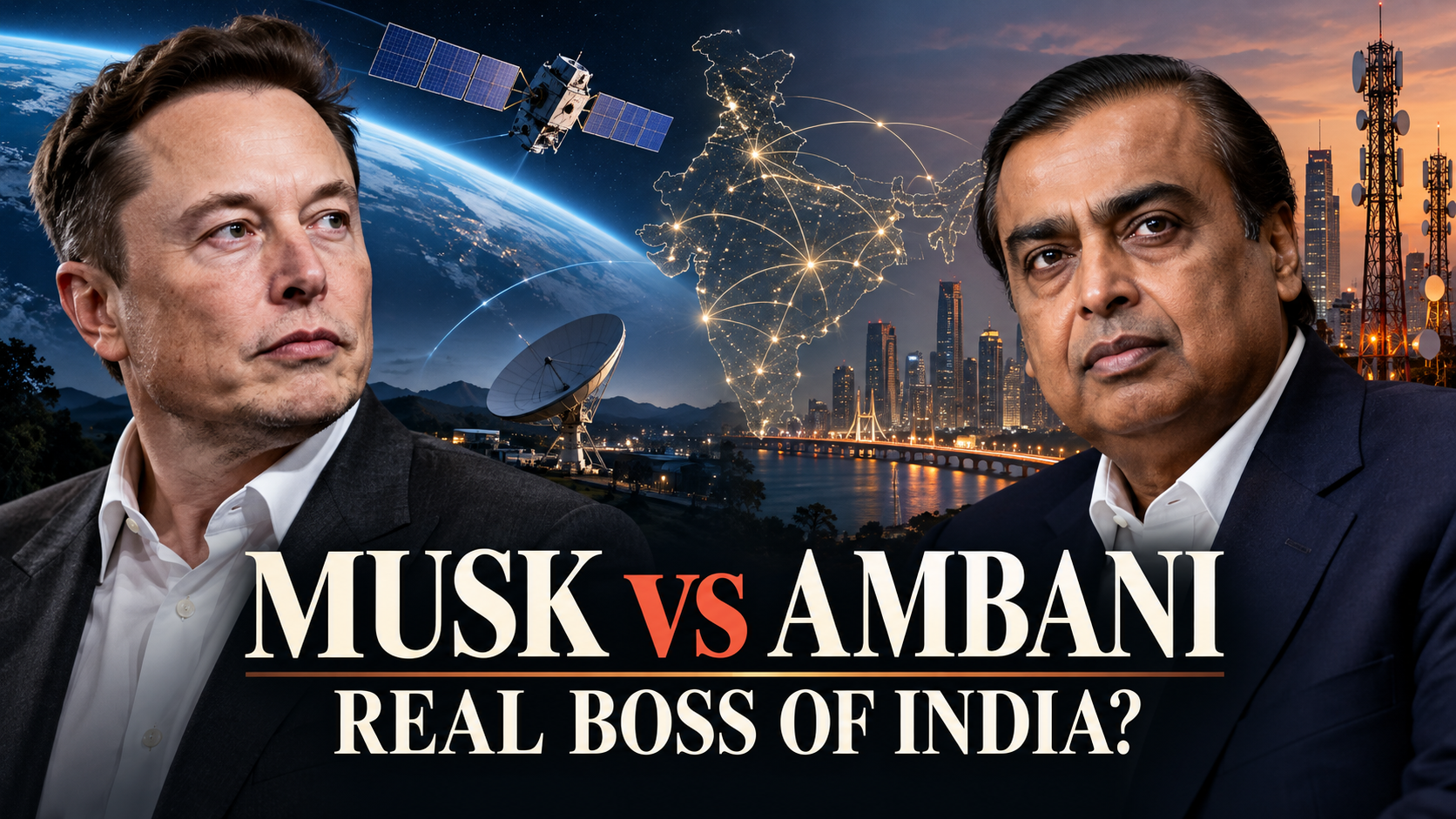
SpaceX CEO Elon Musk has escalated a public dispute over Starlink’s delayed commercial launch in India, sarcastically addressing Reliance Industries Chairman Mukesh Ambani as “Prime Minister Ambani” and questioning whether he holds outsized influence over the country’s telecom landscape. The remarks, posted on X in early October 2026, center on claims that entrenched interests—particularly around Reliance Jio—are slowing satellite broadband approvals to protect market dominance. Indian authorities have rejected the accusations as baseless, emphasizing a uniform regulatory process for all licensed satellite operators. Bloomberg
Musk’s Escalating Posts and Arguments for Starlink
Musk first accused unnamed “oligarchs” of blocking Starlink to maintain a “monopolistic chokehold on the Indian people,” describing the situation as “a crime against the people of India.” He followed by asking, “Is Ambani the real boss of India?” after noting that Starlink is licensed in over 165 countries and has spent five years complying with Indian requirements. In a subsequent post addressed as “Dear Prime Minister Ambani,” he offered a “humble apology” for not recognizing Ambani’s role and urged him to allow competition, arguing that satellite internet could connect underserved areas. Times of India
Musk highlighted potential benefits: improved access for children to education, opportunities for small businesses to reach global markets, and life-saving connectivity during natural disasters when terrestrial networks fail. He later pushed back against critics, stating that competition would benefit Indian consumers with more choices, that Ambani “is not going out of business,” and that Starlink would need affordable pricing to gain traction. Times of India
Government Position: No Monopoly, Uniform Rules for All Licensees
Union Communications Minister Jyotiraditya Scindia has directly addressed the claims, stating that “India does not allow a monopoly in any sector.” He confirmed that three companies hold Global Mobile Personal Communication by Satellite (GMPCS) licences: Starlink, Reliance’s Jio Satellite Communications, and Bharti-backed Eutelsat OneWeb. All three are at a similar regulatory stage and can begin commercial services only after each individually completes security clearances (assessed primarily by the Ministry of Home Affairs) and the government finalizes the revenue-based spectrum charging framework. CNBC TV18
The Department of Telecommunications has described suggestions of discriminatory treatment as “baseless and misconceived.” Security requirements include data localization, lawful interception capabilities, Indian gateways, and related technical demonstrations—conditions that apply equally across licensees. Spectrum assignment is set to be administrative rather than auction-based, with a usage charge of around 5% of adjusted gross revenue (lower for rural/remote areas) nearing finalization with the Telecom Regulatory Authority of India. Business Standard
Starlink’s Approval Timeline and Remaining Hurdles
Starlink received its GMPCS licence from the Department of Telecommunications in June 2025 and IN-SPACe authorization for its Gen-1 constellation in July 2025, following years of engagement that began with an application around November 2022. Provisional spectrum for testing has been available in some cases, but commercial operations require the outstanding security clearances and spectrum assignment. OneWeb and Jio Satellite secured earlier licences but face the same final milestones. Amazon’s Project Kuiper has also expressed interest and is under review. Business Standard
India’s Telecom Landscape and Connectivity Gaps
Reliance Jio remains India’s largest wireless operator, with roughly 500–530 million connections and about 39% market share as of mid-to-late 2026 data, closely trailed by Bharti Airtel at around 38%. Together the two private players dominate the market, with Vodafone Idea and BSNL holding smaller shares. Jio has driven significant growth in 5G adoption and fixed broadband. TelecomLead
Despite high overall coverage, a digital divide persists. TRAI and related data show India with over 1.09 billion internet subscriptions as of early 2026, but rural penetration stands at about 48 subscriptions per 100 people versus roughly 127 in urban areas. Large numbers of people live within mobile broadband footprints yet do not use the internet, with rural-urban gaps remaining notable. Satellite services are positioned by regulators as particularly suited for remote, border, hilly, and island areas that are harder to serve with terrestrial infrastructure. Government programs such as BharatNet continue expanding fiber and mobile coverage in villages. The Policy Edge
Broader Implications
The exchange underscores tensions between global satellite broadband ambitions and national regulatory, security, and competitive frameworks in one of the world’s largest telecom markets. Proponents of faster Starlink entry argue it could accelerate connectivity in hard-to-reach areas and introduce pricing and service competition. Authorities maintain that the process prioritizes security, data protection, and a level playing field among multiple licensed players rather than favoring any single incumbent. As of mid-October 2026, commercial satellite broadband services from any of the three licensees have not yet launched, pending the completion of remaining individual clearances and spectrum finalization.
Musk’s posts have drawn responses from opposition figures, including Rahul Gandhi, but the core dispute remains centered on the pace and nature of regulatory approvals for satellite internet in India. Further clarity is expected once security assessments conclude and the spectrum pricing regime is formally implemented.
Discover more from The Monitor
Subscribe to get the latest posts sent to your email.

UNITED NATIONS — September 24, 2026: Pakistan has warned the United Nations Security Council that the rapid and insufficiently regulated development of artificial intelligence could deepen global inequality while creating new risks to international peace and security.
Speaking during a Security Council briefing on “Artificial Intelligence and International Security,” Pakistan’s Deputy Prime Minister and Foreign Minister Senator Mohammad Ishaq Dar called for stronger international safeguards, regulatory frameworks and governance mechanisms to address the risks associated with increasingly powerful AI systems.
Dar emphasized that the international community needs coordinated action to establish guardrails around artificial intelligence, particularly as AI technologies become increasingly relevant to military decision-making, information systems and national security.
Pakistan Calls for International Guardrails on Artificial Intelligence
Pakistan’s intervention comes as governments and international institutions increasingly debate how AI should be governed across borders.
Dar stressed the importance of restraint and confidence-building measures in the military domain, particularly because AI-assisted systems could compress decision-making timelines and increase the danger of miscalculation.
The concern is significant because artificial intelligence is no longer confined to civilian applications. AI is increasingly being examined in relation to cyber operations, intelligence analysis, autonomous systems, information warfare and other security-sensitive areas.
The United Nations has also warned that AI can create substantial risks when technological development moves faster than international governance.
The UN’s existing AI framework emphasizes responsible, accountable, transparent and human-centered development, while calling for effective human oversight of AI systems.
Why AI Is Becoming a Security Council Issue
The Security Council has previously considered artificial intelligence as a potential factor affecting international peace and security, but the technology has developed rapidly since those early discussions.
A recent analysis by the independent Security Council Report identified several security implications, including AI’s ability to facilitate malicious cyber activity, accelerate the creation and distribution of misinformation and disinformation, and influence military operations.
The organization also highlighted concerns surrounding increasingly autonomous weapons systems, shortened decision-making timelines and questions about human oversight and accountability.
These concerns help explain why AI has moved beyond being primarily a technology-policy issue and increasingly become a subject of international security diplomacy.
The challenge for governments is that AI can simultaneously create opportunities and risks.
AI could help countries identify emerging conflicts, improve humanitarian operations, monitor ceasefires and analyze large quantities of information. At the same time, poorly governed systems could amplify security threats or make already complex conflicts more difficult to manage.
Pakistan Highlights the Global Inequality Dimension
Pakistan’s message to the Security Council went beyond military applications.
Dar also emphasized the need for AI development to be representative, transparent and inclusive, reflecting concerns among developing countries that the benefits of advanced artificial intelligence could become concentrated among a relatively small group of technologically advanced states and companies.
That concern is already reflected in the United Nations’ Global Digital Compact.
The Compact calls for closing digital divides, expanding access to the benefits of the digital economy and strengthening international governance of artificial intelligence. It specifically calls for full and equal representation of countries, including developing nations, in international AI governance.
This makes AI access and governance part of a broader development question.
Countries with advanced computing infrastructure, large datasets, sophisticated research institutions and substantial private-sector investment are positioned differently from nations that remain dependent on imported technologies and have limited domestic AI capacity.
If that gap widens, AI could potentially reinforce existing economic and technological inequalities rather than reduce them.
UN Framework Already Calls for Inclusive AI Governance
The debate at the Security Council is taking place alongside a broader UN effort to develop international mechanisms for AI governance.
The Global Digital Compact, adopted as part of the Pact for the Future, established a framework for international cooperation on digital technologies and AI.
The United Nations has subsequently established an Independent International Scientific Panel on Artificial Intelligence and a Global Dialogue on AI Governance.
The first annual Global Dialogue took place in Geneva in July 2026, bringing together governments and other stakeholders to discuss international cooperation, AI opportunities and emerging risks.
The UN says the dialogue is intended to ensure that AI governance reflects the priorities of all nations rather than only those with the greatest technological capabilities.
For developing countries such as Pakistan, this process provides an avenue to raise questions about technological access, capacity-building, data governance and participation in international rule-making.
AI and Military Decision-Making Raise Particular Concerns
One of the most sensitive areas in the AI debate is military decision-making.
AI can process enormous volumes of information far faster than humans. That capability could potentially assist military planners and governments, but it also raises questions about what happens when decisions involving force are increasingly influenced by automated systems.
A shorter decision-making cycle can create pressure to respond before human officials have fully evaluated the available information.
That is why Pakistan’s emphasis on restraint and confidence-building is significant in the context of international security.
The broader UN position has also stressed the importance of retaining meaningful human control over decisions involving the use of force.
The central issue is not simply whether AI should be used in security applications, but how governments can establish accountability when AI-assisted systems contribute to consequential decisions.
Disinformation Adds Another Layer of Risk
AI-generated content presents another challenge for governments and international organizations.
Generative AI can make it easier to create convincing text, images, audio and video at scale. In a conflict environment, such capabilities could complicate efforts to distinguish authentic information from manipulated material.
The UN has identified misinformation and disinformation among the major concerns surrounding artificial intelligence, particularly where manipulated content can affect public trust, human rights or humanitarian operations.
For international institutions, the problem is therefore both technological and political: governments must develop mechanisms capable of addressing harmful AI-generated content without undermining legitimate expression or access to information.
Global AI Governance Is Becoming More Urgent
The current Security Council discussion reflects a larger international shift.
AI governance is no longer being discussed solely in terms of innovation, investment and economic competitiveness. Governments are increasingly considering questions involving national security, international stability, human rights, development and inequality.
The United States and China, for example, continue to compete technologically while also discussing mechanisms for AI safety and communication.
Meanwhile, the UN is developing a more inclusive multilateral framework intended to give countries a role in shaping international AI governance.
That creates an important distinction between AI development and AI governance.
The first concerns how quickly capabilities advance. The second concerns the rules, safeguards and institutions that determine how those capabilities are developed and deployed.
What Pakistan’s Position Means for Developing Countries
Pakistan’s intervention highlights an issue that is likely to remain central to future AI negotiations: who gets to shape the rules governing artificial intelligence?
Developing countries have an interest not only in managing AI-related risks but also in ensuring access to the technology’s potential benefits.
The UN’s Global Digital Compact recognizes the need for capacity-building, technology cooperation and support for developing countries to access, develop, use and govern AI systems.
That approach is particularly relevant as AI becomes increasingly connected to education, healthcare, agriculture, financial services, public administration and economic productivity.
Without adequate access to computing infrastructure, skills, data and investment, developing countries could find themselves primarily consuming technologies designed elsewhere.
Pakistan’s call for representative and inclusive AI governance therefore places technological development and international security within the same broader conversation.
The Challenge Ahead: Rules That Keep Pace With Technology
The Security Council’s latest discussion illustrates the central difficulty confronting policymakers.
Artificial intelligence is developing faster than many traditional regulatory processes can respond.
International rules must address security risks without unnecessarily blocking beneficial innovation. They must also account for differences between developed and developing countries while maintaining fundamental principles such as human rights, transparency and accountability.
The United Nations’ emerging governance architecture is an attempt to address that challenge through scientific assessment, international dialogue and greater participation by countries around the world.
Pakistan’s intervention adds another voice to that debate, particularly on the consequences of unequal access to AI capabilities and the risks associated with AI-assisted military decision-making.
Conclusion
Pakistan’s warning at the UN Security Council underscores the increasingly international character of the artificial intelligence debate.
The issue is no longer simply how quickly AI can advance. It is also about how the technology is governed, who participates in setting the rules, how military risks are controlled and whether the benefits of AI are distributed broadly enough to avoid deepening existing inequalities.
As AI becomes more deeply integrated into security, economies and public institutions, international cooperation will become an increasingly important part of managing both its opportunities and its risks.
For Pakistan and other developing countries, the emerging global AI governance system will be particularly important because the rules established today could influence access to technology, economic opportunities and participation in future international decision-making for years to come.
Discover more from The Monitor
Subscribe to get the latest posts sent to your email.

The dominant narrative around artificial intelligence investment has always centred on equity valuations — Nvidia’s market capitalisation, hyperscaler earnings multiples, the concentration of the S&P 500 in a handful of AI-exposed names. That narrative is now incomplete. The more consequential shift underway in 2026 is happening in credit markets, and regulators are starting to say so explicitly.
An Unprecedented Pace of Capital Deployment
The Bank of England’s July 2026 Financial Stability Report puts it plainly: the pace of AI-related investment is unprecedented historically, with AI companies increasingly turning to the financial system — and specifically to debt financing — to fund infrastructure buildouts. This marks a meaningful departure from the equity-heavy funding model that characterised the first wave of the AI boom, when cash-rich technology giants largely self-funded expansion from balance-sheet reserves.
Why Debt, and Why Now
The shift toward debt financing reflects simple scale economics: data-center construction costs have grown large enough that even the best-capitalised technology companies are choosing to preserve equity and cash flexibility by tapping bond and private credit markets instead. This dynamic accelerated sharply through the first half of 2026, coinciding with the same window in which China’s export data showed chips, computer parts and power equipment accounting for roughly half of the country’s export growth — evidence that the AI infrastructure buildout is now a genuinely global capital-expenditure cycle, not a US-only phenomenon.
The Leverage Concentration Problem
The Bank’s Financial Policy Committee has flagged a specific structural fragility: equity gains in AI-related names have been driven in significant part by a narrow, concentrated set of companies, with a substantial increase in the use of leverage tied to these positions. That combination — narrow concentration plus rising leverage — is precisely the mechanism that has historically turned isolated valuation corrections into broader, self-reinforcing liquidity events.
Separately, the Bank’s broader assessment of credit markets warns that vulnerabilities in risky asset valuations, sovereign debt markets and risky credit segments — including private credit specifically — remain, with some having become more pronounced since its previous report, as globally higher interest rates and energy-driven cost increases add pressure on corporate borrowers across the board, AI-related or otherwise.
The Sovereign Debt Connection
Perhaps the most significant — and least discussed — finding from the Bank’s analysis concerns how an AI-related equity correction could interact with sovereign bond markets. In its modelled scenario, debt-to-GDP ratios rise following a hypothetical AI valuation correction, but the Bank notes that both the US Treasury market and UK gilt market continued to function well under the scenario tested — with an explicit warning that had those markets come under pressure instead, the consequences could have been considerably more severe.
That finding sits uncomfortably alongside the Federal Reserve’s own hawkish pivot under Chair Kevin Warsh, detailed elsewhere in this series. A Fed moving toward rate hikes rather than cuts directly raises the cost of the debt financing now underpinning much of the AI infrastructure buildout — a tightening that could pressure highly leveraged data-center financing structures at precisely the moment the sector’s borrowing needs are accelerating.
What Regulators Are Doing About It
Rather than attempting to directly restrain AI-related credit growth — not typically a central bank mandate — the Bank of England is focused on strengthening the plumbing that would need to absorb a shock if one occurs. It points specifically to reforms already announced for money market funds across the UK and Europe, alongside exploratory changes to bolster resilience in the gilt repo market, as the primary tools available to prevent an AI-financing-driven credit event from cascading into broader market dysfunction.
The Investor Takeaway
For fixed-income investors and credit allocators, the practical shift is this: AI exposure can no longer be assessed purely through equity valuation multiples. The debt structures financing data-center buildouts — their leverage ratios, their sensitivity to a hawkish Fed, and their concentration among a narrow set of borrowers — now represent a distinct and growing risk factor in global credit markets, one that central banks on both sides of the Atlantic are actively modelling, even as they stop short of calling it a bubble outright.
Featured Snippet
Is AI infrastructure being funded by debt or equity in 2026? AI companies are increasingly relying on debt financing rather than equity to fund data-center buildouts, a shift the Bank of England describes as historically unprecedented in pace, raising new financial stability questions around leverage concentration and credit market resilience.
Discover more from The Monitor
Subscribe to get the latest posts sent to your email.

Resilience Under Strain: The World’s Difficult 2026 Choices

Andy Harris in 2026: Freedom Caucus Influence, Spending and Congressional Power

MLB Playoffs 2026: Postseason Format, Broadcast Guide and How to Track the Bracket

Elon Musk Calls Mukesh Ambani the “Real Boss of India” Over Alleged Monopoly Concerns

Legal Pioneer and Defender of Justice: The Life, Works, and Legacy of Navi Pillay

Inside the Modern Republican Party Platform: Tax Policy, Immigration, and Governance

Anne Carson: Genius of Hybrid Forms and 2026 Nobel Laureate in Literature

Analyzing the Republican Voter Enthusiasm Gap: Turnout Metrics and Polling Data

The West Wing Legacy: Why the Political Drama Is More Relevant Than Ever

Min Ah: The Global Impact and Rising Popularity of the K-Drama Star
Inside the Modern Republican Party Platform: Tax Policy, Immigration, and Governance
Analyzing the Republican Voter Enthusiasm Gap: Turnout Metrics and Polling Data
Anne Carson: Genius of Hybrid Forms and 2026 Nobel Laureate in Literature

Remembering Kianna Underwood: The Nickelodeon Actress Behind “All That” and “Little Bill”
Elon Musk Calls Mukesh Ambani the “Real Boss of India” Over Alleged Monopoly Concerns
The West Wing Legacy: Why the Political Drama Is More Relevant Than Ever
Andy Harris in 2026: Freedom Caucus Influence, Spending and Congressional Power
MLB Playoffs 2026: Postseason Format, Broadcast Guide and How to Track the Bracket
-

 Featured6 years ago
The Right-Wing Politics in United States & The Capitol Hill Mayhem
-

 News5 years ago
Prioritizing health & education most effective way to improve socio-economic status: President
-

 China5 years ago
Coronavirus Pandemic and Global Response
-

 Democracy5 years ago
Missing You! SPSC
-

 Conflict5 years ago
Kashmir Lockdown, UNGA & Thereafter
-

 Canada5 years ago
Socio-Economic Implications of Canadian Border Closure With U.S
-
Democracy5 years ago
President Dr Arif Alvi Confers Civil Awards on Independence Day
-

 Digital6 years ago
Pakistan Moves Closer to Train One Million Youth with Digital Skills