Connect with us

News

Barclays’ £10 Billion Shareholder Return: A Game-Changer for Banking Industry Dynamics

Published

on

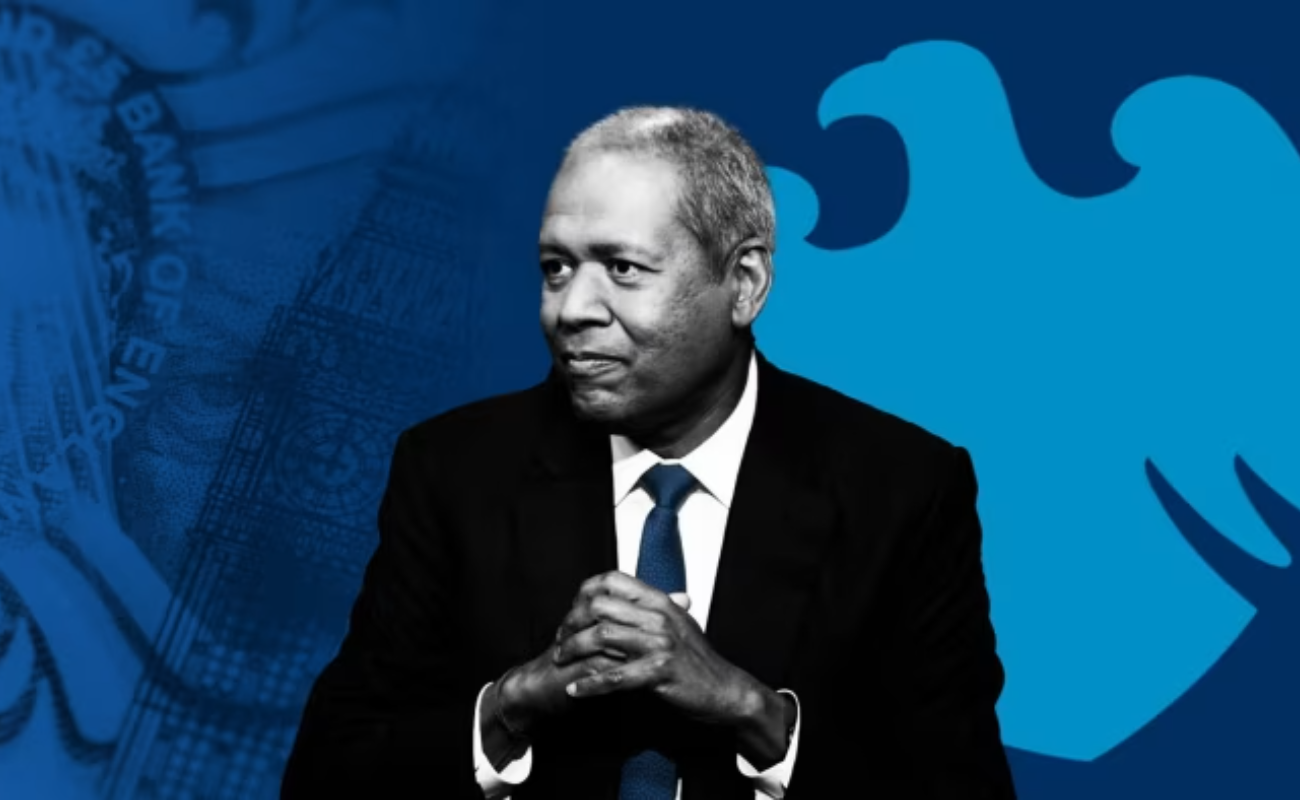
Barclays, one of the world’s largest and most influential banking institutions, has recently announced its plan to return a staggering £10 billion to its shareholders. This move comes as a significant development in the financial industry and is a clear indicator of the bank’s confidence in its prospects. In this article, we will delve into the details of Barclays’ decision, analyze the potential impact on the market, and explore the underlying reasons behind this bold move.

Barclays’ decision to return £10 billion to its shareholders is a strategic move that has captured the attention of investors and industry experts alike. This substantial sum represents a significant portion of the bank’s excess capital, which has accumulated in recent years. By returning this capital to shareholders, Barclays aims to optimize its capital structure and enhance shareholder value. This move is also a testament to the bank’s commitment to disciplined capital management and efficient allocation of resources.

From an analytical perspective, Barclays’ decision carries several implications for the financial market. Firstly, it is likely to bolster investor confidence in the bank’s financial strength and long-term stability. The return of such a substantial amount of capital is a clear signal that Barclays is well-positioned to navigate through economic uncertainties and capitalize on growth opportunities. This could potentially attract new investors and strengthen existing relationships with shareholders.

Furthermore, the impact of Barclays’ decision extends beyond its immediate stakeholders. The broader financial industry is likely to take note of this move, as it sets a precedent for other banks and financial institutions. The decision reflects a proactive approach to capital management, which may influence industry-wide practices and strategies. As such, Barclays’ move could spark a broader conversation about the optimal utilization of excess capital and its implications for shareholder value.

ALSO READ :  Unmasking the Reality: How Korean Chips Impact the Integrity of Huawei Phones

To understand the underlying reasons behind Barclays’ decision, it is essential to consider the broader economic context. The banking industry has been undergoing significant transformation in response to evolving regulatory requirements and market dynamics. In this environment, banks are under pressure to maintain robust capital levels while also delivering attractive returns to shareholders. Barclays’ decision to return £10 billion can be seen as a strategic response to these challenges, demonstrating its ability to strike a balance between regulatory compliance and shareholder value creation.

In addition to regulatory considerations, Barclays’ move also reflects its confidence in its business prospects and growth trajectory. The bank has been making strategic investments in key areas such as digital banking, innovation, and sustainable finance. By returning excess capital to shareholders, Barclays is signaling that it has sufficient resources to fund these initiatives while also rewarding investors for their continued support.

Looking ahead, it will be interesting to monitor the market’s reaction to Barclays’ decision and its long-term implications. The return of £10 billion to shareholders is likely to have a ripple effect on the bank’s stock performance, investor sentiment, and industry dynamics. Furthermore, it will be important to assess how this move aligns with Barclays’ broader strategic priorities and its impact on the competitive landscape.

In conclusion, Barclays’ decision to return £10 billion to its shareholders is a significant development that underscores the bank’s confidence in its future prospects and commitment to enhancing shareholder value. This move carries implications for both the bank’s immediate stakeholders and the broader financial industry. By analyzing the underlying reasons and potential impact of this decision, we gain valuable insights into the dynamics of capital management, investor relations, and strategic positioning within the banking sector.

Analysis

The End of a Gold Rush: Why Wycombe Abbey’s China Campus Closure Signals the Retreat of British Elite Education

Published

on

The shuttering of Wycombe Abbey School Nanjing is not simply a commercial setback for one of Britain’s most storied boarding schools. It is a parable about the limits of soft power, the hubris of the China gold rush, and what happens when open, liberal education ventures too deep into the embrace of an authoritarian state.

When Wycombe Abbey School Nanjing opened its doors in September 2021, it did so with considerable fanfare. Set across 112,250 square metres in the Tangshan Hot Springs resort of Jiangning District, the campus boasted a Broadway-scale 630-seat theatre, four full-sized basketball courts, a FINA-standard swimming pool, and the unmistakable crest of one of England’s most venerable girls’ boarding schools — founded in 1896 and long regarded as the Eton of British girls’ education. For Chinese families willing to pay six-figure fees for the promise of Oxbridge pathways and British pastoral care, it represented the apex of aspirational private schooling.

It took less than five years for that aspiration to collide with reality. Wycombe Abbey School Nanjing — one of the most prominent recent symbols of the British elite education export machine — is closing its doors and will not reopen for the 2026 academic year, with students and staff expected to be redirected to sister campuses or alternative arrangements. The broader Wycombe Abbey International network presses on: campuses in Changzhou, Hangzhou, and Hong Kong continue to operate, and the group is expanding aggressively into Bangkok (opening August 2026) and Singapore (2028). But Nanjing’s closure is telling precisely because of its timing — and what it illuminates about the structural impossibility of delivering genuinely liberal British education inside Xi Jinping’s China.

A Decade of Expansion, Then the Walls Closed In

To understand the Nanjing closure, one must first understand the extraordinary decade that preceded it. From the mid-2000s onwards, British independent schools discovered in China what Silicon Valley had found in smartphones: a market of almost limitless appetite. By 2024-25, fifty British private schools operated 151 satellite campuses worldwide, with fully half of those in China and Hong Kong. The profits were not trivial. Harrow School generated £5.3 million from its overseas operations in 2022-23. Wellington College earned £3.2 million. Even Wycombe Abbey — comparatively modest in its Chinese footprint — booked £900,000 in international campus profits that year, representing 3.2 per cent of its gross fee income.

What fuelled this boom was a confluence of forces that, in retrospect, were always more fragile than they appeared: a rising Chinese professional class willing to spend heavily on international education credentials; a Communist Party that tolerated, even welcomed, foreign educational prestige brands as markers of national sophistication; and British schools sufficiently hungry for revenue — especially after years of domestic financial pressure — to overlook the philosophical contradictions inherent in the arrangement.

Wycombe Abbey International’s partnership with BE Education, the Hong Kong and Shanghai-based operator that has served as the school’s exclusive Asia partner since 2015, produced a network logic that made commercial sense. Changzhou came first, in 2015. Hong Kong followed in 2019. Hangzhou and Nanjing arrived simultaneously in September 2021. Each campus combined the Chinese National Curriculum with what the school describes as “the best of British education” — a formulation that already contained within it an inherent tension.

That tension became a fault line the moment Beijing’s regulators decided to close it by force.

Beijing Tightens the Screws: The Regulatory Revolution Since 2021

The year 2021 was a watershed for international education in China, though it was barely noticed in the Common Room of the average British boarding school. Beijing issued sweeping regulations banning foreign curricula in compulsory education covering Grades 1 through 9 — the very years that form the commercial backbone of bilingual schools like Wycombe Abbey Nanjing, which catered to students from age two to eighteen. Schools could no longer appoint foreign principals to run their campuses. Beijing-approved officials assumed governance oversight. And crucially, the ideological content of what was taught — history, politics, geography — shifted decisively toward what officials now describe as the “correct” national narrative.

Then, on 1 January 2024, China’s Patriotic Education Law came into force. The legislation, as ISC Research has documented, stipulates that all schools — including those operating under foreign brand licences — must ensure their educational resources reflect Chinese history and culture, promote national unity, and reinforce the ideological framework of the party-state. The Patriotic Education Law did not merely complicate the marketing proposition of a Wycombe Abbey education in Nanjing. It rendered it, in any meaningful sense, a contradiction in terms.

ALSO READ :  Who's going to win US Presidential Elections 2024

British schools that have remained in China have been forced into uncomfortable contortions. Harrow International School in Hainan was required to notify parents that students must be taught official Chinese curricula from Grade 1 to Grade 9, including state-mandated versions of history and politics — a development that reportedly alarmed parents across the sector. The school acknowledged that “education policies have been changing dramatically.” This is an exercise in understatement. What is changing is not policy at the margins but the fundamental character of what these institutions are permitted to offer.

The economic headwinds have arrived simultaneously. Total student enrolment at China’s international schools has dropped to around 496,000, with kindergartens and primary schools hit hardest. The post-COVID exodus of Western expatriates — whose children formed the legally permitted clientele of fully foreign-passport-only international schools — has been dramatic and largely permanent. Geopolitical anxiety has accelerated the departure of American, British, and Canadian professionals from Chinese cities. Meanwhile, the Chinese middle-class families who have long constituted the real demand base for bilingual schools like Wycombe Abbey Nanjing are themselves under pressure: a slowing economy, a deflating property market, and a structural demographic decline that will see China’s school-age population continue to shrink for decades.

As one industry observer bluntly put it to New School Talk, a Chinese education analysis platform: “The golden age is over. From now on, quality and positioning will decide who survives.”

The Prestige Paradox: When Brand Becomes Liability

There is a deeper irony buried within the Wycombe Abbey Nanjing story — one that speaks to the existential dilemma facing all British schools that have ventured into China. The prestige of these institutions derives, fundamentally, from what they represent: rigorous independent inquiry, intellectual freedom, debate, the cultivation of critical and cosmopolitan minds. These are precisely the qualities that an authoritarian state committed to ideological conformity cannot permit to flourish. A Wycombe Abbey education, genuinely delivered, is structurally incompatible with the requirements of Xi Jinping’s education ministry.

This is not merely an abstract philosophical point. As The Spectator has detailed, British independent schools “are not autonomous” once they operate within Chinese territory. They operate under national and provincial regulations that determine what can be taught, by whom, and to what ideological end. The liberalism taught at many of our schools, the magazine noted with some asperity, “isn’t popular with the CCP.” When Dulwich College, Wellington, Harrow, and Wycombe Abbey licence their names and crests to Chinese education operators, they are trading not just on their academic reputations but on the values those reputations encode — values that Chinese regulators are now actively working to dilute or extinguish.

For British schools, this presents a reputational risk that the fee revenues do not adequately compensate. Parents in the UK who pay upwards of £50,000 a year to send their daughters to the Wycombe Abbey campus in High Wycombe do so partly because the school’s brand embodies a certain educational philosophy. That philosophy is difficult to sustain when a campus bearing the school’s name is simultaneously required to teach Party-approved historiography to nine-year-olds and submit to Communist Party governance oversight. The brand promise and the political reality are in irresolvable tension.

Wycombe Abbey is, to its credit, acutely aware of this geometry. The school’s expansion strategy signals where it believes the sustainable future of transnational British education lies.

The Southeast Asia Pivot: Pragmatism or Retreat?

The geography of Wycombe Abbey International’s growth trajectory is instructive. Bangkok. Singapore. Incheon. Egypt. These are not replacements for China in raw market terms — China’s middle class, even under strain, remains formidable in absolute numbers. But they represent something more valuable: jurisdictions where British educational values can be delivered without systematic ideological adulteration.

Wycombe Abbey International School Bangkok, opening in August 2026 on the existing VERSO International School campus near Suvarnabhumi Airport, will offer a full British curriculum pathway — IGCSEs, A Levels, access to global universities — in an environment where the school’s pedagogical philosophy does not require negotiation with a party-state apparatus. Singapore (opening 2028), partnering with Wee Hur Holdings, offers another rule-of-law jurisdiction with world-class infrastructure and deep demand for premium international education among both local and expatriate families. South Korea’s planned campus points in the same direction.

ALSO READ :  Breaking Barriers: Empowering Women in Cybersecurity and IT

This is not retreat so much as rational recalibration. The China gold rush of the 2010s operated on the assumption that Beijing would remain broadly permissive — that the CCP’s tacit enthusiasm for Western educational prestige brands would override its ideological imperatives. That assumption has been comprehensively falsified. The question is not whether British schools will continue to operate in China — many will, and some will find commercially viable accommodations with the new regulatory reality — but whether those operations will retain enough of the original educational character to justify the brand association.

For some schools, the financial incentives will win out. Dozens of international and private schools in China are already closing or merging, weighed down by regulatory pressure, economic slowdown, and declining enrolment — and yet the aggregate British presence continues to grow, with new campuses still opening across the country. The British instinct for pragmatic accommodation runs deep.

Soft Power in Retreat

Beyond the commercial calculus, the broader implications for British soft power deserve attention. Education has been one of Britain’s most durable and genuinely effective instruments of international influence. British universities educate more than 600,000 international students annually. British independent schools, with their satellite campuses, have formed character, built networks, and generated lasting affinity for British institutions among professional elites in Asia, the Gulf, and Africa for decades.

That soft power logic depends entirely on the integrity of what is being exported. A Harrow education that requires students to study CCP-approved history is not a Harrow education in any meaningful sense; it is a brand licensing arrangement with a hollow core. When regulators in Beijing determine what can be taught under the Wycombe Abbey crest, they are not merely supervising a school. They are shaping — and in some respects inverting — what the British brand represents.

The UK government has been slow to grapple with the national security dimensions of this dynamic. British intelligence agencies have raised concerns about CCP-linked financing in educational partnerships and the potential for Chinese state influence to flow through these institutional relationships. Those concerns remain largely unaddressed in formal policy, leaving individual schools to navigate genuinely complex geopolitical terrain without adequate guidance.

The Wycombe Abbey Nanjing closure, viewed through this lens, is less a failure of one campus than a clarifying data point about the fundamental incompatibility of open British pedagogy and closed Chinese ideological governance. Not every campus will close. But the era of assuming that China could be an uncomplicated partner in the British education export project is over.

What Comes Next: Lessons for Institutions and Policymakers

The institutions that will navigate this era well are those with the clearest sense of what they are actually selling — and the discipline to decline arrangements that compromise it. Wycombe Abbey’s Southeast Asia pivot suggests the school understands this, even if it arrived at the conclusion through hard experience. A campus in Bangkok or Singapore, operating a genuine British curriculum in a legally stable environment, serves both the school’s commercial interests and its educational mission in a way that a politically constrained campus in Nanjing ultimately cannot.

For policymakers, several imperatives follow. The UK government should develop clear guidelines — perhaps through the Department for Education in coordination with the Foreign, Commonwealth and Development Office — on what minimum standards of educational autonomy and governance independence British schools must maintain before they can legitimately export their brand name to foreign jurisdictions. Licensing a crest to an operator that is subject to CCP governance oversight is a categorically different proposition from opening a campus in an open society. The distinction matters for soft power, for national security, and for the integrity of British education as a global brand.

The story of Wycombe Abbey Nanjing is, ultimately, the story of a bet that could not pay off — not because the school lacked ambition or its pupils lacked talent, but because the political conditions that would have made the bet viable never materialised. Opened in the same year that Beijing began systematically dismantling the autonomy of foreign-linked education, Wycombe Abbey Nanjing was caught in the machinery of a regulatory revolution it had no power to influence.

That machinery is still running. British schools with campuses across China would do well to listen to the sound it makes.


Discover more from The Monitor

Subscribe to get the latest posts sent to your email.

Continue Reading

Analysis

The Costs of Trump’s Contempt Are Starting to Show: How Washington’s Unreliability Is Reshaping the Global Order

Published

on

SHENZHEN, the pulsing heart of China’s industrial machine, sitting across from one of the country’s legendary entrepreneurs—a man who has built billion-dollar supply chains and navigated every tectonic shift in global commerce for four decades. I expected our conversation to center on the Iran war, the Strait of Hormuz blockade, or the spiraling oil premiums strangling Asian manufacturers. Instead, he offered an observation that has haunted me ever since.

“For us, Trump’s attack on Iran is less consequential than his threat to attack Greenland,” he told me, swirling his tea. “When he did that, to America’s oldest allies—Denmark, the Netherlands, the Europeans—I knew immediately that Europe would not follow America’s approach to China. If he treats his friends this way, who needs enemies?”

That remark, delivered with the clinical detachment of a man reading a balance sheet, captures something profound about the tectonic shift underway in global geopolitics. The costs of President Donald Trump’s systematic contempt for allies are no longer theoretical. They are materializing in defense budgets, trade agreements, currency arrangements, and diplomatic realignments from Brussels to Tokyo. Governments that once anchored their entire foreign policies to the reliability of American power are now actively hedging against its absence.

The Greenland Shock: When Allies Became Targets

To understand the velocity of this realignment, one must revisit January 2026—the month Donald Trump threatened to annex Greenland, a sovereign territory of NATO ally Denmark, using military force if necessary, while simultaneously threatening escalating tariffs of 10% to 25% on eight European nations to coerce compliance. 

The European response was swift and unprecedented. European Commission President Ursula von der Leyen warned Washington to keep its hands off Greenland, declaring the island’s sovereignty “non-negotiable” and Europe’s response would be “unflinching.”  The European Union activated its trade “bazooka”—the Anti-Coercion Instrument—at an emergency leaders’ summit in Brussels. 

But the deeper damage was psychological. As the Council on Foreign Relations noted, “the president’s attempt to take control of Greenland could prove existential for the NATO alliance” and “Europeans have lost all illusions about the transatlantic relationship.”  The Economist described Trump’s Greenland gambit as having “created the biggest rift in the transatlantic alliance since the 1956 Suez crisis.” 

This was not a dispute over burden-sharing or defense spending targets—arguments that, however abrasive, operated within the guardrails of alliance management. This was the United States threatening to seize territory from a founding NATO member. For European capitals, the message was unambiguous: if Washington could treat Copenhagen this way, no ally was safe.

From Hedging to Hard Decoupling: Europe’s Strategic Awakening

The accumulation of abuse—tariff wars, insults hurled at allied leaders, open support for far-right parties seeking to fracture the European Union—has reached a tipping point. As Daniel DePetris recently wrote in the U.K. edition of the Spectator, a conservative and ardently pro-American magazine: “The war in Iran has forced Europe to grow a spine. European leaders are no longer interested in dropping to their knees and groveling to stay on Trump’s good side.” 

The shift from rhetoric to action is now unmistakable. The European Union’s ReArm Europe/Readiness 2030 plan commits approximately 800 billion euros (roughly $935 billion) to defense investment in the coming years.  Crucially, the objective is no longer simply to buy American weapons—the model that sustained the transatlantic security bargain for decades. Europeans now want their money to stay at home, building European firms and supply chains to gain strategic autonomy from Washington. 

The same logic is spreading beyond defense. The European Payments Initiative is actively building a European alternative to Visa and Mastercard, with its CEO explicitly citing “Trump fears” as a catalyst for adoption.  The era of “de-risking” was once discussed exclusively in relation to China. Now, European leaders are openly discussing de-risking from the United States. 

ALSO READ :  Chinese Foreign Minister Wang Yi Embarks on a 4-Day Russia Visit for Crucial Security Talks

This is not merely about defense procurement or payment rails. It represents the embryonic architecture of a post-American Europe—one that is increasingly unwilling to subordinate its economic and strategic interests to the whims of an erratic White House.

The Iran War as the Final Straw

If Greenland shattered the illusion of American reliability, the Iran war has pulverized what remained. When U.S. and Israeli forces launched large-scale strikes across Iran in late February 2026, killing Ayatollah Ali Khamenei and other senior regime figures, Trump expected allied solidarity.  What he received was a collective shrug—and then active opposition.

As The Economist reported in early April 2026, European allies are “losing hope of keeping America in NATO,” with President Trump “fuming about their refusal to send ships to reopen the Strait of Hormuz and the reluctance of some to facilitate American operations.”  European NATO allies declared they would not get involved in Trump’s Strait of Hormuz blockade, further ratcheting up tensions within the increasingly fragile alliance. 

The Carnegie Endowment for International Peace captured the European mood precisely: “Donald Trump has certainly done irreversible damage to NATO, but the reasons why there is no way back are long-term and structural. U.S. strategic interests have shifted away from Europe. The transatlantic relationship may get more normal after Trump, based on narrower shared interests, respectful communication, and predictability, but Europeans will have to grow up.” 

The Iran war has done something no amount of diplomatic persuasion could achieve: it has forced Europe to contemplate a future in which American security guarantees can no longer be taken for granted. France and Germany have launched a nuclear steering group to discuss extending the French nuclear umbrella across the continent—a conversation that would have been unthinkable just two years ago.  French President Emmanuel Macron announced a major doctrine shift, opening deterrence exercises to European allies and dispatching French strategic nuclear forces to allied territory. 

Germany, historically the most reluctant European power to assume security leadership, is now actively discussing coming under the French nuclear shield. Poland’s president has openly mused about developing Warsaw’s own nuclear capability.  These are not fringe debates. They represent the most fundamental reimagining of European security architecture since the 1950s.

The View from Beijing: A Strategic Windfall

Perhaps the most damning indicator of how far American standing has fallen comes from the global survey data. The European Council on Foreign Relations found that a year after Trump’s return, a substantial portion of global respondents believe China is overtaking the United States as the world’s dominant power—and that Trump is “making China great again.” 

Only 16% of EU citizens now consider the United States an ally, while 20% see it as a rival or an enemy.  In Germany, trust in American leadership has dropped by a staggering 39 percentage points.  A POLITICO poll of major NATO allies found that majorities in Germany, Canada, and France describe the United States as an unreliable ally—including 57% of Canadians and half of German adults. 

Critically, this is not because Europeans have suddenly fallen in love with Beijing. They have not. Europe has deep conflicts with China over Ukraine, subsidies, electric vehicles, critical minerals, and market access.  But the strategic calculus has shifted. In a world where the United States threatens allies with annexation and economic warfare, maintaining a second channel to Beijing becomes not a preference but a necessity.

As the European Parliament’s own assessment concluded, transatlantic relations since early 2025 have been “marked by rising tension and uncertainty regarding the reliability of the United States as an ally” across multiple domains including NATO, Greenland, Ukraine, trade, technology, climate, and relations with China. 

The Asia-Pacific Fallout: When the Nuclear Umbrella Frays

The contagion is spreading far beyond Europe. Across the Asia-Pacific, American allies who have built their entire defense postures around U.S. security guarantees are now running the same calculus that Europeans have already completed: Can we still count on Washington?

A recent Taiwan poll found that 57% of respondents did not believe the United States would send troops to defend the island if war broke out in the Taiwan Strait.  In Japan and South Korea, the probability of independent nuclear arsenals—long considered a taboo—is now being openly discussed in policy circles, precisely because the American nuclear umbrella is increasingly viewed as an unreliable asset. 

ALSO READ :  Breaking Barriers: Empowering Women in Cybersecurity and IT

The European Council on Foreign Relations report warned explicitly: “If Washington’s security guarantees are regarded as transactional, Asian partners may view the American nuclear umbrella as unreliable. An unforeseen consequence is that it increases the probability that Japan and South Korea will seek independent nuclear arsenals for strategic survival.” 

This is the ultimate cost of Trump’s contempt: a world in which American allies, rather than pooling their security under U.S. leadership, pursue their own nuclear capabilities—weakening nonproliferation norms, increasing the risk of miscalculation, and eroding the very architecture of American hegemony that has kept great-power peace for eight decades.

The Price America Will Pay

There is a paradox at the heart of Trump’s approach. His stated goal is to make America stronger, richer, and more respected. But the actual result is the systematic dismantling of the alliance system that amplifies American power at a fraction of the cost of unilateral action.

As CFR scholars have noted, “Washington’s network of alliances has granted the United States extraordinary influence in Europe and Asia, imposing constraints on Moscow and Beijing at a scale that neither power can replicate.”  Chatham House’s analysis of Trump’s national security strategy observed that “hedging remains the best way for other countries to respond” to U.S. volatility and unpredictability—not just to gain leverage but “to protect against volatility.” 

The irony is that allies are doing precisely what Trump claims to want—spending more on defense, building indigenous industrial capacity—but in ways that reduce American leverage rather than enhance it. The ReArm Europe plan will generate hundreds of billions in defense spending, but increasingly those euros will flow to European defense contractors rather than American ones. The French-German nuclear dialogue, once unimaginable, is now in active planning stages. The European Payments Initiative is building infrastructure that could one day challenge dollar dominance in trade settlement.

Trump’s defenders argue that this is all part of the plan—that burden-shifting is the objective, and if Europe finally takes responsibility for its own defense, that represents American strategic success. But this argument conflates European capability with American influence. A Europe that can defend itself without the United States is also a Europe that can act without the United States—including on China policy, trade policy, and technology standards.

A World After American Reliability

The Shenzhen businessman I spoke with understood something that Washington’s strategic community is only beginning to grasp: reliability is the fundamental currency of alliance leadership. Once squandered, it cannot be quickly restored—even by a future administration that reverts to traditional alliance management.

As Foreign Affairs noted in its assessment of the Trump administration’s approach, “By extorting old friends for short-term gain, threatening to annex allied territory, and applying tariffs indiscriminately, he has squandered decades of cooperation that has served U.S. interests.” 

The Brookings Institution’s analysis captured the structural nature of this shift: “As that confidence dissipates, investors and governments hedge. There is no true alternative to the dollar today, but Europe remains an incomplete financial and political union, and China’s renminbi lacks credibility as a freely trusted reserve asset. Still, the direction of travel is unmistakable.” 

The costs of Trump’s contempt are no longer prospective. They are being priced into defense budgets, trade agreements, currency reserves, and diplomatic alignments across the globe. The world is not waiting for America to become reliable again. It is building systems that do not depend on American reliability at all.

For a country whose post-1945 strategy has rested on being the indispensable nation, there is no greater strategic defeat than becoming dispensable.


Discover more from The Monitor

Subscribe to get the latest posts sent to your email.

Continue Reading

Analysis

Trump’s ‘Civilisation Will Die’ Warning: Kharg Island Strikes and the Global Oil Shock

Published

on

The Ultimatum That Shook the World

Shortly before Tuesday’s dawn broke over Washington, President Donald Trump published a post on Truth Social that will be quoted in history books — or perhaps never read again, depending on what happens next. “A whole civilisation will die tonight, never to be brought back again,” he wrote. “I don’t want that to happen, but it probably will.” Free Malaysia Today

The words landed with the weight of an airstrike. Within minutes, oil markets convulsed. Crude jumped more than 3% to nearly $116 per barrel — Brent clearing $110 — on renewed fears that Trump’s 8 p.m. ET deadline for Iran to reopen the Strait of Hormuz could trigger the most catastrophic escalation of a conflict already rewriting the rules of the global energy order. NBC News

At the same time, something far more concrete was happening in the Persian Gulf. American forces conducted new strikes on military targets on Iran’s Kharg Island, a vital hub through which roughly 80–90% of Iran’s crude oil is exported. The U.S. official who confirmed the strikes noted that, as with previous attacks in mid-March, oil infrastructure was not deliberately targeted — but the distinction may be academic when the surrounding ecosystem of pipelines, pumping stations, and loading terminals sits within blast radius. CBS News

Kharg Island is relatively small — about 8 kilometres long and 4–5 kilometres wide — but it hosts extensive infrastructure, including storage tanks, pipelines, and offshore loading terminals capable of loading roughly 1.3–1.6 million barrels of crude per day. euronews Destroy it, seize it, or simply render it inoperable, and you have not just wounded Iran’s economy — you have surgically removed its financial heartbeat.

This is the story of the most dangerous night in modern oil history. It is also the story of a diplomatic gamble of breathtaking recklessness — or, if you are inclined toward a more charitable read, of breathtaking nerve.

Kharg Island: The Island the World Cannot Afford to Lose

To understand why Kharg Island is ground zero in this conflict, you need to understand the extraordinary geography of Iran’s petroleum infrastructure. Unlike Saudi Arabia’s vast overland pipeline network, Iran pumps virtually its entire crude production through underwater pipelines to this single offshore staging point in the northern Persian Gulf.

Just 20 miles off Iran’s northern Gulf coast, Kharg Island has long been the hub through which about 80–90% of its crude oil is exported. Trump has not ruled out using U.S. ground forces in Iran, and has suggested the possibility of seizing Kharg as part of an effort to stop Iran from controlling maritime traffic through the Strait of Hormuz. CBS News

History is instructive here. During the Iran-Iraq War of the 1980s, Saddam Hussein launched sustained strikes against Kharg in what became known as the “Tanker War.” Iraq flew more than 400 sorties against the island between 1985 and 1988. Iranian oil exports fell — but never stopped entirely. Tehran improvised: floating storage vessels, shuttle tankers, alternative loading points further south. Earlier in the current war, American forces already struck air defenses, a radar site, an airport, and a hovercraft base on Kharg, according to satellite analysis by the Institute for the Study of War and the American Enterprise Institute’s Critical Threats Project. PBS

The strategic logic is sound: if you cannot force open the Strait of Hormuz militarily — a task of extraordinary complexity against Iranian shore-based missiles, mines, and fast-boat swarms — you can try to make Iran’s continued blockade economically suicidal by threatening the one asset it cannot afford to lose. The problem, as strategists from Rapidan Energy to the Center for Strategic and International Studies have noted, is that this logic requires a compliant adversary. Tehran, for four decades, has rarely obliged.

Iran’s Calculated Defiance

Asked about Trump’s repeated deadlines, Iranian Foreign Ministry spokesman Esmail Baqaei told reporters that U.S. officials “have been trying to intimidate Iranians with such language for 48 years.” “Iranians are not going to be subdued by such deadlines in defending their country,” he said. “We will not allow ourselves the slightest hesitation in responding and defending the country.” CBS News

This is not merely bluster. Iran’s strategic calculus, however brutal, has an internal coherence. Iran’s Revolutionary Guard warned it would “deprive the U.S. and its allies of the region’s oil and gas for years” if Trump follows through on his threats. Officials called on young people to form human chains to protect power plants. NBC News These are the gestures of a regime that believes it is fighting for survival — and that knows a cornered power with popular mobilization behind it is extraordinarily difficult to compel.

Iran’s president said he was willing to die alongside millions of Iranians to defend his country. Iran’s 10-point ceasefire proposal — which included a guarantee against future attacks, an end to Israeli strikes on Hezbollah in Lebanon, and removal of sanctions — also notably proposed that Iran impose a $2 million fee per ship transiting the Strait. KANW That last clause tells you everything about how Tehran reads this moment: not as a crisis demanding unconditional capitulation, but as a leveraged negotiation in which it still holds valuable chips.

ALSO READ :  Chinese Foreign Minister Wang Yi Embarks on a 4-Day Russia Visit for Crucial Security Talks

Sources told Axios that there has been some progress behind the scenes in the past 48 hours, even as Iran has maintained a hard public posture. Vice President Vance, involved in the Iran diplomacy, said in Budapest that intense negotiations would take place right up to Trump’s deadline. Axios

This is the fundamental tension at the heart of the current crisis: the diplomatic channel is not entirely dead, but the military pressure is rapidly foreclosing the space in which it can operate.

The Economic Catastrophe Already Unfolding

Whatever happens tonight, one verdict is already in: the world is paying an enormous price.

Over the course of March, global benchmark Brent crude surged more than 60%, marking the biggest monthly price gain since records began in the 1980s. IEA Executive Director Fatih Birol described the energy crisis sparked by the U.S.-Iran war as the worst in history. CNBC That is not rhetorical inflation — it is arithmetically defensible.

“When you look at the 1973 and 1979 oil shocks, in both of them we lost about 5 million barrels per day. These oil crises led to global recession in many countries,” Birol said. “Today, we lost 12 million barrels per day — more than two of these oil crises put together.” CNBC

Bloomberg Economics’ SHOK model projected that at oil around $110 a barrel, the euro area could see roughly 1 percentage point added to annual inflation and 0.6% shaved off GDP. But if the Strait of Hormuz stays closed into the second quarter, the risk is that oil prices move sharply higher. At $170 a barrel, the inflation and growth impact roughly doubles — a stagflationary shock that could shift everything from central bank policy to the outcome of U.S. midterm elections. Bloomberg

The maritime blockade triggered a concurrent “grocery supply emergency” across Gulf Cooperation Council states, which rely on the Strait for over 80% of their caloric intake. By mid-March, 70% of the region’s food imports were disrupted, forcing retailers to airlift staples and resulting in a 40–120% spike in consumer prices. The crisis has shifted from fiscal contraction toward fears of a humanitarian emergency following Iranian strikes on desalination plants — the source of 99% of drinking water in Kuwait and Qatar. Wikipedia

The ripple effects extend far beyond the Gulf. In conversations with more than three dozen oil and gas traders, executives, brokers, shippers, and advisers, one message was repeated: the world still hasn’t grasped the severity of the situation. Many drew parallels with the 1970s oil shock, warning a prolonged closure of the Strait of Hormuz would threaten an even bigger crisis. Bloomberg

Brazil, which accounts for nearly 60% of global soybean exports, is almost entirely dependent on imported fertilizers, with nearly half of its supply transiting the Strait of Hormuz. A sustained fertilizer shortage could compel farmers to reduce usage, causing crop yield drops with significant implications for global food security. Wikipedia We are, in short, watching a supply-chain crisis of 1970s vintage compounded by 21st-century complexity.

The Rhetoric of Total War and the Limits of Coercive Diplomacy

Let us be direct about what Trump’s “civilisation will die” statement represents — and what it does not.

As coercive diplomacy, it follows a recognizable playbook: escalate the perceived costs of non-compliance to a level so existential that the adversary capitulates before the deadline. The logic has precedent. In the final days before the Gulf War, the Bush administration’s unambiguous signaling about military consequences helped produce (briefly) a diplomatic opening. Reagan’s willingness to escalate in the 1987 tanker war — Operation Earnest Will, reflagging Kuwaiti vessels — eventually pushed Iran toward a ceasefire.

But Trump’s framing has introduced a complication that those precedents did not carry: he is threatening collective punishment of a civilian population. Human rights expert Kenneth Roth, former executive director of Human Rights Watch, told NBC News that Trump is “openly threatening collective punishment, targeting not the Iranian military but the Iranian people.” “Attacking civilians is a war crime. So is making threats with the aim of terrorizing the civilian population,” Roth said, noting that threats to carry out war crimes may themselves constitute a violation of international humanitarian law. NBC News

This matters not merely as a legal nicety, but as a strategic liability. When American presidents in past Gulf crises spoke of targeting military infrastructure, they preserved diplomatic credibility with European allies, Gulf partners, and international institutions. Trump’s language — “a whole civilisation will die” — obliterates that credibility. It transforms what might be defensible military coercion into something that looks, to the rest of the world, like a threat of collective annihilation. Strikes on Tuesday hit railway and road bridges, an airport, and a petrochemical plant and knocked out power lines, according to Iranian media Free Malaysia Today — making the threat feel less abstract by the hour.

China, which receives approximately a third of its oil through the Strait of Hormuz, has watched this crisis with mounting alarm and increasing opportunity. According to Lloyd’s List, payments were being assessed by the Iranian Revolutionary Guards in Chinese yuan for ships using Iran’s alternative channel north of Larak Island. Wikipedia Beijing is simultaneously positioning itself as a potential diplomatic broker — its only responsible role, given the stakes — while quietly benefiting from a crisis that weakens U.S. credibility as a guarantor of global order. Every day this drags on, the argument that American hegemony is a stabilizing force in the Gulf becomes harder to make.

ALSO READ :  Developing Global Leaders in Latin America and the Caribbean

The Scenarios: What Happens After 8 p.m.?

There are, broadly, three trajectories from tonight’s deadline.

Scenario One: A Last-Minute Deal. The diplomatic back-channel that Axios and others have reported produces a framework — perhaps a temporary reopening of the Strait in exchange for a pause in strikes, with full negotiations to follow. Markets would stage an historic relief rally, oil retreating perhaps to the $80-$90 range. But the structural damage to U.S. credibility, to the global shipping insurance market, and to the fragile architecture of the rules-based order would not be reversed overnight.

Scenario Two: Escalation Without Resolution. The deadline passes, strikes intensify against infrastructure — power plants, bridges, potentially oil terminals — and Iran retaliates across the Gulf. Market analysts predict a “gap up” in oil prices, with WTI potentially hitting $130 per barrel overnight as military operations begin. FinancialContent Iran has already responded by declaring it would no longer hold back from hitting Gulf neighbors’ infrastructure and claimed to have carried out fresh strikes on a ship in the Gulf and on Saudi industrial facilities linked to U.S. firms. OPB The King Fahd Causeway — the only land link between Saudi Arabia and Bahrain, home to the U.S. Navy’s 5th Fleet — has already been temporarily closed.

Scenario Three: Seizing Kharg. The most extreme option: U.S. forces attempt to occupy Kharg Island, removing it from Iranian control and using it as leverage, or simply as a base for reopening the Strait by force. The military logistics are formidable — the island is heavily mined and defended, according to U.S. military assessments — and the geopolitical consequences of an American military occupation of Iranian territory would be without modern precedent. It would almost certainly trigger sustained Iranian missile attacks on U.S. assets throughout the Gulf, including the 5th Fleet’s Bahrain headquarters.

The Bigger Reckoning

Step back from the noise of a single Tuesday evening, and the deeper story of this crisis is about the structural fragility of a world order built on the assumption that the Persian Gulf’s chokepoints will remain open.

“There are very real, physical manifestations of the closure of the Strait of Hormuz that are working their way around the world,” Chevron CEO Mike Wirth said. Shell CEO Wael Sawan warned that fuel shortages will ripple around the world beginning with jet fuel, followed by diesel and then gasoline. CNBC

The IEA’s strategic petroleum reserve releases, which have softened the immediate blow, are “only helping to reduce the pain” — not providing a cure, in Birol’s words. “The cure is opening up the Strait of Hormuz.” CNBC

That cure requires, above all, a diplomatic outcome. And yet the last several weeks have been characterized by a relentless escalation of rhetoric and military action that has progressively narrowed the corridor in which diplomacy can operate. Deadlines breed counter-deadlines. Ultimatums breed defiance. Bombing campaigns, however surgically intended, produce civilian casualties and political hardening on the other side.

None of this means Trump is wrong to apply maximum pressure — that debate belongs to another column. What it means is that maximum pressure, deployed without a credible diplomatic architecture to absorb a potential Iranian concession, risks producing not a capitulation but a catastrophe.

The Iranian regime is brutal, ideologically committed to anti-Americanism, and demonstrably willing to accept enormous civilian suffering to preserve its rule. It has survived 47 years of sanctions, isolation, and periodic military confrontation. Whether it can survive tonight is a question that markets, chancelleries, and four billion energy-dependent civilians across Asia and Europe are watching with mounting dread.

Conclusion: The Night the World Held Its Breath

History has a habit of hinging on moments that looked, in real time, like theater — until they weren’t. Tonight may be one of those moments. It may also be another deadline that passes into the long ledger of Trump-era ultimatums that were ultimately extended, renegotiated, or quietly forgotten.

What is not in question is the scale of what is at stake. The head of the International Energy Agency described this as “the greatest global energy security challenge in history.” Wikipedia Brent crude trading above $110 a barrel, a fifth of the world’s oil supply strangled by a de facto naval blockade, desalination plants under threat in countries where they represent the entire water supply, food prices spiking across three continents, and a U.S. president writing on social media that “a whole civilisation will die tonight” — these are not the conditions of a managed geopolitical crisis. They are the conditions of a world that has lost its footing.

The deeper question — the one that will occupy historians long after tonight’s deadline has passed — is not whether Trump’s gamble works. It is whether the institutions, alliances, and legal frameworks that have governed the global order since 1945 are capable of surviving a world in which a U.S. president can threaten to obliterate a civilization in a social media post, and the most consequential response is a 3% oil price spike.

The Strait of Hormuz is 21 miles wide at its narrowest point. The gap between the world we thought we inhabited and the one we are now navigating may be rather wider.


Discover more from The Monitor

Subscribe to get the latest posts sent to your email.

Continue Reading
Advertisement
Advertisement

Facebook

Advertisement

Trending

Copyright © 2019-2025 ,The Monitor . All Rights Reserved .

Discover more from The Monitor

Subscribe now to keep reading and get access to the full archive.

Continue reading