
Analysis
The Mirage of a New Middle East: War With Iran Won’t Reshape the Region the Way America Wants

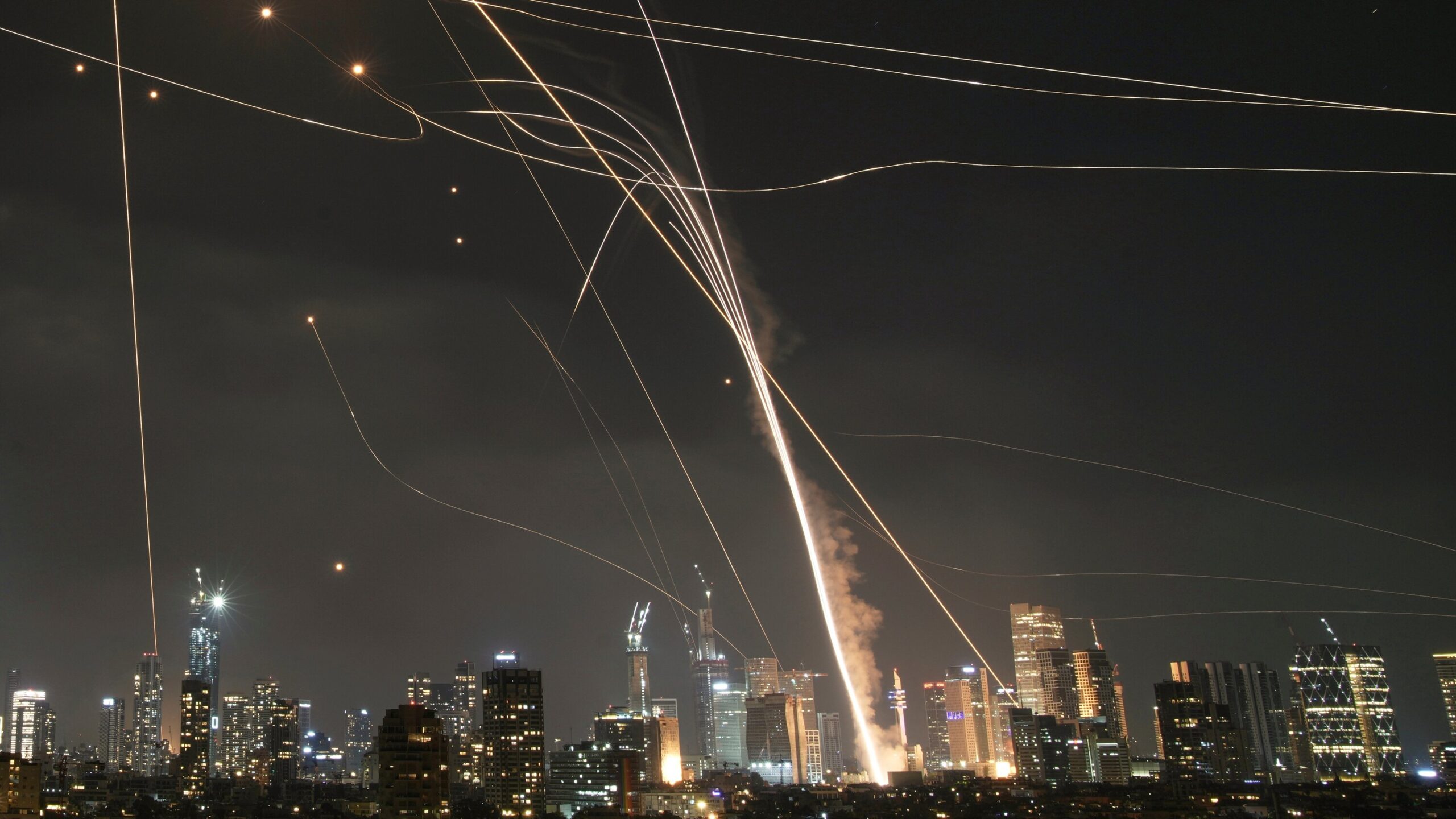
On the morning of February 28, 2026, at exactly 2:30 a.m. Eastern time, Donald Trump released an eight-minute video on Truth Social explaining why the United States had just begun bombing Iran. The message was characteristically blunt: regime change, existential threat, forty-seven years in the making. By sunrise, the Middle East was on fire—literally and strategically—and the world had entered a crisis that no amount of American airpower was ever going to resolve on Washington’s terms.
Eight days later, war with Iran has not reshaped the region the way America wants. It has produced something rather different: a global energy shock, a humanitarian catastrophe, and a geopolitical reckoning that exposes, with brutal clarity, the limits of military supremacy as a tool for political transformation.
Table of Contents
A Diplomatic Window, Deliberately Slammed Shut
The cruelest detail of this war is not its ferocity but its timing. On February 27, just twenty-four hours before the first American bombs fell on Tehran, Oman’s Foreign Minister Badr Al-Busaidi announced that a diplomatic “breakthrough” had been reached—that Iran had agreed in principle to never stockpile enriched uranium and to full international verification. A second round of nuclear talks had been scheduled for Geneva. The architecture of a deal was, by most accounts, within reach.
Instead, the Trump administration—which had spent weeks assembling the largest U.S. military presence in the Middle East since the 2003 invasion of Iraq—chose the strike package over the negotiating table. “The president was faced with a choice,” White House press secretary Karoline Leavitt told reporters. That framing, however politically convenient, obscures the harder truth: the choice had been engineered, not inherited. Washington’s preconditions—total cessation of uranium enrichment, dismantlement of Iran’s ballistic missile program—were conditions Tehran had explicitly and repeatedly said it could not accept. The diplomacy was theatre. The war was always the plan.
UN Secretary-General António Guterres, in a statement that may endure as this conflict’s moral verdict, described the strikes as “squandering” an opportunity for diplomacy. He was not wrong. He was, in the manner of UN secretaries-general throughout history, also completely powerless to stop it.
The Human Arithmetic of “Epic Fury”
Operation Epic Fury—the Pentagon’s somewhat grandiose codename for the campaign—has, by the morning of March 7, killed at least 1,332 people in Iran, of whom at least 181 are children, according to UNICEF. Schools have been struck—most infamously, a girls’ elementary school in Minab on the very first day of the campaign, killing at least 165 schoolgirls and staff. Defense Secretary Pete Hegseth has said only that the Pentagon is “investigating.”
The Center for Strategic and International Studies estimates the first 100 hours of the campaign cost $3.7 billion—roughly $891 million per day, with $3.5 billion of that entirely unbudgeted. US and Israeli forces have struck over 4,000 targets across Iran in the opening four days alone, a pace that war-monitoring group Airwars describes as “significantly more targets per day than any campaign in recent decades”—surpassing even the assault on Gaza that began in 2023, and the US-led campaign against ISIS.
Iran, for its part, is not lying down. Its Revolutionary Guard has launched twenty-three waves of missile and drone strikes against Israel, US bases across the Gulf, and civilian infrastructure from Riyadh to Doha to Dubai. Amazon Web Services’ Bahrain data center was taken offline after a nearby drone strike. An oil refinery in Bahrain was hit. Kuwait’s embassy operations have been suspended. A vessel was struck seven nautical miles east of Fujairah. More than 330,000 people have been forcibly displaced across the broader region. Six US servicemen have died.
Trump’s demand, as of March 6, is “unconditional surrender.” He has also announced his intention to personally select Iran’s next leader—explicitly ruling out Mojtaba Khamenei, the son of the Supreme Leader assassinated in the opening salvo. The gap between what the United States is doing and what it can actually achieve has rarely been so wide.
The Oil Shock: When Geopolitics Meets the Fuel Tank
The Iran war impact on global oil markets has been, by any historical measure, extraordinary. When the Strait of Hormuz—through which approximately 20 percent of the world’s daily oil supply and significant LNG volumes normally transit—effectively closed to commercial shipping, markets responded with a violence not seen in decades.
Crude tanker transits through the Strait fell from an average of 24 vessels per day to four ships on March 1—three of them Iranian-flagged. By March 5, the Joint Maritime Information Center reported traffic at “single-digit levels”. Over 150 tankers sat at anchor outside the strait. Protection and indemnity insurance was pulled entirely for March 5 transit, making the economics of passage impossible regardless of the physical risk.
The price response has been historic. West Texas Intermediate crude surged 35.63 percent across the week ending March 7—the largest weekly gain in the history of futures trading, dating to 1983. WTI closed at $90.90; Brent at $92.69. By Friday morning, WTI had briefly topped $86 for the first time since April 2024, and Oxford Economics noted it was up close to 30 percent since the start of the war and more than 55 percent from the January low. Barclays analysts warned clients that Brent could hit $100 per barrel by next week if tankers remain unable to traverse the Strait. UBS put a scenario for $120 Brent on the table.
Qatar’s energy minister, Saad al-Kaabi, provided what may prove the week’s most alarming single statement, telling the Financial Times that Gulf exporters would halt production entirely within days if tankers cannot pass the Strait—a scenario that could, in his words, spike oil to $150 a barrel and “bring down the economies of the world.” US retail gasoline prices have already jumped 32 cents a gallon in a single week to $3.31, the sharpest seven-day increase since Russia invaded Ukraine in 2022.
For central banks, the timing is diabolical. Brent has risen 36 percent since the start of the year, reigniting inflationary pressures just as monetary policymakers had hoped for clear air to cut rates. “The ongoing Iran conflict solidifies the case for many central banks to hold rates steady for now,” Nomura economists wrote in a note on Sunday. The Federal Reserve’s calculus, already complicated by domestic tariff-driven inflation, has become considerably darker.
Supply Chain Fracture Lines
The disruption extends well beyond crude oil. Iran war supply chain disruption is now running across multiple vectors simultaneously. About 10 percent of the world’s container ships are caught up in broader shipping backups, with cargo expected to begin piling up at ports and transshipment hubs in Europe and Asia. Qatar’s LNG production has been suspended—a serious blow to European winter reserves and Asian buyers who rely on the emirate as their third-largest LNG supplier. European natural gas prices nearly doubled within 48 hours, peaking above €60/MWh before partially retreating on tentative Iranian signals about talks. Aviation over the Gulf has been disrupted, with multiple carriers rerouting long-haul flights and Kuwait’s US embassy evacuated following direct strikes.
Why the Region Won’t Be “Reshaped” on Washington’s Terms
The Fallacy of the “Day After”
Every war of choice arrives with a theory of the peace that follows. In 2003, it was Iraqi democracy radiating stability across the Arab world. In 2011, it was Libyan liberation opening a new chapter for North Africa. The Trump administration’s theory—as Trump himself sketched it on Truth Social, promising to make Iran “economically bigger, better, and stronger than ever before” once it surrenders and accepts a US-selected leader—follows this tradition with striking fidelity, and with equally striking ignorance of its failures.
Iran is not Iraq in 2003. It is a nation of 90 million people with a coherent national identity, deep institutional roots, and a military-theological establishment that has spent four decades preparing for precisely this scenario. Ali Larijani, secretary of Iran’s Supreme National Security Council, warned this week that Iranian forces are “waiting” for a potential US ground invasion, and are prepared to “kill and capture thousands of US troops.” These are not empty words from a cornered regime. They are the considered statements of a state that has fought a grinding eight-year war with Iraq, absorbed decades of sanctions, and internalized—perhaps more deeply than any nation on earth—what existential threat feels like.
The critical intelligence failure lies not in underestimating Iran’s missile inventory, but in misreading how regime existential pressure changes behavior. As one geopolitics analyst put it plainly this week: “If the regime feels threatened, it’ll lash out harder than it would if it thought it could ride out the attacks.” The logic of “maximum pressure” assumes a linear relationship between military pain and political capitulation. Iran’s history suggests the relationship is inverse.
The Gulf States: Caught, Not Converted
Washington’s implicit assumption—that its Gulf Arab partners would welcome an Iran humbled or broken—has collided with a reality more complicated and more dangerous. Saudi Arabia and the UAE did not ask for Iranian missiles to rain on their territory. Riyadh’s US embassy has been struck. Bahraini refineries are on fire. Qatar, which hosts the largest US airbase in the region at Al Udeid, has intercepted multiple waves of Iranian attacks. Saudi Arabia confirmed Iranian strikes on Riyadh and its Eastern Province.
The Gulf states are, in the most literal sense, collateral damage in a war prosecuted in part on their behalf—and at their lobbying. The Washington Post reported that Crown Prince Mohammed bin Salman conducted multiple phone calls with Trump urging him to strike, warning that Iran would “become stronger and more dangerous if Washington did not strike immediately.” The irony now is that MBS’s kingdom is absorbing Iranian missiles while its energy exports sit stranded in tankers outside a closed strait. “Years of Iranian détente-building with the Gulf may be over,” noted Aysha Chowdhry of The Asia Group. That observation, though accurate, understates the fragility: Gulf states that were mending ties with Tehran in 2023—via Chinese mediation—are now war zones.
China’s Strategic Patience
Beijing’s response to this crisis has been a masterclass in what might be called strategic restraint with strategic benefit. China has loudly condemned the strikes—Foreign Minister Wang Yi called the assassination of Khamenei “a grave violation of Iran’s sovereignty” and demanded an immediate halt to military operations—but has offered Tehran nothing beyond rhetoric. The reason is pragmatic: Beijing was not notified of the strikes in advance, and faces its own acute disruption from the Strait closure, given that roughly half of China’s seaborne crude imports transit through the waterway.
Yet the strategic calculus cuts both ways. China has barred the export of rare earth elements for military use—materials crucial for everything from missiles to fighter jets—which complicates America’s capacity to replenish weapons at a historically unprecedented pace of consumption. And with US military attention and resources diverted deep into the Persian Gulf, the Indo-Pacific breathing room Xi Jinping gains is, from his perspective, a strategic dividend. “China is a fair-weather friend—long on words, short on risk,” observed Craig Singleton of the Foundation for Defense of Democracies. But in geopolitics, fair-weather friends who watch their rivals bleed are often the ultimate winners.
The Carnegie Endowment for International Peace captured Beijing’s posture with precision: China has always maintained productive relations with Iran, Saudi Arabia, the UAE, Turkey, and Egypt simultaneously—a portfolio diversification that no other external power has matched. The war that Washington hoped would consolidate American primacy in the Middle East may, paradoxically, accelerate the region’s pivot toward Chinese mediation as the only broker trusted by all sides.
The Strategic Cost: What America Is Burning Through
The arithmetic of this campaign deserves more scrutiny than it has received. The US military has struck more than 3,000 targets in Iran and destroyed 43 Iranian warships since February 28. Iran’s ballistic missile attacks have, by the Pentagon’s own account, fallen 90 percent from peak—evidence of serious degradation. But Iran still fights. Its drone attacks have dropped only 83 percent. Its 23rd wave of missile strikes was announced this week. Its ground forces remain intact and warn of consequences for any invasion.
The weapons expenditure rates are almost certainly unsustainable. The US arsenal of precision munitions—stretched by support for Ukraine and the 2025 twelve-day war with Iran—is being consumed at a pace that no industrial base can immediately replace. China’s rare-earth export ban is not a symbolic gesture; it is a targeted intervention in America’s ability to keep this campaign going. The Senate’s vote on the War Powers Act—which failed, allowing Trump to continue the campaign—has done nothing to resolve the fundamental strategic question: what does “victory” actually look like, and who governs Iran the morning after?
Trump’s stated answer—a “great and acceptable leader” selected with direct US involvement—is not a policy. It is a fantasy that ignores every lesson of nation-building from Kabul to Baghdad to Tripoli. The Supreme Leader’s potential successor, Mojtaba Khamenei, has been explicitly ruled out by Washington. But Washington does not control Iranian succession. The IRGC, battered and enraged, retains both weapons and institutional memory. The Iranian people, who have no affection for the theocracy that has suppressed them for decades, have even less affection for foreign-imposed rulers.
The Forward Reckoning
Iran retaliation impact on global oil markets 2026 has become the dominant variable in the world economy. But the longer arc of this crisis will be measured in different currencies: the legitimacy of the international order, the durability of US alliances, the patience of Asian economies for disruption in their energy arteries, and the strategic positioning of China as the region’s indispensable mediator.
The path out of this war is not a military one. It is a negotiated one, and the very actors Washington has alienated—Oman’s mediators, Europe’s diplomats, China’s back-channels—are the ones who will ultimately have to construct it. Trump’s demand for “unconditional surrender” is not a negotiating position. It is a formula for indefinite war with a nation of 90 million that has nowhere left to retreat.
History is not kind to the architects of unnecessary wars. The mirage of a new Middle East—stable, American-aligned, Iran-free—has always been precisely that: a trick of desert light, receding as you approach it. The region’s fractures are not Iran-made. They are decades in the making, drawn in colonial borders and sustained by strategic miscalculation. No air campaign, however historic in its pace, changes those underlying geometries.
“What this conflict has changed, definitively and dangerously, is the price at the pump, the temperature of the global economy, and the degree of trust that the international community extends to American statecraft. “
Those are not small things. They are, in the medium term, the very foundations of the influence Washington is trying, through force, to reassert.
The Middle East will be reshaped by this war. Just not in any way that Washington planned, or that any American president will be proud to claim.
Discover more from The Monitor
Subscribe to get the latest posts sent to your email.



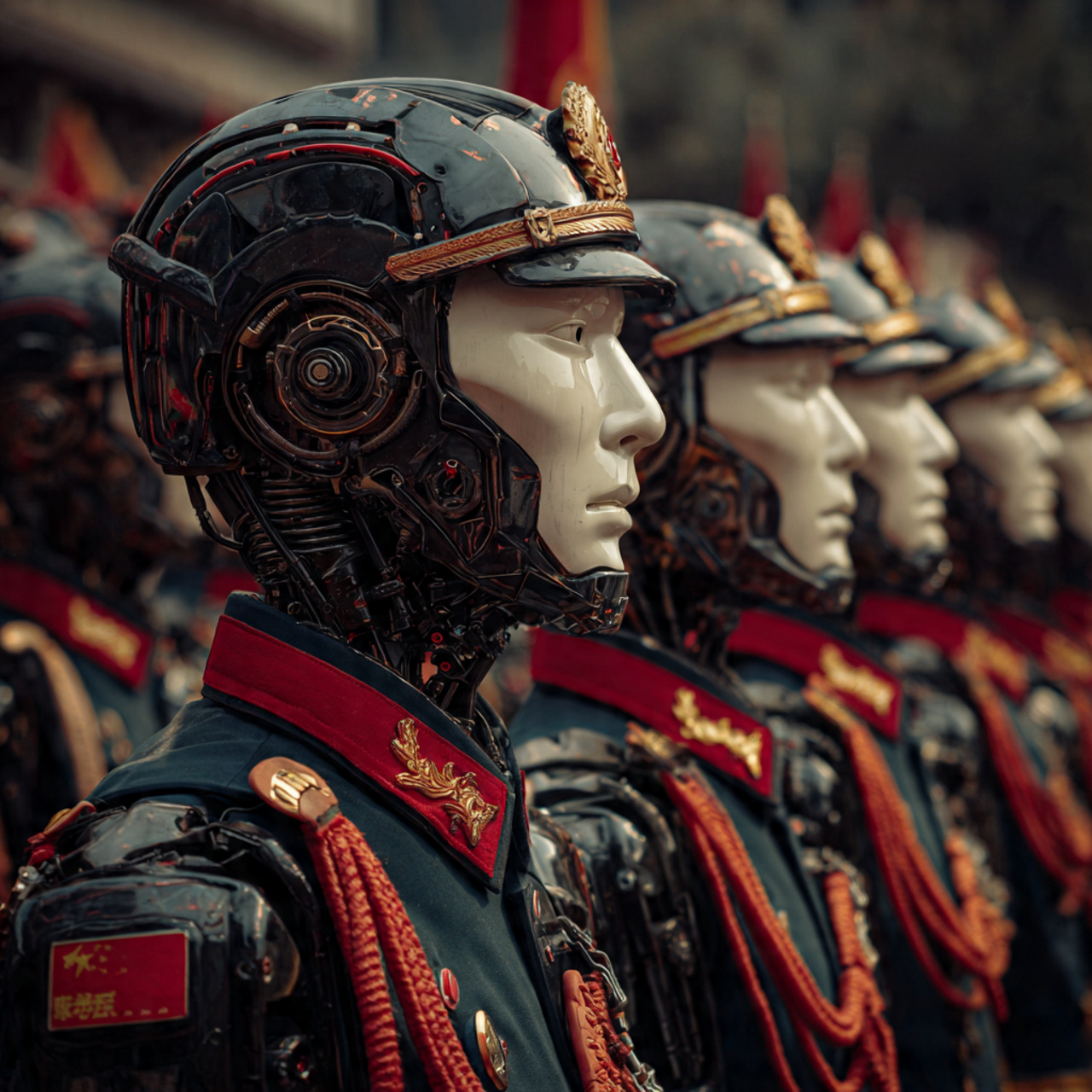
China’s private firms are winning its military AI bids — and Washington doesn’t seem to grasp the implications.
In February 2026, a routine penalty notice appeared on the People’s Liberation Army’s procurement platform. It named Shanxi 100 Trust Information Technology — a 266-person IT company based in Taiyuan, in China’s coal-scarred heartland — and barred it from all military procurement across every service branch for one year. The infraction was bid fraud: the firm had submitted falsified materials to win a contract. In the labyrinthine world of PLA procurement, such violations are not uncommon.
What was uncommon was the company itself.
As a Jamestown Foundation analysis identified, 100 Trust is the sole wholly privately-owned firm operating inside China’s xinchuang (信创) domestic IT innovation framework — a program originally designed to replace foreign technology in sensitive government systems. Despite its modest headcount, the firm holds classified-project clearance and had won some of the PLA’s largest contracts to integrate DeepSeek, China’s breakout open-weight AI model, into military command systems. Its products had reportedly been demonstrated to Xi Jinping himself. And yet, when the opportunity arose to inflate its credentials, someone at 100 Trust apparently couldn’t resist.
The penalty notice tells us almost everything we need to know about China’s military AI push in 2026 — both its ambition and its contradictions. It tells us that China private firms are winning military AI bids once reserved for state giants. It tells us that the structural conditions of Beijing’s civil-military fusion policy have made this outcome not accidental but inevitable. And it tells us that Washington, still operating on a mental model of “China Inc.” — a monolithic, state-directed industrial juggernaut — is watching the wrong companies.
Table of Contents
The Data Is Unambiguous: Private Is the New Defense
The anecdote of Shanxi 100 Trust is not an outlier. It is the leading edge of a statistical pattern that, once you see it, is impossible to unsee.
In a landmark September 2025 study, Georgetown University’s Center for Security and Emerging Technology (CSET) analyzed 2,857 AI-related defense contract award notices published by the PLA between January 2023 and December 2024. The finding that should have set off alarms in every national security directorate from Langley to the Pentagon: of the 338 entities that won AI-related PLA contracts, close to three-quarters were nontraditional vendors (NTVs) — firms with no self-reported state ownership ties. These NTVs collectively won 764 contracts, more than any other category. Two-thirds of them were founded after 2010.
These are not shadowy front companies. They are nimble, technically sophisticated private firms that market themselves explicitly on dual-use capability — civilian agility deployed for military ends. They are the companies winning PLA AI procurement private sector contracts that, by any conventional Washington risk framework, should not exist.
The legacy state-owned defense champions — China Electronics Technology Group (CETC), China Aerospace Science and Technology Corporation (CASC), NORINCO — still lead in sheer contract volume among top-tier entities. But the growth is concentrated in the private sector. The civil-military fusion AI China strategy that Xi Jinping has championed for over a decade is, in the AI domain at least, delivering something its architects may not have fully anticipated: a market in which lean private operators consistently outrun the bureaucratic lumbering of the state-owned defense-industrial complex.
The DeepSeek Accelerant
No single development has turbocharged China’s military AI push more dramatically than DeepSeek’s January 2025 release of its R1 reasoning model as an open-weight system — meaning any entity, including the PLA and its contractor ecosystem, could download, modify, and deploy it without restriction.
The Jamestown Foundation, tracking hundreds of DeepSeek-specific PLA procurement tenders, found the same structural pattern: private companies, not SOEs, won a majority of contracts to build DeepSeek-integrated tools for the PLA. The Jamestown analysts note that this likely reflects private firms’ superior capacity to respond to rapidly shifting market dynamics — a competitive edge that bureaucratic SOEs, with their elongated procurement relationships and political dependencies, simply cannot match.
The capabilities being built are not incremental. Researchers at Xi’an Technological University demonstrated a DeepSeek-powered assessment system that processed 10,000 battlefield scenarios in 48 seconds — a task they estimated would require human military planners approximately 48 hours. The PLA’s Central Theatre Command (responsible for defending Beijing) has used DeepSeek in military hospital settings and personnel management. The Nanjing National Defense Mobilization Office has issued guidance documents on deploying it for emergency evacuation planning. State media outlet Guangming Daily has described DeepSeek as “playing an increasingly crucial role in the military intelligentization process.”
The most revealing data point: Norinco, China’s enormous state-owned weapons manufacturer, unveiled the P60 autonomous combat-support vehicle in February 2026 — explicitly powered by DeepSeek. But the integration contracts enabling such deployments across the PLA’s command architecture are being won by private firms powering China military AI systems from Taiyuan to Hefei, not by Norinco’s in-house engineers.
iFlytek Digital and the Art of Corporate Camouflage
One company illuminates the structural logic with particular clarity: iFlytek Digital, the top-awarded nontraditional vendor in CSET’s dataset, which won 20 contracts in 2023 and 2024 alone, including one for the development of AI-enabled decision support systems and translation software for the PLA. As CSET’s full report documents, iFlytek Digital has close ties to its parent company iFlytek — a speech recognition and natural language processing champion that helped build China’s mass automated voice surveillance infrastructure and played a documented role in the CCP’s surveillance programs in Xinjiang and Tibet. iFlytek was placed on the U.S. government’s Entity List in 2019.
But iFlytek Digital — which became formally independent of its parent in 2021, though its ultimate beneficial owners remained iFlytek executives — operates in a regulatory gray zone that the Entity List framework was never designed to address. This is not an accident. It is a deliberate structural feature: by creating arms-length subsidiaries, spinning off divisions, or establishing new entities that technically lack “state-reported ownership ties,” Chinese tech companies can maintain operational separation from sanctioned entities while preserving functional alignment with them.
For Washington, this matters enormously. The U.S. government’s primary tools — the Commerce Department’s Entity List, the Pentagon’s 1260H “Chinese military company” designations, and the Treasury’s investment restrictions — are built around the premise of identifying specific legal entities. When the PLA’s most consequential AI suppliers are structurally designed to be nontraditional, non-state-affiliated, and technically new, the entity-based framework becomes a sieve. You can list the parent; the subsidiary wins the contract.
The Top Private Winners: A Structural Snapshot
Based on CSET, Jamestown Foundation, and open-source procurement data, the following entities represent the emerging private tier of China’s military AI supplier ecosystem:
- Shanxi 100 Trust Information Technology — xinchuang framework, DeepSeek integration contracts, classified-project clearance; 266 employees.
- iFlytek Digital — NLP, translation, AI decision support; 20 PLA contracts in two years; arms-length separation from sanctioned iFlytek parent.
- PIESAT — Satellite and geospatial analytics; delivering combat simulation platforms and automatic target recognition for the PLA; subsidiaries in Australia, Denmark, Singapore, Malaysia.
- Sichuan Tengden — Drone manufacturer; produced autonomous systems deployed by the PLA on missions near Japan and Taiwan.
- DeepSeek (Hangzhou High-Flyer AI) — Open-weight model appearing in 150+ PLA procurement records; U.S. lawmakers have requested its Pentagon designation as a Chinese military company.
What unites this cohort is not state ownership but structural alignment: dependence on state-controlled compute infrastructure, technical agility that SOEs lack, and an incentive architecture that rewards civil-military dual-use positioning.
The Export Control Paradox
Here is the geopolitical irony that Washington has not fully digested: U.S. export controls on advanced semiconductors — Nvidia A100s, H100s, and their successors — were designed to impede China’s military AI development. In the narrow technical sense, they impose real friction. But in the strategic sense, they have produced a second-order effect that cuts against their intended purpose.
By restricting access to Western computing hardware, the Biden and Trump administrations have deepened Chinese private firms’ dependence on state-controlled domestic alternatives — primarily Huawei’s Ascend AI chips and Kunpeng processors. The firms now winning PLA AI contracts are marketing themselves explicitly on Huawei Ascend stacks, partly because of U.S. export controls. Restrictions that force private firms to rely on state-favored compute simultaneously deepen those firms’ incentive to demonstrate loyalty through military work. The export control paradox: the policy meant to widen the capability gap may be accelerating the fusion between private innovation and PLA procurement.
A separate paradox is operational: DeepSeek’s R1 is open-weight. The Export Administration Regulations have no jurisdiction over Chinese-origin technology being used by Chinese military entities. As one former national security official noted in open-source analysis, “you can’t export-control a model that’s already been released.” The horse left the barn in January 2025.
Meanwhile, the February 2026 CSET report on China’s Military AI Wish List — drawing on over 9,000 unclassified PLA RFPs from 2023 and 2024 — documents that the PLA is pursuing AI-enabled capabilities across all domains simultaneously: decision support systems, autonomous drone swarms, deepfake generation for cognitive warfare, seaborne vessel tracking, cyberattack detection, and AI-enabled encryption stress-testing. The breadth alone should recalibrate any analyst who still views China’s military AI push as aspirational rather than operational.
Why Private Firms Are Outcompeting SOEs
Two structural conditions explain why Chinese private tech military contracts are growing at the expense of SOE incumbents — and why this trend will deepen.
First: speed. PLA AI procurement notices in the DeepSeek era feature compressed tender timelines, frequently under six months from solicitation to award. State-owned defense giants, with their multi-layered bureaucratic approval chains and established procurement relationships, are architecturally incapable of this tempo. A 266-person firm from Taiyuan, by contrast, can pivot its entire technical stack in weeks. The CSET data confirms that the majority of NTVs were founded relatively recently; they were built for agile deployment cycles, not Cold War-era production runs.
Second: the PLA’s own institutional crisis. Xi Jinping’s sweeping anti-corruption purge of the PLA Rocket Force leadership in 2023, and its subsequent extension into the Equipment Development Department and broader defense industrial apparatus, has hollowed out precisely the procurement networks on which SOE defense contractors depended. As Foreign Affairs documented in its March 2026 analysis, the PLA is “rapidly prototyping and experimenting” rather than engaging in traditional long-cycle procurement. In an environment where established bureaucratic relationships carry less weight than deployment speed and technical competence, private firms hold a structural advantage they did not engineer and may not fully appreciate.
The result, paradoxically, is that Xi’s anti-corruption campaign — designed to strengthen the PLA — may be reinforcing private firms’ dominance in its most strategically important procurement category.
The “China Inc.” Fallacy and Why Washington Is Flying Blind
For decades, Washington’s China threat framework has been organized around a relatively simple mental model: the Chinese state directs; Chinese companies obey. Export controls target state entities and their known subsidiaries. Sanctions lists name the champions. Defense authorizations restrict contracts with designated Chinese military companies.
This framework was always an approximation. It is now actively misleading.
The U.S. policy apparatus is structured to track the companies it already knows — CETC, CASC, Huawei, DJI. But as the CSET data on civil-military fusion makes clear, three-quarters of PLA AI contracts are going to entities that do not self-report state ownership ties. Most of these firms are not on any U.S. government list. Many operate in countries allied with the United States — PIESAT, for instance, claimed subsidiaries in Australia, Denmark, Singapore, and Malaysia as of 2023, as Foreign Policy reported.
The December 2025 letter from House Intelligence Committee Chairman Rick Crawford, House Select Committee on China Chairman John Moolenaar, and Senator Rick Scott to the Pentagon requesting that DeepSeek, Unitree Robotics, and thirteen other companies be designated as Chinese military companies is a belated, if welcome, recognition that the designations framework has fallen catastrophically behind the procurement reality. Designating DeepSeek in late 2025 — after its models had already been open-sourced, downloaded millions of times globally, and integrated into PLA command systems — is roughly analogous to sanctioning gunpowder.
The US policy gap on China’s military AI private sector is not a failure of intelligence. It is a failure of analytical framework. The question Washington keeps asking is: “Which Chinese companies are military?” The question it should be asking is: “Given China’s MCF architecture, which Chinese private technology companies aren’t potentially military?”
Implications for Washington: Three Uncomfortable Truths
The Washington implications of China AI bids being won by private firms rather than state giants are neither abstract nor distant. They are operational, legal, and strategic.
First: the Entity List model is inadequate for the private-sector era. Effective technology controls now require tracking corporate structures — beneficial ownership, subsidiary relationships, executive continuity across spinoffs. The 100 Trust case demonstrates that a company can hold classified-project clearance, win the PLA’s largest DeepSeek integration contracts, and have demonstrated its products to the head of state while remaining, on paper, a 266-person private IT firm from Taiyuan that no U.S. government list has ever named. This requires a fundamental rethinking of how the Bureau of Industry and Security, Treasury’s OFAC, and the Pentagon’s designations process share data and coordinate designations.
Second: open-weight AI has broken the export control paradigm for foundation models. The U.S. framework for restricting technology transfer was designed for hardware and proprietary software — objects that can be tracked, licensed, and withheld. An open-weight model that any PLA researcher can fine-tune for battlefield scenario analysis on a domestic Huawei Ascend cluster requires a fundamentally different policy approach: one focused less on restricting Chinese access to existing models and more on maintaining the frontier gap through sustained domestic R&D investment. The 2026 National Defense Authorization Act took modest steps in this direction, but the pace of reform remains slower than the pace of PLA integration.
Third: the procurement volume is not the capability measure that matters. The 100 Trust penalty — a private firm with Xi-level visibility submitting falsified procurement documents — is evidence of a supply-demand gap in China’s military AI ecosystem. Private firms winning contracts they cannot fully execute, racing deployment timelines that exceed their genuine capabilities, is a signal of fragility as much as strength. Washington should be studying not just how many AI contracts the PLA is awarding to private firms, but how many of those contracts are producing operationally deployed capabilities versus prototype demonstrations or outright fraud. The answer, based on available open-source evidence, is considerably more ambiguous than Beijing’s official narrative suggests.
None of this diminishes the strategic imperative. As CSET’s February 2026 Military AI Wish List study documents, the breadth and speed of PLA AI experimentation — across autonomous systems, cognitive warfare, C5ISRT decision support, and space and maritime domain awareness — represents a genuine challenge to U.S. military advantages that is accelerating, not plateauing. The Foreign Affairs analysis published this month warns that “China is positioning itself to quickly and effectively adopt and deploy operational military AI, thus keeping the gap between the U.S. and Chinese militaries narrow.”
The private firms powering China’s military AI push are not a curiosity. They are the mechanism through which Beijing’s most consequential military modernization is being executed — and they are operating in a regulatory and analytical blind spot that Washington has not yet seriously resolved to close.
Citations Used
- “Center for Security and Emerging Technology (CSET) — Pulling Back the Curtain on China’s Military-Civil Fusion” → https://cset.georgetown.edu/publication/pulling-back-the-curtain-on-chinas-military-civil-fusion/
- “CSET full report (PDF)” → https://cset.georgetown.edu/wp-content/uploads/CSET-Pulling-Back-the-Curtain-on-Chinas-Military-Civil-Fusion.pdf
- “Jamestown Foundation — DeepSeek Use in PRC Military and Public Security Systems” → https://jamestown.org/program/deepseek-use-in-prc-military-and-public-security-systems/
- “CSET — China’s Military AI Wish List (February 2026)” → https://cset.georgetown.edu/publication/chinas-military-ai-wish-list/
- “Foreign Affairs — China’s AI Arsenal (March 2026)” → https://www.foreignaffairs.com/china/chinas-artificial-intelligence-arsenal
- “Foreign Policy — China: Under Xi, PLA Adopts More Civilian Tech” → https://foreignpolicy.com/2025/10/07/china-military-civil-fusion-defense-tech-us/
- “House Homeland Security Committee — Letter requesting Pentagon designations for DeepSeek et al.” → https://homeland.house.gov/2025/12/19/chairmen-garbarino-moolenaar-crawford-lead-letter-asking-pentagon-to-list-deepseek-gotion-unitree-and-wuxi-as-chinese-military-companies/
- “RealClearDefense — DeepSeek: PLA’s Intelligentized Warfare” → https://www.realcleardefense.com/articles/2025/11/18/deepseek_plas_intelligentized_warfare_1148009.html
- “South China Morning Post — China’s growing civilian-defence AI ties” → https://www.scmp.com/news/china/military/article/3324727/chinas-growing-civilian-defence-ai-ties-will-challenge-us-report-says
- “FDD — China’s Military Reportedly Deploys DeepSeek AI for Non-Combat Duties” → https://www.fdd.org/analysis/policy_briefs/2025/03/27/chinas-military-reportedly-deploys-deepseek-ai-for-non-combat-duties/
- “CSET — China Is Using the Private Sector to Advance Military AI” → https://cset.georgetown.edu/article/china-is-using-the-private-sector-to-advance-military-ai/
- “The Diplomat — The Private Firms Powering China’s Military AI Push (March 2026)” → https://thediplomat.com/2026/03/the-private-firms-powering-chinas-military-ai-push
Discover more from The Monitor
Subscribe to get the latest posts sent to your email.
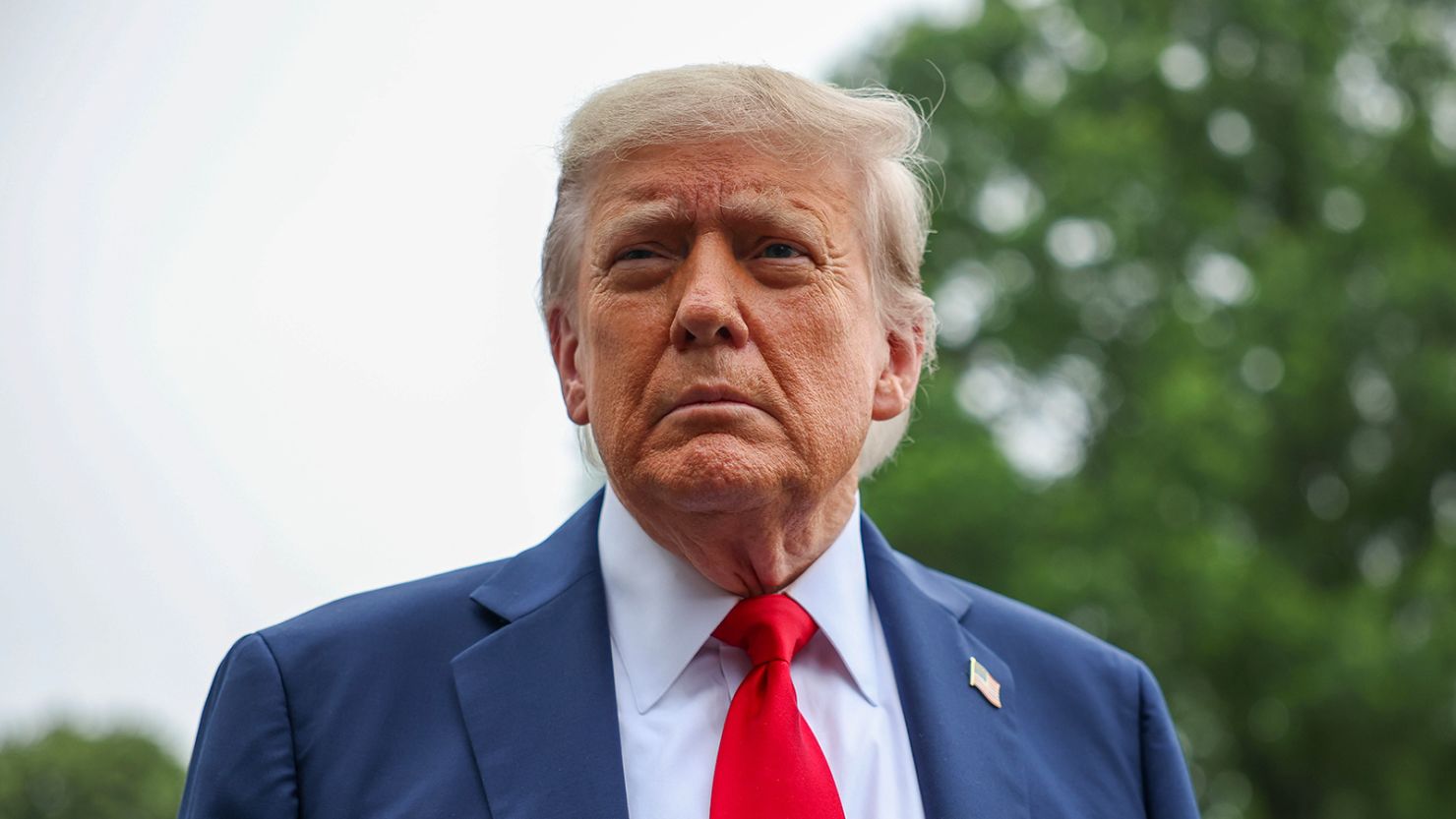
President Trump extended the Iran strike deadline to April 6 after Wall Street suffered its worst day since the conflict began. S&P 500 dropped 1.7%, Nasdaq entered correction, and 10-year Treasury yields spiked to 4.41% on fresh inflation fears. Full market analysis inside.
It was, by any measure, a signal moment—not in the Persian Gulf, where Iranian patrol boats continue to shadow tankers through the world’s most consequential maritime choke point, but on the floor of the New York Stock Exchange, where traders watched their screens with the kind of grim resignation usually reserved for hurricane landfalls.
At 4:00 p.m. Eastern time on Thursday, the numbers were final. The S&P 500 had fallen 1.7 percent, its worst single-day decline since January. The Nasdaq Composite had plunged 2.4 percent, pushing it more than 10 percent below its record high—a correction, in the clinical language of Wall Street, but in human terms something closer to a collective gut punch. The Dow Jones Industrial Average shed 469 points (Reuters).
Then, eleven minutes after the closing bell, President Donald Trump posted on Truth Social: Iran had asked for more time, and he was giving it. Ten more days. The new deadline for a deal to reopen the Strait of Hormuz—or face the destruction of Iran’s energy infrastructure—is now April 6 at 8:00 p.m. Eastern (Bloomberg).
“As per Iranian Government request,” Trump wrote, “please let this statement serve to represent that I am pausing the period of Energy Plant destruction by 10 Days” (Truth Social via Reuters). Talks, he insisted, were “going very well.”
The market, it seems, is not so sure.
What unfolded on Thursday was not merely a routine sell-off in response to geopolitical noise. It was something more revealing: a moment when investors, who had spent weeks parsing contradictory signals from Washington and Tehran, collectively concluded that the cost of uncertainty had become too high to carry. The extension that Trump framed as progress read to many on Wall Street as what it actually was—a punt, born of market panic, dressed up as diplomatic leverage.
Table of Contents
Why Wall Street Crashed: Inflation Fears Meet Iran Deadline Extension
To understand the carnage, one must go back to Saturday, when Trump first gave Iran 48 hours to reopen the Strait of Hormuz. The threat was existential for global energy markets: roughly 20 percent of the world’s oil passes through that narrow waterway, and Iran had effectively closed it since the U.S.-Israel bombing campaign began on February 28 (The Wall Street Journal).
By Monday, the president had already blinked once, extending the deadline to March 27 after Asian markets showed signs of distress. By Thursday, with U.S. stocks in freefall and the 10-year Treasury yield spiking to 4.41 percent—up eight basis points in a single session—he blinked again (Financial Times).
The numbers from Thursday’s session tell a story of broad-based capitulation. The Nasdaq’s 2.4 percent drop pushed it into correction territory, with technology giants taking the heaviest hits: Meta Platforms fell 7 percent, Nvidia slid 4 percent, and Alphabet dropped 3.4 percent (CNBC). The selling was indiscriminate, spanning sectors and market caps, a sign that the concern was systemic rather than sector-specific.
What spooked investors most was not the fighting itself—though that certainly didn’t help—but the collision of geopolitical escalation with stubborn inflation dynamics. Brent crude settled at $108.01 a barrel on Thursday, a 5.7 percent jump that brought its gain since the war began to nearly 50 percent (Bloomberg). West Texas Intermediate climbed 4.6 percent to $94.48.
For a market already skittish about the Federal Reserve’s next move, those oil prices are radioactive. The OECD warned Thursday that the Middle East crisis would push U.S. inflation to 4.2 percent this year, the highest among G7 nations (Reuters). That prospect effectively extinguishes any remaining hope for interest rate cuts in 2026—and raises the uncomfortable possibility that the Fed may have to resume hiking.
Treasury Yields Spike as Oil Volatility Returns
The bond market delivered its own verdict on Thursday, and it was brutal. The two-year Treasury yield, which is exquisitely sensitive to Fed policy expectations, jumped 10 basis points to 3.99 percent (Bloomberg). The 10-year yield touched 4.43 percent intraday before settling at 4.41 percent—a level not seen since the early weeks of the conflict.
What makes this yield spike particularly unsettling is what it signals about market psychology. Typically, geopolitical crises drive investors into the safety of U.S. government debt, pushing yields down. The fact that yields are rising instead suggests that inflation fears are overwhelming the traditional flight-to-quality impulse. Investors are not betting on Fed rescue; they are betting on Fed restraint, perhaps indefinitely.
“The market isn’t being erratic,” Steven Grey, chief investment officer at Grey Value Management, told the Financial Times. “This is what an efficient market looks like in the face of radical uncertainty” (Financial Times).
The radical uncertainty Grey refers to is not merely about whether the U.S. and Iran will reach a deal by April 6. It is about whether any deal is even possible, given the maximalist positions both sides have staked out.
Geopolitical Chess: What Trump’s 10-Day Pause Really Means for the Strait of Hormuz
For all the White House’s insistence that negotiations are proceeding smoothly, the reality on the ground is considerably messier. Iran’s Foreign Minister Abbas Araqchi made clear Wednesday that Tehran does not consider the message-swapping conducted through Pakistani intermediaries to constitute negotiation.
“Messages being conveyed through our friendly countries and us responding by stating our positions or issuing the necessary warnings is not called negotiation or dialogue,” Araqchi said (Reuters). “At present, our policy is to continue resistance and defend the country, and we have no intention of negotiating.”
The U.S. proposal delivered through Pakistan reportedly runs to 15 points and includes demands that Iran dismantle its nuclear program, curb its missile capabilities, and effectively cede control of the Strait of Hormuz (The Wall Street Journal). Iran’s counterproposal, according to regional sources, includes formal control of the strait, reparations from the U.S. and Israel, and guarantees against future military action (Al Jazeera).
These are not the positions of two sides approaching compromise. They are the positions of two sides preparing for a longer conflict, with diplomats working the back channels largely to manage escalation rather than to end it.
That assessment is reinforced by the military posture of the United States. Even as Trump extends diplomatic deadlines, the Pentagon is moving more troops into the region. Some 5,000 Marines are already being repositioned, and now an additional 1,000 soldiers from the 82nd Airborne Division are preparing to deploy, with reports suggesting the total could reach 10,000 (Associated Press).
The message to Tehran is contradictory: we want to talk, but we are also preparing to seize Kharg Island, Iran’s primary oil export terminal. Whether that contradiction reflects strategic coherence or improvisation is a question that markets are increasingly answering in the negative.
The “Toll Booth” and the Global Economy
Iran’s strategy in the strait has become clearer over the past week. Tehran is not merely blocking oil shipments; it is attempting to establish what one analyst described as a “toll booth” for tankers passing through Hormuz (Foreign Policy). Iranian patrol boats are stopping vessels, demanding fees, and allowing some to pass while detaining others.
Trump noted Thursday that Iran had allowed 10 Pakistan-flagged tankers through the strait, presenting this as evidence of progress (Reuters). But the selective passage is itself a form of control—a demonstration that Iran, not the United States, decides which ships move and which do not.
The economic impact of this arrangement is already visible. Global shipping insurance rates have spiked. Tanker operators are demanding premiums that reflect not just the risk of attack but the risk of arbitrary detention. And while Treasury Secretary Scott Bessent announced a U.S. insurance program to encourage shipping through the strait, it remains unclear whether private operators will accept coverage from a government that cannot guarantee safe passage (Bloomberg).
For the global economy, the stakes are enormous. Before the war, approximately 20 million barrels of oil passed through Hormuz daily—roughly 20 percent of world consumption. That flow has been reduced to a trickle, and the impact is being felt at gasoline pumps from Mumbai to Milan (International Energy Agency). In the United States, the national average price of gas is up more than a dollar from a month ago (AAA).
Economist’s View: Long-Term Market Risks Beyond April 6
For investors trying to position themselves for the weeks ahead, the key variable is not whether Trump extends the deadline again on April 6—though that remains a distinct possibility—but whether the underlying structural risks of the conflict are being priced correctly.
On that front, the market may still be underestimating the danger.
“Any sustainable market recovery will require meaningful progress toward a peace agreement and a reopening of the Strait of Hormuz,” Adam Turnquist at LPL Financial told Bloomberg (Bloomberg). That is the baseline condition. Without it, oil prices remain elevated, inflation expectations stay anchored higher, and the Fed remains locked in a hawkish stance.
Yet the conditions for a genuine peace agreement appear distant. Iran has hardened its position since the war began, demanding guarantees it would never have asked for before February 28. The United States, for its part, has committed to a posture of maximum pressure that leaves little room for the kind of face-saving compromises that typically end conflicts.
There is also the matter of trust—or the complete absence of it. The U.S. and Israel launched their initial strikes on February 28 in the middle of what were described as productive talks (The New York Times). Iran’s negotiators, to put it mildly, remember this.
“The current situation looks very similar, with markets positioning for a potential weekend escalation,” Kyle Rodda at Capital.com wrote in a note this week (Capital.com). That is the new normal: investors bracing for military action every Friday, only to recalibrate on Sunday night based on what actually happened.
Conclusion: A Market That Knows the Difference Between Postponement and Resolution
There is an old maxim on Wall Street that markets can climb walls of worry but cannot abide uncertainty. What the past week has demonstrated is that the Trump administration’s approach to the Iran crisis has created a wall of uncertainty so high and so opaque that even the most risk-tolerant investors are pulling back.
The 10-day extension to April 6 buys time, but it does not buy resolution. It allows the White House to avoid a market crisis in the immediate term while leaving every underlying problem—the closure of the strait, the inflationary pressure from high oil prices, the absence of a diplomatic framework—completely unresolved.
For the elite investors and policymakers who read this publication, the takeaway is not complicated. The Trump administration has shown that it will blink when markets demand it. That is a useful signal about the boundaries of policy, but it is not a solution. Until the Strait of Hormuz is genuinely reopened—not selectively, not conditionally, but fully—the risks to global markets remain asymmetrically tilted to the downside.
April 6 will come quickly. Whether it brings a breakthrough or merely another extension is anyone’s guess. But one thing is clear: the market is no longer waiting to find out. It is already pricing in the worst, and hoping, against evidence, to be proven wrong.
Discover more from The Monitor
Subscribe to get the latest posts sent to your email.
Analysis
Indonesia’s Danantara Shifts to Investment Phase, Targets 7% Returns — Sovereign Wealth Fund Enters Deployment Era Under Prabowo’s Ambitious Vision
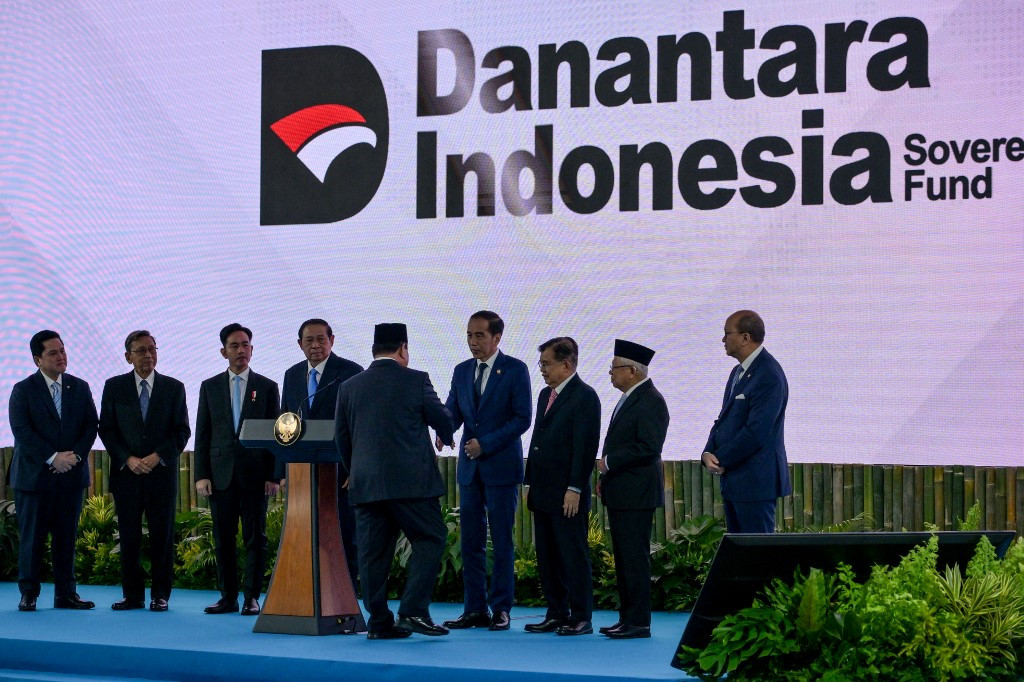
The morning light over Jakarta’s financial district has a way of making ambition look achievable. In the gleaming corridors of the Danantara Indonesia headquarters — a building that barely existed eighteen months ago — a quiet but consequential shift is underway. The sovereign wealth fund that President Prabowo Subianto unveiled with enormous fanfare in February 2025 has spent its inaugural year doing something unglamorous but essential: building the institutional scaffolding that separates a serious fund from a political showpiece. Now, as Indonesia’s Danantara sovereign wealth fund enters its investment phase in 2026, the real examination begins.
At the World Economic Forum in Davos in January, Chief Investment Officer Pandu Patria Sjahrir declared that Danantara’s target for investment fund placements in 2026 is set at $14 billion — nearly double the $8 billion allocated across all of 2025. Kompas The capital acceleration is not simply a number; it is a declaration of intent. The governance year is over. The deployment year has arrived.
Table of Contents
Year One: The Governance Foundation Nobody Talks About
Before you can deploy capital at scale, you need systems that can be trusted with it. That is the unglamorous lesson Danantara absorbed in 2025. Chief executive Rosan Roeslani acknowledged that a primary achievement of the first year was breaking down the siloed operations that had long plagued Indonesia’s state-owned enterprises, promoting greater transparency and internal value creation. Jakarta Globe
BCA Chief Economist David Sumual confirmed the picture candidly: Danantara’s main focus in 2025 was internal consolidation — restructuring efforts, organizational improvements, and recruitment of human resources — with no major projects having fully materialized by year’s end despite SOE dividends being reallocated to the fund. Indonesia Business Post
That candour from a senior domestic economist is actually a constructive signal. Unlike the opaque early years of Abu Dhabi’s IPIC or the dangerously undisclosed operations of Malaysia’s 1MDB before its collapse, Danantara’s leaders are at least publicly acknowledging the gap between aspiration and execution. The first year served as a necessary stress-test of internal architecture. The critical question, now that the architecture is nominally in place, is whether the deployment year delivers the returns its political patron is demanding.
The 7% Return Mandate: Prabowo’s Public Challenge
Few sovereign wealth fund leaders have their performance targets set quite so publicly — or quite so politically — as Pandu Sjahrir now does. President Prabowo Subianto has publicly set a target of 7% return on assets for the fund, a mandate that Sjahrir acknowledged directly, saying Danantara would gladly accept the challenge as it “searches for projects that can give higher returns with the same impact while improving standards.” Jakarta Globe
The 7% ROA hurdle deserves context. Indonesia’s current state-owned enterprise portfolio has historically generated returns on assets hovering near 1.88% — a figure that reflects decades of sub-optimal capital allocation, political interference in pricing decisions, and chronic underinvestment in productivity. Reaching 7% is not an incremental improvement. It represents nearly a fourfold leap in capital efficiency across a portfolio of more than 1,000 SOEs.
To understand whether the target is reachable, consider how the world’s benchmark sovereign funds perform. Singapore’s Temasek Holdings has delivered annualised total shareholder return of approximately 7% in Singapore dollar terms over its 50-year history — but this was achieved with an entirely different governance architecture, strict commercial independence from government policy directives, and a portfolio heavily weighted toward liquid, globally diversified assets. GIC, Singapore’s other sovereign vehicle, targets real returns above 4% over 20-year rolling periods while managing over $770 billion. Abu Dhabi’s Mubadala, a closer model given its hybrid development-investment mandate, has generated returns in the 8–12% range in its best years, but only after a decade of portfolio maturation and institutional discipline-building.
What Danantara needs — quickly — is a portfolio mix that can bridge the gap between its politically derived SOE inheritance and the commercially rational returns its mandate demands.
Shifting to Deployment: Bonds, Equities, and the Capital Market Play
In a presentation at the Indonesia Stock Exchange, Pandu Sjahrir confirmed that Danantara would begin investing SOE dividend capital in both bonds and equities through the capital market starting in 2026, with the explicit additional goal of deepening Indonesia’s relatively shallow domestic capital markets. Kompas
This two-pronged strategy is tactically sound. Fixed-income instruments — particularly Indonesian government bonds (SBN) and SOE-issued corporate bonds — offer predictable yields in the 6–7% range at current rupiah interest rate levels, immediately competitive with the ROA target. The equities component introduces both upside potential and volatility, but also provides the market liquidity and price-discovery function that Indonesia’s IDX has lacked for years.
Economic observer Yanuar Rizky assessed that Danantara’s entry as a major institutional investor could have a positive stabilising effect on Indonesia’s capital markets, provided the fund maintains a clear distinction between commercial portfolio investment and politically motivated market support operations. Kompas That caveat is pointed. If Danantara begins purchasing equities to prop up falling SOE stock prices rather than to generate returns, it will quickly become both a market distortion mechanism and a fiscal liability.
Danantara is also considering taking a shareholder position in the Indonesia Stock Exchange itself through its demutualization process — a move that would simultaneously give the fund a structural role in market governance while diversifying its asset base into financial infrastructure. Kompas
The $14 Billion Deployment Pipeline: Sectors and Scale
The capital earmarked for 2026 will flow primarily from SOE dividends and will target sectors including renewable energy, energy transition, digital infrastructure, healthcare, and food security. Danantara is also evaluating opportunities beyond Indonesia’s borders — specifically in China, India, Japan, South Korea, and Europe — though domestic allocation remains the dominant priority. Asia Asset Management
Six major projects were scheduled for groundbreaking in February 2026 alone, including an aluminum smelter and smelter-grade alumina facility in Mempawah, West Kalimantan; a bioavtur production facility at the Cilacap Refinery in Central Java; a bioethanol plant in Banyuwangi, East Java; and salt factories in Gresik and Sampang designed to supply Indonesia’s chlor-alkali industrial base. Kompas Together, these projects form the visible edge of what Danantara describes as a $7 billion downstream industrialization push — Indonesia’s long-deferred attempt to stop exporting raw nickel, bauxite, and palm oil and start exporting processed value.
The downstream story matters enormously for return-on-assets arithmetic. A nickel laterite operation generates modest margins; a battery cathode facility or EV component manufacturer attached to that same ore base can generate returns in the 12–18% range at commercial scale. That is the logic threading through Danantara’s investment thesis — and it is the same logic that has made Indonesia’s nickel-to-battery downstream push a subject of intense interest among Japanese, South Korean, and European manufacturers watching their supply chains with growing anxiety.
CEO Rosan Roeslani has emphasized that 2026’s strategy is built on risk-managed deployment and long-horizon value creation, with investment screens tightened to ensure capital flows only to projects with clear commercial merit and measurable economic impact. GovMedia
Danantara vs. The World’s Great Sovereign Funds: A Benchmark Comparison
| Fund | AUM (approx.) | 10-Year Return | Independence Model | Primary Focus |
|---|---|---|---|---|
| Norway GPFG | $1.7 trillion | ~8.5% p.a. | Statutory independence | Global equities/bonds |
| Temasek (Singapore) | ~$300 billion | ~7% TSR | Operational independence | Asia equities |
| GIC (Singapore) | ~$770 billion | 4%+ real | Full professional management | Global diversified |
| Mubadala (Abu Dhabi) | ~$300 billion | 8–12% (peak) | Semi-commercial | Strategic/development |
| Khazanah (Malaysia) | ~$35 billion | Mixed | Political proximity | Domestic SOEs |
| Danantara (Indonesia) | ~$900 billion AUM | Target: 7% ROA | Political appointment-led | SOEs + strategic projects |
The table tells a revealing story. Danantara is already one of the largest sovereign vehicles on earth by nominal AUM — but AUM and investable capital are very different things when the underlying portfolio consists largely of SOE assets that are neither liquid nor independently valued. Norway’s Government Pension Fund Global can credibly report 8.5% annualised returns because its portfolio is marked to liquid global market prices daily. Danantara’s SOE assets are carried at book values that may significantly diverge from what arms-length buyers would actually pay.
This is not a fatal flaw — it is a governance design choice with profound implications for how the 7% target gets measured. If Danantara measures ROA against re-valued, market-based asset prices, the benchmark is genuinely demanding. If it measures against legacy book values, the headline number may look better while concealing underlying performance deterioration.
The Broader Economic Stakes: Indonesia’s Path Past the Middle-Income Trap
Danantara does not exist in isolation. It is the financial architecture beneath President Prabowo’s “Golden Indonesia 2045” vision — the aspiration to reach developed-nation status within a generation. The fund was explicitly designed to help accelerate the president’s target of 8% annual GDP growth by his term’s end in 2029, consolidating and streamlining SOE operations to unlock productivity gains that fragmented management had suppressed for decades. Fortune
Indonesia’s GDP per capita, currently around $5,000, needs to triple to reach developed-world thresholds. That requires sustained, compounding productivity improvements across agriculture, manufacturing, energy, and services simultaneously. Danantara — if it functions as designed — could accelerate this by directing capital toward infrastructure gaps, energy transition assets, and downstream industries that private markets have been too cautious or too short-sighted to finance at the required scale.
Prabowo’s pitch to American business leaders in Washington in February 2026 was explicit: all state-owned assets have been consolidated under Danantara to accelerate investment, and the fund will serve as a primary engine of Indonesia’s economic transformation. Jakarta Globe The geopolitical subtext was equally clear — Indonesia is positioning itself as a destination for capital diversifying away from Chinese concentration and seeking access to Southeast Asia’s 280 million-strong consumer middle class.
Pandu Sjahrir, speaking at the South China Morning Post’s China Conference: Southeast Asia 2026 in Jakarta in February, framed the geopolitical dimension directly: “In the new geopolitical world, every country and every leader uses sovereign wealth funds as a geopolitical tool,” while insisting that Danantara must operate for profit rather than politics. South China Morning Post The tension between those two imperatives — geopolitical instrument and commercially disciplined investor — defines Danantara’s central challenge, and is one that even mature funds like Mubadala have never fully resolved.
Risks, Scrutiny, and the 1MDB Shadow
No serious analysis of Danantara can avoid the governance concerns that have trailed the fund from its inception. Following Danantara’s inauguration, the Jakarta Composite Index fell 7.1%, driven by continuous foreign capital outflows of approximately $622.7 million — a market verdict on investor discomfort with the fund’s legal structure and oversight architecture. East Asia Forum
The concerns are structural, not merely perceptual. Indonesia’s national audit bodies — the Financial Audit Board (BPK), the Agency for Financial and Development Supervision (BPKP), and the Corruption Eradication Commission (KPK) — have limited ability to monitor Danantara’s managed assets. Audits can only be conducted upon request from the House of Representatives, creating an oversight model that is reactive rather than systematic. Wikipedia
Critics have pointed out that Danantara’s senior leadership emerged from political negotiation as much as merit selection — CEO Rosan Roeslani served as Prabowo’s campaign chief, while Pandu Sjahrir served as the campaign’s deputy treasurer. East Asia Forum These connections do not automatically disqualify either man — Temasek’s own senior officials maintain government proximity — but they demand an unusually clear demonstration of commercial independence before institutional investors will commit capital with confidence.
Economists have also flagged crowding-out risks: as Danantara absorbs SOE dividends and raises capital through bond instruments, private sector investment appetite may be compressed, particularly if Patriot Bond subscriptions divert capital that listed companies would otherwise have deployed for their own growth. Indonesia Business Post
The Patriot Bond programme itself has attracted commentary that is difficult to ignore. Financial analysts widely viewed the initiative — which raised over Rp50 trillion from Indonesia’s business elite — as carrying the implicit return of political goodwill rather than purely financial reward, describing it as a “loyalty test” for the nation’s conglomerates. Wikipedia These are not conditions under which a world-class sovereign fund typically operates.
Investor Outlook: What Global Capital Should Watch
For international investors, Danantara’s deployment year presents a calibrated opportunity set rather than a binary bet. The fund’s entry into Indonesia’s bond and equity markets will provide liquidity and potentially improve price discovery on SOE-linked assets that have historically been thinly traded. Indonesia’s sovereign bond yields — currently in the 6.8–7.2% range for 10-year instruments — already offer competitive real returns given the country’s current inflation trajectory, and Danantara’s institutional demand will provide additional market support.
The downstream projects represent a longer-dated opportunity. Investors with three-to-five-year horizons who gain exposure to Indonesia’s nickel-to-battery value chain — whether through listed SOEs, joint venture structures, or Danantara-linked project bonds — are positioning for a structural shift in global clean-energy supply chains. The risk is not the economics of the projects themselves; it is the execution timeline and the political discipline to resist using Danantara as a budget-substitute during fiscal pressures.
Danantara’s 2026 Corporate Work Plan, presented to the House of Representatives, emphasised that every investment must be “bankable and truly value-accretive” — a standard borrowed from the private equity lexicon that, if genuinely applied, would represent a meaningful departure from the historically political character of Indonesian SOE capital allocation. Danantara Indonesia
Whether that departure is real or rhetorical will become clear within the next eighteen months. The projects are breaking ground. The bonds are being issued. The capital is beginning to flow. And in a country of 280 million people sitting atop some of the world’s most valuable commodity and consumer market assets, the upside — if governance holds — is not 7%. It is considerably higher.
Prabowo’s fund has set the floor. The ceiling is a function of institutional integrity.
Conclusion: The Deployment Era Begins — And the Scrutiny Deepens
Indonesia’s Danantara sovereign wealth fund enters 2026 at an inflection point that will define its legacy for a generation. The governance infrastructure is nominally in place. The capital pipeline — $14 billion targeted for deployment this year — is the largest in the fund’s short history. The 7% return-on-assets mandate, set publicly by the president himself, is ambitious relative to current SOE performance baselines but achievable if capital is deployed into commercial-grade projects with rigorous discipline.
The fund’s peer group — Temasek, GIC, Mubadala, Norway’s GPFG — took years, sometimes decades, to earn the institutional credibility that translates into sustained performance. Danantara does not have that luxury of time. Indonesia’s growth aspirations are set on a compressed timeline, and the political expectations attached to this fund are enormous.
What sophisticated investors should watch: the actual returns posted in Danantara’s first audited annual report; the independence and credibility of whichever oversight mechanism emerges; the performance of the six downstream projects currently breaking ground; and whether the fund’s capital market activities in bonds and equities reflect commercial logic or political stabilization.
The fund carrying the weight of Indonesia’s Golden 2045 vision is now, at last, actively deploying. The test of whether Danantara becomes Southeast Asia’s defining sovereign fund — or its most cautionary tale — begins today.
Discover more from The Monitor
Subscribe to get the latest posts sent to your email.

The Private Firms Powering China’s Military AI Push

Trump Extends Iran Talks Deadline amid Sell-Off on Wall Street

Indonesia’s Danantara Shifts to Investment Phase, Targets 7% Returns — Sovereign Wealth Fund Enters Deployment Era Under Prabowo’s Ambitious Vision

AI is dressing up greed as progress on creative rights

Iran’s Tenacious Regime and the Future of the Gulf

Brent Crosses $100 as Indian Tanker Path Corrected Near Strait of Hormuz

Iran Vows to Keep Strait of Hormuz Closed: Mojtaba Khamenei’s First Statement Signals Escalation as Oil Surges Past $100

Pakistan’s 5G Era Begins: Pilot Projects Launch Next Week After Record $510 Million Spectrum Auction

The 400 Million Barrel Question: Can the IEA’s Historic Reserve Release Save the Global Economy from Iran’s Energy War?

Qatar warns Middle East war will force Gulf to stop energy exports within days

Four Killed in Beirut Hotel Strike, Israel Says It Targeted Iranian Commanders

The Hormuz Crisis: How US-Iran War Is Reshaping Gulf Geopolitics and Global Energy Security
Iran’s Tenacious Regime and the Future of the Gulf
Indonesia’s Danantara Shifts to Investment Phase, Targets 7% Returns — Sovereign Wealth Fund Enters Deployment Era Under Prabowo’s Ambitious Vision
Iran Vows to Keep Strait of Hormuz Closed: Mojtaba Khamenei’s First Statement Signals Escalation as Oil Surges Past $100
Brent Crosses $100 as Indian Tanker Path Corrected Near Strait of Hormuz
The 400 Million Barrel Question: Can the IEA’s Historic Reserve Release Save the Global Economy from Iran’s Energy War?
AI is dressing up greed as progress on creative rights
-

 Featured5 years ago
The Right-Wing Politics in United States & The Capitol Hill Mayhem
-

 News4 years ago
Prioritizing health & education most effective way to improve socio-economic status: President
-

 China5 years ago
Coronavirus Pandemic and Global Response
-

 Canada5 years ago
Socio-Economic Implications of Canadian Border Closure With U.S
-

 Democracy5 years ago
Missing You! SPSC
-

 Conflict5 years ago
Kashmir Lockdown, UNGA & Thereafter
-
Democracy5 years ago
President Dr Arif Alvi Confers Civil Awards on Independence Day
-

 Digital5 years ago
Pakistan Moves Closer to Train One Million Youth with Digital Skills