
Opinion
Trump’s North America Flag Map Explained: Viral Image, USMCA Tensions


An AI-generated image posted to Truth Social this week has done more to reignite the debate over the future of North American trade and sovereignty than months of formal USMCA review hearings combined. The map — showing the American flag’s stars-and-stripes pattern superimposed over the entire United States, Canada, Mexico, Greenland, Iceland, and a string of Caribbean nations including Cuba and Jamaica — carried no caption, no policy explanation, and no White House clarification. It didn’t need one to go viral.
Table of Contents
What the Map Actually Shows
The image, shared without comment, depicts:
- The continental United States, Canada, and Mexico entirely covered by a single American flag graphic.
- Greenland (an autonomous Danish territory) and Iceland (a sovereign European nation) included within the flag’s boundary — despite Iceland having no geographic connection to North America.
- Caribbean nations and territories, including Cuba, Jamaica, and Puerto Rico, folded into the same graphic.
- A flag design bearing 67 stars rather than the standard 50 — widely read online as a visual suggestion of 17 additional “states.”
- The caption “United States of America,” with no further text.
By standard geographic definition, North America comprises 23 sovereign nations. The map’s scope — extending to Iceland, which sits in Europe — signals the image was constructed as a symbolic statement rather than a literal territorial claim, though the White House has not offered that or any other characterization.
The Pattern This Fits
The map did not emerge from nowhere. It is the latest in a documented sequence of Trump statements and actions asserting expanded U.S. territorial interest across the same geography:
- Repeated public suggestions that Canada become the 51st U.S. state.
- Ongoing demands for U.S. control of Greenland, framed around national security, which Danish and Greenlandic officials have consistently rejected.
- An August 27, 2026 executive order directing U.S. federal agencies to refer to Lake Ontario as “Lake America” — a change that applies only to U.S. federal usage and carries no force under Canadian or international law.
- Earlier 2026 statements asserting U.S. control over the Strait of Hormuz, floated as “Trump Strait,” and a separate declaration regarding the Moon.
- A prior push to add New Mexico to the same renaming pattern, which state officials publicly rejected.
Commentators have characterized the map as consistent with — rather than a departure from — this established rhetorical pattern of using symbolic territorial claims and unilateral renaming actions as instruments of political signaling.
International Reaction
The map produced immediate diplomatic friction:
- Iceland summoned the U.S. ambassador in direct response to its inclusion in the graphic — a formal diplomatic protest step, despite Iceland’s inclusion appearing to be geographically nonsensical even within the map’s own logic.
- Foreign policy commentators have explicitly warned against dismissing the image as “empty noise,” arguing that when a sitting president overlays the American flag on the territory of Mexico, Canada, Iceland, Cuba, and Jamaica simultaneously, neighboring and allied governments are compelled to respond, since silence risks being read as tacit acceptance.
- Domestic reaction split sharply along predictable lines, with critics calling the post an “unhinged” territorial provocation and supporters characterizing it as satire or a negotiating gesture tied to ongoing trade friction.
The Real Economic Backdrop: USMCA’s Mandatory 2026 Review
The map’s viral spread is inseparable from a genuine, high-stakes trade process underway in parallel: the United States-Mexico-Canada Agreement (USMCA) is subject to a mandatory joint review in July 2026, and the process has been contentious well before the map surfaced.
Key developments in the USMCA review:
- U.S. Trade Representative Jamieson Greer has publicly accused Mexico of failing to comply with existing USMCA provisions, stating it “doesn’t make a lot of sense to talk about extending the USMCA or updating it when Mexico is not even complying with important parts of it.”
- Trump has floated abandoning the trilateral structure entirely in favor of separate bilateral deals with Mexico and Canada, arguing the current agreement’s terms explicitly allow for “different deals” with each partner.
- Mexico’s Economy Minister Marcelo Ebrard has acknowledged that the 2026 review will likely include distinct bilateral negotiating tracks, effectively conceding that the trilateral framework may not survive the review intact.
- Trump has separately ended trade negotiations with Canada at points during 2026, and floated 25% tariffs on Mexican and Canadian imports tied to fentanyl and migration flows — with both countries threatening retaliatory tariffs.
- The review is meant to address genuinely substantive issues — critical minerals access, EV supply chains, and AI-related trade provisions — that have been overshadowed in public discourse by the symbolic controversy of the flag map.
Reading the Signal: Negotiating Tactic or Genuine Ambition?
Trade and foreign-policy analysts are divided on how to interpret the map within the broader USMCA context:
- As leverage: A maximalist symbolic gesture ahead of contentious bilateral negotiations could be read as an opening position designed to make subsequent, more modest asks (tariff concessions, market-access changes) appear reasonable by comparison.
- As genuine signaling of territorial ambition: Given the map’s consistency with substantive prior actions — the Lake Ontario renaming executive order is a real federal policy change, not merely rhetoric — some analysts argue the pattern reflects an actual, if incrementally pursued, expansionist posture rather than pure negotiating theater.
- As a distraction mechanism: Some commentary, including from media figures, has framed the map and related renaming actions as attention-diverting moves timed against separate, less favorable news cycles (for instance, criticism tying the Lake Ontario order’s timing to concurrent coverage of Middle East policy).
The Trump North America flag map is simultaneously a viral internet moment and a genuine diplomatic incident, arriving in the middle of a substantively important USMCA review process where the trilateral trade agreement’s future is already in question. Whether read as negotiating leverage, distraction, or authentic signal of territorial ambition, the map has forced Iceland into formal diplomatic protest and added a symbolic layer of tension onto trade talks that were already fraught over tariffs, fentanyl enforcement, and Mexican compliance disputes — with the mandatory USMCA review outcome likely to matter far more to North American economic integration than the map itself.
Discover more from The Monitor
Subscribe to get the latest posts sent to your email.




Representative Andy Harris of Maryland is associated with the House Freedom Caucus and fiscal-conservative debates in Congress.
The essential answer
Representative Andy Harris of Maryland is associated with the House Freedom Caucus and fiscal-conservative debates in Congress. Search interest around his name is best served by explaining what a member of the House can influence, what the caucus seeks and how legislation actually advances. His public statements or voting choices should be attributed to specific dates and records, rather than turned into general claims about the motivations of every Republican. The politically useful questions concern committee work, federal spending, healthcare policy and the relationship between a small caucus and House leadership. For primary-source background, consult US House official member website; House clerk; Congressional Budget Office. In a fast-moving topic, publication time and information cutoff matter: subsequent events may require updating the figures or legal status, not merely changing the date in the footer.
Who Andy Harris is
Harris represents a Maryland congressional district in the U.S. House and has held a prominent role in the House Freedom Caucus. The group is associated with efforts to influence Republican fiscal and procedural positions, but its membership and leadership should always be checked against current records. Biography should start with official representative and House sources, including his district, committee assignments and legislative statements. A member’s views may evolve, so quoting an older budget position as his current response to a new bill would be inaccurate. Searchers should receive a concise profile before partisan interpretations.
What the Freedom Caucus can actually do
A bloc of lawmakers can make negotiations more difficult or shape the floor strategy when the House majority is narrow. Its strength depends on membership, party arithmetic, internal discipline and the rules governing consideration of legislation. A caucus resolution is not law, and a chair’s endorsement does not bind every member. Budget standoffs often involve negotiations among the House, Senate and executive branch. Understanding that structure explains why high-profile demands sometimes produce policy concessions and sometimes fail. A fair article should report both supporters’ fiscal rationale and critics’ concerns about services or shutdown disruptions.
Budget disputes and the meaning of spending figures
Federal spending debates routinely mix discretionary appropriations, mandatory programs, tax expenditures, authorization levels and actual outlays. These are not interchangeable. For example, a plan targeting annual agency appropriations should not be described as automatically cutting monthly Social Security benefits unless the legislative text actually addresses them. The Congressional Budget Office provides independent cost estimates for many proposals. Analysts should distinguish savings over a ten-year projection window from reductions in a single fiscal year. That level of specificity is more useful than repeating claims that any spending proposal would either save or destroy the economy.
How to evaluate a lawmaker’s voting record
Use official roll-call records to identify what bill or amendment was voted on, what the text would do and whether it passed. Procedural votes are especially easy to mischaracterize: voting against a rule may reflect process strategy rather than rejection of every policy in the underlying bill. A legislator can also co-sponsor a proposal that never reaches a vote. Readers should compare committee statements, sponsored bills, voting behavior and subsequent explanations. Political ratings from interest groups may reflect their criteria, but they are not substitutes for primary documentation.
What constituents should monitor in 2026
Follow legislation on annual appropriations, federal healthcare spending, energy regulation and the debt outlook, together with district-specific economic concerns. Constituents seeking help with a federal agency should use the official congressional office instead of unofficial social-media accounts. When a new headline claims Harris has forced a shutdown or changed a law, verify the chamber’s actual actions, not merely a press conference. In polarized coverage, independent facts about institutional power are often more valuable than speculation about personal political ambition.
Worked example: how to interpret a difficult headline
A group of lawmakers may demand a lower spending level in negotiations. That demand can affect bargaining leverage, yet services do not automatically change because a press release names a number. Only enacted appropriations, legally relevant rules and agency implementation establish the practical effect. This distinction lets readers evaluate Harris’s influence without either minimizing or exaggerating it. This is a deliberately illustrative comparison unless explicit documented numbers are identified. It should not be mistaken for a real person’s financial circumstances, an unverified event, or a guaranteed forecast. Its purpose is to show how a reader can apply the underlying principle and identify which information still needs to be checked.
Three concepts that are often confused
| Concept | What it actually establishes |
|---|---|
| Public statement | Expresses a position; may be negotiation strategy. |
| Recorded House vote | Shows a member’s action on specific text or procedure. |
| Enacted funding bill | Establishes legal authority for actual spending. |
These distinctions are more than technical niceties. They change the answer to the reader’s question. An estimate does not carry the same evidentiary weight as a final rule; an announcement does not have the same practical consequence as a completed transaction; and a provisional interpretation should not be presented as a confirmed event. Wherever a live source supplies a new fact, the editor should check whether the old text still describes the right stage of the process.
A reader’s verification workflow
Start by recording the precise claim and the date it was allegedly true. Open the primary announcement or filing rather than a social-media screenshot. Ask whether the source has an incentive to present only the most favorable interpretation, and corroborate material facts with reputable independent reporting where available. For numerical claims, note the denominator, timeframe and whether the number is a stock, a flow, a forecast or a realized result. For legal claims, note the court, agency, stage of proceedings and exact published document.
Next, separate information useful for immediate decisions from context that merely explains the headline. A person may need to act on a deadline even when the long-run political debate remains unresolved. Someone evaluating a security may need financing details, while a customer comparing technology products needs a tested specification and local warranty terms. The same headline can matter for different reasons; the article should therefore provide an actionable answer without implying that every reader faces the same circumstances.
Indicators and developments worth monitoring
- Official House roll-call votes and committee roles.
- Freedom Caucus leadership and membership updates.
- CBO budget scores for bills he supports or opposes.
- Funding deadlines and completed congressional actions.
Avoid treating these signals as a checklist that mechanically predicts the future. Some are leading indications and others are lagging measurements. A change becomes significant only after its magnitude, source and comparison period are understood. If two reputable sources disagree, explain the source of the difference—definitions, timing, jurisdiction, measurement or uncertainty—instead of selecting whichever number makes the strongest headline. That practice strengthens both reader trust and the article’s usefulness in search features that surface isolated paragraphs.
The specific information advantage of this article
A caucus leader can influence negotiation while still lacking unilateral power to legislate. Mapping congressional procedures and federal budget categories to specific public records offers more durable value than recycling polarized commentary about a politician’s intentions.
Frequently asked questions
Who is Andy Harris?
A Republican member of the U.S. House from Maryland associated with the House Freedom Caucus. For individual decisions, consult the primary institution or product provider, and use the exact relevant date.
Can a caucus leader pass a federal law alone?
No. Enactment requires the legislative and constitutional process. For individual decisions, consult the primary institution or product provider, and use the exact relevant date.
Where can I check his votes?
Use official House roll-call records and the text of the relevant bill. For individual decisions, consult the primary institution or product provider, and use the exact relevant date.
How can I verify his district services?
Use his official House website, not a third-party form. For individual decisions, consult the primary institution or product provider, and use the exact relevant date.
Bottom line
Representative Andy Harris of Maryland is associated with the House Freedom Caucus and fiscal-conservative debates in Congress. Search interest around his name is best served by explaining what a member of the House can influence, what the caucus seeks and how legislation actually advances. His public statements or voting choices should be attributed to specific dates and records, rather than turned into general claims about the motivations of every Republican. The politically useful questions concern committee work, federal spending, healthcare policy and the relationship between a small caucus and House leadership. The best next step is to identify which of the monitored developments could change this answer and use a current, authenticated record before acting. Clear distinctions between confirmed facts, estimates, proposals and contested claims are more valuable than dramatic certainty.
Discover more from The Monitor
Subscribe to get the latest posts sent to your email.

On October 9, 2026, the Norwegian Nobel Committee announced Navanethem “Navi” Pillay as the laureate of the 2026 Nobel Peace Prize. Recognized for her lifelong efforts to uphold international legal frameworks, advance human rights, and ensure accountability for war crimes and genocide, Pillay stands as one of the most transformative jurists of the modern era.
From her beginnings as a working-class defense attorney in apartheid-era South Africa to serving at the highest levels of global judicial institutions, Pillay’s career reflects a commitment to the rule of law as the foundation for global peace.
1. Early Life and Legal Education
Navanethem Pillay was born on September 23, 1941, in Durban, South Africa, into a working-class Tamil South African family. Growing up under the institutionalized racial segregation of apartheid, she experienced firsthand the systemic inequalities embedded in the legal and social systems of the time.
Supported by her community, Pillay attended the University of Natal, earning a Bachelor of Arts in 1963 and a Bachelor of Laws (LL.B.) in 1965. In 1967, she became the first woman of color to set up a private law practice in Natal Province. Faced with restrictions that prevented non-white lawyers from accessing judge’s chambers or using court libraries, she focused her early legal practice on defending anti-apartheid activists, political detainees, and trade unionists.
She later pursued advanced legal studies in the United States at Harvard Law School, completing a Master of Laws (LL.M.) in 1982 and a Doctor of Juridical Science (S.J.D.) in 1988. Her doctoral research focused on international human rights law and judicial independence.
2. Fighting Apartheid and Pioneering Institutional Reform
During the height of apartheid, Pillay represented political prisoners held on Robben Island, including members of the African National Congress (ANC) and the Black Consciousness Movement. Her defense strategies challenged state-sanctioned detention without trial, police brutality, and torture.
Key Contributions to Rights and Gender Equality
- Co-founder of Equality Now (1992): Pillay co-founded the international non-governmental organization Equality Now, which advocates for the civil, political, and economic rights of women worldwide.
- High Court Appointment (1995): Following South Africa’s transition to democracy under President Nelson Mandela, Pillay was appointed as the first Black woman judge on the South African High Court in 1995.
3. Key Global Appointments and Legal Achievements
| Institutional Role | Tenure | Primary Focus & Notable Achievements |
| Judge & President, International Criminal Tribunal for Rwanda (ICTR) | 1995–2003 | Presided over landmark cases establishing sexual violence as an act of genocide (Jean-Paul Akayesu case). |
| Judge, International Criminal Court (ICC) | 2003–2008 | Served in the Appeals Division during the foundational years of the court’s operations. |
| UN High Commissioner for Human Rights | 2008–2014 | Championed global campaigns on women’s rights, LGBT rights, combatting caste discrimination, and protecting journalists. |
| Chair, Independent UN Commission of Inquiry on the Occupied Palestinian Territory | 2021–Present | Mandated to investigate violations of international humanitarian and human rights law in the region. |
| Ad Hoc Judge, International Court of Justice (ICJ) | Present | Appointed in high-profile international litigation, including the Gambia v. Myanmar genocide proceedings. |
Landmark Precedents Set
- Defining Rape as Genocide: In the 1998 Jean-Paul Akayesu ruling at the ICTR, Pillay and her fellow judges issued a ruling establishing that systematic sexual violence and rape committed during conflict constitute acts of genocide under international law.
- Media Responsibility in Atrocities: In the 2003 ICTR Media Case, she presided over the trial that held media executives accountable for incitement to genocide, setting a key precedent for international criminal law regarding hate speech and mass communication.
4. The 2026 Nobel Peace Prize Recognition
The Norwegian Nobel Committee awarded the 2026 Nobel Peace Prize to Navi Pillay on October 9, 2026.
"The Norwegian Nobel Committee has decided to award the Nobel Peace Prize for 2026
to Navanethem 'Navi' Pillay for her efforts to promote peace and international law."
— Official Announcement, Norwegian Nobel Committee (October 2026)
The Committee highlighted her career-long defense of legal principles, human dignity, and international accountability during periods of geopolitical instability. With this award, Pillay became the fifth South African citizen—and the first Black South African woman—to receive the Nobel Peace Prize.
Official Sources & References
- The Nobel Prize Official Announcement — NobelPrize.org
- UN Human Rights Office (OHCHR) — Former High Commissioners Profile
- International Criminal Court (ICC) — Judicial Profiles
- International Criminal Tribunal for Rwanda (ICTR) Legacy Archives — UN International Residual Mechanism for Criminal Tribunals
- Navi Pillay Biography — Encyclopedia Britannica
- BBC News Coverage on the 2026 Nobel Peace Prize Announcement
Discover more from The Monitor
Subscribe to get the latest posts sent to your email.
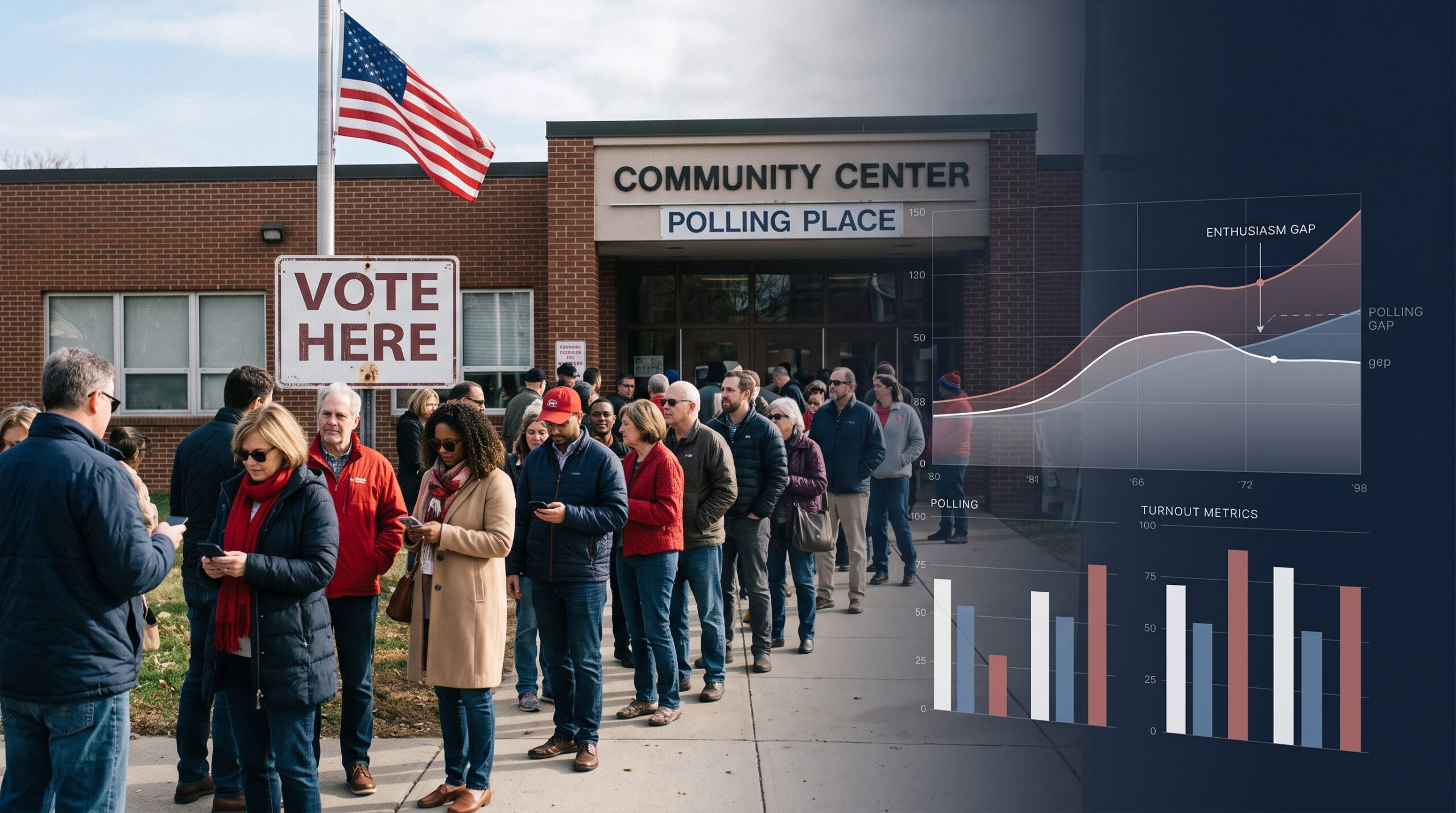
Polls and primary turnout show Republicans trailing on enthusiasm ahead of the 2026 midterms. Here’s what the data shows, where it’s weaker, and what could change.
Key Takeaways
- A Washington Post-Ipsos poll conducted July 8 to 13, 2026, found Democrats ahead 48% to 45% among registered voters, but ahead by about eight points among voters who say they are absolutely certain to vote.
- Democrats have outpaced Republicans in primary turnout. As of late June, about 12.6 million votes had been cast in Democratic House primaries, compared with 8.6 million in Republican primaries, according to a Washington Post analysis cited by commentators.
- Analysis of six states that held comparable primaries in 2022 and 2026 found the Republican-to-Democratic turnout ratio moved toward Democrats in every case.
- Special elections since 2025 have shown Democrats running ahead of their 2024 presidential margins, though special elections draw low turnout and are not reliable predictors.
- Enthusiasm is a leading indicator, not a result. Historically, the gap between stated enthusiasm and votes cast has been large, and the November outcome depends on who actually turns out.
Search Intent Summary
Readers searching this topic usually want to know whether Republicans are less motivated to vote in 2026, what the numbers show, and how much weight to give them. This article reviews the polling, primary turnout, and special election evidence, then sets out the strongest arguments on each side.
What “Enthusiasm” Measures
Political scientists use several overlapping measures. Pollsters ask respondents how enthusiastic they are about voting, how certain they are to vote, and whether they consider the upcoming election more important than past ones. Each measure captures something different, and results vary by question wording.
The key distinction is between opinion and turnout. Enthusiasm tells you how motivated a group feels. Turnout tells you how many people actually vote. Historically, the two do not always match, and the party with lower enthusiasm can still turn out strongly if its voters are organized and its contests are high-stakes.
What the Polls Show
The broadest signal comes from national surveys. In a February 2026 Washington Post-ABC News-Ipsos poll, 47% of registered voters planned to back Democrats and 45% Republicans. The gap was sharpest among younger voters. The poll found that 51% of 18-to-39-year-olds who voted for Donald Trump in 2024 said they were certain to vote, compared with 77% of Harris voters in the same age group.
By July, the Washington Post-Ipsos poll had narrowed the overall margin. Democrats led 48% to 45% among registered voters, down from a five-point edge in May. The enthusiasm gap, however, had widened. The same survey showed Democrats’ lead expanding to about eight points among those who said they were absolutely certain to vote.
Other measures point the same way. A Post-ABC poll found 73% of Democrats said the upcoming midterms were more important than past midterms, compared with 52% of Republicans. In the same survey, 72% of Republicans said they would definitely vote. A Marquette University Law School poll found 28% of Republicans and Republican-leaning independents described themselves as “very enthusiastic” about voting in the midterms.
These results should be read carefully. A generic-ballot lead of a few points is well within polling error, and the enthusiasm gap is a difference between two groups’ stated motivation, not a measured vote.
Primary Turnout: The Stronger Signal
Primary turnout is a more concrete measure than survey responses, because it counts actual ballots. Primary electorates are small and self-selected, so they are not a clean preview of a general election. Still, they show who is showing up when the stakes are visible.
Commentary citing a Washington Post analysis reported that by late June 2026, about 12.6 million ballots had been cast in Democratic House primaries, compared with 8.6 million in Republican primaries. Democrats set turnout records in several states, including Wisconsin, Michigan, Texas, and Georgia, according to the same analysis.
The statistician Charles Stewart III, of MIT’s Election Data and Science Lab, compared turnout in the six states that held statewide primaries in both 2022 and 2026: Arkansas, Illinois, Nebraska, North Carolina, Ohio, and Texas. In every one, the ratio of Republican to Democratic primary turnout moved toward Democrats. In his analysis, Democratic turnout rose while Republican turnout fell. Stewart also noted that primary turnout is not always predictive of general election outcomes, and that many factors influence it.
Those findings are not uniform. Closed primary systems, contested races, and candidate quality all shape turnout. A competitive Republican primary in one state can boost that party’s turnout even when enthusiasm elsewhere is weak.
Special Elections: A Pattern, With Caveats
Special elections have produced consistent Democratic overperformance. An analysis by The Down Ballot, reported in a column that cited it, examined 110 special elections since January 2025 and found Democrats running an average of 12.5 points ahead of their 2024 presidential margins. In 2025, Decision Desk HQ found an average overperformance of about 20 points in US House specials.
Special elections are a useful signal but a weak forecast. They draw low turnout, usually from the most motivated voters, and they are held under conditions that differ from a midterm. Analysts have noted that Democrats overperformed in special elections before the 2024 presidential race, then lost the national popular vote. Special elections can show shifts in motivation without predicting how a broader electorate will vote.
The Republican Case
Republicans and some analysts offer several counterarguments, and they deserve a fair hearing.
Enthusiasm is not the same as turnout. Republicans have historically turned out reliably in midterms when their voters were motivated by specific issues or candidates, and the party’s organizational infrastructure is strong.
Low-turnout special elections and primaries can exaggerate the energy of whichever side is more engaged in a given contest, and Democratic primary turnout partly reflects contested races that drew heavy spending.
Polls of enthusiasm can shift quickly. A few months before an election is a long time, and a single event, such as a major policy action or a change in the economic outlook, can reshape voter motivation.
The party also argues that its message on the economy and taxes resonates with voters who may not register strongly in polling. In the July Post-Ipsos poll, the top concern among voters was the economy, and some Republicans have argued their affordability messaging will close the gap as the election approaches.
The Democratic Case
Democrats point to the same data as evidence of an energized base. They argue that primary turnout records, special election swings, and the enthusiasm gap show a motivated electorate.
Democratic strategists also argue that the war with Iran, rising gasoline prices, and cost-of-living pressures have hurt the incumbent party. Pricing and economic concerns dominate voter priorities, according to the Post-Ipsos poll. The Post poll noted that more than 70% of Democrats regard voting as more important this year than before.
What to Watch Before November
Several indicators will show whether the gap is real or temporary.
Watch whether enthusiasm translates into actual turnout in the fall. Early voting and absentee data in competitive states will be more reliable than polls.
Watch the composition of turnout. A widening gap among younger voters, the group the February poll singled out, would matter more than overall numbers.
Watch Republican primary turnout in states that still have contests, and compare it with 2022 benchmarks.
Watch the economic and foreign policy environment. Gasoline prices, inflation, and the status of the Iran conflict all feed into voter priorities, as covered in our Iran policy analysis and the crude oil article.
Practical Takeaways
For readers following the midterms, the most useful habit is to weight actual turnout data above survey enthusiasm when assessing the outlook, and to treat both as indicators rather than predictions. Enthusiasm polls are a useful early signal, but they often change before voting.
For campaigns and analysts, the data points to the importance of turnout operations in the weeks before the election, regardless of which party’s enthusiasm numbers look stronger.
This article describes the evidence and the arguments on each side. It does not forecast the outcome of the midterms.
Future Outlook
The enthusiasm gap is a clear signal in the data so far, particularly in primaries and specials. Whether it turns into a general election advantage depends on turnout operations, on how the economy and foreign policy evolve, and on how many voters decide late. Those questions remain open.
Frequently Asked Questions
Are Republicans less enthusiastic about voting in 2026?
Several national polls show lower stated enthusiasm among Republicans than Democrats, including a Washington Post-Ipsos poll from July 2026 and a Marquette University Law School poll. Enthusiasm measures vary by question, so no single poll settles the question.
Does primary turnout predict the midterms?
Primary turnout is a useful signal but not a reliable forecast. It reflects who participates in primaries, which are smaller and more self-selected than general elections. Changes in turnout relative to earlier cycles can indicate shifts in motivation, but they do not determine outcomes.
Do special elections predict general election results?
Special elections show trends in voter motivation, but they draw low turnout and occur under different conditions than midterms. In 2024, Democrats overperformed in special elections before losing the national vote. Treat them as one input among many.
What is the enthusiasm gap?
The enthusiasm gap is the difference between parties in how motivated their supporters say they are to vote. Pollsters measure it by asking how enthusiastic or certain respondents are to vote. It is a measure of stated motivation, not a measure of votes.
Discover more from The Monitor
Subscribe to get the latest posts sent to your email.

Andy Harris in 2026: Freedom Caucus Influence, Spending and Congressional Power

MLB Playoffs 2026: Postseason Format, Broadcast Guide and How to Track the Bracket

Elon Musk Calls Mukesh Ambani the “Real Boss of India” Over Alleged Monopoly Concerns

Legal Pioneer and Defender of Justice: The Life, Works, and Legacy of Navi Pillay

Inside the Modern Republican Party Platform: Tax Policy, Immigration, and Governance

Anne Carson: Genius of Hybrid Forms and 2026 Nobel Laureate in Literature

Analyzing the Republican Voter Enthusiasm Gap: Turnout Metrics and Polling Data

The West Wing Legacy: Why the Political Drama Is More Relevant Than Ever

Remembering Kianna Underwood: The Nickelodeon Actress Behind “All That” and “Little Bill”

Pakistan Warns UN Security Council of AI Risks to Global Peace and Equality

Min Ah: The Global Impact and Rising Popularity of the K-Drama Star
Inside the Modern Republican Party Platform: Tax Policy, Immigration, and Governance

Fortress Diplomacy: How China’s Secretive Hongqi N701 Matches America’s Legendary “Beast”
Anne Carson: Genius of Hybrid Forms and 2026 Nobel Laureate in Literature
Remembering Kianna Underwood: The Nickelodeon Actress Behind “All That” and “Little Bill”
Analyzing the Republican Voter Enthusiasm Gap: Turnout Metrics and Polling Data

Jennifer Garner’s Latest Projects: Business Ventures Beyond Hollywood
Elon Musk Calls Mukesh Ambani the “Real Boss of India” Over Alleged Monopoly Concerns
-

 Featured6 years ago
The Right-Wing Politics in United States & The Capitol Hill Mayhem
-

 News5 years ago
Prioritizing health & education most effective way to improve socio-economic status: President
-

 China5 years ago
Coronavirus Pandemic and Global Response
-

 Democracy5 years ago
Missing You! SPSC
-

 Canada5 years ago
Socio-Economic Implications of Canadian Border Closure With U.S
-

 Conflict5 years ago
Kashmir Lockdown, UNGA & Thereafter
-
Democracy5 years ago
President Dr Arif Alvi Confers Civil Awards on Independence Day
-

 Digital6 years ago
Pakistan Moves Closer to Train One Million Youth with Digital Skills