
Elections
Analyzing the Republican Voter Enthusiasm Gap: Turnout Metrics and Polling Data

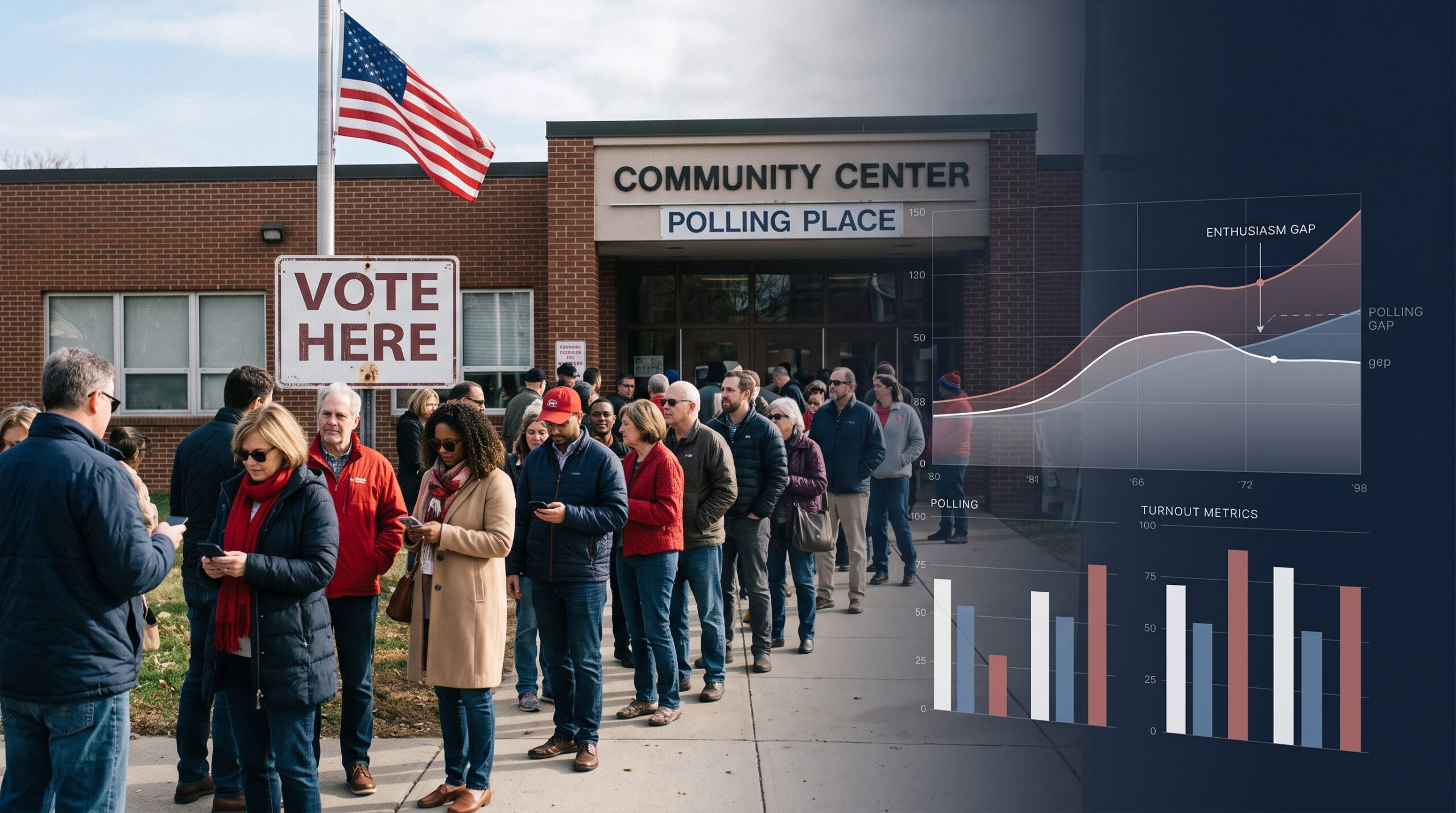
Polls and primary turnout show Republicans trailing on enthusiasm ahead of the 2026 midterms. Here’s what the data shows, where it’s weaker, and what could change.
Table of Contents
Key Takeaways
- A Washington Post-Ipsos poll conducted July 8 to 13, 2026, found Democrats ahead 48% to 45% among registered voters, but ahead by about eight points among voters who say they are absolutely certain to vote.
- Democrats have outpaced Republicans in primary turnout. As of late June, about 12.6 million votes had been cast in Democratic House primaries, compared with 8.6 million in Republican primaries, according to a Washington Post analysis cited by commentators.
- Analysis of six states that held comparable primaries in 2022 and 2026 found the Republican-to-Democratic turnout ratio moved toward Democrats in every case.
- Special elections since 2025 have shown Democrats running ahead of their 2024 presidential margins, though special elections draw low turnout and are not reliable predictors.
- Enthusiasm is a leading indicator, not a result. Historically, the gap between stated enthusiasm and votes cast has been large, and the November outcome depends on who actually turns out.
Search Intent Summary
Readers searching this topic usually want to know whether Republicans are less motivated to vote in 2026, what the numbers show, and how much weight to give them. This article reviews the polling, primary turnout, and special election evidence, then sets out the strongest arguments on each side.
What “Enthusiasm” Measures
Political scientists use several overlapping measures. Pollsters ask respondents how enthusiastic they are about voting, how certain they are to vote, and whether they consider the upcoming election more important than past ones. Each measure captures something different, and results vary by question wording.
The key distinction is between opinion and turnout. Enthusiasm tells you how motivated a group feels. Turnout tells you how many people actually vote. Historically, the two do not always match, and the party with lower enthusiasm can still turn out strongly if its voters are organized and its contests are high-stakes.
What the Polls Show
The broadest signal comes from national surveys. In a February 2026 Washington Post-ABC News-Ipsos poll, 47% of registered voters planned to back Democrats and 45% Republicans. The gap was sharpest among younger voters. The poll found that 51% of 18-to-39-year-olds who voted for Donald Trump in 2024 said they were certain to vote, compared with 77% of Harris voters in the same age group.
By July, the Washington Post-Ipsos poll had narrowed the overall margin. Democrats led 48% to 45% among registered voters, down from a five-point edge in May. The enthusiasm gap, however, had widened. The same survey showed Democrats’ lead expanding to about eight points among those who said they were absolutely certain to vote.
Other measures point the same way. A Post-ABC poll found 73% of Democrats said the upcoming midterms were more important than past midterms, compared with 52% of Republicans. In the same survey, 72% of Republicans said they would definitely vote. A Marquette University Law School poll found 28% of Republicans and Republican-leaning independents described themselves as “very enthusiastic” about voting in the midterms.
These results should be read carefully. A generic-ballot lead of a few points is well within polling error, and the enthusiasm gap is a difference between two groups’ stated motivation, not a measured vote.
Primary Turnout: The Stronger Signal
Primary turnout is a more concrete measure than survey responses, because it counts actual ballots. Primary electorates are small and self-selected, so they are not a clean preview of a general election. Still, they show who is showing up when the stakes are visible.
Commentary citing a Washington Post analysis reported that by late June 2026, about 12.6 million ballots had been cast in Democratic House primaries, compared with 8.6 million in Republican primaries. Democrats set turnout records in several states, including Wisconsin, Michigan, Texas, and Georgia, according to the same analysis.
The statistician Charles Stewart III, of MIT’s Election Data and Science Lab, compared turnout in the six states that held statewide primaries in both 2022 and 2026: Arkansas, Illinois, Nebraska, North Carolina, Ohio, and Texas. In every one, the ratio of Republican to Democratic primary turnout moved toward Democrats. In his analysis, Democratic turnout rose while Republican turnout fell. Stewart also noted that primary turnout is not always predictive of general election outcomes, and that many factors influence it.
Those findings are not uniform. Closed primary systems, contested races, and candidate quality all shape turnout. A competitive Republican primary in one state can boost that party’s turnout even when enthusiasm elsewhere is weak.
Special Elections: A Pattern, With Caveats
Special elections have produced consistent Democratic overperformance. An analysis by The Down Ballot, reported in a column that cited it, examined 110 special elections since January 2025 and found Democrats running an average of 12.5 points ahead of their 2024 presidential margins. In 2025, Decision Desk HQ found an average overperformance of about 20 points in US House specials.
Special elections are a useful signal but a weak forecast. They draw low turnout, usually from the most motivated voters, and they are held under conditions that differ from a midterm. Analysts have noted that Democrats overperformed in special elections before the 2024 presidential race, then lost the national popular vote. Special elections can show shifts in motivation without predicting how a broader electorate will vote.
The Republican Case
Republicans and some analysts offer several counterarguments, and they deserve a fair hearing.
Enthusiasm is not the same as turnout. Republicans have historically turned out reliably in midterms when their voters were motivated by specific issues or candidates, and the party’s organizational infrastructure is strong.
Low-turnout special elections and primaries can exaggerate the energy of whichever side is more engaged in a given contest, and Democratic primary turnout partly reflects contested races that drew heavy spending.
Polls of enthusiasm can shift quickly. A few months before an election is a long time, and a single event, such as a major policy action or a change in the economic outlook, can reshape voter motivation.
The party also argues that its message on the economy and taxes resonates with voters who may not register strongly in polling. In the July Post-Ipsos poll, the top concern among voters was the economy, and some Republicans have argued their affordability messaging will close the gap as the election approaches.
The Democratic Case
Democrats point to the same data as evidence of an energized base. They argue that primary turnout records, special election swings, and the enthusiasm gap show a motivated electorate.
Democratic strategists also argue that the war with Iran, rising gasoline prices, and cost-of-living pressures have hurt the incumbent party. Pricing and economic concerns dominate voter priorities, according to the Post-Ipsos poll. The Post poll noted that more than 70% of Democrats regard voting as more important this year than before.
What to Watch Before November
Several indicators will show whether the gap is real or temporary.
Watch whether enthusiasm translates into actual turnout in the fall. Early voting and absentee data in competitive states will be more reliable than polls.
Watch the composition of turnout. A widening gap among younger voters, the group the February poll singled out, would matter more than overall numbers.
Watch Republican primary turnout in states that still have contests, and compare it with 2022 benchmarks.
Watch the economic and foreign policy environment. Gasoline prices, inflation, and the status of the Iran conflict all feed into voter priorities, as covered in our Iran policy analysis and the crude oil article.
Practical Takeaways
For readers following the midterms, the most useful habit is to weight actual turnout data above survey enthusiasm when assessing the outlook, and to treat both as indicators rather than predictions. Enthusiasm polls are a useful early signal, but they often change before voting.
For campaigns and analysts, the data points to the importance of turnout operations in the weeks before the election, regardless of which party’s enthusiasm numbers look stronger.
This article describes the evidence and the arguments on each side. It does not forecast the outcome of the midterms.
Future Outlook
The enthusiasm gap is a clear signal in the data so far, particularly in primaries and specials. Whether it turns into a general election advantage depends on turnout operations, on how the economy and foreign policy evolve, and on how many voters decide late. Those questions remain open.
Frequently Asked Questions
Are Republicans less enthusiastic about voting in 2026?
Several national polls show lower stated enthusiasm among Republicans than Democrats, including a Washington Post-Ipsos poll from July 2026 and a Marquette University Law School poll. Enthusiasm measures vary by question, so no single poll settles the question.
Does primary turnout predict the midterms?
Primary turnout is a useful signal but not a reliable forecast. It reflects who participates in primaries, which are smaller and more self-selected than general elections. Changes in turnout relative to earlier cycles can indicate shifts in motivation, but they do not determine outcomes.
Do special elections predict general election results?
Special elections show trends in voter motivation, but they draw low turnout and occur under different conditions than midterms. In 2024, Democrats overperformed in special elections before losing the national vote. Treat them as one input among many.
What is the enthusiasm gap?
The enthusiasm gap is the difference between parties in how motivated their supporters say they are to vote. Pollsters measure it by asking how enthusiastic or certain respondents are to vote. It is a measure of stated motivation, not a measure of votes.
Discover more from The Monitor
Subscribe to get the latest posts sent to your email.



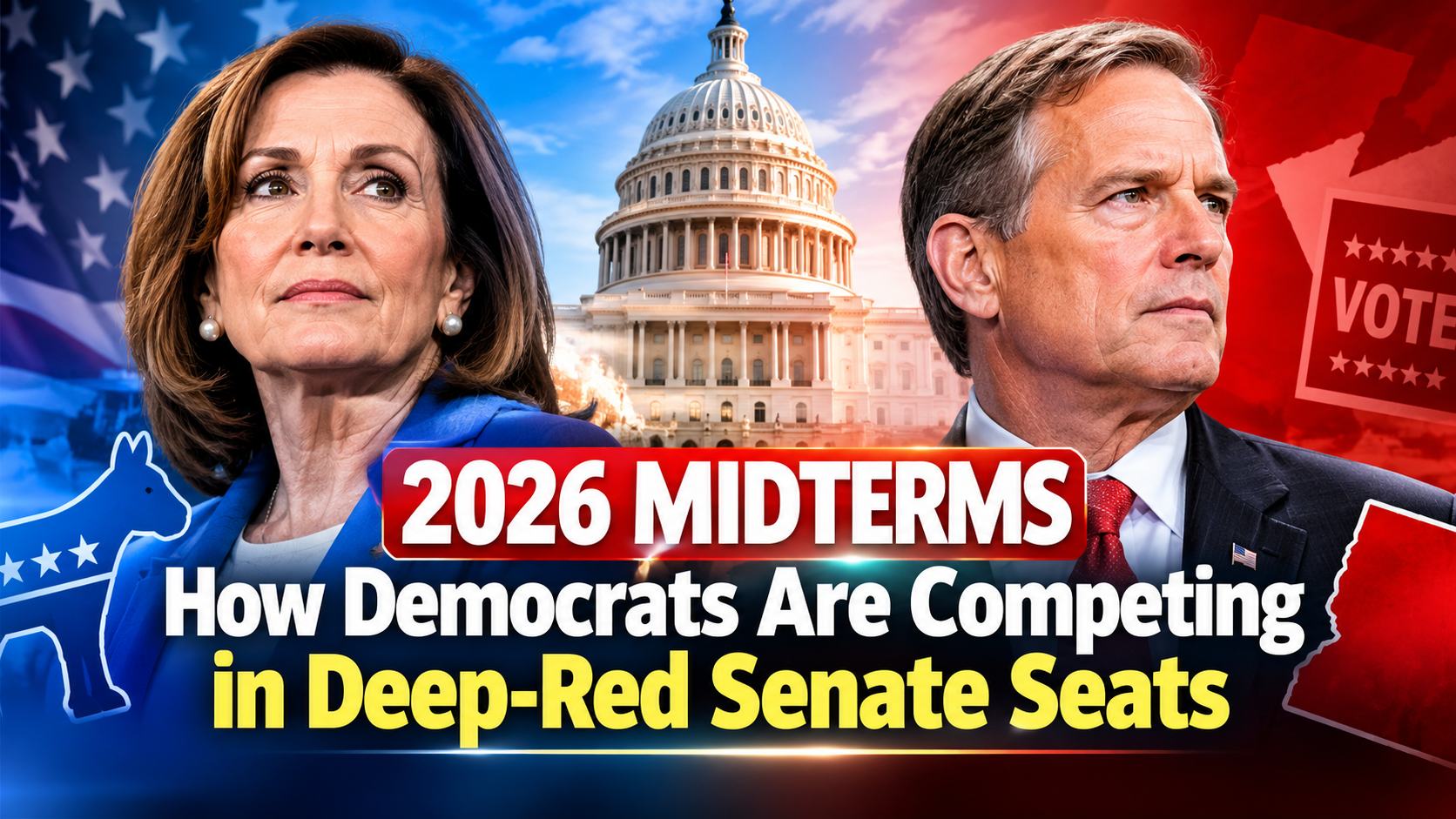
The defining feature of the 2026 Senate cycle isn’t a single flippable seat — it’s how many states once considered structurally out of reach for Democrats have moved onto competitive target lists simultaneously. Nate Silver’s FLIPR model now shows Democrats polling ahead or within striking distance in Texas, North Carolina, Maine, Alaska, Iowa, and Ohio — a map that, six months earlier, would have been dismissed as aspirational rather than analytical.
The Core Dynamic: PVI Erosion in “Safe” Republican Territory
The Cook Partisan Voter Index (PVI) measures how a state or district leans relative to the national average, and it has historically been treated as a reliable ceiling on Democratic competitiveness in deep-red states. What’s shifted in 2026 is not the underlying PVI scores themselves — Texas remains a nominally red state, and Maine remains a state Trump has never carried — but the gap between a state’s structural partisan lean and its real-time polling, which has widened sharply against Republicans in a way PVI alone doesn’t capture.
Maine is the clearest illustration: it’s rated roughly D+7 on partisan lean, yet Sen. Susan Collins has won five consecutive terms there by cultivating a moderate, Trump-skeptical brand. Analysts now describe her erosion with independents — tied to her votes on Medicaid cuts and reconciliation packages — as the reason a state that “should” have been competitive for over a decade is only now genuinely rated a Toss-up.
Texas: The Marquee Case Study
The Talarico-Paxton matchup is the highest-profile test of whether Republican dominance in Texas is genuinely eroding or whether this is simply an unusually weak GOP nominee in an otherwise stable red state:
- Ken Paxton (R), the state attorney general, defeated incumbent Sen. John Cornyn in the Republican primary after securing Trump’s endorsement — but enters the general election carrying a well-documented history of legal controversies and a contentious, highly publicized divorce that both national and Texas-specific coverage flags as a real drag on his numbers.
- James Talarico (D), a state representative, has posted a consistent, modest polling lead and is rated by FLIPR with roughly a 60.7% win probability, and by Nate Silver’s initial model assessment at launch as high as 63%.
- The race is rated “Lean Democrat” by FLIPR — a rating with almost no modern precedent for a Texas federal race, given the state hasn’t elected a Democratic senator since 1988.
The Texas dynamic is instructive precisely because it may not generalize: Paxton’s specific vulnerabilities are candidate-level, not structural, meaning a stronger Republican nominee in a future cycle could plausibly restore the state’s traditional partisan lean even if Talarico wins in 2026.
In the 2026 midterms, Democrats are competitive in traditionally Republican Senate seats including Texas, Maine, North Carolina, Alaska, Iowa, and Ohio. Texas Democrat James Talarico leads Republican Ken Paxton in polling, while Maine’s Susan Collins faces her toughest re-election in three decades against Democrat Troy Jackson.
Maine: A Nominee Swap Adds Volatility
Maine’s race has been unusually chaotic even by midterm standards. Oyster farmer and military veteran Graham Platner won the Democratic primary over Gov. Janet Mills with progressive backing, but withdrew in July 2026 following sexual assault allegations and other controversies. Democrats replaced him with Troy Jackson, the former state Senate president, at a nominating convention on July 25 — leaving Democrats running a late-entry candidate against a five-term incumbent with 30 years of brand-building in the state.
Despite the disruption, Collins — the only Senate Republican representing a state Trump has never carried in three presidential runs — remains, per CNN’s Senate rankings, the single most vulnerable Republican incumbent in the chamber. Her position illustrates the core thesis of this cycle: candidate-level erosion (Collins’s declining favorability with both parties) is compounding with structural disadvantage (Maine’s D+7 lean) in a way that has finally overcome her historical resilience.
North Carolina: A More Conventional Battleground
North Carolina represents the more traditional version of a competitive Republican-held seat: former Gov. Roy Cooper (D), a proven statewide winner, faces former RNC Chairman Michael Whatley (R), the expected GOP nominee. Sabato’s Crystal Ball moved this race from “Leans Republican” to “Toss-up” alongside Maine — placing it in the same tier of competitiveness as Georgia and Michigan, two Democratic-held seats, illustrating how the overall map has shifted toward parity rather than a clean partisan split.
Suburban and Independent Voter Shifts
Across every competitive race — Texas, Maine, North Carolina, and the newer additions of Alaska, Iowa, and Ohio — the same demographic driver recurs in analyst commentary: independent and suburban voters moving away from Republican candidates, tied to dissatisfaction with reconciliation-package votes (particularly Medicaid provisions), economic anxiety over gas prices, and a broader erosion in Trump’s approval rating, which FLIPR’s inputs place at roughly 38% nationally with only 22% strong approval. This pattern — suburban erosion compounding with base-level fatigue — is structurally similar to the dynamic that drove Democratic gains in the 2018 midterms, though the current map extends into more traditionally rural, red-leaning states than 2018’s suburban-centric wave did.
Why This Matters Beyond November 2026
If Democrats do flip seats in states like Texas, Maine, or North Carolina, it would suggest a durable erosion in Republican strength beyond the specific unpopularity of individual 2026 candidates — with implications for the 2028 presidential map. If, conversely, Republicans hold these seats despite unfavorable national conditions, it would suggest FLIPR and similar models are overweighting national environment relative to the genuine structural advantages (partisan registration, rural turnout patterns, incumbency) that have insulated red states from Democratic gains in prior cycles.
Finally ,The 2026 Senate map has expanded well beyond the traditional handful of swing states, with Democrats competitive in Texas, Maine, North Carolina, Alaska, Iowa, and Ohio simultaneously. Texas (Talarico vs. Paxton) and Maine (Collins vs. Jackson) represent two distinct versions of the same underlying story — one driven primarily by candidate-level Republican vulnerability, the other by a decades-long erosion of a moderate incumbent’s independent support finally catching up with the state’s structural partisan lean.
Discover more from The Monitor
Subscribe to get the latest posts sent to your email.

With the November 3, 2026 midterm elections roughly two months away, multiple independent forecasting models are converging on a similar conclusion: Democrats are currently favored to retake control of the U.S. House of Representatives, though the size of any majority — and control of the Senate — remains genuinely uncertain.
This piece breaks down what the leading models actually say, why historical patterns favor the out-of-power party in midterms, and which structural factors could still complicate a Democratic pickup.
The Current Numbers
Heading into the cycle, Republicans hold a narrow 218-seat majority, with Democrats at 212 seats and several vacancies. Because of that narrow margin, Democrats need to flip only a small net number of seats — commonly cited as roughly three to six, depending on how upcoming special elections in safely Democratic vacant seats resolve — to reclaim the majority.
Several independent models have published 2026 House projections:
- A Cornell University-based academic forecasting team, presenting at the American Political Science Association’s annual meeting, projects Democrats winning approximately 226 seats to Republicans’ 209, with simulations showing a plausible range as wide as 206 to 258 Democratic seats.
- A separate independent forecasting outlet (FiftyPlusOne) gives Democrats an 85% probability of winning the House majority, with a median projected outcome of 230 seats, and a national House popular-vote margin estimated at roughly +7 points for Democrats.
- Aggregator and prediction-market platforms tracking the race show a broadly consistent picture: Democrats favored, with meaningful — not negligible — uncertainty remaining.
Researchers behind the Cornell model were notably direct about what it would take for the forecast to be wrong: given the model’s historical accuracy, a Republican House majority holding would likely mean “either everything has gone their way or something unprecedented has happened.”
Why History Favors Democrats Structurally
Election forecasters lean heavily on one of the most consistent patterns in American politics: the president’s party almost always loses House seats in midterm elections.
- Looking back across 36 midterm elections since 1882, the White House party avoided losing a net of at least three seats in only four of them — 1934, 1962, 1998, and 2002 — each occurring under unusual circumstances (the Great Depression recovery, the Cuban Missile Crisis aftermath, post-9/11 unity, and the Clinton impeachment backlash, respectively).
- Democrats need a uniform national swing of roughly 1.1% from the 2024 House results to flip control — a relatively low bar by historical standards.
- Special elections held throughout 2025 provide an early, concrete signal: across roughly 31 state legislative and House special elections, Democratic candidates outperformed the 2024 presidential ticket’s vote share by an average of 15.4 points (median 13 points) — more than ten times the swing needed to flip the House.
The Redistricting Wildcard
No 2026 forecast is complete without accounting for the unusual mid-decade redistricting activity that has reshaped the House map since the 2024 election. Aggressive redistricting in several Republican-controlled states has given the GOP additional structural insulation heading into this cycle — a countervailing force against the historical midterm pattern and the favorable special-election trendline described above. This is the central tension every current model is trying to price in: strong Democratic generic political environment signals, against a map that has been deliberately reshaped to blunt exactly that kind of environment.
The GOP Counter-Strategy
Republican strategists are not treating the historical pattern as inevitable. Key elements of the party’s defensive posture include:
- Leaning on redistricting gains in states where new maps have already been implemented, effectively “banking” seats that would otherwise be more competitive under prior district lines.
- Fundraising and turnout operations targeted specifically at the small number of genuinely competitive districts where the national environment is expected to matter most.
- Nationalizing the midterm around specific policy contrasts rather than running on incumbency alone, given that broad “stay the course” messaging tends to perform poorly for an incumbent president’s party in a midterm.
What Swing Districts Are Actually Deciding This
Rather than the national popular vote, the real decision point sits in a relatively small number of competitive districts — often those that saw redistricting changes, those with retiring incumbents, or historically split-ticket suburban seats. Readers tracking this race closely should watch:
- Districts with open seats created by incumbent retirements, which historically see larger swings than seats with incumbents running for reelection.
- Suburban districts that have trended away from the GOP in recent cycles, where the current generic-ballot environment would need to hold through November to matter.
- Newly redrawn districts in states where redistricting fights are still working through courts — some maps used in 2026 could still face late legal challenges.
What Competitors Are Missing
Much of the horserace coverage of this cycle reports the topline “Democrats favored” number without explaining why two structurally different forces — a strongly Democratic-leaning political environment on one hand, and an aggressively re-drawn map on the other — are pulling against each other simultaneously. That tension, not the headline probability number, is the actual story of the 2026 House cycle, and it’s why even a “85% favored” forecast still carries real uncertainty worth taking seriously rather than treating as a foregone conclusion.
Key Dates to Watch
- Ongoing — ballot access deadlines and any late redistricting litigation in contested states
- September–October 2026 — final pre-election generic ballot and fundraising disclosures
- November 3, 2026 — Election Day
- Early November 2026 — initial results; close districts may take days to certify
Q: Are Democrats favored to win the House in the 2026 midterms?
As of early September 2026, multiple independent forecasting models favor Democrats to win a U.S. House majority. One academic model projects roughly 226 Democratic seats to 209 Republican seats; another independent forecaster puts Democrats’ probability of winning the House at 85%, with a median projection of 230 seats. Republicans currently hold an 218-seat majority, and Democrats need only a small net seat gain to flip control.
Discover more from The Monitor
Subscribe to get the latest posts sent to your email.
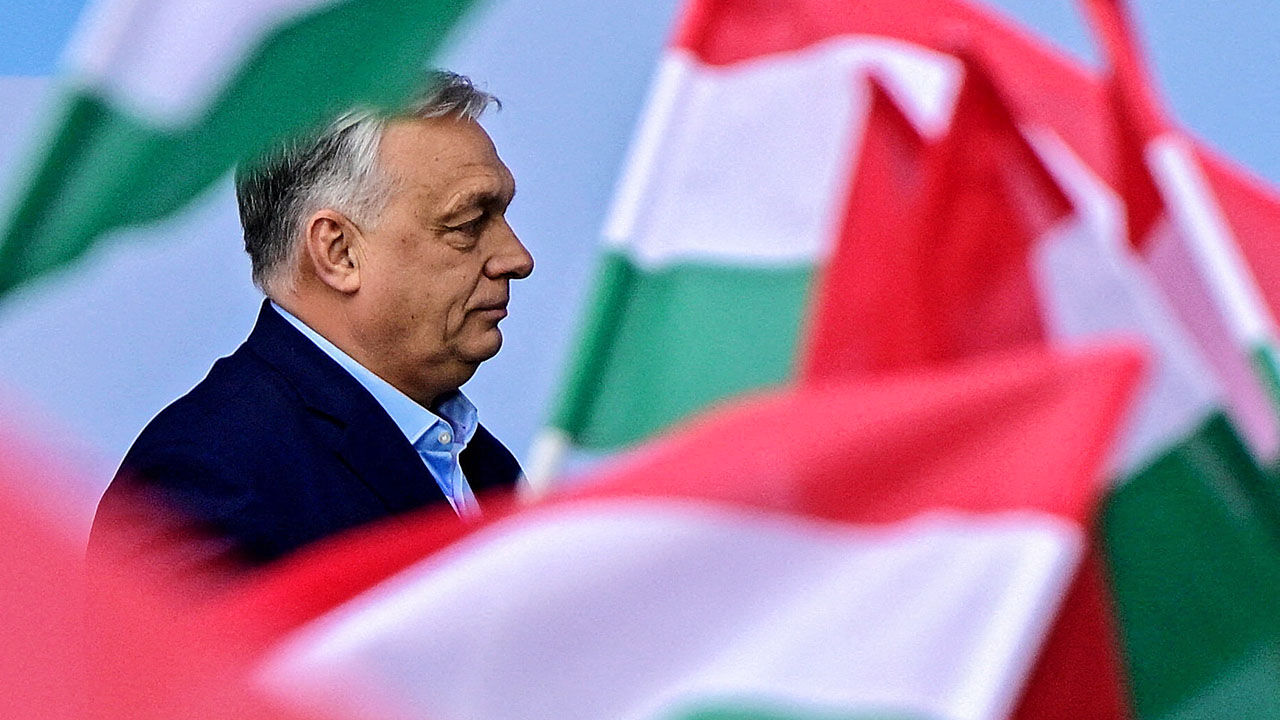
How Viktor Orbán’s Illiberal Democracy Template Became the Global Playbook for Dismantling Freedom—And Why April 12 Could Change Everything
One week from now, roughly 8 million eligible voters in a Central European country barely larger, in population, than the greater New York metropolitan area will cast ballots that reverberate far beyond the Danube. Hungary goes to the polls on April 12 in what independent pollsters are calling the most consequential European election of 2026. The opposition Tisza party, led by the telegenic former government insider Péter Magyar, has surged to a 19-to-23-point lead over Prime Minister Viktor Orbán’s ruling Fidesz among decided voters—56% to 37%, according to the 21 Research Centre’s latest survey, with Bloomberg reporting that the Hungarian forint jumped against the euro on the news. Donald Trump has already endorsed Orbán. So, reportedly, has the Kremlin. The man whom MAGA celebrates as a hero of Christian civilization may be about to lose a free election.
That matters. Not primarily to Hungarians—though of course it matters most to them. It matters to anyone who cares about the health of democracy in an age when authoritarianism is no longer the blunt instrument of generals in mirrored sunglasses but the sleek, legally dressed project of elected leaders with supermajorities and friendly courts.
Hungary has fewer people than Belgium. Its population has fallen from 10 million in 2009 to fewer than 9.6 million today, a demographic collapse driven by emigration—largely young Hungarians fleeing a system rigged against them—and a fertility rate of just 1.31, one of the lowest in Central Europe despite billions spent on family subsidies. Its economy, which entered technical recession twice in 2023–2024, contributes roughly 1% of the European Union’s total GDP. By any conventional measure of geopolitical weight, Hungary is a footnote.
And yet. Orbán’s Hungary is one of the most studied, most cited, most imitated political experiments of the 21st century. Not because Hungarians invented the Rubik’s Cube (they did) or the ballpoint pen (they did that too), but because an unscrupulous one, Viktor Orbán, has spent sixteen years demonstrating something that many political scientists once considered impossible: that a determined leader, working entirely within the formal architecture of democracy, can hollow it out until only the shell remains. He called the result an “illiberal democracy.” History may call it something less polite. Either way, the world has been watching—and in many places, taking notes.
How You Dismantle a Democracy Without Technically Destroying It
Orbán’s method is not, and has never been, the method of a coup. He did not send tanks into parliament. He sent lawyers.
When Fidesz swept to a supermajority in 2010, winning over two-thirds of parliamentary seats on just 53% of the popular vote—a harbinger of the electoral system manipulations to come—Orbán used that majority with breathtaking speed. Within months, his allies were parachuted into 6-to-12-year terms on the Constitutional Court, the National Media Authority, the Competition Authority, the State Audit Office, and the Public Prosecutor’s Office. These were not corrupt appointments in the crude sense of brown envelopes and handshakes. They were legal. They were confirmed by the parliament Fidesz controlled. And they ensured, with surgical precision, that no institution capable of checking government power would ever again have the independence to do so.
Then came the media. Orbán understood, perhaps better than any European leader of his generation, that reality is constructed by the outlets that describe it. State-owned broadcasters were brought to heel through loyal editorial appointments. Pro-government businessmen acquired most private outlets, which in 2018 were merged overnight into a single media conglomerate—the Central European Press and Media Foundation, or KESMA—comprising over 450 outlets. The government classified the transaction as being of “national strategic importance,” exempting it from competition review. Independent media did not disappear entirely, but it was starved of advertising—state-linked companies provided 70–80% of pro-government outlets’ advertising revenue, while critical voices found their commercial oxygen cut off.
The electoral system itself was redesigned. Orbán’s government redrew constituency boundaries, reduced the size of parliament, abolished runoff votes, and extended voting rights to ethnic Hungarian diaspora communities abroad—who vote overwhelmingly for Fidesz via postal ballot. The resulting system allowed Fidesz to win supermajorities in 2014, 2018, and 2022 despite never approaching two-thirds of the popular vote. Scholars commonly describe the result as “competitive authoritarianism”: elections still happen, opposition parties still exist, and yet the playing field has been tilted so systematically that genuine competition becomes structurally improbable.
Finally, there is the money. A 2026 Cato Institute analysis concludes that Transparency International and Civitas Institute assess corruption in Hungary not as a malfunction of state power but as “a central characteristic of the operation of the state.” Hungary’s score on the Corruption Perceptions Index fell from 55 in 2012 to 40 in 2025, making it the most corrupt country in the European Union—roughly tied with Cuba and China. Billions of euros in EU development funds were redirected through public procurement to a small circle of politically connected oligarchs, creating a loyal business class that in turn funded loyal media, which funded loyal politics, which protected the business class. A self-reinforcing machine. A state that functions, in the words of one political analyst, less like a government than like a vertically integrated protection racket.
The Economic Bill Comes Due
For years, Orbán managed to sustain a political equilibrium by papering over the contradictions: nationalism for the soul, EU subsidies for the wallet. That equation has been breaking down. Hungary’s economy stagnated through much of 2024 and 2025, entering technical recession twice. GDP per capita in purchasing power terms stood at just 77% of the EU average in 2024—with only Slovakia, Latvia, Greece, and Bulgaria faring worse. The country had the lowest individual consumption per capita in the entire EU.
More damaging still: €7.5 billion in EU cohesion funds and a further €10.4 billion under the EU Recovery and Resilience Facility remain frozen over rule-of-law concerns. In February 2025, the European Commission deducted €325 million in fines directly from Hungary’s EU allocations over asylum policy violations. The OECD projects GDP growth of just 0.3% for Hungary in 2025. Hungarian inflation ran at 17.1% in 2023—the highest in the EU. Three major rating agencies assigned Hungary a negative outlook in December 2025.
This is the real story that Péter Magyar is telling Hungarians. “You have made Hungary the poorest, most corrupt nation in the European Union,” he told crowds at rallies that drew tens of thousands across a country where opposition politicians once barely dared venture into rural strongholds. Magyar—43, articulate, and credentialed by having actually worked inside the system he now attacks—is not a leftist insurgent. He is a centre-right politician who has promised to curb corruption, unlock frozen EU funds, and firmly anchor Hungary in the EU and NATO. His appeal is less ideological than moral. He is running, essentially, against decay.
Five Lessons for the World from Tiny Hungary
What makes Hungary so instructive—and so alarming—is not just what happened there but how transferable the playbook is. Here are the essential lessons.
Lesson One: Democratic institutions are infrastructure, not decoration. Democracies survive not because citizens are virtuous but because institutions constrain power even when citizens aren’t paying attention. Orbán understood this with clarity his opponents did not match. By systematically appointing loyalists to every regulatory and judicial body within the first two years of a supermajority, he ensured that the checks on executive power became extensions of executive power. The Constitutional Court that should have stopped him became the court that blessed him. The lesson is simple and terrifying: institutions are only as strong as the political will to defend them in the moment—and moments pass quickly.
Lesson Two: The “zombie democracy” is the hardest to fight. A classical autocracy is easy to name and easier to oppose. Orbán’s genius—if one can call it that—was to never formally cancel democracy, only to defang it. Elections continue to occur. Opposition parties contest them. International observers note irregularities and then go home. This zombie form—democracy that breathes but does not function—is profoundly harder to resist because it gives incumbents a veneer of legitimacy. Dissidents can be dismissed as sore losers. Foreign critics can be accused of interference. The system sustains itself precisely because it resembles the thing it has replaced.
Lesson Three: Corruption is not a side effect—it is the point. Orbán’s crony capitalism is not incidental to his political project; it is the political project. By concentrating economic power in the hands of a loyal oligarchy, he created a financial constituency with an existential stake in his continued rule. Those businesses fund his media. Those oligarchs lose everything if he loses. This dynamic—state capture as a loyalty mechanism—is now visible in varying degrees from Warsaw to Ankara, from Bratislava to Washington, where the blurring of state resources and personal political interest has become a defining feature of the populist right. Hungary is the proof of concept.
Lesson Four: Cultural fear is the accelerant. Orbán has always understood that economic grievances alone are insufficient. You need an enemy. In Hungary, successive enemies have included George Soros, Brussels bureaucrats, Muslim migrants, LGBTQ+ communities, and—more recently—Ukraine. The culture war is not decorative; it is structural. It creates an out-group that rallies an in-group, and it reframes every political contest as a civilizational battle in which normal democratic norms—fair courts, free press, minority rights—become tools of the enemy. A 2025 constitutional amendment declared that all Hungarians are either male or female, stripped dual nationals of citizenship if declared “threats to the state,” and enshrined the right to use cash—each provision a piece of culture-war legislation dressed as constitutional principle.
Lesson Five: The export model is real and active. Hungary is a template, not an accident. The MAGA movement has been openly fascinated with the Orbán model, and Orbán has been a keynote speaker at CPAC conferences in the United States. He organized European variants of the event in Budapest in 2022, 2023, and 2024. Marine Le Pen in France, Geert Wilders in the Netherlands, and the AfD in Germany all draw inspiration—tactically and rhetorically—from what Orbán demonstrated was possible. Trump’s personal endorsement of Orbán ahead of the April 12 vote is not merely a diplomatic courtesy; it is a statement of ideological solidarity. This is a network, not a coincidence.
What Happens After April 12?
Polls can be wrong. Electoral systems can be cruel. By-election results in rural Hungary—where Fidesz has won eight consecutive contests since Tisza emerged in 2024—remind us that polling leads do not automatically translate into parliamentary seats in a majoritarian system engineered to produce the opposite outcome. The aggregated PolitPro poll trend puts Tisza at 48.7% versus Fidesz at 40.8%, with projections suggesting 102 Tisza seats versus 86 for Fidesz in a 199-seat parliament. That would be a historic shift—but it would be a thin majority, and thin majorities in a system built for supermajorities face structural headwinds from day one.
If Magyar wins, the challenges begin immediately. The judiciary is stacked. The media ecosystem is hostile. The oligarchic networks are entrenched. Reversing sixteen years of institutional capture is not the work of a first hundred days—it is the work of a generation, and it requires the EU to provide not just financial incentives but sustained political support for democratic reform in ways Brussels has been reluctant to offer with sufficient conviction.
If Orbán wins, by whatever margin and through whatever combination of turnout suppression, diaspora votes, and gerrymandered constituencies, the consequences stretch well beyond Budapest. A re-empowered Orbán would continue to block EU aid to Ukraine, as he has done repeatedly since Russia’s full-scale invasion. He would continue to serve as the EU’s internal veto player, the man who can paralyze European foreign policy with a single abstention. He would be emboldened to accelerate the institutional consolidation that has already driven the Central European University out of Budapest, required NGOs to register as foreign agents, and enabled the government to strip dual nationals of citizenship for political disloyalty. And he would take a phone call from Mar-a-Lago that would be heard around the world as a victory message for illiberal democracy.
Small Country, World-Sized Stakes
There is a bitter irony at the heart of this moment. The country that produced the Rubik’s Cube—the puzzle that looks solvable until you realize every move changes something you weren’t watching—has itself become a puzzle for democrats everywhere. How do you protect open societies from leaders who use open societies’ own rules against them? How do you maintain institutional norms when one side has decided norms are a weakness to exploit? How do you beat a rigged game from inside it?
Péter Magyar may be about to provide one answer: you organize, you mobilize, you refuse to cede the countryside, and you make the cost of stagnation impossible to ignore. Mass demonstrations involving tens of thousands of participants on both sides shaped the Hungarian campaign, especially around Independence Day on March 15. Voter turnout is projected to be at record levels. The Medián polling institute has suggested the 23-point lead among decided voters could be sufficient to deliver a two-thirds parliamentary supermajority for Tisza—the same instrument Orbán used to dismantle democracy, potentially repurposed to repair it.
That is not guaranteed. It may not even be likely, given the structural disadvantages the opposition faces. But the fact that it is possible—that an opposition party built from scratch in 2024 by a former insider who decided he could no longer be silent has managed to put the most successful authoritarian-democrat of his generation genuinely on the defensive—is itself a lesson.
Democracy is not self-healing, but it is not incurable, either. The antibodies exist. What tiny Hungary is showing the world, one week before it votes, is that the Orbán template has a vulnerability its author may not have fully anticipated: ordinary people, fed up with corruption and stagnation, are still capable of voting against it. The question is whether, in Hungary and everywhere else this model has traveled, they are given a fair chance to do so.
Watch the Danube on April 12. The currents there may tell us something about the tides everywhere else.
Discover more from The Monitor
Subscribe to get the latest posts sent to your email.

Anne Carson: Genius of Hybrid Forms and 2026 Nobel Laureate in Literature

Analyzing the Republican Voter Enthusiasm Gap: Turnout Metrics and Polling Data

The West Wing Legacy: Why the Political Drama Is More Relevant Than Ever

Remembering Kianna Underwood: The Nickelodeon Actress Behind “All That” and “Little Bill”

Min Ah: The Global Impact and Rising Popularity of the K-Drama Star

Pakistan Warns UN Security Council of AI Risks to Global Peace and Equality

Fortress Diplomacy: How China’s Secretive Hongqi N701 Matches America’s Legendary “Beast”

Jennifer Garner’s Latest Projects: Business Ventures Beyond Hollywood

Horror Box Office Economics: ROI, Market Share and the 2026

Best iPhone 18 Pro Max Cases: Premium Protection for Apple’s 2026 Flagship
Pakistan Warns UN Security Council of AI Risks to Global Peace and Equality

Bloodhound Q50: Remembering the Tragic Loss of Chicago’s Rising Drill Star

2026 Midterms: How Democrats Are Competing in Deep-Red Senate Seats

Remembering Eliana Moreno: The Legacy of NBC LA’s “Eli in the Heli”
Horror Box Office Economics: ROI, Market Share and the 2026

iOS 27 Release Date & Siri AI: The Ultimate Tech News Guide for iPhone 18 Users

Club América’s Financial Playbook: The Economics and Valuation of Latin American Football
Min Ah: The Global Impact and Rising Popularity of the K-Drama Star
-

 Featured5 years ago
The Right-Wing Politics in United States & The Capitol Hill Mayhem
-

 News5 years ago
Prioritizing health & education most effective way to improve socio-economic status: President
-

 China5 years ago
Coronavirus Pandemic and Global Response
-

 Canada5 years ago
Socio-Economic Implications of Canadian Border Closure With U.S
-

 Democracy5 years ago
Missing You! SPSC
-

 Conflict5 years ago
Kashmir Lockdown, UNGA & Thereafter
-
Democracy5 years ago
President Dr Arif Alvi Confers Civil Awards on Independence Day
-

 Digital6 years ago
Pakistan Moves Closer to Train One Million Youth with Digital Skills