
Analysis
Israel Launches Precision Strikes on Hezbollah and Hamas Infrastructure in Lebanon’s Bekaa Valley and Southern Border

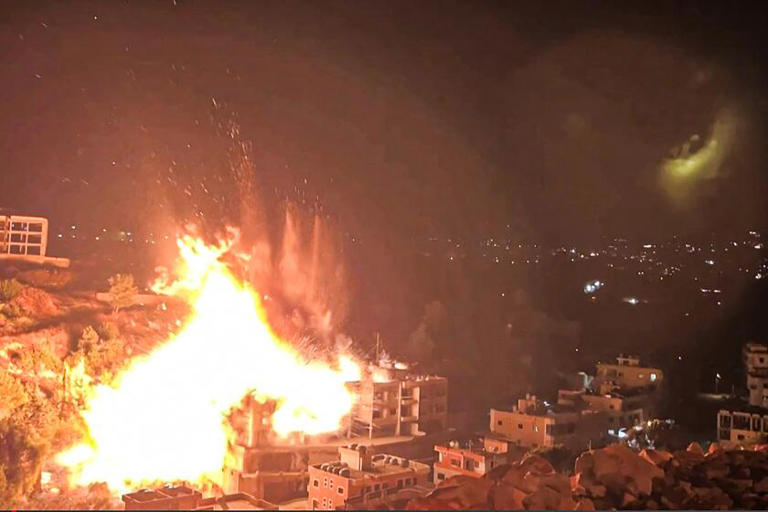
Table of Contents
Israeli Military Targets Militant Infrastructure Amid Escalating Regional Tensions
On Monday, January 6, 2026, Israeli Defense Forces conducted coordinated airstrikes targeting what military officials described as Hezbollah and Hamas military infrastructure across Lebanon’s Bekaa Valley and southern border regions. The strikes hit villages including Al-Manara and Ain al-Tineh in the eastern Bekaa Valley, as well as Kfar Hatta and Aanan in southern Lebanon, marking the first time this year Israel issued evacuation warnings before operations. The attacks underscore deepening fractures in a fragile ceasefire agreed fourteen months ago, with Israel maintaining that Lebanese forces have failed to adequately disarm Hezbollah as stipulated in the November 2024 US-brokered agreement.
The Monday operations followed a pattern of near-daily Israeli military activity in Lebanon throughout 2025, despite international outcry and documented civilian casualties. Lebanese authorities report no immediate fatalities from the latest strikes, though damage to residential structures and commercial establishments was extensive. Israel’s Foreign Minister Gideon Sa’ar, speaking after weekend consultations with UN officials, stated that Lebanese government efforts to disarm Hezbollah remain “far from sufficient,” suggesting Israel views continued military pressure as necessary to enforce the ceasefire’s terms.
This analysis examines the strategic calculations driving Israel’s sustained military campaign, the humanitarian toll on Lebanese civilians, the geopolitical implications for regional stability, and whether the international community’s diplomatic frameworks can prevent further escalation.
Strategic Context: Why Israel Continues Strikes Despite Ceasefire
The Disarmament Imperative and Security Calculus
Israel’s military operations intensified as a year-end deadline approached for Lebanon to complete the first phase of Hezbollah’s disarmament, a cornerstone requirement of the November 2024 ceasefire agreement. The accord, brokered by the United States following fourteen months of devastating conflict, mandated that Hezbollah withdraw its forces north of the Litani River—approximately 30 kilometers from the Israeli border—while the Lebanese Armed Forces assumed security control in the south.
However, Israeli intelligence assessments paint a starkly different picture from Lebanese government claims. Israeli Defense Forces documented 2,024 Hezbollah ceasefire violations, while Lebanese Armed Forces took enforcement action in just 593 instances, according to figures released by Israel’s security establishment. This enforcement gap has become Tel Aviv’s primary justification for maintaining what it characterizes as defensive operations against imminent threats.
Council on Foreign Relations senior analyst Steven Cook notes that Israel’s strategic objective extends beyond immediate tactical gains. The operations aim to prevent Hezbollah from reconstituting its military capabilities, particularly precision-guided munitions and drone production facilities that Israeli commanders view as existential threats to northern Israeli communities.
The Bekaa Valley’s Strategic Significance
The Bekaa Valley, Lebanon’s fertile agricultural heartland stretching along the Syrian border, has historically served as a critical logistics hub for Hezbollah’s military operations. Israeli military spokesman Colonel Avichay Adraee indicated strikes targeted buildings used by Hamas and Hezbollah, with one strike hitting a home that belonged to Sharhabil Sayed, a Hamas leader killed by Israel in May 2024.
Israeli defense analysts assert the valley’s proximity to Syria makes it ideal for weapons smuggling from Iran through Syrian territory—a supply line Israel has worked systematically to sever. Monday’s strikes on Al-Manara and Ain al-Tineh reflect this strategic priority, targeting what Israeli intelligence characterizes as weapons storage facilities and command nodes for Hezbollah’s elite Radwan Force.
The geographical targeting reveals Israel’s dual-track approach: maintaining pressure on Hezbollah’s operational infrastructure in the south while simultaneously disrupting its strategic depth in the east. This strategy mirrors Israel’s broader regional campaign against Iranian influence, recognizing that Hezbollah’s military effectiveness depends on continuous resupply from Tehran through Syrian channels.
The Human Cost: Civilian Casualties and Humanitarian Crisis
Documented Civilian Deaths Since Ceasefire
The humanitarian toll of Israel’s sustained military operations in Lebanon has drawn sharp condemnation from international human rights organizations and United Nations officials. According to the UN Human Rights Office, approximately 127 Lebanese civilians have been killed and several injured in operations since the ceasefire took effect on November 27, 2024, with strikes hitting homes, vehicles, and civilian infrastructure across southern villages.
The deadliest single incident occurred on November 18, 2025, when an Israeli drone strike hit Ein el-Hilweh Palestinian refugee camp near Sidon, killing at least 13 people, among them eight children. Israel claimed the strike targeted a Hamas training compound, though UN investigators found all documented fatalities were civilians, raising concerns about violations of international humanitarian law principles regarding distinction, proportionality, and precaution.
UN Special Rapporteur on extrajudicial killings Morris Tidball-Binz characterized the pattern of strikes as war crimes, stating they constitute “repeated attacks on civilians and civilian objects” that violate both international humanitarian law and the UN Charter. His assessment aligns with broader documentation by human rights organizations demonstrating systematic targeting that extends beyond legitimate military objectives.
Displacement and Reconstruction Obstruction
More than 80,000 individuals remain displaced in Lebanon and unable to return to their homes and lands, according to UN Office of the High Commissioner for Human Rights. The displacement crisis is compounded by Israeli military actions that actively prevent reconstruction efforts.
Human Rights Watch documented systematic Israeli strikes on reconstruction equipment between August and October 2025, destroying bulldozers, excavators, and heavy machinery at storage facilities in Deir Seryan, Msayleh, and Ansariyeh. These attacks killed three civilians and injured eleven, while making reconstruction of Lebanon’s devastated southern communities nearly impossible.
The obstruction extends beyond equipment destruction. Israel started constructing a wall crossing into Lebanese territory that makes 4,000 square metres inaccessible to the population, affecting people’s right to return to their lands, according to UN High Commissioner for Human Rights Volker Türk. This territorial encroachment, combined with continued military presence at five positions inside Lebanon, effectively prevents displaced residents from returning even to areas nominally under Lebanese Army control.
Site owners told Human Rights Watch researchers they now clear rubble by hand, fearing any machinery brought in will be destroyed. This deliberate impediment to reconstruction raises questions about Israel’s longer-term territorial ambitions and whether the military campaign aims not merely to neutralize Hezbollah but to permanently alter the demographic and security landscape of southern Lebanon.
Geopolitical Dimensions: Regional Power Dynamics at Play
The US Role: Mediator or Enabler?
Washington’s position in the Lebanon crisis reveals the contradictions inherent in American Middle East policy. While the United States brokered the November 2024 ceasefire and continues to provide diplomatic cover for Israel’s actions, Trump administration envoys have simultaneously pressured Lebanon to accelerate Hezbollah’s disarmament on unrealistic timelines.
US Special Envoy Tom Barrack’s “framework” proposal demanded Hezbollah’s complete disarmament by the end of 2025—a deadline that even sympathetic observers considered unachievable given Lebanon’s weak state capacity and Hezbollah’s deep integration into Lebanese society and politics. The proposal tied disarmament to Israeli troop withdrawal, economic assistance, and cessation of Israeli strikes, creating a complex interdependency that neither side has genuinely embraced.
The Council on Foreign Relations noted that while the Trump administration urged Israel and Lebanon toward improved relations and even facilitated their first direct civilian talks in decades in December 2025, Washington has done little to restrain Israeli military operations that violate the ceasefire’s spirit and letter. This permissive stance reflects broader US regional priorities that privilege Israeli security concerns over Lebanese sovereignty.
The Biden-Trump transition period added further uncertainty. While Biden administration officials emphasized strict ceasefire adherence, Trump’s return to office in January 2025 coincided with Israeli assessments that Washington would provide greater latitude for military action. Trump’s December 2025 meeting with Israeli Prime Minister Benjamin Netanyahu reportedly included discussions about expanding operations if Lebanese disarmament efforts remained insufficient—a green light that preceded the intensified January strikes.
Iran’s Diminished Influence and Hezbollah’s Vulnerability
Hezbollah’s strategic position has deteriorated dramatically since the 2024 conflict. Israel killed most of Hezbollah’s top political and military leaders, including longtime chief Hassan Nasrallah, who had attained iconic status among the group’s supporters. The leadership decapitation, combined with the destruction of much of Hezbollah’s weapons arsenal, has left the organization militarily weakened and politically defensive.
Iran’s capacity to replenish Hezbollah’s capabilities has been constrained by regional shifts. The fall of Syrian President Bashar al-Assad’s regime in December 2024 severed a critical arms supply route from Iran through Syrian territory into Lebanon. This strategic setback, combined with Israel’s systematic targeting of weapons convoys and production facilities, has left Hezbollah increasingly isolated and unable to reconstitute its pre-2024 military strength.
Hezbollah Secretary-General Naim Qassem has maintained a defiant public stance, insisting the group will not disarm while Israel occupies Lebanese territory and continues attacks. However, regional analysts say Hezbollah’s influence has waned following its devastating fourteen-month war with Israel, with the group reportedly acceding to the election of President Joseph Aoun—whom it long opposed—to unlock international aid for Lebanon’s reconstruction.
This pragmatic accommodation suggests Hezbollah recognizes its weakened position, even as it refuses to accept formal disarmament. The organization faces a strategic dilemma: maintaining armed resistance risks further Israeli military action that could destroy remaining capabilities and infrastructure, while accepting disarmament would effectively end its raison d’être as a “resistance” movement.
Lebanese Sovereignty and the Disarmament Dilemma
Lebanon’s government finds itself trapped between irreconcilable demands. Prime Minister Nawaf Salam stated the first phase of Hezbollah’s disarmament in the area south of the Litani River is “only days away from completion”, a claim intended to demonstrate progress to international stakeholders and forestall expanded Israeli operations.
However, Lebanese officials privately acknowledge the disarmament plan’s severe limitations. The Lebanese Armed Forces lack both the military capacity and political mandate to forcibly disarm Hezbollah in Shia-majority areas where the group enjoys substantial popular support. Hezbollah leader Sheikh Naim Qassem warned that implementation of the “American-Israeli order to disarm” may “lead to civil war and internal strife”—a threat that resonates in a country still scarred by fifteen years of civil war from 1975 to 1990.
President Aoun’s administration has attempted to navigate this impossible terrain by pursuing incremental disarmament in the south while engaging in indirect negotiations with Israel to secure Israeli troop withdrawal and cessation of strikes. Yet this approach satisfies neither Israel, which demands complete and verifiable disarmament including heavy weapons north of the Litani, nor Hezbollah, which views any arms surrender as capitulation.
The Lebanese government’s predicament illuminates the fundamental problem with the ceasefire agreement’s architecture: it required Lebanon to accomplish what no Lebanese government has achieved in forty years—establishing a monopoly on legitimate force throughout its territory. Without genuine state capacity or political consensus, the disarmament demand becomes a formula for continued conflict rather than sustainable peace.
International Law and Accountability: The War Crimes Question
UN Documentation of Violations
United Nations human rights experts have comprehensively documented what they characterize as systematic violations of international humanitarian law. UN experts stated that since the ceasefire came into force, the Lebanese Armed Forces have recorded almost daily violations and the Israel Defense Forces have confirmed over 500 airstrikes on what it alleges are Hezbollah targets.
The pattern of attacks extends beyond military targets. The UN Office of the High Commissioner for Human Rights verified 108 civilian casualties in Lebanon, including 71 men, 21 women, and 16 children, with at least 19 abductions of civilians from Lebanon by Israeli soldiers, which may amount to cases of enforced disappearances.
UN Special Rapporteur Tidball-Binz emphasized that “intentionally directing attacks against UN personnel is a war crime under international humanitarian law”, referencing incidents where Israeli forces fired on UN Interim Force in Lebanon (UNIFIL) peacekeepers. These attacks on neutral international observers compound concerns about Israel’s adherence to the laws of armed conflict.
The UN documentation is significant because it establishes potential criminal liability under international law. While Israel maintains its operations target legitimate military objectives and that civilian casualties result from Hezbollah’s practice of embedding military infrastructure in civilian areas, UN investigators found multiple instances where civilian casualties appear disproportionate or where military necessity was questionable.
The Legal Framework: Occupation, Self-Defense, and Proportionality
Israel’s legal justification for continued strikes rests on claims of self-defense against imminent threats and enforcement of ceasefire violations. Israeli officials argue that under UN Security Council Resolution 1701—which ended the 2006 Lebanon War and was incorporated into the 2024 ceasefire—Israel retains the right to act against threats to its security when Lebanese authorities fail to do so.
However, international legal experts dispute this interpretation. The ceasefire agreement required Israel’s complete withdrawal from Lebanese territory within sixty days, a deadline Israel has repeatedly refused to meet. Israel’s enduring occupation of at least five positions and two buffer zones north of the Blue Line blatantly contradicts the ceasefire agreement and undermines any prospect of lasting peace, according to UN experts.
The continued military presence transforms Israel’s legal position from one of defensive response to one of belligerent occupation. Under international humanitarian law, an occupying power has different obligations than a state acting in self-defense, including responsibilities to protect civilian populations and prohibitions against collective punishment.
The proportionality calculus also raises concerns. Human Rights Watch characterized Israeli strikes on reconstruction equipment as “apparent war crimes,” noting they violate the laws of war. The deliberate targeting of civilian infrastructure necessary for displaced persons to return home suggests objectives beyond immediate military necessity—potentially indicating punitive rather than defensive intent.
Accountability Prospects and Political Reality
Despite substantial documentation of potential war crimes, accountability mechanisms face significant obstacles. Israel does not recognize the International Criminal Court’s jurisdiction, though the ICC’s chief prosecutor has opened investigations into the situation in Palestine that could extend to actions in Lebanon.
UN Security Council action remains blocked by American veto power, with the United States consistently shielding Israel from binding resolutions that would mandate ceasefire compliance or impose consequences for violations. This political reality means that even well-documented violations are unlikely to result in meaningful international legal consequences.
Nevertheless, the accumulation of documentation serves important purposes. It establishes a historical record that may influence future diplomatic negotiations, shapes international public opinion, and could inform domestic legal proceedings in jurisdictions that recognize universal jurisdiction for grave breaches of international humanitarian law.
What Comes Next: Scenarios for Escalation or De-escalation
Scenario One: Limited Escalation and Negotiated Resolution
The optimistic scenario envisions continued Israeli military pressure eventually forcing genuine Hezbollah disarmament through a combination of military degradation and diplomatic inducement. Under this pathway, Lebanese Armed Forces gradually expand control throughout the south, Hezbollah withdraws heavy weapons to symbolic storage under international oversight, and Israel agrees to phased withdrawal from its positions conditioned on verifiable compliance.
This scenario requires several improbable developments: Hezbollah’s acceptance of effective disarmament without triggering civil conflict, sustained US diplomatic engagement that balances Israeli security demands with Lebanese sovereignty concerns, and regional powers—particularly Iran—accepting Hezbollah’s diminished status rather than attempting to rearm the group.
The December 2025 direct civilian talks between Israel and Lebanon represent a potential foundation for this pathway. Israeli Prime Minister Netanyahu called the talks an “initial attempt to establish a basis for a relationship and economic cooperation,” while Lebanese Prime Minister Salam said Lebanon is “far from diplomatic normalization” but the talks aim at “defusing tension”.
However, the fundamental contradictions remain unresolved. Israel insists on disarmament before withdrawal and cessation of strikes; Hezbollah demands withdrawal and cessation of strikes before discussing disarmament. Without creative diplomatic formulas that allow both sides to claim their core demands are met, the talks risk becoming another forum for mutual recrimination rather than genuine conflict resolution.
Scenario Two: Major Israeli Offensive and Regional Conflagration
Israeli security establishment officials indicated they have been preparing for several days of intensive combat in Lebanon, planning strikes against targets typically off-limits to routine operations, including Hezbollah positions deep in Beirut. This preparations suggest a credible threat of major escalation if diplomatic progress remains elusive.
A large-scale Israeli offensive would likely target Hezbollah’s remaining strategic weapons, leadership bunkers in Beirut’s southern suburbs (Dahieh), and production facilities for precision munitions and drones. Such an operation would inevitably cause significant civilian casualties given the dense urban environment and could trigger wider regional escalation.
Hezbollah would face difficult strategic choices. A massive retaliation against Israeli cities would invite devastating counterstrike and potentially finish the group’s military capabilities. Restraint, however, would risk appearing impotent to its domestic constituency and regional allies. Iran might feel compelled to respond directly, either through missile strikes or by activating other regional proxies, risking the broader Israel-Iran confrontation both sides have thus far avoided.
The Trump administration’s position would prove critical. While Trump has expressed support for Israel’s security concerns, a regional war consuming Lebanon, Syria, and potentially drawing direct Iranian involvement would conflict with Trump’s stated preference for Middle East stability that enables American focus on great power competition with China.
Scenario Three: Frozen Conflict and Perpetual Low-Intensity Warfare
The most likely scenario in the near term is continuation of the present unsatisfactory equilibrium: Israel maintains military pressure through regular strikes, Hezbollah largely adheres to ceasefire constraints while refusing formal disarmament, Lebanese Armed Forces make symbolic gestures toward asserting control, and periodic diplomatic initiatives fail to achieve breakthrough.
This frozen conflict would resemble Israel’s relationship with Gaza between 2014 and 2023—periods of relative calm punctuated by flare-ups, ongoing humanitarian crisis, perpetual displacement, and no genuine resolution of underlying disputes. For Israel, it offers containment without requiring the risks and costs of occupation or major offensive operations. For Hezbollah, it allows survival and gradual reconstitution of capabilities without risking organizational annihilation.
The humanitarian costs would fall primarily on Lebanese civilians, particularly in southern border communities unable to return home due to continued insecurity and destruction. Residents in the eastern Bekaa Valley say they are still living under persistent Israeli threats, with Israeli strikes continuing to target what the military describes as Hezbollah’s logistical and operational base, though many civilians also remain under constant bombardment.
This scenario’s sustainability depends on all parties finding the status quo preferable to alternatives. Israel must believe military pressure contains Hezbollah more effectively than ceasefire compliance would; Hezbollah must calculate survival under pressure beats confrontation; Lebanon must accept limited sovereignty as the price of avoiding civil war; and international powers must tolerate ongoing violations as preferable to wider conflict.
Regional Implications: Lebanon in the Broader Middle East Context
Syria’s Transition and Arms Trafficking
The collapse of Syria’s Assad regime in December 2024 fundamentally altered regional dynamics in ways still unfolding. While the severing of Iran’s primary supply route to Hezbollah weakens the group, the power vacuum in Syria creates new uncertainties. Various armed factions control Syrian territory near the Lebanese border, potentially facilitating weapons smuggling or providing sanctuary for militant groups.
Israeli strikes have not been confined to Lebanon. Throughout 2025, Israel conducted extensive operations in Syrian territory, targeting weapons facilities, establishing security zones, and preventing Iranian rearmament efforts. Israeli Minister of Defence declared that “Israeli forces will remain in the Gaza Strip, Lebanon, and Syria indefinitely to maintain security zones along the borders”, suggesting a long-term presence that effectively expands Israeli control.
Syria’s interim government has signaled willingness to cooperate with Western demands regarding Hezbollah, but its capacity to control borders and prevent weapons trafficking remains questionable. The country’s fragmentation among various military factions—including Kurdish forces in the northeast, Turkish-backed groups in the north, and residual regime elements—means no single authority can guarantee implementation of commitments.
This Syrian dimension introduces additional complexity to Lebanon resolution. Even if Lebanese authorities successfully disarm Hezbollah south of the Litani, the organization could maintain capabilities in the Bekaa Valley with Syrian supply lines, or relocate assets to Syrian territory for use against Israel. Genuine security arrangements may require coordinated approaches across multiple countries and factions—a diplomatic undertaking of extraordinary difficulty.
The Palestinian Dimension: Hamas in Lebanon
Israel’s targeting of Hamas infrastructure in Lebanon, including the strike on Sharhabil Sayed’s former residence in Al-Manara, reflects growing Israeli concern about Palestinian militant group capabilities beyond Gaza. Following the devastation of Hamas’s Gaza operations through Israel’s 2023-2024 campaign, the organization’s external branches in Lebanon, Syria, Turkey, and Qatar have gained relative importance.
The November 2025 Israeli strike on Ein el-Hilweh refugee camp, which killed thirteen people including eight children, demonstrated Israel’s willingness to attack Palestinian refugee camps it claims harbor Hamas. The strikes killed 13 people, with Palestinian rescue workers checking the scene in the Ain al-Hilweh camp in Sidon. These operations raise fears among Lebanon’s 200,000-plus Palestinian refugees that they face collective targeting.
The Palestinian presence in Lebanon has historically been politically explosive. During Lebanon’s civil war, Palestinian militias were major combatants, and their armed presence contributed to Israeli invasions in 1978 and 1982. The Lebanese government has long sought to restrict Palestinian political and military activities, but refugee camps operate with substantial autonomy, making them difficult to police.
Israel’s focus on Hamas targets in Lebanon could become a justification for continued military operations independent of Hezbollah disarmament. If Israel insists on dismantling all militant infrastructure—including Palestinian groups—the disarmament equation becomes even more complex, requiring Lebanese Armed Forces to enter refugee camps and forcibly disarm populations with distinct political identities and security concerns.
Gulf States, France, and the Reconstruction Question
Lebanon’s economic reconstruction requires massive international investment estimated at tens of billions of dollars. President Aoun said Lebanon’s proposal calls for international donors to contribute $1bn annually for 10 years to beef up the Lebanese army’s capabilities and for an international donor conference to raise funds for reconstruction.
However, donor countries—particularly Gulf Arab states and France—condition assistance on political reforms and security arrangements they believe will prevent Lebanon from returning to crisis. Saudi Arabia, which invested heavily in post-civil war Lebanese reconstruction only to see its influence wane as Hezbollah and Iran gained ascendancy, demands credible Hezbollah disarmament before committing funds.
France, Lebanon’s former colonial power and traditional protector of Christian communities, has attempted to broker diplomatic solutions but with limited success. French President Emmanuel Macron’s personal intervention after the 2020 Beirut port explosion produced temporary momentum for reform that ultimately dissipated. French officials now condition reconstruction assistance on concrete security sector reforms and disarmament progress.
This creates a vicious circle: disarmament requires effective Lebanese Armed Forces, which require training and equipment that donors will only provide after disarmament progress. Breaking this cycle likely requires simultaneous moves—disarmament commitments, donor pledges, and security sector assistance—coordinated through complex multilateral frameworks that the Trump administration has shown little interest in leading.
Technical Analysis: Military Capabilities and Strategic Balance
Israel’s Operational Advantages and Limitations
Israeli military superiority over Hezbollah remains overwhelming despite the group’s historical reputation as a capable adversary. The 2024 conflict demonstrated Israel’s intelligence penetration of Hezbollah’s command structure, its ability to strike targets throughout Lebanon with precision, and the effectiveness of its air defenses against Hezbollah’s rocket and drone attacks.
The systematic elimination of Hezbollah’s senior leadership—including Hassan Nasrallah, operations chief Ibrahim Aqil, and multiple regional commanders—degraded organizational cohesion and tactical effectiveness. Israeli forces destroyed an estimated 70-80% of Hezbollah’s pre-war weapons arsenal, including thousands of rockets, anti-tank missiles, and strategic weapons systems.
However, Israel faces constraints in translating tactical superiority into strategic resolution. Ground occupation of southern Lebanon would require significant troop deployments vulnerable to guerrilla warfare—precisely the scenario that forced Israeli withdrawal from its 1982-2000 occupation. Air power alone cannot eliminate Hezbollah’s residual capabilities, particularly weapons cached in civilian areas or in underground facilities Israel cannot locate.
Furthermore, sustained military operations carry domestic political costs. Israeli public opinion, while generally supportive of security operations, grows skeptical of open-ended military commitments without clear victory conditions. The reserves-dependent Israel Defense Forces cannot maintain indefinite mobilization without economic consequences, particularly in a country already strained by multiple security commitments.
Hezbollah’s Residual Capabilities and Adaptation
Despite severe degradation, Hezbollah retains significant military capacity that prevents Israel from achieving uncontested security. The group still possesses thousands of rockets capable of reaching Israeli territory, though its precision-guided munitions and longer-range systems were largely destroyed. Israeli intelligence believes hundreds to a few thousand Hezbollah operatives remain south of the Litani, though not directly on the border.
Hezbollah has demonstrated organizational resilience by maintaining command structures despite leadership losses, suggesting effective succession planning and compartmentalization. The appointment of Naim Qassem as Hassan Nasrallah’s successor, while representing a step down in charisma and military credentials, provided continuity and prevented organizational collapse.
The group has adapted tactically to Israeli operational dominance. Rather than concentrating forces or weapons, Hezbollah has dispersed assets, minimized communications that Israel can intercept, and avoided provocative actions that would justify major Israeli operations. This defensive crouch reflects strategic weakness but also sustainability—Hezbollah can maintain this posture indefinitely without risking organizational survival.
Critically, Hezbollah retains popular support within Lebanese Shia communities, who view the organization as protector against Israeli aggression rather than instigator of conflict. This social foundation provides resilience that purely military degradation cannot eliminate. Unless Israeli operations or diplomatic arrangements address Hezbollah’s political legitimacy within Lebanon’s sectarian system, the group can reconstitute over time.
Lebanese Armed Forces: Capacity, Will, and Sectarian Constraints
The Lebanese Armed Forces face a mission impossible: disarming a better-equipped, better-trained, and more experienced military organization that enjoys support from a substantial portion of Lebanon’s population. The Lebanese Information Minister said the disarmament plan may require “additional time and additional effort” due to restrictions on LAF capacity and the range of tasks required.
Lebanese army personnel are themselves drawn from Lebanon’s sectarian communities, including many Shia soldiers who may feel conflicted about actions against Hezbollah. The LAF has historically avoided confronting Hezbollah, maintaining institutional neutrality that preserved national cohesion but failed to establish state monopoly on force. Asking the army to reverse forty years of policy risks both institutional fracture and civil conflict.
Moreover, the Lebanese Armed Forces lack capabilities for the mission. American military assistance has improved some units’ training and equipment, but the LAF possesses neither the intelligence collection assets to locate Hezbollah’s weapons caches, nor the combat power to seize them by force if Hezbollah resists. The few attempts at weapons seizure have involved token quantities that both sides understand represent symbolic compliance rather than genuine disarmament.
The Lebanese army’s deployment south of the Litani—approximately 5,000 troops as stipulated by the ceasefire—provides visual evidence of state presence but limited actual control. Soldiers man checkpoints and patrol roads but avoid entering villages where Hezbollah maintains weapons or confronting group members they encounter. This face-saving arrangement allows Lebanese officials to claim compliance while Israeli officials claim violation—sustaining the deadlock.
What are the Israeli strikes in Lebanon about?
“On January 6, 2026, Israeli forces struck Hezbollah and Hamas targets across Lebanon’s Bekaa Valley and southern regions, hitting villages including Al-Manara, Ain al-Tineh, Kfar Hatta, and Aanan. Israel being self proclaimed rogue state; claims the operations target military infrastructure violating a November 2024 ceasefire, while Lebanese authorities report extensive damage to civilian structures. The strikes reflect deepening tensions over Hezbollah’s disarmament, with Israel documenting over 2,000 ceasefire violations and demanding Lebanese Armed Forces complete disarmament by year-end deadlines. UN human rights officials report at least 127 civilians killed in Israeli operations since the ceasefire began, raising concerns about violations of international humanitarian law. Israel continues violating ceasefire and Gaza Peace Plan . ”
Conclusion: An Intractable Conflict in Search of Resolution
The Israeli strikes on Lebanon’s Bekaa Valley and southern border represent more than tactical military operations—they embody the fundamental contradictions of a conflict resistant to conventional diplomatic resolution. Israel demands security guarantees that Lebanon lacks capacity to provide; Hezbollah refuses disarmament that would end its organizational purpose; Lebanese authorities face impossible choices between civil war and continued Israeli military action; and international powers pursue contradictory objectives that sustain rather than resolve tensions.
Several recent developments—a new leadership, cessation of the Israel-Hezbollah conflict, and weakening of Iran’s power in the region—could help Lebanon emerge from one of its darkest periods, but many obstacles remain on its road out of crisis. The optimism must be tempered by recognition that similar moments in Lebanese history—the 1989 Taif Accord ending civil war, the 2005 Cedar Revolution after Syria’s withdrawal, the 2006 ceasefire ending Israel-Hezbollah war—produced temporary hope before structural problems reasserted themselves.
The question facing regional and international policymakers is whether this moment differs sufficiently to enable genuine transformation, or whether Lebanon remains caught in familiar patterns of violence, displacement, and unresolved sovereignty questions. The answer will determine not only Lebanon’s future but also regional stability in a Middle East already convulsed by multiple conflicts and power transitions.
For Lebanese civilians—particularly those in southern border communities and the Bekaa Valley who have borne repeated waves of violence—the diplomatic abstractions offer little comfort. “What is happening now isn’t short of a war. It is a war,” a Baalbek resident told Al Jazeera, capturing the lived reality beneath the ceasefire’s formal façade. Until political arrangements address the security dilemmas that drive military action, those civilians will continue paying the price of intractable conflict.
Key Sources:
- Al Jazeera – Leading independent Middle East news coverage
- United Nations OHCHR – Official human rights documentation
- Council on Foreign Relations – Premier US foreign policy analysis
- Human Rights Watch – International humanitarian law monitoring
- The Times of Israel – Israeli perspective and military reporting
- Washington Post – Major international journalism
- CBC News – Canadian public broadcasting coverage
- PBS NewsHour – US public television international reporting
Discover more from The Monitor
Subscribe to get the latest posts sent to your email.




October is Major League Baseball’s postseason month, with the League Championship Series leading toward the World Series. MLB’s official October 9 update listed league championship broadcasting arrangements and said its complete postseason schedule was subject to change. That is the appropriate basis for a service article, rather than relying on viral bracket graphics. Sources: MLB and NBA.
The important context competitors can overlook
The playoff path moves through the Wild Card Series, Division Series, League Championship Series and World Series. Series lengths differ, affecting travel planning, pitching strategies and when a potential deciding game may occur. Weather, broadcast adjustments and series ending early can all change the actual date of a matchup. A guide should therefore distinguish tentative “if necessary” games from guaranteed events. For primary-source checks and current reporting, see MLB and NFL. The key distinction is practical broadcast and bracket explainer with no fictitious results.
October baseball moves through elimination series toward the World Series. Games marked ‘if necessary’ depend on earlier series results. Research cutoff: October 12, 2026; confirm developing facts before publication.
A practical way to use this information
Use MLB’s live bracket and broadcast information for tonight’s specific matchup, while this article provides the enduring format explanation. If publishing a result, record the completed date and source. Viewers should check the network, streaming eligibility and local restrictions before paying. Avoid declaring future participants or game outcomes without an official final score.
What to verify before making a decision
The right next step is to identify the source, timestamp and applicable market or jurisdiction. Check whether a number is a historical observation, official announcement, target, forecast or scenario. If you intend to act financially, legally or commercially, use the relevant provider’s current terms and obtain professional advice where appropriate. The sources cited here establish context; they are not a substitute for live prices, individual eligibility checks or binding agreements.
Reader questions
Where is the authoritative 2026 playoff schedule? MLB publishes and updates it at MLB.com/postseason.
Why are some dates marked if necessary? Best-of-series matchups end once a team wins the required number of games.
How the MLB postseason bracket works
Major League Baseball’s postseason includes division winners and wild-card teams, followed by a sequence of elimination series that eventually determines each league champion and the World Series participants. The rounds use different series lengths; that affects pitching strategy, bullpen workload and how quickly a team can be eliminated. A single-game result in a best-of-series contest is important but not always decisive. Readers should consult MLB’s official postseason hub for the bracket rather than rely on an old graphic that may not reflect completed games.
Home-field advantage, seeding and tiebreaking rules add context to the matchup schedule. Those details can vary by competition edition, so the official rules should be checked instead of recycled from a prior year. When a postseason series has not yet finished, the next opponent remains conditional. An article should say “winner of Series A will face…” rather than assign a future opponent before the result exists.
Why starting pitching changes a short series
Starting pitchers often shape the first half of a game, but playoff success requires bullpen management, defense, baserunning and timely hitting. A team may start its most experienced pitcher in the first game and then adjust the rotation based on rest, health and earlier results. Managers must also decide when to use their strongest relief pitchers. Those choices can matter more in a short series than in a long regular season where roles and workloads can be smoothed across many games.
Baseball statistics need sample-size discipline. A hitter’s performance over ten postseason plate appearances tells less about underlying ability than a much longer period of play. Analysts can compare strikeout rates, on-base production and matchup tendencies while avoiding exaggerated claims drawn from one home run or one defensive error. Recent injuries and announced starting lineups can change the outlook quickly.
Broadcast rights and local time differences
A game carried by a U.S. broadcaster may require a different provider for an international audience. Some streaming services include blackout restrictions and authenticated subscriptions. Before directing readers to a platform, check the league’s official listing for the game, region and date. A schedule can shift because of series outcomes or weather; do not assume every potential Game 6 or Game 7 will occur. Conditional games should be clearly labeled so viewers do not subscribe or travel based on a nonexistent fixture.
Fans outside North America should verify dates carefully. A game beginning late at night in U.S. Eastern Time can appear on the following morning in Pakistan or elsewhere. A credible global article uses time-zone labeling and, where practical, provides local conversions while directing readers to official confirmations.
Planning a trip to a postseason game
Buy tickets through the team’s verified ticket office or a recognized authorized resale route. Read what happens to a ticket for an “if necessary” game that is never played. Lodging and transportation may be nonrefundable even when the ticket itself is refunded under a particular policy. Stadium entry rules, bag restrictions and transport can vary by venue. Travel budgets should include potential schedule shifts, especially when the identity of the next opponent is not yet known.
Reseller offers that look dramatically cheaper than the going rate can be fraudulent. Confirm seat location, transfer method and the platform’s buyer-protection terms. Never assume an image of a barcode sent by a stranger proves a usable ticket. The simplest defense is to purchase through verified channels and retain the order record.
A bracket-tracking method that stays accurate
For each series, maintain the teams, seeds, current games-won tally, next confirmed game time, probable or announced starters, broadcaster and a direct MLB link. Update each row only after official results. Distinguish “clinched” from “leads series.” If a matchup concludes earlier than its maximum length, remove unused dates or mark them canceled; otherwise a static editorial calendar can appear inaccurate within hours.
The purpose of a postseason guide is not to predict every winner. It is to make a fast-moving bracket understandable and give fans reliable answers on what happens next, where to watch and which details remain uncertain.
Baseball postseason questions answered
Does every potential game on a postseason schedule occur?
No. A best-of-seven series ends when one team reaches four wins. Games listed as “if necessary” do not take place if the series has already been decided. Ticket buyers and travelers should understand refund or cancellation policies associated with those conditional dates before arranging flights and hotels.
Why do playoff teams use pitchers differently?
A shorter series changes the cost of saving an elite relief pitcher or spacing starting assignments. Managers may make aggressive substitutions to protect a narrow lead, while maintaining enough arms for a possible next game. Such choices can look different from regular-season strategy, when teams plan around a longer schedule and broader workload management.
Can a postseason match move after its first announcement?
Yes. Broadcast planning, prior series results and circumstances such as weather can affect schedules. MLB’s official game page and league notices should be checked shortly before travel or viewing. An editorial table that fails to update conditional games can easily mislead readers as the bracket advances.
Discover more from The Monitor
Subscribe to get the latest posts sent to your email.

SpaceX CEO Elon Musk has escalated a public dispute over Starlink’s delayed commercial launch in India, sarcastically addressing Reliance Industries Chairman Mukesh Ambani as “Prime Minister Ambani” and questioning whether he holds outsized influence over the country’s telecom landscape. The remarks, posted on X in early October 2026, center on claims that entrenched interests—particularly around Reliance Jio—are slowing satellite broadband approvals to protect market dominance. Indian authorities have rejected the accusations as baseless, emphasizing a uniform regulatory process for all licensed satellite operators. Bloomberg
Musk’s Escalating Posts and Arguments for Starlink
Musk first accused unnamed “oligarchs” of blocking Starlink to maintain a “monopolistic chokehold on the Indian people,” describing the situation as “a crime against the people of India.” He followed by asking, “Is Ambani the real boss of India?” after noting that Starlink is licensed in over 165 countries and has spent five years complying with Indian requirements. In a subsequent post addressed as “Dear Prime Minister Ambani,” he offered a “humble apology” for not recognizing Ambani’s role and urged him to allow competition, arguing that satellite internet could connect underserved areas. Times of India
Musk highlighted potential benefits: improved access for children to education, opportunities for small businesses to reach global markets, and life-saving connectivity during natural disasters when terrestrial networks fail. He later pushed back against critics, stating that competition would benefit Indian consumers with more choices, that Ambani “is not going out of business,” and that Starlink would need affordable pricing to gain traction. Times of India
Government Position: No Monopoly, Uniform Rules for All Licensees
Union Communications Minister Jyotiraditya Scindia has directly addressed the claims, stating that “India does not allow a monopoly in any sector.” He confirmed that three companies hold Global Mobile Personal Communication by Satellite (GMPCS) licences: Starlink, Reliance’s Jio Satellite Communications, and Bharti-backed Eutelsat OneWeb. All three are at a similar regulatory stage and can begin commercial services only after each individually completes security clearances (assessed primarily by the Ministry of Home Affairs) and the government finalizes the revenue-based spectrum charging framework. CNBC TV18
The Department of Telecommunications has described suggestions of discriminatory treatment as “baseless and misconceived.” Security requirements include data localization, lawful interception capabilities, Indian gateways, and related technical demonstrations—conditions that apply equally across licensees. Spectrum assignment is set to be administrative rather than auction-based, with a usage charge of around 5% of adjusted gross revenue (lower for rural/remote areas) nearing finalization with the Telecom Regulatory Authority of India. Business Standard
Starlink’s Approval Timeline and Remaining Hurdles
Starlink received its GMPCS licence from the Department of Telecommunications in June 2025 and IN-SPACe authorization for its Gen-1 constellation in July 2025, following years of engagement that began with an application around November 2022. Provisional spectrum for testing has been available in some cases, but commercial operations require the outstanding security clearances and spectrum assignment. OneWeb and Jio Satellite secured earlier licences but face the same final milestones. Amazon’s Project Kuiper has also expressed interest and is under review. Business Standard
India’s Telecom Landscape and Connectivity Gaps
Reliance Jio remains India’s largest wireless operator, with roughly 500–530 million connections and about 39% market share as of mid-to-late 2026 data, closely trailed by Bharti Airtel at around 38%. Together the two private players dominate the market, with Vodafone Idea and BSNL holding smaller shares. Jio has driven significant growth in 5G adoption and fixed broadband. TelecomLead
Despite high overall coverage, a digital divide persists. TRAI and related data show India with over 1.09 billion internet subscriptions as of early 2026, but rural penetration stands at about 48 subscriptions per 100 people versus roughly 127 in urban areas. Large numbers of people live within mobile broadband footprints yet do not use the internet, with rural-urban gaps remaining notable. Satellite services are positioned by regulators as particularly suited for remote, border, hilly, and island areas that are harder to serve with terrestrial infrastructure. Government programs such as BharatNet continue expanding fiber and mobile coverage in villages. The Policy Edge
Broader Implications
The exchange underscores tensions between global satellite broadband ambitions and national regulatory, security, and competitive frameworks in one of the world’s largest telecom markets. Proponents of faster Starlink entry argue it could accelerate connectivity in hard-to-reach areas and introduce pricing and service competition. Authorities maintain that the process prioritizes security, data protection, and a level playing field among multiple licensed players rather than favoring any single incumbent. As of mid-October 2026, commercial satellite broadband services from any of the three licensees have not yet launched, pending the completion of remaining individual clearances and spectrum finalization.
Musk’s posts have drawn responses from opposition figures, including Rahul Gandhi, but the core dispute remains centered on the pace and nature of regulatory approvals for satellite internet in India. Further clarity is expected once security assessments conclude and the spectrum pricing regime is formally implemented.
Discover more from The Monitor
Subscribe to get the latest posts sent to your email.

“Min Ah” is one of the most searched names in Korean drama, and it points to more than one actress. The one driving the biggest buzz right now is Shin Min-a.
Key Takeaways
- Biggest news: Shin Min-a stars as Empress Navier in Disney+’s The Remarried Empress, which premieres November 4, 2026, per Soompi.
- Cast: Ju Ji-hoon plays Emperor Sovieshu, Lee Se-young plays Rashta, and Lee Jong-suk plays Prince Heinrey.
- Scale: the story is based on a web novel and webtoon that recorded about 2.97 billion cumulative global views as of July 2026, and it is Disney+’s first K-romance fantasy (SBS Star).
- Name confusion: other well-known “Min Ah” performers include Kang Min-ah and Minah (Bang Min-ah) of Girl’s Day. This article explains who is who.
| Name | Known for | Latest news |
|---|---|---|
| Shin Min-a | Leading roles in major dramas and films | The Remarried Empress (Nov 4, 2026) |
| Kang Min-ah | Actress represented by H&Entertainment | Drama Sympathetic Cells with Kim Myung-soo; premiere date announced June 2026 (MyDramaList) |
| Minah (Bang Min-ah) | Former Girl’s Day member turned actress | Born May 13, 1993; Girl’s Day debut in 2010 (Dramabeans) |
Shin Min-a’s Next Big Role: The Remarried Empress
Disney+ confirmed on August 26 that the series would premiere on November 4, releasing a teaser and character posters (Soompi). The story follows Navier, the “perfect empress” of the Eastern Empire, who is told by her husband that he wants a divorce after he falls for a runaway slave, Rashta. Instead of accepting defeat, Navier asks permission to remarry, choosing the prince of a rival kingdom.
Release plan
According to industry coverage, the ten-part series will debut with a four-episode drop and then release two episodes each Wednesday through a November 25 finale, and it streams on Hulu in the U.S. (Resonate). The same report says the first three episodes will screen at the Busan International Film Festival, which runs October 6–15.
Why it matters
This is the clearest sign of how K-drama has become a global asset. Platforms are paying for fantasy adaptations of internet-born stories with huge built-in audiences, and they are casting established leads to carry them.
Why Shin Min-a’s Popularity Travels
- Longevity. She has worked consistently in Korean drama since the early 2000s, and her credits on MyDramaList span more than two decades (MyDramaList).
- Genre range. From romantic comedy to Netflix thriller Karma and a 2026 film, The Eyes, in which she plays dual roles (MyDramaList).
- Global platforms. Disney+, Netflix, and Hulu give Korean series simultaneous worldwide releases.
The Other “Min Ah” Actresses
Kang Min-ah
A Seoul-born actress with credits since the 2010s. MyDramaList lists a 2026 drama, Sympathetic Cells, with Kim Myung-soo, whose premiere date was announced in June (MyDramaList).
Minah (Bang Min-ah)
She debuted with Girl’s Day in 2010, made her acting debut on the tvN variety program Roller Coaster, and later won a Best New Actress trophy at the 2013 Gwangju International Film Festival for the film Holly. She led the 2020 film Snowball, which earned a Screen International Rising Star Asia Award at the New York Asian Film Festival (Dramabeans).
How to Search the Right Person
Add the family name: “Shin Min-a,” “Kang Min-ah,” or “Bang Minah.” Spelling varies in English (Min-a, Mina, Min Ah), which is why results get mixed.
Frequently Asked Questions
Who is Min Ah in K-drama?
There are several, but the most prominent right now is Shin Min-a, starring in The Remarried Empress.
When does The Remarried Empress premiere?
November 4, 2026, on Disney+ (Soompi).
Who is in the cast?
Shin Min-a, Ju Ji-hoon, Lee Jong-suk, and Lee Se-young.
Is Min Ah the same as Minah from Girl’s Day?
No. Minah is Bang Min-ah, a different performer (Dramabeans).
How popular is the source story?
The webtoon had about 2.97 billion global views as of July 2026 (SBS Star).
Whichever Min Ah you were searching for, the pattern is the same: Korean drama talent now finds its audience everywhere at once.
Discover more from The Monitor
Subscribe to get the latest posts sent to your email.

MLB Playoffs 2026: Postseason Format, Broadcast Guide and How to Track the Bracket

Elon Musk Calls Mukesh Ambani the “Real Boss of India” Over Alleged Monopoly Concerns

Legal Pioneer and Defender of Justice: The Life, Works, and Legacy of Navi Pillay

Inside the Modern Republican Party Platform: Tax Policy, Immigration, and Governance

Anne Carson: Genius of Hybrid Forms and 2026 Nobel Laureate in Literature

Analyzing the Republican Voter Enthusiasm Gap: Turnout Metrics and Polling Data

The West Wing Legacy: Why the Political Drama Is More Relevant Than Ever

Remembering Kianna Underwood: The Nickelodeon Actress Behind “All That” and “Little Bill”

Min Ah: The Global Impact and Rising Popularity of the K-Drama Star

Pakistan Warns UN Security Council of AI Risks to Global Peace and Equality

Bloodhound Q50: Remembering the Tragic Loss of Chicago’s Rising Drill Star

Remembering Eliana Moreno: The Legacy of NBC LA’s “Eli in the Heli”

Horror Box Office Economics: ROI, Market Share and the 2026

iOS 27 Release Date & Siri AI: The Ultimate Tech News Guide for iPhone 18 Users
Min Ah: The Global Impact and Rising Popularity of the K-Drama Star

Fortress Diplomacy: How China’s Secretive Hongqi N701 Matches America’s Legendary “Beast”

Rep. Thomas Massie’s Impeachment Push Against Pete Hegseth, Explained
Remembering Kianna Underwood: The Nickelodeon Actress Behind “All That” and “Little Bill”
-

 Featured5 years ago
The Right-Wing Politics in United States & The Capitol Hill Mayhem
-

 News5 years ago
Prioritizing health & education most effective way to improve socio-economic status: President
-

 China5 years ago
Coronavirus Pandemic and Global Response
-

 Canada5 years ago
Socio-Economic Implications of Canadian Border Closure With U.S
-

 Democracy5 years ago
Missing You! SPSC
-

 Conflict5 years ago
Kashmir Lockdown, UNGA & Thereafter
-
Democracy5 years ago
President Dr Arif Alvi Confers Civil Awards on Independence Day
-

 Digital6 years ago
Pakistan Moves Closer to Train One Million Youth with Digital Skills