
Kashmir
Justice is not a vocation for the weak-hearted, whether in Kashmir or elsewhere: Dr. Fai

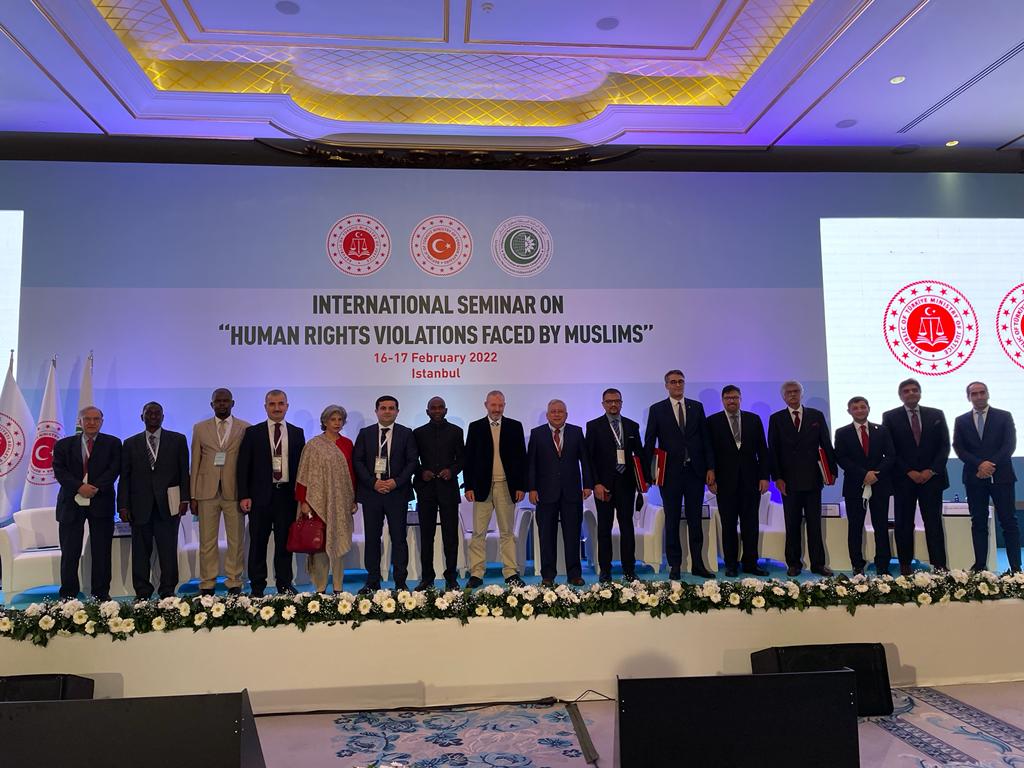
“I am deeply honored by the opportunity to address this highly esteemed circle of dignitaries, representing equally estimable nations of the Organization of Islamic Cooperation (OIC). I am also humbled to see such an esteemed group of Muslim leaders devoted to causes that rise above ambition or self-promotion.
I am exceptionally grateful for the unwavering support that has always been given by the member states of OIC for the cause of Kashmir, no matter how great the Realpolitk temptations. Justice is not a vocation for the weak-hearted, whether in Palestine, Myanmar, Kashmir or elsewhere,” this was stated by Dr. Ghulam Nabi Fai, Chairman, Washington-based ‘World Forum for Peace & Justice’ during two days international conference, entitled: “Human Rights Violations Faced by the Muslims,” held in Istanbul on February 16 & 17, 2022.

The conference was jointly sponsored by the Government of Turkey in cooperation with Independent Permanent Commission of Human Rights (IPCHR) of the OIC and was addressed among others by, H.E. Mevlut Cavusoglu, Minister of Foreign Affairs, Turkey; Professor (Dr.) Mustafa Sentop, Speaker, Grand Assembly of Turkey; H.E. Yakup Mogul, Deputy Minister of Justice, Turkey; Daniel Holtgen, Spokesperson for the Secretary General of ‘Council of Europe,’ and many others.
The other panelists of the session in which Dr. Fai participated included: Ambassador Shabbir Ahmad Chowdhury, Secretary, Ministry of Foreign Affairs, Bangladesh; ElHabib Bourane, Director, Muslim Communities and Minorities, OIC; Dr. Reza Uddin, Council member, Arakan Rohingya Union; Ambassador Zamir Akram, Former Pakistan’s Representative to the UN in Geneva; Dr. Hassan A. Abdein, Associate Editor, Muslim Minorites, Oxford, UK. The theme of this session was, “The Situation of Muslims in Asia.”
Dr. Fai narrated that it is a historical fact that the Kashmir question is one of the oldest unresolved international problems in the world. It is worth mentioning that when the Kashmir dispute erupted in 1947-1948, the United States championed the stand that the future status of Kashmir must be ascertained in accordance with the wishes and aspirations of the people of the territory. The United States was the principal sponsor of the resolution # 47 which was adopted by the Security Council on 21 April 1948, and which was based on that unchallenged principle.
Fai cited the United Nations High Commissioner on Human Rights (UNHCHR) ‘Report on the Situation of Human Rights in Kashmir,’ issued on June 14, 2018 which contains graphic documentation of human rights violations being committed by the Indian military and paramilitary forces in Indian Occupied Kashmir. This was a significant step towards greater international recognition of the serious abuses committed against Kashmiris at the hands of Indian army. This report takes the veil of secrecy off of India’s crimes against humanity.
The report cites specific incidents where the Indian Government violated the very principles of human decency and democratic freedom against the people of Kashmir. It also details many instances where the use of draconian laws have given sense of total impunity to the Indian army in Kashmir. The report underscored that “Impunity for enforced or involuntary disappearances in Kashmir continues as there has been little movement towards credibly investigating complaints including into alleged sites of mass graves in the Kashmir Valley and Jammu region.”
The United Nations report suggested that [As a State party to the International Covenant on Civil and Political Rights, which prohibits torture under any circumstances (Article 7), India is obliged to ensure that no person is “subjected to torture or to cruel, inhuman or degrading treatment or punishment”. There have long been persistent claims of torture by security forces in Kashmir.] The UN report qoutes ‘the Special Rapporteur on violence against women, its causes and consequences,’ who said, “[W]omen living in militarized regions, such as Jammu and Kashmir and the north-eastern states, live in a constant state of siege and surveillance, whether in their homes or in public.’
Since, August 5, 2019, the Indian government, in order to crush any resistance to its illegal occupation, has instituted new draconian measures. In a ruthless campaign they imprisoned politicians, journalists, and civil society members, to intimidate and suppress any form of dissent. The enactment of Domicile Law was designed to change the demography of Kashmir. It is reported that over 4 million Domicile certificates have been issued to grant non Kashmiris’ right to buy and compete for local jobs which is a clear violation of International Law since it unilaterally changes the United Nations_recognized status of Jammu & Kashmir.
Fai added that the latest actions taken by the National Investigation Agency (NIA) are politically motivated and are part of the Indian government’s attempt to censor peaceful Kashmiri voices. The Unlawful Activity Prevention Act (UAPA) has been used countless times to harass, assault and imprison activists, political leaders and journalists who aim to expose the human rights violations committed by Indian forces. Latest victim is Khurram Parvez, one of the internationally known human rights activists who was detained under UAPA. Ms. Mary Lawlor, UN Special Rapporteur on Human Rights Defenders said on November 23, 2021, that ‘He (Khurram Parvez) is not a terrorist, he is a human rights defender.’
Dr. Fai made the following twelve suggestions to the IPHRC:
1. Given the report, issued by the United Nations High Commissioner on Human Rights on June 14, 2018 & July 8, 2019, regarding the ‘Situation in Kashmir’, we would like to request the OIC members of the Human Rights Council to endorse this report and initiate a joint OIC resolution to set up an enquiry commission on human rights violations in Kashmir during the forthcoming session of the UN Human Rights Council in Geneva to be held between February 28 to April 1, 2022.
2. Widely use and disseminate testimony of Dr Gregory Stanton, Chairman, ‘Genocide Watch’, which he gave to the United States Congress on January 12, 2022, and repeated in his January 19, 2022, TV interview with Karan Thapar, that ‘in India, there are the makings of a genocide against Muslims, starting with Kashmir & Assam’. Based on this authoritative evidence, we suggest to OIC ‘The Gambia Model’, taking Myanmar to the ICJ for crimes against humanity against the Rohingya, to be followed for Occupied Kashmir as well.
3. OIC should invoke the ‘Genocide Convention’ in the UN General Assembly and / or Security Council.
4. The OIC must provide ‘safe havens’ for the Kashmiri Diaspora, especially those fleeing oppression in Occupied Kashmir – students, scholars, activists, journalists, and business people – in OIC member states, in an institutional manner, like opening up visas / jobs / scholarships for meritorious students, relocation facilitation for such skilled and professional Kashmiris, for whom living in Modi’s India has become unbearable.
5. In the ‘battle of ideas’ for Azadi (Freedom) of Kashmiri people, OIC must promote the 3 core causes together: PKR (Palestine, Kashmir, Rohingya); establish a special website, combining genocide with resistance. This has to be a sustained and coordinated initiative, where people of conscience, both Muslim and non-Muslim scholars, intellectuals and diplomats can play a role through various channels, including Parliamentary Diplomacy.
6. OIC should set up an ‘independent’ criminal court to hear cases of specific crimes against civilian population in occupied Kashmir.
7. OIC should organize a ‘digital referendum’ in occupied Kashmir eliciting wishes of the Kashmiri people (even if only a section of the population participates); and ask the UN General Assembly and / or Security Council to allow a representative of the Kashmiri people (selected through ‘digital referendum’) to present the case of Kashmir to the world community.
8. OIC should commission to study the danger of a nuclear conflict between Pakistan and India due to the unresolved Kashmir dispute.
9. OIC should establish a ‘Global Kashmir Assembly’ composed of Kashmiri diaspora leaders from across the world. It could operate virtually; lobby with host countries on agreed group positions / demands.
10. OIC must persuade the Government of India to release all political prisoners unconditionally, including Khurram Parvez, Yasin Malik, Shabir Shah, Masarat Alalm, Aasia Andrabi, and others.
11. OIC must convince the United Nations to persuade Government of India to rescind the Domicile Law which is designed to change the demography of Kashmir.
12. Finally, it is further our hope that the policy makers of OIC member countries will look to solving the root cause of the problem of Kashmir – the unfulfilled promise of self-determination as guaranteed by successive United Nations Security Council resolutions.
Discover more from The Monitor
Subscribe to get the latest posts sent to your email.



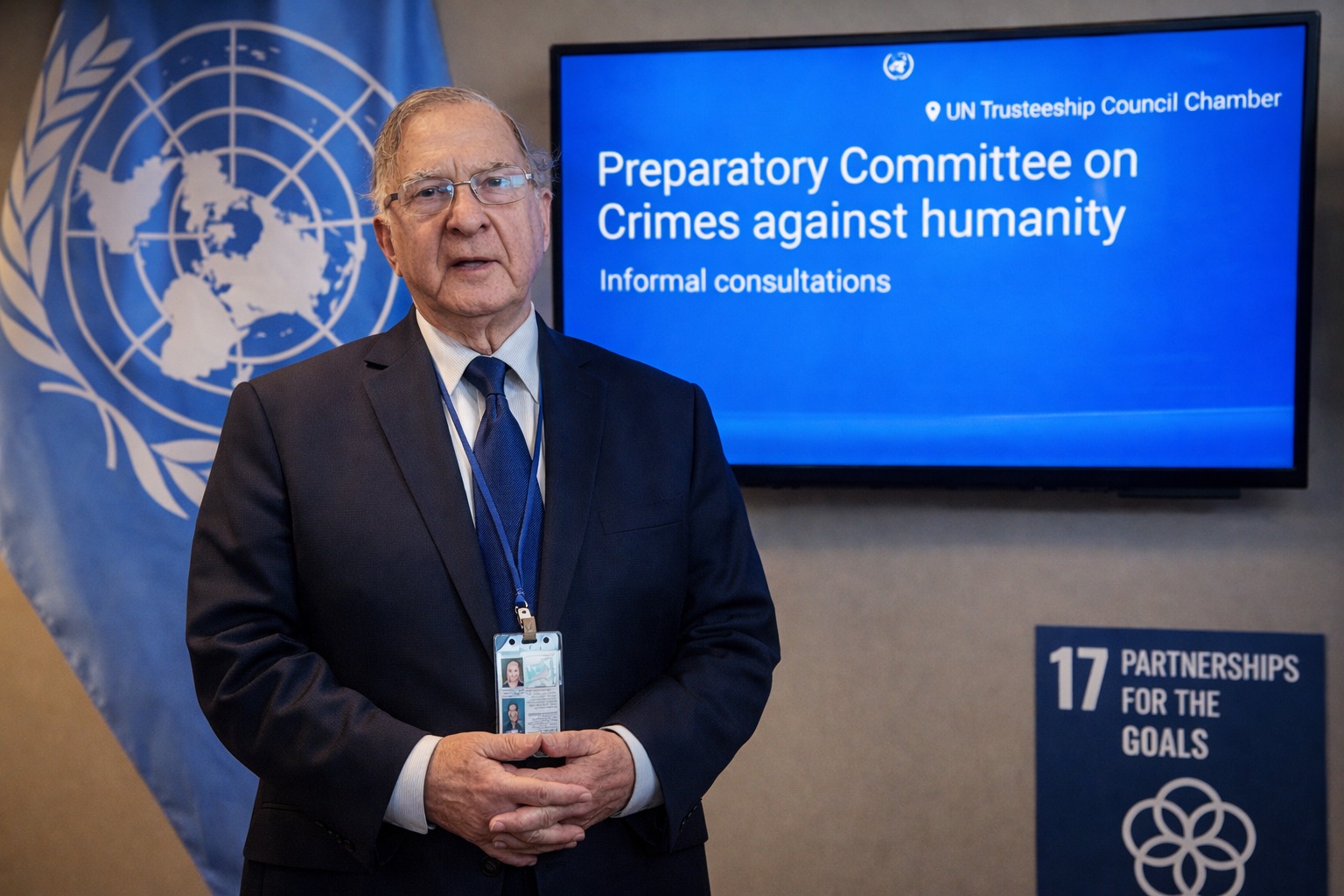
Crimes against humanity represent one of the most serious affronts to human dignity and collective conscience. They embody patterns of widespread or systematic violence directed against civilian populations — including murder, enforced disappearances, torture, persecution, sexual violence, deportation, and other inhumane acts that shock the moral order of humanity. The United Nations Conference of Plenipotentiaries on the Prevention and Punishment of the Crime against Humanity presents a historic opportunity to strengthen global resolve, reinforce legal frameworks, and advance cooperation among states to ensure accountability, justice, and meaningful prevention.
While the international legal architecture has evolved significantly since the aftermath of the Second World War, important normative and institutional gaps remain. The Genocide Convention of 1948 and the Geneva Conventions established foundational legal protections, and the creation of the International Criminal Court reinforced accountability mechanisms. Yet, unlike genocide and war crimes, there is still no stand-alone comprehensive convention dedicated exclusively to crimes against humanity. This structural omission has limited the capacity of states to adopt consistent domestic legislation, harmonize cooperation frameworks, and pursue perpetrators who move across borders. The Conference of Plenipotentiaries seeks to fill this critical void.

The Imperative of Prevention
Prevention must stand at the core of the international community’s approach. Too often, the world reacts to atrocities only after irreparable harm has been inflicted and communities have been devastated. A meaningful prevention framework requires early warning mechanisms, stronger monitoring capacities, transparent reporting, and a willingness by states and institutions to act before crises escalate. Education in human rights, inclusive governance, rule of law strengthening, and responsible security practices are equally essential elements of prevention.
Civil society organizations, academic institutions, moral leaders, and human rights defenders play a vital role in documenting abuses, amplifying the voices of victims, and urging action when warning signs emerge. Their protection and meaningful participation must therefore be an integral component of any preventive strategy. Without civic space, truth is silenced — and without truth, accountability becomes impossible.
Accountability and the Rule of Law
Accountability is not an act of punishment alone; it is an affirmation of universal human values. When perpetrators enjoy impunity, cycles of violence deepen, victims are re-traumatized, and the integrity of international law erodes. Strengthening judicial cooperation — including extradition, mutual legal assistance, and evidence-sharing — is essential to closing enforcement gaps. Equally important is the responsibility of states to incorporate crimes against humanity into domestic criminal law, ensuring that such crimes can be prosecuted fairly and independently at the national level.
Justice must also be survivor centered. Victims and affected communities deserve recognition, reparations, psychological support, and the assurance that their suffering has not been ignored. Truth-seeking mechanisms and memorialization efforts help restore dignity and foster long-term reconciliation.
The Role of Multilateralism
The Conference reinforces the indispensable role of multilateralism in confronting global challenges. Atrocities rarely occur in isolation; they are rooted in political exclusion, discrimination, securitization of societies, and structural inequalities. No state, however powerful, can confront these dynamics alone. Shared norms, coordinated diplomatic engagement, and principled international cooperation are vital to preventing abuses and responding when they occur.
Multilateral commitments must also be matched with political will. Declarations are meaningful only when accompanied by implementation, transparency, and accountability to both domestic and international publics.
Technology, Media, and Modern Challenges
Contemporary conflicts and crises unfold in an increasingly digital and interconnected world. Technology can illuminate truth — enabling documentation, verification, and preservation of evidence — but it can also be weaponized to spread hate, dehumanization, and incitement. Strengthening responsible digital governance, countering disinformation, and supporting credible documentation initiatives are essential tools for both prevention and accountability. Journalists, researchers, and human rights monitors must be protected from reprisals for their work.
Climate-related stress, demographic shifts, and political polarization further complicate the landscape in which vulnerabilities emerge. The Conference should therefore promote a holistic understanding of risk factors that may precipitate widespread or systematic violence.
A Universal Commitment — With Local Realities
While the principles guiding this Convention are universal, their application must be sensitive to local histories, languages, cultures, and institutional realities. Effective implementation depends on national ownership, capacity-building, judicial training, and inclusive policymaking that engages women, youth, minorities, and marginalized communities. The pursuit of justice must never be perceived as externally imposed, but rather as an expression of shared human values anchored within domestic legal systems.
The Kashmir Conflict and the Reality of Crimes Against Humanity
Crimes against humanity do not emerge overnight. They develop through sustained patterns of abuse, erosion of legal safeguards, and the normalization of repression. Jammu and Kashmir presents a contemporary case study of these dynamics.
Under international law, crimes against humanity encompass widespread or systematic attacks directed against a civilian population, including imprisonment, torture, persecution, enforced disappearance, and other inhumane acts. Evidence emerging from Kashmir—documented by UN experts, international NGOs, journalists, and scholars—demonstrates patterns that meet these legal criteria.
The invocation of “national security” has become the central mechanism through which extraordinary powers are exercised without effective judicial oversight. Draconian laws are routinely used to silence dissent, detain human rights defenders, restrict movement, and suppress independent media. This securitized governance has produced what many Kashmiris describe as the “peace of the graveyard”—an imposed silence rather than genuine peace.
Early-warning frameworks for mass atrocities are particularly instructive. Gregory Stanton identifies Kashmir as exhibiting multiple risk indicators, including classification and discrimination, denial of civil rights, militarization, and impunity. These indicators, if left unaddressed, historically precede mass atrocity crimes.
The systematic silencing of journalists, as warned by the Committee to Protect Journalists, and the targeting of academics and diaspora voices—such as the denial of entry to Dr. Nitasha Kaul and the cancellation of travel documents of elderly activists like Amrit Wilson—demonstrate repression extending beyond borders.
The joint statement by ten UN Special Rapporteurs (2025) regarding one of internationally known human rights defender – Khurram Parvez – underscores that these are not isolated incidents but part of a broader pattern involving arbitrary detention, torture, discriminatory treatment, and custodial deaths. Together, these acts form a systematic attack on a civilian population, triggering the international community’s responsibility to act.
This Conference offers a critical opportunity to reaffirm that sovereignty cannot be a shield for crimes against humanity. Kashmir illustrates the urgent need for:
- Preventive diplomacy grounded in early warning mechanisms.
- Independent investigations and universal jurisdiction where applicable.
- Stronger protections for journalists, scholars, and human rights defenders, including Irfan Mehraj, Abdul Aaala Fazili, Hilal Mir, Asif Sultan and others.
- Victim-centered justice and accountability frameworks for Mohammad Yasin Malik, Shabir Ahmed Shah, Masarat Aalam, Aasia Andrabi, Fehmeeda Sofi, Nahida Nasreen and others.
Recognizing Kashmir within the crimes-against-humanity discourse is not political—it is legal, moral, and preventive. Failure to act risks entrenching impunity and undermining the very purpose of international criminal law.
Conclusion
The United Nations Conference of Plenipotentiaries carries profound moral, legal, and historical significance. It represents not only a technical exercise in treaty development but a reaffirmation of humanity’s collective promise — that no people, anywhere, should face systematic cruelty without recourse to justice and protection. By advancing a comprehensive Convention on the Prevention and Punishment of the Crime against Humanity, the international community strengthens its resolve to stand with victims, confront impunity, and uphold the sanctity of human dignity.
The success of this effort will ultimately depend on our willingness to transform commitments into action, principles into practice, and aspiration into enduring protection for present and future generations.
Dr. Fai submitted this paper to the Organizers of the Preparatory Committee for the United Nations Conference of Plenipotentiaries on Prevention and Punishment of Crimes against Humanity on behalf of PCSWHR which is headed by Dr. Ijaz Noori, an internationally known interfaith expert. The conference took place at the UN headquarters between January 19 – 30, 2026.
Discover more from The Monitor
Subscribe to get the latest posts sent to your email.
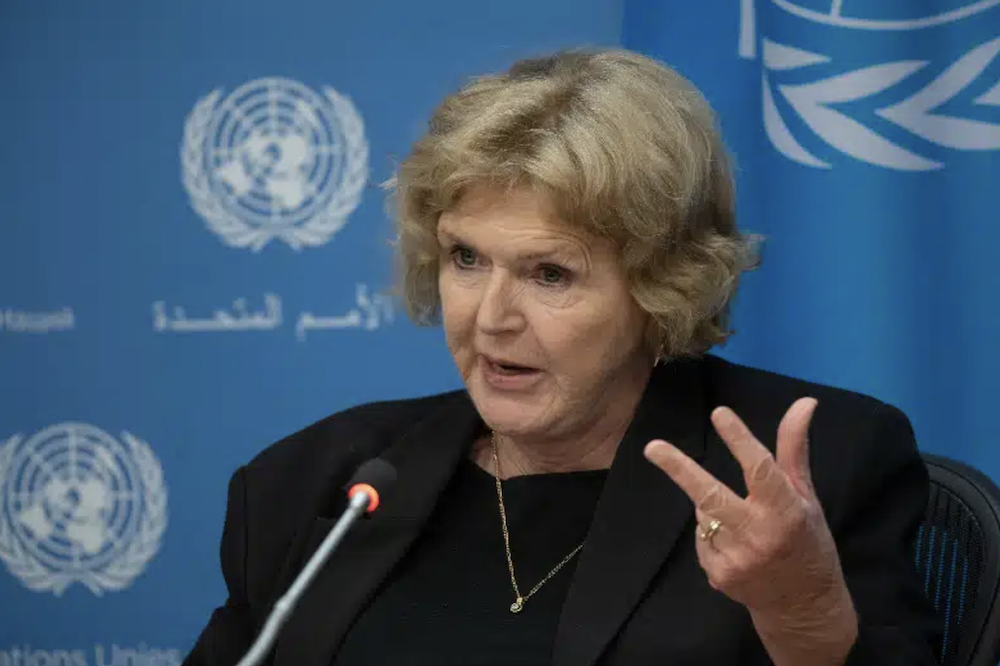
This written communication draws the attention of the United Nations and its human rights mechanisms to persistent and grave violations in Jammu and Kashmir, which cumulatively raise serious concerns under international human rights law and international criminal law, including the threshold of crimes against humanity.
For decades, the civilian population of Jammu and Kashmir has lived under one of the world’s most militarized environments. Since August 2019 in particular, restrictions on civil liberties have intensified, marked by arbitrary arrests, prolonged detentions without trial, torture and ill-treatment, extrajudicial killings, enforced disappearances, and collective punishment under the guise of national security.
On 24 November 2025, ten UN Special Rapporteurs issued a joint statement condemning “reports of arbitrary arrests and detentions, suspicious deaths in custody, torture and other ill-treatment, lynchings, and discriminatory treatment of Kashmiri and Muslim communities.”
These concerns echo findings previously documented by Michelle Bachelet,the United Nations High Commissioner for Human Rights (OHCHR) in its 2019 report, which warned of an entrenched culture of impunity and lack of accountability for serious violations.
Independent experts on mass atrocities have sounded early warnings. Gregory Stanton, Founder of Genocide Watch, has stated that Kashmir exhibits multiple risk factors associated with genocide, including extreme militarization, denial of identity, suppression of dissent, and systemic impunity.
Freedom of expression and access to information have been severely curtailed. The Committee to Protect Journalists has repeatedly warned that journalism in Kashmir has been effectively criminalized, leaving the population voiceless.
Award-winning journalists and scholars—such as Masarat Zahra and Dr. Nitasha Kaul (British Academic) —have faced harassment, travel bans, and reprisals, including the denial of entry to India, amounting to transnational repression.
The recent attachment of properties belonging to members of the Kashmiri diaspora who advocate a peaceful resolution of the Kashmir dispute is deeply alarming. These measures appear aimed at intimidating and silencing dissenting voices and preventing the international community from understanding the reality on the ground.
Equally disturbing is the forthcoming trial of Mohammad Yasin Malik before the Supreme Court of India, where the government is seeking the death penalty, a move that has sent shockwaves across Kashmir and among human rights advocates worldwide. The recent convictions of Asiya Andrabi, Nahida Nasreen and Fahmeeda Sofi serve no legitimate purpose other than to suppress political expression and peaceful advocacy.
The continued incarceration of Shabir Ahmed Shah and Masarat Alam, without credible justification, further underscores a pattern of repression aimed at dismantling legitimate political leadership in Kashmir. The prolonged confinement of Khurram Parvez, an internationally known human rights advocate violates all norms of international standards.
These actions collectively reflect a troubling pattern of repression and raise serious concerns under international human rights law. Urgent intervention by the United Nations is essential to protect fundamental freedoms, uphold the rule of law, and prevent further deterioration of the human rights situation in Jammu and Kashmir.
My concerns are consistent with observations made by other United Nations independent experts, international NGO’s, scholars and academics.
Mary Lawlor, UN Special Rapporteur on Human Rights Defenders said on the targeting of Kashmiri civil society: “The continued use of counter-terrorism legislation to silence human rights defenders in Jammu and Kashmir is deeply alarming. Peaceful human rights work must never be criminalized under the guise of national security.”
Dr. Fernand de Varennes, UN Special Rapporteur on Minority Issues (2020): “Restrictions imposed in Jammu and Kashmir appear to be inconsistent with international human rights norms, particularly those protecting minorities.”
International Commission of Jurists (ICJ): “The prolonged denial of civil liberties in Jammu and Kashmir raises serious concerns under international law, including the prohibition of collective punishment and arbitrary detention.”
Amnesty International: “India’s claims of ‘normalcy’ in Kashmir are contradicted by widespread repression, including arbitrary detentions, communication blackouts, and collective punishment of civilians.”
Human Rights Watch: “Impunity for security forces remains the norm, fostering further abuses and denying justice to victims.”
Timely and principled intervention by the United Nations is essential to restore confidence in the rule of law, protect fundamental freedoms, and bring a measure of sanity and accountability to the situation in Jammu and Kashmir.
This submission urges the United Nations to:
- Initiate independent international investigations into alleged crimes against humanity in Jammu and Kashmir.
- Press for the repeal or reform of laws enabling arbitrary detention and collective punishment.
- Persuade India to release Mohammad Yasin Malik, Shabbir Ahmed Shah, Masar Aalam, Asiya Andrabi, Nahida Nasreen, Fahmeeda Soofi, Khurram Parvez and others immediately.
- Ensure access to UN Special Procedures, international observers, and independent media.
- Call for accountability and remedies for victims, consistent with international law.
Silence and inaction risk normalizing repression. The situation in Jammu and Kashmir demands sustained international scrutiny and principled engagement.
Discover more from The Monitor
Subscribe to get the latest posts sent to your email.
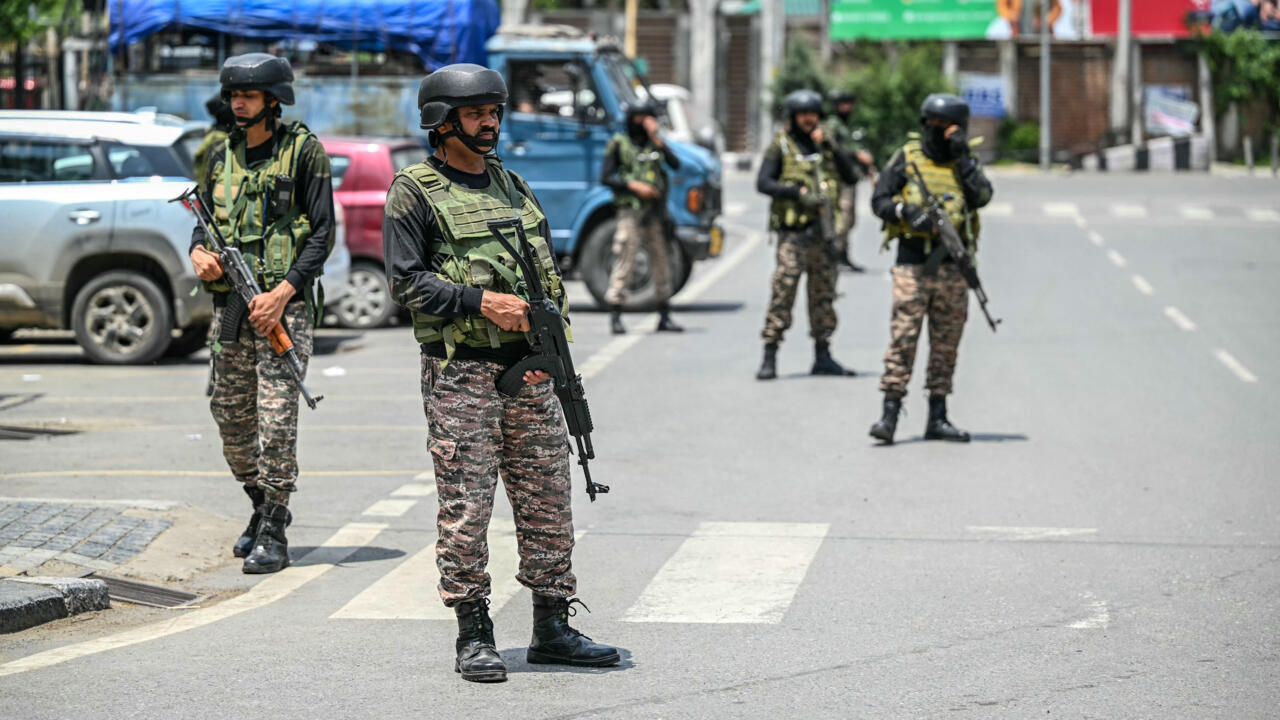
The recent conviction of three prominent Kashmiri women leaders—Asiya Andrabi, Fahmeeda Sofi, and Nahida Nasreen—by a National Investigation Agency (NIA) court in Delhi underscores a disturbing trend in India’s governance of Jammu and Kashmir: the systematic criminalization of peaceful political dissent under the guise of counterterrorism.
The three women were convicted under the Unlawful Activities (Prevention) Act (UAPA), a law widely criticized by international human rights experts for its vague definitions, prolonged pre-trial detention, and use as a tool to silence critics. Asiya Andrabi, Fahmeeda Sofi, and Nahida Nasreen are associated with Dukhtaran-e-Millat, a constituent of the All Parties Hurriyat Conference (APHC)—a coalition that has long advocated a peaceful, negotiated resolution of the Kashmir dispute in accordance with United Nations resolutions.
This case is not an anomaly. It reflects a broader pattern in which India’s counterterrorism laws are deployed not to address genuine security threats, but to suppress political expression and civic activism in Kashmir.
International concern over India’s counterterrorism framework is well documented. On May 6, 2020, nine United Nations Special Rapporteurs, together with the Chair of the UN Working Group on Arbitrary Detention, formally warned India that amendments to the UAPA were incompatible with its obligations under international human rights law. They expressed particular alarm over provisions allowing individuals to be designated as “terrorists” without due process, noting that such powers were being exercised in a context of discrimination against religious minorities, human rights defenders, and political dissidents.
Leading human rights organizations have echoed these warnings. Aakar Patel, former Chair of Amnesty International India, observed that authorities were using “bogus foreign-funding and terrorism charges” to intimidate and silence critics, in violation of international financial and legal standards. Human Rights Watch, in multiple reports including one issued in November 2023, has urged India to stop abusing counterterrorism regulations that have created what its Asia leadership describes as a “dangerous arsenal” against civil society.
The allegations against Asiya Andrabi, Fahmeeda Sofi, and Nahida Nasreen center largely on their use of social media and public messaging that, according to prosecutors, threatened India’s sovereignty and territorial integrity. Yet a closer look reveals that their advocacy focused on demanding the implementation of United Nations Security Council resolutions on Kashmir—resolutions that explicitly recognize Kashmir as a disputed territory and call for the people of the region to determine their political future.
These resolutions were not imposed on India from the outside. They were adopted with India’s participation and, in several instances, with language proposed by Indian representatives themselves. Peacefully invoking international law and UN-mandated processes cannot credibly be equated with terrorism.
Equally troubling is the judicial reasoning employed in the case. The special NIA court relied on domestic legal provisions to claim that the women’s statements were prejudicial to national integration. This ignores a fundamental legal reality: under international law and binding UN Security Council resolutions, Jammu and Kashmir remains a disputed territory, not an internationally recognized part of any UN member state. Advocacy for self-determination in such a context does not constitute secession; it reflects a right recognized under international law.
The judgment also raises serious constitutional concerns. By criminalizing peaceful political expression, it conflicts with basic protections enshrined in India’s own Constitution, including guarantees of liberty, due process, and freedom of expression. When counterterrorism laws are used to punish speech rather than violence, the rule of law itself is placed at risk.///
Among the charges cited is an allegation that Asiya Andrabi hoisted the Pakistani flag and sang Pakistan’s national anthem in Kashmir in 2015. Even if true, the selective criminalization of symbolic expression exposes a glaring double standard. Kashmiri civilians have frequently been compelled under military supervision to display Indian national symbols on official occasions. Symbolic acts cannot be criminalized selectively, particularly in a region governed by extraordinary military measures.
The conviction of these three women must also be viewed alongside the continued detention of other prominent Kashmiri leaders, including Mohammad Yasin Malik, Shabir Ahmed Shah, Masarat Aalam, and Khurram Parvez, many of whom have been imprisoned for years without fair trial under the same legal framework.
India rightly seeks recognition as a democratic state committed to the rule of law. That claim is undermined when counterterrorism legislation is used to silence peaceful political voices, especially those of women, in a disputed territory. Restoring credibility requires more than rhetoric; it requires adherence to constitutional guarantees and international legal obligations.
The international community—particularly UN Special Rapporteurs and democratic partners of India—must press for the immediate and unconditional release of all Kashmiri political prisoners, including Asiya Andrabi, Fahmeeda Sofi, and Nahida Nasreen, held for peaceful expression. Justice in Kashmir cannot be achieved through repression. Only respect for law, dialogue, and the freely expressed will of the people can offer a path toward lasting peace.
Discover more from The Monitor
Subscribe to get the latest posts sent to your email.

Trump’s ‘Civilisation Will Die’ Warning: Kharg Island Strikes and the Global Oil Shock

Lessons for the World from Tiny Hungary

Millions of Burmese Struggle to Find Safety in Thailand

What Is the No Kings Protest? Inside Minnesota’s Historic 2026 Flagship Rally Against Authoritarianism

OPINION | Global South Peace Efforts: How the World’s New Mediators Are Reshaping Diplomacy in 2026

Singapore’s Bold Bid to Become Asia-Pacific’s Gold-Trading Powerhouse: Why the City-State Is Racing to Capture Bullion Liquidity and Central-Bank Vaults

The Private Firms Powering China’s Military AI Push

Trump Extends Iran Talks Deadline amid Sell-Off on Wall Street

Indonesia’s Danantara Shifts to Investment Phase, Targets 7% Returns — Sovereign Wealth Fund Enters Deployment Era Under Prabowo’s Ambitious Vision
Singapore’s Bold Bid to Become Asia-Pacific’s Gold-Trading Powerhouse: Why the City-State Is Racing to Capture Bullion Liquidity and Central-Bank Vaults
OPINION | Global South Peace Efforts: How the World’s New Mediators Are Reshaping Diplomacy in 2026

Iran’s Tenacious Regime and the Future of the Gulf
Indonesia’s Danantara Shifts to Investment Phase, Targets 7% Returns — Sovereign Wealth Fund Enters Deployment Era Under Prabowo’s Ambitious Vision

Brent Crosses $100 as Indian Tanker Path Corrected Near Strait of Hormuz

The 400 Million Barrel Question: Can the IEA’s Historic Reserve Release Save the Global Economy from Iran’s Energy War?

Iran Vows to Keep Strait of Hormuz Closed: Mojtaba Khamenei’s First Statement Signals Escalation as Oil Surges Past $100
What Is the No Kings Protest? Inside Minnesota’s Historic 2026 Flagship Rally Against Authoritarianism

AI is dressing up greed as progress on creative rights
-

 Featured5 years ago
The Right-Wing Politics in United States & The Capitol Hill Mayhem
-

 News4 years ago
Prioritizing health & education most effective way to improve socio-economic status: President
-

 China5 years ago
Coronavirus Pandemic and Global Response
-

 Canada5 years ago
Socio-Economic Implications of Canadian Border Closure With U.S
-

 Democracy5 years ago
Missing You! SPSC
-

 Conflict5 years ago
Kashmir Lockdown, UNGA & Thereafter
-
Democracy5 years ago
President Dr Arif Alvi Confers Civil Awards on Independence Day
-

 Digital5 years ago
Pakistan Moves Closer to Train One Million Youth with Digital Skills