
India
Kashmiris have not forgotten UN promises


Kashmir is a natural paradise, surrounded by India, Pakistan, China, Afghanistan, and with a narrow Wakhan stripe, separating it from Tajikistan and Kyrgyzstan. Compared to existing 193 countries in the world taken individually, Kashmir is larger than103 and more populous than 129. It is also more than three times the size of Belgium, the Netherlands and Luxemburg combined. The people of Jammu & Kashmir have not forgotten that it was on April 21, 1948, that the United Nations Security Council adopted resolution # 47 which states that the future of Kashmir shall be decided by its inhabitants.
There have been successive United Nations security Council resolutions that pledged to the people of Kashmir their right to self-determination. The Indian Government has barred the exercise of this right and has waged a campaign of terror against the people of Kashmir. The Kashmiris have become victims of systematic and extreme brutalities, and nothing has been done by the world powers or any organ of the United Nations including the Secretary General to permit them any relief or redress.
Each time the people of Kashmir have demanded the right to self-determination, Indian authorities have responded with extreme repression. India is a signatory to the ‘Universal Declaration of Human Rights,’ which guarantees that ‘everyone has the right to life, liberty, and security of person,’ that ‘no one shall be subjected to torture, or to cruel, inhuman or degrading treatment or punishment,’ and that ‘no one shall be subjected to arbitrary arrest, detention or exile.’
These rights are being violated by the Indian army and its paramilitary forces, day in, day out. Since 1989, the Indian Government has embarked upon a campaign of mass slaughter, rape and robbery against the people of Kashmir. It is estimated that since January 1990, more than 100,000 people have been killed in Kashmir at the hands of the Indian forces of occupation. More than 10,000 persons have involuntarily disappeared. Their wives are called “Half-widows” because no one knows whether they are dead or alive.
Further, it is estimated that hundreds of Kashmiris are held as political prisoners by the government of India. Very recently, on November 15, 2021, the killing of three innocent Kashmiris, Dr. Mudasir Gul, Altaf Butt and Mohammad Amir in Hyderpora, Srinagar, Kashmir in a fake encounter has once again shaken the conscience of the global civil society. This act of barbarism by occupation army signifies the death of so-called Indian democracy.
This latest killing of innocent civilians needs a transparent investigation by a neutral outside agency, like the United Nations. And, now the Arrest of World-renowned Human Rights Activist Khurram Parvez by NIA of India on November 21, 2021 is obviously travesty of justice. Mary Lawlor, the UN Special Rapporteur on Human Rights Defender tweeted: Khurram Parvez is not a terrorist. He is a Human Rights Defender. India has legalized torture, arbitrary arrest, wanton destruction of property and has given its soldiers the right to kill at sight, and to conduct searches without warrant.
Here are few black laws authorized by the Government of India which clearly violate international standards. The Jammu and Kashmir Public Safety Act (PSA). This law enables the Indian armed forces in Kashmir to detain civilians for up to one year without trial or due process for a wide variety of reasons, including the exercise of free speech. Under this law, an individual who prints pamphlets and newsletters that advocate the implementation of the United Nations resolutions calling for a plebiscite in Kashmir can also be arrested and detailed without formal charge or due process.
That is why the Amnesty International calls the Jammu and Kashmir Public Safety Act, ‘Lawless Law. In 2011, Amnesty International’s ‘Lawless Law’ report revealed that, given the political context in J&K, the PSA was used to detain, among others, political leaders, lawyers, and individuals who challenged the state through political action or peaceful dissent. The report found that the PSA provides for arbitrary detention, which violates the right to liberty under human rights law binding on India.
Furthermore, the report found that state authorities also used the PSA to facilitate other human rights violations, including incommunicado detentions, torture and other cruel, inhuman or degrading treatment or punishment (other ill-treatment) in custody, and detention on vague grounds. Based on these findings, the report called on the Government of J&K to repeal the PSA, abolish the administrative detention system, either release those held under the PSA or charge them with a recognised criminal offence, and to try them in a regular court in proceedings which meet international standards of fairness. The Terrorist and Disruptive Act (TADA).
This act allows Indian forces to round up and detain citizens for up to one year without formal charges, due process of law or formal trial. When and if court hearings are held, they are held in secret. Victims are not allowed to confront their accusers, and witnesses can keep their identities secret. The Unlawful Activities (Prevention) Act 1967 (UAPA). Under UAPA a person can be incarcerated up to 180 days without a charge sheet being filed. It does not allow right to dissent. The Amnesty International Executive Director has said that UAPA has been used to “target journalists and human rights defenders who criticize government policies.”
The National Security Act. Under this law, the Indian armed forces can detain individuals for up to one year without charges or trial to prevent them from ‘acting in a manner prejudicial to state security.’ Under his law, an individual does not even have to take a specific action to be detained. If the Indian authorities believe that he is about to do something, they can detain him without charge to prevent him from acting/. The Armed Forces Special Powers Act (AFSPA) [Jammu and Kashmir].
This law was passed on September 10, 1990. It allows the Governor of the State of Jammu and Kashmir to unilaterally ‘declare the whole or any part f the state to be a disturbed area.’ By identifying Kashmir as a disturbed area, this act empowers the armed forces to search homes without warrant, arrest Kashmiri people without warrant, destroy entire home and villages and shoot innocent civilians in the streets with intent to kill.
The United Nations High Commissioner for Human Rights in her report issued on July8, 2019 states, “The Armed Forces (Jammu and Kashmir) Special Powers Act 1990 (AFSPA) remains a key obstacle to accountability. As described in the June 2018 OHCHR report, this Act grants broad powers to the security forces operating in Jammu and Kashmir and effectively bestows immunity on security forces from prosecution in civilian courts for their conduct, by requiring the Central Government to sanction all prospective prosecutions against such personnel.”
Justice Rajinder Sachar, former Chief Justice of Delhi High Court, during an event organized by ‘People’s Union for Civil Liberties’ on May 7, 2016, urged all to unite to pressurise the government to repeal sedition laws and Armed Forces Special Power Act (AFSPA) Dr. Syed Nazir Gilani, President, Jammu Kashmir Council for Human Rights submitted a written statement to the UN Human Rights Council on August 30, 2019.
He elaborated that there was a war going on between the people of Kashmir and the Indian Security forces. The June 2018 and July 2019 reports by OHCHR have detailed the situation. According to these reports “The Armed Forces (Jammu and Kashmir) Special Powers Act (AFSPA) grants broad powers to the security forces in Jammu and Kashmir and effectively bestows immunity on security forces from prosecution in civilian courts for their conduct, by requiring the Central Government to sanction all prospective prosecutions against such personnel”.
For any of the above actions, article 7 of the act, titled ‘protection of persons acting in good faith under this act’ holds that ‘no prosecutions, suit or other legal proceeding shall be instituted…against any person in respect to anything done or purported to be done in exercise of the powers conferred by this act. This means that any member of the armed forces who conducts the above-described human rights violations – torture, summary executions of civilians, burning down homes and villages, and arbitrary arrest – can do so with total immunity from prosecution. These draconian laws violate articles 9 and 14 of the International Covenant on Civil and Political rights (ICCPR).
Currently, two dangerous misunderstandings exist about the Kashmir issue. If allowed to continue, they can destroy the potential of peace making in the subcontinent: These are: (a) Kashmiris have been battered into submission by Indian forces through these draconian laws. (b) India is unbendingly opposed to giving up her occupation of Kashmir; so it is futile to bring any pressure on her.
As regards the first, one need only to recall what happened to a nation as great as France under the 5-year Nazi occupation. That so many prominent Frenchmen and sections of French society refused to offer any resistance to German forces; that men of standing like Petain and Laval collaborated with the Nazis are undeniable facts. Did they betoken even a limited popularity of the Nazis? Certainly not. All they brought out was the opportunism of a few individuals or groups and the weakness inherent in human nature when confronted with life’s necessities. The thinking runs along these lines: life is to be lived; if an overarching issue is remaining undecided, one has still to face relatively minor but pressing day-to-day matters and one has to try to tackle them.
If this happened in France in four or five years of alien occupation, is it any wonder that it should happen in Kashmir after seventy-four years of unremittingly suppressive alien rule. The second misunderstanding arises from a superficial reading of realities. It is true that successive governments in India have persistently presented a completely intransigent front on the Kashmir issue. But if no cracks are visible in that front, it is because no pressure whatsoever has been applied which would expose the realities under the surface. During the last two years or so, particularly since August 5, 2019, when Article 370 and 35A were abrogated, several articles have appeared in the international press and even in mainstream India press written by thoughtful Indians opposed to the official policy on the issue.
They take their stand not on morality but realistically on India’ own long-term interest. That an unresolved Kashmir issue, the occupation of Kashmir in defiance of the people’s wishes, has damaged India’s democratic credentials and hence her standing and aspiration for an enhanced status in the United Nations is a point of emphasis in their pleadings. Only shallow thinking will regard this current of Indian opinion as inconsequential.
If world powers want to help bring about a peaceful settlement of the Kashmir dispute, it must demand from India as a first step, the immediate repeal of these black laws. The world powers and particularly, the United Nations Human Rights Council is in a position to arrest the course of brutalities by examining and exposing the situation and persuading both India and Pakistan that the way to bring peace and stability to the region of South Asia is by resolving the Kashmir dispute to the satisfaction of all parties concerned.
Discover more from The Monitor
Subscribe to get the latest posts sent to your email.



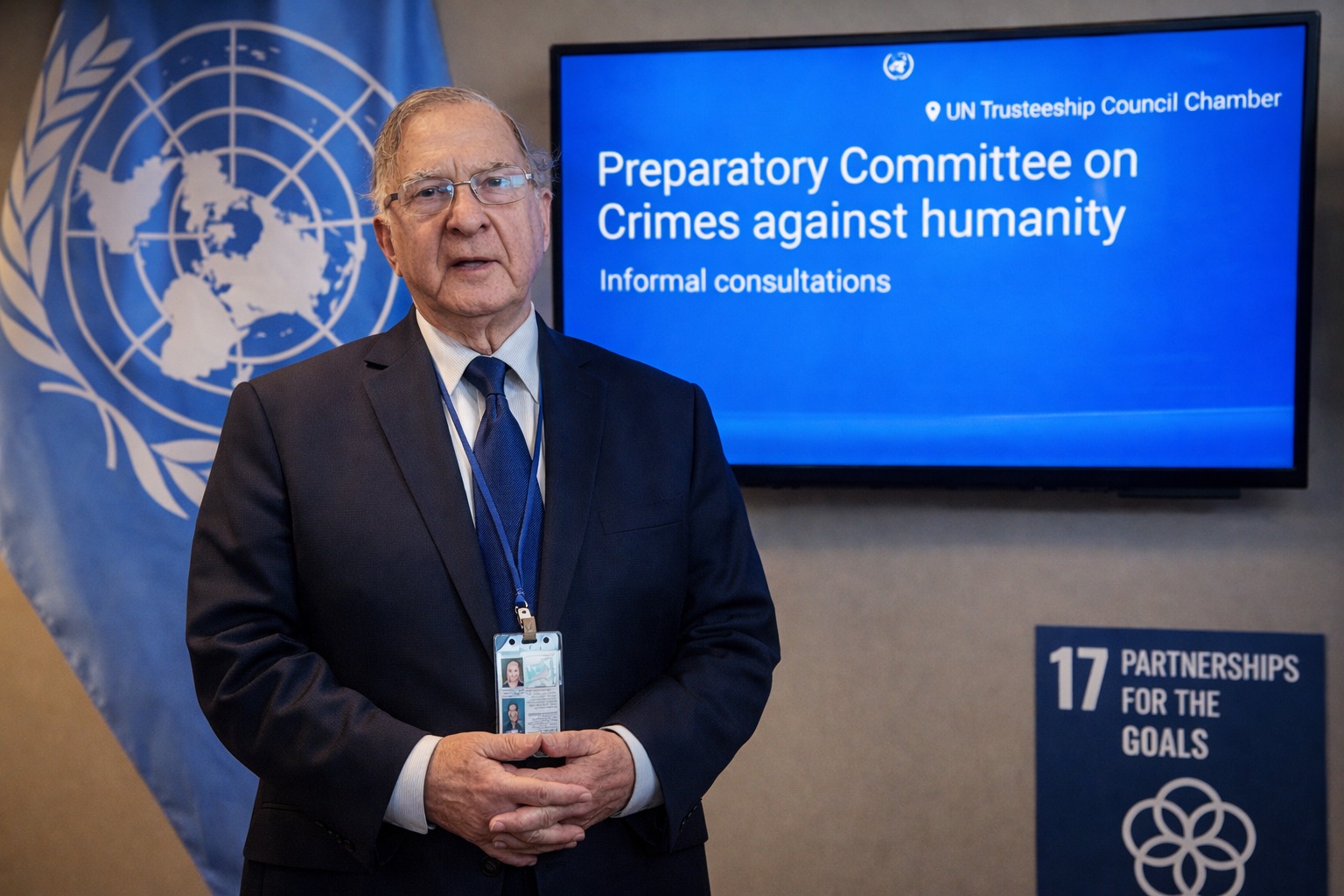
Crimes against humanity represent one of the most serious affronts to human dignity and collective conscience. They embody patterns of widespread or systematic violence directed against civilian populations — including murder, enforced disappearances, torture, persecution, sexual violence, deportation, and other inhumane acts that shock the moral order of humanity. The United Nations Conference of Plenipotentiaries on the Prevention and Punishment of the Crime against Humanity presents a historic opportunity to strengthen global resolve, reinforce legal frameworks, and advance cooperation among states to ensure accountability, justice, and meaningful prevention.
While the international legal architecture has evolved significantly since the aftermath of the Second World War, important normative and institutional gaps remain. The Genocide Convention of 1948 and the Geneva Conventions established foundational legal protections, and the creation of the International Criminal Court reinforced accountability mechanisms. Yet, unlike genocide and war crimes, there is still no stand-alone comprehensive convention dedicated exclusively to crimes against humanity. This structural omission has limited the capacity of states to adopt consistent domestic legislation, harmonize cooperation frameworks, and pursue perpetrators who move across borders. The Conference of Plenipotentiaries seeks to fill this critical void.

The Imperative of Prevention
Prevention must stand at the core of the international community’s approach. Too often, the world reacts to atrocities only after irreparable harm has been inflicted and communities have been devastated. A meaningful prevention framework requires early warning mechanisms, stronger monitoring capacities, transparent reporting, and a willingness by states and institutions to act before crises escalate. Education in human rights, inclusive governance, rule of law strengthening, and responsible security practices are equally essential elements of prevention.
Civil society organizations, academic institutions, moral leaders, and human rights defenders play a vital role in documenting abuses, amplifying the voices of victims, and urging action when warning signs emerge. Their protection and meaningful participation must therefore be an integral component of any preventive strategy. Without civic space, truth is silenced — and without truth, accountability becomes impossible.
Accountability and the Rule of Law
Accountability is not an act of punishment alone; it is an affirmation of universal human values. When perpetrators enjoy impunity, cycles of violence deepen, victims are re-traumatized, and the integrity of international law erodes. Strengthening judicial cooperation — including extradition, mutual legal assistance, and evidence-sharing — is essential to closing enforcement gaps. Equally important is the responsibility of states to incorporate crimes against humanity into domestic criminal law, ensuring that such crimes can be prosecuted fairly and independently at the national level.
Justice must also be survivor centered. Victims and affected communities deserve recognition, reparations, psychological support, and the assurance that their suffering has not been ignored. Truth-seeking mechanisms and memorialization efforts help restore dignity and foster long-term reconciliation.
The Role of Multilateralism
The Conference reinforces the indispensable role of multilateralism in confronting global challenges. Atrocities rarely occur in isolation; they are rooted in political exclusion, discrimination, securitization of societies, and structural inequalities. No state, however powerful, can confront these dynamics alone. Shared norms, coordinated diplomatic engagement, and principled international cooperation are vital to preventing abuses and responding when they occur.
Multilateral commitments must also be matched with political will. Declarations are meaningful only when accompanied by implementation, transparency, and accountability to both domestic and international publics.
Technology, Media, and Modern Challenges
Contemporary conflicts and crises unfold in an increasingly digital and interconnected world. Technology can illuminate truth — enabling documentation, verification, and preservation of evidence — but it can also be weaponized to spread hate, dehumanization, and incitement. Strengthening responsible digital governance, countering disinformation, and supporting credible documentation initiatives are essential tools for both prevention and accountability. Journalists, researchers, and human rights monitors must be protected from reprisals for their work.
Climate-related stress, demographic shifts, and political polarization further complicate the landscape in which vulnerabilities emerge. The Conference should therefore promote a holistic understanding of risk factors that may precipitate widespread or systematic violence.
A Universal Commitment — With Local Realities
While the principles guiding this Convention are universal, their application must be sensitive to local histories, languages, cultures, and institutional realities. Effective implementation depends on national ownership, capacity-building, judicial training, and inclusive policymaking that engages women, youth, minorities, and marginalized communities. The pursuit of justice must never be perceived as externally imposed, but rather as an expression of shared human values anchored within domestic legal systems.
The Kashmir Conflict and the Reality of Crimes Against Humanity
Crimes against humanity do not emerge overnight. They develop through sustained patterns of abuse, erosion of legal safeguards, and the normalization of repression. Jammu and Kashmir presents a contemporary case study of these dynamics.
Under international law, crimes against humanity encompass widespread or systematic attacks directed against a civilian population, including imprisonment, torture, persecution, enforced disappearance, and other inhumane acts. Evidence emerging from Kashmir—documented by UN experts, international NGOs, journalists, and scholars—demonstrates patterns that meet these legal criteria.
The invocation of “national security” has become the central mechanism through which extraordinary powers are exercised without effective judicial oversight. Draconian laws are routinely used to silence dissent, detain human rights defenders, restrict movement, and suppress independent media. This securitized governance has produced what many Kashmiris describe as the “peace of the graveyard”—an imposed silence rather than genuine peace.
Early-warning frameworks for mass atrocities are particularly instructive. Gregory Stanton identifies Kashmir as exhibiting multiple risk indicators, including classification and discrimination, denial of civil rights, militarization, and impunity. These indicators, if left unaddressed, historically precede mass atrocity crimes.
The systematic silencing of journalists, as warned by the Committee to Protect Journalists, and the targeting of academics and diaspora voices—such as the denial of entry to Dr. Nitasha Kaul and the cancellation of travel documents of elderly activists like Amrit Wilson—demonstrate repression extending beyond borders.
The joint statement by ten UN Special Rapporteurs (2025) regarding one of internationally known human rights defender – Khurram Parvez – underscores that these are not isolated incidents but part of a broader pattern involving arbitrary detention, torture, discriminatory treatment, and custodial deaths. Together, these acts form a systematic attack on a civilian population, triggering the international community’s responsibility to act.
This Conference offers a critical opportunity to reaffirm that sovereignty cannot be a shield for crimes against humanity. Kashmir illustrates the urgent need for:
- Preventive diplomacy grounded in early warning mechanisms.
- Independent investigations and universal jurisdiction where applicable.
- Stronger protections for journalists, scholars, and human rights defenders, including Irfan Mehraj, Abdul Aaala Fazili, Hilal Mir, Asif Sultan and others.
- Victim-centered justice and accountability frameworks for Mohammad Yasin Malik, Shabir Ahmed Shah, Masarat Aalam, Aasia Andrabi, Fehmeeda Sofi, Nahida Nasreen and others.
Recognizing Kashmir within the crimes-against-humanity discourse is not political—it is legal, moral, and preventive. Failure to act risks entrenching impunity and undermining the very purpose of international criminal law.
Conclusion
The United Nations Conference of Plenipotentiaries carries profound moral, legal, and historical significance. It represents not only a technical exercise in treaty development but a reaffirmation of humanity’s collective promise — that no people, anywhere, should face systematic cruelty without recourse to justice and protection. By advancing a comprehensive Convention on the Prevention and Punishment of the Crime against Humanity, the international community strengthens its resolve to stand with victims, confront impunity, and uphold the sanctity of human dignity.
The success of this effort will ultimately depend on our willingness to transform commitments into action, principles into practice, and aspiration into enduring protection for present and future generations.
Dr. Fai submitted this paper to the Organizers of the Preparatory Committee for the United Nations Conference of Plenipotentiaries on Prevention and Punishment of Crimes against Humanity on behalf of PCSWHR which is headed by Dr. Ijaz Noori, an internationally known interfaith expert. The conference took place at the UN headquarters between January 19 – 30, 2026.
Discover more from The Monitor
Subscribe to get the latest posts sent to your email.
Analysis
What Is Nipah Virus? Symptoms, Risks, and Transmission Explained as India Faces New Outbreak Alert

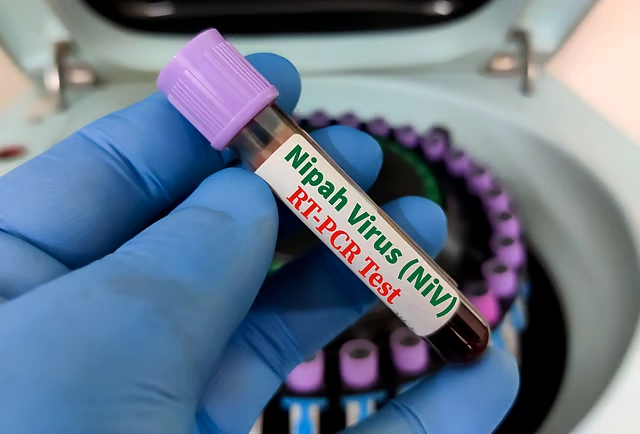
KOLKATA, West Bengal—In the intensive care unit of a Kolkata hospital, shielded behind layers of protective glass, a team of healthcare workers moves with a calibrated urgency. Their patient, a man in his forties, is battling an adversary they cannot see and for which they have no specific cure. He is one of at least five confirmed cases in a new Nipah virus outbreak in West Bengal, a stark reminder that the shadow of zoonotic pandemics is long, persistent, and profoundly personal. Among the cases are two frontline workers, a testament to the virus’s stealthy human-to-human transmission. Nearly 100 contacts now wait in monitored quarantine, their lives paused as public health officials race to contain a pathogen with a terrifying fatality rate of 40 to 75 percent.
This scene in India is not from a dystopian novel; it is the latest chapter in a two-decade struggle against a virus that emerges from forests, carried by fruit bats, to sporadically ignite human suffering. As of January 27, 2026, containment efforts are underway, but the alert status remains high. There is no Nipah virus vaccine, no licensed antiviral. Survival hinges on supportive care, epidemiological grit, and the hard-learned lessons from past outbreaks in Kerala and Bangladesh.
For a global audience weary of pandemic headlines, the name “Nipah” may elicit a flicker of recognition. But what is Nipah virus, and why does its appearance cause such profound concern among virologists and public health agencies worldwide? Beyond the immediate crisis in West Bengal, this outbreak illuminates the fragile interplay between a changing environment, animal reservoirs, and human health—a dynamic fueling the age of emerging infectious diseases.

Table of Contents
Understanding the Nipah Virus: A Zoonotic Origin Story
Nipah virus (NiV) is not a newcomer. It is a paramyxovirus, in the same family as measles and mumps, but with a deadlier disposition. It was first identified in 1999 during an outbreak among pig farmers in Sungai Nipah, Malaysia. The transmission chain was traced back to fruit bats of the Pteropus genus—the virus’s natural reservoir—who dropped partially eaten fruit into pig pens. The pigs became amplifying hosts, and from them, the virus jumped to humans.
The South Asian strain, however, revealed a more direct and dangerous pathway. In annual outbreaks in Bangladesh and parts of India, humans contract the virus primarily through consuming raw date palm sap contaminated by bat urine or saliva. From there, it gains the ability for efficient human-to-human transmission through close contact with respiratory droplets or bodily fluids, often in家庭or hospital settings. This capacity for person-to-person spread places it in a category of concern distinct from many other zoonoses.
“Nipah sits at a dangerous intersection,” explains a virologist with the World Health Organization’s (WHO) Emerging Diseases unit. “It has a high mutation rate, a high fatality rate, and proven ability to spread between people. While its outbreaks have so far been sporadic and localized, each event is an opportunity for the virus to better adapt to human hosts.” The WHO lists Nipah as a priority pathogen for research and development, alongside Ebola and SARS-CoV-2.
Key Symptoms and Progression: From Fever to Encephalitis
The symptoms of Nipah virus infection can be deceptively nonspecific at first, often leading to critical delays in diagnosis and isolation. The incubation period ranges from 4 to 14 days. The illness typically progresses in two phases:
- Initial Phase: Patients present with flu-like symptoms including:
- High fever
- Severe headache
- Muscle pain (myalgia)
- Vomiting and sore throat
- Neurological Phase: Within 24-48 hours, the infection can progress to acute encephalitis (brain inflammation). Signs of this dangerous progression include:
- Dizziness, drowsiness, and altered consciousness.
- Acute confusion or disorientation.
- Seizures.
- Atypical pneumonia and severe respiratory distress.
- In severe cases, coma within 48 hours.
According to the US Centers for Disease Control and Prevention (CDC), the case fatality rate is estimated at 40% to 75%, a staggering figure that varies by outbreak and local healthcare capacity. Survivors of severe encephalitis are often left with long-term neurological conditions, such as seizure disorders and personality changes.
Transmission Routes and Risk Factors
Understanding Nipah virus transmission is key to breaking its chain. The routes are specific but expose critical vulnerabilities in our food systems and healthcare protocols.
- Zoonotic (Animal-to-Human): The primary route. The consumption of raw date palm sap or fruit contaminated by infected bats is the major risk factor in Bangladesh and India. Direct contact with infected bats or their excrement is also a risk. Interestingly, while pigs were the intermediate host in Malaysia, they have not played a role in South Asian outbreaks.
- Human-to-Human: This is the driver of hospital-based and家庭clusters. The virus spreads through:
- Direct contact with respiratory droplets (coughing, sneezing) from an infected person.
- Contact with bodily fluids (saliva, urine, blood) of an infected person.
- Contact with contaminated surfaces in clinical or care settings.
This mode of transmission makes healthcare workers exceptionally vulnerable, as seen in the current West Bengal cases and the devastating 2018 Kerala outbreak, where a nurse lost her life after treating an index patient. The lack of early, specific symptoms means Nipah can enter a hospital disguised as a common fever.
The Current Outbreak in West Bengal: Containment Under Pressure
The Nipah virus India 2026 outbreak is centered in West Bengal, with confirmed cases receiving treatment in Kolkata-area hospitals. As reported by NDTV, state health authorities have confirmed at least five cases, including healthcare workers, with one patient in critical condition. The swift response includes:
- The quarantine and daily monitoring of nearly 100 high-risk contacts.
- Isolation wards established in designated hospitals.
- Enhanced surveillance in the affected districts.
- Public advisories against consuming raw date palm sap.
This outbreak echoes, but is geographically distinct from, the several deadly encounters Kerala has had with the virus, most notably in 2018 and 2023. Each outbreak tests India’s increasingly robust—yet uneven—infectious disease response infrastructure. The Indian Council of Medical Research (ICMR) and the National Institute of Virology (NIV) have deployed teams and are supporting rapid testing, which is crucial for containment.
Airports in the region, recalling measures from previous health crises, have reportedly instituted thermal screening for passengers from affected areas, a move aimed more at public reassurance than efficacy, given Nipah’s incubation period.
Why the Fatality Rate Is So High: A Perfect Storm of Factors
The alarming Nipah virus fatality rate is a product of biological, clinical, and systemic factors:
- Neurotropism: The virus has a strong affinity for neural tissue, leading to rapid and often irreversible brain inflammation.
- Lack of Specific Treatment: There is no vaccine for Nipah virus and no licensed antiviral therapy. Treatment is purely supportive: managing fever, ensuring hydration, treating seizures, and, in severe cases, mechanical ventilation. Monoclonal antibodies are under development and have been used compassionately in past outbreaks, but they are not widely available.
- Diagnostic Delays: Early symptoms mimic common illnesses. Without rapid, point-of-care diagnostics, critical isolation and care protocols are delayed, increasing the opportunity for spread and disease progression.
- Healthcare-Associated Transmission: Outbreaks can overwhelm infection prevention controls in hospitals, turning healthcare facilities into amplification points, which increases the overall case count and mortality.
Global Implications and Preparedness
While the current Nipah virus outbreak is a local crisis, its implications are global. In an interconnected world, no outbreak is truly isolated. The World Health Organization stresses that Nipah epidemics can cause severe disease and death in humans, posing a significant public health concern.
Furthermore, Nipah is a paradigm for a larger threat. Habitat loss and climate change are bringing wildlife and humans into more frequent contact. The Pteropus bat’s range is vast, spanning from the Gulf through the Indian subcontinent to Southeast Asia and Australia. Urbanization and agricultural expansion increase the odds of spillover events.
“The story of Nipah is the story of our time,” notes a global health security analyst in a piece for SCMP. “It’s a virus that exists in nature, held in check by ecological balance. When we disrupt that balance through deforestation, intensive farming, or climate stress, we roll the dice on spillover. West Bengal today could be somewhere else tomorrow.”
International preparedness is patchy. High-income countries have sophisticated biosecurity labs but may lack experience with the virus. Countries in the endemic region have hard-earned field experience but often lack resources. Bridging this gap through data sharing, capacity building, and joint research is essential.
Prevention and Future Outlook
Until a Nipah virus vaccine becomes a reality, prevention hinges on public awareness, robust surveillance, and classical public health measures:
- Community Education: In endemic areas, public campaigns must clearly communicate the dangers of consuming raw date palm sap and advise covering sap collection pots to prevent bat access.
- Enhanced Surveillance: Implementing a “One Health” approach that integrates human, animal, and environmental health monitoring to detect spillover events early.
- Hospital Readiness: Ensuring healthcare facilities in at-risk regions have protocols for rapid identification, isolation, and infection control, and that workers have adequate personal protective equipment (PPE).
- Accelerating Research: The pandemic has shown the world the value of platform technologies for vaccines. Several Nipah virus vaccine candidates are in various trial stages, supported by initiatives like the Coalition for Epidemic Preparedness Innovations (CEPI). Similarly, research into antiviral treatments like remdesivir and monoclonal antibodies must be prioritized.
The future outlook is one of cautious vigilance. Eradicating Nipah is impossible—its reservoir is wild, winged, and widespread. The goal is effective management: early detection, swift containment, and reducing the case fatality rate through better care and, eventually, medical countermeasures.
Conclusion: A Test of Vigilance and Cooperation
The patients in Kolkata’s isolation wards are more than statistics; they are a poignant call to action. The Nipah virus India outbreak in West Bengal is a flare in the night, illuminating the persistent vulnerabilities in our global health defenses. It reminds us that while COVID-19 may have redefined our scale of concern, it did not invent the underlying risks.
Nipah’s high fatality rate and capacity for human-to-human transmission demand respect, but not panic. The response in West Bengal demonstrates that with swift action, contact tracing, and community engagement, chains of transmission can be broken, even without a magic bullet cure.
Ultimately, the narrative of Nipah is not solely one of threat, but of trajectory. It shows where we have been—reactive, often scrambling. And it points to where we must go: toward a proactive, collaborative, and equitable system of pandemic preparedness. This means investing in research for neglected pathogens, strengthening health systems at the grassroots, and respecting the delicate ecological balances that, when disturbed, send silent passengers from the forest into our midst. The goal is not just to contain the outbreak of today, but to build a world resilient to the viruses of tomorrow.
Discover more from The Monitor
Subscribe to get the latest posts sent to your email.
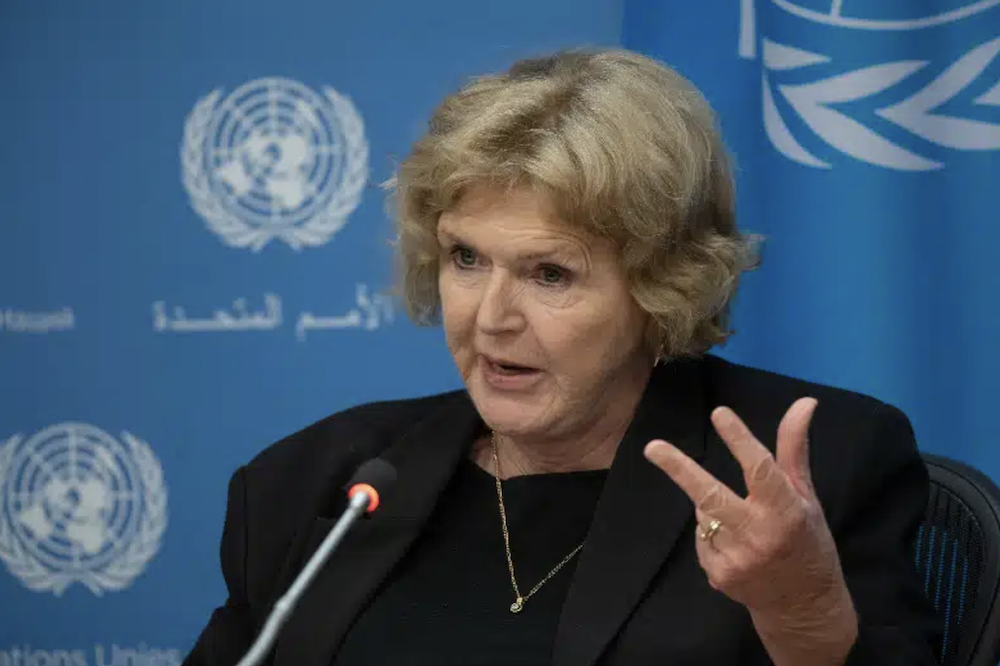
This written communication draws the attention of the United Nations and its human rights mechanisms to persistent and grave violations in Jammu and Kashmir, which cumulatively raise serious concerns under international human rights law and international criminal law, including the threshold of crimes against humanity.
For decades, the civilian population of Jammu and Kashmir has lived under one of the world’s most militarized environments. Since August 2019 in particular, restrictions on civil liberties have intensified, marked by arbitrary arrests, prolonged detentions without trial, torture and ill-treatment, extrajudicial killings, enforced disappearances, and collective punishment under the guise of national security.
On 24 November 2025, ten UN Special Rapporteurs issued a joint statement condemning “reports of arbitrary arrests and detentions, suspicious deaths in custody, torture and other ill-treatment, lynchings, and discriminatory treatment of Kashmiri and Muslim communities.”
These concerns echo findings previously documented by Michelle Bachelet,the United Nations High Commissioner for Human Rights (OHCHR) in its 2019 report, which warned of an entrenched culture of impunity and lack of accountability for serious violations.
Independent experts on mass atrocities have sounded early warnings. Gregory Stanton, Founder of Genocide Watch, has stated that Kashmir exhibits multiple risk factors associated with genocide, including extreme militarization, denial of identity, suppression of dissent, and systemic impunity.
Freedom of expression and access to information have been severely curtailed. The Committee to Protect Journalists has repeatedly warned that journalism in Kashmir has been effectively criminalized, leaving the population voiceless.
Award-winning journalists and scholars—such as Masarat Zahra and Dr. Nitasha Kaul (British Academic) —have faced harassment, travel bans, and reprisals, including the denial of entry to India, amounting to transnational repression.
The recent attachment of properties belonging to members of the Kashmiri diaspora who advocate a peaceful resolution of the Kashmir dispute is deeply alarming. These measures appear aimed at intimidating and silencing dissenting voices and preventing the international community from understanding the reality on the ground.
Equally disturbing is the forthcoming trial of Mohammad Yasin Malik before the Supreme Court of India, where the government is seeking the death penalty, a move that has sent shockwaves across Kashmir and among human rights advocates worldwide. The recent convictions of Asiya Andrabi, Nahida Nasreen and Fahmeeda Sofi serve no legitimate purpose other than to suppress political expression and peaceful advocacy.
The continued incarceration of Shabir Ahmed Shah and Masarat Alam, without credible justification, further underscores a pattern of repression aimed at dismantling legitimate political leadership in Kashmir. The prolonged confinement of Khurram Parvez, an internationally known human rights advocate violates all norms of international standards.
These actions collectively reflect a troubling pattern of repression and raise serious concerns under international human rights law. Urgent intervention by the United Nations is essential to protect fundamental freedoms, uphold the rule of law, and prevent further deterioration of the human rights situation in Jammu and Kashmir.
My concerns are consistent with observations made by other United Nations independent experts, international NGO’s, scholars and academics.
Mary Lawlor, UN Special Rapporteur on Human Rights Defenders said on the targeting of Kashmiri civil society: “The continued use of counter-terrorism legislation to silence human rights defenders in Jammu and Kashmir is deeply alarming. Peaceful human rights work must never be criminalized under the guise of national security.”
Dr. Fernand de Varennes, UN Special Rapporteur on Minority Issues (2020): “Restrictions imposed in Jammu and Kashmir appear to be inconsistent with international human rights norms, particularly those protecting minorities.”
International Commission of Jurists (ICJ): “The prolonged denial of civil liberties in Jammu and Kashmir raises serious concerns under international law, including the prohibition of collective punishment and arbitrary detention.”
Amnesty International: “India’s claims of ‘normalcy’ in Kashmir are contradicted by widespread repression, including arbitrary detentions, communication blackouts, and collective punishment of civilians.”
Human Rights Watch: “Impunity for security forces remains the norm, fostering further abuses and denying justice to victims.”
Timely and principled intervention by the United Nations is essential to restore confidence in the rule of law, protect fundamental freedoms, and bring a measure of sanity and accountability to the situation in Jammu and Kashmir.
This submission urges the United Nations to:
- Initiate independent international investigations into alleged crimes against humanity in Jammu and Kashmir.
- Press for the repeal or reform of laws enabling arbitrary detention and collective punishment.
- Persuade India to release Mohammad Yasin Malik, Shabbir Ahmed Shah, Masar Aalam, Asiya Andrabi, Nahida Nasreen, Fahmeeda Soofi, Khurram Parvez and others immediately.
- Ensure access to UN Special Procedures, international observers, and independent media.
- Call for accountability and remedies for victims, consistent with international law.
Silence and inaction risk normalizing repression. The situation in Jammu and Kashmir demands sustained international scrutiny and principled engagement.
Discover more from The Monitor
Subscribe to get the latest posts sent to your email.

Millions of Burmese Struggle to Find Safety in Thailand

What Is the No Kings Protest? Inside Minnesota’s Historic 2026 Flagship Rally Against Authoritarianism

OPINION | Global South Peace Efforts: How the World’s New Mediators Are Reshaping Diplomacy in 2026

Singapore’s Bold Bid to Become Asia-Pacific’s Gold-Trading Powerhouse: Why the City-State Is Racing to Capture Bullion Liquidity and Central-Bank Vaults

The Private Firms Powering China’s Military AI Push

Trump Extends Iran Talks Deadline amid Sell-Off on Wall Street

Indonesia’s Danantara Shifts to Investment Phase, Targets 7% Returns — Sovereign Wealth Fund Enters Deployment Era Under Prabowo’s Ambitious Vision

AI is dressing up greed as progress on creative rights

Iran’s Tenacious Regime and the Future of the Gulf
Singapore’s Bold Bid to Become Asia-Pacific’s Gold-Trading Powerhouse: Why the City-State Is Racing to Capture Bullion Liquidity and Central-Bank Vaults

Qatar warns Middle East war will force Gulf to stop energy exports within days
OPINION | Global South Peace Efforts: How the World’s New Mediators Are Reshaping Diplomacy in 2026

Four Killed in Beirut Hotel Strike, Israel Says It Targeted Iranian Commanders

The Hormuz Crisis: How US-Iran War Is Reshaping Gulf Geopolitics and Global Energy Security
Iran’s Tenacious Regime and the Future of the Gulf
Indonesia’s Danantara Shifts to Investment Phase, Targets 7% Returns — Sovereign Wealth Fund Enters Deployment Era Under Prabowo’s Ambitious Vision

Brent Crosses $100 as Indian Tanker Path Corrected Near Strait of Hormuz

The 400 Million Barrel Question: Can the IEA’s Historic Reserve Release Save the Global Economy from Iran’s Energy War?
-

 Featured5 years ago
The Right-Wing Politics in United States & The Capitol Hill Mayhem
-

 News4 years ago
Prioritizing health & education most effective way to improve socio-economic status: President
-

 China5 years ago
Coronavirus Pandemic and Global Response
-

 Canada5 years ago
Socio-Economic Implications of Canadian Border Closure With U.S
-

 Democracy5 years ago
Missing You! SPSC
-

 Conflict5 years ago
Kashmir Lockdown, UNGA & Thereafter
-
Democracy5 years ago
President Dr Arif Alvi Confers Civil Awards on Independence Day
-

 Digital5 years ago
Pakistan Moves Closer to Train One Million Youth with Digital Skills