
Opinion
OPINION | Global South Peace Efforts: How the World’s New Mediators Are Reshaping Diplomacy in 2026


Global South peace efforts are transforming international mediation as Qatar, Saudi Arabia, Turkey, and BRICS nations step into diplomatic roles once dominated by Western powers. Analysis of 2026’s shifting geopolitical landscape.
Table of Contents
The Quiet Revolution in Doha
On a sweltering July afternoon in 2025, representatives of the Democratic Republic of Congo and Rwanda-backed M23 rebels sat across from each other in a conference room at the Four Seasons Hotel in Doha. The scene was unremarkable—men in suits, bottled water, the hushed cadence of translation through earpieces. Yet what happened next signaled a profound shift in the architecture of global conflict resolution. By evening, Qatar’s chief negotiator Mohammed al-Khulaifi stood between the warring parties as they signed a ceasefire agreement, ending fighting that had devastated the mineral-rich east of the DRC.
This was not an isolated moment. From Jeddah to Jakarta, from Brasília to Ankara, a new cohort of diplomatic actors is rewriting the rules of peacemaking. The Global South—long dismissed as the object of great-power competition rather than its arbiter—has emerged as the primary front for attention and peace efforts in 2026. As traditional Western-led mediation mechanisms falter under the weight of geopolitical polarization, countries across Africa, the Middle East, Latin America, and Asia are stepping into the breach with a legitimacy that Western powers increasingly struggle to claim.
The numbers tell part of the story. According to the Stockholm International Peace Research Institute (SIPRI), multilateral peace operation deployments have fallen by more than 40 percent between 2015 and 2024, even as conflicts have proliferated.
Meanwhile, Global South nations have mediated in over twenty active conflicts since 2022, from Sudan’s civil war to the Gaza crisis, from Ukraine-Russia prisoner exchanges to the Myanmar quagmire. Qatar alone has been present in conflicts spanning Afghanistan to Venezuela, hosting the political offices of the Taliban and Hamas while maintaining dialogue channels with Washington, Moscow, and Tehran.
What explains this sudden ascendance? And what does it mean for the future of international order?
The Legitimacy Advantage: Why Global South Mediators Succeed Where the West Fails
The most compelling explanation for the Global South’s mediation success lies not in resources—though Qatar, Saudi Arabia, and the UAE possess ample financial leverage—but in perceived legitimacy. Western powers, particularly the United States, have seen their credibility as neutral arbiters erode through a combination of selective enforcement, perceived double standards, and the weaponization of international institutions.
“The dual response to Russia’s invasion of Ukraine with sanctions and the financial and military support for Israel’s offensive against the civilian population in Gaza have provoked critical reactions in the U.S. and other countries,” noted researchers at CEBRI, a Brazilian think tank. “For its part, the so-called Global South has condemned Russia for the invasion but voted in the UN against imposing sanctions, while distancing itself from the ‘West’ over the Gaza war”.
This credibility gap has created diplomatic space that Global South actors have been quick to exploit. When Saudi Arabia hosted high-level U.S.-Russia talks to end the Ukraine war in early 2025, or when it mediated between India and Pakistan during their May 2025 military escalation, Riyadh brought something Washington could not: the perception of neutrality grounded in non-Western identity.
Similarly, Turkey’s mediation between Russia and Ukraine—including the landmark Black Sea grain deal of 2022 and subsequent prisoner exchanges—derived credibility from Ankara’s refusal to join Western sanctions regimes while maintaining NATO membership.
The Sudan crisis illustrates this dynamic with painful clarity. After nearly two years of devastating civil war that has displaced over eleven million people and killed an estimated 400,000, Sudan’s government formally proposed in November 2025 that Turkey and Qatar join Saudi Arabia and Egypt as mediators between the Sudanese Armed Forces and the Rapid Support Forces (RSF). Khartoum’s ambassador to Indonesia explicitly criticized the United States and UAE for “double standards” and attempting to impose terms favorable to the RSF, which Sudan accuses of receiving Emirati support.
“You cannot accept somebody who’s the aggressor, supported by them, and they want to force a peace that serves that aggressor’s policy,” Ambassador Yassir Mohamed Ali stated, articulating a sentiment widely shared across the Global South about Western-led mediation efforts.
The BRICS Factor: Institutionalizing Global South Peace Efforts
If individual mediation successes represent tactical gains, the institutionalization of Global South diplomatic capacity through BRICS represents a strategic transformation. The expanded bloc—now encompassing Brazil, Russia, India, China, South Africa, Iran, Egypt, Ethiopia, the UAE, and Indonesia (which joined in early 2025)—has increasingly positioned itself as a platform for conflict resolution alongside its economic agenda.
In December 2025, Brazil convened a BRICS workshop on conflict mediation at the Itamaraty Palace in Brasília, explicitly designed to “emphasize the accumulated knowledge and lessons learned by the Global South in resolving international crises.” Celso Amorim, President Lula da Silva’s special advisor for international affairs, declared that “the ability to foster dialogue, prevent crises and resolve conflicts remains the most noble and essential mission for the future of BRICS countries”.
The workshop included Turkey and Qatar as invited participants—acknowledgment that effective mediation increasingly operates through networks that transcend formal bloc membership. This reflects a broader trend: the most successful Global South mediators combine institutional platforms with bilateral relationships cultivated over decades.
Yet BRICS’ emergence as a diplomatic actor is not without contradictions. The bloc’s January 2026 naval exercise off South Africa’s coast—codenamed “Will for Peace 2026” and involving China, Russia, Iran, and the UAE—sparked controversy precisely because it appeared to conflate military posturing with peace diplomacy. India, the current BRICS chair, publicly distanced itself from the exercise, clarifying that it was “neither institutional nor representative of the bloc”.
These tensions highlight a fundamental challenge: can BRICS function as a credible mediation platform when its members hold divergent positions on major conflicts? China’s “Friends for Peace” initiative on Ukraine, launched jointly with Brazil, has been criticized for lacking neutrality—promoting peace proposals that make no reference to Ukrainian territorial integrity or Russian troop withdrawal. Russia, meanwhile, views BRICS primarily as an anti-Western project, using the platform to mobilize support and circumvent sanctions.
The answer may lie in differentiation rather than unified action. As one analysis from the Observer Research Foundation noted, BRICS members are increasingly pursuing “strategic multi-alignment”—navigating between major powers rather than aligning with any single bloc. This flexibility, while limiting the bloc’s capacity for collective mediation, enhances individual members’ utility as honest brokers.
Economic Incentives: The Commerce of Peace
Beneath the rhetoric of South-South solidarity and post-colonial solidarity lies a harder calculus: mediation has become good business. For Gulf states in particular, diplomatic influence translates directly into economic opportunity and security partnerships.
Qatar’s mediation strategy exemplifies this nexus. The tiny emirate has provided over $1 billion in aid to Gaza over eighteen years, channeled through Israel’s banking system under Qatari supervision—creating leverage with both Palestinian factions and Israeli authorities. Its hosting of the Taliban’s political office since 2013, and subsequently Hamas’, generated unique access to non-state actors that Western powers refused to engage directly. This positioning proved invaluable during the Gaza ceasefire negotiations of 2024-2025, when Qatar emerged as the primary interlocutor between Israel and Hamas.
Saudi Arabia’s mediation efforts in Sudan and Ukraine similarly serve Vision 2030’s broader economic transformation agenda. By positioning itself as a global diplomatic hub, Riyadh attracts investment, tourism, and strategic partnerships that reduce dependence on oil revenues. The Kingdom’s hosting of U.S.-Russia talks and its mediation between India and Pakistan enhance its reputation as a stable, influential actor worthy of Western and Global South investment alike .
Turkey’s mediation architecture operates through multiple channels. The Turkish Cooperation and Coordination Agency (TIKA) has launched development projects across Africa and Asia—from Mozambique to Afghanistan—creating goodwill that facilitates diplomatic access. Ankara’s defense industry cooperation with Azerbaijan, combined with its mediation between Armenia and Azerbaijan, demonstrates how military-technical relationships can underpin diplomatic influence.
Even for smaller actors, mediation offers asymmetric returns. Malaysia’s successful brokering of the 2024 Bangsamoro peace agreement and its 2025 ceasefire between Thailand and Cambodia enhanced its regional standing despite limited material resources. Indonesia’s decision to join President Trump’s “Board of Peace” for Gaza in January 2026—while simultaneously deepening BRICS engagement—reflects Jakarta’s calculation that visibility in peace processes enhances its bid for global middle-power status.
The Data: Mapping Global South Mediation Influence
The empirical evidence for Global South mediation’s rise extends beyond anecdotal successes. According to SIPRI data, while UN peacekeeping deployments have declined to 61,197 personnel across 11 operations in 2025—down from 107,088 a decade ago—regional and non-Western-led peace operations have expanded to fill gaps.
Key Global South Mediation Initiatives (2024-2026):Table
| Conflict | Primary Mediators | Outcome/Status |
|---|---|---|
| DRC-Rwanda/M23 | Qatar | Ceasefire signed July 2025 |
| Sudan SAF-RSF | Saudi Arabia, Egypt, proposed Turkey/Qatar | Ongoing; Khartoum requested expanded mediation November 2025 |
| Gaza-Israel | Qatar, Egypt, Turkey | Ceasefire October 2025; fragile implementation |
| Ukraine-Russia | Turkey, Saudi Arabia | Prisoner exchanges; grain deal 2022; talks hosted 2025 |
| India-Pakistan | Saudi Arabia, Oman | De-escalation May 2025 |
| Myanmar | Malaysia (ASEAN Chair 2025), Thailand | Limited progress; ASEAN Five-Point Consensus stalled |
| Ethiopia-Somalia | Turkey | Ankara Declaration; trilateral mechanism established |
| Thailand-Cambodia | Malaysia (ASEAN Chair) | Kuala Lumpur Accord July 2025; ceasefire holding |
The geographic distribution reveals a striking pattern: Middle Eastern actors dominate mediation in African and Asian conflicts, while Latin American and Southeast Asian states focus primarily on regional disputes. This division of labor suggests an emerging specialization within Global South diplomacy, with Gulf states leveraging financial resources and transnational networks, while middle powers like Indonesia, Malaysia, and Brazil deploy. normative influence and institutional platforms.
The Limits of Southern Diplomacy: Constraints and Contradictions
For all its momentum, Global South mediation faces structural limitations that temper triumphalist narratives. The most significant is the absence of enforcement mechanisms. The African Union’s struggle to implement its Sudan peace roadmap—adopted in May 2023 but largely ignored by warring parties—illustrates how diplomatic initiatives without coercive backing often fail to alter battlefield calculations.
“The AU’s lack of control of these critical elements of conflict management further empowers conflict enablers,” noted Harvard’s Transition Magazine. “While Hemedti and Al-Burhan continue to wage a devastating war against civilians, they have been granted diplomatic platforms across the continent”. This pattern—where belligerents exploit mediation for legitimacy while continuing military operations—has plagued multiple Global South-led initiatives.
Competition among Southern mediators also undermines collective effectiveness. The rivalry between Saudi Arabia and the UAE—described by the Institute for National Security Studies as evolving “from quiet competition to open rivalry”—has complicated mediation in Yemen and Sudan, where the two Gulf powers back opposing factions. Similarly, Qatar’s close ties with Islamist movements and Turkey generate suspicion in Abu Dhabi and Cairo, limiting trilateral cooperation even when interests align.
China’s role reveals another tension. While Beijing promotes “common, comprehensive, cooperative and sustainable security” through initiatives like the Global Security Initiative, its actual mediation record remains cautious. Analysts at the University of Hong Kong have described China as a “reluctant quasi-mediator”—advancing emphatic statements about peace while avoiding penalties or positive material benefits for actors willing to negotiate [^source from search]. This reluctance stems partly from Beijing’s preference for bilateral deal-making over multilateral mediation, and partly from its desire to avoid entanglement in conflicts that could damage relations with key partners.
India’s positioning offers a counterpoint. As a BRICS member with close ties to Washington, Moscow, and Tel Aviv, New Delhi has emerged as a potential “peace architect” in West Asia—capable of back-channel communication between Iran, Israel, and Gulf states. Yet India’s refusal to condemn Russian aggression in Ukraine, or to explicitly criticize Israeli actions in Gaza, limits its credibility with parties seeking moral clarity rather than transactional diplomacy.
Implications for the Liberal International Order
The Global South’s mediation ascendancy arrives at a moment of profound institutional flux. The liberal international order—characterized by U.S. hegemony, multilateral institutions, and rules-based governance—faces what Mark Carney, speaking at Davos 2026, termed a “rupture”. President Trump’s second administration has withdrawn from 66 international organizations, imposed “reciprocal tariffs” that violate WTO principles, and increasingly resorted to unilateral force—as demonstrated by interventions in Iran (2025) and Venezuela (2026).
For Global South states, this disintegration presents both opportunity and peril. The erosion of Western dominance creates space for alternative diplomatic architectures—BRICS, the Shanghai Cooperation Organization, the African Union’s “Quintet” mechanism for Sudan—to assume greater authority. Yet the replacement of hegemonic stability with multipolar competition risks what the Policy Center for the New South calls “postmodern imperialism”: a world where power trumps rules, and small states lack the buffers to resist coercion.
The mediation realm illustrates this paradox. Global South actors gain influence precisely because Western powers have delegitimized themselves through selective enforcement and geopolitical tribalism. Yet without the institutional scaffolding that the U.S. and its allies provided—funding for peace operations, enforcement of agreements, humanitarian access—mediation risks becoming performative rather than transformative.
Brazil’s Celso Amorim acknowledged this tension when he emphasized that “peace is an indispensable condition for economic and social development” while noting that “wars and prolonged instability make sustainable economic growth, social inclusion and poverty reduction impossible”. The implicit critique: current mediation efforts address symptoms rather than structural drivers of conflict—inequitable trade regimes, climate-induced resource scarcity, and the arms trade that fuels regional wars.
The View from Western Capitals: Adaptation or Obsolescence?
For policymakers in Washington, London, and Brussels, the Global South’s mediation rise demands strategic recalibration. Three imperatives emerge from the 2025-2026 landscape.
First, accept complementary rather than competitive mediation. The instinct to view Qatar’s Gaza diplomacy or Turkey’s Ukraine mediation as threats to Western influence is counterproductive. These efforts address gaps that Western actors cannot fill due to legitimacy deficits. The appropriate response is coordination—ensuring that Southern-led initiatives align with humanitarian principles and international law, rather than attempting to supplant them.
Second, address the legitimacy deficit through institutional reform. The Global South’s skepticism toward Western-led order stems from real grievances: IMF conditionality that prioritizes debt service over development, UN Security Council composition that reflects 1945 power dynamics, and climate finance commitments that remain unfulfilled. Meaningful reform of these institutions—expanding African Union representation in the G20, accelerating IMF quota adjustments, delivering on loss-and-damage funding—would restore credibility more effectively than rhetorical commitments to partnership.
Third, invest in conflict prevention rather than crisis response. The data on forced displacement—123.2 million people worldwide at the end of 2024, with Sudan alone accounting for 14.3 million displaced—demonstrates that current approaches fail to prevent conflicts from reaching catastrophic scale. Global South mediators bring cultural competency and local knowledge that Western actors lack; Western powers bring resources and enforcement capacity. Effective prevention requires combining these comparative advantages through early warning systems and rapid response mechanisms that operate before conflicts become intractable.
Conclusion: The New Geometry of Peacemaking
As 2026 unfolds, the geometry of international mediation has fundamentally shifted. The linear model—where Western powers identify conflicts, deploy resources, and broker settlements—has given way to a networked architecture where authority is distributed across multiple centers. Qatar’s Doha, Turkey’s Ankara, Saudi Arabia’s Riyadh, Brazil’s Brasília, and South Africa’s Pretoria have joined Geneva, Washington, and New York as essential nodes in the peacemaking ecosystem.
This transformation reflects deeper currents in world politics: the diffusion of power, the erosion of Western legitimacy, and the emergence of states that combine economic resources with diplomatic agility. It does not, however, guarantee better outcomes. The ceasefire signed in that Doha conference room in July 2025 held for mere weeks before fighting resumed in eastern DRC. The Jeddah talks on Sudan have produced agreements that collapsed within days. Gaza’s October 2025 ceasefire remains fragile, hostage to the calculations of actors who view war as politically useful.
What the Global South’s mediation rise offers is not a solution to these pathologies, but an alternative pathway—one grounded in legitimacy derived from shared post-colonial experience, economic interdependence, and the practical wisdom of states that have themselves navigated conflict and transformation. Whether this pathway leads to durable peace or merely to a more crowded diplomatic marketplace depends on whether Southern mediators can translate their newfound influence into institutionalized mechanisms for enforcement, accountability, and justice.
The world is watching. And for the first time in generations, it is watching the Global South not as a problem to be solved, but as a source of solutions.
Discover more from The Monitor
Subscribe to get the latest posts sent to your email.



Analysis
Singapore’s Bold Bid to Become Asia-Pacific’s Gold-Trading Powerhouse: Why the City-State Is Racing to Capture Bullion Liquidity and Central-Bank Vaults

When gold briefly touched US$5,600 per troy ounce earlier this year — a price that would have seemed fantastical a decade ago — it was not traders on the floor of the London Metal Exchange who were most animated. It was central bankers from Warsaw to Kuala Lumpur, family offices in Singapore and Abu Dhabi, and sovereign wealth funds quietly recalibrating their exposure to a metal that has become the defining safe-haven asset of a fractured geopolitical era.
Even after a sharp pullback triggered by the outbreak of conflict in the Middle East dragged prices to around US$4,430 per ounce by late March, the structural story remains emphatically intact: gold’s gravitational centre is shifting east. And Singapore, with its formidable financial architecture and a reputation for regulatory elegance, intends to plant its flag firmly at that new centre. On March 27, 2026, the Monetary Authority of Singapore (MAS) and the Singapore Bullion Market Association (SBMA) unveiled four strategic focus areas designed to transform the city-state into Asia-Pacific’s premier Singapore gold-trading hub. It is, in every sense, a declaration of intent.
Table of Contents
The Eastward Drift of Bullion Power
To understand the ambition, first understand the moment. The World Gold Council projects central banks globally will purchase approximately 850 tonnes of gold in 2026, sustaining what has become one of the most consequential structural shifts in reserve management since Bretton Woods. Central-bank buying in 2025 reached 863 tonnes — historically elevated and geographically widespread, spanning Poland, Kazakhstan, Brazil, Malaysia, and Indonesia. In Asia alone, new entrants to official gold accumulation emerge almost quarterly, motivated by a common logic: in a world of dollar weaponisation, sanctions risk, and mounting geopolitical entropy, gold is the only truly neutral reserve asset.
J.P. Morgan Global Research forecasts combined central bank and investor gold demand averaging some 585 tonnes per quarter in 2026, underpinning its projection that prices could approach US$5,000 per ounce by year-end. Meanwhile, the World Gold Council’s annual survey recorded the highest central bank intention to buy gold since the survey was first conducted in 2019.
The institutional demand is substantial on its own. But pair it with the explosive growth of Asian retail and family-office demand — bar and coin demand is forecast to exceed 1,200 tonnes globally in 2026 — and the market opportunity for a well-positioned regional hub becomes unmistakable. Singapore, which removed goods and services tax on investment-grade precious metals in 2012, has long been a magnet for bullion storage and retail investment. What it has lacked is the deep capital-market plumbing — the derivatives, clearing infrastructure, and sovereign-custodian credibility — that would allow it to punch at the weight of London or Zurich. The initiative announced on March 27 is designed to close that gap with surgical precision.
Four Pillars, One Strategic Vision
The key focus areas were developed by a Gold Market Development Working Group that MAS and SBMA established in January 2026, building on detailed discussions and studies with industry participants in 2025. The working group reads like a who’s who of global bullion banking: DBS, ICBC Standard Bank, JPMorgan Chase, UBS AG, United Overseas Bank, SGX Group, and the World Gold Council sit at its core, supported by vault operators including Brink’s, Loomis International, and Malca-Amit, alongside trading houses StoneX APAC and YLG Bullion Singapore.
The four focus areas are individually significant. Taken together, they constitute a comprehensive blueprint for building a Singapore bullion market with genuine global depth.
1. Capital-Market Products: Building the Price-Discovery Engine
The first pillar is the development of gold-related capital-market products to promote price discovery and build liquidity. This is arguably the most technically demanding of the four goals and, in the long run, the most consequential. London dominates global gold pricing precisely because it is where the world’s deepest pool of paper gold — forwards, OTC derivatives, leases — meets its deepest pool of physical metal. Singapore currently lacks this two-sided market.
What might such products look like? Singapore-listed gold ETFs with physical backing in local vaults, gold forwards priced off a Singapore benchmark, and gold-linked structured notes accessible to regional wealth managers are all credible candidates. The SGX Group’s involvement in the working group hints at the ambition: a futures contract priced off kilobar gold (the one-kilogram bar standard prevalent across Asian markets and an accepted COMEX delivery contract) could serve as a genuinely Asian benchmark, less exposed to the idiosyncrasies of London’s 400-troy-ounce large-bar convention.
Establishing a vibrant Asia gold trading liquidity pool in Singapore would also give Asian producers, refiners, and jewellers a local hedge that does not require them to transact through time zones that are awkward for the region — an enduring frustration with London’s primacy.
2. Vaulting Standards: The Architecture of Trust
The second focus area — establishing robust, internationally aligned vaulting and logistics standards — is less glamorous but no less critical. The London Bullion Market Association (LBMA), which sets global Good Delivery standards for gold bars, provides the template. Singapore already hosts internationally reputable vault operators, but the absence of a formalised, regulator-backed standards framework has historically created friction for institutional clients accustomed to the certainty of LBMA accreditation.
Closing this gap matters for a straightforward commercial reason: institutional gold trading at scale — whether by a sovereign wealth fund, a pension manager, or an international trading house — requires documented chain-of-custody assurance, insurance frameworks, and logistics protocols that meet international audit standards. Singapore’s aspiration to house central-bank bullion, in particular, makes this pillar foundational. No central bank will deposit reserves in a jurisdiction whose vaulting standards are ambiguous.
The presence of Metalor Technologies Singapore — one of the world’s premier precious-metals refiners — among the working group’s technical participants signals that Singapore intends to offer not merely storage but an integrated precious-metals ecosystem: refining, vaulting, trading, and settlement, all under one regulatory canopy.
3. A Clearing System for OTC Gold Settlement
The third focus area may be the most operationally complex: building a clearing system to support secure and efficient over-the-counter settlement for trading both large bars (the 400-troy-ounce London convention, approximately 12.4 kilograms) and kilobars (one kilogram, the Asian institutional standard) in Singapore. This is, effectively, the plumbing that turns a storage location into a trading hub.
Currently, significant OTC gold trades involving Asian counterparties are typically settled through London infrastructure or via bilateral arrangements that carry meaningful counterparty risk. A Singapore-based clearing facility — ideally with central-counterparty clearing to eliminate bilateral exposure — would reduce settlement risk, lower transaction costs, and allow the market to function across Asian time zones without dependence on Western intermediaries.
The group will help establish a clearing system to support secure and efficient over-the-counter settlements when large bar and kilobar gold is trading in Singapore. Large bars of gold, which weigh about 12.4 kilograms, are the preferred standard for institutional trading and settlement in the London market. Kilobar, which has a weight of one kilogram, is the preferred standard in Asian markets and is an accepted delivery contract for COMEX gold futures contracts in the US.
The Singapore gold clearing system 2026 initiative thus serves a dual purpose: it creates the infrastructure for efficient local settlement and positions Singapore as a natural location for gold trading during Asian hours — a gap that neither London nor New York can fill on their own.
4. Central-Bank Vaulting: The Sovereign Dimension
The fourth and arguably most geopolitically resonant focus area is MAS’s stated intention to explore providing vaulting services for foreign central banks and sovereign entities. The gold is understood to be stored in MAS-owned vaults. This is a genuinely significant departure from Singapore’s existing role in the bullion ecosystem — and a direct play for the most coveted and creditworthy clients in the gold market.
Singapore’s proposal could potentially attract nations that have challenged the status and credibility of historic hubs such as London and New York. A number of countries including Germany have repatriated gold for security reasons, and there have been similar moves from Poland, the Netherlands and Serbia.
MAS Deputy Chairman Chee Hong Tat — who is also Singapore’s minister for national development — framed the initiative with characteristic measured confidence. “We are working closely with the industry to see how we can position Singapore as a gold trading hub in Asia,” he told reporters. He emphasised that Singapore’s ambitions are anchored in long-term ecosystem-building, not short-term price speculation: “When it comes to investments, there will be ups and downs. If you look at what we are doing, we are not placing bets on whether the prices in the short term will go up or go down. What we are doing is to create the ecosystem for gold trading activity to be based out of Singapore.”
For emerging-market central banks in Southeast Asia, South Asia, and the Gulf — particularly those that have historically stored reserves in New York or London but now seek diversification — Singapore offers something qualitatively distinct: a neutral, politically stable, rule-of-law jurisdiction in their own time zone, operated by a regulator with an impeccable international reputation. In an era when reserve assets can be frozen by Western governments with a keystroke, that proposition carries weight that is difficult to overstate.
The Competitive Landscape: Singapore vs. Hong Kong, Dubai, and the West
No analysis of the Singapore vs Hong Kong gold hub rivalry is complete without acknowledging the scale of Hong Kong’s ambitions. Hong Kong signed a cooperation pact with the Shanghai Gold Exchange and reiterated a pledge to expand gold-storage capacity to 2,000 tons within three years. A public campaign unveiled this year promotes the special administrative region as a trading, financing and storage hub for gold, with a government-run clearing system slated to begin trials this year.
Hong Kong’s trump card is proximity to mainland China — the world’s largest consumer and one of its largest producers of gold. All Chinese gold imports flow through the Shanghai Gold Exchange (SGE), creating captive volumes that give Hong Kong structural advantages in physical metal flow. The SGE cooperation pact is designed to extend those flows offshore, creating a mechanism for international investors to access Chinese gold demand through a familiar common-law jurisdiction.
But the Hong Kong model has vulnerabilities that Singapore is quietly exploiting. First, Hong Kong’s geopolitical positioning has become complex since 2020, and a meaningful cohort of international investors and central bankers view its regulatory independence with greater scepticism than in previous decades. Second, the SGE partnership, while commercially powerful, tethers Hong Kong to Beijing’s preferences in ways that could constrain its appeal to the same sovereign clients both cities covet. Third, Hong Kong’s clearing system remains under development — still finalising details of its proposed clearing system, including the type of bars permitted for delivery and the currencies in which trade can be settled.
MAS Deputy Chairman Chee Hong Tat said there is likely room for more than one regional trading centre for gold as rising uncertainty gives more investors reason to pivot to the safe-haven asset. “I think the space is big enough for us to coexist and for both cities to be able to grow our respective services,” said Chee. “There are some overlaps in the clients that we serve and the market segments that we target, but it’s also not completely identical.”
That diplomacy is appropriate. But the reality is that for central banks outside China’s sphere of influence — those in Southeast Asia, South Asia, the Middle East, and parts of Africa and Latin America that are actively diversifying reserve locations — Singapore and Hong Kong are not complementary; they are alternatives. Singapore’s pitch to this cohort rests on three durable advantages: political neutrality, regulatory credibility, and a track record of building world-class financial infrastructure without the complications of a major superpower’s hand on the tiller.
Dubai, the other significant rival for Asia-Pacific gold trading hub status, has carved out a genuine niche in physical gold — particularly for African production flowing towards Asian consumption. But its regulatory ecosystem for capital-market products is still maturing, and it lacks Singapore’s bench strength in institutional banking, derivatives, and financial technology.
London, the global benchmark, faces a different kind of threat: relevance drift. The post-Brexit fragmentation of European financial markets, combined with growing Asian dissatisfaction with a pricing benchmark set entirely outside their time zone, creates structural demand for a credible Asian alternative. Singapore is the only candidate with the institutional depth to satisfy that demand comprehensively.
The Economic Case: Jobs, Revenue, and Financial Resilience
Singapore’s gold-hub ambitions are not merely about prestige. The economic dividend from establishing the city-state as a genuine Singapore bullion market centre is measurable and meaningful. MAS and SBMA noted: “Our goal is to anchor high-value activities here, create good jobs for Singaporeans, enhance the resilience and diversity of Singapore’s financial sector, and benefit market participants in Singapore and the region.”
The job-creation vector runs across multiple domains: vaulting and logistics operations requiring highly specialised security and technical skills; trading and relationship management roles that would see Singapore-based professionals managing bullion flows across the region; research and analysis functions supporting pricing, risk management, and market intelligence; and compliance and regulatory roles as the ecosystem scales. Each segment represents high-value employment that aligns with Singapore’s broader strategic objective of moving up the economic value chain.
There is also a financial-sector resilience argument. Singapore’s economy is uniquely exposed to global trade flows and financial-market volatility. A thriving gold ecosystem — which tends to perform precisely when other financial assets are under stress — would provide a countercyclical buffer for the city-state’s economy, reducing correlated risk across its financial-services sector. Gold’s demonstrated capacity to retain value during periods of geopolitical turbulence, dollar weakness, and financial-market dislocation makes it an attractive addition to Singapore’s financial product mix.
The tax revenue implications are harder to quantify but potentially significant. Singapore’s zero-GST treatment of investment-grade precious metals already attracts substantial bullion import and export activity. A deeper ecosystem — one that includes clearing, settlement, central-bank custody, and listed derivatives — would generate substantial transactional and corporate tax flows, as well as income from the highly paid professionals it attracts.
Risks and Challenges: The Road From Ambition to Infrastructure
Intellectual honesty requires acknowledging the headwinds. Building a genuine Asia gold trading liquidity 2026 hub is not a matter of announcing working groups and waiting for the market to arrive. London’s primacy is self-reinforcing: it commands the deepest liquidity pool precisely because the deepest liquidity pool is already there. Persuading traders, banks, and institutional investors to shift settlement and pricing activity to Singapore requires a critical-mass threshold that is genuinely difficult to reach.
The MAS SBMA gold market development working group has wisely sequenced its ambitions — beginning with infrastructure and standards before capital-market products, and with an explicit acknowledgment that implementation details will take months to finalise. This is prudent. Rushed infrastructure in gold markets creates precisely the kind of settlement uncertainty that drives sophisticated clients back to established hubs.
Regulatory alignment with LBMA standards, in particular, requires careful bilateral engagement. The LBMA’s accreditation processes for Good Delivery refiners and vault operators are rigorous and time-consuming. Singapore will need to demonstrate that its standards are not merely internationally “aligned” but genuinely interoperable — that a bar vaulted in Singapore can move seamlessly into and out of the London market without friction.
The geopolitical environment, while providing the tailwind for gold demand, also creates complexity. Central banks remained firm buyers of gold in 2026, even as prices were skyrocketing to records in January, though the institutions’ appetite for bullion could face a stern test amid rising geopolitical tensions in the Middle East. A prolonged conflict that pushes energy prices materially higher could sustain inflationary pressures that complicate interest-rate trajectories — creating short-term headwinds for gold prices even as structural demand remains intact. Singapore’s hub ambitions are a decade-long project; short-term price volatility is noise.
Finally, there is the challenge of liquidity chicken-and-egg dynamics. Derivatives markets need market-makers; market-makers need volume; volume requires end-users; end-users require liquidity. Breaking this circularity requires either regulatory mandates (which MAS has historically been reluctant to impose) or creative commercial incentives that bring anchor market-makers into the ecosystem early. The presence of JPMorgan Chase and UBS in the working group suggests that tier-one international banks are prepared to play this role — but their commitment to active market-making in Singapore-listed gold products remains to be demonstrated in practice.
What This Means for Global Investors and the Future of Asian Finance
For institutional investors and family offices, Singapore’s gold-hub initiative is worth watching closely for two reasons. First, the Singapore gold-related capital market products that emerge from the working group will create new instruments for accessing Asian gold markets — potentially including ETFs, forwards, and structured notes that offer superior cost and settlement efficiency compared to routing through London or New York. Second, and more broadly, Singapore’s emergence as a MAS gold vaulting centre for sovereign entities signals a structural shift in where the world’s financial infrastructure is being built.
The city-state’s strategic gambit is fundamentally a bet on three durable trends: the continuing shift of economic weight to Asia, the sustained de-dollarisation impulse among emerging-market central banks, and the structural demand for gold as a hedge against geopolitical entropy. All three trends have powerful momentum and are unlikely to reverse in the medium term.
Turning Singapore into what one might call the Zurich of the East — a politically neutral, impeccably regulated custodian of global wealth, positioned at the intersection of the world’s most dynamic economic geography — would represent one of the most consequential feats of financial statecraft in Asia’s modern economic history. The working group’s mandate runs through 2026, with periodic implementation updates promised. By year-end, the contours of Singapore’s new gold architecture should be clear.
Gold, after all, has always been less about the metal itself than about the institutions trusted to hold it. Singapore, on March 27, 2026, announced its candidacy for that trust at a regional scale. The audition has begun.
Discover more from The Monitor
Subscribe to get the latest posts sent to your email.
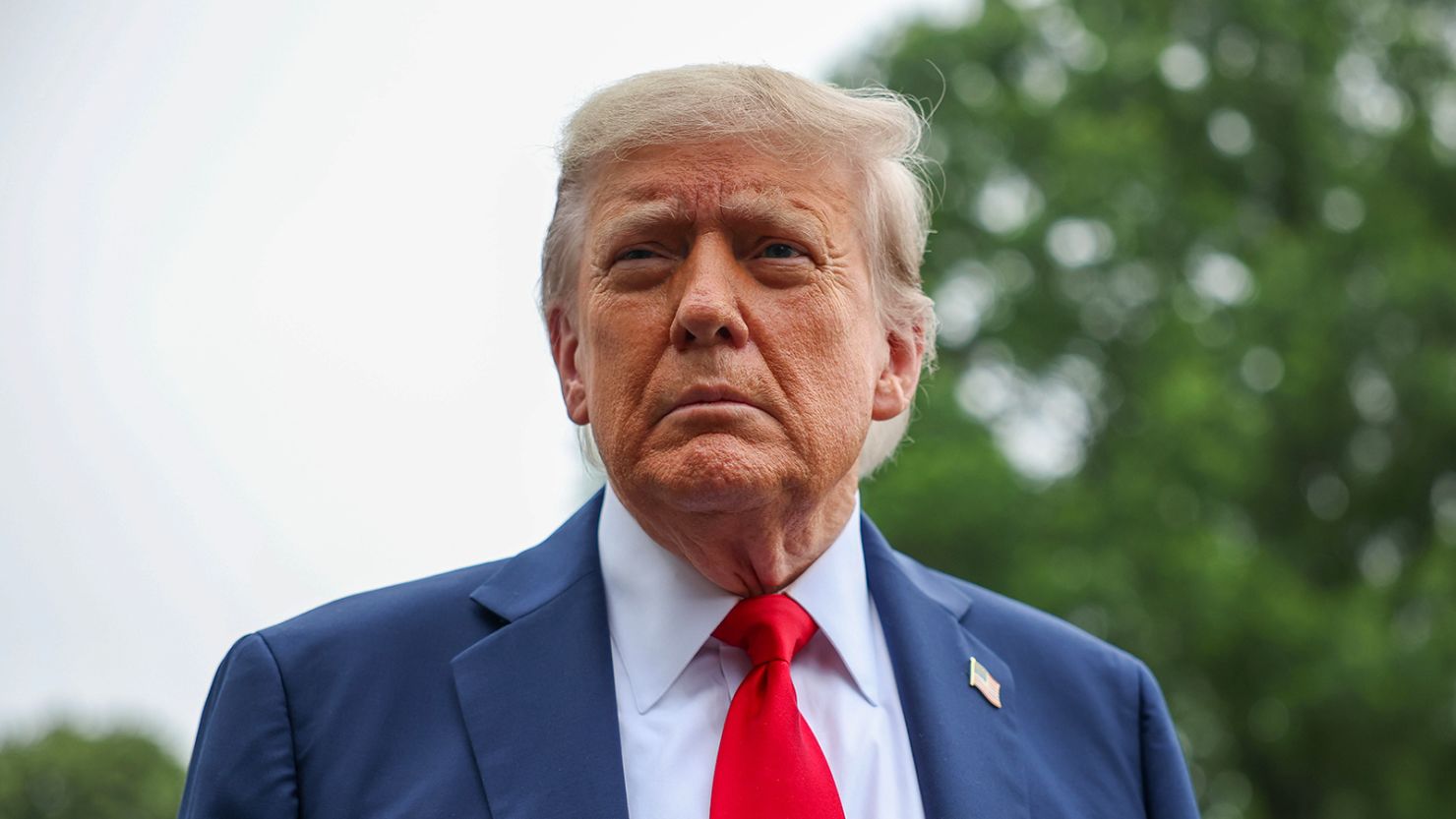
President Trump extended the Iran strike deadline to April 6 after Wall Street suffered its worst day since the conflict began. S&P 500 dropped 1.7%, Nasdaq entered correction, and 10-year Treasury yields spiked to 4.41% on fresh inflation fears. Full market analysis inside.
It was, by any measure, a signal moment—not in the Persian Gulf, where Iranian patrol boats continue to shadow tankers through the world’s most consequential maritime choke point, but on the floor of the New York Stock Exchange, where traders watched their screens with the kind of grim resignation usually reserved for hurricane landfalls.
At 4:00 p.m. Eastern time on Thursday, the numbers were final. The S&P 500 had fallen 1.7 percent, its worst single-day decline since January. The Nasdaq Composite had plunged 2.4 percent, pushing it more than 10 percent below its record high—a correction, in the clinical language of Wall Street, but in human terms something closer to a collective gut punch. The Dow Jones Industrial Average shed 469 points (Reuters).
Then, eleven minutes after the closing bell, President Donald Trump posted on Truth Social: Iran had asked for more time, and he was giving it. Ten more days. The new deadline for a deal to reopen the Strait of Hormuz—or face the destruction of Iran’s energy infrastructure—is now April 6 at 8:00 p.m. Eastern (Bloomberg).
“As per Iranian Government request,” Trump wrote, “please let this statement serve to represent that I am pausing the period of Energy Plant destruction by 10 Days” (Truth Social via Reuters). Talks, he insisted, were “going very well.”
The market, it seems, is not so sure.
What unfolded on Thursday was not merely a routine sell-off in response to geopolitical noise. It was something more revealing: a moment when investors, who had spent weeks parsing contradictory signals from Washington and Tehran, collectively concluded that the cost of uncertainty had become too high to carry. The extension that Trump framed as progress read to many on Wall Street as what it actually was—a punt, born of market panic, dressed up as diplomatic leverage.
Table of Contents
Why Wall Street Crashed: Inflation Fears Meet Iran Deadline Extension
To understand the carnage, one must go back to Saturday, when Trump first gave Iran 48 hours to reopen the Strait of Hormuz. The threat was existential for global energy markets: roughly 20 percent of the world’s oil passes through that narrow waterway, and Iran had effectively closed it since the U.S.-Israel bombing campaign began on February 28 (The Wall Street Journal).
By Monday, the president had already blinked once, extending the deadline to March 27 after Asian markets showed signs of distress. By Thursday, with U.S. stocks in freefall and the 10-year Treasury yield spiking to 4.41 percent—up eight basis points in a single session—he blinked again (Financial Times).
The numbers from Thursday’s session tell a story of broad-based capitulation. The Nasdaq’s 2.4 percent drop pushed it into correction territory, with technology giants taking the heaviest hits: Meta Platforms fell 7 percent, Nvidia slid 4 percent, and Alphabet dropped 3.4 percent (CNBC). The selling was indiscriminate, spanning sectors and market caps, a sign that the concern was systemic rather than sector-specific.
What spooked investors most was not the fighting itself—though that certainly didn’t help—but the collision of geopolitical escalation with stubborn inflation dynamics. Brent crude settled at $108.01 a barrel on Thursday, a 5.7 percent jump that brought its gain since the war began to nearly 50 percent (Bloomberg). West Texas Intermediate climbed 4.6 percent to $94.48.
For a market already skittish about the Federal Reserve’s next move, those oil prices are radioactive. The OECD warned Thursday that the Middle East crisis would push U.S. inflation to 4.2 percent this year, the highest among G7 nations (Reuters). That prospect effectively extinguishes any remaining hope for interest rate cuts in 2026—and raises the uncomfortable possibility that the Fed may have to resume hiking.
Treasury Yields Spike as Oil Volatility Returns
The bond market delivered its own verdict on Thursday, and it was brutal. The two-year Treasury yield, which is exquisitely sensitive to Fed policy expectations, jumped 10 basis points to 3.99 percent (Bloomberg). The 10-year yield touched 4.43 percent intraday before settling at 4.41 percent—a level not seen since the early weeks of the conflict.
What makes this yield spike particularly unsettling is what it signals about market psychology. Typically, geopolitical crises drive investors into the safety of U.S. government debt, pushing yields down. The fact that yields are rising instead suggests that inflation fears are overwhelming the traditional flight-to-quality impulse. Investors are not betting on Fed rescue; they are betting on Fed restraint, perhaps indefinitely.
“The market isn’t being erratic,” Steven Grey, chief investment officer at Grey Value Management, told the Financial Times. “This is what an efficient market looks like in the face of radical uncertainty” (Financial Times).
The radical uncertainty Grey refers to is not merely about whether the U.S. and Iran will reach a deal by April 6. It is about whether any deal is even possible, given the maximalist positions both sides have staked out.
Geopolitical Chess: What Trump’s 10-Day Pause Really Means for the Strait of Hormuz
For all the White House’s insistence that negotiations are proceeding smoothly, the reality on the ground is considerably messier. Iran’s Foreign Minister Abbas Araqchi made clear Wednesday that Tehran does not consider the message-swapping conducted through Pakistani intermediaries to constitute negotiation.
“Messages being conveyed through our friendly countries and us responding by stating our positions or issuing the necessary warnings is not called negotiation or dialogue,” Araqchi said (Reuters). “At present, our policy is to continue resistance and defend the country, and we have no intention of negotiating.”
The U.S. proposal delivered through Pakistan reportedly runs to 15 points and includes demands that Iran dismantle its nuclear program, curb its missile capabilities, and effectively cede control of the Strait of Hormuz (The Wall Street Journal). Iran’s counterproposal, according to regional sources, includes formal control of the strait, reparations from the U.S. and Israel, and guarantees against future military action (Al Jazeera).
These are not the positions of two sides approaching compromise. They are the positions of two sides preparing for a longer conflict, with diplomats working the back channels largely to manage escalation rather than to end it.
That assessment is reinforced by the military posture of the United States. Even as Trump extends diplomatic deadlines, the Pentagon is moving more troops into the region. Some 5,000 Marines are already being repositioned, and now an additional 1,000 soldiers from the 82nd Airborne Division are preparing to deploy, with reports suggesting the total could reach 10,000 (Associated Press).
The message to Tehran is contradictory: we want to talk, but we are also preparing to seize Kharg Island, Iran’s primary oil export terminal. Whether that contradiction reflects strategic coherence or improvisation is a question that markets are increasingly answering in the negative.
The “Toll Booth” and the Global Economy
Iran’s strategy in the strait has become clearer over the past week. Tehran is not merely blocking oil shipments; it is attempting to establish what one analyst described as a “toll booth” for tankers passing through Hormuz (Foreign Policy). Iranian patrol boats are stopping vessels, demanding fees, and allowing some to pass while detaining others.
Trump noted Thursday that Iran had allowed 10 Pakistan-flagged tankers through the strait, presenting this as evidence of progress (Reuters). But the selective passage is itself a form of control—a demonstration that Iran, not the United States, decides which ships move and which do not.
The economic impact of this arrangement is already visible. Global shipping insurance rates have spiked. Tanker operators are demanding premiums that reflect not just the risk of attack but the risk of arbitrary detention. And while Treasury Secretary Scott Bessent announced a U.S. insurance program to encourage shipping through the strait, it remains unclear whether private operators will accept coverage from a government that cannot guarantee safe passage (Bloomberg).
For the global economy, the stakes are enormous. Before the war, approximately 20 million barrels of oil passed through Hormuz daily—roughly 20 percent of world consumption. That flow has been reduced to a trickle, and the impact is being felt at gasoline pumps from Mumbai to Milan (International Energy Agency). In the United States, the national average price of gas is up more than a dollar from a month ago (AAA).
Economist’s View: Long-Term Market Risks Beyond April 6
For investors trying to position themselves for the weeks ahead, the key variable is not whether Trump extends the deadline again on April 6—though that remains a distinct possibility—but whether the underlying structural risks of the conflict are being priced correctly.
On that front, the market may still be underestimating the danger.
“Any sustainable market recovery will require meaningful progress toward a peace agreement and a reopening of the Strait of Hormuz,” Adam Turnquist at LPL Financial told Bloomberg (Bloomberg). That is the baseline condition. Without it, oil prices remain elevated, inflation expectations stay anchored higher, and the Fed remains locked in a hawkish stance.
Yet the conditions for a genuine peace agreement appear distant. Iran has hardened its position since the war began, demanding guarantees it would never have asked for before February 28. The United States, for its part, has committed to a posture of maximum pressure that leaves little room for the kind of face-saving compromises that typically end conflicts.
There is also the matter of trust—or the complete absence of it. The U.S. and Israel launched their initial strikes on February 28 in the middle of what were described as productive talks (The New York Times). Iran’s negotiators, to put it mildly, remember this.
“The current situation looks very similar, with markets positioning for a potential weekend escalation,” Kyle Rodda at Capital.com wrote in a note this week (Capital.com). That is the new normal: investors bracing for military action every Friday, only to recalibrate on Sunday night based on what actually happened.
Conclusion: A Market That Knows the Difference Between Postponement and Resolution
There is an old maxim on Wall Street that markets can climb walls of worry but cannot abide uncertainty. What the past week has demonstrated is that the Trump administration’s approach to the Iran crisis has created a wall of uncertainty so high and so opaque that even the most risk-tolerant investors are pulling back.
The 10-day extension to April 6 buys time, but it does not buy resolution. It allows the White House to avoid a market crisis in the immediate term while leaving every underlying problem—the closure of the strait, the inflationary pressure from high oil prices, the absence of a diplomatic framework—completely unresolved.
For the elite investors and policymakers who read this publication, the takeaway is not complicated. The Trump administration has shown that it will blink when markets demand it. That is a useful signal about the boundaries of policy, but it is not a solution. Until the Strait of Hormuz is genuinely reopened—not selectively, not conditionally, but fully—the risks to global markets remain asymmetrically tilted to the downside.
April 6 will come quickly. Whether it brings a breakthrough or merely another extension is anyone’s guess. But one thing is clear: the market is no longer waiting to find out. It is already pricing in the worst, and hoping, against evidence, to be proven wrong.
Discover more from The Monitor
Subscribe to get the latest posts sent to your email.
Analysis
Indonesia’s Danantara Shifts to Investment Phase, Targets 7% Returns — Sovereign Wealth Fund Enters Deployment Era Under Prabowo’s Ambitious Vision
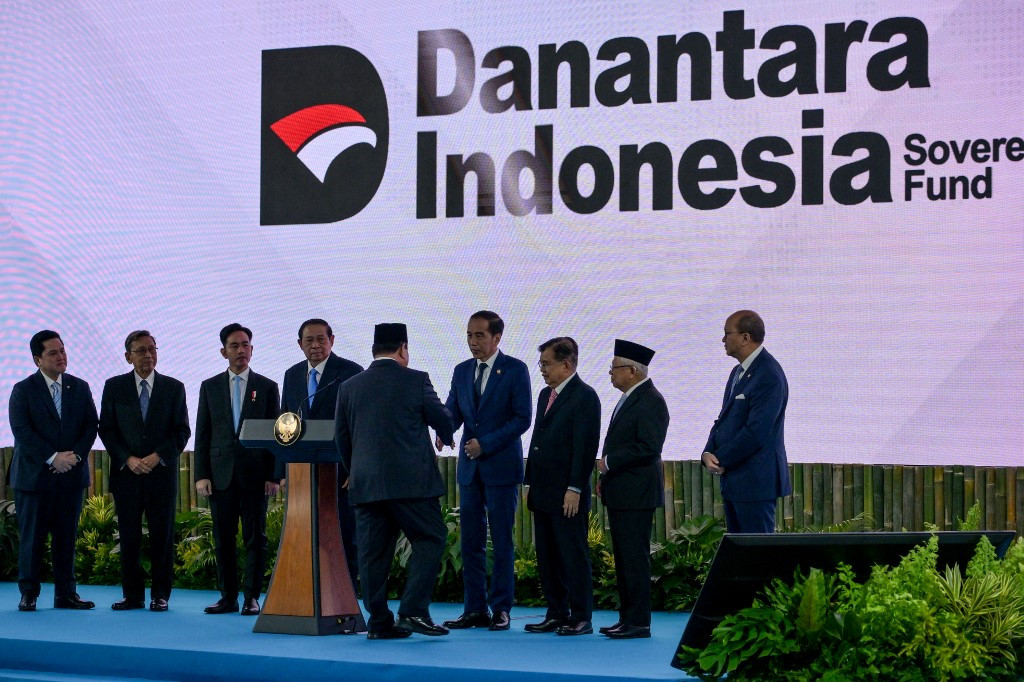
The morning light over Jakarta’s financial district has a way of making ambition look achievable. In the gleaming corridors of the Danantara Indonesia headquarters — a building that barely existed eighteen months ago — a quiet but consequential shift is underway. The sovereign wealth fund that President Prabowo Subianto unveiled with enormous fanfare in February 2025 has spent its inaugural year doing something unglamorous but essential: building the institutional scaffolding that separates a serious fund from a political showpiece. Now, as Indonesia’s Danantara sovereign wealth fund enters its investment phase in 2026, the real examination begins.
At the World Economic Forum in Davos in January, Chief Investment Officer Pandu Patria Sjahrir declared that Danantara’s target for investment fund placements in 2026 is set at $14 billion — nearly double the $8 billion allocated across all of 2025. Kompas The capital acceleration is not simply a number; it is a declaration of intent. The governance year is over. The deployment year has arrived.
Table of Contents
Year One: The Governance Foundation Nobody Talks About
Before you can deploy capital at scale, you need systems that can be trusted with it. That is the unglamorous lesson Danantara absorbed in 2025. Chief executive Rosan Roeslani acknowledged that a primary achievement of the first year was breaking down the siloed operations that had long plagued Indonesia’s state-owned enterprises, promoting greater transparency and internal value creation. Jakarta Globe
BCA Chief Economist David Sumual confirmed the picture candidly: Danantara’s main focus in 2025 was internal consolidation — restructuring efforts, organizational improvements, and recruitment of human resources — with no major projects having fully materialized by year’s end despite SOE dividends being reallocated to the fund. Indonesia Business Post
That candour from a senior domestic economist is actually a constructive signal. Unlike the opaque early years of Abu Dhabi’s IPIC or the dangerously undisclosed operations of Malaysia’s 1MDB before its collapse, Danantara’s leaders are at least publicly acknowledging the gap between aspiration and execution. The first year served as a necessary stress-test of internal architecture. The critical question, now that the architecture is nominally in place, is whether the deployment year delivers the returns its political patron is demanding.
The 7% Return Mandate: Prabowo’s Public Challenge
Few sovereign wealth fund leaders have their performance targets set quite so publicly — or quite so politically — as Pandu Sjahrir now does. President Prabowo Subianto has publicly set a target of 7% return on assets for the fund, a mandate that Sjahrir acknowledged directly, saying Danantara would gladly accept the challenge as it “searches for projects that can give higher returns with the same impact while improving standards.” Jakarta Globe
The 7% ROA hurdle deserves context. Indonesia’s current state-owned enterprise portfolio has historically generated returns on assets hovering near 1.88% — a figure that reflects decades of sub-optimal capital allocation, political interference in pricing decisions, and chronic underinvestment in productivity. Reaching 7% is not an incremental improvement. It represents nearly a fourfold leap in capital efficiency across a portfolio of more than 1,000 SOEs.
To understand whether the target is reachable, consider how the world’s benchmark sovereign funds perform. Singapore’s Temasek Holdings has delivered annualised total shareholder return of approximately 7% in Singapore dollar terms over its 50-year history — but this was achieved with an entirely different governance architecture, strict commercial independence from government policy directives, and a portfolio heavily weighted toward liquid, globally diversified assets. GIC, Singapore’s other sovereign vehicle, targets real returns above 4% over 20-year rolling periods while managing over $770 billion. Abu Dhabi’s Mubadala, a closer model given its hybrid development-investment mandate, has generated returns in the 8–12% range in its best years, but only after a decade of portfolio maturation and institutional discipline-building.
What Danantara needs — quickly — is a portfolio mix that can bridge the gap between its politically derived SOE inheritance and the commercially rational returns its mandate demands.
Shifting to Deployment: Bonds, Equities, and the Capital Market Play
In a presentation at the Indonesia Stock Exchange, Pandu Sjahrir confirmed that Danantara would begin investing SOE dividend capital in both bonds and equities through the capital market starting in 2026, with the explicit additional goal of deepening Indonesia’s relatively shallow domestic capital markets. Kompas
This two-pronged strategy is tactically sound. Fixed-income instruments — particularly Indonesian government bonds (SBN) and SOE-issued corporate bonds — offer predictable yields in the 6–7% range at current rupiah interest rate levels, immediately competitive with the ROA target. The equities component introduces both upside potential and volatility, but also provides the market liquidity and price-discovery function that Indonesia’s IDX has lacked for years.
Economic observer Yanuar Rizky assessed that Danantara’s entry as a major institutional investor could have a positive stabilising effect on Indonesia’s capital markets, provided the fund maintains a clear distinction between commercial portfolio investment and politically motivated market support operations. Kompas That caveat is pointed. If Danantara begins purchasing equities to prop up falling SOE stock prices rather than to generate returns, it will quickly become both a market distortion mechanism and a fiscal liability.
Danantara is also considering taking a shareholder position in the Indonesia Stock Exchange itself through its demutualization process — a move that would simultaneously give the fund a structural role in market governance while diversifying its asset base into financial infrastructure. Kompas
The $14 Billion Deployment Pipeline: Sectors and Scale
The capital earmarked for 2026 will flow primarily from SOE dividends and will target sectors including renewable energy, energy transition, digital infrastructure, healthcare, and food security. Danantara is also evaluating opportunities beyond Indonesia’s borders — specifically in China, India, Japan, South Korea, and Europe — though domestic allocation remains the dominant priority. Asia Asset Management
Six major projects were scheduled for groundbreaking in February 2026 alone, including an aluminum smelter and smelter-grade alumina facility in Mempawah, West Kalimantan; a bioavtur production facility at the Cilacap Refinery in Central Java; a bioethanol plant in Banyuwangi, East Java; and salt factories in Gresik and Sampang designed to supply Indonesia’s chlor-alkali industrial base. Kompas Together, these projects form the visible edge of what Danantara describes as a $7 billion downstream industrialization push — Indonesia’s long-deferred attempt to stop exporting raw nickel, bauxite, and palm oil and start exporting processed value.
The downstream story matters enormously for return-on-assets arithmetic. A nickel laterite operation generates modest margins; a battery cathode facility or EV component manufacturer attached to that same ore base can generate returns in the 12–18% range at commercial scale. That is the logic threading through Danantara’s investment thesis — and it is the same logic that has made Indonesia’s nickel-to-battery downstream push a subject of intense interest among Japanese, South Korean, and European manufacturers watching their supply chains with growing anxiety.
CEO Rosan Roeslani has emphasized that 2026’s strategy is built on risk-managed deployment and long-horizon value creation, with investment screens tightened to ensure capital flows only to projects with clear commercial merit and measurable economic impact. GovMedia
Danantara vs. The World’s Great Sovereign Funds: A Benchmark Comparison
| Fund | AUM (approx.) | 10-Year Return | Independence Model | Primary Focus |
|---|---|---|---|---|
| Norway GPFG | $1.7 trillion | ~8.5% p.a. | Statutory independence | Global equities/bonds |
| Temasek (Singapore) | ~$300 billion | ~7% TSR | Operational independence | Asia equities |
| GIC (Singapore) | ~$770 billion | 4%+ real | Full professional management | Global diversified |
| Mubadala (Abu Dhabi) | ~$300 billion | 8–12% (peak) | Semi-commercial | Strategic/development |
| Khazanah (Malaysia) | ~$35 billion | Mixed | Political proximity | Domestic SOEs |
| Danantara (Indonesia) | ~$900 billion AUM | Target: 7% ROA | Political appointment-led | SOEs + strategic projects |
The table tells a revealing story. Danantara is already one of the largest sovereign vehicles on earth by nominal AUM — but AUM and investable capital are very different things when the underlying portfolio consists largely of SOE assets that are neither liquid nor independently valued. Norway’s Government Pension Fund Global can credibly report 8.5% annualised returns because its portfolio is marked to liquid global market prices daily. Danantara’s SOE assets are carried at book values that may significantly diverge from what arms-length buyers would actually pay.
This is not a fatal flaw — it is a governance design choice with profound implications for how the 7% target gets measured. If Danantara measures ROA against re-valued, market-based asset prices, the benchmark is genuinely demanding. If it measures against legacy book values, the headline number may look better while concealing underlying performance deterioration.
The Broader Economic Stakes: Indonesia’s Path Past the Middle-Income Trap
Danantara does not exist in isolation. It is the financial architecture beneath President Prabowo’s “Golden Indonesia 2045” vision — the aspiration to reach developed-nation status within a generation. The fund was explicitly designed to help accelerate the president’s target of 8% annual GDP growth by his term’s end in 2029, consolidating and streamlining SOE operations to unlock productivity gains that fragmented management had suppressed for decades. Fortune
Indonesia’s GDP per capita, currently around $5,000, needs to triple to reach developed-world thresholds. That requires sustained, compounding productivity improvements across agriculture, manufacturing, energy, and services simultaneously. Danantara — if it functions as designed — could accelerate this by directing capital toward infrastructure gaps, energy transition assets, and downstream industries that private markets have been too cautious or too short-sighted to finance at the required scale.
Prabowo’s pitch to American business leaders in Washington in February 2026 was explicit: all state-owned assets have been consolidated under Danantara to accelerate investment, and the fund will serve as a primary engine of Indonesia’s economic transformation. Jakarta Globe The geopolitical subtext was equally clear — Indonesia is positioning itself as a destination for capital diversifying away from Chinese concentration and seeking access to Southeast Asia’s 280 million-strong consumer middle class.
Pandu Sjahrir, speaking at the South China Morning Post’s China Conference: Southeast Asia 2026 in Jakarta in February, framed the geopolitical dimension directly: “In the new geopolitical world, every country and every leader uses sovereign wealth funds as a geopolitical tool,” while insisting that Danantara must operate for profit rather than politics. South China Morning Post The tension between those two imperatives — geopolitical instrument and commercially disciplined investor — defines Danantara’s central challenge, and is one that even mature funds like Mubadala have never fully resolved.
Risks, Scrutiny, and the 1MDB Shadow
No serious analysis of Danantara can avoid the governance concerns that have trailed the fund from its inception. Following Danantara’s inauguration, the Jakarta Composite Index fell 7.1%, driven by continuous foreign capital outflows of approximately $622.7 million — a market verdict on investor discomfort with the fund’s legal structure and oversight architecture. East Asia Forum
The concerns are structural, not merely perceptual. Indonesia’s national audit bodies — the Financial Audit Board (BPK), the Agency for Financial and Development Supervision (BPKP), and the Corruption Eradication Commission (KPK) — have limited ability to monitor Danantara’s managed assets. Audits can only be conducted upon request from the House of Representatives, creating an oversight model that is reactive rather than systematic. Wikipedia
Critics have pointed out that Danantara’s senior leadership emerged from political negotiation as much as merit selection — CEO Rosan Roeslani served as Prabowo’s campaign chief, while Pandu Sjahrir served as the campaign’s deputy treasurer. East Asia Forum These connections do not automatically disqualify either man — Temasek’s own senior officials maintain government proximity — but they demand an unusually clear demonstration of commercial independence before institutional investors will commit capital with confidence.
Economists have also flagged crowding-out risks: as Danantara absorbs SOE dividends and raises capital through bond instruments, private sector investment appetite may be compressed, particularly if Patriot Bond subscriptions divert capital that listed companies would otherwise have deployed for their own growth. Indonesia Business Post
The Patriot Bond programme itself has attracted commentary that is difficult to ignore. Financial analysts widely viewed the initiative — which raised over Rp50 trillion from Indonesia’s business elite — as carrying the implicit return of political goodwill rather than purely financial reward, describing it as a “loyalty test” for the nation’s conglomerates. Wikipedia These are not conditions under which a world-class sovereign fund typically operates.
Investor Outlook: What Global Capital Should Watch
For international investors, Danantara’s deployment year presents a calibrated opportunity set rather than a binary bet. The fund’s entry into Indonesia’s bond and equity markets will provide liquidity and potentially improve price discovery on SOE-linked assets that have historically been thinly traded. Indonesia’s sovereign bond yields — currently in the 6.8–7.2% range for 10-year instruments — already offer competitive real returns given the country’s current inflation trajectory, and Danantara’s institutional demand will provide additional market support.
The downstream projects represent a longer-dated opportunity. Investors with three-to-five-year horizons who gain exposure to Indonesia’s nickel-to-battery value chain — whether through listed SOEs, joint venture structures, or Danantara-linked project bonds — are positioning for a structural shift in global clean-energy supply chains. The risk is not the economics of the projects themselves; it is the execution timeline and the political discipline to resist using Danantara as a budget-substitute during fiscal pressures.
Danantara’s 2026 Corporate Work Plan, presented to the House of Representatives, emphasised that every investment must be “bankable and truly value-accretive” — a standard borrowed from the private equity lexicon that, if genuinely applied, would represent a meaningful departure from the historically political character of Indonesian SOE capital allocation. Danantara Indonesia
Whether that departure is real or rhetorical will become clear within the next eighteen months. The projects are breaking ground. The bonds are being issued. The capital is beginning to flow. And in a country of 280 million people sitting atop some of the world’s most valuable commodity and consumer market assets, the upside — if governance holds — is not 7%. It is considerably higher.
Prabowo’s fund has set the floor. The ceiling is a function of institutional integrity.
Conclusion: The Deployment Era Begins — And the Scrutiny Deepens
Indonesia’s Danantara sovereign wealth fund enters 2026 at an inflection point that will define its legacy for a generation. The governance infrastructure is nominally in place. The capital pipeline — $14 billion targeted for deployment this year — is the largest in the fund’s short history. The 7% return-on-assets mandate, set publicly by the president himself, is ambitious relative to current SOE performance baselines but achievable if capital is deployed into commercial-grade projects with rigorous discipline.
The fund’s peer group — Temasek, GIC, Mubadala, Norway’s GPFG — took years, sometimes decades, to earn the institutional credibility that translates into sustained performance. Danantara does not have that luxury of time. Indonesia’s growth aspirations are set on a compressed timeline, and the political expectations attached to this fund are enormous.
What sophisticated investors should watch: the actual returns posted in Danantara’s first audited annual report; the independence and credibility of whichever oversight mechanism emerges; the performance of the six downstream projects currently breaking ground; and whether the fund’s capital market activities in bonds and equities reflect commercial logic or political stabilization.
The fund carrying the weight of Indonesia’s Golden 2045 vision is now, at last, actively deploying. The test of whether Danantara becomes Southeast Asia’s defining sovereign fund — or its most cautionary tale — begins today.
Discover more from The Monitor
Subscribe to get the latest posts sent to your email.

OPINION | Global South Peace Efforts: How the World’s New Mediators Are Reshaping Diplomacy in 2026

Singapore’s Bold Bid to Become Asia-Pacific’s Gold-Trading Powerhouse: Why the City-State Is Racing to Capture Bullion Liquidity and Central-Bank Vaults

The Private Firms Powering China’s Military AI Push

Trump Extends Iran Talks Deadline amid Sell-Off on Wall Street

Indonesia’s Danantara Shifts to Investment Phase, Targets 7% Returns — Sovereign Wealth Fund Enters Deployment Era Under Prabowo’s Ambitious Vision

AI is dressing up greed as progress on creative rights

Iran’s Tenacious Regime and the Future of the Gulf

Brent Crosses $100 as Indian Tanker Path Corrected Near Strait of Hormuz

Iran Vows to Keep Strait of Hormuz Closed: Mojtaba Khamenei’s First Statement Signals Escalation as Oil Surges Past $100

Qatar warns Middle East war will force Gulf to stop energy exports within days

Four Killed in Beirut Hotel Strike, Israel Says It Targeted Iranian Commanders

The Hormuz Crisis: How US-Iran War Is Reshaping Gulf Geopolitics and Global Energy Security
Iran’s Tenacious Regime and the Future of the Gulf
Indonesia’s Danantara Shifts to Investment Phase, Targets 7% Returns — Sovereign Wealth Fund Enters Deployment Era Under Prabowo’s Ambitious Vision
Iran Vows to Keep Strait of Hormuz Closed: Mojtaba Khamenei’s First Statement Signals Escalation as Oil Surges Past $100
Brent Crosses $100 as Indian Tanker Path Corrected Near Strait of Hormuz

The 400 Million Barrel Question: Can the IEA’s Historic Reserve Release Save the Global Economy from Iran’s Energy War?
AI is dressing up greed as progress on creative rights
-

 Featured5 years ago
The Right-Wing Politics in United States & The Capitol Hill Mayhem
-

 News4 years ago
Prioritizing health & education most effective way to improve socio-economic status: President
-

 China5 years ago
Coronavirus Pandemic and Global Response
-

 Canada5 years ago
Socio-Economic Implications of Canadian Border Closure With U.S
-

 Democracy5 years ago
Missing You! SPSC
-

 Conflict5 years ago
Kashmir Lockdown, UNGA & Thereafter
-
Democracy5 years ago
President Dr Arif Alvi Confers Civil Awards on Independence Day
-

 Digital5 years ago
Pakistan Moves Closer to Train One Million Youth with Digital Skills