
News
PM Calls Turkish President to extend Sympathies on Casualties in Idlib

 Prime Minister Imran Khan called President Recep Tayyip Erdo?an, today, and conveyed heartfelt sympathies and condolences on the loss of lives of a number of Turkish soldiers in the attack in Idlib. He stated that the people of Pakistan were in strong solidarity with the brotherly Turkish nation in this time of grief and sorrow. The Prime Minister reaffirmed support for Turkey’s legitimate security and humanitarian concerns in the region and also lauded Turkey’s humanitarian assistance, including through hosting millions of Syrian refugees.
Prime Minister Imran Khan added that Pakistan fully supports Turkey’s efforts in its fight against terrorism. While appreciating Turkey’s hosting of millions of refugees, the Prime Minister called upon the international community to help Turkey bear this enormous burden. He also offered to extend all possible support and assistance from Pakistan in this regard.
The Prime Minister also stressed that the international community should come forward and play its role towards finding a political solution to the Syrian conflict, as well as addressing the prevailing humanitarian crisis. The Prime Minister thanked President Erdo?an for his unequivocal support on the Jammu & Kashmir dispute, reaffirmed during his recent visit to Pakistan and especially during his address to the Joint Session of the Parliament.
The Prime Minister further updated President Erdo?an on the prevailing situation in IOJ&K and the recent massive killings in targeted violence against Muslims in India. He thanked President Erdo?an for raising his voice on this issue as part of his espousal of Muslim causes worldwide.
Discover more from The Monitor
Subscribe to get the latest posts sent to your email.




Washington, D.C. police have identified 55-year-old emergency physician Matt Wade Lambert as the suspect in a Thursday morning shooting in the Logan Circle neighborhood that left one man dead and four others wounded before Lambert died by suicide during a standoff with officers.
The incident began shortly before 8 a.m. on November 12, 2026, inside the Vida Fitness gym on the ground floor of the Metropole condominium building. Lambert, a resident of the building, fatally shot building manager James Stuart, 46, according to Interim Metropolitan Police Department Chief Jeffery Carroll. Police believe Stuart was specifically targeted due to a long-running dispute between Lambert and the building’s homeowners association.
Shooting Escalates From Gym to Apartment Balcony
After the initial shooting in the gym, Lambert returned to his seventh-floor apartment and opened fire from a balcony or patio area, striking four people on the ground level—two men and two women. One of those victims remained in critical condition as of Thursday evening, while the other three sustained non-life-threatening injuries, police said.
Officers later recovered three firearms from Lambert’s apartment: a handgun, a rifle, and a shotgun. None of the weapons were registered to him in the District of Columbia. Carroll stated that Lambert used each of the weapons during the incident and fired at officers at least twice through his apartment door while barricaded inside.
Fire and Accelerant Investigation
During the standoff, Lambert also started a fire inside his apartment. Investigators found flammable liquids and other accelerants, along with evidence that large sections of drywall had been removed, exposing wooden studs and the rear of the building’s exterior. Police are examining whether he poured and ignited a flammable substance to help the flames spread through the structure. He also broke the gas line connected to a fireplace in the unit. The building’s sprinkler system activated and helped contain the fire, and firefighters were able to shut off the building’s gas supply.
Negotiators spoke with Lambert for roughly an hour before he died from a self-inflicted gunshot wound. Carroll confirmed that a shotgun was used near the end of the incident.
HOA Dispute Over Mold and Maintenance Cited as Motive
Authorities have linked the shooting to an ongoing legal conflict between Lambert and the condominium association. Court records show Lambert filed a lawsuit against the HOA in 2025 over water damage and black mold in his unit, which he alleged resulted from construction and scaffolding work on the building. The Metropole is described as a luxury property, and Lambert’s apartment has been reported in the range of $1.1 million.
Police noted that Stuart, as the building manager, had been involved in the dispute. Acquaintances of Lambert described him as a board-certified emergency physician who had not previously displayed obvious signs of distress in recent professional interactions, though investigators continue to review his communications and the lawsuit filings.
Police Response and Ongoing Investigation
The shooting prompted a large law enforcement response in Logan Circle, an area roughly a mile north of the White House. A temporary shelter-in-place order was issued in the immediate vicinity while officers secured the scene and negotiated with Lambert. Mayor Muriel Bowser described the events as a senseless act of gun violence.
As of Thursday night, the investigation remained active. Police were continuing to examine the sequence of events, the source of the firearms, the arson attempt, and any additional communications from Lambert in the hours before the shooting. The Vida Fitness gym and parts of the building remained closed pending further evaluation of the scene.
Residents and officials expressed shock at the scale of the violence in an otherwise residential and commercial stretch of Northwest Washington. Authorities have not released the names of the four injured victims.
This remains a developing story. Updates will be provided as more confirmed information becomes available from the Metropolitan Police Department and other official sources.
Discover more from The Monitor
Subscribe to get the latest posts sent to your email.
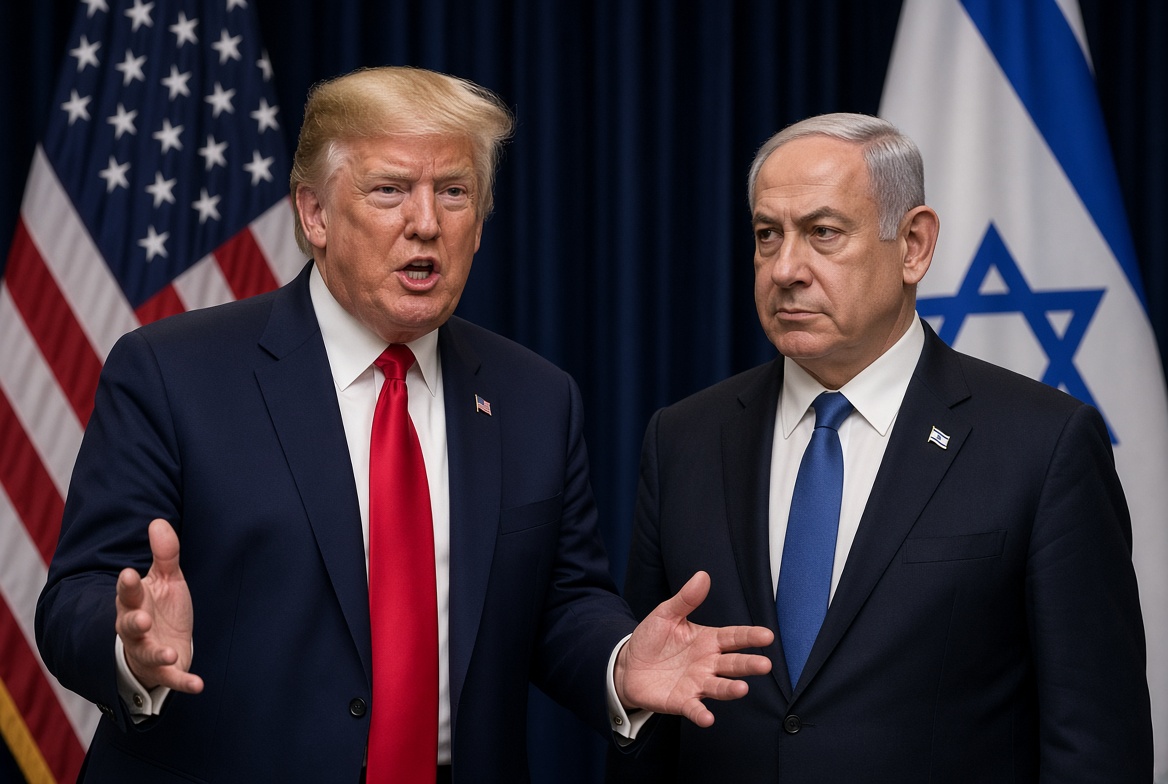
President Donald Trump said Tuesday that the United States will end its roughly $4 billion in annual funding to Israel by the close of this year under an agreement he reached months ago with Israeli Prime Minister Benjamin Netanyahu.
Speaking by phone on Fox News’ Fox & Friends as Americans voted in the midterm elections, Trump stated that the two leaders had decided to halt the payments because Israel “doesn’t need it” and to remove what he described as a damaging political talking point used by critics.
“Now, as far as paying Israel, Bibi Netanyahu and I have made a deal that we give Israel $4 billion a year, and we made a deal months ago that we’re stopping,” Trump said. “We’ve already agreed that by the end of this year we won’t be paying Israel. Now, we’ll help Israel if they need it.”
Trump added that Netanyahu had raised the idea himself, saying the Israeli leader told him it would be “appropriate” not to receive the aid given domestic political controversy in the United States. He specifically referenced criticism from Democratic Michigan Senate candidate Abdul El-Sayed and others on the left, calling continued payments “a bad talking point”.
The announcement immediately raised questions about implementation. The current U.S.-Israel Memorandum of Understanding, which provides about $3.8 billion annually in military assistance, does not expire until 2028. U.S. military aid to Israel is appropriated by Congress, and experts noted that abrupt termination of ongoing programs—particularly in missile defense and counter-drone systems—would face legal and logistical hurdles. Trump has not detailed the precise mechanism or timeline for ending the funding.
There was no immediate confirmation from Netanyahu’s office or Israel’s foreign ministry. Israeli defense and financial officials were reportedly caught off guard by the public statement. The U.S. State Department did not respond to requests for comment.
The move comes amid declining American public support for unconditional aid to Israel since the war in Gaza that began in 2023. A recent Quinnipiac University poll found that nearly half of U.S. voters overall, and two-thirds of Democrats, believe the United States is too supportive of Israel. Aid to Israel has also become a point of contention within the Republican Party, drawing criticism from some isolationist and “America First” voices.
Trump framed the decision as consistent with a strong alliance, emphasising that the U.S. would continue to support Israel “if they need it” and that Israel remains a key partner. He noted that Israel could still purchase American weapons.
Analysts described the timing—on Election Day—as potentially aimed at neutralising attacks from both progressive Democrats and some within the MAGA coalition. Former Republican Rep. Marjorie Taylor Greene wrote on X that the announcement was unlikely to change midterm results, while others questioned whether the pledge would hold after the election.
The development marks a significant rhetorical shift in a relationship that has included steady U.S. military financing for decades. Whether the stated cutoff materialises by the end of 2026, and in what form, remains unclear pending further details from the White House and any formal agreement with Israel.
References
Al Jazeera. (2026, November 3). Trump says US will stop giving Israel aid after year-end. https://www.aljazeera.com/news/2026/11/3/trump-announces-that-us-will-stop-paying-israel-after-year-end
Debusmann, B., Jr. (2026, November 3). Trump says US ‘won’t be paying Israel’ by end of year. BBC News. https://www.bbc.co.uk/news/articles/cmx2dlx86n9yo
Reuters. (2026, November 3). Trump says US will stop $4 billion in funding to Israel at end of 2026. https://www.reuters.com/world/middle-east/trump-says-us-will-stop-paying-israel-after-year-end-2026-11-03/
Times of Israel. (2026, November 3). Trump says US to end $4 billion in annual military aid to Israel by end of 2026. https://www.timesofisrael.com/trump-says-us-to-end-4-billion-in-annual-military-aid-to-israel-by-end-of-2026/
Discover more from The Monitor
Subscribe to get the latest posts sent to your email.

Three headlines about Elon Musk’s companies appeared to tell unrelated stories: a spectacular electric sports car, a possible corporate merger and growing dependence on satellite connectivity. Read together, they reveal a broader contest over capital, engineering and control of digital infrastructure.
The key is to separate announcements, proposals and operational results. A demonstrated vehicle capability is not a mass-production date. A corporate committee is not a completed merger. And satellite coverage is not the same as unrestricted service under every political or security condition.
Tesla Roadster: the spectacle and the schedule
Reuters reported in mid-October on a next-generation Tesla Roadster demonstration involving SpaceX-inspired thruster technology. The report also indicated that customer deliveries would not begin until 2028. The distinction between a prototype showcase and a product ready for buyers is the most important one for readers evaluating Tesla’s technology ambitions.
A dramatic unveiling can demonstrate engineering intent. What follows is less glamorous: homologation, manufacturing readiness, servicing plans, warranty commitments, cost control and repeatable performance in ordinary conditions. Prospective buyers should not treat estimated specifications or on-stage promises as final contract terms.
SpaceX–Tesla merger talks: possible is not agreed
Reuters reported on October 22 that a potential merger would require Musk’s approval, even as governance considerations complicated the discussion. Committees studying a deal have not, by themselves, established a price, transaction structure, regulatory clearance or shareholder outcome.
The strategic case is obvious to enthusiasts: electric vehicles, robotics, satellites, artificial intelligence and computing capacity might be marketed as a single integrated ecosystem. The drawbacks are equally serious. A conglomerate can obscure business-level performance, increase capital-allocation conflicts and make valuation harder. Directors and shareholders would need to scrutinise related-party interests and who benefits from any exchange ratio.
The less cinematic AI numbers
Reuters’ October earnings coverage described rapid revenue growth in SpaceX’s AI business alongside a sharp increase in capital spending. Investors should resist both extremes: dismissing all AI demand as hype or assuming revenue growth guarantees attractive free cash flow. Data-centre infrastructure needs chips, sites, power and expensive maintenance.
Fast revenue growth can coexist with high valuation risk. The test is whether new businesses eventually finance their own expansion while preserving adequate returns to capital providers.
Starlink’s national-security dilemma
Satellite networks promise resilience when terrestrial networks fail. They also create dependence on operators with technical control over service policies, access and availability. October reporting on Starlink and Ukraine highlighted how restrictions or changes in operational capability can acquire strategic significance. The Reuters account noted statements by Ukrainian officials about restored connectivity at high travel speeds; statements about the causes of earlier restrictions require careful attribution.
For governments and businesses, diversification may therefore matter almost as much as signal quality. Critical communications need backups, clear contracts and a plan for service interruption.
Five questions before believing the next Musk headline
| Claim | Verification test |
|---|---|
| A rocket or vehicle can perform a feat | Independent evidence of a completed demonstration |
| A car launches next year | Confirmed production, approvals and delivery schedule |
| Two companies are merging | Filed agreement, board and shareholder approvals |
| AI business is profitable | Cash flow, costs and credible segment disclosure |
| Satellite service is universally available | Licence, coverage, capacity and contractual terms |
Why the story matters outside the US
Pakistan and other emerging markets look to satellite broadband, low-cost electric technology and AI tools for development opportunities. They also face affordability, spectrum and regulatory questions. Importing a futuristic product is not a substitute for competition policy or infrastructure resilience.
Corporate governance will matter as much as engineering
A potential deal between companies closely associated with the same entrepreneur raises questions about valuation, conflicts and decision-making. Independent directors must consider whether each shareholder group receives fair treatment; enthusiasm for a shared brand is not a substitute for transaction terms. Investors should distinguish a serious formal proposal from a public comment about strategic possibilities.
There is also a different risk profile across the businesses involved. A vehicle manufacturer faces factory utilisation, safety recalls and consumer financing. A satellite operator depends on launch capabilities, spectrum arrangements, recurring subscriptions and government permissions. AI computing infrastructure adds yet another profile involving power costs, hardware replacement and contract concentration. Combining these enterprises does not make their underlying risks disappear.
For followers of the space programme, the next meaningful milestone is evidence of repeated operational success, not a promise that a future mission will use advanced recovery methods. For EV buyers, it is a firm delivery programme with defined specifications. For connectivity users, it is consistent service under known contractual conditions.
A restrained technology roundup can celebrate ambitious engineering while continuing to ask ordinary questions about reliability, costs and the institutions that oversee it.
Are Tesla and SpaceX already one company?
No. Reported discussions and committees do not establish a completed merger.
Does a Roadster prototype guarantee 2028 deliveries?
No. The announced timeline remains subject to production and regulatory realities.
Can Starlink replace every terrestrial telecom network?
No. It may be particularly valuable in hard-to-serve areas or emergencies, but capacity, cost and regulation still matter.
The overlooked theme: Musk’s ventures are increasingly connected by shared ambitions and capital demands. The more compelling editorial question is not what they can announce, but which promises can be delivered at scale and at a defensible cost.
Discover more from The Monitor
Subscribe to get the latest posts sent to your email.

DC Doctor Matt Wade Lambert Identified as Suspect in Logan Circle Gym Shooting

Congress can’t stop Trump’s wars. It can make them expensive.

The Millers and the New Washington Power Couple

The Municipal Left Turn: Can They Govern?

The First Muslim Senator and the Limits of America’s Midterm Revolt

Trump Announces U.S. Will Stop $4 Billion Annual Aid to Israel by End of 2026

What Is Trump Doing on Election Day 2026? Inside His White House Plans

Tesla, SpaceX and Starlink: The Real Business Story Behind Elon Musk’s October Buzz

Resilience Under Strain: The World’s Difficult 2026 Choices
What Is Trump Doing on Election Day 2026? Inside His White House Plans
Resilience Under Strain: The World’s Difficult 2026 Choices
Trump Announces U.S. Will Stop $4 Billion Annual Aid to Israel by End of 2026
Tesla, SpaceX and Starlink: The Real Business Story Behind Elon Musk’s October Buzz
The First Muslim Senator and the Limits of America’s Midterm Revolt

Andy Harris in 2026: Freedom Caucus Influence, Spending and Congressional Power
The Millers and the New Washington Power Couple
The Municipal Left Turn: Can They Govern?
Congress can’t stop Trump’s wars. It can make them expensive.
-

 Featured6 years ago
The Right-Wing Politics in United States & The Capitol Hill Mayhem
-

 Conflict5 years ago
Kashmir Lockdown, UNGA & Thereafter
-

 News5 years ago
Prioritizing health & education most effective way to improve socio-economic status: President
-

 Democracy5 years ago
Missing You! SPSC
-

 China5 years ago
Coronavirus Pandemic and Global Response
-

 Digital6 years ago
Pakistan Moves Closer to Train One Million Youth with Digital Skills
-

 Canada5 years ago
Socio-Economic Implications of Canadian Border Closure With U.S
-
Democracy5 years ago
President Dr Arif Alvi Confers Civil Awards on Independence Day