
News
Bloodhound Q50: Remembering the Tragic Loss of Chicago’s Rising Drill Star

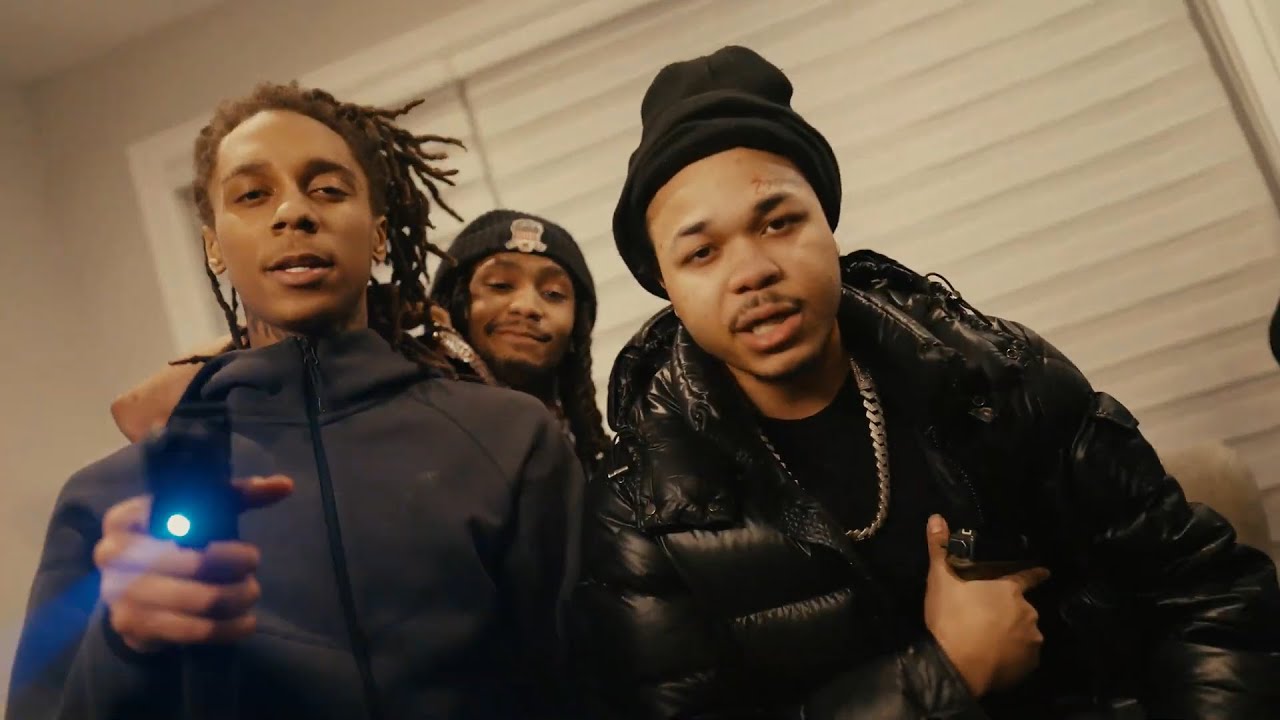
Table of Contents
Key Takeaways
- Chicago drill artist Bloodhound Q50, born Mikquale Cooper, was fatally shot in the early hours of Sunday, September 13, 2026, in the city’s Fuller Park neighborhood. He was 22.
- Police say two vehicles pulled alongside Cooper’s car at a gas station and gunmen opened fire, striking him in the chest and shoulder before fleeing the scene; no arrests have been made.
- The Cook County Medical Examiner’s office has formally identified the victim as Mikquale Cooper of Chicago; a manager with AMF Music Group confirmed Cooper performed as Bloodhound Q50.
- Q50 had just released his project Get Back or Die Trying and performed at Rolling Loud Orlando earlier this year.
- His death adds to a painful pattern within Chicago’s drill scene — Q50 was a member of the Bloodhounds collective alongside his cousin, Bloodhound Lil Jeff, who was killed in a separate shooting in 2024.
Chicago’s drill music community is mourning the loss of Mikquale Cooper, the 22-year-old rising artist known to fans as Bloodhound Q50, who was shot and killed early Sunday morning in the city’s Fuller Park neighborhood. The killing has drawn tributes from across the hip-hop world and reignited difficult conversations about violence within the genre’s Chicago roots.
What Happened
According to the Chicago Police Department, Cooper was seated in the driver’s seat of his car at a gas station in the 4200 block of South Wentworth Avenue at approximately 3:58 a.m. on Sunday, September 13, when two vehicles pulled up alongside him. Gunmen from both cars opened fire, striking Cooper in the chest and shoulder. Chicago Fire Department personnel treated him at the scene, where he was pronounced dead. The vehicles involved — described as a black Acura sedan and a silver Honda Accord — fled onto the southbound Dan Ryan Expressway. As of this writing, no arrests have been made, and police have said the investigation remains ongoing.
The Cook County Medical Examiner’s office has officially identified the victim as Mikquale Cooper of Chicago. While Chicago police did not publicly name the victim in their initial statements, a manager with AMF Music Group — the label associated with Cooper — confirmed to multiple outlets that he was the artist known as Bloodhound Q50.
Who Was Bloodhound Q50
Cooper emerged from Chicago’s drill scene as part of the Bloodhounds collective, performing alongside artists including his cousin, Bloodhound Lil Jeff, who was himself killed in a shooting in 2024. Q50 built a following with tracks including “Don’t Blink or Stare” and “Splash Bros 2,” and had recently celebrated his 22nd birthday on August 6 with the release of his project Get Back or Die Trying. He had performed at the Rolling Loud festival in Orlando earlier this year, a milestone that reflected his growing profile beyond Chicago’s local scene.
Following news of his death, Rolling Loud posted condolences online, and members of the broader hip-hop community, including commentator DJ Vlad, shared memories of their interactions with the artist. Cooper’s mother also addressed the public directly in the hours after his death, responding to unkind commentary online with a defense of her son’s memory.
A Painful, Recurring Pattern
Q50’s death has renewed attention on the toll gun violence has taken on Chicago’s drill music community specifically, and on young Black artists and residents more broadly. His cousin and collaborator Bloodhound Lil Jeff was killed in 2024, meaning the Bloodhounds collective has now lost two members to gun violence within roughly two years. Commentators and advocates who work on violence prevention in Chicago have pointed to the case as part of a broader, well-documented cycle in which drill artists — who often narrate the violence of their neighborhoods in their music — become victims of that same violence themselves.
Why This Story Resonates Beyond Chicago
Drill music, which originated in Chicago in the early 2010s before spreading to London, New York, and beyond, has long faced scrutiny over its relationship to real-world violence — both as a chronicle of conditions artists live through and, critics argue, as a potential accelerant of street conflicts. Q50’s death arrives as that debate continues, offering no easy resolution but underscoring the very real human cost behind the genre’s most difficult subject matter. For fans, his passing is a reminder of how quickly a promising career — an artist just months removed from a Rolling Loud stage — can be cut short.
Frequently Asked Questions
Who was Bloodhound Q50?
Bloodhound Q50, born Mikquale Cooper, was a 22-year-old Chicago drill rapper and member of the Bloodhounds collective, known for tracks like “Don’t Blink or Stare” and his recent project Get Back or Die Trying.
How did Bloodhound Q50 die?
He was fatally shot early Sunday, September 13, 2026, in Chicago’s Fuller Park neighborhood when gunmen in two vehicles pulled alongside his car and opened fire. He was struck in the chest and shoulder and pronounced dead at the scene.
Have there been any arrests in the Bloodhound Q50 shooting?
As of this writing, no arrests have been made. Chicago police have said the investigation is ongoing and have asked anyone with information to come forward.
Discover more from The Monitor
Subscribe to get the latest posts sent to your email.




Three headlines about Elon Musk’s companies appeared to tell unrelated stories: a spectacular electric sports car, a possible corporate merger and growing dependence on satellite connectivity. Read together, they reveal a broader contest over capital, engineering and control of digital infrastructure.
The key is to separate announcements, proposals and operational results. A demonstrated vehicle capability is not a mass-production date. A corporate committee is not a completed merger. And satellite coverage is not the same as unrestricted service under every political or security condition.
Tesla Roadster: the spectacle and the schedule
Reuters reported in mid-October on a next-generation Tesla Roadster demonstration involving SpaceX-inspired thruster technology. The report also indicated that customer deliveries would not begin until 2028. The distinction between a prototype showcase and a product ready for buyers is the most important one for readers evaluating Tesla’s technology ambitions.
A dramatic unveiling can demonstrate engineering intent. What follows is less glamorous: homologation, manufacturing readiness, servicing plans, warranty commitments, cost control and repeatable performance in ordinary conditions. Prospective buyers should not treat estimated specifications or on-stage promises as final contract terms.
SpaceX–Tesla merger talks: possible is not agreed
Reuters reported on October 22 that a potential merger would require Musk’s approval, even as governance considerations complicated the discussion. Committees studying a deal have not, by themselves, established a price, transaction structure, regulatory clearance or shareholder outcome.
The strategic case is obvious to enthusiasts: electric vehicles, robotics, satellites, artificial intelligence and computing capacity might be marketed as a single integrated ecosystem. The drawbacks are equally serious. A conglomerate can obscure business-level performance, increase capital-allocation conflicts and make valuation harder. Directors and shareholders would need to scrutinise related-party interests and who benefits from any exchange ratio.
The less cinematic AI numbers
Reuters’ October earnings coverage described rapid revenue growth in SpaceX’s AI business alongside a sharp increase in capital spending. Investors should resist both extremes: dismissing all AI demand as hype or assuming revenue growth guarantees attractive free cash flow. Data-centre infrastructure needs chips, sites, power and expensive maintenance.
Fast revenue growth can coexist with high valuation risk. The test is whether new businesses eventually finance their own expansion while preserving adequate returns to capital providers.
Starlink’s national-security dilemma
Satellite networks promise resilience when terrestrial networks fail. They also create dependence on operators with technical control over service policies, access and availability. October reporting on Starlink and Ukraine highlighted how restrictions or changes in operational capability can acquire strategic significance. The Reuters account noted statements by Ukrainian officials about restored connectivity at high travel speeds; statements about the causes of earlier restrictions require careful attribution.
For governments and businesses, diversification may therefore matter almost as much as signal quality. Critical communications need backups, clear contracts and a plan for service interruption.
Five questions before believing the next Musk headline
| Claim | Verification test |
|---|---|
| A rocket or vehicle can perform a feat | Independent evidence of a completed demonstration |
| A car launches next year | Confirmed production, approvals and delivery schedule |
| Two companies are merging | Filed agreement, board and shareholder approvals |
| AI business is profitable | Cash flow, costs and credible segment disclosure |
| Satellite service is universally available | Licence, coverage, capacity and contractual terms |
Why the story matters outside the US
Pakistan and other emerging markets look to satellite broadband, low-cost electric technology and AI tools for development opportunities. They also face affordability, spectrum and regulatory questions. Importing a futuristic product is not a substitute for competition policy or infrastructure resilience.
Corporate governance will matter as much as engineering
A potential deal between companies closely associated with the same entrepreneur raises questions about valuation, conflicts and decision-making. Independent directors must consider whether each shareholder group receives fair treatment; enthusiasm for a shared brand is not a substitute for transaction terms. Investors should distinguish a serious formal proposal from a public comment about strategic possibilities.
There is also a different risk profile across the businesses involved. A vehicle manufacturer faces factory utilisation, safety recalls and consumer financing. A satellite operator depends on launch capabilities, spectrum arrangements, recurring subscriptions and government permissions. AI computing infrastructure adds yet another profile involving power costs, hardware replacement and contract concentration. Combining these enterprises does not make their underlying risks disappear.
For followers of the space programme, the next meaningful milestone is evidence of repeated operational success, not a promise that a future mission will use advanced recovery methods. For EV buyers, it is a firm delivery programme with defined specifications. For connectivity users, it is consistent service under known contractual conditions.
A restrained technology roundup can celebrate ambitious engineering while continuing to ask ordinary questions about reliability, costs and the institutions that oversee it.
Are Tesla and SpaceX already one company?
No. Reported discussions and committees do not establish a completed merger.
Does a Roadster prototype guarantee 2028 deliveries?
No. The announced timeline remains subject to production and regulatory realities.
Can Starlink replace every terrestrial telecom network?
No. It may be particularly valuable in hard-to-serve areas or emergencies, but capacity, cost and regulation still matter.
The overlooked theme: Musk’s ventures are increasingly connected by shared ambitions and capital demands. The more compelling editorial question is not what they can announce, but which promises can be delivered at scale and at a defensible cost.
Discover more from The Monitor
Subscribe to get the latest posts sent to your email.
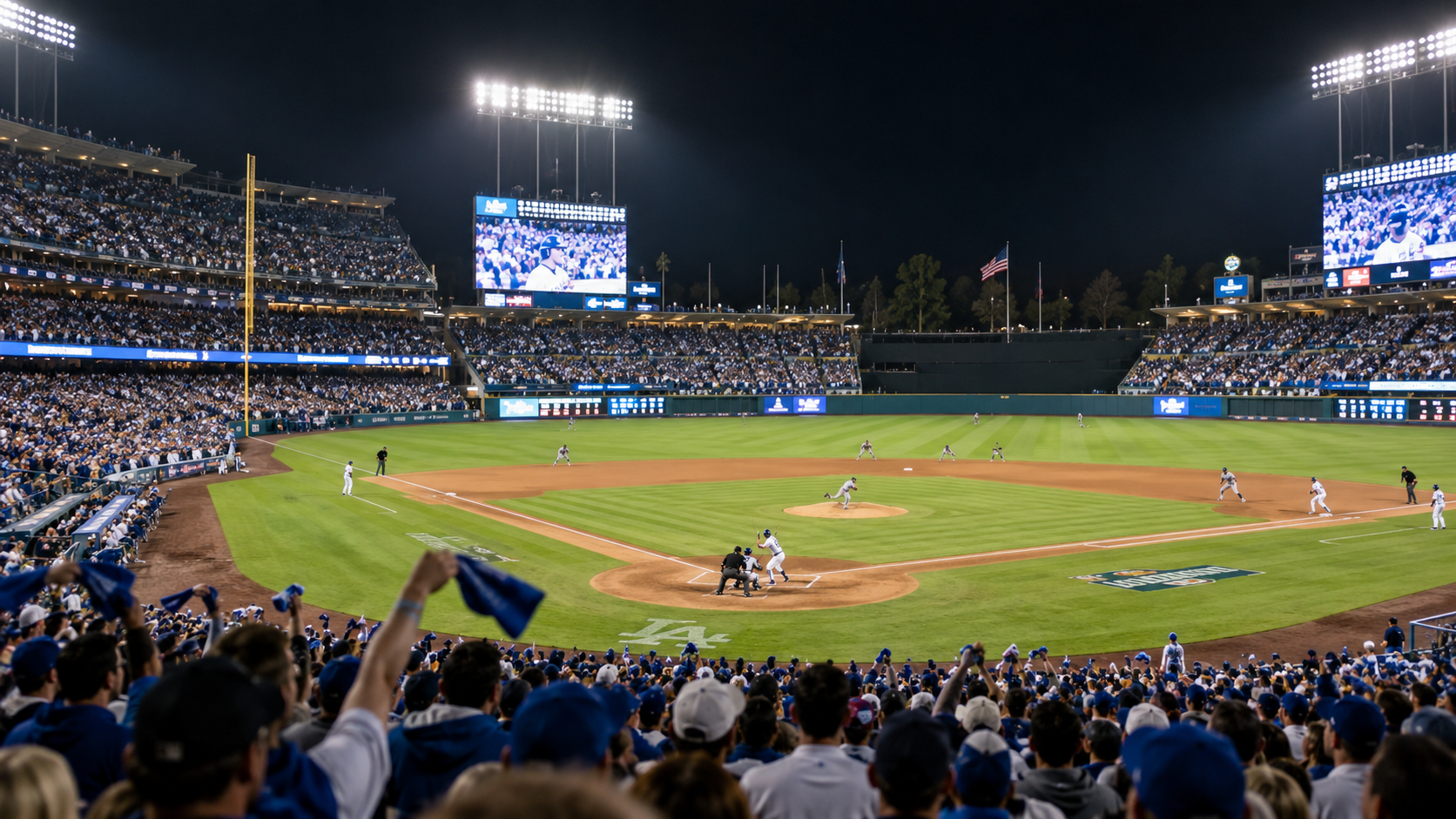
October is Major League Baseball’s postseason month, with the League Championship Series leading toward the World Series. MLB’s official October 9 update listed league championship broadcasting arrangements and said its complete postseason schedule was subject to change. That is the appropriate basis for a service article, rather than relying on viral bracket graphics. Sources: MLB and NBA.
The important context competitors can overlook
The playoff path moves through the Wild Card Series, Division Series, League Championship Series and World Series. Series lengths differ, affecting travel planning, pitching strategies and when a potential deciding game may occur. Weather, broadcast adjustments and series ending early can all change the actual date of a matchup. A guide should therefore distinguish tentative “if necessary” games from guaranteed events. For primary-source checks and current reporting, see MLB and NFL. The key distinction is practical broadcast and bracket explainer with no fictitious results.
October baseball moves through elimination series toward the World Series. Games marked ‘if necessary’ depend on earlier series results. Research cutoff: October 12, 2026; confirm developing facts before publication.
A practical way to use this information
Use MLB’s live bracket and broadcast information for tonight’s specific matchup, while this article provides the enduring format explanation. If publishing a result, record the completed date and source. Viewers should check the network, streaming eligibility and local restrictions before paying. Avoid declaring future participants or game outcomes without an official final score.
What to verify before making a decision
The right next step is to identify the source, timestamp and applicable market or jurisdiction. Check whether a number is a historical observation, official announcement, target, forecast or scenario. If you intend to act financially, legally or commercially, use the relevant provider’s current terms and obtain professional advice where appropriate. The sources cited here establish context; they are not a substitute for live prices, individual eligibility checks or binding agreements.
Reader questions
Where is the authoritative 2026 playoff schedule? MLB publishes and updates it at MLB.com/postseason.
Why are some dates marked if necessary? Best-of-series matchups end once a team wins the required number of games.
How the MLB postseason bracket works
Major League Baseball’s postseason includes division winners and wild-card teams, followed by a sequence of elimination series that eventually determines each league champion and the World Series participants. The rounds use different series lengths; that affects pitching strategy, bullpen workload and how quickly a team can be eliminated. A single-game result in a best-of-series contest is important but not always decisive. Readers should consult MLB’s official postseason hub for the bracket rather than rely on an old graphic that may not reflect completed games.
Home-field advantage, seeding and tiebreaking rules add context to the matchup schedule. Those details can vary by competition edition, so the official rules should be checked instead of recycled from a prior year. When a postseason series has not yet finished, the next opponent remains conditional. An article should say “winner of Series A will face…” rather than assign a future opponent before the result exists.
Why starting pitching changes a short series
Starting pitchers often shape the first half of a game, but playoff success requires bullpen management, defense, baserunning and timely hitting. A team may start its most experienced pitcher in the first game and then adjust the rotation based on rest, health and earlier results. Managers must also decide when to use their strongest relief pitchers. Those choices can matter more in a short series than in a long regular season where roles and workloads can be smoothed across many games.
Baseball statistics need sample-size discipline. A hitter’s performance over ten postseason plate appearances tells less about underlying ability than a much longer period of play. Analysts can compare strikeout rates, on-base production and matchup tendencies while avoiding exaggerated claims drawn from one home run or one defensive error. Recent injuries and announced starting lineups can change the outlook quickly.
Broadcast rights and local time differences
A game carried by a U.S. broadcaster may require a different provider for an international audience. Some streaming services include blackout restrictions and authenticated subscriptions. Before directing readers to a platform, check the league’s official listing for the game, region and date. A schedule can shift because of series outcomes or weather; do not assume every potential Game 6 or Game 7 will occur. Conditional games should be clearly labeled so viewers do not subscribe or travel based on a nonexistent fixture.
Fans outside North America should verify dates carefully. A game beginning late at night in U.S. Eastern Time can appear on the following morning in Pakistan or elsewhere. A credible global article uses time-zone labeling and, where practical, provides local conversions while directing readers to official confirmations.
Planning a trip to a postseason game
Buy tickets through the team’s verified ticket office or a recognized authorized resale route. Read what happens to a ticket for an “if necessary” game that is never played. Lodging and transportation may be nonrefundable even when the ticket itself is refunded under a particular policy. Stadium entry rules, bag restrictions and transport can vary by venue. Travel budgets should include potential schedule shifts, especially when the identity of the next opponent is not yet known.
Reseller offers that look dramatically cheaper than the going rate can be fraudulent. Confirm seat location, transfer method and the platform’s buyer-protection terms. Never assume an image of a barcode sent by a stranger proves a usable ticket. The simplest defense is to purchase through verified channels and retain the order record.
A bracket-tracking method that stays accurate
For each series, maintain the teams, seeds, current games-won tally, next confirmed game time, probable or announced starters, broadcaster and a direct MLB link. Update each row only after official results. Distinguish “clinched” from “leads series.” If a matchup concludes earlier than its maximum length, remove unused dates or mark them canceled; otherwise a static editorial calendar can appear inaccurate within hours.
The purpose of a postseason guide is not to predict every winner. It is to make a fast-moving bracket understandable and give fans reliable answers on what happens next, where to watch and which details remain uncertain.
Baseball postseason questions answered
Does every potential game on a postseason schedule occur?
No. A best-of-seven series ends when one team reaches four wins. Games listed as “if necessary” do not take place if the series has already been decided. Ticket buyers and travelers should understand refund or cancellation policies associated with those conditional dates before arranging flights and hotels.
Why do playoff teams use pitchers differently?
A shorter series changes the cost of saving an elite relief pitcher or spacing starting assignments. Managers may make aggressive substitutions to protect a narrow lead, while maintaining enough arms for a possible next game. Such choices can look different from regular-season strategy, when teams plan around a longer schedule and broader workload management.
Can a postseason match move after its first announcement?
Yes. Broadcast planning, prior series results and circumstances such as weather can affect schedules. MLB’s official game page and league notices should be checked shortly before travel or viewing. An editorial table that fails to update conditional games can easily mislead readers as the bracket advances.
Discover more from The Monitor
Subscribe to get the latest posts sent to your email.
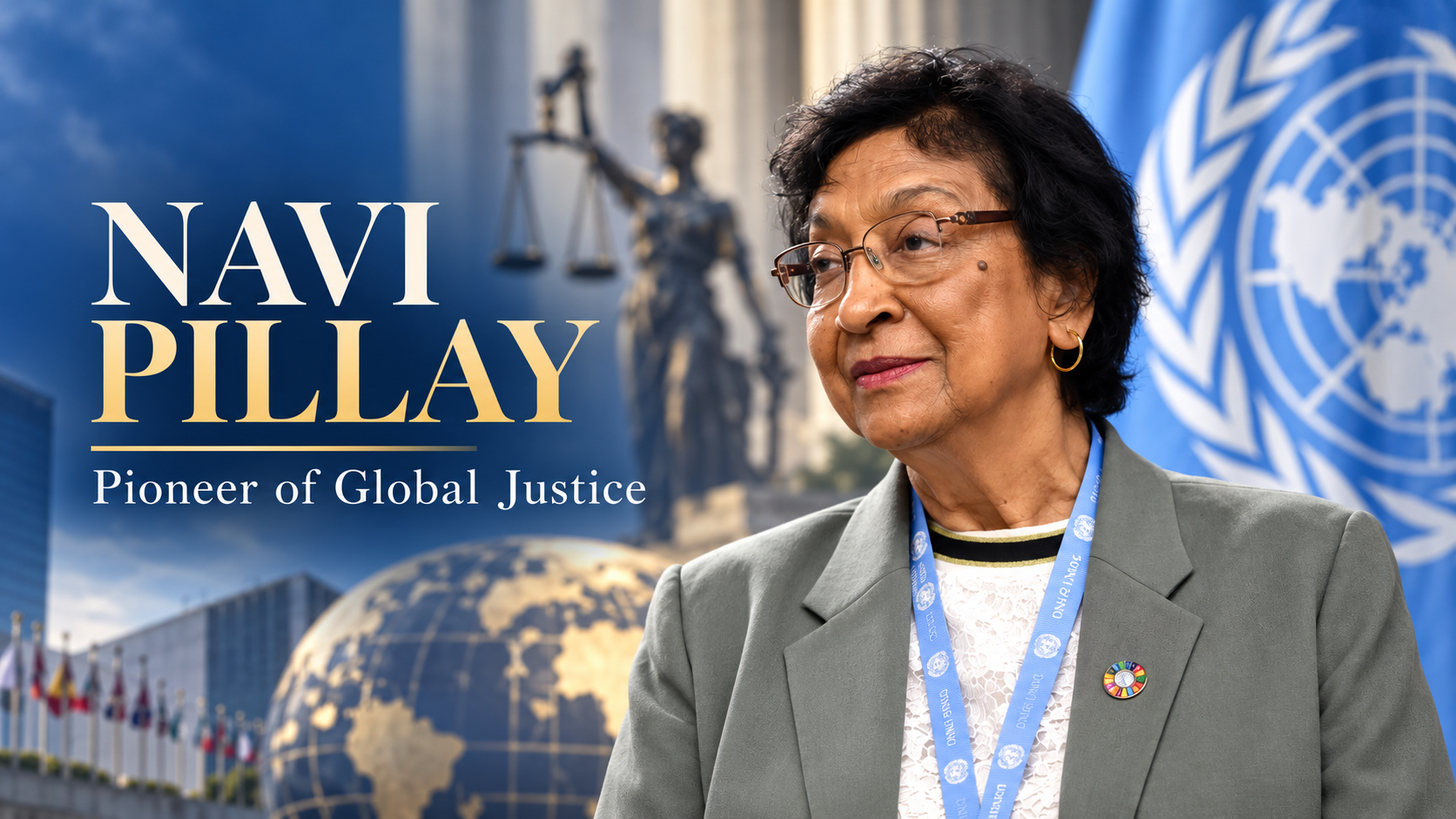
On October 9, 2026, the Norwegian Nobel Committee announced Navanethem “Navi” Pillay as the laureate of the 2026 Nobel Peace Prize. Recognized for her lifelong efforts to uphold international legal frameworks, advance human rights, and ensure accountability for war crimes and genocide, Pillay stands as one of the most transformative jurists of the modern era.
From her beginnings as a working-class defense attorney in apartheid-era South Africa to serving at the highest levels of global judicial institutions, Pillay’s career reflects a commitment to the rule of law as the foundation for global peace.
1. Early Life and Legal Education
Navanethem Pillay was born on September 23, 1941, in Durban, South Africa, into a working-class Tamil South African family. Growing up under the institutionalized racial segregation of apartheid, she experienced firsthand the systemic inequalities embedded in the legal and social systems of the time.
Supported by her community, Pillay attended the University of Natal, earning a Bachelor of Arts in 1963 and a Bachelor of Laws (LL.B.) in 1965. In 1967, she became the first woman of color to set up a private law practice in Natal Province. Faced with restrictions that prevented non-white lawyers from accessing judge’s chambers or using court libraries, she focused her early legal practice on defending anti-apartheid activists, political detainees, and trade unionists.
She later pursued advanced legal studies in the United States at Harvard Law School, completing a Master of Laws (LL.M.) in 1982 and a Doctor of Juridical Science (S.J.D.) in 1988. Her doctoral research focused on international human rights law and judicial independence.
2. Fighting Apartheid and Pioneering Institutional Reform
During the height of apartheid, Pillay represented political prisoners held on Robben Island, including members of the African National Congress (ANC) and the Black Consciousness Movement. Her defense strategies challenged state-sanctioned detention without trial, police brutality, and torture.
Key Contributions to Rights and Gender Equality
- Co-founder of Equality Now (1992): Pillay co-founded the international non-governmental organization Equality Now, which advocates for the civil, political, and economic rights of women worldwide.
- High Court Appointment (1995): Following South Africa’s transition to democracy under President Nelson Mandela, Pillay was appointed as the first Black woman judge on the South African High Court in 1995.
3. Key Global Appointments and Legal Achievements
| Institutional Role | Tenure | Primary Focus & Notable Achievements |
| Judge & President, International Criminal Tribunal for Rwanda (ICTR) | 1995–2003 | Presided over landmark cases establishing sexual violence as an act of genocide (Jean-Paul Akayesu case). |
| Judge, International Criminal Court (ICC) | 2003–2008 | Served in the Appeals Division during the foundational years of the court’s operations. |
| UN High Commissioner for Human Rights | 2008–2014 | Championed global campaigns on women’s rights, LGBT rights, combatting caste discrimination, and protecting journalists. |
| Chair, Independent UN Commission of Inquiry on the Occupied Palestinian Territory | 2021–Present | Mandated to investigate violations of international humanitarian and human rights law in the region. |
| Ad Hoc Judge, International Court of Justice (ICJ) | Present | Appointed in high-profile international litigation, including the Gambia v. Myanmar genocide proceedings. |
Landmark Precedents Set
- Defining Rape as Genocide: In the 1998 Jean-Paul Akayesu ruling at the ICTR, Pillay and her fellow judges issued a ruling establishing that systematic sexual violence and rape committed during conflict constitute acts of genocide under international law.
- Media Responsibility in Atrocities: In the 2003 ICTR Media Case, she presided over the trial that held media executives accountable for incitement to genocide, setting a key precedent for international criminal law regarding hate speech and mass communication.
4. The 2026 Nobel Peace Prize Recognition
The Norwegian Nobel Committee awarded the 2026 Nobel Peace Prize to Navi Pillay on October 9, 2026.
"The Norwegian Nobel Committee has decided to award the Nobel Peace Prize for 2026
to Navanethem 'Navi' Pillay for her efforts to promote peace and international law."
— Official Announcement, Norwegian Nobel Committee (October 2026)
The Committee highlighted her career-long defense of legal principles, human dignity, and international accountability during periods of geopolitical instability. With this award, Pillay became the fifth South African citizen—and the first Black South African woman—to receive the Nobel Peace Prize.
Official Sources & References
- The Nobel Prize Official Announcement — NobelPrize.org
- UN Human Rights Office (OHCHR) — Former High Commissioners Profile
- International Criminal Court (ICC) — Judicial Profiles
- International Criminal Tribunal for Rwanda (ICTR) Legacy Archives — UN International Residual Mechanism for Criminal Tribunals
- Navi Pillay Biography — Encyclopedia Britannica
- BBC News Coverage on the 2026 Nobel Peace Prize Announcement
Discover more from The Monitor
Subscribe to get the latest posts sent to your email.

Tesla, SpaceX and Starlink: The Real Business Story Behind Elon Musk’s October Buzz

Resilience Under Strain: The World’s Difficult 2026 Choices

Andy Harris in 2026: Freedom Caucus Influence, Spending and Congressional Power

MLB Playoffs 2026: Postseason Format, Broadcast Guide and How to Track the Bracket

Elon Musk Calls Mukesh Ambani the “Real Boss of India” Over Alleged Monopoly Concerns

Legal Pioneer and Defender of Justice: The Life, Works, and Legacy of Navi Pillay

Inside the Modern Republican Party Platform: Tax Policy, Immigration, and Governance

Anne Carson: Genius of Hybrid Forms and 2026 Nobel Laureate in Literature

Analyzing the Republican Voter Enthusiasm Gap: Turnout Metrics and Polling Data

Min Ah: The Global Impact and Rising Popularity of the K-Drama Star
Inside the Modern Republican Party Platform: Tax Policy, Immigration, and Governance
Analyzing the Republican Voter Enthusiasm Gap: Turnout Metrics and Polling Data
Anne Carson: Genius of Hybrid Forms and 2026 Nobel Laureate in Literature

Remembering Kianna Underwood: The Nickelodeon Actress Behind “All That” and “Little Bill”
Elon Musk Calls Mukesh Ambani the “Real Boss of India” Over Alleged Monopoly Concerns

The West Wing Legacy: Why the Political Drama Is More Relevant Than Ever
Resilience Under Strain: The World’s Difficult 2026 Choices
MLB Playoffs 2026: Postseason Format, Broadcast Guide and How to Track the Bracket
-

 Featured6 years ago
The Right-Wing Politics in United States & The Capitol Hill Mayhem
-

 News5 years ago
Prioritizing health & education most effective way to improve socio-economic status: President
-

 China5 years ago
Coronavirus Pandemic and Global Response
-

 Conflict5 years ago
Kashmir Lockdown, UNGA & Thereafter
-

 Democracy5 years ago
Missing You! SPSC
-

 Canada5 years ago
Socio-Economic Implications of Canadian Border Closure With U.S
-
Democracy5 years ago
President Dr Arif Alvi Confers Civil Awards on Independence Day
-

 Digital6 years ago
Pakistan Moves Closer to Train One Million Youth with Digital Skills