
Finance
Jennifer Garner’s Latest Projects: Business Ventures Beyond Hollywood

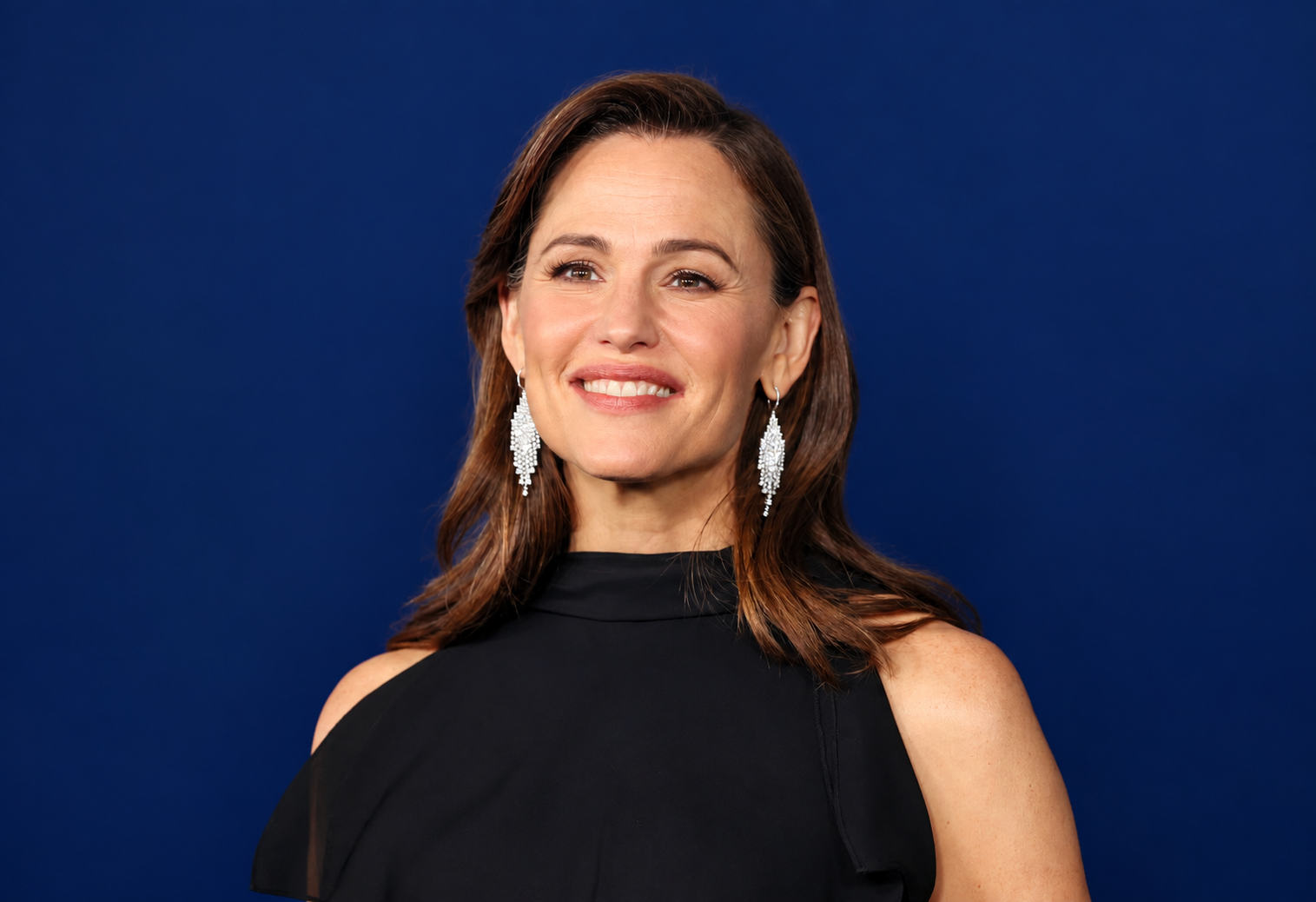
Most celebrity business ventures are licensing deals wearing a founder’s costume. The name goes on the label, the cheque clears, and an operating company nobody has heard of does the actual work.
Jennifer Garner’s is not that. On 6 February 2026, she rang the opening bell at the New York Stock Exchange as Once Upon A Farm went public at $18 per share with a valuation of $724 million.
The company she co-founded is now a listed public entity with audited financials, a board seat in her name, and a stock price that has since gone down. That last detail is the most interesting part of the story.
Table of Contents
Key Takeaways
- The IPO: Once Upon A Farm listed on the NYSE as OFRM, raising $197.9 million at the midpoint of its marketed range.
- The pop: shares closed day one up about 17%, then traded at $25.10 by 9 February — nearly 40% above the listing price.
- The reality check: the stock was down about 15% for the year by August 2026.
- The business is real: $225 million in annual revenue for the year ending September 2025, up more than 40%.
- Her role is contractual and disclosed: board director, co-founder and spokesperson, with compensation set out in the S-1.
What Once Upon A Farm Actually Is
The company sells organic, cold-pressed refrigerated food for children — pouches, smoothies, applesauce and oat bars — through grocery retail and direct-to-consumer channels.
It was founded by serial entrepreneurs Cassandra Curtis and Ari Raz, with Garner and CEO John Foraker joining as co-founders two years later. Foraker’s background matters to the credibility of the operation: he ran Annie’s Homegrown for more than a decade and served as a president at General Mills.
Note: founding-date reporting varies between 2011 and 2015 depending on the source. Verify before publication.
The Financial Trajectory
| Metric | Figure |
|---|---|
| Annual revenue (yr ending Sept 2025) | $225 million |
| Year-on-year growth | Over 40% |
| CAGR since 2018 | More than 60% |
| IPO valuation | $724 million |
| Capital raised | $197.9 million |
| Shares sold by company | ~7.6 million |
| Shares sold by existing holders | ~3.4 million |
| Lead bookrunners | Goldman Sachs, JPMorgan Chase |
A compound annual growth rate above 60% sustained over seven years is not a celebrity endorsement outcome. It is a consumer packaged goods outcome — and CPG is one of the hardest categories in which to build distribution from scratch.
What Her Actual Job Is
This is where the Once Upon A Farm story diverges most sharply from the celebrity-brand template, because the terms are public.
The S-1 discloses that Garner serves on the public company’s board of directors and continues as co-founder and spokesperson — “Farmer Jen” — a role for which she was paid $1 million in the prior year, with $2 million to $3 million in expected annual compensation through 2028, separate from stock options and an IPO-linked bonus.
She also worked the roadshow directly. Garner described the investor meetings to Forbes as rooms full of existing customers, noting that families already trusted the product.
That is a meaningful distinction for anyone assessing celebrity-backed companies. There is a difference between a founder who licenses a likeness and a founder who sits on the board, pitches institutional investors and has compensation disclosed in a registration statement.
The Mission Structure
Once Upon A Farm is a public benefit corporation — the “PBC” in its legal name — which means its charter permits management to weigh mission alongside shareholder returns.
Garner has framed the IPO itself as a mission decision. Selling to a major food conglomerate would have cost the existing team control of the business; a listing preserved it while raising capital.
The concrete expression of that mission is WIC certification. Getting products approved so low-income families can purchase them through the federal nutrition programme has been a stated priority, and the brand now holds that distinction in more than 20 states. Garner has called it the company’s north star.
It connects to a longer track record — she had been a trustee for Save the Children for several years before joining the company in 2017.
The Risks the Prospectus Discloses
A public listing forces disclosure that private celebrity ventures never face. Three risks stand out.
Tariff and sourcing exposure. The prospectus highlighted risks related to tariffs and trade barriers, particularly against Mexico and South America, from where the company sources a significant portion of its fruit and vegetable ingredients.
Key-person concentration. A brand built substantially on one founder’s public identity carries a risk no diversified CPG company does.
Acquisition framing. Ahead of the listing, Hedgeye analyst Bennett Cheer characterised the company as an acquisition “play” — a view that treats the IPO as a staging post toward a strategic sale rather than a destination.
The Post-IPO Slide, and What It Tells You
The stock’s path is the honest part of this story. Priced at $18, up 17% on day one, close to $25 within a week, then down roughly 15% for the year by August.
Garner’s stated response has been to ignore the daily price and focus on execution — her position being that the stock follows the mission rather than the reverse.
Whether or not one finds that convincing as investor communication, the underlying pattern is common and worth understanding. Consumer IPOs frequently pop on scarcity — the listing was described as a rare food offering that excited investors — and then reprice once the float settles and quarterly results replace the narrative.
For investors, the lesson generalises. A founder’s celebrity generates demand at listing. It does not generate gross margin.
The Broader Commercial Portfolio
Beyond Once Upon A Farm, Garner’s commercial activity follows a consistent pattern: long-term brand relationships rather than one-off endorsements.
She has been the recurring face of Capital One’s advertising campaigns, continuing through 2026. She brokered Once Upon A Farm’s first sports sponsorship in 2024 — a multi-year deal making it Angel City FC’s exclusive children’s snack partner.
She was named to the Forbes 50 Over 50 class of 2026 at age 54, alongside continued acting work.
What This Means for the Global Market in 2027
Coverage of celebrity businesses stops at the launch. Here is what actually determines outcomes.
Public listing is the real test of a celebrity brand. Private valuations are negotiated; public ones are voted on daily. Expect more celebrity-founded consumer companies to attempt listings after this precedent — and expect most to trade below their debut.
Governance disclosure becomes the differentiator. Once Upon A Farm published its founder compensation structure. Investors evaluating the next celebrity IPO should ask for the same and treat its absence as a signal.
Tariff exposure is the underpriced risk in food CPG. Companies sourcing produce from Mexico and South America face input volatility that margin models built in a stable trade environment do not capture.
The PBC structure will be tested. A public benefit corporation’s mission commitments have not yet been stress-tested against a sustained share price decline. Once Upon A Farm may become the case study.
Acquisition remains the likely endgame. If the Hedgeye thesis holds, a strategic buyer eventually acquires the brand. The question for shareholders is whether that happens above or below the $18 listing price.
Frequently Asked Questions
What company did Jennifer Garner found?
Garner is a co-founder and chief brand officer of Once Upon A Farm, an organic children’s food company. She joined in September 2017 alongside CEO John Foraker; the business was originally founded by Cassandra Curtis and Ari Raz.
When did Once Upon A Farm go public?
The company listed on the New York Stock Exchange under the ticker OFRM on 6 February 2026, pricing at $18 per share for a valuation of $724 million and raising $197.9 million.
How much revenue does Once Upon A Farm generate?
The company reported $225 million in annual revenue for the year ending September 2025, representing growth of more than 40% year-on-year and a compound annual growth rate above 60% since 2018.
Is Jennifer Garner paid by Once Upon A Farm?
Yes, and the terms are disclosed. She was paid $1 million in the year before the IPO, with $2 million to $3 million in expected annual compensation through 2028, separate from stock options and an IPO-linked bonus.
Discover more from The Monitor
Subscribe to get the latest posts sent to your email.



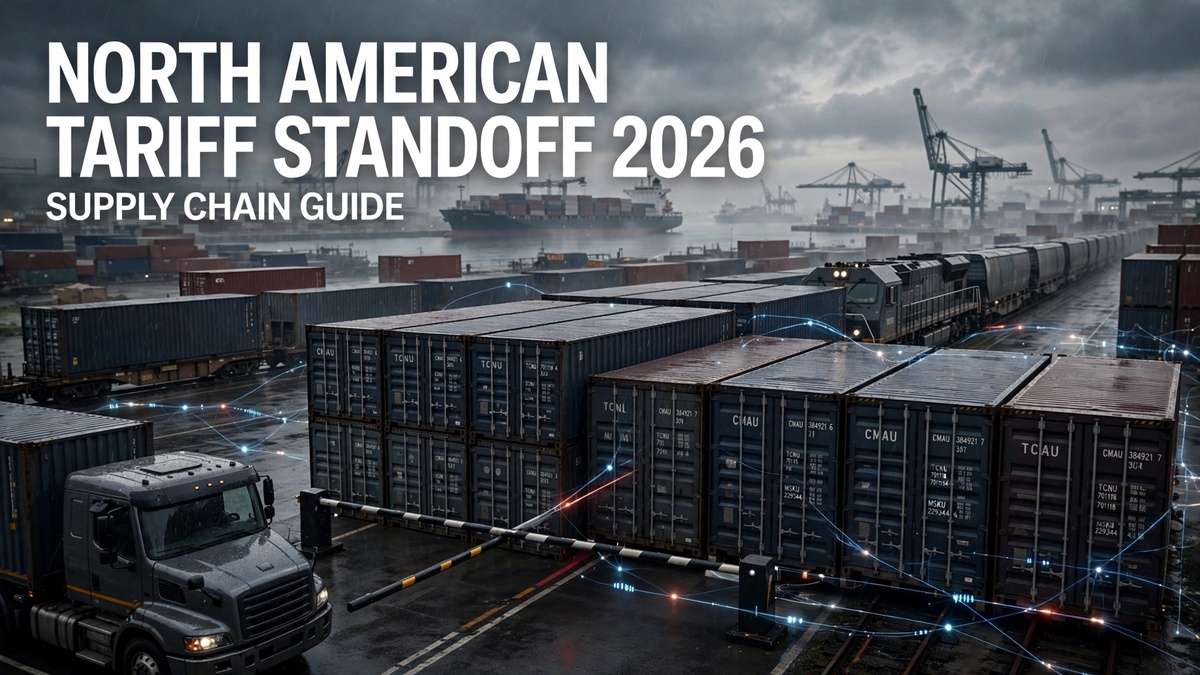
For six years, the USMCA functioned as a predictable backstop for North American supply chains — a rare constant through a volatile trade era. That predictability ended on July 1, 2026. The United States Trade Representative confirmed it would not agree to renew the USMCA in its current form following the agreement’s mandatory six-year joint review, and by September, the standoff had escalated sharply: new Section 338 tariffs on Canadian goods, a doubling of steel and aluminum duties, and stalled Canada-US talks, even as Mexico continued active, if difficult, bilateral negotiations. For supply chain executives, the question is no longer whether North American trade rules will change — it is how fast, and which sourcing models survive the transition.
Key Takeaways
- The USTR announced on July 1, 2026 that it would not renew the USMCA in its current form, following the agreement’s mandatory six-year joint review — though the agreement remains legally in force while negotiations continue, and full withdrawal by any party would take six months to take effect.
- New Section 338 tariffs on Canada-origin goods took effect August 19, 2026 at a 50% ad valorem duty, applying even where USMCA duty-free status would otherwise apply, following the collapse of a September round of Canada-US talks.
- An estimated 85% of Mexican exports to the US remain USMCA-compliant and exempt from newer tariff actions, including a Section 301 forced-labor enforcement action covering 60 economies — while Canada has not opened formal, text-based bilateral negotiations tied to the review at all.
- The central unresolved dispute with Mexico is automotive content requirements: Washington is seeking a 50% US-specific content threshold for vehicles to qualify for preferential USMCA access, which Mexico is resisting and has linked to relief from existing Section 232 tariffs on autos (25%) and steel/aluminum (50%).
- Despite the tariff escalation, nearly 60% of goods imported from Canada and Mexico continue to enter the US duty-free, underscoring that North American trade disruption in 2026 remains targeted and negotiated rather than a wholesale breakdown of integration.
How the Standoff Reached This Point
The current confrontation traces back through a specific legal and political sequence. After the US Supreme Court struck down IEEPA-based tariffs in February 2026, the administration pivoted to alternative legal authorities: a 10% tariff on Canada and Mexico under Section 122 of the Trade Act of 1974 (with an exemption maintained for USMCA-compliant goods), alongside a separate, unaffected 25% tariff on Canadian and Mexican steel, aluminum, and certain auto products under Section 232 of the Trade Expansion Act of 1962 — subsequently raised to 50% for steel and aluminum.
The USMCA’s mandatory six-year joint review, triggered by a provision written into the original 2020 agreement, then became the vehicle for a more fundamental renegotiation push. On July 1, 2026, the USTR confirmed it would not renew the agreement in its current form, citing purported shortcomings and ongoing trade deficits with both neighbors. Crucially, this announcement did not terminate the agreement or preferential trade — the USMCA remains in force while the three governments work through the issues raised, and any formal withdrawal by a party would not take effect for six months, a design feature intended to preserve negotiation leverage without triggering an immediate supply chain shock.
The situation escalated further by September: the US deployed the rarely used Section 338 tariff authority against Canada specifically, roughly doubling existing steel and aluminum rates and reintroducing tariffs from a zero baseline across a much wider set of Canadian goods, after a round of talks collapsed. Canada, notably, has not yet opened a substantive, text-based bilateral negotiating round tied to the joint review itself, unlike Mexico — engagement has remained largely at the ministerial-call level between Canada’s Trade Minister and the US Trade Representative.
The Two-Track Negotiation: Mexico vs. Canada
A critical, underappreciated fact for 2026 supply chain planning is that the US is running genuinely different negotiating tracks with its two USMCA partners:
Mexico has completed two full bilateral negotiating rounds covering automotive rules of origin, steel and aluminum, economic security, industrial goods, agriculture, labor, environmental standards, and regulatory compatibility. The core sticking point remains automotive content: Washington’s push for a 50% US-specific content requirement (versus the current North American-content framework) is being actively resisted by Mexico, which has explicitly linked any concessions to relief from existing Section 232 auto and metals tariffs. Mexican officials have noted that a separate Section 301 forced-labor enforcement action covering 60 economies produces no practical change for Mexican exporters specifically, since USMCA-compliant goods — an estimated 85% of Mexico’s US-bound exports — remain exempt as long as rules-of-origin requirements are satisfied.
Canada, by contrast, has not begun formal bilateral negotiations tied to the review at all, and its position has deteriorated sharply since July 1: the September Section 338 action roughly doubled steel and aluminum rates and reintroduced tariffs across a substantially broader set of goods from a zero baseline, representing the most significant escalation in the relationship since the review began.
What This Means for Supply Chain Restructuring
Rules of Origin Are Now a Live Compliance Risk, Not a Static Baseline
With automotive content requirements under active renegotiation and other sectors facing scrutiny, businesses that have treated USMCA rules-of-origin qualification as a fixed, one-time certification exercise face material risk. A targeted change to a single rule of origin, tariff classification, or certification requirement can affect thousands of suppliers and shipments across an integrated production network simultaneously — meaning sourcing and logistics models that currently qualify for preferential treatment may not continue to qualify under a revised framework, even without any change to the physical supply chain itself.
Mexico Remains the More Stable Near-Term Sourcing Base
Given Mexico’s active, structured bilateral negotiation track and the 85% USMCA-compliance exemption rate for its exports, Mexico currently presents a comparatively more predictable near-term sourcing environment than Canada, where the absence of formal negotiations combined with the September escalation has introduced acute uncertainty. This is a reversal of the historical assumption that Canada — as the more institutionally aligned partner — represents lower trade-policy risk.
Automotive and Metals-Intensive Supply Chains Face the Sharpest Exposure
The unresolved automotive content dispute with Mexico and the doubled steel/aluminum tariffs on Canada concentrate risk specifically in vehicle manufacturing, auto parts, and any metals-intensive industrial supply chain — sectors where BCG’s analysis has noted that tariff costs, layered onto supply disruption, could threaten the survival of some auto and auto parts companies, with downstream effects on retail prices, annual vehicle sales, and industry employment.
The Duty-Free Baseline Still Holds — For Now
The single most important stabilizing fact for supply chain planning is that nearly 60% of goods imported from Canada and Mexico continue to enter the US duty-free despite the standoff, and full treaty withdrawal by any party remains widely viewed as unlikely given the depth of North American supply chain integration and the six-month withdrawal notice period built into the agreement’s design. This suggests businesses should plan for continued negotiation-driven volatility in specific sectors (autos, steel, aluminum) rather than a wholesale collapse of North American trade preference.
Supply Chain Restructuring Strategies for 2026–2027
- Segment supplier risk by rules-of-origin sensitivity, not just by country. A supplier whose qualification depends on automotive content thresholds under active renegotiation carries fundamentally different risk than one in a sector untouched by the current disputes.
- Build contractual flexibility into sourcing agreements for tariff-classification changes. Given that thousands of suppliers can be affected by a single rule change, procurement contracts should include tariff-exposure adjustment mechanisms rather than assuming static classification.
- Treat Canada-sourced steel, aluminum, and metals-intensive inputs as higher near-term risk than comparable Mexican inputs, given the divergent negotiation tracks and the September escalation specifically targeting Canadian goods.
- Monitor the Section 232 auto tariff–content requirement linkage closely. Mexico’s explicit linking of content-rule concessions to Section 232 relief means any resolution is likely to arrive as a package, not sector by sector — businesses should model scenarios for both continued impasse and a bundled resolution.
- Avoid over-reacting to headline tariff announcements without checking USMCA-compliance exemption status. With roughly 85% of Mexican exports and 60% of combined Canada-Mexico imports still qualifying for duty-free treatment, the practical tariff exposure for a specific supply chain often differs substantially from the headline rate.
Frequently Asked Questions
Is the USMCA ending in 2026?
No. The USTR declined to renew the USMCA in its current form as of July 1, 2026, but the agreement remains legally in force while negotiations continue; a formal withdrawal by any party would take six months to take effect and is considered unlikely given deep supply chain integration.
How are US tariffs on Canada different from tariffs on Mexico in 2026?
Canada faces a more severe and less negotiated situation: new Section 338 tariffs took effect in August 2026 at 50% on certain goods, talks collapsed in September, and Canada has not opened formal bilateral negotiations. Mexico has completed two full bilateral negotiating rounds, and roughly 85% of its US-bound exports remain USMCA-compliant and tariff-exempt.
What is the main unresolved issue in the USMCA renegotiation with Mexico?
Automotive content requirements — the US is seeking a 50% US-specific content threshold for vehicles to qualify for preferential access, which Mexico is resisting and has linked to relief from existing steel, aluminum, and auto tariffs.
Conclusion
The 2026 North American tariff standoff is best understood not as a collapse of continental trade integration but as a genuine, high-stakes renegotiation running on two very different tracks — a structured, if difficult, Mexico process and a stalled, escalating Canada process. With nearly 60% of Canada-Mexico imports still entering the US duty-free and full treaty withdrawal remaining a low-probability outcome, the practical task for supply chain leaders is precision: distinguishing which specific inputs, sectors, and supplier relationships carry genuine renegotiation risk from the broader base of trade that remains, for now, stable.
Discover more from The Monitor
Subscribe to get the latest posts sent to your email.
Amid all the attention on Anthropic’s reported $2 trillion IPO valuation target, a quieter but arguably more consequential financial detail has emerged: the company is finalizing a $15 billion pre-IPO credit facility, according to Bloomberg reporting. Debt financing decisions made in the months before a public listing say a great deal about a company’s capital needs and risk profile — here’s what this facility actually signals for investors evaluating Anthropic’s long-term stock health.
Key Takeaways
- Anthropic is reportedly finalizing a $15 billion revolving credit facility, up from an earlier reported target exceeding $10 billion.
- The facility is being arranged by the same banks reportedly leading the equity IPO — Morgan Stanley, Goldman Sachs, and JPMorgan — which previously provided Anthropic debt financing.
- The credit line exists alongside a reported ~$42 billion net loss in 2025, even as the company reached positive adjusted operating income in Q2 2026.
- Debt facilities of this size are typically used for working capital flexibility and compute infrastructure spending, not permanent capital structure financing.
- How this facility is drawn down and disclosed in the S-1 will be a key signal of Anthropic’s capital intensity relative to its revenue growth.
What a Pre-IPO Credit Facility Actually Is
A revolving credit facility functions differently from the equity capital an IPO raises. Rather than permanent capital in exchange for ownership, it’s a line of credit the company can draw on and repay as needed — similar in concept to a corporate credit card with a very large limit, typically secured against assets or backed by the company’s cash flow and creditworthiness.
Companies preparing for an IPO often arrange credit facilities in the months beforehand for several reasons:
- Bridging capital needs before IPO proceeds are actually received
- Funding capital expenditures (in Anthropic’s case, compute infrastructure) without diluting equity holders further before the offering
- Signaling creditworthiness to public market investors, since securing a large facility from top-tier banks implies those banks’ credit committees have reviewed and approved the company’s financial position
- Maintaining flexibility for opportunistic spending, such as compute capacity commitments, without needing to raise additional equity
Why $15 Billion, and Why Now
Reporting indicates the facility’s size grew from an earlier target exceeding $10 billion to the current $15 billion figure — an increase that tracks with Anthropic’s own revenue and infrastructure scaling over the same period. This timing is notable: the facility is being finalized in parallel with the IPO process itself, not as a separate, unrelated financing event.
The banks arranging the facility — Morgan Stanley, Goldman Sachs, and JPMorgan — are the same institutions reportedly competing for lead roles on the equity offering. This dual relationship (debt provider and equity underwriter) is common in large-cap tech IPOs, but it means these banks have deep, direct visibility into Anthropic’s balance sheet and cash flow needs heading into the roadshow — visibility that goes well beyond what’s captured in investor-relayed revenue run-rate figures.
What the Facility Signals About Compute Spending
Frontier AI companies face a structural challenge that traditional software companies don’t: the cost of training and running large language models scales directly with usage and model capability, creating enormous ongoing capital expenditure needs even as revenue grows. Anthropic’s reported ~$42 billion net loss in 2025 — roughly five times its $8.3 billion loss the year before — reflects this dynamic directly.
A $15 billion credit facility gives Anthropic a funding buffer to continue scaling compute infrastructure — including a reported multi-year computing arrangement with SpaceX potentially worth tens of billions of dollars — without depending entirely on either operating cash flow or dilutive equity raises to fund that growth in real time.
Debt vs. Equity: What It Means for Post-IPO Stock Health
For investors evaluating the eventual publicly traded stock, the credit facility matters in a few concrete ways:
1. Balance Sheet Leverage
A $15 billion facility, even if not fully drawn, represents a real contingent liability. Public market investors will want to see, once the S-1 becomes public, how much of the facility is drawn, at what interest rate, and under what covenants — details that affect the company’s financial flexibility during any future growth slowdown.
2. Reduced Near-Term Dilution Pressure
By using debt rather than additional equity rounds to fund infrastructure spending in the run-up to the IPO, Anthropic avoids diluting existing shareholders further before the offering — a detail that modestly supports the per-share economics for both pre-IPO investors and eventual public shareholders, assuming the debt is serviceable.
3. A Read on Lender Confidence
Top-tier banks don’t extend $15 billion in committed credit without confidence in a company’s ability to service that debt. The facility’s existence — and its growth from an earlier sub-$10 billion target — is itself a data point suggesting lenders are underwriting continued revenue growth, even if that growth eventually falls short of the more bullish $100–120 billion full-year 2026 projections.
Comparing Anthropic’s Financial Profile
| Metric | Figure | Context |
|---|---|---|
| 2025 net loss | ~$42 billion | ~5x the $8.3B loss in 2024 |
| Q2 2026 adjusted operating income | Positive | First reported profitability inflection |
| Pre-IPO credit facility | ~$15 billion | Up from earlier >$10B target |
| Revenue run rate (July 2026) | ~$65 billion | Up from $9B at end of 2025 |
| Series H valuation (May 2026) | $965 billion | Prior to IPO valuation discussions |
The juxtaposition here is the crux of the entire investment debate: explosive revenue growth alongside historically large net losses, bridged by both a Series H equity raise and now a substantial credit facility. Whether that combination represents a company appropriately investing for scale, or one whose unit economics remain fundamentally unproven, is likely to be the central question analysts probe once the S-1’s audited figures are public.
Risks Specific to the Credit Facility
- Interest rate exposure. Revolving facilities of this size typically carry floating interest rates tied to benchmark rates; higher-for-longer rate environments increase the carrying cost of any drawn balance.
- Covenant risk. Large credit facilities often include covenants — financial conditions the borrower must maintain — that could restrict operational or capital allocation flexibility if triggered.
- Refinancing dependency. If compute spending needs continue to outpace operating cash flow generation well into the post-IPO period, the company may need to return to debt or equity markets again, a scenario that could pressure the stock if it happens sooner than investors expect.
FAQ
What is Anthropic’s $15 billion credit facility for?
It’s reportedly intended to give Anthropic balance sheet flexibility to fund continued compute infrastructure spending and working capital needs ahead of and around its IPO, without relying solely on operating cash flow or additional equity dilution.
Who is providing Anthropic’s credit facility?
Reporting indicates Morgan Stanley, Goldman Sachs, and JPMorgan — the same banks reportedly leading the equity IPO — are involved in structuring the facility, alongside their prior role as Anthropic’s debt financiers.
Does the credit facility mean Anthropic is in financial trouble?
Not necessarily. Large credit facilities are a standard and often prudent tool for capital-intensive, high-growth companies, especially ahead of an IPO. It should be read alongside the company’s reported positive adjusted operating income in Q2 2026, not as a standalone distress signal.
How will this affect Anthropic’s stock after it goes public?
The facility itself is a balance sheet item that will be disclosed in the company’s audited financials. Its size relative to the company’s cash flow generation, along with the interest rate and covenant terms, will be key details investors evaluate when assessing the stock’s financial risk profile post-listing.
Discover more from The Monitor
Subscribe to get the latest posts sent to your email.
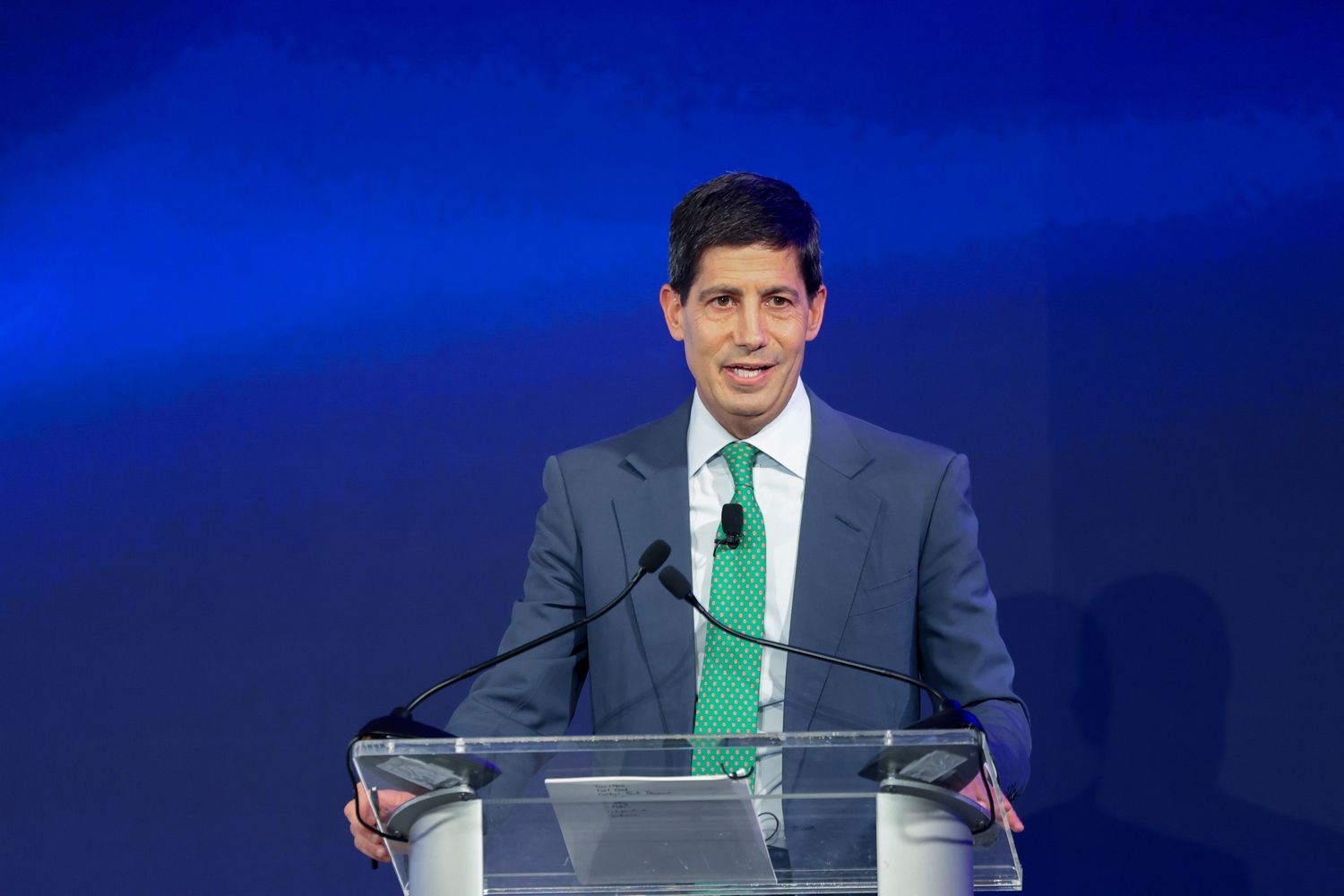
Nine Fed officials now project a 2026 rate hike after Kevin Warsh’s debut FOMC meeting. Here’s what the hawkish pivot means for inflation, mortgages, stocks, and the US economy.
The Federal Reserve delivered one of the most consequential policy surprises of 2026 on June 17, when new Chair Kevin Warsh held interest rates steady at 3.50%–3.75% but allowed the Fed’s updated projections to do the hawkish talking for him. Nine of 18 Federal Open Market Committee members now pencil in at least one rate hike before year-end — a seismic reversal from March, when no policymaker foresaw tightening and the consensus leaned toward cuts.
For households carrying mortgages, credit card balances, and auto loans, the message was unmistakable: the era of cheap money is not returning anytime soon.
The June FOMC Meeting: A Debut That Shook Markets
Warsh’s first FOMC press conference was, by design, terse. The Fed’s policy statement shrank from roughly 300 words to just 130, stripping out the customary forward guidance that markets had relied upon for years. The truncated statement acknowledged that inflation remains “elevated” partly due to energy “supply shocks” — a nod to Middle East conflict disruptions — but offered no explicit signal about the direction of the next move.
Warsh did not submit a dot-plot forecast for himself, an unusual omission that he justified by saying he did not want to lock the institution into a predetermined path. “I did not submit a dot for me,” he said at the press conference. “It’s not helpful in the conduct of policy.”
What his colleagues submitted, however, told the real story. Six of the nine officials who projected a hike penciled in two quarter-point increases — a path that would push the benchmark rate to 4.25%–4.50% by year-end.
Why This Is a Bigger Deal Than It Looks
The June pivot is not merely a shift in one metric. It represents a fundamental change in the Fed’s risk calculus under Warsh’s leadership.
US inflation hit 4.2% year-over-year in May 2026, its highest level in more than three years — double the Fed’s 2% target. The sustained overshoot reflects a combination of factors: geopolitical energy disruptions from the US-Iran conflict, persistent services inflation, and a labor market that has proven more resilient than forecast. May payrolls surprised sharply to the upside for the third consecutive month, erasing the narrative of an imminent growth slowdown.
Bank of America revised its rate forecast following the June meeting, now projecting three quarter-point hikes — bringing the federal funds rate to 4.25%–4.50% — compared to its previous base case of no change through 2026. Deutsche Bank’s chief US economist described the June outcome as a clear signal that “the risk that they might need to raise rates has clearly risen.”
Traders on the Kalshi prediction market are pricing in a 57% probability of at least one hike in 2026, a figure that has climbed sharply since the June FOMC outcome.
Market Reaction: Stocks Fall, Yields Surge
Markets moved swiftly to price in the hawkish shift. On June 17:
- The Dow Jones Industrial Average fell 507 points (-0.98%)
- The S&P 500 dropped 1.21%
- The Nasdaq Composite shed 1.34%
- Two-year Treasury yields surged 16 basis points to 4.21%, their highest level in over a year
- The US Dollar Index posted its best single-day gain in nearly a year
- Gold fell more than 2%, reflecting expectations that higher rates would strengthen the dollar and raise the opportunity cost of holding the metal
The bond market’s reaction was particularly telling. Short-term yields — which are most sensitive to Fed policy expectations — moved significantly more than long-term yields, a pattern that typically accompanies genuine tightening expectations rather than speculative noise.
What Kevin Warsh’s Policy Philosophy Means Going Forward
Warsh arrived at the Fed’s helm with a reputation as a skeptic of its communication strategy. He has long argued that the central bank “stops talking so much” about its decisions and that market participants place “undue weight on Federal Reserve communications.”
His debut press conference was evidence of this philosophy in action. He hinted at fewer press conferences and announced five task forces to review how the Fed communicates, what data it uses, and how it frames inflation — all with the stated goal of making the institution “clear-eyed and focused on the future.”
The practical implication for investors: forward guidance from the Fed will become less reliable as a tool for navigating markets. Under Warsh, data — not Fed communication — will drive positioning.
Warsh’s strategic posture may also be intentionally hawkish for credibility purposes. As BofA analysts noted, it is possible that Warsh is being “strategically hawkish to gain credibility while biding his time to cut later.” The risk, however, is that inflation surprises to the upside and forces the Fed’s hand before any such pivot can occur.
What This Means for Household Finances
Mortgages
The 30-year fixed mortgage rate does not move in lockstep with the federal funds rate but is heavily influenced by Treasury yields. With the 10-year note yield hovering near 4.5% in late June 2026, mortgage affordability remains severely constrained. Any additional Fed tightening would likely push yields — and mortgage rates — higher still.
Credit Cards
Credit card interest rates, which are directly indexed to the prime rate, would rise automatically with any federal funds rate increase. With average credit card APRs already in double digits, a 50–75 basis point tightening cycle would add meaningful costs for consumers carrying revolving balances.
Savings Accounts and CDs
The flip side of higher rates: savings accounts, money market funds, and certificates of deposit would offer more attractive yields. Consumers who have parked cash in these instruments stand to benefit from any tightening.
Auto Loans
New and used vehicle financing costs have already climbed substantially since 2022. Further rate increases would extend the affordability squeeze in the auto market.
The Political Dimension
Warsh was appointed by President Trump after the administration’s prolonged and public confrontation with his predecessor, Jerome Powell, over the pace of rate cuts. The irony is palpable: Warsh was selected with an expectation — at least in some circles — that he would be more accommodative. The June FOMC outcome appeared to disappoint the White House. Trump, speaking to reporters in Paris before departing for a G7 dinner in Versailles, said that higher interest rates “keeps the country down.”
Powell, for his part, remains on the Fed’s governing board and voted at the June meeting in favor of holding rates at approximately 3.6% — a small act of continuity in an institution undergoing significant change.
The Bottom Line
The June 2026 FOMC meeting marks an inflection point in US monetary policy. Kevin Warsh has signaled that the Fed will prioritize inflation credibility over growth accommodation — even if that puts him at odds with the White House, Wall Street’s rate-cut consensus, and households hoping for mortgage relief.
With inflation at a three-year high, a resilient labor market, and nine FOMC members already projecting hikes, the path of least resistance for US interest rates is now upward. The question is not whether the Fed tightens further, but how fast and by how much.
Investors, homeowners, and borrowers would be prudent to model for a federal funds rate of 4.25%–4.50% by the end of 2026 — and to position accordingly.
FAQ
Q: Will the Federal Reserve raise rates in 2026?
A: Nine of 18 FOMC members projected at least one rate hike in their June 2026 dot plot, and Bank of America now forecasts three quarter-point increases by year-end. While not certain, the probability of at least one hike before December has risen sharply.
Q: Who is Kevin Warsh and why does he matter?
A: Kevin Warsh is the new Chair of the Federal Reserve, appointed by President Trump in 2026. His debut FOMC meeting in June delivered a hawkish surprise, with a dramatically shortened policy statement and a press conference that signaled a move away from traditional forward guidance.
Q: How does the Fed dot plot work?
A: The dot plot is a chart showing each FOMC member’s projection for where the federal funds rate should be at the end of each year. In June 2026, nine members projected at least one rate hike, a significant shift from March when no members foresaw tightening.
Q: How will a Fed rate hike affect mortgage rates?
A: Mortgage rates are primarily tied to 10-year Treasury yields rather than the federal funds rate directly, but Fed tightening pushes Treasury yields higher, which feeds through to mortgage costs. Further hikes in 2026 would likely keep 30-year fixed rates elevated or push them higher.
Discover more from The Monitor
Subscribe to get the latest posts sent to your email.

Elon Musk Calls Mukesh Ambani the “Real Boss of India” Over Alleged Monopoly Concerns

Legal Pioneer and Defender of Justice: The Life, Works, and Legacy of Navi Pillay

Inside the Modern Republican Party Platform: Tax Policy, Immigration, and Governance

Anne Carson: Genius of Hybrid Forms and 2026 Nobel Laureate in Literature

Analyzing the Republican Voter Enthusiasm Gap: Turnout Metrics and Polling Data

The West Wing Legacy: Why the Political Drama Is More Relevant Than Ever

Remembering Kianna Underwood: The Nickelodeon Actress Behind “All That” and “Little Bill”

Min Ah: The Global Impact and Rising Popularity of the K-Drama Star

Pakistan Warns UN Security Council of AI Risks to Global Peace and Equality

Best iPhone 18 Pro Max Cases: Premium Protection for Apple’s 2026 Flagship
Pakistan Warns UN Security Council of AI Risks to Global Peace and Equality

Bloodhound Q50: Remembering the Tragic Loss of Chicago’s Rising Drill Star

Remembering Eliana Moreno: The Legacy of NBC LA’s “Eli in the Heli”

Horror Box Office Economics: ROI, Market Share and the 2026

iOS 27 Release Date & Siri AI: The Ultimate Tech News Guide for iPhone 18 Users

Club América’s Financial Playbook: The Economics and Valuation of Latin American Football
Min Ah: The Global Impact and Rising Popularity of the K-Drama Star

Fortress Diplomacy: How China’s Secretive Hongqi N701 Matches America’s Legendary “Beast”
-

 Featured5 years ago
The Right-Wing Politics in United States & The Capitol Hill Mayhem
-

 News5 years ago
Prioritizing health & education most effective way to improve socio-economic status: President
-

 China5 years ago
Coronavirus Pandemic and Global Response
-

 Canada5 years ago
Socio-Economic Implications of Canadian Border Closure With U.S
-

 Democracy5 years ago
Missing You! SPSC
-

 Conflict5 years ago
Kashmir Lockdown, UNGA & Thereafter
-
Democracy5 years ago
President Dr Arif Alvi Confers Civil Awards on Independence Day
-

 Digital6 years ago
Pakistan Moves Closer to Train One Million Youth with Digital Skills