
Cricket
Top 10 Reasons of Failure for Babar Azam as Pakistan Captain


Babar Azam is one of the most talented batsmen in the world. He has a beautiful technique and can score runs in all formats of the game. However, he has not been able to translate his brilliance into team success as Pakistan captain.
There are several reasons for this. Some of the most common factors include:
1. Poor bowling attack
Pakistan’s bowling attack has been one of the weakest in the world in recent years. This has put a lot of pressure on Babar and the batsmen to score big runs.
2. Inconsistent selection
Pakistan has been guilty of inconsistent selection in recent years. This has made it difficult for Babar to build a settled team.
3. Lack of experience
Babar is a relatively young captain. He is still learning the ropes of captaincy.
4. Lack of leadership
Babar is not a natural leader. He is not a vocal captain and he does not inspire his players.
5. Lack of aggression
Babar is not an aggressive captain. He is too cautious and he does not take risks.
6. Lack of tactical nous
Babar is not a tactically astute captain. He often makes poor decisions on the field.
7. Lack of communication
Babar does not communicate well with his players. This has led to several problems on and off the field.
8. Lack of support
Babar has not received the support he deserves from the Pakistan Cricket Board (PCB). The PCB has been critical of his captaincy and has not given him the backing he needs.
9. Lack of confidence
Babar has lost the confidence of his players. This is a major problem that he needs to address.
10. Lack of motivation
Babar does not seem to be motivated to captain Pakistan. He looks tired and uninterested in the job.
These are just some of the reasons why Babar Azam has failed as Pakistan’s captain. If he wants to be successful, he needs to address these issues.
In addition to the above, I would also add that Babar is too soft on his players. He needs to be more demanding and hold his players accountable for their performances. He also needs to be more consistent with his team selection. He needs to pick a team and stick with it, even if they are not performing well.
Finally, Babar needs to learn to be more aggressive in his captaincy. He needs to take risks and try to win matches. He needs to be more proactive and not be afraid to make changes.
If Babar can address these issues, then he has the potential to be a successful Pakistan captain. However, if he does not, then he will continue to fail.
I would also like to add that Babar is not the only one to blame for Pakistan’s failures. The PCB is also to blame. They have not provided Babar with the support he needs. They have also been critical of his captaincy, which has not helped.
The PCB needs to do more to support Babar. They need to give him the backing he needs and they need to be more positive about his captaincy. They also need to address the problems with the bowling attack and the selection policy.
If the PCB can do these things, then Pakistan has a chance of being successful in the future. However, if they do not, then Pakistan will continue to be a struggling team.


Discover more from The Monitor
Subscribe to get the latest posts sent to your email.



Breaking News
Pakistan vs New Zealand T20 World Cup 2026 Super 8 Opener Abandoned: Rain Washes Out Colombo Clash, Both Teams Share One Point
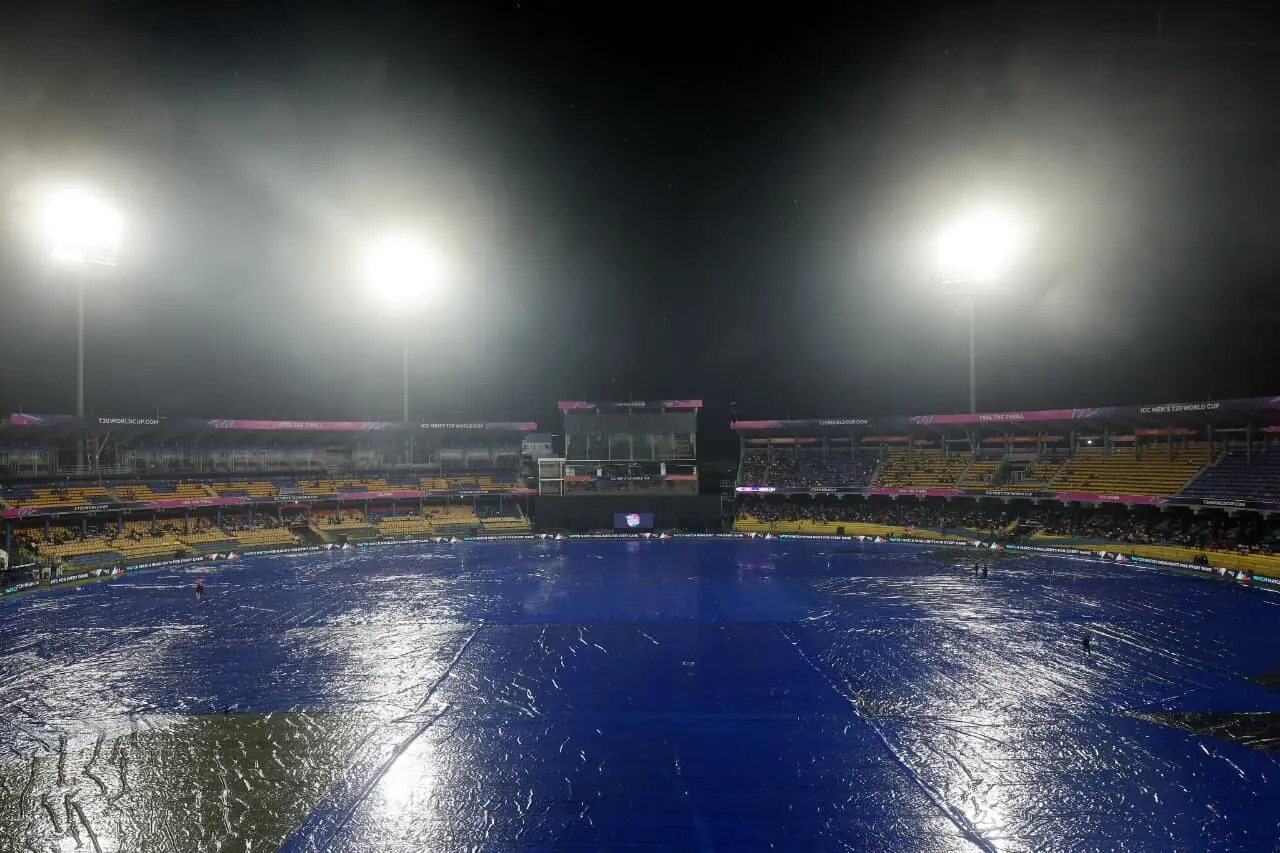
The stage was set. The toss was done. The match never was.
At the R. Premadasa Stadium on Saturday evening, the ICC Men’s T20 World Cup 20op26’s Super Eights stage was supposed to roar to life with one of world cricket’s most compelling rivalries. It never got the chance. The rain that arrived as a drizzle during the toss, turned obstinate through the early evening, and finally turned ferocious well past the cut-off window has now had the last word: the match between Pakistan and New Zealand has been officially abandoned, with both teams awarded one point each. Not a ball was bowled. The impact of rain on Pakistan vs New Zealand Super 8 semifinal chances in 2026 has gone from a hypothetical to a harsh, immediate reality.
Pakistan captain Salman Ali Agha had won the toss and opted to bat — a decision rendered entirely academic within minutes. His New Zealand counterpart Mitchell Santner — back from illness during the group stage — had no sooner shaken hands than the heavens intervened. More than three hours later, the umpires called it. The covers stayed on. Colombo wins. Cricket loses.
Table of Contents
Match Buildup and Pakistan’s Toss Decision in Rainy Colombo Conditions
Pakistan’s choice to bat first is, in isolation, sound logic at the R. Premadasa. Historically, sides setting totals at this venue have the better of it — the surface offers predictable bounce in the early overs before the dew and wear introduce variables that spin bowlers can exploit. But batting first in a potentially shortened contest is a different equation. If overs are reduced drastically, Pakistan’s preferred strategy of building through their top order becomes a liability, while New Zealand’s deep hitting — Finn Allen, Glenn Phillips, and Jimmy Neesham — is designed exactly for the chaos of a five-or-ten-over blitz.
It is worth noting that Pakistan have played all their tournament matches in Sri Lanka, giving them a granular familiarity with local conditions that New Zealand, based in India for the group stage, simply cannot match. The Kiwis swept past Afghanistan, the UAE, and Canada in Chennai and Ahmedabad, where flat, batting-friendly tracks invited attacking play. The shift to Colombo — spinning tracks, higher humidity, evening dew — is a genuine tactical recalibration. Lockie Ferguson, Ish Sodhi, and a fully recovered Santner are all back in the XI, signalling New Zealand’s intent to attack spin and pace.
Pakistan have made an intriguing selection in Fakhar Zaman, brought in for the spin-heavy conditions, while the squad’s internal soap opera continues: Babar Azam, once the unquestioned centrepiece of Pakistan’s batting, is batting at number four, with returns of 15, 46, and 5 in his three group-stage outings. Shaheen Shah Afridi is absent from the playing XI — a decision that generated controversy against India and remains eyebrow-raising here, given Colombo’s humidity often aids swing bowlers. According to ESPNcricinfo’s live coverage, Babar’s T20I strike rate has been just over 120 in the number four role — serviceable, but not the explosiveness Pakistan need at the Super 8 level.
⛔ Match Abandoned: Full Timeline of the Rain-Ravaged Evening in Colombo
What began as a frustrating delay became a washout of the entire match. Here is the confirmed timeline:
- Scheduled start: 7:00 PM local time (13:30 GMT)
- Rain onset: During the toss; drizzle escalated to sustained, heavy rainfall
- Covers on: Entire ground — pitch and outfield — sealed under blue sheets
- Overs begin being lost: From 8:10 PM local time
- Cut-off for a 5-over contest: 10:16 PM local time (IST 10:46 PM)
- Official abandonment: Match called off after the cut-off window expired without play
- Result: No Result — Pakistan 1 point, New Zealand 1 point
According to Cricbuzz’s radar analysis, heavy spells arrived in successive waves with no meaningful window of relief. AccuWeather had forecasted a 75% chance of rain for the evening, with thunderstorm probability spiking to 41% around match time — data that was available 24 hours ago, yet the ICC pressed ahead without a reserve day contingency for this stage. The forecast proved grimly accurate.
The Colombo R. Premadasa Stadium pitch report after the rain delay is now, sadly, a collector’s item — a pitch no one ever batted or bowled on during this match. The covers protected the surface throughout, but the evening’s cricket was irretrievably lost. For fans who had bought tickets, made travel arrangements, and stayed glued to weather apps all day hoping for a break, this was the worst possible outcome.
The Reserve Day Question: Why There Was Never a Safety Net
The abandonment was always the worst-case scenario — and as per the ICC’s official playing conditions, there was never a reserve day to fall back on. Super 8 matches in the T20 World Cup 2026 have no reserve day provision. That privilege is reserved solely for semi-finals and the final. Once the cut-off window expired at 10:16 PM local time without the minimum five overs per side being bowled, the match was gone — and one point each was the only possible result.
The final outcome breakdown:
| Scenario | Outcome |
|---|---|
| Full 20 overs per side | Normal result |
| Minimum 5 overs per side completed | DLS result declared |
| Less than 5 overs per side | Match abandoned, 1 point each |
| Tonight’s result | Match abandoned — PAK 1 pt, NZ 1 pt ✅ |
The implications now ripple through Super 8 Group 2, which also contains England and Sri Lanka. For Pakistan, who suffered a 61-run mauling from India in the group stage, a shared point is a bitter pill but not a fatal one — yet. For New Zealand, similarly stung by South Africa, the calculus is identical. Both teams are now under immediate pressure heading into their remaining two Super 8 fixtures. There is no more margin for dropped points. Wins against England and Sri Lanka respectively are not preferences — they are requirements.
Tactical Reset: What Both Teams Must Do Now
The abandonment changes the tactical conversation entirely. Rather than analysing what might have happened tonight, both camps must now urgently recalibrate for their next fixtures — and for very different reasons.
New Zealand’s power-hitting depth — Allen, Phillips, Neesham, Daryl Mitchell — remains their greatest weapon entering the next match. In a group where NRR could yet separate sides tied on points, New Zealand cannot afford to grind out low-scoring wins; they need dominant ones. Their bowling, anchored by a recovered Santner and Lockie Ferguson, must also be decisive from ball one.
Pakistan’s situation is arguably more precarious. The toss decision to bat — tactically reasonable on the Premadasa pitch — is now irrelevant, but the selection controversies it highlighted are not. Shaheen Shah Afridi’s absence from the playing XI, Babar Azam’s modest returns at number four, and the team’s wider batting fragility against top-tier pace remain unresolved questions that will face real scrutiny in their next Super 8 outing.
New Zealand’s strategy vs Pakistan in reduced-overs match formats remains a useful template for how the Kiwis will approach the rest of the Super 8 stage: hit spin early, target the powerplay hard, deploy pace in surgical spells. It is a method that has worked in 24 T20Is between these sides across the past 30 months. ESPNcricinfo notes that Jacob Duffy takes a Pakistan wicket every 10.5 deliveries — a striking indicator of New Zealand’s quiet, consistent edge in this fixture format. Neither team got to prove anything tonight. The next game is where the reckoning begins.
T20 World Cup 2026 Super 8 Points Table: Group 2 After the Washout
The T20 World Cup 2026 Super 8 points table now shows Pakistan and New Zealand deadlocked after Game 1 — and both trailing any team that wins their opener cleanly tonight. Here is the updated Group 2 snapshot following the abandonment:
| Team | Played | Won | Lost | NR | Points | NRR |
|---|---|---|---|---|---|---|
| Pakistan | 1 | 0 | 0 | 1 | 1 | 0.000 |
| New Zealand | 1 | 0 | 0 | 1 | 1 | 0.000 |
| England | 0–1 | TBD | TBD | TBD | TBD | — |
| Sri Lanka | 0–1 | TBD | TBD | TBD | TBD | — |
NRR for PAK and NZ shows 0.000 as no balls were bowled. England and Sri Lanka standings update after their opener.
The arithmetic is unforgiving: with only three games per team in the Super 8 stage, Pakistan and New Zealand have already used one of their three lifelines — and got nothing to show for it. A win in Game 2 becomes mandatory, not just desirable. A second washout or, worse, a defeat could effectively end semi-final dreams before the final group round. This is the pressure that a single rained-out evening in Colombo has manufactured — and it will not ease until both teams have bat in hand again.
Historical Context: PAK vs NZ Rain-Affected Games in T20 World Cups
Rain and high-stakes Pakistan-New Zealand encounters are not strangers. At the 2022 T20 World Cup semi-final in Sydney, the two sides contested a tight match that, while not rain-affected, showcased how narrow the margins are between them. Pakistan’s T20 World Cup history in Sri Lanka specifically has been colourful: the 2012 edition saw multiple weather interruptions, and the island’s southwest monsoon climate has long been cricket’s most capricious scheduling adversary.
What makes tonight’s washout particularly sharp is context: Pakistan trained without a practice session before this match because heavy rain cancelled their preparation earlier in the week. They arrived cold, slightly unsettled, with selection controversies unresolved — and left with the same questions unanswered, because the rain denied them even the catharsis of a result. New Zealand, by contrast, were boosted by Santner’s recovery and the return of their full-strength squad. Weather, it turns out, has been as much Pakistan’s opponent this week as the Black Caps — and on Saturday night, weather was the only winner.
The Bigger Picture: Climate Change and the Cricket Economy in Colombo
It is worth pausing on the broader picture, because the sight of world cricket’s showpiece Super Eights being delayed by persistent rain is not merely a scheduling inconvenience — it is a symptom of a deeper structural issue that cricket’s administrators have been slow to confront.
Sri Lanka’s climate is becoming less predictable. The island sits in the path of both northeast and southwest monsoons, and meteorologists have documented increasing rainfall variability linked to climate patterns in the Indian Ocean. Colombo’s February weather has historically been one of the drier windows in the calendar — precisely why the ICC scheduled the Super Eights here. But “historically” is doing heavy lifting in an era of accelerating climate disruption.
The economic stakes are considerable. A washed-out or significantly reduced Pakistan vs New Zealand game means fewer overs of premium broadcast inventory, lower advertising yields for official partners, and disappointed fans — many of whom have travelled from South Asia and the Pacific to watch this match. Pakistani and New Zealand cricket boards collectively depend on ICC distributions and broadcast revenues; a rain-affected Super 8 stage in a major tournament is, in financial terms, not trivial. The Financial Times has previously noted that ICC events generate upwards of $500 million in broadcast revenue per cycle — a figure that makes every lost over a line item someone, somewhere, is computing.
The ICC’s response — scheduling matches at this stage without reserve days, relying on a 90-minute buffer window — feels increasingly inadequate. If climate trends continue, cricket in tropical venues will need more robust contingency planning: covered facilities, reserve days extended beyond the knockouts, or venue flexibility protocols built into hosting contracts from day one.
Fan Reactions and What Comes Next
Social media did not wait for the official abandonment announcement to erupt. Pakistani fans — with characteristic fatalism sharpened by a week of rain-cancelled training sessions — swiftly declared that the weather was doing Shaheen Shah Afridi’s job: keeping the opposition from playing. New Zealand supporters, meanwhile, took quiet comfort in the point; they know their power-hitting lineup would have thrived in any shortened format, but a shared point without risk of defeat is not the worst outcome from a cricketing insurance perspective.
The harder truth is this: neither team can now afford anything other than wins in their remaining two Super 8 fixtures. For Pakistan, the ghost of that 61-run group-stage thrashing by India lingers. For New Zealand, South Africa’s group-stage superiority over them left doubts about their big-game composure. Both teams wanted this match as a statement opener. Instead, they got a weather bulletin.
The ICC, for its part, faces mounting questions about scheduling wisdom and contingency planning in an era of increasingly volatile tropical weather patterns. One washed-out Super 8 match is a news story. Two is a crisis. Three is a structural failure. Saturday night in Colombo was, at minimum, an urgent warning shot.
Colombo’s sky owes cricket fans a reckoning — and a long, uninterrupted evening of elite cricket to pay the debt. The next time Pakistan and New Zealand share a ground at this tournament, there will be no room for postponement. From the first ball, everything will matter.
❓ FAQ: Key Questions Answered
Was the Pakistan vs New Zealand T20 World Cup 2026 Super 8 match abandoned? Yes. The match was officially abandoned without a ball being bowled due to persistent, heavy rain at R. Premadasa Stadium, Colombo. Both Pakistan and New Zealand have been awarded one point each.
Is there a reserve day for Super 8 matches in T20 World Cup 2026? No. According to the ICC’s official playing conditions, reserve days apply only to semi-finals and the final. Super 8 matches must be completed within the allocated match day or result in a shared point — which is exactly what happened tonight.
What was the minimum overs required for a result in PAK vs NZ? A minimum of five overs per side needed to be bowled for a DLS result to be declared. The cut-off time for starting a 5-over-a-side contest was 10:16 PM local time. That window expired without play, triggering the official abandonment.
How does the washout affect Pakistan’s Super 8 semifinal chances in 2026? Pakistan now have 1 point from 1 match. With England and Sri Lanka also in Group 2 and two matches remaining each, Pakistan must win both of their remaining games to guarantee a semi-final berth. Any further dropped points could prove fatal to their campaign.
How does the washout affect New Zealand’s Super 8 semifinal chances in 2026? Identical situation to Pakistan — 1 point from 1 match, two games remaining. New Zealand must also win both their upcoming Super 8 fixtures. The margin for error is now zero.
What is the Colombo R. Premadasa Stadium pitch like after the rain? The pitch was never used and remained under covers throughout the evening. For future matches at the venue, ground staff will need to assess moisture levels carefully. Historically, the Premadasa surface — when dry — favours spin and offers predictable bounce in the powerplay.
Where can I follow Pakistan and New Zealand’s remaining Super 8 fixtures? Live scores, schedules, and match updates are available on ESPNcricinfo and the ICC’s official website.
Discover more from The Monitor
Subscribe to get the latest posts sent to your email.
Analysis
Pakistan’s Humiliating Defeat to India: A Catalog of Captaincy Failures at T20 World Cup 2026

India’s 61-run demolition of Pakistan in Colombo exposes systematic flaws in team selection, tactical nous, and leadership under Salman Agha
When Salman Agha won the toss and elected to bowl first under the Colombo floodlights on Sunday evening, few could have predicted the scale of Pakistan’s capitulation that would follow. India’s comprehensive 61-run victory—their eighth win in nine T20 World Cup encounters against their arch-rivals—was not merely a defeat. It was an autopsy of Pakistan cricket’s endemic problems: mystifying team selections, baffling tactical decisions, and a captaincy that appears chronically underprepared for the intensity of India-Pakistan clashes.
The scoreline tells part of the story. India posted 175/7 in their 20 overs, with Ishan Kishan’s blistering 77 off 40 balls serving as the cornerstone. In response, Pakistan crumbled to 114 all out in just 18 overs, their batting lineup disintegrating like a sandcastle before the tide. But the numbers alone cannot capture the deeper malaise—the inexplicable decision-making that has become a hallmark of Pakistan’s recent tournament play.
Table of Contents
The Toss That Lost the Match
Salman Agha won the toss and decided to bowl first on what he described as a “tacky” surface, believing it would assist bowlers in the early overs. The logic appeared sound on paper: exploit early movement, restrict India to a manageable total, and chase under lights as the pitch improved. India’s captain Suryakumar Yadav, by contrast, indicated they would have batted first anyway, expecting the pitch to slow down enough to counter any dew advantage later.
The decision proved catastrophic. On spin-friendly Colombo tracks that historically become harder to bat on as matches progress, Pakistan handed India first use of the surface. As events unfolded, 175 became the highest score in India-Pakistan T20 World Cup history—hardly the restricted total Agha had envisioned. Worse, when Pakistan batted, the pitch offered turn and variable bounce that rendered strokeplay treacherous.
The toss decision encapsulated a broader failure of match awareness. Senior analysts on ESPN Cricinfo noted that if pitches are tacky to begin with, they tend to get better as temperatures drop at night—precisely the opposite of Agha’s reasoning. This fundamental misreading of conditions set the tone for what followed.

The Selection Mysteries: Fakhar, Naseem, and Nafay
Perhaps nothing better illustrates Pakistan’s rudderless approach than the team selection. Three players with proven credentials against India—or specific skills suited to Colombo conditions—were inexplicably relegated to the bench.
Fakhar Zaman, one of Pakistan’s most destructive limited-overs batsmen, watched from the sidelines despite his storied history against India. Fakhar has played 117 T20Is, scoring 2,385 runs at a strike rate of 130.75, and his 2017 Champions Trophy century against India remains one of Pakistan cricket’s defining moments. His aggressive batting style and ability to play pace and spin with equal fluency made him an obvious selection for the high-pressure cauldron of an India clash. Yet the team management persisted with Babar Azam at number four—a batsman who managed just 5 runs off 7 balls before being bowled by Axar Patel and whose recent form against India has been woeful.
Naseem Shah, the young pace sensation who has repeatedly demonstrated his ability to extract bounce and movement even from docile surfaces, was another puzzling omission. While Pakistan’s squad featured Naseem as a key pace option alongside Shaheen Shah Afridi, the playing XI instead deployed Faheem Ashraf—a bowler whose international returns have been modest at best. Naseem’s pace and ability to hit the deck hard would have provided the ideal counterpoint to India’s aggressive openers, particularly on a pitch offering assistance to quicker bowlers in the early overs.
Khawaja Nafay, named in the 15-man squad as a wicketkeeper-batsman option, similarly failed to make the cut. His exclusion was particularly glaring given Pakistan’s top-order fragility and the presence of two specialist wicketkeepers (Usman Khan and Sahibzada Farhan) in the lineup already.
The cumulative effect was a team that looked ill-equipped for the challenge, lacking both firepower and balance.
Spinner Overload: Too Many Cooks
If the batting order selections raised eyebrows, Pakistan’s bowling composition bordered on the incomprehensible. The team fielded a staggering array of spin options: Saim Ayub (part-time left-arm orthodox), Abrar Ahmed (leg-spinner/googly specialist), Shadab Khan (leg-spinner), Mohammad Nawaz (left-arm orthodox), Usman Tariq (mystery spinner), and captain Salman Agha himself (off-spinner).
Six spin options in a T20 match. The redundancy was staggering.
To make matters worse, Pakistan bowled five overs of spin in the powerplay alone—only the 13th time in T20 World Cup history that a fifth spin over has been bowled inside a powerplay. While the Colombo surface offered turn, this approach played directly into India’s hands. Kishan, a devastatingly effective player of spin, feasted on the lack of variety. Shadab Khan, Abrar Ahmed, and Shaheen Shah Afridi combined to concede 86 runs in six overs—a hemorrhaging of runs that effectively ended the contest as a spectacle.
The tactical poverty was evident in specific passages of play. Pakistan bowled Shadab Khan to two left-handed batters and brought Abrar Ahmed back despite him having a “stinker” of a night. In the death overs, rather than employing spin to squeeze India, Shaheen Shah Afridi was brought back for the final over and plundered for 16 runs, allowing India to surge past 175.
The spinner overload wasn’t merely a tactical misstep—it revealed a captain uncertain of his resources and unwilling to commit to a coherent plan.
The Batting Order Blunder: Agha Before Babar
Among the more peculiar decisions was the batting order itself. Salman Agha, the captain and an all-rounder by trade, was promoted to number three—ahead of Babar Azam, Pakistan’s most accomplished batsman.Even players like Mohammad Haris , Mohammad Rizwan ,Minhas were not picked for the squad , It is big blunder made by Aquib Javed and others who slected the squad . Pakistan team did not select the aggressive players like Abdul Samad and already wasted talented Asif Ali and Irfan Khan Niazi . There was none who could hit six to shift the pressure and speed up momentum . The chequred history of defeats against India in world cup still hounds and same happened today .Will anybody take the responsibility of poor selection and worst captaincy to step down and fix the issues . Even the smaller and new teams like,Afghanistan ,USA , Italy , Zimbabwe performed well and gave tough time to opponents . When will they learn the lesson . They prove to be a wall of Sand against India in world cup encounters disappointed and hurting the feelinhs and dreams of the fans .
The rationale is unclear. Agha’s T20 record is respectable but hardly stellar; his primary value lies in his ability to bowl tidy off-spin and provide lower-order impetus. Elevating him above Babar—who, despite recent struggles, remains Pakistan’s premier accumulator—suggested either a crisis of confidence in Babar or a fundamental misunderstanding of optimal batting orders.

When Pakistan’s chase began, the decision’s folly became immediately apparent. Hardik Pandya dismissed Sahibzada Farhan for a duck in his first over, and Jasprit Bumrah then removed both Saim Ayub and Salman Agha in quick succession. Pakistan found themselves at 13 for 3 within two overs, with their captain having contributed a meager 4 runs. Babar entered at the fall of the third wicket and lasted just 16 balls before departing for 5, caught between the need for consolidation and the mounting run rate.
The structural flaw was glaring: by promoting Agha, Pakistan had effectively wasted a top-order slot. Had Babar batted at three or as opener—his natural positions—he might have anchored the innings through the powerplay carnage. Instead, Pakistan’s best batsman arrived with the game already slipping away, the asking rate climbing, and pressure mounting exponentially.Pakistan failed to dominate both the pace and Spin attack of India .
Kishan’s Masterclass and India’s Clinical Execution
To credit Pakistan’s failings alone would be to diminish India’s superlative performance. Ishan Kishan’s 77 off 40 balls, featuring 10 fours and 3 sixes, set the template for an innings of controlled aggression. Kishan’s ability to dominate Pakistan’s spin-heavy attack—particularly his audacious strokeplay against Abrar Ahmed and Mohammad Nawaz—showcased the chasm in class and preparation between the two sides.
Captain Suryakumar Yadav contributed 32 off 29 balls, while Shivam Dube’s 27 off 17 deliveries and Tilak Varma’s 25 off 24 balls provided crucial support. India’s depth allowed them to absorb the twin blows of Abhishek Sharma’s early dismissal and Hardik Pandya’s duck, building partnerships and accelerating at will.
With the ball, India were relentless. Hardik Pandya and Jasprit Bumrah shared three early wickets, reducing Pakistan to 38/4 at the end of the powerplay. Axar Patel claimed two crucial scalps, including Babar Azam, while Varun Chakaravarthy’s 2 for 17 included back-to-back dismissals of Faheem Ashraf and Abrar Ahmed. The variety and precision of India’s attack—three seamers, three spinners, all delivering match-winning spells—stood in stark contrast to Pakistan’s scattergun approach.
A Pattern of Captaincy Failures
Salman Agha’s tenure as Pakistan captain has been brief, but the India match crystallized a troubling pattern. This was not an isolated aberration but rather symptomatic of deeper issues within Pakistan cricket: reactive rather than proactive thinking, selection driven by sentiment rather than form, and tactical naivety at crucial junctures.
Former Pakistan cricketers have been scathing. Ahead of the match, Rashid Latif, Mohammad Amir, and Ahmed Shehzad openly questioned Babar’s continued place in the team, highlighting concerns about his strike rate and diminishing returns in high-pressure games. Their prophecies proved prescient: Babar’s failure was emblematic of a team trapped between nostalgia for past glories and the brutal demands of modern T20 cricket.
The Pakistan Cricket Board’s instability has not helped. Frequent changes in leadership, coaching staff, and selection philosophy have created an environment where mediocrity is tolerated and accountability is scarce. This instability trickles down to team selection and on-field strategy, producing the kind of rudderless performance witnessed in Colombo.

What Now for Pakistan?
Pakistan’s path to the Super Eight stage remains viable but fraught with peril. They must now beat Namibia in their final group game to secure progression, a task that should be straightforward but, given recent form, carries no guarantees.
Beyond results, however, Pakistan faces deeper questions. Can Salman Agha learn from this debacle and impose a coherent tactical identity? Will the selectors have the courage to drop underperforming big names like Babar in favor of form players like Fakhar? And can the PCB provide the stability necessary for long-term planning rather than lurching from crisis to crisis?
The answers will define not only this tournament but Pakistan cricket’s trajectory for years to come. For now, the evidence suggests a team—and a system—in disarray.
Key Takeaways
- Toss Blunder: Pakistan’s decision to bowl first on a pitch that would deteriorate backfired spectacularly
- Selection Errors: Fakhar Zaman, Naseem Shah, and Khawaja Nafay inexplicably benched despite strong credentials
- Spinner Overload: Six spin options diluted Pakistan’s bowling attack, allowing India to dominate
- Batting Order Chaos: Salman Agha promoted above Babar Azam defied logic and wasted a top-order slot
- Systemic Issues: PCB instability and lack of accountability continue to undermine team performance
Match Summary:
India 175/7 (20 overs) – Ishan Kishan 77 (40), Suryakumar Yadav 32 (29); Saim Ayub 3/25
Pakistan 114 (18 overs) – Usman Khan 44 (34); Hardik Pandya 2/16, Jasprit Bumrah 2/17, Varun Chakaravarthy 2/17
Result: India won by 61 runs
About the Match: The encounter at R. Premadasa Stadium marked India’s eighth win over Pakistan in nine T20 World Cup meetings, reinforcing their psychological dominance in cricket’s most-watched rivalry. The result secured India’s passage to the Super Eight stage while leaving Pakistan’s campaign hanging by a thread.
Discover more from The Monitor
Subscribe to get the latest posts sent to your email.

The roar of the crowd in Rawalpindi was less a cheer for a victory and more a collective, heaving sigh of relief for a nation. When Babar Azam punched that ball through the covers to bring up his landmark century in the 2nd ODI Rawalpindi against Sri Lanka, it felt like the end of the most excruciating period of his already brilliant career. For months, the phrase Babar Azam Century Drought had haunted every analysis, every post-match show, and every fan’s worried conversation.
But this innings wasn’t just a number—it was a definitive roar from the Babar Azam Maestro, silencing the ridiculous whispers of doubt and catapulting him straight into the history books by tying the legendary Babar Azam Saeed Anwar Record. This hundred, achieved with that classic Babar grace under the most intense Pressure imaginable, wasn’t just a blip on the scorecard; it was the powerful re-affirmation that the world’s premier White-ball cricket batsman still has the unique heart and talent required to single-handedly win a match. The drought, often dramatically and unfairly labelled the 83 Innings Failure, now stands merely as a necessary struggle preceding a monumental historical achievement: matching Saeed Anwar’s formidable tally of Pakistan ODI Centuries.
Table of Contents
🤯 The Weight of 83: Anatomy of the Longest Babar Azam Century Drought
If you want to know the true measure of a champion, don’t look at their peaks—look at how they survive the absolute pits. For a player who literally sets global benchmarks for consistency, an 83-innings stretch across all formats without a triple-digit score felt like an eternity. Honestly, the narrative began to get ugly: was the Maestro losing his signature touch? Was the unforgiving burden of expectation and captaincy simply too much?
The psychological impact of a run like that is impossible for us to truly comprehend. Every time he got out in the 70s or 80s, the public debate reached a fever pitch. Unlike a younger or lower-ranked player, the expectation on Babar is not just to score runs, it’s to score match-winning hundreds. This entire period of the 83 Innings Failure was a severe, public test of his incredible mental Resilience. It’s the kind of pressure few players in the modern game have had to live through. Babar carried the emotional weight of a cricket-mad country on his shoulders, and the longer the Babar Azam Century Drought persisted, the heavier that collective weight became. The century in the 2nd ODI Rawalpindi was thus more than a score; it was a deeply personal, cathartic, and collective release of tension.
🖼️ The Rawalpindi Masterpiece: Why This Century Was Different
The innings itself was exactly what we’ve come to expect from Babar Azam: authoritative, beautiful, risk-averse, yet relentlessly punishing against anything loose. It wasn’t some ugly, desperate slog for the line; it was a measured work of art built on an absolutely flawless technique.
On a surface at the Rawalpindi Cricket Stadium that demanded respect and concentration, Babar showed the world why he is considered an artist with the bat. His timing was crisp, and the sight of his majestic cover drive was truly Poetry in Motion. He expertly picked up singles and doubles, never allowing the Sri Lankan bowlers to settle, before finally shifting gears and accelerating seamlessly in the late overs. The key factor here is that he did this under pressure, helping the team set a truly challenging total that ultimately proved decisive. This was the performance of a genuine Match-winner, demonstrating both the incredible patience to absorb pressure early on and the explosive power to dominate when it mattered most.
👑 The Historical Context: Tying the Pakistan ODI Centuries Record
This is the part that will be engraved in stone. By scoring his 20th ODI century, Babar Azam drew level with the legendary Saeed Anwar for the most Pakistan ODI Centuries.
| Player | ODI Centuries | Innings Taken |
| Saeed Anwar | 20 | 244 |
| Babar Azam | 20 | $\approx 118$ |
The comparative speed is simply astonishing. Saeed Anwar will always be one of the most iconic stroke-makers Pakistan has ever produced, but Babar has reached the very same summit in almost half the innings. This statistic isn’t just trivia; it powerfully highlights the generational shift and Babar’s sheer, unparalleled efficiency in White-ball cricket. The Babar Azam Saeed Anwar Record is more than a simple numerical tie; it perfectly symbolizes Babar’s arrival as the modern, high-volume standard-bearer for Pakistan ODI Centuries, brilliantly continuing the legacy of attacking, world-class batting established by players like Anwar decades ago.
🔢 From ‘Failure’ to ‘Fastest’: The Statistical Rebuttal of the Maestro
The media noise and public fixation on the Babar Azam Century Drought—the so-called 83 Innings Failure—conveniently ignored his underlying, world-class excellence. Even during that drought, Babar was consistently churning out vital half-centuries, maintaining a truly elite batting average well above 50. The fact remains: Babar Azam is historically among the fastest players in the game’s history to reach numerous career milestones (2000, 3000, 4000, and 5000 ODI runs). This century acts as the perfect, powerful statistical rebuttal to all the negativity. It fully reaffirms his remarkable conversion rate compared to his peers and puts him firmly back where he belongs—among the global ODI elite, where his average and consistency are genuinely rivalled by only a handful of players in history.
🚀 Conclusion: What’s Next for the Maestro?
The century in the 2nd ODI Rawalpindi wasn’t just a personal win; it was a desperately needed, huge injection of confidence for the entire Pakistani team. The breaking of the Babar Azam Century Drought clears the mental slate for the captain and star batsman, allowing him to focus solely on the team’s massive goals ahead. With the Babar Azam Saeed Anwar Record now tied, the obvious next step—and the next guaranteed headline—will be breaking it. The Babar Azam Maestro has just proven that his mental resilience is every bit as potent and reliable as his signature cover drive. This historic, drought-ending innings serves as a loud reminder that true champions don’t stop scoring runs; they merely take a powerful, visible breath before their next statement of dominance. For Babar Azam, the agonising wait is finally over. The real, defining legacy, however, is just getting started.
Discover more from The Monitor
Subscribe to get the latest posts sent to your email.

Lessons for the World from Tiny Hungary

Millions of Burmese Struggle to Find Safety in Thailand

What Is the No Kings Protest? Inside Minnesota’s Historic 2026 Flagship Rally Against Authoritarianism

OPINION | Global South Peace Efforts: How the World’s New Mediators Are Reshaping Diplomacy in 2026

Singapore’s Bold Bid to Become Asia-Pacific’s Gold-Trading Powerhouse: Why the City-State Is Racing to Capture Bullion Liquidity and Central-Bank Vaults

The Private Firms Powering China’s Military AI Push

Trump Extends Iran Talks Deadline amid Sell-Off on Wall Street

Indonesia’s Danantara Shifts to Investment Phase, Targets 7% Returns — Sovereign Wealth Fund Enters Deployment Era Under Prabowo’s Ambitious Vision

AI is dressing up greed as progress on creative rights
Singapore’s Bold Bid to Become Asia-Pacific’s Gold-Trading Powerhouse: Why the City-State Is Racing to Capture Bullion Liquidity and Central-Bank Vaults
OPINION | Global South Peace Efforts: How the World’s New Mediators Are Reshaping Diplomacy in 2026

Four Killed in Beirut Hotel Strike, Israel Says It Targeted Iranian Commanders

Iran’s Tenacious Regime and the Future of the Gulf
Indonesia’s Danantara Shifts to Investment Phase, Targets 7% Returns — Sovereign Wealth Fund Enters Deployment Era Under Prabowo’s Ambitious Vision

Brent Crosses $100 as Indian Tanker Path Corrected Near Strait of Hormuz

The 400 Million Barrel Question: Can the IEA’s Historic Reserve Release Save the Global Economy from Iran’s Energy War?

Iran Vows to Keep Strait of Hormuz Closed: Mojtaba Khamenei’s First Statement Signals Escalation as Oil Surges Past $100
What Is the No Kings Protest? Inside Minnesota’s Historic 2026 Flagship Rally Against Authoritarianism
-

 Featured5 years ago
The Right-Wing Politics in United States & The Capitol Hill Mayhem
-

 News4 years ago
Prioritizing health & education most effective way to improve socio-economic status: President
-

 China5 years ago
Coronavirus Pandemic and Global Response
-

 Canada5 years ago
Socio-Economic Implications of Canadian Border Closure With U.S
-

 Democracy5 years ago
Missing You! SPSC
-

 Conflict5 years ago
Kashmir Lockdown, UNGA & Thereafter
-
Democracy5 years ago
President Dr Arif Alvi Confers Civil Awards on Independence Day
-

 Digital5 years ago
Pakistan Moves Closer to Train One Million Youth with Digital Skills