
Education
Flawed Recruitment Policy for Teaching Jobs

Teachers play a vital role in nation-building since they are called the architects of nations. Best teachers always build the foundation of nations on High Ideals and great ambitions by giving the clear roadmap to the students to pursue destination. According to saying of Holy Prophet ( Peace be Upon him) ” I am sent as a teacher in this world”
Teachers can never be bad but the Skilled and efficient teachers always carve and shape the future of Students. Unfortunately, in Pakistan, the teaching is not regarded as a respectable profession since we see that in the western world, the teachers are regarded in high esteem and enjoy the perks and privileges like the legislators and elite civil servants.

The massive politicization, victimization, flawed recruitments, referral systems, corruption and the mass negligence has wreaked havoc with this Noble Profession. The malicious terms are also used for teachers which are beyond the boundaries of respect and Honour.
The quota-based recruitment of Teachers has already invited widespread criticism and wrath of the candidates who fail to obtain the desired level of percentage i.e 60% in recruitment Tests conducted by public and private Testing services such as NTS, PTS, OTS, BTS, Sindh University and Sukkur –IBA (STS).
Despite registering various complaints regarding the errors in the Answer keys, the candidates are not given the benefit of such errors, The Recent recruitment Test for JEST and ECE in Sindh conducted by SIBA has also become controversial Since Very Few candidates managed to obtain 60% Marks in the test whereas 95% of the candidates Failed in the test terming it very difficult or of high standards above their IQ and Knowledge Level.
The massive politicization, victimization, flawed recruitments, referral systems, corruption and the mass negligence has wreaked havoc with this Noble Profession. The malicious terms are also used for teachers which are beyond the boundaries of respect and Honour.
The Teachers Recruitment Policy has always remained flawed and influenced by the Feudal Lords and the Legislators who always try their best to get their blue-eyed people appointed and these political appointees never attend their duties and have never been found doing their jobs.
This heinous violation of merit at massive scale has significantly led to the destruction of the very fabric of education and the profession has been under fire due to such unscrupulous people who just get the jobs for money and enjoyment not a service to the nation.
The Flawed Recruitment policy to appoint teachers through various testing services is also based on fault lines since these testing services conduct MCQs based tests containing Questions from English, Science, math, GK, Computer and Pedagogy.
The supervisory staff is mostly inefficient and non-vigilant. As result, several ineligible candidates clear the Test by impersonating and using unfair means and become teachers by securing 60% plus Marks in test and given offers letters without conducting an interview and demonstration.
Then, how to make sure that though they have passed the Test and secured the requisite percentage, yet will they be able to teach students in a professional manner? Do they have the proper teaching skills or what teaching methods will they use for imparting education to thoughts?
The Flawed Recruitment policy to appoint teachers through various testing services is also based on fault lines since these testing services conduct MCQs based tests containing Questions from English, Science, math, GK, Computer and Pedagogy.
These are the biggest questions that need to be answered but It is ironic that the teachers who are recruited through testing services are not interviewed thus children are deliberately handed over to these amateurs in education who are mostly unaware how to teach as these are the beneficiaries of this faulty recruitment system that has awarded the safe passage to these ineligible candidates who passed the Test by means of impersonation, unfair means and bribery and in sheer violation of the merit.
The meritorious candidates whose loftiest dream was just teaching are mostly deprived of teaching jobs and become the victims of this faulty recruitment system that is heavily politicized.
The Heavily politicized Education department has already given birth to various problems such as substandard Education, lack of Teaching, Training and Motivation skills, lack of reading and writing Skills. The Faultlines have plagued the whole education system has caused rising copy culture and inefficiency that has eaten Education system like a termite.
If we peep in the past, we will have the precedence of impersonation, unfair means and bribery in various recruitment tests conducted by these traditional Testing services with mushrooming growth and have been squeezing the poor candidates in the guise of Testing fee and conducting the professional testing without following the International quality standard operating procedures. These so-called testing services have gobbled millions of rupees on the pretext of testing fee and giving nothing in return only OMR sheet and the question Paper to candidates during the test.
There are some reports that the contracts of conducting various recruitments tests are awarded on nepotism and favouritism since It was evident HEC had announced to conduct Test itself and even established its own Testing service but afterwards succumbed to exerted pressure from the supporters of These traditional testing services and shut up its own testing service namely Education testing Council leaving the candidates at the mercy of these money grabbing Testing services.
The corruption, mismanagement, lack of proper scrutiny, rampant impersonation in the recruitment tests, have raised various question marks over the authenticity and credibility of these Testing services calling for the government to mull over this issue.
The corruption, mismanagement, lack of proper scrutiny, rampant impersonation in the recruitment tests, have raised various question marks over the authenticity and credibility of these Testing services calling for the government to mull over this issue.
Either the government should give requisition to Public Service Commission’s (Federal and Provincial) to conduct these recruitment Tests specially the recruitment tests of Teachers or should toughen the conditions for carrying out recruitment tests by following due procedure of Scrutiny, identification, biometric verification and ensuring that no impersonating person appears on behalf of original candidates to get him passed or qualified for the appointment depriving the deserving candidates of their right.
It is pertinent to say that Government should review the Recruitment policy and bring changes in the recruitment process through the introduction of Descriptive Tests, Interviews and Demonstration wherever Applicable so that deserving meritorious candidates should find the way to this elevated position and noble profession.
Furthermore , the passing ratio of recently conducted recruitment test by Sukkur IBA may be lowered to 40% to 45 % as was done in the recruitment phase of school Head Masters so that maximum candidates may be declared as Qualified followed by conducting Interviews to be conducted by the committee comprising the members from the District Education Department, Public Service Commission and from the Secretariat of Education department i.e Section Officer ,Deputy secretary etc , so that meritocracy may prevail and the standard of education may be improved with induction of best teachers who may boost the stagnant literacy rate .
There should be national Teacher Recruitment council just like PMDC and PEC so that all the aspiring teachers must be registered with the National and Provincial Teacher recruitment councils and the council should play the role of managing the various level of teachers starting from Primary, Elementary, Secondary, Higher Secondary Level.
The National Teachers Recruitment Council may maintain the database of teachers and even place them on outsourcing to help a qualified teacher get jobs in the Public and Private sector.
The new recruitment policy for the teachers may be envisaged so that qualified teachers may get the chance to be the part of Public sector institutes and raise the standard of Education by bringing it at par with International Standards.
The Government of Pakistan especially the Government of Sindh must take notice of irregularities and mismanagement in the recruitment process of Teachers as well as other recruitment tests conducted by mainstream Testing services Companies i.e NTS , PTS ,ITS ,BTS ,UTS ,GTS and Sukkur IBA (STS) and bring some policy changes so that the recruitment tests may be made transparent and free from internal and External involvement which will ultimately contribute to the prevalence of meritocracy and the stoppage of the illegal entry into Government services on the basic of Bribery, impersonation, unfair means or mismanagement and incompetence of the Testing Company.
Discover more from The Monitor
Subscribe to get the latest posts sent to your email.



Analysis
The End of a Gold Rush: Why Wycombe Abbey’s China Campus Closure Signals the Retreat of British Elite Education


The shuttering of Wycombe Abbey School Nanjing is not simply a commercial setback for one of Britain’s most storied boarding schools. It is a parable about the limits of soft power, the hubris of the China gold rush, and what happens when open, liberal education ventures too deep into the embrace of an authoritarian state.
When Wycombe Abbey School Nanjing opened its doors in September 2021, it did so with considerable fanfare. Set across 112,250 square metres in the Tangshan Hot Springs resort of Jiangning District, the campus boasted a Broadway-scale 630-seat theatre, four full-sized basketball courts, a FINA-standard swimming pool, and the unmistakable crest of one of England’s most venerable girls’ boarding schools — founded in 1896 and long regarded as the Eton of British girls’ education. For Chinese families willing to pay six-figure fees for the promise of Oxbridge pathways and British pastoral care, it represented the apex of aspirational private schooling.
It took less than five years for that aspiration to collide with reality. Wycombe Abbey School Nanjing — one of the most prominent recent symbols of the British elite education export machine — is closing its doors and will not reopen for the 2026 academic year, with students and staff expected to be redirected to sister campuses or alternative arrangements. The broader Wycombe Abbey International network presses on: campuses in Changzhou, Hangzhou, and Hong Kong continue to operate, and the group is expanding aggressively into Bangkok (opening August 2026) and Singapore (2028). But Nanjing’s closure is telling precisely because of its timing — and what it illuminates about the structural impossibility of delivering genuinely liberal British education inside Xi Jinping’s China.
A Decade of Expansion, Then the Walls Closed In
To understand the Nanjing closure, one must first understand the extraordinary decade that preceded it. From the mid-2000s onwards, British independent schools discovered in China what Silicon Valley had found in smartphones: a market of almost limitless appetite. By 2024-25, fifty British private schools operated 151 satellite campuses worldwide, with fully half of those in China and Hong Kong. The profits were not trivial. Harrow School generated £5.3 million from its overseas operations in 2022-23. Wellington College earned £3.2 million. Even Wycombe Abbey — comparatively modest in its Chinese footprint — booked £900,000 in international campus profits that year, representing 3.2 per cent of its gross fee income.
What fuelled this boom was a confluence of forces that, in retrospect, were always more fragile than they appeared: a rising Chinese professional class willing to spend heavily on international education credentials; a Communist Party that tolerated, even welcomed, foreign educational prestige brands as markers of national sophistication; and British schools sufficiently hungry for revenue — especially after years of domestic financial pressure — to overlook the philosophical contradictions inherent in the arrangement.
Wycombe Abbey International’s partnership with BE Education, the Hong Kong and Shanghai-based operator that has served as the school’s exclusive Asia partner since 2015, produced a network logic that made commercial sense. Changzhou came first, in 2015. Hong Kong followed in 2019. Hangzhou and Nanjing arrived simultaneously in September 2021. Each campus combined the Chinese National Curriculum with what the school describes as “the best of British education” — a formulation that already contained within it an inherent tension.
That tension became a fault line the moment Beijing’s regulators decided to close it by force.
Beijing Tightens the Screws: The Regulatory Revolution Since 2021
The year 2021 was a watershed for international education in China, though it was barely noticed in the Common Room of the average British boarding school. Beijing issued sweeping regulations banning foreign curricula in compulsory education covering Grades 1 through 9 — the very years that form the commercial backbone of bilingual schools like Wycombe Abbey Nanjing, which catered to students from age two to eighteen. Schools could no longer appoint foreign principals to run their campuses. Beijing-approved officials assumed governance oversight. And crucially, the ideological content of what was taught — history, politics, geography — shifted decisively toward what officials now describe as the “correct” national narrative.
Then, on 1 January 2024, China’s Patriotic Education Law came into force. The legislation, as ISC Research has documented, stipulates that all schools — including those operating under foreign brand licences — must ensure their educational resources reflect Chinese history and culture, promote national unity, and reinforce the ideological framework of the party-state. The Patriotic Education Law did not merely complicate the marketing proposition of a Wycombe Abbey education in Nanjing. It rendered it, in any meaningful sense, a contradiction in terms.
British schools that have remained in China have been forced into uncomfortable contortions. Harrow International School in Hainan was required to notify parents that students must be taught official Chinese curricula from Grade 1 to Grade 9, including state-mandated versions of history and politics — a development that reportedly alarmed parents across the sector. The school acknowledged that “education policies have been changing dramatically.” This is an exercise in understatement. What is changing is not policy at the margins but the fundamental character of what these institutions are permitted to offer.
The economic headwinds have arrived simultaneously. Total student enrolment at China’s international schools has dropped to around 496,000, with kindergartens and primary schools hit hardest. The post-COVID exodus of Western expatriates — whose children formed the legally permitted clientele of fully foreign-passport-only international schools — has been dramatic and largely permanent. Geopolitical anxiety has accelerated the departure of American, British, and Canadian professionals from Chinese cities. Meanwhile, the Chinese middle-class families who have long constituted the real demand base for bilingual schools like Wycombe Abbey Nanjing are themselves under pressure: a slowing economy, a deflating property market, and a structural demographic decline that will see China’s school-age population continue to shrink for decades.
As one industry observer bluntly put it to New School Talk, a Chinese education analysis platform: “The golden age is over. From now on, quality and positioning will decide who survives.”
The Prestige Paradox: When Brand Becomes Liability
There is a deeper irony buried within the Wycombe Abbey Nanjing story — one that speaks to the existential dilemma facing all British schools that have ventured into China. The prestige of these institutions derives, fundamentally, from what they represent: rigorous independent inquiry, intellectual freedom, debate, the cultivation of critical and cosmopolitan minds. These are precisely the qualities that an authoritarian state committed to ideological conformity cannot permit to flourish. A Wycombe Abbey education, genuinely delivered, is structurally incompatible with the requirements of Xi Jinping’s education ministry.
This is not merely an abstract philosophical point. As The Spectator has detailed, British independent schools “are not autonomous” once they operate within Chinese territory. They operate under national and provincial regulations that determine what can be taught, by whom, and to what ideological end. The liberalism taught at many of our schools, the magazine noted with some asperity, “isn’t popular with the CCP.” When Dulwich College, Wellington, Harrow, and Wycombe Abbey licence their names and crests to Chinese education operators, they are trading not just on their academic reputations but on the values those reputations encode — values that Chinese regulators are now actively working to dilute or extinguish.
For British schools, this presents a reputational risk that the fee revenues do not adequately compensate. Parents in the UK who pay upwards of £50,000 a year to send their daughters to the Wycombe Abbey campus in High Wycombe do so partly because the school’s brand embodies a certain educational philosophy. That philosophy is difficult to sustain when a campus bearing the school’s name is simultaneously required to teach Party-approved historiography to nine-year-olds and submit to Communist Party governance oversight. The brand promise and the political reality are in irresolvable tension.
Wycombe Abbey is, to its credit, acutely aware of this geometry. The school’s expansion strategy signals where it believes the sustainable future of transnational British education lies.
The Southeast Asia Pivot: Pragmatism or Retreat?
The geography of Wycombe Abbey International’s growth trajectory is instructive. Bangkok. Singapore. Incheon. Egypt. These are not replacements for China in raw market terms — China’s middle class, even under strain, remains formidable in absolute numbers. But they represent something more valuable: jurisdictions where British educational values can be delivered without systematic ideological adulteration.
Wycombe Abbey International School Bangkok, opening in August 2026 on the existing VERSO International School campus near Suvarnabhumi Airport, will offer a full British curriculum pathway — IGCSEs, A Levels, access to global universities — in an environment where the school’s pedagogical philosophy does not require negotiation with a party-state apparatus. Singapore (opening 2028), partnering with Wee Hur Holdings, offers another rule-of-law jurisdiction with world-class infrastructure and deep demand for premium international education among both local and expatriate families. South Korea’s planned campus points in the same direction.
This is not retreat so much as rational recalibration. The China gold rush of the 2010s operated on the assumption that Beijing would remain broadly permissive — that the CCP’s tacit enthusiasm for Western educational prestige brands would override its ideological imperatives. That assumption has been comprehensively falsified. The question is not whether British schools will continue to operate in China — many will, and some will find commercially viable accommodations with the new regulatory reality — but whether those operations will retain enough of the original educational character to justify the brand association.
For some schools, the financial incentives will win out. Dozens of international and private schools in China are already closing or merging, weighed down by regulatory pressure, economic slowdown, and declining enrolment — and yet the aggregate British presence continues to grow, with new campuses still opening across the country. The British instinct for pragmatic accommodation runs deep.
Soft Power in Retreat
Beyond the commercial calculus, the broader implications for British soft power deserve attention. Education has been one of Britain’s most durable and genuinely effective instruments of international influence. British universities educate more than 600,000 international students annually. British independent schools, with their satellite campuses, have formed character, built networks, and generated lasting affinity for British institutions among professional elites in Asia, the Gulf, and Africa for decades.
That soft power logic depends entirely on the integrity of what is being exported. A Harrow education that requires students to study CCP-approved history is not a Harrow education in any meaningful sense; it is a brand licensing arrangement with a hollow core. When regulators in Beijing determine what can be taught under the Wycombe Abbey crest, they are not merely supervising a school. They are shaping — and in some respects inverting — what the British brand represents.
The UK government has been slow to grapple with the national security dimensions of this dynamic. British intelligence agencies have raised concerns about CCP-linked financing in educational partnerships and the potential for Chinese state influence to flow through these institutional relationships. Those concerns remain largely unaddressed in formal policy, leaving individual schools to navigate genuinely complex geopolitical terrain without adequate guidance.
The Wycombe Abbey Nanjing closure, viewed through this lens, is less a failure of one campus than a clarifying data point about the fundamental incompatibility of open British pedagogy and closed Chinese ideological governance. Not every campus will close. But the era of assuming that China could be an uncomplicated partner in the British education export project is over.
What Comes Next: Lessons for Institutions and Policymakers
The institutions that will navigate this era well are those with the clearest sense of what they are actually selling — and the discipline to decline arrangements that compromise it. Wycombe Abbey’s Southeast Asia pivot suggests the school understands this, even if it arrived at the conclusion through hard experience. A campus in Bangkok or Singapore, operating a genuine British curriculum in a legally stable environment, serves both the school’s commercial interests and its educational mission in a way that a politically constrained campus in Nanjing ultimately cannot.
For policymakers, several imperatives follow. The UK government should develop clear guidelines — perhaps through the Department for Education in coordination with the Foreign, Commonwealth and Development Office — on what minimum standards of educational autonomy and governance independence British schools must maintain before they can legitimately export their brand name to foreign jurisdictions. Licensing a crest to an operator that is subject to CCP governance oversight is a categorically different proposition from opening a campus in an open society. The distinction matters for soft power, for national security, and for the integrity of British education as a global brand.
The story of Wycombe Abbey Nanjing is, ultimately, the story of a bet that could not pay off — not because the school lacked ambition or its pupils lacked talent, but because the political conditions that would have made the bet viable never materialised. Opened in the same year that Beijing began systematically dismantling the autonomy of foreign-linked education, Wycombe Abbey Nanjing was caught in the machinery of a regulatory revolution it had no power to influence.
That machinery is still running. British schools with campuses across China would do well to listen to the sound it makes.
Discover more from The Monitor
Subscribe to get the latest posts sent to your email.
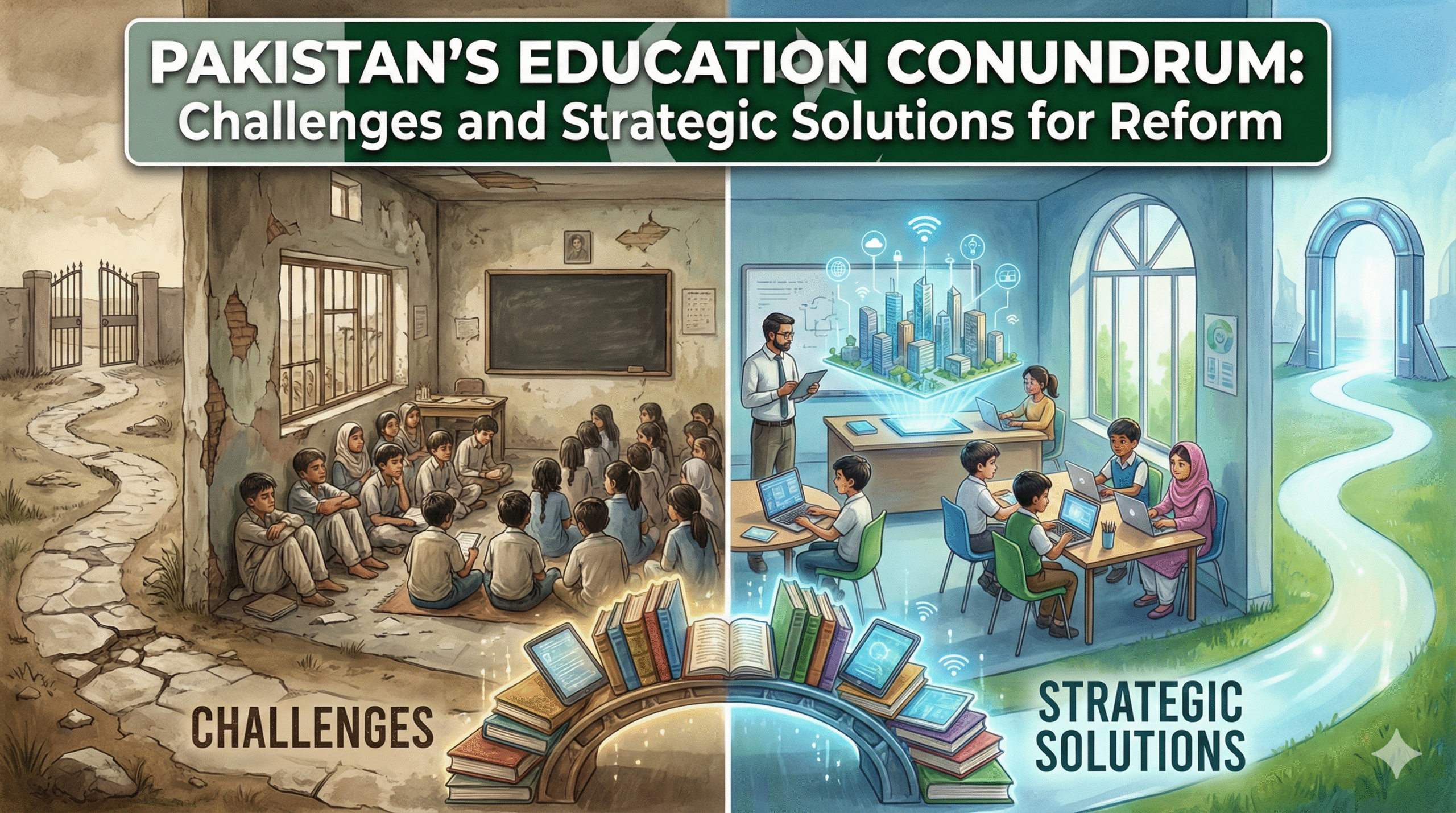
Pakistan’s education system faces serious challenges that stop many children from getting the learning they need. Millions of young students, especially those aged 5 to 16, remain out of school. This crisis is not just about numbers but the deep-rooted issues like low public spending, outdated policies, and poor quality in teaching that affect the country’s future.
Understanding what causes these problems and how they affect society is key to finding real solutions. This article explores why Pakistan’s education system is struggling and what steps might help fix it.
These challenges create a cycle where poverty and illiteracy keep reinforcing each other. Despite some efforts, the system struggles to offer the skills and knowledge students need to succeed in today’s world.
” The core problem is that Pakistan’s education system is trapped between a lack of funding, ineffective management, and growing inequality that limits access for many children.“
Key Takeaways
- Many children in Pakistan cannot access basic education due to financial and social barriers.
- The education system suffers from poor quality and weak management.
- Effective reforms require better funding, improved policies, and focus on equal access.
Current State of Education in Pakistan
Pakistan faces several major challenges in education, including limited access to schools, poor quality of learning institutions, insufficient teacher training, and a wide gap between urban and rural education. These issues greatly affect enrollment, learning outcomes, and future opportunities for millions of children.
Access to Schools
Access to education in Pakistan remains a major barrier. Over 25 million children are out of school, with the highest numbers in rural and remote areas. Many regions lack enough schools, especially for girls. Social and economic factors also prevent attendance. Families often prioritize work over education due to poverty.
Limited public funding restricts new school construction. Transportation and unsafe routes to schools keep children, particularly girls, away. While urban areas tend to have better infrastructure, rural regions face severe school shortages. This results in over 36% of children nationwide not attending school.
Quality of Educational Institutions
The quality of education across Pakistan’s schools varies widely and often remains poor. Many schools suffer from outdated textbooks, weak curricula, and lack of basic facilities. Proper learning environments are rare, with overcrowded classrooms and insufficient learning materials common.
Government schools generally provide lower-quality education compared to private institutions, although private schools often charge fees that many families cannot afford. Low learning outcomes persist. Students frequently leave school without mastering essential skills like reading and math.
Teacher Training and Capacity
Teacher quality in Pakistan is a critical issue. Most teachers receive limited training, which affects their ability to engage students or deliver effective lessons. Many are not updated on modern teaching methods, reducing classroom effectiveness.
Low salaries demotivate teachers and contribute to absenteeism. In rural areas, finding qualified teachers is even harder. Many educators lack confidence in handling diverse student needs or managing classrooms. Training programs exist but are inconsistent and underfunded, leading to gaps in teacher performance.
Urban-Rural Disparities
Education access and quality vary sharply between urban and rural areas. Cities benefit from better infrastructure, more schools, and higher teacher availability. Private schooling options are more common, offering better resources and learning environments.
Rural communities face severe disadvantages. Schools are scarce, poorly maintained, and lack trained teachers. Cultural norms may discourage girls’ education. These disparities reinforce cycles of poverty and limit social mobility in rural populations.
| Aspect | Urban Areas | Rural Areas |
|---|---|---|
| School Availability | Generally adequate | Very limited |
| Teacher Quality | Higher training levels | Often underqualified |
| Infrastructure | Better facilities and resources | Poor or missing basic facilities |
| Female Enrollment | Higher compared to rural | Much lower, with cultural barriers |
Historical Context and Policy Evolution
Pakistan’s education system has deep roots in its colonial past, influencing how schools and curricula developed after independence. Over time, the government introduced various reforms aimed at addressing challenges like low literacy and uneven quality. However, the success of these reforms depended heavily on how policies were implemented across regions.
Legacy of Colonial Education Frameworks
Pakistan inherited an education system designed primarily to serve colonial interests rather than national development. The British focused on creating a small educated elite to work in administration. This left a fragmented structure, with limited access for the majority of the population. The curriculum emphasized rote learning and ignored local languages and cultures.
After 1947, the country struggled to reshape this inherited system. Many schools remained urban and elite-focused, while rural areas lacked facilities. The colonial legacy also left a strong divide between English-medium and vernacular schools. This historical setup created long-term challenges in expanding quality education to all segments of society.
Major Education Reforms
Since independence, Pakistan has launched several major reforms to improve education access, quality, and relevance. Key policies included the 1972 National Education Policy, which aimed to standardize curricula and expand primary education. The 1992 policy introduced a shift toward decentralization and greater involvement of provincial governments.
Reforms also focused on religious education integration, skill-based learning, and literacy enhancement programs. Despite these efforts, inconsistent funding and political changes often disrupted progress. Policies oscillated between centralized control and decentralized initiatives, creating confusion among administrators and schools.
| Year | Key Reform | Focus |
|---|---|---|
| 1972 | National Education Policy | Curriculum standardization |
| 1992 | Decentralization reform | Provincial control & autonomy |
| 2009 | Literacy & skill programs | Improving youth literacy rates |
Government Policy Implementation
The effectiveness of education policies in Pakistan has been limited by poor implementation. Challenges include insufficient funding, lack of trained teachers, and weak monitoring systems. Many policies remain on paper without clear follow-up or resources to back them up.
Regional disparities also affect implementation. Provinces with less infrastructure struggle to apply national policies effectively. Political instability and frequent changes in education leadership further disrupt continuity. Additionally, bureaucratic delays and corruption have slowed the development of schools and teaching quality.
Efforts to involve local communities and private sectors have grown but are uneven. Successful policy implementation requires consistent support, accountability, and adapting strategies to local needs.
Socioeconomic Barriers to Learning
Access to education in Pakistan is deeply affected by economic conditions, social customs, and geography. These factors create obstacles that keep many children from fully benefiting from schooling. Poverty limits resources, cultural gender roles affect who attends school, and where a child lives influences education quality.
Poverty and Affordability
Many families in Pakistan live below the poverty line, which makes it hard to afford school expenses like uniforms, books, and transportation. Even when tuition is free, indirect costs can be too high for poor households.
Children from low-income families often must work to support their families. This reduces their time and energy for learning. Schools in poorer areas also lack basic facilities and trained teachers.
Because of these issues, dropout rates are high among children from poor families, especially after primary school. Poverty also affects nutrition and health, which impacts concentration and attendance in school.
Gender Inequality
In many parts of Pakistan, girls face more barriers to education than boys. Cultural norms often prioritize boys’ schooling and encourage girls to stay at home or marry early.
Safety concerns, lack of female teachers, and distant schools discourage families from sending girls to school. This limits girls’ access to education beyond the elementary level in some regions.
Girls who do attend school often study in overcrowded or poorly resourced environments. Gender bias in textbooks and teaching methods can also affect how girls learn and perform.
Regional Disparities
Education quality and access vary widely between urban and rural areas. Cities generally have better schools, more teachers, and stronger infrastructure.
Rural areas often suffer from fewer schools, poorly trained teachers, and lack of basic facilities like clean water and electricity. Many schools in these areas are difficult to reach, especially for girls.
Regions affected by conflict or poverty have even lower enrollment rates. These geographic differences create unequal opportunities for children based solely on where they live.
| Factor | Urban Areas | Rural Areas |
|---|---|---|
| School Quantity | Many schools | Few schools |
| Teaching Quality | Generally better-trained | Often untrained or absent |
| Facilities | Adequate facilities | Poor or missing facilities |
| Safety | Relatively safer | Concerns over travel safety |
Curriculum and Language Challenges
Pakistan’s education faces major hurdles with language choice, curriculum design, and textbook quality. These factors affect how well students learn and how the system adapts to diverse needs across the country.
Medium of Instruction Dilemma
The main languages used in schools are Urdu and English, while over 70 regional languages are spoken nationwide. This creates a gap for many children who speak local languages at home. When taught in Urdu or English, these students often struggle to understand and keep up.
The lack of early education in native languages limits student engagement and learning outcomes. Schools rarely switch to regional languages or use bilingual teaching methods. Resistance from teachers, limited resources, and policy gaps make introducing local languages difficult.
Without proper support, many learners face disadvantages that widen educational inequality. Bridging this language gap is key to improving access and success rates in schools.
Curriculum Relevance
Much of Pakistan’s curriculum is outdated and does not reflect local culture or current global knowledge. Subjects often focus on rote memorization rather than critical thinking or practical skills.
The Single National Curriculum aims to standardize content but faces uneven implementation, with rural areas lacking enough materials and trained teachers. Political influences sometimes shape curricula that prioritize ideology over quality education.
There is a growing call for curricula that relate better to students’ lives and future job markets. This requires frequent updates and inclusion of diverse regional perspectives.
Textbook Quality
Textbooks in Pakistan vary widely in quality and relevance. Many contain errors, outdated information, and politically biased content. Poor production standards reduce durability and usability.
Access to quality books is uneven, especially in remote or underfunded schools. Some areas rely on secondhand or unofficial materials. Teachers report lacking adequate, clear resources to deliver lessons effectively.
Efforts to improve textbook content and distribution need to focus on accurate information, cultural inclusion, and alignment with modern teaching methods. Enhancing textbook quality can significantly impact student learning outcomes.
Public vs Private Sector Education
Pakistan’s education system is divided mainly into public and private sectors. Public schools are run by the government and aim to provide free or low-cost education. Private schools charge tuition and often have better facilities and resources but are less affordable for many families.
Key Differences:
| Aspect | Public Schools | Private Schools |
|---|---|---|
| Cost | Low or free | Expensive, varies widely |
| Quality | Varies, often limited | Generally better, but inconsistent |
| Teacher Training | Often lacks investment | More focus on faculty development |
| Accessibility | More accessible to low-income families | Mostly for middle and upper income groups |
Private schools in Pakistan often outperform public schools in student results. This is partly due to better resources, smaller class sizes, and more qualified teachers. However, quality control in private education is inconsistent because of weak regulation.
Public schools face challenges like underfunding and overcrowding. Many lack basic infrastructure and qualified teachers. This contributes to a significant gap in educational outcomes between the two sectors.
Both sectors play important roles. Public schools serve the majority of children, while private schools cater to those who can afford them. There is growing support for public-private partnerships to improve quality and access in public education. Community involvement and government support are seen as crucial steps to bridge this divide.
Impact of Technology and Innovation
Technology is changing how education works in Pakistan, but the effects are uneven. Some students gain greatly from new learning tools, while others still lack access to basic digital resources. Innovations like AI and mobile learning hold promise but face obstacles tied to infrastructure and policy.
Digital Divide
The digital divide in Pakistan shows a clear gap between urban and rural areas. Many rural regions lack reliable internet and electricity, making it hard for students to benefit from online learning or digital tools. Urban schools tend to have better access to computers and mobile devices, giving their students an advantage.
This gap also affects gender equity. Girls in remote areas often face more barriers to technology access, which limits their education opportunities. Poor infrastructure and high costs intensify these challenges.
Efforts to close this divide include government and NGO projects aimed at expanding internet access and providing affordable devices. Still, significant work remains to ensure equal digital learning chances nationwide.
E-Learning Initiatives
Pakistan has introduced several e-learning programs to support education through technology. Projects like DigiSkills offer free online courses that teach digital and technical skills to young people, preparing them for jobs.
The Learning Passport, backed by UNICEF, targets marginalized children, providing digital education resources that reach beyond traditional schools. This helps children, especially girls, overcome logistical and social barriers.
These initiatives use mobile-friendly platforms and multimedia to engage students. However, challenges such as teacher training, content relevance, and internet reliability need ongoing attention to maximize impact.
Pathways Forward and Proposed Solutions
Addressing Pakistan’s education challenges requires targeted steps in policy, community support, and future planning. Solutions must improve access, teacher quality, infrastructure, and technology while involving local stakeholders. Each approach plays a key role in building a more effective system.
Policy Recommendations
Effective policies need clear focus on funding, training, and curriculum updates. Increasing budget allocation to education is essential to fix poor infrastructure and provide learning materials. Teacher training programs must prioritize skills for active, project-based learning rather than rote methods.
Curriculum reforms should align with modern needs, including digital literacy and critical thinking. Policies should promote gender equality and accessibility to ensure no group is left behind.
Regular monitoring and evaluation can track progress and reveal gaps. Using data to guide decisions helps avoid repeating past mistakes and allocates resources efficiently.
Community Involvement
Local communities play a crucial role in supporting schools and boosting enrollment. Community engagement can improve accountability and encourage parental involvement, which affects student attendance and success.
School management committees should include parents and local leaders. Their participation helps adapt education to community needs and values.
Awareness campaigns can promote the importance of education, especially for girls, to overcome cultural barriers.
Partnering with non-profits and private sectors can bring extra resources and innovation. Community-backed initiatives tend to be more sustainable and responsive.
Future Outlook
Technology and research-driven policies will shape Pakistan’s education future. Integrating digital tools can expand access to remote areas and support personalized learning.
Investing in education research provides evidence-based approaches to reform. This data-backed method helps create resilient systems able to adjust to challenges like natural disasters or economic shifts.
The growing young population demands faster, scalable solutions. Emphasizing skills for the job market will link education more directly to economic growth.
Sustained political will is critical. Without ongoing commitment, progress will remain slow, and disparities will persist.
Discover more from The Monitor
Subscribe to get the latest posts sent to your email.

Dr. Arifa Sayeda Zehra, often referred to as a national icon in Pakistan, was a towering figure whose contributions spanned the realms of education, intellectual history, and social advocacy. Her distinctive voice and profound insights, particularly on the Urdu language, literature, human rights, and social issues, cemented her legacy as one of the most respected intellectuals and humanitarians of her time.
👩🏫 The Professional Journey of a Pioneering Educationist
Dr. Zehra’s professional life was characterised by a deep commitment to teaching, academic leadership, and educational reform, particularly for women’s empowerment.
- Academic Foundation: She built a formidable academic background, earning a Bachelor of Arts (Honours) from Lahore College for Women University, a Master of Arts in Urdu from Government College University, Lahore, and further degrees—an M.A. in Asian Studies and a Ph.D. in History—from the University of Hawaii at Manoa. Her 1983 dissertation, Sir Sayyid Ahmad Khan, 1817-1898: Man with a Mission, reflected her specialisation in intellectual history.
- Key Leadership Roles: Her career included influential roles at premier educational institutions in Lahore:
- She began as a lecturer at Lahore College for Women in 1966, eventually serving as its vice principal (1985-1988) and then Principal (1988-1989).
- She later served as the Principal of the Government College of Women, Gulberg (1989-2002).
- Later Career and Influence: Post-retirement from formal administration, her expertise remained in high demand. She was a Professor Emeritus of History at Forman Christian College and was a visiting faculty member at numerous prestigious institutions, including the Lahore University of Management Sciences (LUMS) and the National College of Arts (NCA).
🌟 Key Achievements and Educational Reforms
Dr. Zehra’s impact on education goes beyond her administrative roles; she was a fervent advocate for quality education and language preservation.
Advocating for the Urdu Language
She was celebrated for her immense knowledge and passion for the Urdu language and literature. Dr. Zehra continually advocated for the language’s continued use, accessibility to classic books, and what she termed a “literary revolution” among Pakistani youth to reconnect them with their national heritage. Her televised forums and lectures often explored the socio-cultural context of the language, discussing influences like colonialism and classism on its perception.
Influential Public Service
Her expertise led to involvement in high-level policy and governance:
- She served as a member of the Punjab Public Service Commission (2002-2005).
- She was a Caretaker Provincial Minister of Punjab, demonstrating her readiness to contribute to provincial governance.
- She served as the Special Advisor to the Prime Minister for Education and National Harmony Affairs.
🫂 Impact as a Social Worker and Human Rights Advocate
While she often stated she preferred to work for social change through the platform of education rather than official NGO membership, Dr. Zehra’s contributions to human rights and gender equality are profound.
- Champion of Gender Equality: Her decision to teach at women’s colleges was deeply rooted in her commitment to female equity and parity. She used her platform to educate women on their basic legal rights and societal roles.
- Chairperson of NCSW: She served as the Chairperson on the National Commission on the Status of Women (NCSW), a critical position from which she could directly influence policy and legislation to improve the lives and standing of women in Pakistan.
- Voice for Development and Rights: She was a vocal proponent for basic human rights and holistic development in Pakistan, often discussing South Asian social issues in public forums and conferences. Her intellectual analysis of societal problems helped shape public discourse and raise awareness among various segments of the population.
💎 The Enduring Legacy
Dr. Arifa Sayeda Zehra’s legacy is one of intellectual honesty, unwavering integrity, and a life dedicated to service. Her passing on November 10, 2025 (at the age of 88), marked the end of an era, but her influence continues.
- Inspiration to Youth: Her engaging and accessible lectures, which often went viral online, made her an inspirational figure, particularly for the youth, who were drawn to her eloquent articulation of complex issues.
- Intellectual Depth: She gifted Pakistan a treasure trove of critical analysis on history, society, and literature, constantly pushing for deeper, more reasoned engagement with national challenges.
- Recognition: Her lifetime of service was recognised through various honors, including the University of Hawaii Distinguished Alumni Awardee in 2016.
Dr. Zehra remains a shining example of how a dedicated educationist can transcend the classroom to become a formidable force for social justice and national harmony. Her work will continue to inspire new generations to seek knowledge and speak truth to power.
Discover more from The Monitor
Subscribe to get the latest posts sent to your email.

MLB Playoffs 2026: Postseason Format, Broadcast Guide and How to Track the Bracket

Elon Musk Calls Mukesh Ambani the “Real Boss of India” Over Alleged Monopoly Concerns

Legal Pioneer and Defender of Justice: The Life, Works, and Legacy of Navi Pillay

Inside the Modern Republican Party Platform: Tax Policy, Immigration, and Governance

Anne Carson: Genius of Hybrid Forms and 2026 Nobel Laureate in Literature

Analyzing the Republican Voter Enthusiasm Gap: Turnout Metrics and Polling Data

The West Wing Legacy: Why the Political Drama Is More Relevant Than Ever

Remembering Kianna Underwood: The Nickelodeon Actress Behind “All That” and “Little Bill”

Min Ah: The Global Impact and Rising Popularity of the K-Drama Star

Pakistan Warns UN Security Council of AI Risks to Global Peace and Equality

Bloodhound Q50: Remembering the Tragic Loss of Chicago’s Rising Drill Star

Remembering Eliana Moreno: The Legacy of NBC LA’s “Eli in the Heli”

Horror Box Office Economics: ROI, Market Share and the 2026

iOS 27 Release Date & Siri AI: The Ultimate Tech News Guide for iPhone 18 Users
Min Ah: The Global Impact and Rising Popularity of the K-Drama Star

Fortress Diplomacy: How China’s Secretive Hongqi N701 Matches America’s Legendary “Beast”

Rep. Thomas Massie’s Impeachment Push Against Pete Hegseth, Explained
Remembering Kianna Underwood: The Nickelodeon Actress Behind “All That” and “Little Bill”
-

 Featured5 years ago
The Right-Wing Politics in United States & The Capitol Hill Mayhem
-

 News5 years ago
Prioritizing health & education most effective way to improve socio-economic status: President
-

 China5 years ago
Coronavirus Pandemic and Global Response
-

 Canada5 years ago
Socio-Economic Implications of Canadian Border Closure With U.S
-

 Democracy5 years ago
Missing You! SPSC
-

 Conflict5 years ago
Kashmir Lockdown, UNGA & Thereafter
-
Democracy5 years ago
President Dr Arif Alvi Confers Civil Awards on Independence Day
-

 Digital6 years ago
Pakistan Moves Closer to Train One Million Youth with Digital Skills